
"It is likely that domain names only have 3–5 years left as a major way of finding sites on the Web," one of the most well-known experts on internet usability predicted in 1999. The article is still up on his website today. Jakob Nielsen could have memory-holed it, hoping no one noticed or remembered. Instead, he did the opposite.
When the article was first published, it appeared on useit.com under a bolded Permanent Content heading. Then the entire site was migrated to nngroup.com in 2012, at which point the article received a new URL, and the old URL redirected to it. “Linkrot equals lost business,” it has read for 25+ years, even when you’ve written things you’d like to forget.
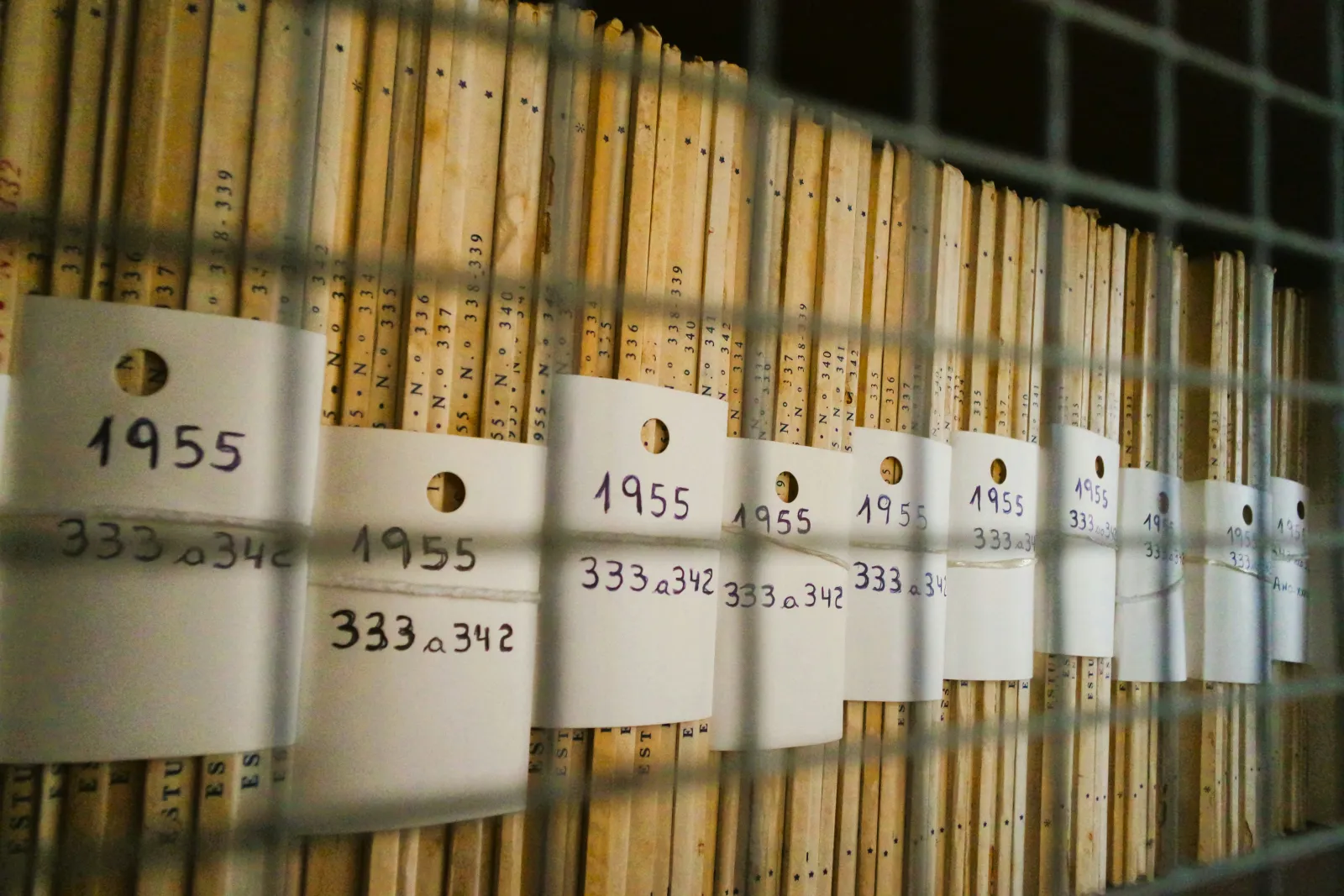
The value of your archives scales exponentially with each additional entry. They are how people and search engines find and reference you, how skeptics vet your writing before inviting it into their inboxes. Your archives are a place to find topic inspiration and link to previous writing. They compound in value, each new piece making every previous piece more discoverable, more credible, more useful as a reference point.
Archives as marketing
No one likes marketing, the verb or the noun. Creators hate doing it, subscribers distrust it, and it becomes almost entirely redundant when you have published work you can point to and say, “You’ll get more of this if you sign up.” The verifiability of that pitch only goes up as your archives grow. But that doesn’t mean you have to give away the farm, either.
To build up a resume of consistent and public publishing without disincentivizing signups, you might insert an emailwall after the first couple paragraphs of your emails, so everything below them is visible in the inbox version but hidden in the archives. Or, for an approach that is more tedious but more effective, write two versions of your newsletter: One longform for subscribers, the other “a useful, self-contained shorter version of the newsletter,” avoiding the trap of what Phil Agre described as “a set of teasers for the paid version is just advertising and will justifiably annoy people,” a quote that is not only accessible 30 years after the fact thanks to Phil’s archives, but also indexed by search engines.
Every archived issue of your newsletter with a public URL is an opportunity for search engines and chatbots to surface your writing in their search results and conversations. The extremely low bar for algorithms to market your work for you is SEO-friendly archives (often handled automatically by platforms like Buttondown) and a link to an old issue on a page that is already in a search engine’s index. That’s how a newsletter like Hillel Wayne’s Computer Things can appear in the top five results for a “why is it called boilerplate code” query.
Archives are an endpoint, an object that you, your subscribers, or search engines can point to when people are looking for something to read–or comment on.
Archives as community
Google indexes more than a newsletter by itself. Its crawlbots capture user generated content below it too. Because Hillel’s archives have a comments section, for example, anyone who subscribes to the newsletter or finds it in search results can ask questions or add context to an article. Instead of managing a separate Slack or Discord server, people can have full-blown conversations in the archives themselves. From a selfish perspective, it’s an excellent way to encourage subscribers and contributors to create link- and results-worthy content with zero extra overhead. From a community-building angle, it’s a way to show a potential subscriber that they won’t be the first one to the party.
Patricia Elzie-Tuttle’s weekly newsletter, The Infophile, has weekly accountability threads where she shares things she’s working on and invites others to join her. “Collectively, we will check in with each other the following week and see if we all did our things,” she explained in an interview. “It’s a low lift to be accountability buddies, but this is the kind of community I have fostered through my newsletter.”
Topics like those in The Infophile can be sensitive, though, better left unindexed and inaccessible to strangers. You can build a community in your archives, without the marketing benefits, by enabling private mode. This will make the URLs for previous issues only visible to you and people who subscribe to your newsletter. It’s great for privacy and redundancy.
Archives as backups
The biggest problem with URLs as information locators is link rot. “Keeping URIs so that they will still be around in 2, 20 or 200 or even 2000 years is clearly not as simple as it sounds,” Tim Berners-Lee acknowledged in 1998. “However, all over the Web, webmasters are making decisions which will make it really difficult for themselves in the future.” They post to sites they do not own or moderate, prioritize SEO over accessibility, and make dozens of other choices that mean there’s a 66% chance any given page will be gone within nine years.
It would be hypocritical of me to write elsewhere that every platform is likely at its half-life, then turn around and tell you Buttondown will live forever, even if that is the plan! But the internet isn’t so strict that you can’t store back issues of your writing in multiple places.
The best way to avoid the problem that Arvid Kahl summarized as “anything that is supposed to prevent link rot itself is prone to rot,” is to own the domain where your archives are posted. That way, you can always set up redirects from old URLs to newer ones. You could move from Mailchimp to MailerLite to Buttondown and your archives link would remain the same.
There are a couple of ways to achieve that. You could simply post to your own website and set up RSS-to-newsletter for emails that link to your site. Or, if you want to make changes to the content before sending, paste it into your newsletter editor and set the canonical URL to your website’s version of the article. In either case, clicking on the H1 in the email will link to your domain rather than your newsletter platform’s archives, and a meta tag will tell search engines to always prefer the former over the latter.
Of course, there’s always the option to just host your newsletter on a custom domain, creating and sending content from an app like Buttondown and having it post straight to your website. Even then, losing access to your domain could mean that you have no way to retrieve your archives, as they’re associated with a domain that likely underpins both your website and your email. A monthly export automation is great for local backups, but it’s nice to have a URL-based stopgap.
Archiving your newsletter and all of the links it contains in the Wayback Machine every time you send might seem excessive, but it prevents a lot of future pain. You could even do it automatically with Buttondown’s webhooks and Archiver. Then, add text to your newsletter footer along the lines of “This email and all the links it contains have been saved to archive.org in case they become unavailable.” Now you and your subscribers have multiple avenues to your writing should something unfortunate happen to your domain or your newsletter platform.
Archives as topic generators
Old emails are fodder for new content. Best Evidence sends bonus posts to paying subscribers, then waits a few months and sends them to free subscribers. The tempertemper newsletter (a good example of hosting on a custom domain), includes a From the archives subheading in every issue, linking to a popular article from at least a year ago. You could also revisit old posts with the benefit of intervening time, commenting on how the topic changed or evolved, for a way to get over writer’s block.
If you write elsewhere, under the banner of a company or employer, you could repurpose articles when the original URL dies. “From 2012 to 2020, Treehugger was owned by the Mother Nature Network, where I wrote regularly about the problems of aging in our cities and suburbs. Many of them did not get reposted to Treehugger but are still relevant, so I am going to repost some of them here over the holidays,” is how Lloyd Alter handled it in Carbon Upfront!. Anna Hamilton took a similar approach with Citizen Cane, editing articles from a shuttered magazine for disabled writers into the newsletter format.
You could use your email client to search for ideas in archives, but it’s a much better experience in a more purpose-built interface. Personally, I add metadata to every email to make topics easier to find later. And Buttondown’s archives include a search function that I use to surface old issues. In fact, you might invite subscribers to search for and reply with old topics they want you to update or revisit, as a natural and earnest way to encourage engagement and boost deliverability.
Creating your most valuable asset is totally hands-off
The written word was invented to preserve ideas and endure across generations. Thinking of writing’s lifespan in terms of hours or days, as many often do on social media, cheapens its connection to what came before. “As we experience a cacophony of information coming in from all directions, inquiry ceases and anxiety flavors all our actions,” says the homepage for the bi-weekly newsletter MEME, unchanged since 1997. “Increasingly, we live in a matrix of information, without context, without pattern, disassociated from the past, rootless and unsettling.”
Your archives should live forever. Even if they’re for a newsletter you abandoned or a blog you rarely revisit. They are a record of your work and the people who appreciated it.
User comments from 1999 still sit beneath Jakob Nielsen’s article about domain names being phased out. They are no longer relevant to the internet we use today, but they are there as enduring proof that an interesting conversation took place between people from all over the world. And that’s worth keeping forever.