
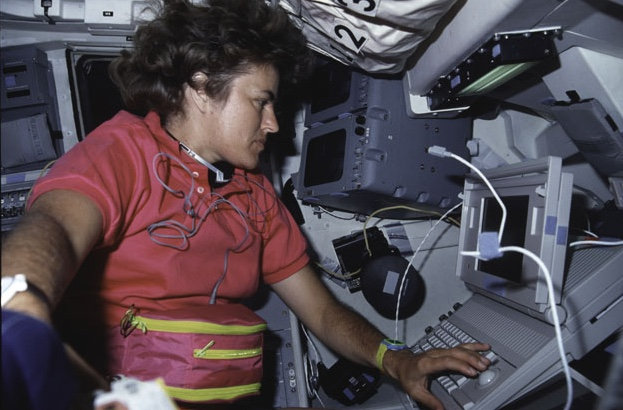
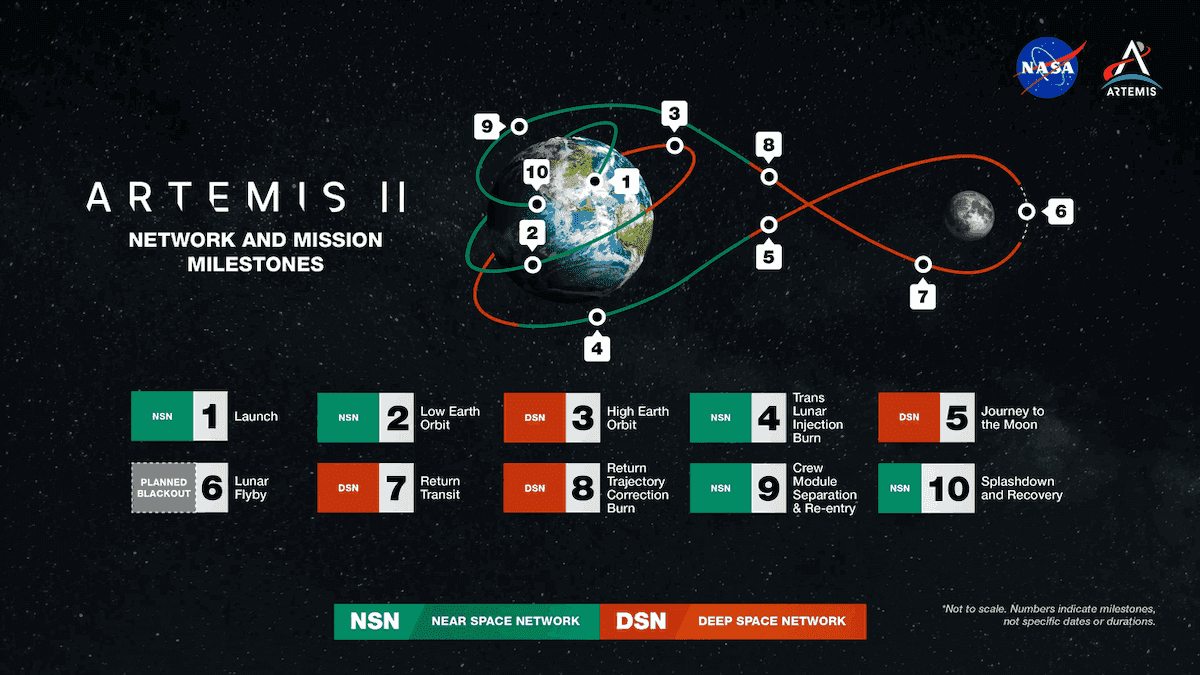
For 41 minutes, the four Artemis II astronauts will be cut off from the rest of humanity.
Then they’ll crest the far side of the Moon. The Orion spacecraft will fire up its infrared laser-based communications system, using a four-inch optical telescope to lock onto home. 1.28 seconds later, give or take a few centiseconds, data will reach terrestrial receivers at Table Mountain, California and White Sands, New Mexico. Then another four thousandths of a second to Mission Control in Houston. Then back again, infrared light retracing the route to the Moon. 238,000 miles from Earth, the astronauts’ inboxes will blow up with unread messages.
With a latency of around two and a half seconds and a “10-20 Mbps uplink” and a “40-260 Mbps downlink,” according to NASA, the Artemis missions, the first crewed NASA flight around the moon in five decades, will be able to stream 4k footage from the Moon and hold live video calls, as long as you’re willing to pause a couple beats between sentences. One day, similar systems could power communications to Mars, albeit with a round-trip latency of anywhere from six and a half minutes to nearly 40.
But that’s at the best of times. Solar activity, atmospheric conditions on Earth, or anything preventing a clean line of sight can impede communications. The internet itself was designed, in part, to handle terrestrial network failures, with packet switching and redundancy rerouting bits if something’s down. In space, during a solar storm, the only option might be to wait. So NASA reinvented the inbox for everything, with a “store-and-forward approach to overcome latency and disruption challenges” as part of its Delay/Disruption Tolerant Networking.
We didn’t start there. Internet in space started in 1991, almost as an afterthought, when a Macintosh Portable rode into orbit aboard the STS-43 Space Shuttle mission, alongside a TDRS satellite that formed the early backbone of NASA’s space communications. Decades later, we’d remember the mission for something else, as the mission when the first email was sent from space—routed, like Artemis today, through White Sands and on to Mission Control.
Hasta la vista, baby,... we'll be back!
It started with the mice.
The plan, in the 1980s, was for the United States, Canada, the EU, and Japan to collaboratively build a Space Station Freedom as, among other things, a laboratory and orbiting satellite repair station. With that came an endless number of unknowns. By the time 1990 rolled around, those questions included how then new-to-the-market laptop computers would perform in space.
“Little is known about how, or if, typical cursor control devices work in zero gravity,” explained a NASA and Lockheed report. Mice, at the time, actually looked like mice, with off-white plastic bodies, wired cables snaking behind, and a rolling rubber ball that converted the mouse’s motion into coordinates for on-screen navigation. Simple enough, unless you were in space and the ball floated just enough to not register movement. A floppy, one mission earlier, had flown across the shuttle when ejected from a Macintosh Portable. Who knew how mice would react to zero gravity?
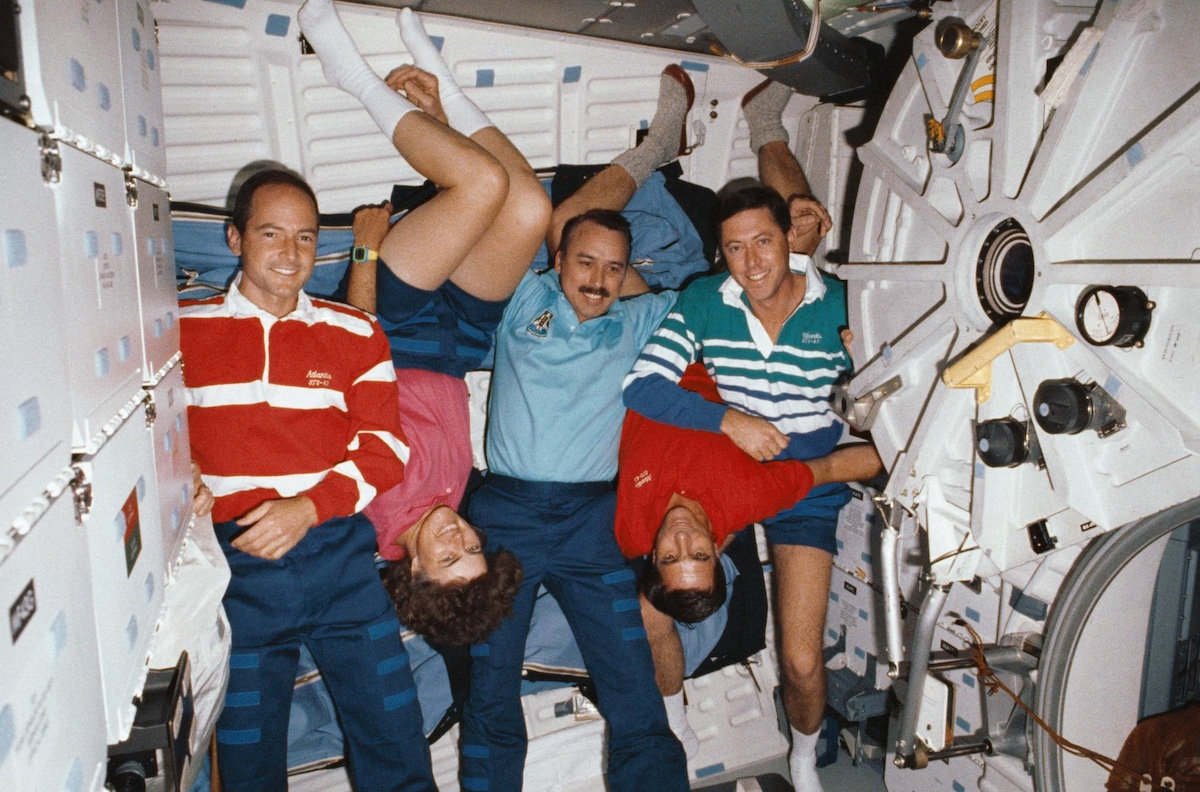
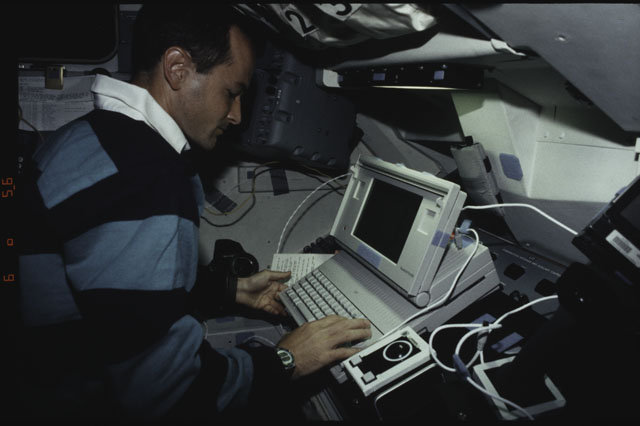
Answering that question fell to experiment DTO 1208, “Space Station Cursor Control Device Evaluation II and Advanced Application,” with a computer and a bunch of mice on Space Shuttle Atlantis mission STS-43. Apple’s first laptop, the Macintosh Portable, was selected for the mission because it “had the widest variety of pointing devices available,” noted Adam Engst in TidBITS. It came with a built-in trackball, and they additionally included a 2-inch trackball, an optical mouse, and (my favorite) a modified aircraft control stick with the payload. And they planned real-world tests, so the astronauts wouldn’t be simply playing with the mice in zero gravity. “The Macintosh payloads were designed to test human-computer interface requirements for several hardware and software applications that are of high priority with the SSFP (Space Station Freedom Program) crew,” concluded Lockheed and NASA.
Email was among those applications, one that required some pre-mission tweaks. “The modem was modified by NASA to work with their synchronous DCE equipment,” noted an Apple support doc. Apple got to work on their early networking service, AppleLink, modifying it for the mission “to deal with, among other things, routing and packet delays.”
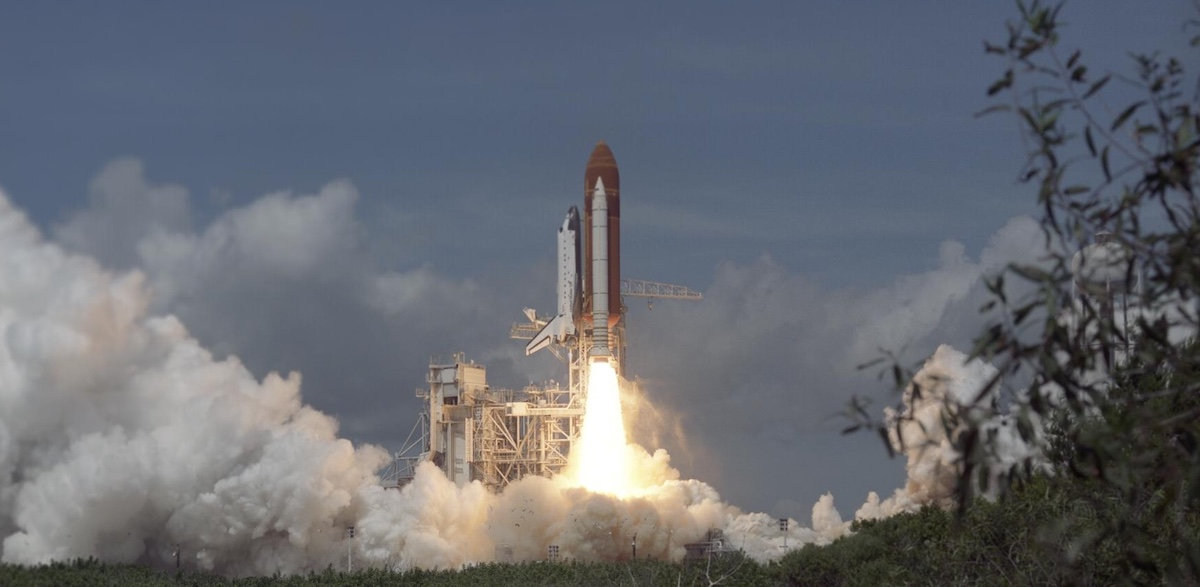
All that was left was to see if everything actually worked as intended. Space Shuttle Atlantis and crew lifted off mid-afternoon on August 2, 1991, deployed the fifth TDRS satellite to boost NASA’s communications capabilities, then started working on their mission’s experiments. It was quite the gadget-heavy flight, with the Mac and mice, along with WristMacs, a proto-Apple Watch designed by Seiko that the crew used to remind them when it was time to take pictures and run experiments.
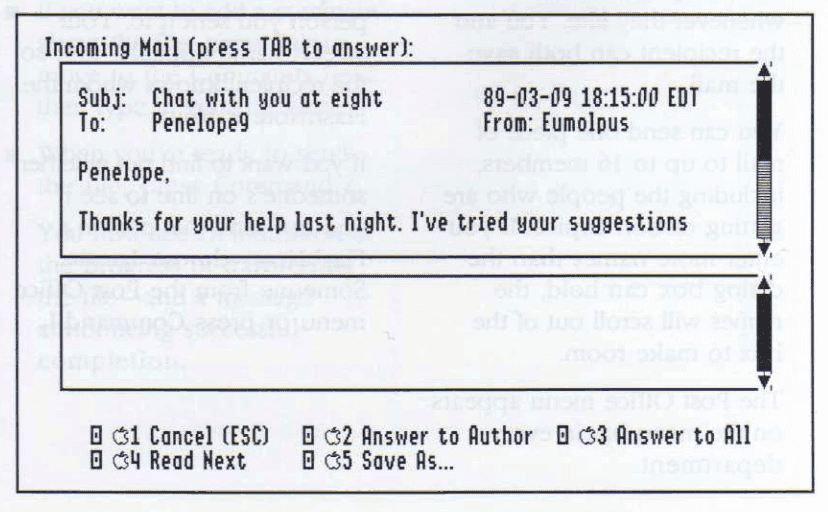
Seven days into the mission, a timer went off on [Friday, August 9, 1991—perhaps on their watches, synced from the Mac. Astronauts Shannon Lucid and James C. Adamson pulled out the Macintosh Portable, connected to AppleLink, and typed out an email to astronaut Marcia Ivans, the shuttle communicator in Houston for this mission:
Hello Earth ! Greetings from the STS-43 Crew. This is the first AppleLink from space. Having a GREAT time, wish you were here,... send cry, and CS! Have a nice day...... Hasta la vista, baby,... we'll be back!
Cry, noted Apple’s documentation, stood for cryogenics or fuel, while CS stood for Control System. “In other words, they wanted to stay up there!,” guessed the Apple documentarian. The tagline echoed Terminator 2: Judgment Day, a move that’d opened a month earlier. And the underscores around great, I can’t help but notice, were a bit of proto-Markdown formatting.
Sending an email from space didn’t work on the first try. “An error message reading ‘The modem pool is not responding’ was reported by the Atlantis crew, apparently caused by a spike in the signal putting the ROLM data switching system "back to sleep" after a connection had been established the first time,” reported AppleLink project manager Michael Elliot Silver to TidBITS’ Adam Engst, and “The second failure occurred because the ROLM had not reset itself properly.”
“The third time was the charm.”
Then started a wild journey of bits, from the shuttle to (likely) a TDRS or commercial satellite, from there to a ground station in White Sands, then over perhaps a T1 link to “a Macintosh Portable at the Johnson Space Center in Houston; and from there to AppleLink’s central computers, which are run by General Electric in Brookpark, Ohio,” explained Ann Garrison in MacWorld’s December 1991 issue. It likely took over a half second—if not quite a bit longer, depending on the ground networking—for that first email to hit Apple’s servers.
The first email from space had been sent, through Apple’s proprietary messaging system instead of the more universal email system, a mere two days after Tim Berners-Lee published his first web page at CERN.
Remote Control Email
Three and a half decades later, email from space is routine. There’s WiFi on the International Space Station, believe it or not, and it works to a degree even on space walks. That and ethernet provide local and ground connectivity—just not full internet access.
NASA instead offers what it calls “Crew Support LAN” that is essentially a fancy remote desktop built for space. “The crew will view the desktop of the ground computer using an onboard laptop and interact remotely with their keyboard touchpad,” says the space agency, partly for security, partly to mitigate latency issues. So if you’re on the space station typing an email in Gmail or Buttondown, you’d actually be sending keystrokes from space to a computer sitting in Houston at Mission Control.
Those keystrokes go from a ThinkPad or HP ZBook laptop to a similar route that the first email took from space. The data flows from the ISS first to a geosynchronous TDRS satellite, newer hardware in the same constellation that was partly launched alongside that first email. From there it’s beamed to the White Sands ground station, then to Johnson Space Center’s mission control, and from there to NASA’s email servers and out to the wider world.
Dragon capsules, perhaps unsurprisingly, relay data instead to SpaceX satellites in low Earth orbit, then on to NASA’s ground relay servers, and it’s possible astronauts would be sending emails in the 20-or-so hours they’re in low Earth cruising altitude en route to an ISS rendezvous.
On Artemis missions to the moon, and future missions further afield, the Near Space Network—a hybrid of TDRS satellite communications and ground stations will relay data while the spacecraft is closer to home. Once it’s around 20,000 miles from Earth, it’ll transition to the Deep Space Network, relying on direct laser communications to ground-based radio telescopes and delay tolerant networking to store bits until they can be delivered in event of communications disruptions. It’s like your phone switching from WiFi to the cellular network when you leave home, and notifications being momentarily delayed during the handover, only this time it’s a spaceship switching networks a tenth of the way to the moon.
Email through the ether

Today, STS-43 is remembered as the first time an email was sent from space. Yet email was far from the first thing the crew talked about after landing.
“One of the privileges that we had on this mission was to fly some new software and some new computers,” said Space Shuttle pilot Michael Barker, in a post-flight press conference. “The first time that the combination had ever flown together on the space shuttle.”
After talking about deploying the satellite payload and running other experiments, he continued: “Another one of the experiments that we did for the space station was evaluating different kinds of cursor control devices for use on board the data management system on the space station,” said Barker. “We used a Macintosh computer and four different kinds of cursor control devices.”
Email didn’t merit a mention (by NASA, anyhow; Apple’s documentation listed “Connecting to AppleLink and sending mail and files” as the second most important task conducted on the Macintosh Portable). The first email sent from space was unceremoniously logged on page 24 of the mission report: “This DTO was performed successfully with electronic mail (e-mail) being sent and received by the crew.” That second message, the first email received in space, has been lost to time.
And perhaps that’s to be expected. Email even in 1991 had long-since become an expected part of computing, along with spreadsheets and word processors. Getting mice to work seemed a more formidable challenge; email and other application software just came along for the ride. If anything, it wasn’t certain in 1991 that email would be the future. The network the first email in space was sent through is long gone, while the idea of email, of communicating with computers, was one of the most obvious things to test while trialing laptops in space. The hard work of communicating across the vastness of space, of accounting for missing packets and solar storms, became the quiet underpinnings of space missions we’d quickly take for granted.
If humans set foot on Mars, as likely as anything, they will send email en route or while there. But it won’t be noteworthy, any more than any other part of the trip, just a silent part of the technology stack that underpins modern life wherever humans find themselves.
Of course you’d use email if you had a laptop in space. What better way to communicate with the world?
| Image | Credit |
|---|---|
| Header photo of Shannon Lucid | National Archives |
| STS-43 crew photo | NASA |
| James Adamson on Macintosh Portable | National Archives |
| AppleLink Mail screenshot | AppleLink guide |
