The Hypothesis logo

The Hypothesis

Archives
Subscribe

The Hypothesis

Archive

We Will Rise Again

Check out these amazing contributors to the anthology!

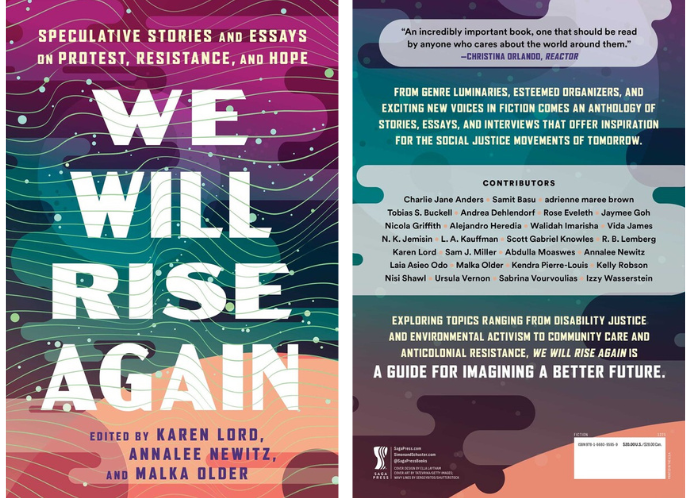
Before I tell you a wild story about a man I cannot forget, I have book news! We Will Rise Again: Speculative Stories and Essays on Protest, Resistance, and Hope, the anthology I co-edited with Karen Lord and Malka Older, will be out on December 2! Come to Booksmith in San Francisco that night to celebrate with five amazing authors and activists who are in the book. You can also read one of the stories on Electric Lit, and pre-order it from your local indie bookstore today!

In other bookish news, I have been surprised and delighted by the response to Automatic Noodle – it debuted on the USA Today and Indie bestseller lists, and has already gone into a fifth (!!) printing. You can order autographed and personalized copies of all my books from Noe Valley Books and Green Apple. Bonus: You can buy Automatic Noodle swag (designed by Lucy Bellwood) from a website (designed by Mike Monteiro) that is a facsimile of the old-fashioned HTML website the robots create in the book.  

Remember: books are great holiday gifts!

#41
November 18, 2025
Read more

A book that might lighten your mood

Today Automatic Noodle is officially in stores! It’s being called a “cozy” book, and I will definitely accept that label. I wrote it after spending three years researching the history of American psychological and cultural warfare for my previous book, Stories Are Weapons. After all that time thinking about how people torture each other with words, I desperately needed to produce words that would comfort me.

That’s why I centered the story around my favorite food: noodles.

The menu is from Old Xi’an Noodle House in Vancouver, BC

And that’s why I set it in the city I have loved for my whole life: San Francisco.

#40
August 5, 2025
Read more

The Automatic Noodle book tour is cooking!

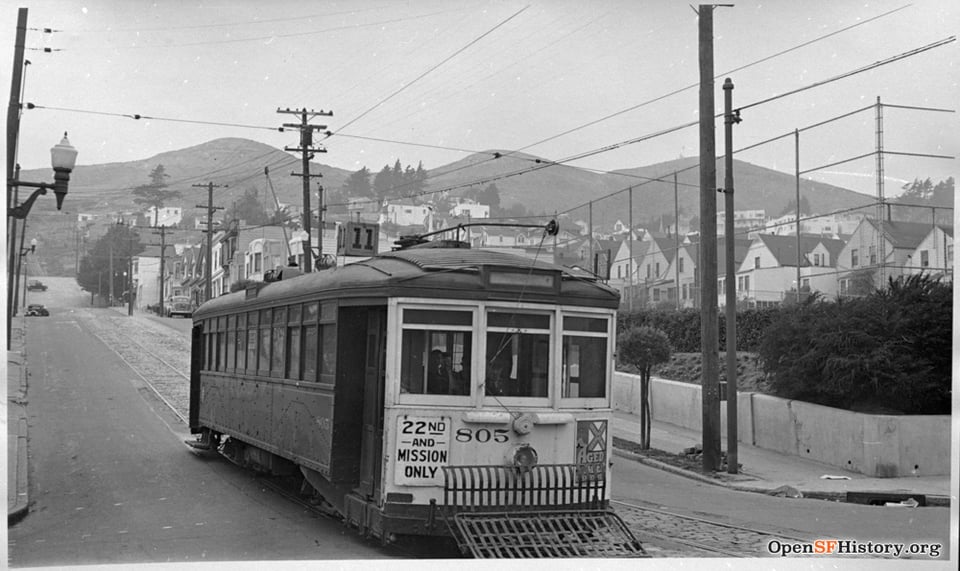
This photo from 1941 shows 24th Street at Douglass, right next to the storefront and park where Automatic Noodle takes place.

My new book Automatic Noodle is coming out next Tuesday, August 5, and it’s a special one for me. Set entirely in San Francisco, it’s a gift to the city I have loved since I first visited at the age of five. I’ve lived here for a quarter century, and it’s where I found my community, my family, and my voice as a writer.


If you live in the Bay Area, please come to the FREE book launch this Sunday afternoon, August 3, at Bethany United Methodist Church (1270 Sanchez Street)! Doors are at 2:30 and event starts at 3:00. RSVP here! It’s hosted by Noe Valley Books (a store which also makes an appearance in my book), and there will be sticker giveaways, a reading, and a conversation with AI researcher Alex Hanna, co-author of The AI Con.

#39
July 29, 2025
Read more

Robots are obsessed with 1990s web aesthetics

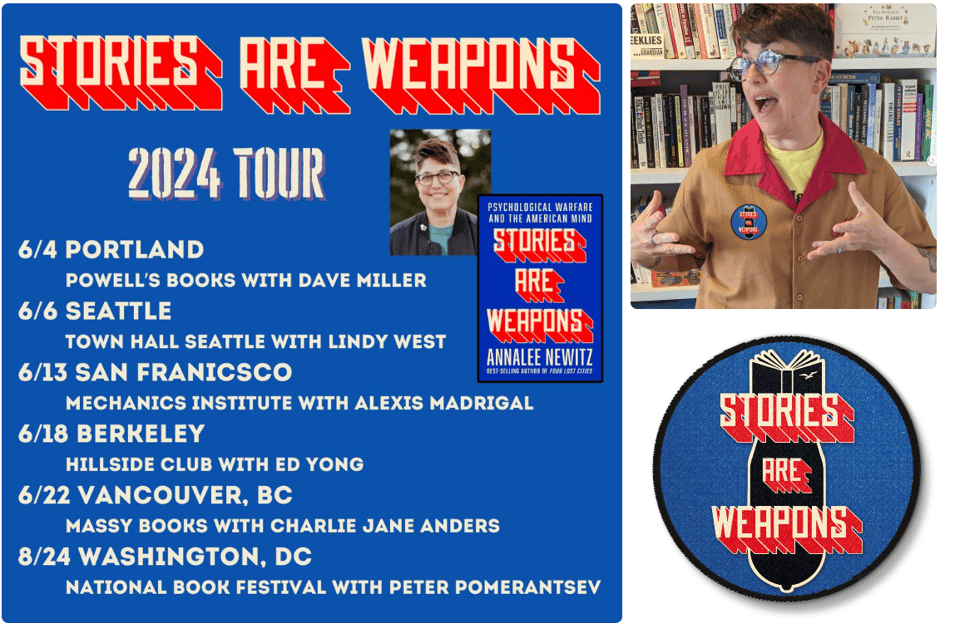
I’m taking a break from my media studies series (you can read the first three installments here, here, and here) to talk about my forthcoming novella, Automatic Noodle! It will be out on August 4, and you can pre-order it now. I’ll be going on tour in August, too — catch me in San Francisco, LA, Tempe, St. Louis, Portland, Seattle, and Vancouver, BC!

Let’s say you boiled down all the breathless business plans and tech journalism written about AI and robots in the past decade. You’d be left with reams of content attempting to address the following questions:

  • Will AI/robots take our jobs?

  • Will AI/robots rise up and destroy us all?

  • How can we make sure AI/robots obey us?

  • When will AI/robots solve all our problems for us?

  • When will AI/robots do all the shitty jobs that we don’t want to do?

You know what I say? Fuck those questions. They are near-replicas of the kinds of questions that white people asked about Black people during Jim Crow, that men asked about women during the suffrage movement, and that the U.S. government is asking about immigrants today. They’re a reflection of the contradictory desires held by an ownership class that wants to control laborers violently, but also to receive their care and attention endlessly.

#38
June 4, 2025
Read more

How much are you willing to pay for a fantasy?

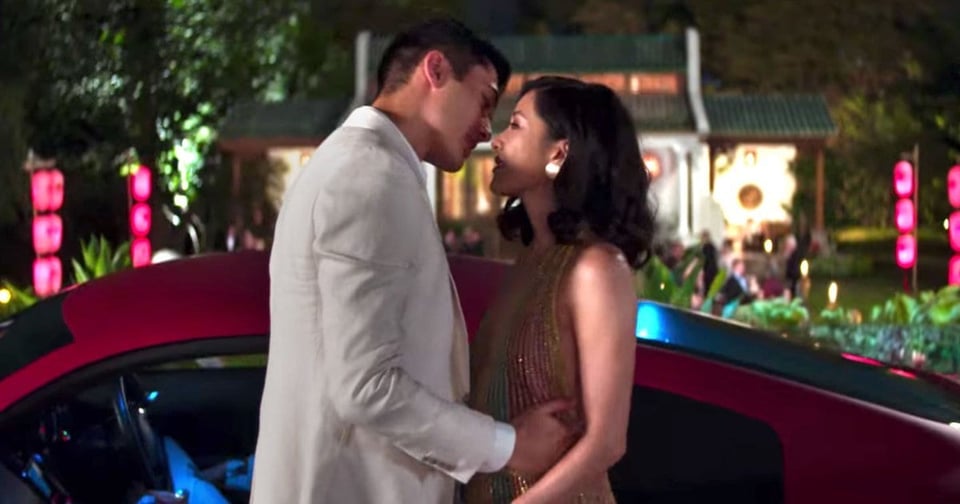
The happy ending in Crazy Rich Asians (2018)

One of the great mysteries contemplated by everyone from top executives in the entertainment industry, to lowly culture critics, is why people are willing to pay money for certain kinds of stories. Especially when so many of those stories are essentially the same narratives, with slight variations. In my letter today, we'll be exploring one powerful reason why people are willing to shell out to experience the same kinds of content, over and over.

In the two previous letters from this series about media studies, I introduced you to the ways researchers study media, and we explored the analytical breakthroughs made by one of the founders of the discipline, Stuart Hall.

Now we’re going to start analyzing media content, by looking at how we divide stories up into genres like “horror” and “science fiction.” We’ll take a deep dive into the romance genre, and investigate how we use fictional stories as a self-soothing device — for better and for ill. And yes, there will be a media studies exercise for you at the end!

#37
February 24, 2025
Read more

The man who discovered media codes and how to resist them

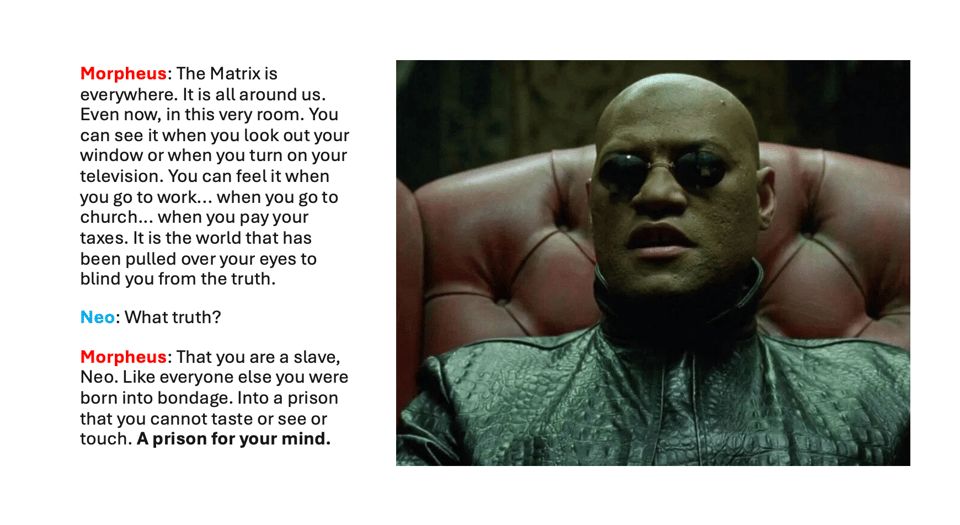
“Morpheus: The Matrix is everywhere. It is all around us. Even now, in this very room. You can see it when you look out your window or when you turn on your television. You can feel it when you go to work... when you go to church... when you pay your taxes. It is the world that has been pulled over your eyes to blind you from the truth. Neo: What truth? Morpheus: That you are a slave, Neo. Like everyone else you were born into bondage. Into a prison that you cannot taste or see or touch. A prison for your mind.”
Morpheus is ready for some discourse theory, in The Matrix (1999).

How do you analyze something that is imaginary, symbolic, and exerts its power only in our minds? This, in a nutshell, is the question at the core of media studies. There are no scientific instruments, no mass spectrometers nor telescopes, that help us measure what happens when a narrative enters someone’s consciousness and infects them with new ideas. We have to figure it out using only the meat in our skulls.

And this leads to another question. How do you analyze something that you are emotionally invested in, while it’s running? Studying media is difficult because often it means taking apart the stories that we love, or that have shaped our sense of self. It’s hard to subject our pleasures to self-aware scrutiny.

But that is precisely what we must do. Allowing a story to define you without analyzing it — well, it’s like eating a delicious candy that a stranger gave you on the street. Sure, it could be fine. Delightful, even. Or it could be really, really toxic. Don’t you want to know before you stick it in your mouth?

#36
February 10, 2025
Read more

What is "media"? A primer for Americans.

Just in time for a massive transformation in the way we use and consume media in the United States, I’ll be sending you a lot of letters. They’re based on an introductory media studies course I taught in the spring of 2024 at the University of San Francisco.

I owe a lot to my USF colleagues and students, who taught me how to teach media in the twenty-first century. My students asked unexpected questions and spurred me to rethink my approach and the topics I covered. They also introduced me to pop culture and perspectives I never would have discovered on my own, outside the classroom. With these letters, I hope to extend that classroom experience to you, my reader.

Each letter will be loosely based on a lecture from my course. I’ll also include some in-class exercises we did, to suggest ways you might explore media analysis on your own. In today’s letter, I’ll introduce you to the big themes of this series, and give you a fun introductory exercise.

Media studies gives us insights into what media is, and where it comes from. But most importantly, it teaches us how to challenge and change the messages that our media carries.

#35
January 25, 2025
Read more

Inside the dying malls of San Francisco

Over the weekend I visited two dying malls in San Francisco. I wanted to see what it looks like when retail gives way to emptiness — and what might come next.

From physical objects to virtual brands

Below you can see one corner of a gorgeous, cream-colored Art Deco building whose fate has become emblematic of San Francisco itself. Note the empty white sign on its left flank, a blank rectangle hovering above a big, square clock. It looks sort of like a giant exclamation point now, but for most of the teens, the sign read “@twitter.” After Elon Musk bought the company, he immediately began defacing the logo. First he ordered the “w” to be pained over so that the sign read “@titter.” Then he paid to have people build a huge glowing X on the roof. The sign was so bright and intrusive that the city forced Musk to remove it.

The former Twitter/X building as it looked on Dec. 7, 2024
#34
December 11, 2024
Read more

Normalize the resistance

There is a void at the core of our imaginations right now, and it is America’s future. It’s hard to know what will happen after Trump’s inauguration. Especially because the new regime’s goal is to keep us confused and unsure about what is really happening.

Weaponized confusion is a classic form of psychological warfare, deployed by militaries against foreign adversaries for centuries. It lowers morale, induces a sense of hopelessness, and makes decision-making nearly impossible. Increasingly, in the 21st century, governments are using it against their own people. In Russia, the tactic is called maskirovka (literally: camouflage); in America, Steve Bannon calls it “flooding the zone with shit.” You know the drill. Political leaders unleash a barrage of contradictory, often false messages, and we the people have no idea WTF is going on.

It’s hard to protest policies that you can’t even pin down.

This is something I thought about a lot over the past few years while I wrote Stories Are Weapons, a deep dive into the history of psychological warfare in America. What I learned is that there are many ways to resist modern propaganda: you can protect schools and libraries from censorship; keep careful records of the histories that authorities are trying to erase; and tell your own truthful stories about what is happening. (I talked in more depth about these strategies during a virtual lecture at Cary Library in Massachusetts.) But it is impossible to completely eradicate government disinformation campaigns.

#33
November 27, 2024
Read more

Casualties are mounting in the U.S. culture wars

Right now we’re reeling in the aftermath of two US psyops that reporters revealed to the public last week. One was what you might call a “classic” psyop, aimed at a foreign adversary; the other was a culture war attack, or cultop, aimed at the American people. Both were devastating – harmful to human life and liberty. Here’s how they went down.


ChinaAngVirus

An investigative report from Reuters revealed that the Pentagon aimed a psyops campaign at the Philippines in 2020, urging Filipinos not to use the Sinovac covid vaccine from China, and to avoid masks from Chinese manufacturers. This was particularly devastating for a country where the death toll from covid was tremendous, largely due to vaccine hesitancy. The Pentagon’s campaign included creating fake Filipino identities, opening hundreds of Twitter (now X) accounts under their names, and spreading memes that claimed covid was a “Chinese virus.” Many used the Tagalog slogan “Chinaangvirus” or “China is the virus.”

A screenshot of a psyop on Twitter, uncovered by the Reuters investigative team.
#32
June 18, 2024
Read more

Sometimes you have to escape your problems in order to solve them

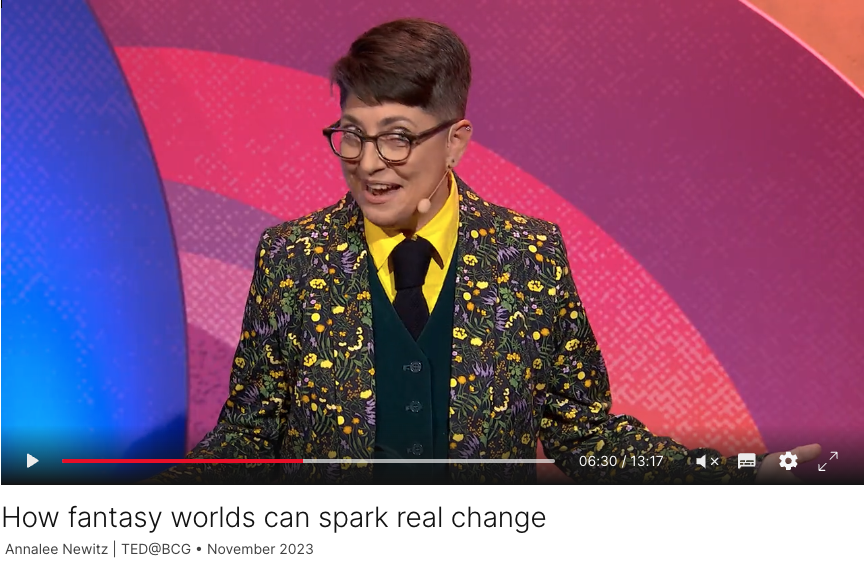
Last fall, I went to a small TED gathering in Paris to give a talk, and now it’s online! It’s about how escapist stories offer us a new perspective on the real world, and help us engage with our communities. I draw connections between cosplay, green infrastructure, science fiction, and public transit – and offer a message about how pleasure in stories can lead to real-world change. Plus, there’s goblincore. (Just watch it – you’ll see!)

This is my “guess what? chicken butt!” face.

In many ways, it’s an antidote to the problems I tackle in my forthcoming book Stories Are Weapons: Psychological Warfare and the American Mind. Though the book deals with the damage caused by culture wars and propaganda, it also looks forward to a future where we use stories to guide us in the direction of community care and repair of the public sphere. My point is that stories can be weaponized, but we can also consciously and deliberately issue a ceasefire. Psychological disarmament is possible, and escapist stories help us imagine what that would look like.

#31
May 17, 2024
Read more

How to recognize a psyop in three easy steps

Psyops are everywhere, but not in the way that you might think. Here is a quick-and-dirty guide to recognizing these mind-warping weapons in the wild. 

As I discovered while researching my new book Stories Are Weapons, psychological warfare became a professional industry in the early twentieth century, modeled in part on the new field of public relations. The basic structure of an American psyop is cobbled together out of advertising techniques, pop psychology, and pulp fiction tropes. Using insights gleaned from these sources, the military spent the early years of the 20th century figuring out how to craft messages that can hurt, demoralize, and distract you. 

Then something terrible but predictable happened. Just as military equipment was transferred to civilian police forces during the 1990s, psyops found their way into the arsenals of culture warriors today. 

Unlike bombs, however, psyops can be dodged. Once you know what to look for, your brain can treat this cultural ordinance exactly the way your spam filter treats e-mails about CrYpT0 InVeStMeNt$ – it will throw them in your mental trashcan unread, so that you can focus on constructive information.

#30
May 5, 2024
Read more

How a science fiction obsession led me to psychological war

I've spent the past three years researching and writing a book about the history of psychological warfare in the United States. It’s called Stories Are Weapons: Psychological Warfare and the American Mind, and it comes out on June 4. The subject crept up on me, and not for the reasons you might think.

It all started over a decade ago at a science fiction convention in San Diego. I was talking to the writer Eugene Fischer about obscure writers that we loved. He mentioned Cordwainer Smith, a mid-twentieth century author who had written about human-animal hybrids of the distant future who led a revolution against their cyborg masters. It sounded amazing and weird, and I made a mental note to pick up some of Smith’s work. It was only later that I discovered that Cordwainer Smith was the pen name of Paul Linebarger, an intelligence operative who wrote the first Army manual devoted to the practice of psychological warfare in 1948.

I had to know more. So I started digging, and what follows is some of what I found. I was only able to cram a few of these gems into my book, so I've got a treasure trove of stuff here that I've been dying to talk about.

Linebarger’s father was a judge in the Philippines who became a devoted follower of Chinese nationalist Sun Yat-Sen. As a result, the young writer spent long stretches of his childhood under the tutelage of his godfather Sun Yat-Sen in China, learning statecraft from his father’s circle and Mandarin in school. He grew up with two names: 林白乐 (Lin Bai-lo) and Paul Linebarger. As an adult, he published science fiction as Cordwainer Smith, realist fiction under the name Felix C. Forrest, as well as a spy novel and an unpublished pop psychology book under the name Carmichael Smith. As a professional psywarrior, he worked to overthrow the Communists in China – not for the glory of America, but to continue the nationalist project of his mentor Sun Yat-Sen. 

#29
April 9, 2024
Read more

Commodify your intelligence

There are many problems with the idea of artificial intelligence, but one of the worst is that it assumes “intelligence” can be measured objectively. And then, because Silicon Valley funds AI development, intelligence is assigned a monetary value. AI is like a mind that has been reduced to various cuts of meat, which are then sold as commodities.

That sounds like a twenty-first century cyberpunk scenario, but in fact people have been quantifying intelligence and putting a price tag on thought for over a century. IQ tests became popular in the 1910s, and were used to determine people’s eligibility for work, schooling, and even civil rights. In 1923, the Hungarian philosopher György Lukács wrote a powerful essay about how capitalism shapes the consciousness of knowledge workers. He described how “[the worker’s] qualities and abilities are no longer an organic part of his personality, they are things which he can ‘own’ or ‘dispose of’ like the various objects of the external world.” What Lukács described, ultimately, was a form of labor where we are forced to think thoughts that are not our own.

#28
November 7, 2023
Read more

I prefer not to admire problems

Photograph of the Wave Lab at OSU by Terrelynn Moffett

I'm back from a long hiatus on this newsletter, most of which was spent touring for my novel The Terraformers, and finishing up my forthcoming nonfiction book Stories Are Weapons (coming in summer 2024 from W.W. Norton!), an exploration of how psychological warfare has shaped the American mind. At last, I'll be returning to writing this newsletter regularly. My focus will be on short essays, somewhere in the gray area between a classic tweet and a classic magazine feature. I've grown impatient with the idea that one must write something extremely short or extremely long in order to be understood.

So let's get started. In June, I was invited to speak at a workshop for Arizona State University's Center for Science and the Imagination, where I joined an incredible group of writers and editors who work on "applied science fiction." I opened the workshop with a (short!) introduction to the idea. Here's what I said.

Applied Science Fiction

#27
August 11, 2023
Read more

Moose romance, sentient trains, and you

My novel The Terraformers comes out on January 31, just a week from now! I can't wait to show it to you. Pre-orders matter a lot -- they are used by booksellers and the media to measure a book's potential success -- so if you're interested in the book, please consider ordering it this week from your favorite indie bookstore.

When people ask me what The Terraformers is about, I always start by saying that the book is a multi-generational story. That's because it's a character-centric tale about environmental change. By definition, that required a long time scale, where the continent-spanning projects of one generation are picked up by the next. My characters are all part of the Environmental Rescue Team (ERT), a group of far-future first responders and environmental engineers whose credo is "everything in balance."

My characters are … a little strange. They include a lovesick moose, a flying train, an investigative journalist cat, and a hominin who grew up inside a volcano. They don’t always do the right thing, but they care deeply about serving the public good.

#26
January 24, 2023
Read more

The singularity is officially over

Last week I published a column in New Scientist about how the singularity is no longer a helpful model for thinking about the future. Here’s an excerpt from what I wrote:

I was watching the new series based on William Gibson’s 2014 sci-fi novel The Peripheral when I had one of those nerdy, late-night realizations: cyberpunk has become the retro-future, a vision of tomorrow that feels like the past. Even Gibson himself, who coined the term “cyberspace”, has stopped writing cyberpunk, a subgenre devoted to corporate dystopias centered on virtual reality and sentient AI …

As the cyberpunk vision explodes, its philosophical underpinnings are also melting down. Silicon Valley’s investment in VR and AI was pushed in part by a belief in the “singularity”. Described by sci-fi author Vernor Vinge in the 1990s, this is a hypothetical event in which technological advancement accelerates so fast that humanity is transformed. As Vinge once told me, experiencing the singularity would be like seeing new mountains rise on the horizon. Self-aware computers would be evolving so fast they could remold the planet in the time it took to eat breakfast …

The Peripheral replaces the singularity with another vision of how technology will transform civilisation. Instead of a high-tech turning point driven by powerful AIs, it imagines the “Jackpot”, a series of horrific, human-caused events that have wrecked the planet. The population has plummeted, while the rich “klept” class of the future uses quantum tunnelling to send data back to the present. There, they set up corporations that can funnel money to various groups. Some do it to change the future, but most are just amusing themselves, treating people like avatars in a game. The scenario is a literalisation of Gibson’s famous comment that “the future is here, it’s just unevenly distributed”.

The point is that AI will not usher in a new phase of existence. Instead it will make a small number of pseudo-monarchs very rich, and the rest of us will become their playthings, struggling to survive in a post-Jackpot world where resources are diminishing. Cyberpunk imagined virtual worlds based on 20th-century technocracy. But The Peripheral‘s vision suggests our prospects look quite different. Now, it feels like we are tottering towards a scenario where the most vulnerable will be abused by leaders who believe they are from the future.

One of my favorite authors, Ken MacLeod, tweeted the article, taking issue with how I’d used the word “technocracy” in the last paragraph. We had a brief back and forth, where he pointed out that technocrats were more like the heroes in Golden Age science fiction, the military-industrial complex men whose goals were antithetical to those of cyberpunk’s chaotic antiheroes. He had a good point. I should have used a different word, like maybe “techno-oligarchy” or “anarcho-capitalism.”

I had a bittersweet feeling after the exchange, thinking about how nice it was to have a place where I could talk to someone whose opinion I respect, and have my perspective changed by their comments. For a few minutes, I felt the imminent loss of Twitter keenly.

#25
November 18, 2022
Read more

Sad amoebas are studying the early universe

I can never resist a weird scenario, especially when it’s scientifically plausible. In my short story “A Hole in the Light,” published a few days ago in the excellent Sunday Morning Transport newsletter, I went deep on the weirdly plausible. The story is about a civilization of amoebas living in the early universe, right around the time that the ambient gas left after the Big Bang started to coalesce into stars and galaxies on a massive scale. I first started mulling this one over back in 2014, when I read a paper by Harvard astronomer Avi Loeb (yes, the guy who is convinced that meteor ‘Oumuamua was a spacecraft) about what he called the “habitable epoch” of the universe.

What Loeb pointed out in this paper is that we’re used to thinking of our current universe, with its galaxies and vast lightless voids between, as the most obvious time for life to arise. But what if the early universe was a better time? Billions of years ago, shortly after the Big Bang, the universe would have been full of warm gas. It could keep every planetary body as warm as Earth is in the glow of our yellow star. As Loeb told me in an interview, “For a long time, we’ve had this preconception that life is here on Earth, but the universe is dead. But maybe we should be thinking of this as a living universe. We may be relative latecomers to the game.” 

When I asked him what life might have been like in this universe of cozy, illuminated gas, Loeb said it would probably have been quite simple. “Algae,” he suggested. At that time in cosmic history, environmental conditions changed so rapidly that species would have to evolve quickly before everything transformed. It seems unlikely a complex civilization like ours would arise in such difficult conditions. But what if it could? 

I spent a very long lunch pumping ASU astronomer Jackie Monkiewicz for more details about exactly what the early universe might have looked like, especially when it came to the behavior of stars.

#14
October 6, 2022
Read more

Twitter is becoming a lost city

Hey friends. 

It’s been a while since I’ve sent out a newsletter, and it’s nice to be back! I’ve been hard at work on finishing up my novel The Terraformers (coming in January), while simultaneously researching and writing my next book, a nonfiction history of psychological warfare in the United States. And I’ve also been thinking a lot about Twitter.

That’s because the collapse is coming to Twitter. I’ve seen it before: I watched Friendster and MySpace die at the turn of the century, their once-vibrant memes decaying in abandoned accounts, comments rotting into spam. If you’ve been on Twitter as long as I have, which is going on fifteen years, you’ve seen the signs too. 

People who were once major Twitter personalities have abandoned it for other platforms – they’re blowing up on #booktok or writing paywalled newsletters or dishing out the mainstream media op-eds. Accounts with the most followers, like Barack Obama and Katy Perry, lost hundreds of thousands of followers after Elon Musk announced his takeover bid. 

#24
August 7, 2022
Read more

Mercenaries and subversives in the gender war

It's been a while since I sent out a newsletter, but I'm back to bring you irregular updates on current scientific and historical discoveries, as well as my own work. Today, we've got a little bit of both.

The anniversary of 9/11, marking twenty years of the U.S. "war on terror," drowned out news of the latest salvo in another war -- the war on reproductive rights, whose kinetic force was felt keenly in Texas after the Supreme Court allowed a state law banning nearly all abortions to stand. What's unique about this law is that it essentially turns citizens into bounty hunters, allowing them to sue anyone who "aids" people seeking abortion more than six weeks after they've gotten pregnant. Successful suits will result in payouts of $10,000 or more. Essentially, Texas is creating a new army of mercenary surveillance troops, paid to spy on their neighbors' private medical procedures.

It's not the first time the struggle for reproductive rights has turned citizens into mercenaries. In my novel The Future of Another Timeline, I describe how the nineteenth century anti-birth control crusader Anthony Comstock perfected the "citizen's arrest" for obscenity. As Amy Werbel describes in her incredible book Lust on Trial, Comstock and his followers dragged more than one woman into New York police stations in the middle of abortions. They also arrested people who published information about birth control and abortion -- many of those people, including birth control educator Ida Craddock, killed themselves rather than face long prison sentences. My characters, time travelers from the present and future, are fighting to bend the timeline toward reproductive justice. But how do you win against a force of anonymous mercenaries, emboldened by laws designed to undermine the autonomy of women and pregnant people?

download.png

#23
September 20, 2021
Read more
Older archives  
Mastodon
Instagram
Powered by Buttondown, the easiest way to start and grow your newsletter.