
A video of Angine de Poitrine performing “microtonal math rock,” decked out in their signature polka dot costumes, oversized papier-mâché masks, and cartoonish noses, recently racked up more than 12 million views in a couple of months. One of the top comments reads “AI: Humans are done with music; Angine de Poitrine: Hold my triangular Martian beer” and has over five thousand upvotes.
There has never been a better time in history to be a weirdo. Thanks to monolithic algorithms that serve us clickbait and samey pop songs, alongside AI that produces the most middle-of-the-road non-art computationally possible, people are starved for the strange and surreal, for niches within niches and, most importantly, human imperfection.
Bosch to Badger Badger Badger
Weird art goes back thousands of years. But if you were an average, middle- to low-income individual living before the 20th century, you didn’t have a lot of access to writing and paintings that pushed the boundaries. Later, when the Dadaists and Surrealists started cranking out their beautiful nonsense, it was hard to come by if you weren’t an intellectual or a collector.
Avant-garde cinema, pulp magazines, and “Theater of the Absurd” plays in the ‘50s were some of the earliest entry points to uncanny art for everyday people. Still, even those relied on financial success and acceptance by established distributors, filtering out anything genuinely bonkers.
Then came public computer networks. Anyone with consumer-level hardware could log into a Bulletin Board Systems or sign up for an email exploder to share their poetry or ASCII art or Star Trek fan fiction or whatever odd thing they were into. Then, as LISTSERV automated newsletter signups and creators figured out how to paint by coloring individual character blocks, “an easier way to distribute artwork among BBSes grew into one of the most vibrant art movements online,” Jason Scott of the Internet Archive wrote about his ANSI art collection. “Buried in these archives are hundreds of hours of work, thousands of original pieces, and the ebb and flow of a vibrant social culture.”
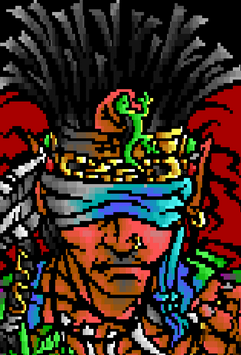
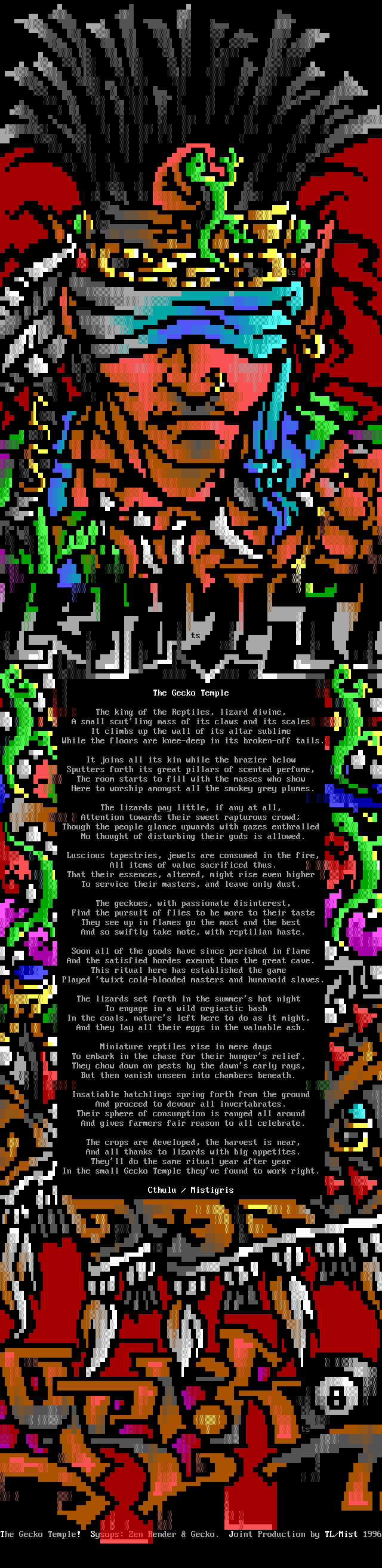
There was an explosion of idiosyncratic and experimental animations, music, games, and fiction in the 90s, often announced and delivered via e-zines and newsletters, from artist collectives like iCE (Insane Creators Enterprises). As a medium, BBSes and email “allowed [online artists] to work and talk independently of any bureaucracy or art-world institution, without being marginalized or deprived of community,” Rachel Greene wrote in a 2000 article for Artforum. Publishing and consuming content online cost nothing compared to offline creation, and with the anonymity afforded by sharing their work online, creators and their fans could be as weird as they wanted. The stock price of strange has been on a fairly consistent upward trend ever since.
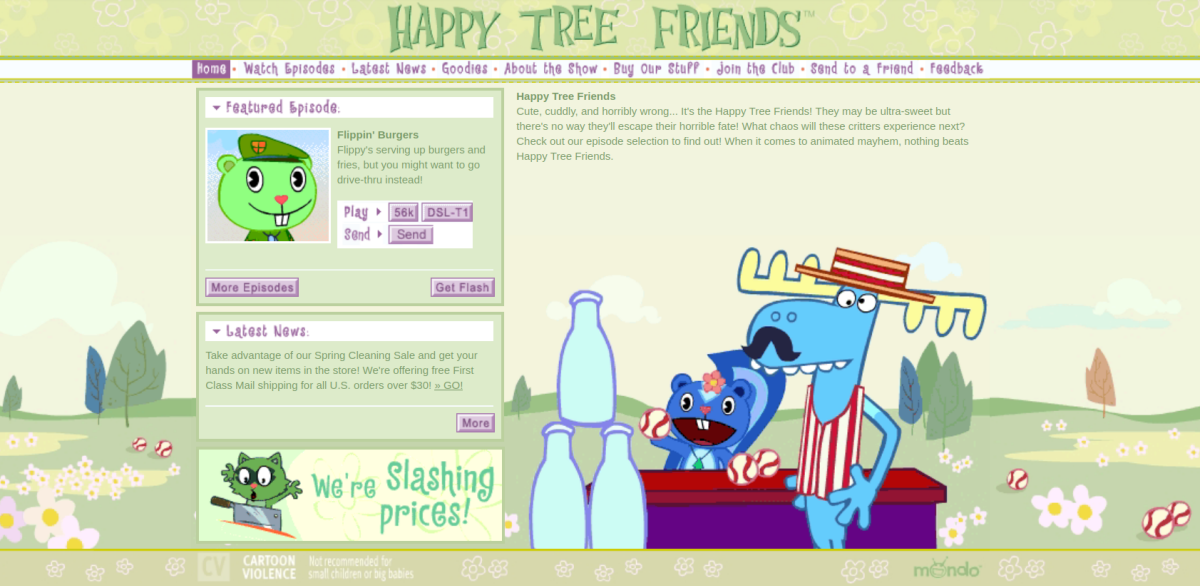
Personally, my diet of early 2000s eccentric artists came from DeviantArt, NewGrounds, and Albino Blacksheep, sites that generated millions of monthly visits before most legacy media could generate anywhere near that much traffic. These were sites that traded specifically in subversive (and looking back, often problematic) media. Videos like Salad Fingers and Happy Tree Friends were interesting because they were unlike anything you could see anywhere else, and I’m not the only one who feels nostalgic about them.
“I've been thinking a lot about the 'weird' internet and its warm resurgence into the limelight. It's clear that it never truly went away, it was just drowned out by the social media giants,” Nathan Long reflected in his The WeirdNet and Frog Corrals newsletter. Algorithmic decisions like YouTube prioritizing how long people spent watching a video threw a wet blanket on offbeat shortform content in the 2010s. And getting away from feeds filled with same-y content was a big part of why newsletters surged in popularity around that time. But the wave in peculiar content and creators we see today is something else entirely.
The new Turing test
It’s not hard to imagine Angine de Poitrine going viral on a site like eBaum's World 20 years ago. It just would have been for entirely different reasons than the popularity the band enjoys today. I doubt people would be clamoring for an interview to ask why they dress the way they do (they were booked to play the same venue twice in one week) or how the guitarist can accurately hit microtonal frets from behind a mask (a custom guitar with “oversized, phosphorescent fret markers”). Sixteen-year-old me would have watched the silly video a few dozen times and moved on. I wouldn’t have sought out the band’s story because I never would have doubted that it involved real work and effort.
“My newsletter is just "weird" enough (while still being valuable) that people stick around,” popular newsletterer Cassidy Williams recently told me on a call. “I think that kind of weirdness matters a lot to show that I'm a person, not a faceless company or AI bot.” When anyone can prompt ChatGPT to spit out some oddball poetry or Midjourney to generate an off-kilter image, we want to know the person, and the motivation, behind the art, warts and all.
Everyone makes little errors and has eccentricities that are uniquely theirs. They are hard to forge, like digital fingerprints. Before LLMs a lot of us (myself included) were conditioned to stamp out those imperfections. Clean, succinct writing and design used to signal experience and skill, whereas today they tell your audience a lot less about you than something rough and covered in your distinct smudges.
“We have to recognize that the concept of ‘reality’ has been colonized and monetized so much at this point that to decommodify our reality is to make everything weirder,” Charlie Jane Anders wrote of so-called realism in fiction. “Be cozy, cute, bizarre, obscene, looptastic. Make stories that nobody can possibly mistake for a mirror. If you find a narrative mirror, shatter it and turn the fragments into a disco ball. What lies on the other side of realism is pure exhilarating fun.” And that doesn’t apply only to fiction. People don’t want to read someone else’s words in their own voice, they want something different.
The prodigal weirdos
It is incredibly hard to re-weird yourself after years of being terminally online. “The quantitative revolution in culture is a living creature that consumes data and spits out homogeneity,” Derek Thompson wrote in What Moneyball-for-Everything Has Done to American Culture. When you climb out of the monoculture funnel, you have a built-in audience that is as interested in your work as it is in your story, in how you did it.
If you, like me, feel the urge to get back in touch with your weird self, the best place to start hanging around are the spots where creators hung out before engagement metrics smothered outliers. Find the groups, lists, communities, newsletters, and websites that let failed experiments live on the front page and top post. Write by dictation, editing and self-censoring yourself as little as possible. Actively seek out strange content you enjoy and emulate it à la Steal Like an Artist. Cross-train in creative disciplines that you're terrible at (poetry! painting!) and publish your messiest creations. Your work and your audience will get stranger overnight.
A few years ago was a much scarier time, for me, than today. LLMs seemed remarkable and magical. I’m ashamed to say that yes, their surreal and dreamlike outputs made me feel uncreative and uninteresting. But there is no story behind them, no human mess. And the more I see people online come to the same conclusion, the more optimistic I am. “Just when you think the world is all going to sh*t, two monochromatic polka dotted musical monsters give you hope.”
People want to read your words and see your art. Because it comes from you, ya weirdo.
| Image | Credit |
|---|---|
| Header photo by user @ReimsCroixRouge | Wikimedia Commons |
| The Gecko Temple ANSI art | Textfiles.com |
| Happy Tree Friends Homepage | The Wayback Machine |
.jpg)