Newsflash: The Inspectors write back
In the last few emails we've been summing up some of the issues raised in responses to the main modifications:
- Unresolvable traffic issues
- The realistic capacities of the Green Belt sites
- Unacknowledged loss of "Best & Most Versatile" farmland
- The uneven spatial distribution of Green Belt sites
This email takes a break from that series to cover something that happened this week.
What has happened
On 5 June the three Inspectors examining the Sheffield Plan sent the Council a note setting out further questions on the main modifications. The Council published it on 12 June. The Inspectors require the points in it to be resolved before they publish their final report.
What the note contains
The note covers nine points:
- The Innovation Corridor road scheme;
- The appraisal of sites put forward during the May 2025 consultation on additional Green Belt sites;
- Land at NWS30 and SES29 that Yorkshire Water owns and will not release;
- The boundary of NES38;
- The application to list the old bridge at Highfield Lane, beside SES29;
- The deliverability and timing of site HC07;
- Policy NC3: affordable housing and viability;
- Policy GS5: biodiversity; and
- Policy BG1: blue and green infrastructure.
On the first, the Inspectors are not convinced the Innovation Corridor road can be built within the plan period (to 2039) and require the plan and maps to be changed to remove it - changes that will need a round of consultation. The rest are questions the Council must answer.
What the Council has said
In a notification email, the Council describes the note as "some questions about a small number of points" and adds that "there is no suggestion the plan will be found unsound".
What this means for S13
Two of the Inspectors' questions concern SES29 directly - the proposed S13 allocation at Handsworth Hall Farm.
The first is the land inside the site that Yorkshire Water owns and will not release; the Inspectors ask whether the boundary should be changed. Less developable land means fewer homes, and an updated housing trajectory.
The second is the application to list the old bridge at Highfield Lane. The site's access scheme requires both Highfield Lane and Orgreave Lane to carry the volume of traffic from 870 homes and 20 hectares of employment land; if the bridge is listed, the Inspectors ask whether the site can be reached by Orgreave Lane alone - and whether "the anticipated site capacity remain[s] justified".
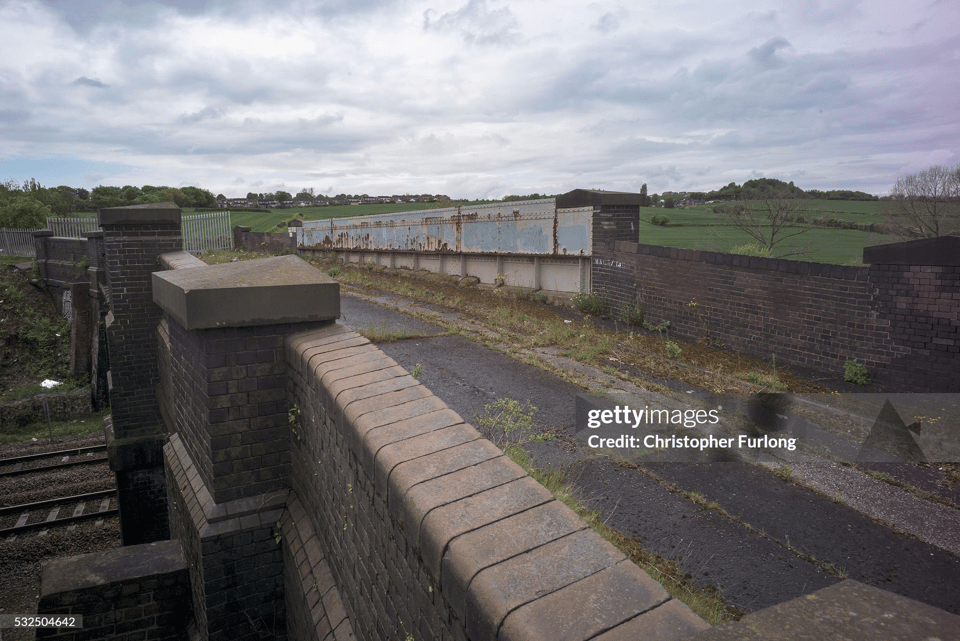
SES29 was proposed because the Council said it was needed to deliver at scale. If it cannot be accessed safely, or cannot deliver the houses claimed, the case for releasing it weakens.
A second deliverability question: HC07
The doubt over SES29 is whether it can deliver the homes claimed. The doubt over HC07 is whether it will deliver any homes at all.
HC07 is a site at Wellington Street and Trafalgar Street, in town, near Devonshire Green. The Plan assumes it will deliver 1,105 homes from 2027/28.
But the existing scheme is not viable. The developer applied to amend it to make the site feasible; the Council refused that application in February 2026. Code Living, the developer, has now told the Inspectors the site will not contribute to Sheffield's five-year housing land supply, and may remain unavailable beyond that.
The Inspectors ask whether those 1,105 homes can still be treated as deliverable.
That question has plan-wide significance. Across the seventeen-year plan period, the Plan shows a net supply of 38,318 homes against a requirement of 38,020 - headroom of just 298. HC07 alone is nearly four times that margin.
If those homes do not arrive in the plan period, the Plan goes from 298 over target to around 800 short - and cannot be effective unless the Council finds replacement sites.
Where would the homes come from?
That brings us a closely related point in the Inspectors' note: how the Council treated the alternative sites put forward during the May 2025 consultation.
During the consultation, developers put forward several sites. The Council did not allocate them and has said they would be counted within the Plan's windfall allowance if they came forward.
Former Council Leader Tom Hunt explained the reasoning: the supply already assumes a large windfall allowance, and any suitable urban sites would simply count towards it. Windfalls, he confirmed, are sites "not allocated in the Plan" - so the brownfield alternatives would be "accounted for in the windfall allowance" rather than used to replace Green Belt sites.
The Inspectors have now asked the Council to appraise those sites for deliverability and sustainability.
The problem is clear. If HC07 cannot deliver, the brownfield sites are needed to fill the gap - but the Council is relying on them to make up the windfall allowance, almost 20% of the Plan's entire supply. The same sites cannot do both jobs.
If the appraisals find those sites undeliverable or unsustainable, there are fewer sites to deliver the windfall the Council has assumed while the requirement stays exactly the same.
Those homes still have to be found somewhere, and that could put more Green Belt at risk.
A Plan with 298 homes to spare over seventeen years now has three of its central assumptions in doubt at once: the 1,105 homes at HC07, the 870 at SES29, and the windfall sites that stand in for almost a fifth of all supply.
The Plan now rests on homes the Council may not get, and on alternatives it chose not to test.
Where this leaves us
Whether the Plan is sound is for the Inspectors to decide. But their decision now rests on whether the Council can justify its housing supply assumptions, including HC07.
Two things follow.
First, the Council must publish its complete response to the Inspectors, allowing residents and councillors to review the evidence prior to any vote to adopt the Plan.
Second, the Council's new Leader, Councillor Fran Belbin, can settle the central question in a sentence: does she stand behind the claim that HC07 will deliver 1,105 homes?
Read the full Inspectors' note here.
-The Save S13 Green Belt Campaign