
The need for project management of AI
2026-10-05
Ayy lmao
Work is excruciatingly meaningful at times or it is devastatingly meaningless.
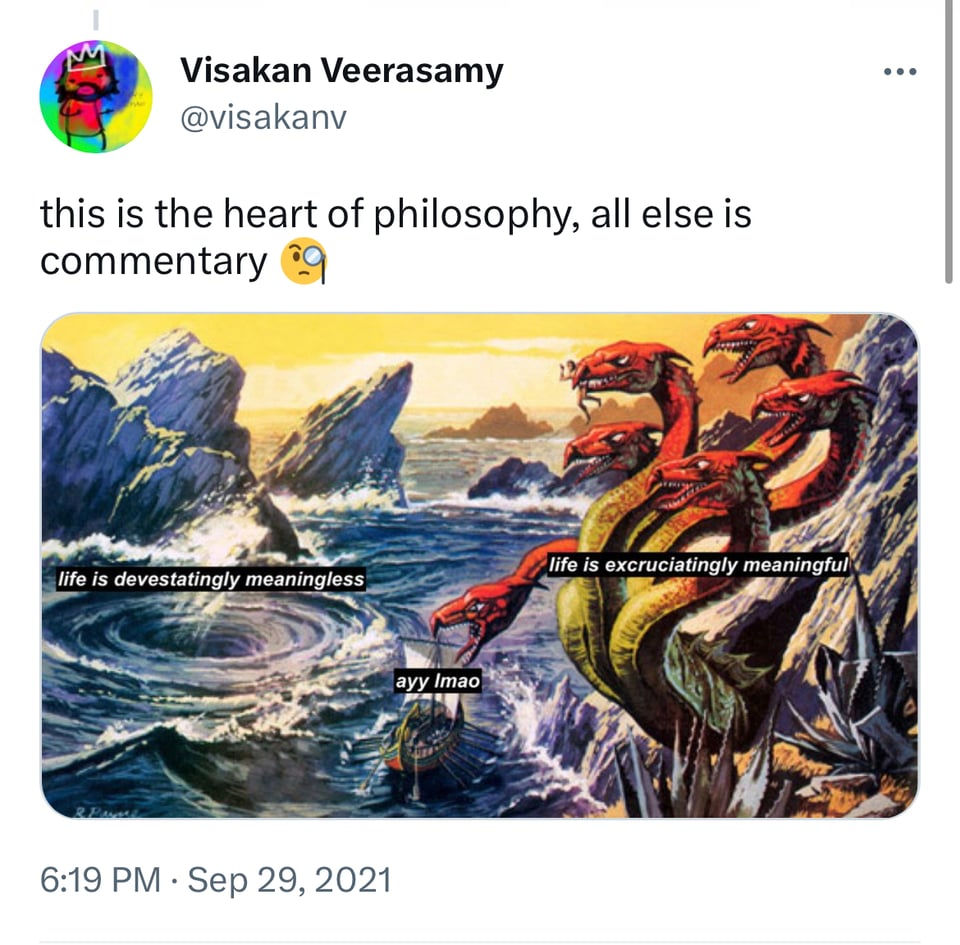
When emotions swing to the extremes, I keep coming back to this meme. It's simple and true.
A long break from work made me revisit my previous state. It’s weird how the brain re-orients itself in such a short time. It’s bizarre how negativity reinforces once you feel it in yourself.
Recent travels and work made me realise that there are parts of being an employee that fall on both end's of the spectrum. So, donning "ayy lmoa" approach allows me to navigate and focus on doing the job at my hand. There is a fiduciary duty towards oneself to enjoy the work you are doing if possible. I am in a privileged situation to do so.
I know you are not here to read my amateur thoughts on psychology. I just wanted to use the monologue as a segway to talk about working with AI.
Persons who are working with AI tools that they are handed and people who want to leverage AI are often not the same. This is not new to enterprises, the users are often not the beneficiaries. For example, you do everything related to logistics and transportation in a TMS because you need to have a system of record. So, doing it in a TMS software makes it easy for a business to track the costs, revenue and efficiency of the organisation but is not required
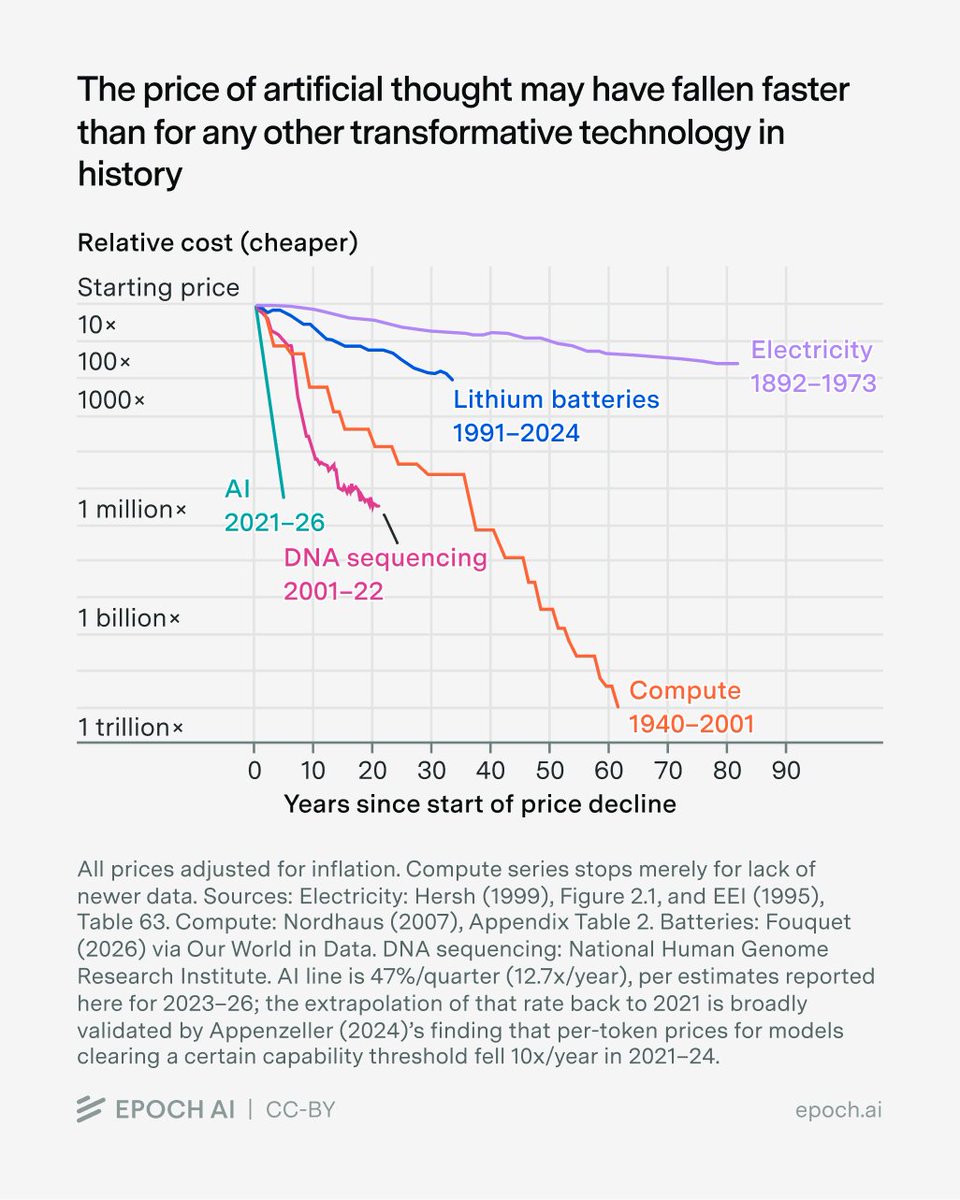
Economically speaking, using intelligence to execute work that is pennies on the dollar is a no-brainer. Yet, the experience of people using AI is frustrating to say the least. Everyone is out there figuring out how to put AI to use in their daily workflows. One thing we have to accept that chatbots are more than models and many are only using chatbots.
The end users of AI are slowly moving towards the meaningless part of their job because AI is depriving them. This is primarily due to a chatbot being handed to them.
So, what is the "ayy lmao" approach to working with AI?
In order to get to it first we need to understand the source of all digital software in legacy domains like Logistics and Transportation.
The genesis of all software problems in this space stems from trying to reproduce what happened, is happening or will happen into a digital abstraction. We use software to visualise this abstraction. Yet, we don't transform the process flow. I keep coming back to this essay from Amod Malviya where he talks about the cost of abstraction.
"Computational thinking means more than being able to program a computer. It requires thinking at multiple levels of abstraction." - Jeannette M. Wing
Jeannette was not alone in recognising this. Richard Hamming in his fantastic book The Art of Doing Science and Engineering (an absolute must-read for any engineer, scientist, or any thinking person) makes similar arguments about the style of thinking.
Both Jeannette and Hamming go on to emphasise the importance of Foundations and the Method of thinking, and how it's pervasive to problem solving in general.
If you are seeing the process needs to change but don’t have the organisational power to make a change. I would urge you to limit the scope of what AI should be in the current workflow. Limit it to the level where it just becomes a component in your current workflow.
So, the ”ayy lmao” approach is to understand the AI tool that is available and ratio your utilisation to what is capable . Chatbots can follow non-sequential chain of thought. Which means instead of learning software’s UI, you can just talk to it and reproduce the work in non-deterministic way. Basing on the provider and how they set it up, it can either be delightful or frustrating.
If you are the management looking to leverage AI. Its a a different story, agentic AI is now being positioned to solve all problems in enterprise while consumers are all using chat agents to execute their personal lives (mostly travel planning )like Muse, Instinct or dots.
If we move to a layer of abstraction above, organisation in itself is a form of abstraction. Its where people are individually co-ordinating activities in a shared boundary. There are no physical boundaries to where or who can work as long as there is a contract of employment.
Similarly, the goal of software is to represent the physical world in an abstracted way and help do the job more efficiently. When we interacted with the previous era of software in this space. We worked within deterministic processes that would execute the step we initiate. It was as designed and I wrote about the challenges in understanding systems at work designing such products as well.
When we move to digital abstraction, we never revisit what are the inherent benefits of computational thinking. We instead constrain it to the physical steps and status quo process.
An example that is very close to my operating area is the creation of a strategic bid with a chatbot. A quick introduction to those who don’t know, companies who want to move freight decide to have contracts of price with all their carriers. This reduces the risk of costs extending beyond budget. Typically, running a strategic bid was a challenging product. Previous era of software made it easier by enabling customers to manage the bid event with all their carriers. Now, they would like to see a chatbot in the UI to create the event.
What a real agent in this space would do is change the entire process of Strategic bids. It will take an agent 5 minutes to create an event and run it. What if we run a weekly strategic bid? Carrier won't engage. Why won't they engage? Submitting a 1000 lane bid is cumbersome, what if the bid event is only for a single lane? Carriers could easily participate and submit their bids. Who does it help? Preferably all but even if it is helps one side, it is worth the shot.
Computational thinking is about leveraging the underlying capabilities of AI agents and the technology and utilising it to achieve the goal. In the case of strategic bids, stay within the budget.
This is not the first time I have written about this. If AI has to be fully leveraged, we need to replace labour. Other avenues for leveraging AI is to do the work that was never done due to constraints. There are frameworks in place to help facilitate these conversations.
There is irony in automation without proper change management towards people and processes. Any management who is hoping AI will solve it for them is in for a rude awakening.
Round up
It was a conference week and AI was the main topic.
I presented a bunch of theory topics and facilitated a roundtable. What was interesting was asking the fundamental questions shows how wide the spectrum of adoption is when it comes to digital technology. It will be interesting to see what happens next year when we do the same with AI adoption.
Everyone wants to talk about AI and put it to use. So, more and more people are willing to get trained in it. That’s ironic , don't you think. I will write more on this irony and how companies serving customers with AI agents need to address it.
Links that resonated
No reading was attempted this week.
Sign off
The week started early. I had to travel on Sunday and 3 days of immersed conference experience is over-stimulating. You are drained at the end of it but you need to get back to work as soon as you are back. I am back on the road again and engaging in many more conversations.
Incubating change management is the underlying topic that we all need to address as we navigate work. If you take anything away from this post, it is to focus on abstractions that we add to our work and how it changes with new technology like AI.
I like Visa's frame of unlearn catastrophizing, learn project management. We all need to do it to leverage AI. "Ayy lmao".
Signing off till next time,
Vivek, learning project management
Don't miss what's next. Subscribe to On the side:

