Gnamma

Archives
Subscribe

Gnamma

Archive

Gnamma #107 - Scottish Slosh

This edition of Gnamma is something I pitched to Nordic Surfer's Mag after my trip to Scotland in February. TBD if it gets published, so I want to share it here as well. Thanks to those who helped me afford my conference trip: I spent my credit card points on a 2-day surf trip at the end to the northeastern tip of Great Britain when the conference wrapped up! Hope you enjoy.


There’s a concept in anthropology called the “encounter,” typically used to describe interactions between people from different cultures, or “everyday engagements across difference”. The term originated in descriptions of colonial-era collisions between the colonizers and the colonized, including moments like Europe’s early glimpses of surfing via Captain James Cook’s visits to Hawaii. Now, the encounter's ethnographic value has grown into works on decolonization, beyond east-west/north-south dualities, and even expanded into nonhuman relations. Although the exotifying and academic weight behind the term evokes something more akin to Madagascar than anglophone world banality, I found myself, a white American, thinking about the word as the BBC chattered away in a baby-blue Fiat 500 careening through the wetlands of northern Scotland—my lanky ass and a rented midlength wedged inside.

My Scottish rendezvous represented the earliest ascent of spring, the end of February, during a couple of almost disconcertingly sunny days. I had just weathered my first Swedish winter, and I had not surfed in many months since my last trip back to California. In the sequence of grief, my relationship with surfing was moving from "depression" towards "acceptance" with the new routine. I aspirationally squeezed out my entire stock of credit card points to get a rental car and budget hotel, adding a few days at the end of an easy-going week in Glasgow for a work conference to pursue the surf.

#107
May 17, 2026
Read more

Gnamma #106 - Mesoscale Freakology

In my last newsletter, I implored you readers to consider the "freakology" of wetlands, particularly those heavily impacted by development and human activity.

Screenshot 2026-04-23 at 21.16.07.png

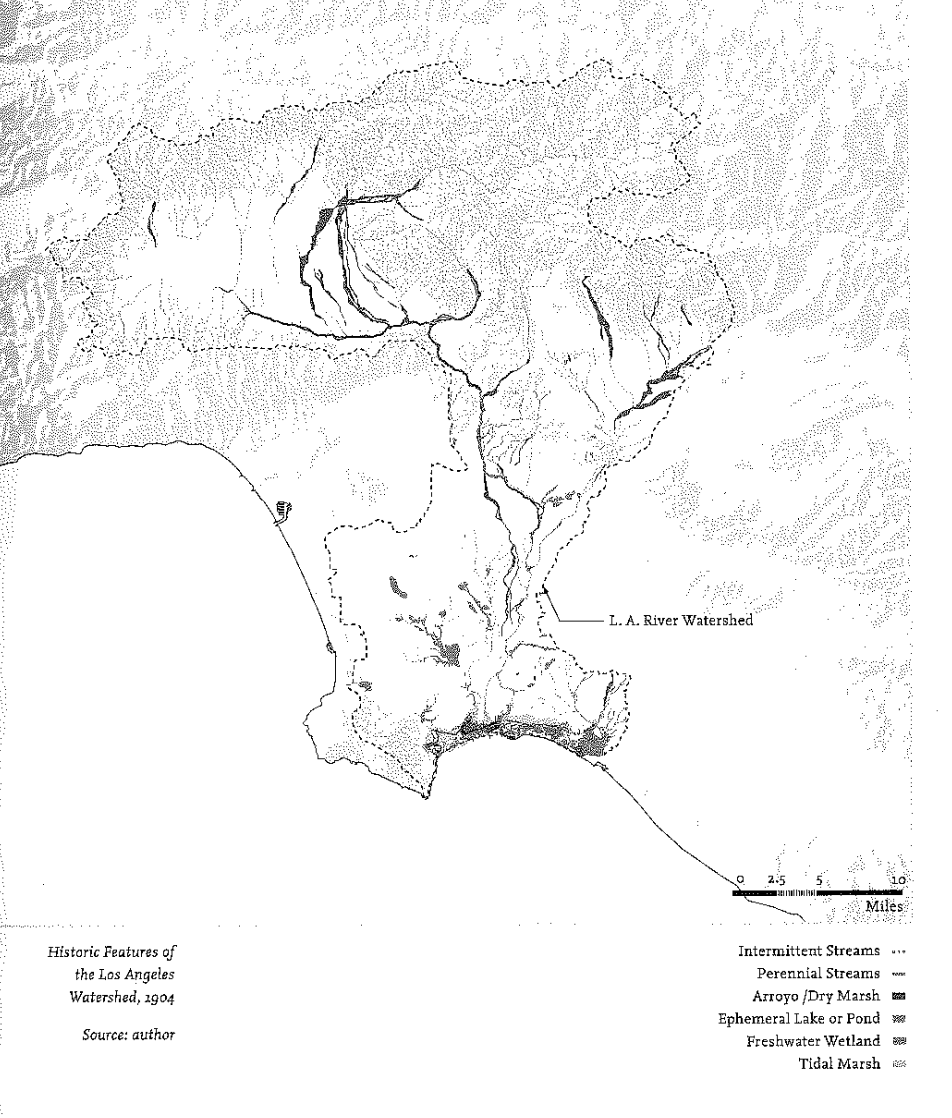
I'm borrowing here from David Fletcher's "Flood Control Freakology" (2008), an essay and book on the Los Angeles River, which you may know better as a big concrete channel featured as a place to drive your car in the movies. It no longer looks like the prototype of a wetland. Despite the pavement, the pollution, and the infrastructure, ecology remains: there are birds, plants, even fish making homes in the place. He encourages embracing "freakology" over "bucology," removing any expectation that this place would be "natural" in the same way that some unpopulated mountain valley might be; he also extends "ecology" beyond the biotic and into the social and political. Chris Reed writes:

Fletcher’s “freakologies” are compelling examples of the general phenomena and arguments of the book. Freakologies — Fletcher’s term — are the offspring of dynamic environmental flows (of water, minerals, plant communities and animals) and the manifestations of artificial infrastructural systems (concrete channels, steel bridges, vertical walls and stormwater and sewage discharge pipes) that sustain LA’s economy. These “freak ecologies” include: emergent vegetation nurtured by the scarce organic nutrients and silts caught up in the inorganic debris dumped into the channel (junk cars, shopping carts, old clothing, plastic bags); squatter camps under bridges and in storm drains, their occupants cashing in cans and bottles carried by floodwaters at recycling centers, washing clothes and bodies in the low-flow channels, lighting combustible waste and logs at night to make communal bonfires; new stands of mixed native and exotic, ornamental and agricultural plants swept downstream from yards and nurseries and nature reserves, feeding off effluent from treatment plants and car washes; bat colonies and swallow nests, tucked beneath overpasses, that help control disease outbreaks by consuming vast quantities of the mosquitoes that breed in the river’s standing water; and the largest concentration of black-necked stilts in the United States, which feed off the invertebrates that thrive in the river’s algae fields — fields that themselves result (accidentally) from the channel’s shallow configuration and the high volume of nutrient-rich sewage discharged into it. This is the stuff of the networked, infrastructural city — not an idealized, romanticized, riparian past that could no longer thrive here — and this, according to Fletcher, forms the basis for a rich discussion of its future.

#106
April 23, 2026
Read more

Gnamma #105 - Wetland Cybernetics

"Cybernetics" is a word that misleads us in today's world due to what "cyber" has come to connote. Cyber does not necessarily mean anything about the electronic or the digital or the online, but rather evolved from a Greek word for "steersman"—someone operating a boat. I often think of a sailboat, making subtle changes with the lines and the rudder to stay on-course while responding to changing currents and winds. This etymology invokes feedback systems between an operator and their machine, and perhaps their environment:

The word “Cybernetics” was first defined by Norbert Wiener, in his book from 1948 of that title, as the study of control and communication in the animal and the machine. The term cybernetics stems from the Greek κυβερνήτης (kybernētēs, steersman, governor, pilot, or rudder) [source]

Now, Wiener's term cybernetics has come to represent a broad swath of research about causal and feedback systems (see wikipedia) across many disciplines and cross-disciplinary spaces, from ecology to organizational theory and beyond. The study typically focuses on the organizational structure of the focus system(s), and the feedbacks between their components.

One of my favorite aspects of wetlands is that they are complex systems, with various interaction parts and processes and thus lots of opportunities for feedback loops. Wetland landforms or communities often exhibit what we might call "self-organization:" that is, their "elements interact to produce a global function or behavior." Take a look at a satellite image of this reedy wetland portion of the Cameia in Angola and tell me there isn't some kind of patterning algorithm at work, making small-scale dynamics evolve into this large-scale pattern:

#105
April 5, 2026
Read more

Gnamma #104 - Salted Just Right

Salt occurs naturally all over planet earth. When rain falls, the water flows into ponds, aquifers, and rivers, and as it flows, salt dissolves into the water. The salt then moves along and ends up wherever the water goes: typically, this is into the ocean. Our oceans have accumulated salts since Earth’s primeval stage, and salinity levels have changed in response to landmasses moving around, rivers discharging more or less water, and glaciers taking water in and out.

If surface water doesn't end up in an ocean, it will probably evaporate, leaving the salt behind on earth in a terminal "evaporite" basin. This is why terminal lakes—like Utah's Great Salt Lake and The Dead Sea, which do not drain to anywhere—can become salty. Salt in the landscape varies with geologic history and soil characteristics, but in general most places on earth are not defined by their saltiness. The unique cases, like salt lakes, salt "glaciers," and brine pools, are not very common. (However, there is a subfield of geology on salt tectonics!)

image.png From Modern Farmer.

Despite this truth, many places on earth are undergoing a slow salinity crises, where the soil salt levels are increasing to levels unsurvivable by plants. Or, at least, the plants we want to survive, like food crops. Increasing salt levels in agricultural soils is happening for a few reasons:

#104
March 13, 2026
Read more

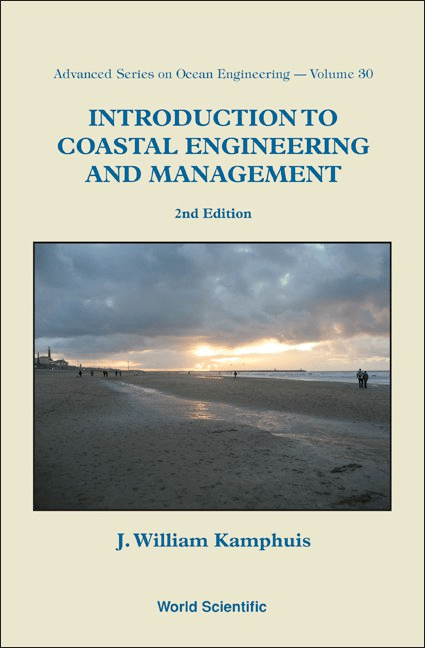
Gnamma #103 - 21st-Century Coastal Engineering

Thanks to everyone who has helped fund me to go to the Ocean Sciences Meeting later this month—your donations are helping a lot financially (and emotionally) to get all my PhD work out in the world! Also, if you want to get a big-picture idea of how wetlands and sediment resources have evolved over time in San Francisco Bay, consider attending my webinar for the American Association of Geographers: The Wetlands of San Francisco Bay: Shifting Sediments and Murky Histories.

For me, now is an interesting time to return to my work on this marsh. While my current project is much more about (freshwater) wetland hydrology, my previous work is closer to coastal engineering. The difference between these things can be typical academic hair-splitting, but at its core, engineers are "scientifically-trained technician[s] in public service," according to this history of coastal engineering. Coastal engineers are a subset of civil engineers focused on coastal processes. Engineers have a nerdy focus and applied, beneficial intent: in my work, it was about understanding the technical details of successful marsh restoration.

image.png

"Coastal Engineering" as a distinct discipline is a relatively young field in the USA. As that history document linked above attests, people have made technical decisions to modify the coasts for eons, often towards maintenance of ports, but the field only became somewhat codified in the first third of the 20th century. Coastal engineering splintered off of civil engineering when American beaches began eroding, as they suffered the long-term consequences of jetties installed on beaches and dams installed upstream, and money was put towards management of these problems. A heavy injection of research money then came from the military during World War II, to research wave conditions to plan the Normandy Landings. This influx of purpose and organizing caused decades of ripple effects in coastal engineering, allowing the field to mature in the 50s, 60s, and 70s. Because they have jurisdiction to manage most of the coastal waterways and coastal protections in the United States, The Army Corps of Engineers is one of the leading institutions of the field: their 1984 Shore Protection Manual is still (!) a go-to reference.

#103
February 12, 2026
Read more

Gnamma #102 - Eroding Marshes and Vanished Oysters of San Francisco Bay

I wrote in autumn about my PhD dissertation work in Gnamma #95 - How A Marsh Falls Apart. My research was mostly a close examination of a single marsh in South San Francisco Bay—Whale's Tail Marsh South—and the physical forces affecting its shape (geomorphology) and evolution. One part of my dissertation work has continued to puzzled me, though, a lingering question about the fate and history of the place. Here I will share why, and my best running hypotheses as to what is going on.

Before I jump into it though, I have a plea. Now that my PhD work is all published, I am sharing it at the AGU Ocean Sciences Meeting in Glasgow, Scotland later this month! But, due to the weirdness of academic funding timelines, and because I'm showing "old" work, I couldn't get much any financial support to attend this conference. It's crucial that I get my ideas out there and network with people at conferences like this, so I'm self-funding myself to go, but to a cost of about $1000. If you are a fan of my work or want to help support this last dribbly bit of my PhD, please consider giving $10 to offset these costs!!! I have set up a GoFundMe here (link fixed!). For those of you who already support this newsletter financially, I am putting your support from December, January, and February towards this cause, no need for any more! Thanks a billion. Now back to the science.

Screenshot 2026-02-01 at 08.50.05.png Google Earth screengrab of the marsh in question.

Whale's Tail Marsh South, hereafter "WTMS," is a small marsh with levees on its north and east sides. It doesn't really have a south side, due to its wedge-like shape and the outlet of a tidal creek. The western edge faces the water of San Francisco Bay, and this geography is critical because the marsh is hemmed-in. The levees prevent the marsh vegetation from growing in any direction except out towards the water. Unfortunately, the nearby waters of San Francisco Bay has some of the biggest waves in the region, because the dominant wind direction goes directly across the widest part of the Bay here: the when winds blow across long distances of open water—called "fetch"—bigger waves can be made. In my research, I linked these waves to rapid erosion of the edge of the marsh. So this marsh's one unconstrained boundary is actually retreating, moving landward at a median pace of 1.5 meters per year from its western edge (see my paper!). Be aware, the marsh itself is only about 300-500 meters wide. With these facts together, this marsh is on a short timeline to self-destruction, as I also wrote about in Gnamma #79.
#102
February 1, 2026
Read more

Gnamma #101 - "Wetlandscapes"

The scientific research project that is currently employing me is called "Disclosing Overlooked Wetlandscape Ecosystem Services" (or DOWES—see more info here).

This jargon-laden title is a mouthful, but underlying it are some questions that are not so complicated:

  1. when do wetlands depend on the broader landscapes around them to work and be healthy?
  2. what things do wetland(-scapes) do that we have previously overlooked or under-quantified?

The first question is the one that explains the neologism “wetlandscapes.” This term correctly evokes “wet landscapes” and “wetland scapes.” The DOWES team is currently writing a manuscript to extend existing definitions of this term, given lots of potential confusion.

#101
December 19, 2025
Read more

Gnamma #100 - Liquid Computer

Much as I’ve heard over years about water memory, I’ve also heard whispers about “water computers.”

Before computers as we know them today went electronic, there were machines doing computation in a variety of analog ways. Analog computing just means some mechanical activity to do the computing: doing addition with pencil on paper is analog computing. We can make machines that automate this process, ranging from an abacus (still analog) to GPUs (if we go electronic). The Inca did it with quipu. What exactly “computation” means is honestly up for debate: transforming states/values in structured ways? Data getting reworked? But let’s sidestep that for now. Information goes in (two and three), computation happens (plus), information comes out (five).

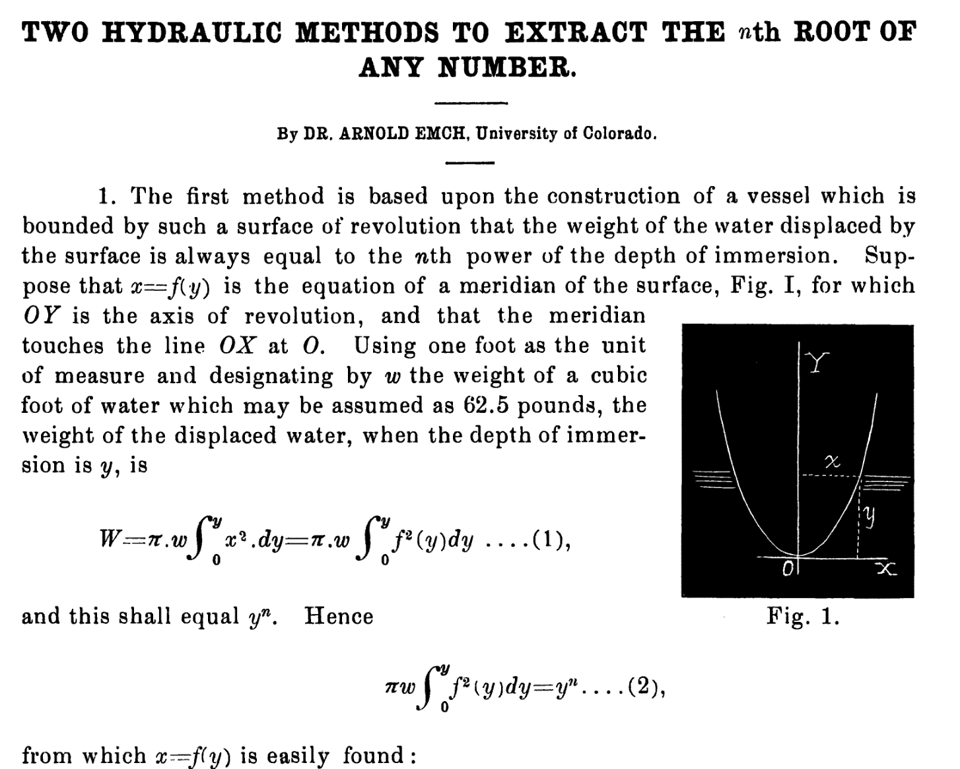
As I learned in this great history of liquid computing (2019) by Andrew Adamatzky, a nifty technique for factoring was published in 1901:

Screenshot 2025-11-17 at 23.26.56.png

#100
November 19, 2025
Read more

Gnamma #99 - Sandbox Earth

If you like Gnamma, please consider paying for a subscription! You can modify your subscription on the signup page.

One of the biggest perceptual changes I’ve had in my journey to become a landscape scientist is seeing the surface of the earth as a process of continuous change. Some landscapes change quickly, and some move slowly—it depends on what they are made of and the forces exerted on them, like rain and wind (and plants and bulldozers).

I like to think of the earth surface as two dynamic layers between the earth’s interior and the atmosphere: bedrock and soil. This is a big linguistic simplification that would invoke ire by both soil scientists and geologists, probably, but let’s keep it straightforward. “Bedrock” is hard rock, part of the geologic cycle, determined usually by large-scale geologic processes like volcanoes and tectonics. Bedrock can be eroded into particles, which then move around and mingle with particles made by plants (and corals and stuff) and other little solids, and this mixture we can call soil.

#99
November 2, 2025
Read more

Gnamma #98 - Water Memory

There is an idea that floats around homeopathy called “water memory:” that water can “remember” substances dissolved in it (or antibodies) even after extreme dilution. Put another way, it’s the idea that minuscule aspects of something in the water are carried by the entire body of water sufficiently to matter for medicinal purposes.

The concept was published in a reputable scientific journal in 1988 and then debunked over following decades. However, due to the publishing whiplash and the great marketing ideas that use it to justify various products, it has persisted. (There is a decent history of it here.) But don’t forget: you can just dilute something out of meaningful existence.

In my last semester of grad school (two years ago! yikes!), I took a seminar on stable isotope techniques (taught by Todd Dawson of the Center for Stable Isotope Biogeochemistry), and I share this because stable isotopes in hydrology felt as close as you can scientifically get to the idea of water memory. It felt like magical science. So let me explain!

Let’s start with what an isotope is. All of the elements in the periodic table have default atomic mass values. Those are the little numbers in the bottom right corners of each element in this graphic:

#98
October 18, 2025
Read more

Gnamma #97 - Clothes for Earth

I love clothing! I've always been very picky about what I wear, and in high school I got the "self-edge" denim bug while attending a fairly formal prep school, the combination of which made me care a lot about what I wear. Even now, I probably spend a couple hours a week looking at clothes online, though often just eBay resellers at this point.

But clothing and fashion are weird and concerning. Fashion gets pretty navel-gazing, so is it worth thinking about at all? See this Blackbird Spyplane response on that. And the clothing industry, particularly in fast fashion, is insanely wasteful. Seriously, bonkers-level wasteful. There's waste in manufacturing, slop between the manufacturers and retailers, heaps of clothes that go unpurchased, massive throw-out culture by consumers, and weird global supply chains leading to dumps of clothes and fabric scraps all over the place. These patterns have big environmental impacts.

image.png Image from Al-Jazeera in the Atacama Desert, Chile. Martin Bernetti/AFP.

Beyond just a waste of resources, lots of clothes have "forever chemical" (PFAS/PFOA) in them, affecting people directly and by entering our waterways. Clothes leave other remnants in the environments in the form of microfibers: clothing degrades slowly as you wear them (or when they're in a landfill), turning into microfibers or microplastics, which can be quite mobile and affect ecosystem health, including us.

#97
October 5, 2025
Read more

Gnamma #96 - Uh, What Are Tides?

Here in Stockholm, an element of the city that has surprised me is how much of the built environment—bike paths, big regal buildings, transit, shops and restaurants—is built right at the water level. As I have walked around, the water has been as little as 20 cm below the pavement I'm standing on, across both the "lake" side (west) and "sea" side (east), per Gnamma #94. Given that I think about flooding and sea level rise a lot in my professional work, my immediate response to this has been "holy shit! is anyone worried about this?"

image.png Tunnelbana station right at lake level in Stockholm. Photo from here.
Thankfully, the answer is yes, the city does think about it, and Stockholm actually doesn't have immediate high risk: the lake level is kept steady by managing flow through the sluices/locks, and the region is undergoing uplift keeping up with sea level rise (i.e. the relative sea level rise is very small), at least for now for now. The city is also investing in some semi-long-term (until 2100) infrastructure plans to help manage.

Part of my surprise with this always-near water level is also because I've gotten accustomed to living in a place with medium-sized tides: San Francisco has tides that can be bigger than 2 meters, representing daily changes in water levels taller than I am, and a built environment that reflects these variations. In places with tides, everything needs to be built above the highest tides, at peril of frequent flooding.

#96
September 28, 2025
Read more

Gnamma #95 - How A Marsh Falls Apart

Over a year and a half after finishing my PhD, all of my work is now published! Academic publishing typically takes forever, due to rounds of peer review and fiddly logistics and extremely high costs—but more on the silly world of contemporary academic publishing in another post. Today, I'm going to summarize what I wrote about in my dissertation.

Where I got my PhD the requirement is that a dissertation has at least three components that are substantial enough to become academic papers. I wrote three chapters, each of which has now gotten published. They are all open-access, so you should be able to freely download the PDFs! The absolute shortest summary is that I asked three questions:

  1. Where are there waves in protected bays, and what makes them? (paper 1, 2023)
  2. How do those waves cause erosion/retreat at the edge of a salt marsh? (paper 2, 2024)
  3. When a salt marsh erodes from waves, where does the mud go? (paper 3, 2025)

I wrote the first paper after doing field work in Tomales Bay, California, with John Largier at U.C. Davis Bodega Marine Lab. He's a coastal oceanographer who has worked in Tomales Bay for decades and he knew the system well. The project began by trying to understand the beaches in the bay, but evolved into a study on the waves.

#95
September 14, 2025
Read more

Gnamma #94 - Stockholm Municipal Hydrodynamics

Hi everyone! I am now writing from Stockholm, Sweden. I just began another postdoc research position in the Department of Physical Geography at Stockholms Universitet. I'm working on a project here about wetlandscapes–a neologism that deserves another post sometime soon, but I'll write that once I get some clarity on what I want to do in the job. For now, I'm getting to know my new city.

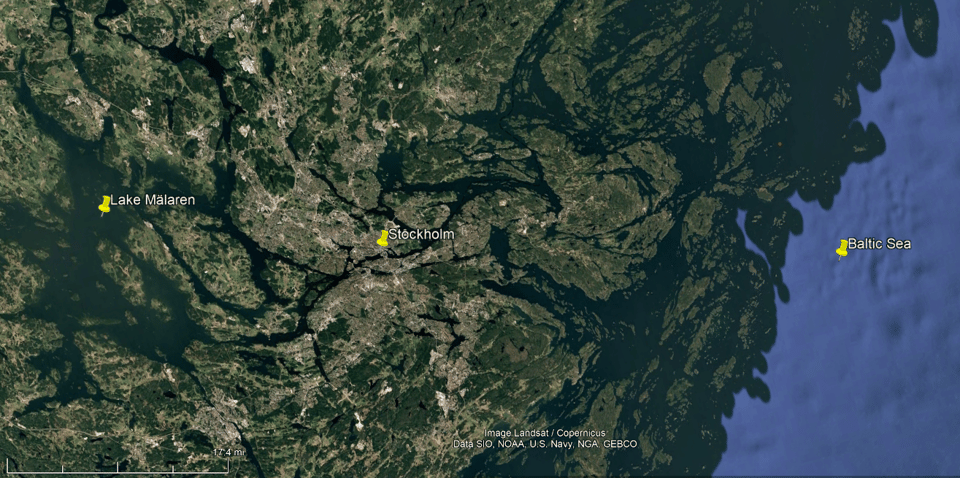
Color RGB aerial image of Stockholm and its surrounding area, with Lake Mälar (Mälaren) labeled to the west and the Baltic Sea labeled to the East.

Stockholm doesn't have much for surfing, which makes me terribly sad, but it is perhaps even more of an amphibious urban area than the Bay Area. As you can see from the satellite image above, Stockholm sits within a very watery landscape. To the east is the vast array of islands called the Stockholm Archipelago within the Baltic Sea. To the west is an interconnected landscape of lakes, river channels, and wetlands, dominated by the enormous area of the lake Mälaren, which supplies drinking water to Stockholm.

Map focusing on the blue-water extent of Lake Mälaren, with urbanized areas indicated within the landscape in red. Figure from Wikimedia.

#94
August 31, 2025
Read more

Gnamma #93 - Amphibious Possibility

My professional work right now mostly revolves around remote sensing of the dynamism of the wetlands in the Okavango Delta, a vast inland river delta in northwestern Botswana. It's a unique system, because most river deltas pour into oceans, seas, or lakes... but this one just ends. The water evaporates into the Kalahari desert air or percolates deep into its sands or gets sucked up by the trees of the area enduring the arid climate.

photo from wikimedia

The Delta also has a distinct hydrology. The rainy season here is approximately December-March, during which the entire landscape gets rain and the landscape gets green. Simultaneously, the Angolan Highlands, a plateau northwest of the Okavango Delta, collects a ton of water, which moves slowly through its forested landscape and spongy peatlands. This water then flows into the Okavango 3-5 months later, allowing the Delta and its wetlands another pulse of blue and green, in the peak of the hot summer. A recent paper called this service the "water tower" of the Okavango Delta, providing water when it is scarcest and turning the landscape into a vast oasis.

The magic of wetlands is their in-betweenness. They aren't totally wet—that's lakes and oceans. But they aren't very dry, either—that would make them a terrestrial ecosystem like shrubland or something. The Okavango is a huge area (~20,000 square kilometers) that's sometimes covered in a meter of water, sometimes completely dry, and everywhere in-between in both water depths and duration inundated. It's complex! Hence the need to study these dynamics!

#93
June 20, 2025
Read more

Gnamma #92 - NOAA's Ark

The National Oceanic and Atmospheric Administration (NOAA, pronounced like “noah”) is one of many agencies under enormous budget collapse from the Trump administration right now. While all of the scientific agencies in the USA essentially remain under a hiring freeze, they are also looking down the barrel of massive budget cuts that will addle research progress (if not virtually completely stop it, depending on the pace of necessary agency restructurings). This blockage in the research infrastructure of the United States is likely to halt a generation of scientists as they seek funding for graduate school, careers as federal scientists, and strategic guidance for the fundamental and applied research that keeps the whole shebang moving forward.

The United States has been the global hub of federal-level science essentially since World War II, a dominance supported by many state-level actions as well. That soft power has eroded somewhat in some recent decades particularly as China and India have produced STEM graduates at paces inconceivable by American standards, and many other [generally wealthy] countries have developed robust research arms (like CSIRO in Australia) and their own niches. But still, the income levels for scientific work and breadth of science funding in the US have supported robust workforces here, and the capacities of our federal-level scientific products have allowed the United States and its agencies’ data products to center themselves for global scientific development. It is very likely that we are now at a turning point for this pattern.

I am biased towards environmental science work of course, but let’s entertain an example. The National Weather Service is a federal agency under NOAA that produces weather forecasts (building upon NOAA’s various climate data pipelines and the computing resources to run the large-scale models). These forecasts and datasets inform all sorts of things: the temperatures and winds you see in your daily weather forecasts; farmers’ growing-season predictions; water resource management; and mountaineers’ avalanche awareness procedures. It’s unlikely that these services stop outright, but very likely that they are going to get a bunch worse as described in this solid article in Mother Jones (see also in NPR. This means potentially less drought predictability for farmers, tighter controls on water use, and more people dying in avalanches. Some of these data streams are only in the US, but data produced in the United States such as weather balloon sondes provide backbone data to climate models that are global in use. Still, closer to home, my cousin (who has a little rain-prediction gadget in his house) said he considered using the Norwegian global meteorological model due to forthcoming changes in the National Weather Service, before he ultimately found a more local data stream from here in the East Bay.

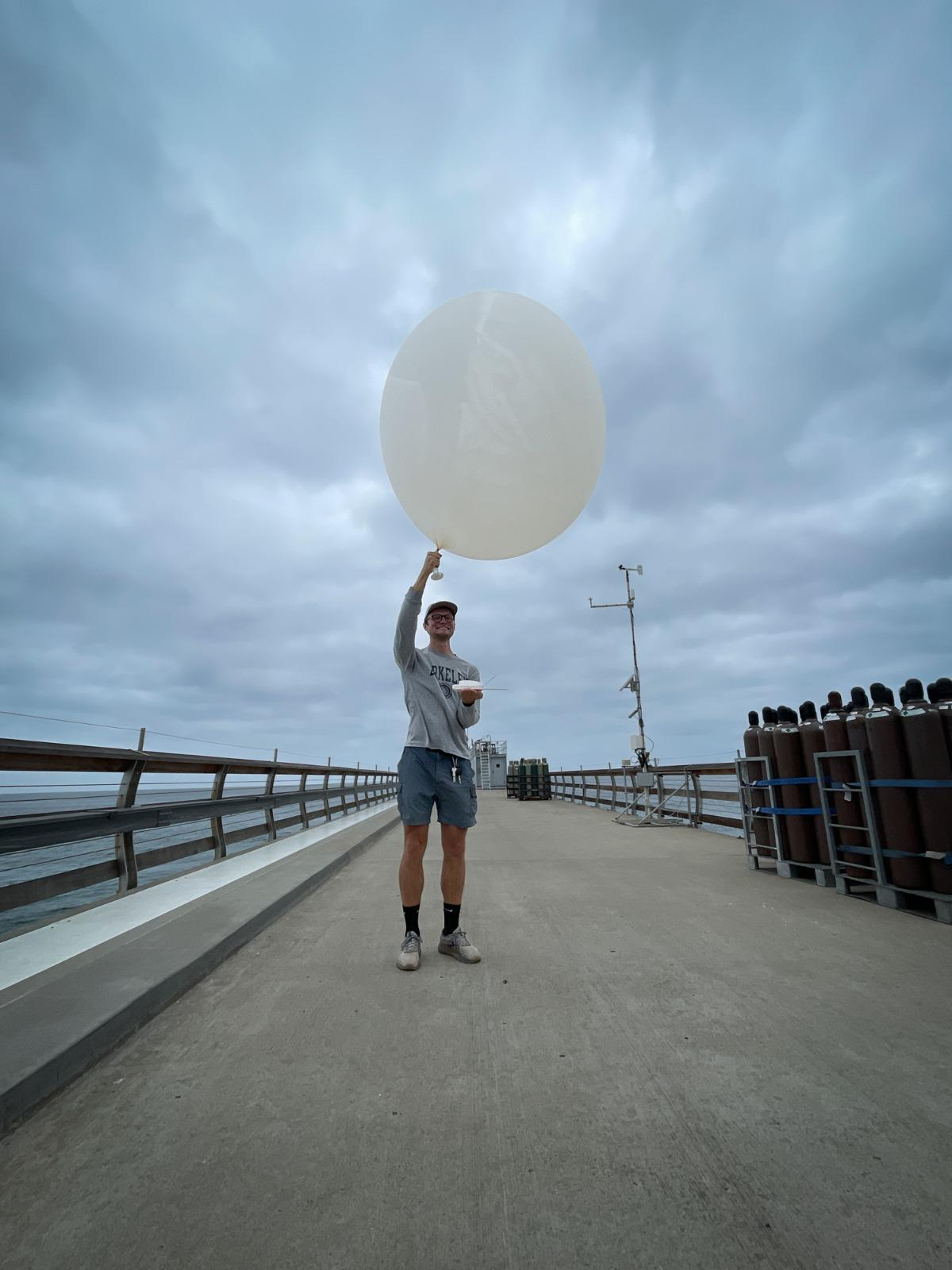
Me with a (granted, non-National Weather Service) Weather Balloon on Scripps Institute for Oceanography Pier, September 2023.
#92
May 21, 2025
Read more

Gnamma #91 - Los Angeles, Phoenix

It's been a whirlwind few months since my last post here on Gnamma. There is an anti-democratic, technocratically-fueled coup happening here in the USA. (The best aggregator on this topic, to me, has been kottke.org. Yet another country in the Americas falling to a coup supported by USA business interests, only this time... it's the United States itself?!). This shift in the American federal ruling has enormous consequences for... well, probably all of us... but definitely folks like me who were considering working for the federal government! Alas, this is not quite the topic of my newsletter today—I wanted to mention it in hopes that you're finding your strategies to keep alive and upright. Instead, I want to roll back the clocks a couple months and talk about the fires that roiled the Los Angeles metro area in January.

Hughes Fire Plume Over I-5 in Southern California Screenshot from the Hughes fire, north of LA close to I-5.
Let's remind ourselves that these fires were enormous. Hundreds of square kilometers of burned areas. Tens of thousands of burned structures. Not as many immediate deaths as you might think—the count seems to be somewhere between 20 and 50—but still, plenty of direct deaths. Plus, there are likely hundreds-to-thousands more human-years of life expectancies shortened by exposure to smoke and other toxins that will remain in the soil (or groundwater). Plenty of lives ruined by financial burdens of what was lost and what will be endured. And emotional burdens of many sizes that will be carried by people and communities for decades.

#91
March 17, 2025
Read more

Gnamma #90 - OBSF v2

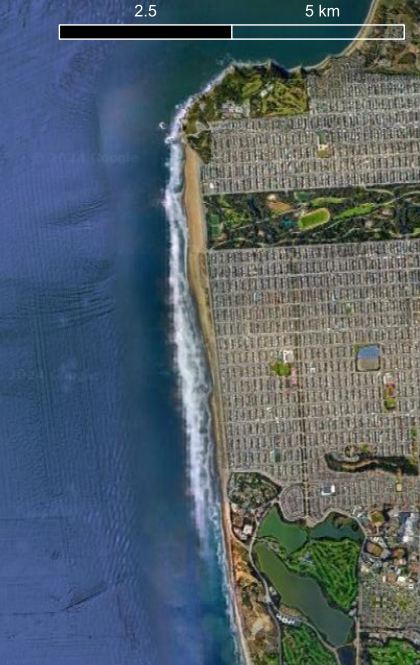
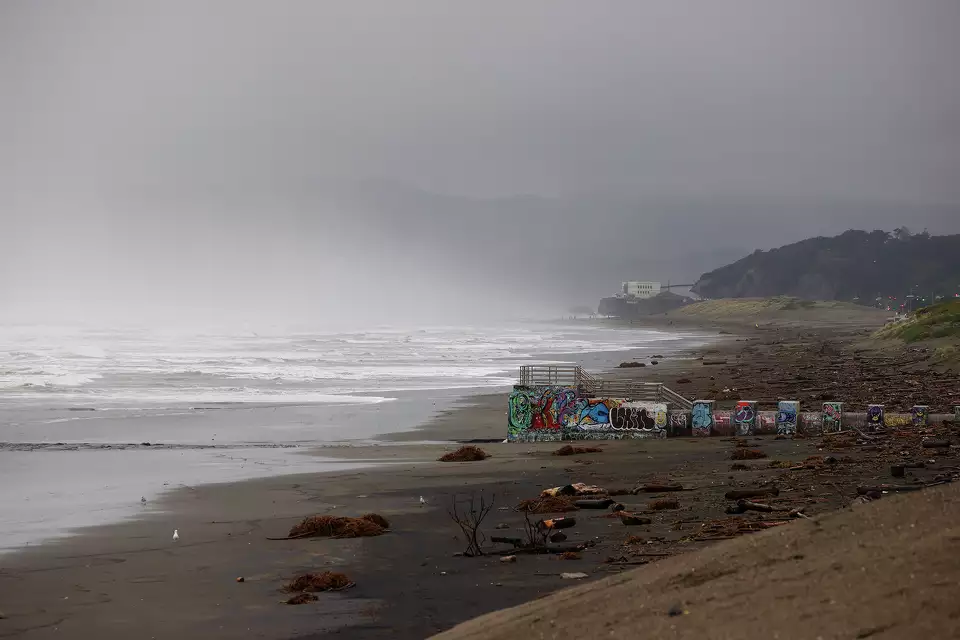
We're in peak surf season here in San Francisco, and thus far we've had a terrific run of surf. I've been paddling out as often as I can, and my favorite place to do so is Ocean Beach, San Francisco (OBSF). This enormous, windswept beach comprises almost the entirety of the western edge of San Francisco, running almost due north-south.

image.png

OBSF is really an amalgamation of a number of different waves and constantly-shifting sandbars. The surfers typically refer to them by cross-street, which are mostly alphabetical (Anza, Balboa, Cabrillo, ... Irving, Judah, Kirkham, etc). My favorite place to surf is the south end of the beach, typically around Ulloa, Vicente, Wawona, and (non-alphabetical) Sloat. Currents at the beach can be intense, so as a surfer you are constantly looking for landmarks that can notch how far you've been carried. At Vicente is a large storm drain, and by tracking this, I can take stock of how fast I'm drifting. (There is a second one at Lincoln, further north on the beach.)

#90
December 13, 2024
Read more

Gnamma #89 - Model Behavior

I just returned from the Physics of Estuaries and Coastal Seas conference, a small (~150 people), very science-focused event for the niche academic world I primarily live in. I thought it was a great conference, or at least, I liked the people and the science a whole lot.

(Note: since last writing, I accepted a postdoc in the Environmental Systems Dynamics Lab at the University of California, where I will continue to study wetlands but now mostly using satellite imagery! So I will take a step away from the fluid mechanics-heavy world, but I hope I will return some day too...)

This realm of science that seeks to understand coastal waters leans heavily on numerical models of environmental fluid mechanics. In other words, simulations of the physics that govern how water moves through estuaries and coastal seas. Virtually all of this means using the Navier-Stokes equations, a set of partial differential equations that describe the movement of fluids. These equations are then simplified somewhat for environmental flows: we can assume the water is essentially incompressible, and that horizontal scales are much longer than vertical scales. And we add a variety of processes like friction (as water flows over the ground), waves made by winds, and tides. All of our numerical models for solving partial differential equations require discretizing them—i.e., creating a grid of cells, and within each cell the physics are resolved and the equations solved.

from here

#89
October 4, 2024
Read more

Gnamma #88 - Fog Ontology

Gnamma #88 - Fog Ontology

For the past six years I’ve lived near San Francisco, a place with a particularly charismatic fog presence. (“Karl”). In the subtle seasonality of coastal California, fog is also one of the better markers of time: the chilly and damp conditions of “Fogust” (now) contrast with the starkly clear bluebird days coming soon in November. People who say the Bay Area doesn't have seasons are just bringing the expectation of dramatic continental climates to a place that's running a different system.

Fog can be difficult to define, even, at a quick pass. Is it different from a low-slung cloud? At what threshold do we go from damp condensing air to… fog proper? The slippery, airborne phenomenon, a flavor of "occult precipitation"--fog challenges us because the word denotes a “thing” that really sits across a few spectra of environmental effects.

(source)

#88
August 19, 2024
Read more
Older archives  
Powered by Buttondown, the easiest way to start and grow your newsletter.