When the headache isn't really a headache
2026-06-18
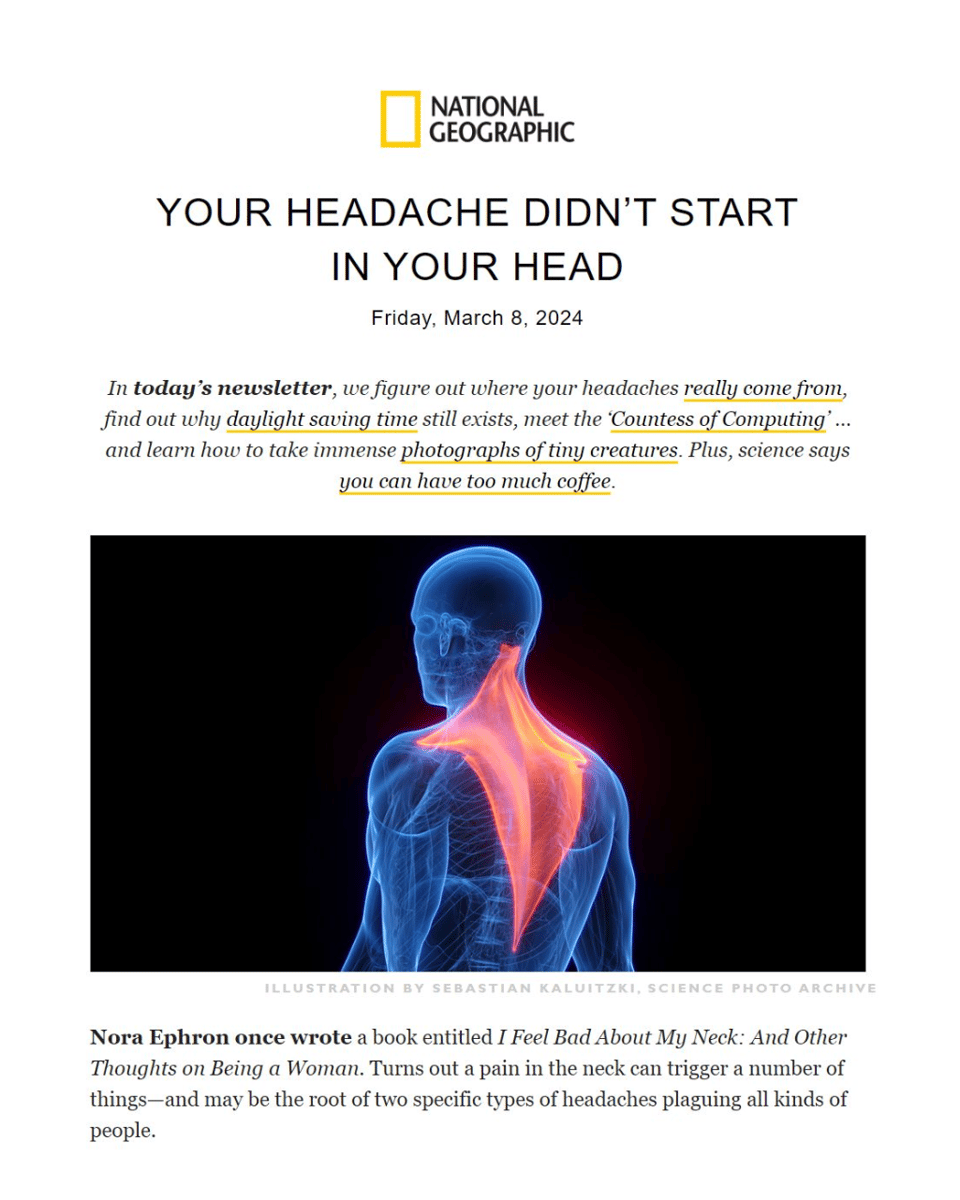
Most headache treatment is designed to chase the pain after it shows up.
Acute medications shut down the attack once it starts. For a lot of people, they work. If those medications are working for you, keep going. Preventives can bring the count down, and none of that is wrong.
But there's a question we don't often ask: where is the pain actually coming from?
It's called cervicogenic headache. The head pain that originates in the cervical spine, usually from the top three segments: C1, C2, and C3. The nerves there share the same pathways with the ones that carry sensation in your head. Irritate the structures in your upper neck, and your brain can read the signal as a headache.
You can usually tell this one apart by how it behaves:
It tends to sit on one side and stay there
It often starts at the base of the skull and climbs toward the temple or behind the eye
It gets worse when you turn or tip your head — movement aggravates it instead of easing it
Your neck feels stiff or tender before the head pain ramps up
That last point is the tell. If moving your neck changes your headache, your neck is part of the conversation. If your neck is the source, treating the headache will never be enough.
References
Antonaci F, Bono G, Mauri M, Drottning M, Buscone S. Concepts leading to the definition of the term cervicogenic headache: a historical overview. J Headache Pain. 2005;6(6):462–6. PMCID: PMC3452304.
Al Khalili Y, Ly N, Murphy PB. Cervicogenic Headache. StatPearls [Internet]. Treasure Island (FL): StatPearls Publishing. https://www.ncbi.nlm.nih.gov/books/NBK507862/
Don't miss what's next. Subscribe to WH.:


