The chair was never the problem
2026-06-04
The chair was never the problem
Low back pain is now one of the most common complaints in any place where people sit for a living. And the spot that takes the beating is L4/L5, one of the hardest-working segments in your lower back, and a frequent place for it to fail.
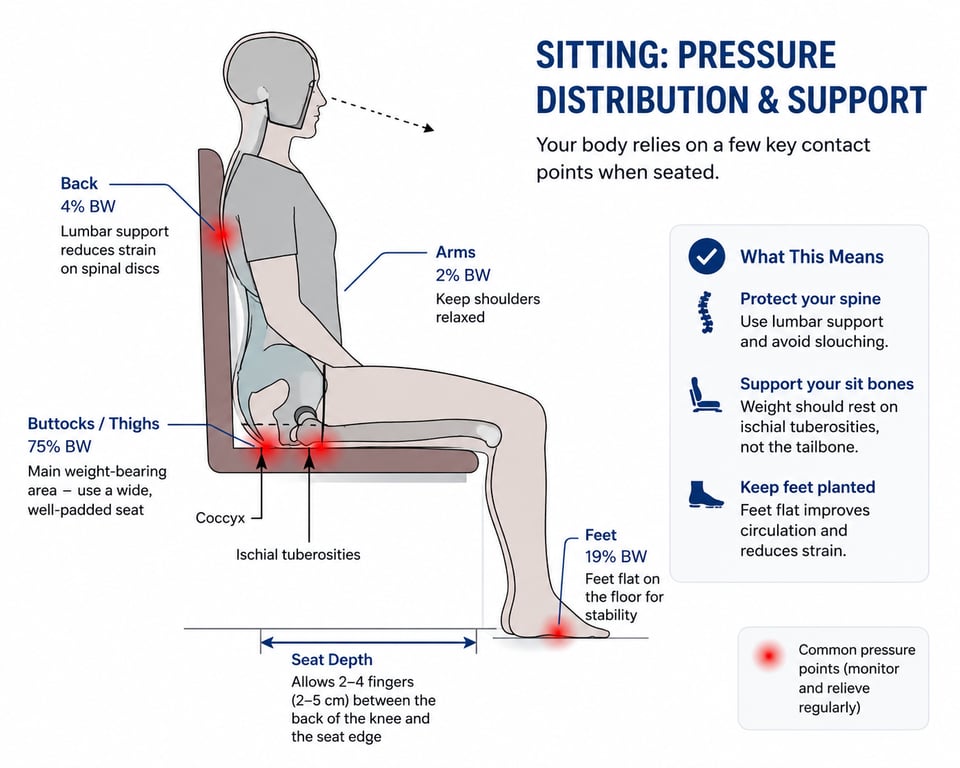
Sitting is supposed to be restful. You take the weight off with your feet and let it drop into the two sit bones at the base of your pelvis: the ischial tuberosities.
Done right, the muscles get to stand down. Gravity does the work.
That's not what happens.
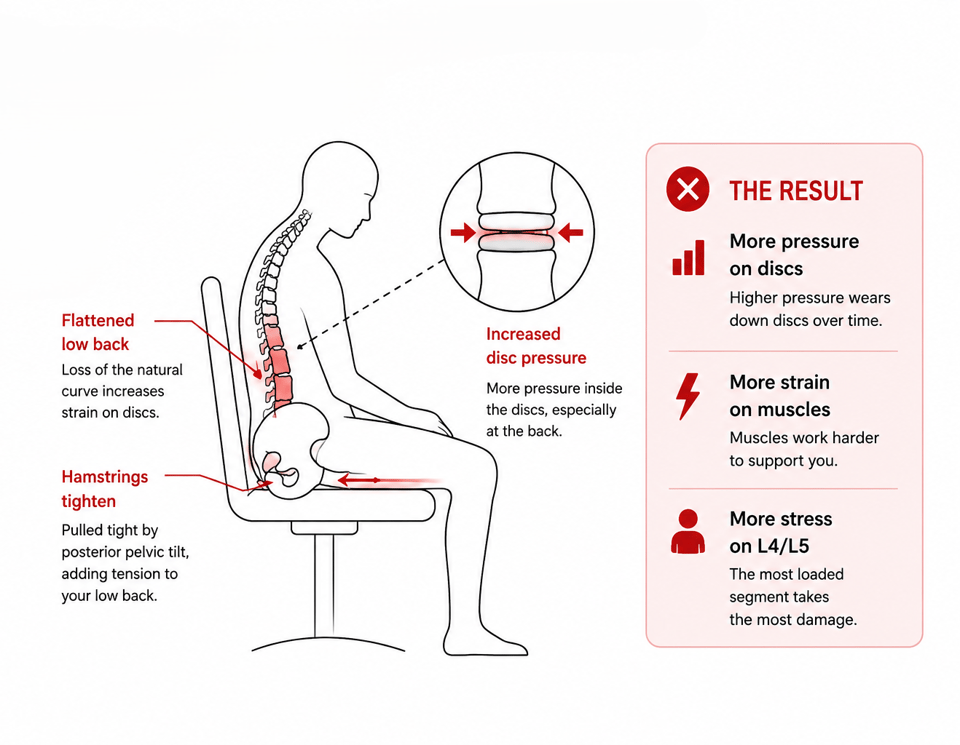
When you sit the way most people sit, the pelvis rolls backward. The curve in your low back flattens out. The hamstrings pull. And the pressure inside your discs climbs.
There is no single perfect posture. Your spine wants neutral, and neutral isn't a position you buy. It's one you find.
Try it right now, in whatever you're sitting in.
Roll your pelvis all the way forward until your low back arches hard. Then roll it all the way back until the curve collapses into a slump. Now rock slowly between the two extremes. Somewhere in the middle, the arch stops fighting the slump and the muscles go quiet. That's neutral. That's where your spine wants to be.
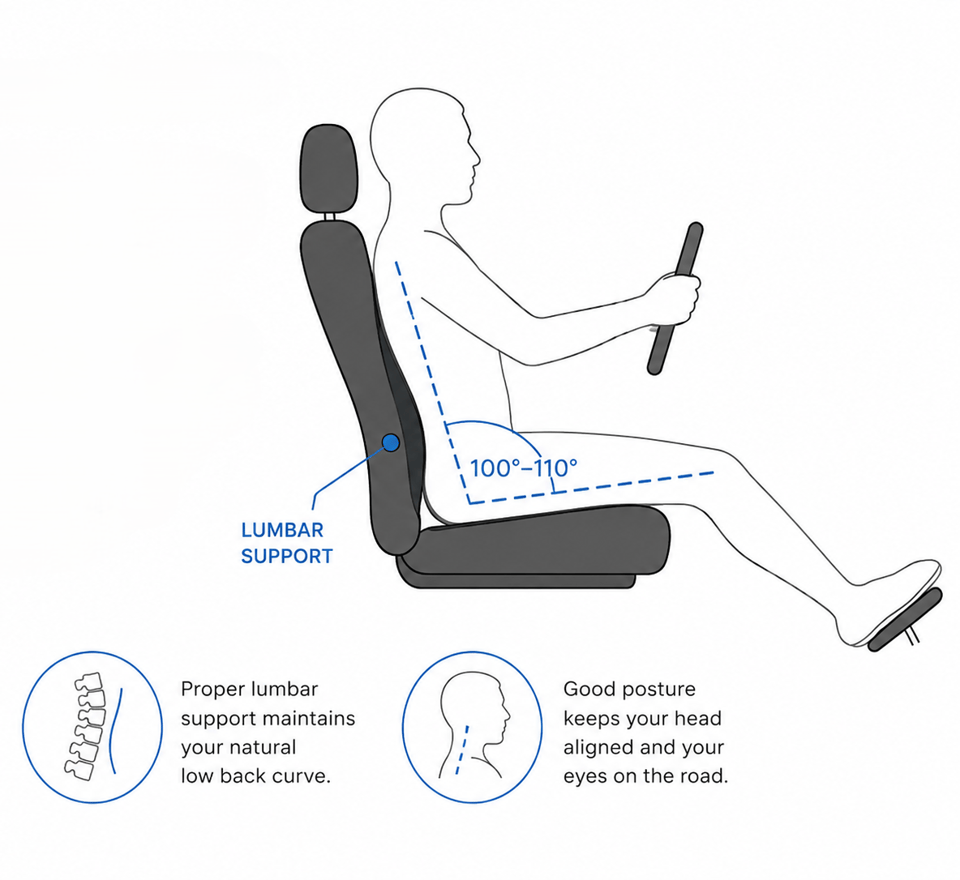
A word for the car though. When you're driving, the curve in your low back is set mostly by the angle between your trunk and your thighs. The research points to a backrest around 110 degrees with real lumbar support, and that's where disc pressure drops and your head stops drifting toward the windshield.
Hope this helps.
WH
Source: Harrison DD, et al. Sitting biomechanics part I: review of the literature. J Manipulative Physiol Ther. 1999;22(9):594-609.
Don't miss what's next. Subscribe to WH.:


