
The times are changing in large organisations
2026-05-31
A previous version of this post for the role of product was written by yours truly in March 2024
Theory of Change as the default approach to being an employee
When you work in a large organisation with abundant resources and people, output is a function of collaboration among multiple teams.
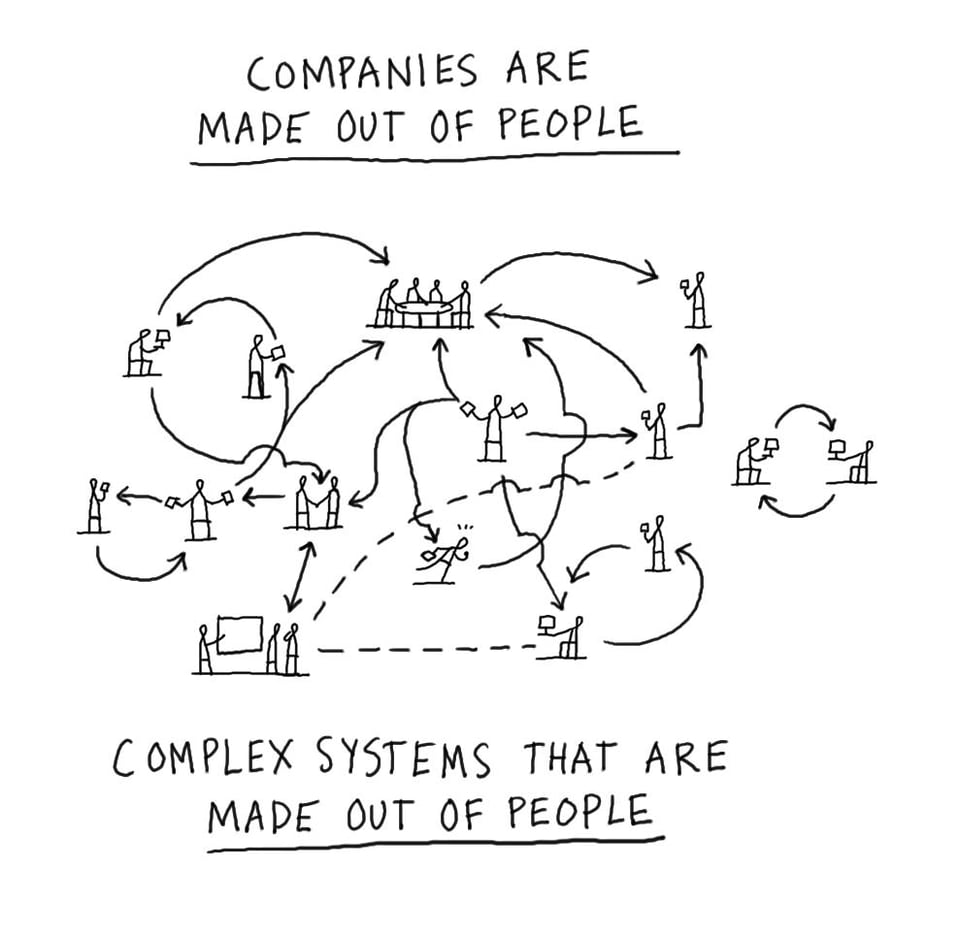
Outcome is more reliant on the direction the leadership sets up for the organisation. More the reason why strategy is given such a prominent weightage in corporate world.
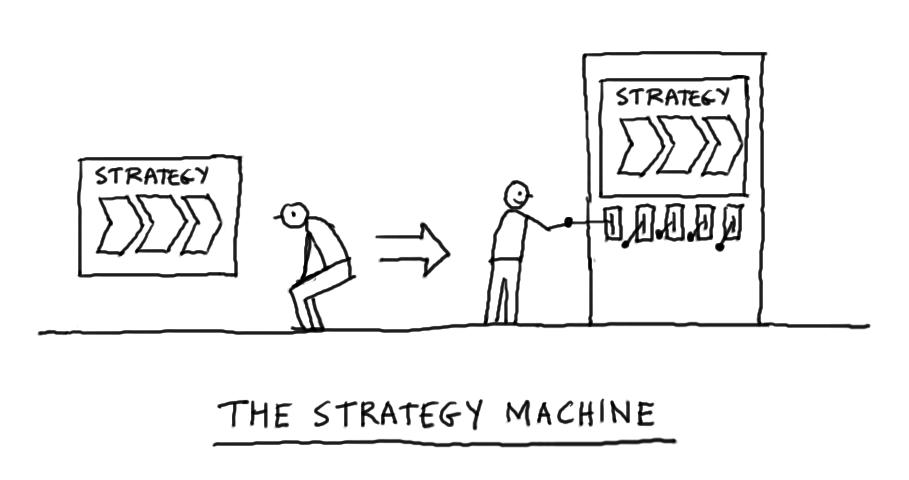
The setup defined whether a single employee is effective or not. With the advent of AI and refocus on individual contributors and smaller teams, organisations are going through a transitionary phase. It helps to understand the effectiveness barometer of the people working for you and their commitment to trek that trail with the team during this transition.
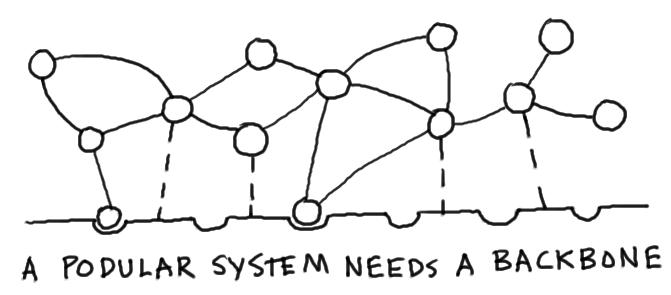
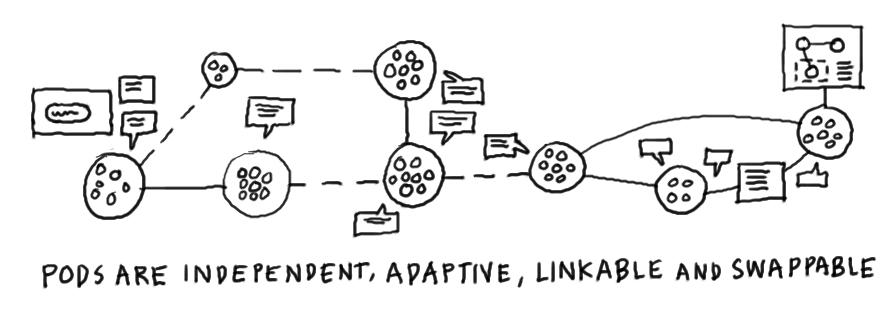
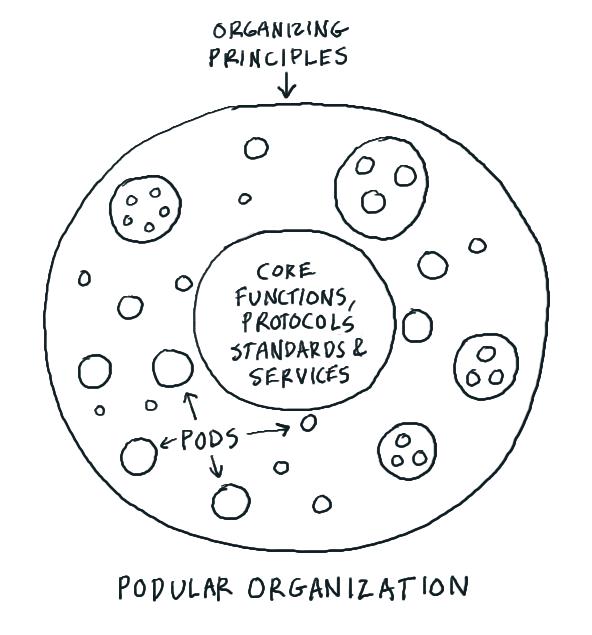
As the organisations restructure around pods or triads, it becomes pertinent that people move away from theory of action to theory of change. The effectiveness of the structure of pods is reliant on this underlying shift as pods are meant to be interoperable.
This article (which I stumbled onto thanks to the amazing community of Commoncog) captures the underlying friction moving from the status quo.
I am increasingly convinced that the difference between effective and ineffective people is their skill at developing a theory of change.
The output of a system is a function of how we let a team be effective with their charter over their area of focus. This is a stark shift in how employees approach work in big companies.
The counter argument to this is theory of action. Aaron writes about it with an example.
Let’s take a concrete example. Imagine you want to decrease the size of the defense budget. The typical way you might approach this is to look around at the things you know how to do and do them on the issue of decreasing the defense budget. So, if you have a blog, you might write a blog post about why the defense budget should be decreased and tell your friends about it on Facebook and Twitter. If you’re a professional writer, you might write a book on the subject. If you’re an academic, you might publish some papers. Let’s call this strategy a “theory of action”: you work forwards from what you know how to do to try to find things you can do that will accomplish your goal.
In the past you joined a team to exercise your skills to play the role you were hired for. Like in my case, being a product manager involved explaining different facets around the products to different sets of people in the team.
Before we get into how it all changes, lets go back to Aaron’s post and walk through the difference in approaches between the two.
A theory of change is the opposite of a theory of action — it works backwards from the goal, in concrete steps, to figure out what you can do to achieve it. To develop a theory of change, you need to start at the end and repeatedly ask yourself, “Concretely, how does one achieve that?” A decrease in the defense budget: how does one achieve that? Yes, you. ….. …..
Alright, well, we can continue down this road for a while — figuring out who politicians trust, figuring out how to persuade them, figuring out how to get them to, in turn, persuade the politicians, etc. Then, when the politicians are persuaded, there’s the task of developing something they can vote for, getting it introduced so they can vote on it, then getting them to vote on the specific measure even when they agree with the overall idea. You can see that this can take quite a while.
It’s not easy. It could take a while before you get to a concrete action that you can take. But do you see how this is entirely crucial if you want to be effective? Now maybe if you’re only writing a blog post, it’s not worth it. Not everything we do has to be maximally effective.
Essentially, it’s a version of you taking the goal seriously not yourself. To be effective we need to work backwards and successively break it down till we reach a point where we can immediately contribute to be effective.
At an organisation level, understanding the role of the pod or team where you belong and then work backwards towards the immediately effective thing to do becomes the expectation.
So, how can one move away from theory of action to becoming more effective. Take a look at this map.
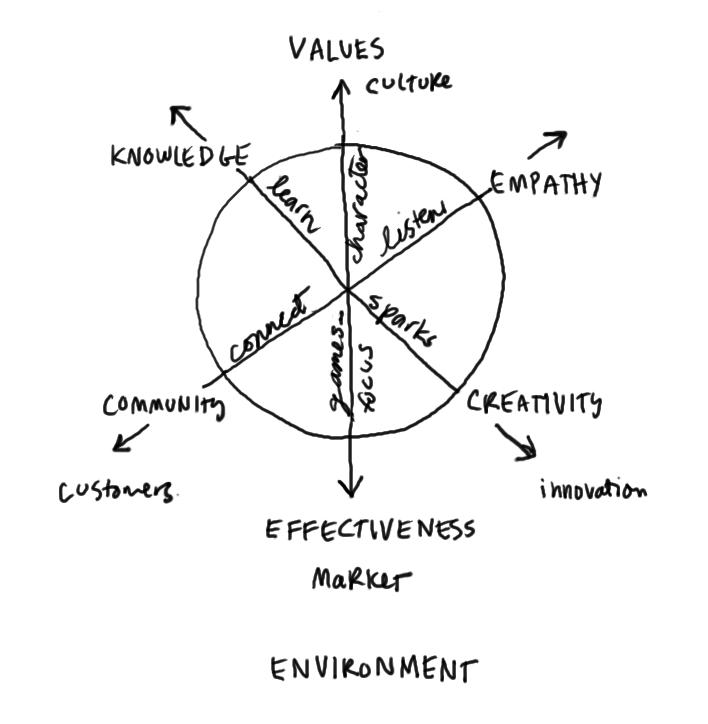
You learn things that are needed to achieve the goal. Stay connected with the voice of customer to inform yourself. Focus on things that keeps you in stead with market and help you differentiate. Let your creative sparks fly to bring innovation when in pursuit of the goal. Become an empath as you try to succeed with your peers. Showcase common values you collectively committed to as part of the team or organisation.
This is quite in contrast to what was passable as a corporate employee in the previous world.
Your skills atrophy when not applied, being effective is a skill in itself.
The AI age is not displacing you, it is asking you to move towards an approach of theory of change in your role as an employee. While the organisations are becoming platform companies providing common services, defining protocols and setting standards.
I would be a hippocrat if I didn’t share my own experience as an example. Connecting the dots and finding a theory to support it is all in hindsight, I stumbled on to it through pursuing growth as my north star.
Late last year I formulated my thoughts around growth in Execution, growth and product market fit. I was responsible for the growth of the product but area of focus and operations was all around the optimisation stage.
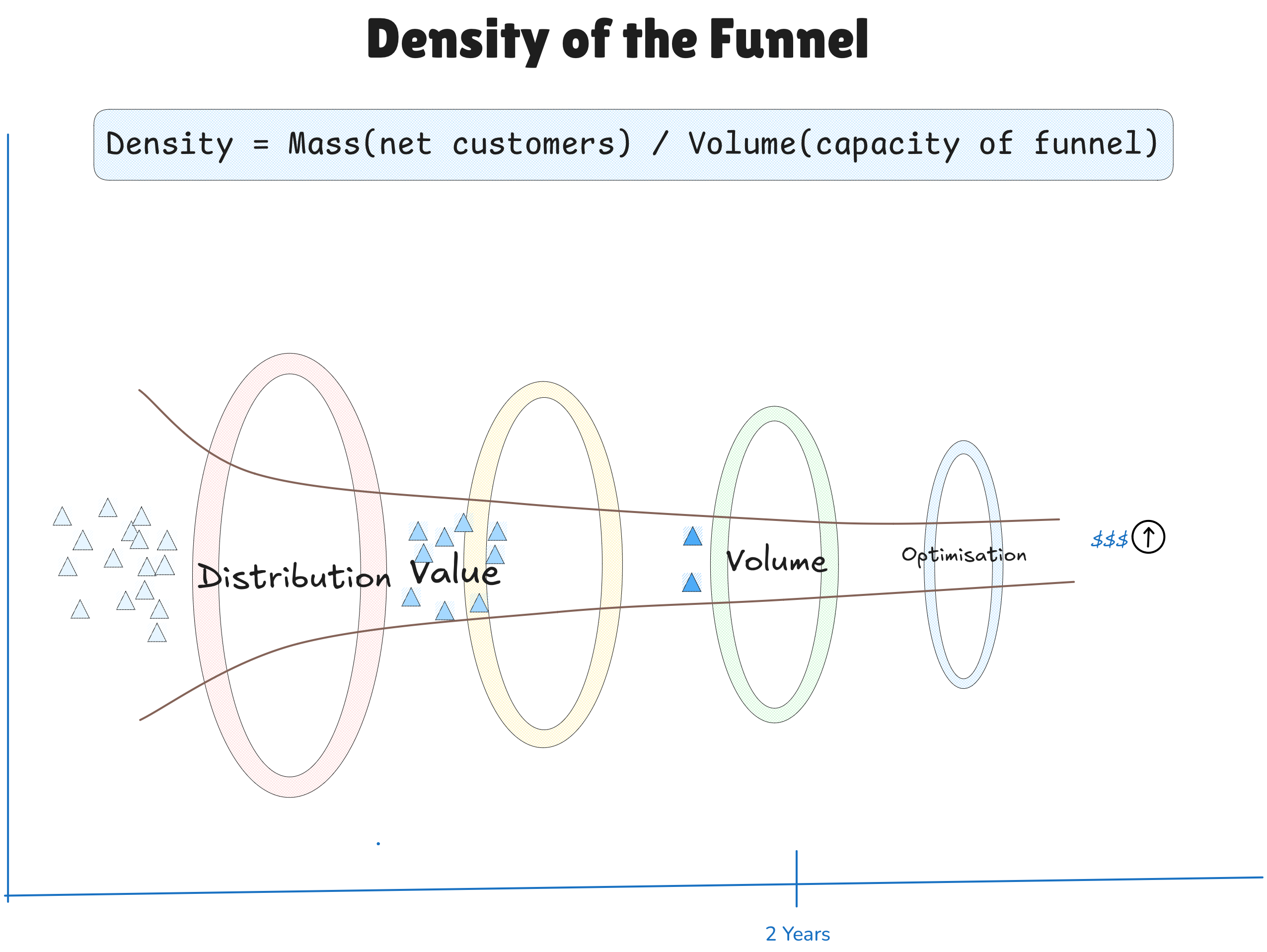
Fast forward to present, I have now essentially traversed at least 2 more preceding stages of the funnel, volume and value. Now, going by the doctrine of theory of change, it will be to work on distribution , i.e figuring out how to learn the craft of marketing.
The end goal is still the same. I will work on moving the bottom line with increased growth rate for a product having found its product market fit.
With the shift taking shape in everyone’s career, it increases the potential to impact the goals we set out to achieve as part of a team, pod or product.
All the wonder full sketches attached in this post are from Dave Gray’s book “The connected company” published as Flickr collection.
Round up
There was ruling in Supreme court of USA about Freight brokerages being liable for hiring unsafe carriers. Jason Miller was out there on LinkendIn providing the structural benchmarks behind carrier safety.
I come from a world where insurance underwriting on freight movement is not even a market in open spot transportation back in India. Companies would have corporate insurance and freight would be covered in it when claimed as stolen property. Brokers would be socially responsible for the theft or delays of goods if something bad happens when moving freight. Execution risk is why the commission agent is an integral part in open market road freight in India.
In the US it is much more standardised with a government body auditing the safety ratings of Carriers. But there are structural reasons why smaller carriers don’t have the right incentive or resources to improve their ratings, if they are rated. Jason wrote a paper that uses econometric principles to go over all the published work on this topic and provide evidence on the both fronts. I happen to get my hands on it. Here is an important excerpt
Providing evidence consistent with one or both explanations is important because each theory prescribes different regulatory and policy implications. If resource differences are a contributor, regulatory agencies and policymakers may want to consider how to better design information dissemination strategies that better inform carriers about safety best- practices (Yapp and Fairman 2006). This would also provide evidence in favor of the Federal Motor Carrier Safety Administration’s (FMCSA’s) practice of calculating percentile safety scores that rank carriers’ vis-à-vis similarly sized carriers or carriers with a similar number of inspections in that the percentile rankings would help remove safety differences stemming from firms’ resources. In contrast, if incentive differences are a contributor, then regulators and policymakers may want to take steps such as increasing the use of stratified sampling relative to random sampling for conducting inspections to enhance deterrence effects.
It is fascinating topic and one that will be inundated with hot takes and fear monegering. It is nice to read the literature and keep yourself informed of the ramifications with the ruling by reading academic research.
Links that resonated
Great speeches if Russ Ackoff gave a ted talk
This talk by Russ Ackoff is a powerful primer of discontinuous improvement and why it is the core of innovation. Starts you on the path of systems thinking.
Benedict Evans talks about the nature of job exposure to AI. Like all his writing and takes, it ends with “it depends”. But throughout the post, you will figure out the factors that may increase or insulate your job’s exposure to AI.
Sign off
The themes since the beginning of this year has been around all functions revolving product building with the lens of the legacy domains. I wrote a lot on Sales as I spent significant time working the value and volume stages of the 4 point framework.
These posts are my point of view on how the work we are doing is evolving and hence they tie to this brilliant article that Aaron wrote on Theory of change. I have personal affliction to what happened with Aaron and it was right at the time I was being introduced to the world of blogs through his own innovation, real simple syndication (rss). It’s a tragedy that he took his life, the world wide web would be very different had he continued to work on it. Its ironic what caused him despair is now part of training for every foundation model.
You read a lot of takes on AI age online from an organisational point of view. Some share their personal point of view of leveraging AI and sharing their wins. This one is my attempt at addressing the shift I am seeing in my own work as a corporate employee.
Signing off till next time,
Vivek, beginning to move again.
Don't miss what's next. Subscribe to On the side:

