
Quality as a principle
2026-06-15
Pursuing quality in Sales
Increasingly I am becoming more aware of the culture and influences that shape you at work.
I studied engineering because I followed the default path for the longest time. At college that completely unravelled. What we were taught was far removed from what we needed to learn for the future, any interest left in engineering was squashed. The divide led me astray and I got enamoured by entrepreneurship and the innovation in digital economy. And this on the side started the journey to wherever I am at this moment in my career.
During the same time I happen to visit the wonderful new library built next to our campus. It had all these books in different sections. After classes instead of spending time doing coursework, I would enter the library and read anything that piqued my interest.
Memory is hazy but at one point I picked up a book, “The Zen and the art of motorcycle maintenance” by Robert M Pirsig. The book was all about understanding quality. How do you define “quality” ?
I won’t go into metaphysics of quality discourse for the purpose of this post but would like to state that quality is derived from the act of doing. In context of work, It could be a task at work, designing the process to follow as a team or the purpose of it.
Quality in doing the work is something I seek. All the times I have been successful in achieving some progress, its with collaborators who joined in the pursuit.
A week ago I spent majority of my time talking about freight logistics with prospects. Multiple times during those conversations we go into tangents where I follow my curiosity. The discovery process is broad because when it’s time to deliver the sales pitch, it makes sense that we communicate it in their frame of reference.
The other benefit of broader discovery is that it helps in understanding the systems at work and constraints at play. It is also the first step in the journey towards pursuing quality.
Theory of Constraints is the invention of Dr Eliyahu Goldratt, an Israeli physicist, educator, and management specialist.
It’s a business philosophy which seeks to strive towards the global objective, or goal, of a system through an understanding of the underlying cause and effect dependency and variation of the system in question.
An another tangent, I read “The Goal” by Dr Goldratt where he introduced this concept of Theory of constraints when I was 15, which is 18 years ago. I am dating myself over here but thought it will be interesting context for you to realise why I keep saying on the side since I did it instead of studying for school.
The essence of “The goal” book is that we all know of the underlying system at play. My previous issue talking about theory of change is about the systemic change taking shape with the advent of AI and people moving towards more general skills in the workforce. It looks something similar to this;
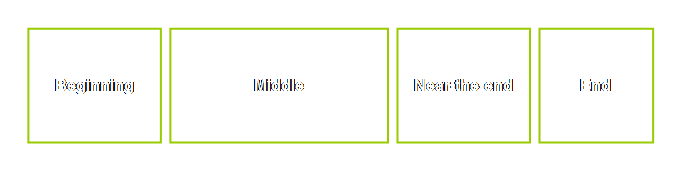
And where did you put yourself? Probably somewhere in the middle or near the end? That’s quite interesting. I think most of us are aware of an overall system or process, and yet we still break the system down into local parts. Peter Senge wouldn’t be surprised ;
“From a very early age, we are taught to break apart problems, to fragment the world. This apparently makes the complex tasks and subjects more manageable, but we pay a hidden, enormous price. We can no longer see the consequences of our actions; we lose our intrinsic sense of connection to the larger whole.” …
Just-in-time, statistical process control, and Theory of Constraints are all system approaches. Goldratt characterizes a system approach as a warning against “concentrating on a local optima (in place or time) and, by that, jeopardizing the performance of the system as a whole.”
Back to sales conversations, our product looking to sell to a prospect is addressing a specific component of the system. Knowing where we sit in the overall process and understanding their constraints helps me have a meaningful conversation that often labelled as expertise in sales conversations. But essentially, I am mapping the system, understanding the constraints and communicating the benefit within their frame. It doesn’t go smooth all times, often times it gets messier, there is back and forth. In the end, the prospect is skeptical because we are there to sell. So, you want to leave the pitch with the acceptance that they know our situation whether we buy from them or not.
The challenge is that it is easier to get into these discussions when meeting in person. I have not been very successful in replicating this online just yet. But I will write more if and when I figure it out.
As part of these discussion, we engage with the prospect in order for them to experience the change in system and where they would like to focus next once we improve this part of the system. You as the person proposing the change have to inform or suggest where they should look. This is the opportunity to establish credibility.
In the end, this is what pursuit of quality feels like in the act of selling. It helps if you approach your domain as a beat reporter, constantly researching, collecting anecdotes and writing field reports as a form of reflection. I apologise if this is not more actionable but I have written a bit on selling software in the legacy domains that you can read after this one to make it actionable.
Round up
Theory of constraints is one of the systemic approaches to work. This site that I was made aware thanks to the lovely community of CommonCog provides a good introduction to concepts at play.
A Guide to Implementing the Theory of Constraints
Why approach systems with these tools in the first place, the writer suggests to build an elegant solutions.
…In the sciences the meaning of elegance is one of simplicity and ingeniousness. An elegant solution to a problem is a cause for considerable respect. Theory of Constraints seeks elegant solutions to problems, rather than sophisticated ones. Elegant solutions are more likely to have broken some deeper core or underlying problem; sophisticated solutions are likely to have addressed a limited number of higher order problems (symptoms) while leaving the underlying core problem unresolved.
The solutions may be elegant, but they are also incredibly robust. This robustness means that doing something, anything, which is aligned with the direction of the solution, is most likely to bring about an improvement or movement towards that improvement. In contrast the surest way to fail is to sit around measuring and data gathering and waiting until you are sure your implementation will be perfect. It won’t be perfect because it will never start. Robust solutions can stand a lot of rough handling. The best thing to do then is to do something.
Doesn’t this sound like what Robert M. Pirsig meant by Quality ?
Links that resonated
Two links for this week include how the search is moving towards more LLMs path dependant and how an LLM heavy user at work but not in personal life (like yours truly) changed due to global logistics challenge or managing shipments.
Sign off
I spent the pervious week mostly on the road and the last week mostly at home. It took that long to get to this synthesis.
I am out for most part of the coming two weeks if everything goes to plan. Visas and immigrant life. Again two contrasting situations just like my previous two weeks.
I took 800 words to write what is quality when it comes to work and I think I haven’t done a clear job. Apologies if this was frustrating read. Writing it was as much a struggle as reading the book, The Zen and the Art of Motorcycle maintenance back in the day. A lot about quality feels hand wavy but it still is a primary motivator that keeps me going to answer “Is there a more elegant way to do this ?” at work.
Why is this pertinent now ? Selling AI or generative AI will require a systems thinking process. The technology is simple, it can improve the efficiency at the delegated task. Then, how does it impact overall system at play? Hopefully, I can write along what I learn by practicing such sales motion.
Signing off till next time,
Vivek, eternally trying to understand the system.
Don't miss what's next. Subscribe to On the side:

