The Death of Nolan Wells and Media Indifference
The death of a young man, media bias, and the history of racial violence in Mississippi
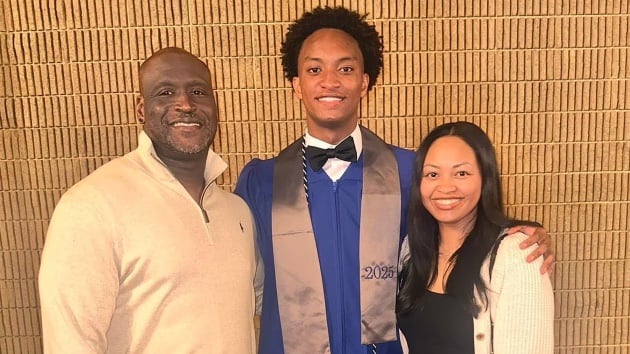
Nolan Wells was an 18-year-old young Black man whose life ended on or around July 4th. He was a graduate of Ocean Springs High School in Jackson County, Mississippi. On the Fourth of July, Nolan went out on a boat to Horn Island, a barrier island off the Mississippi Gulf Coast, with three friends, all of which were white.
Subscribe nowThe exact details of what happened to Wells that day are unknown. But Nolan’s body was discovered on July 7. The next day the local sheriff said, "There's no information that we have right now that would lead us to believe that a crime has occurred."
What we know for sure is that Nolan went out on a boat trip. What follows is going to be a tad he said/she said but stick with me: Nolan did not come back on the boat that day but his three friends did. They alleged he decided to stay on the island with a young woman. Her identity was unknown for a spell but she’s subsequently been identified as Katie McCormack, 19. However, McCormack's sister disputes the boys’ version of events. It’s also notable that although Wells didn’t make it back on the boat that day, his cell phone did, in the possession of his three friends. As a high school teacher in 2026, I want to note that teenagers and their phones are not easily separated.
The series of events presented by the young men with Wells that day and apparently thus far accepted by Mississippi law enforcement leave many questions unanswered. In the days after Wells disappeared at least one of the young men from the boat retained legal counsel. Some have noted that if a friend went missing, they’d join the search party rather than search for a lawyer. Consequently, their decision has raised suspicion, though it does not, by itself, establish wrongdoing.
The case is like A Tale of Two Medias. While I was back in the US, I didn't read much coverage of the disappearance in normy, mainstream publications. For instance, the links above are from The Daily Mail and TMZ. Instead, I almost exclusively saw coverage of the case when I was with my mom. She's a devoted consumer of Roland Martin’s Black Star Network, and every morning when I rolled into her house, Martin was on the television discussing the latest developments.
It also hit me while sitting with mom that her interest in this case is a proxy for her ongoing concerns about my safety and I need to sit with that.
Over the course of those visits, I watched Nolan's parents, Christine Wells-Wonsley and Elmore Wonsley, sit for interview after interview, still visibly grieving, as they pleaded with local law enforcement to conduct a thorough investigation and with national media to pay attention to their son's story.
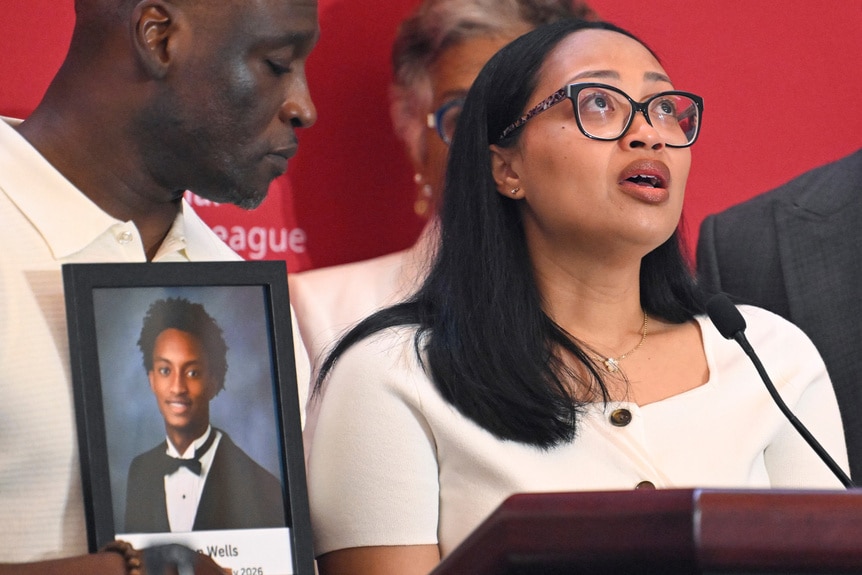
The pleas seemed to be falling on deaf ears. The last update I watched with my mom, right before we flew back to the Gulf, came the day after an autopsy was completed. The results had not been released to the public, nor the family, and they were clearly distraught about the glacial nature of the process.
But what ultimately pushed me to write about this was one final interview I watched with the Wells family. Don Lemon was interviewing Nolan's parents and their attorney, Ben Crump. The interview was conducted over a video call. As Nolan's parents and his attorney spoke, they passed a phone or small camera between them. Behind them, a television silently played cable news.
A steady stream of headlines rolled across the TV: the latest Trump scandal, wildfires in Canada, the AI bubble, Elon's latest rocket malfunction, an endless rotation of pharmaceutical commercials. (Seriously, there are so many drug commercials on US television). But what never popped up on the TV behind the Wells family was their son’s story.
That stuck with me.
The Wells case is a textbook example of the concept of selective attention, the tendency of media to latch onto some things while overlooking others. It helps explain why some stories become national conversations while others barely register.
Journalistic indifference to Black pain and misery is a force as old as the country itself, as is law enforcement showing credulity to incredulous claims of innocence by the perpetrators of that violence. Martin, Lemon, and other Black media figures are carrying this story because others won’t.
There is a long history in America of Black families having to fight for attention when they believe something has happened to their loved ones. They have to call reporters, seek out lawyers, organize protests, and push institutions that should be looking for answers in the first place.
Additionally, the skepticism many Black Americans (and especially Black Mississippians) feel toward law enforcement does not come out of nowhere. Mississippi has a particularly dark record of cases where violence involving Black people was ignored, mishandled, or actively covered up by the institutions responsible for seeking justice.
Emmett Till, who if alive today would be a year younger than my mom, was beaten, mutilated, and tossed in a river in Mississippi in 1955. His killers were acquitted by an all white jury after deliberating for 67 minutes.
Medgar Evers was murdered in 1963 by Byron De La Beckwith in Mississippi. There was a 31 year gap between the murder and De La Beckwith's eventual conviction in 1994.
Vernon Dahmer, a white farmer, was murdered in 1966 for paying poll taxes for Black voters in Mississippi. His killer didn't go to prison until 1998—thirty-two years later.
I could list names for hours and that history matters.
In a place with that history, transparency is not a courtesy; it is the foundation of trust. This explains why Nolan’s family and observers are unwilling to accept many of the answers being given.
Notably, the wheels of justice aren’t all moving slowly in this case. The DOJ has shown it is willing to act quickly, charging three people so far for making threats to a witness, a judge, and the county clerk’s office.
I want to be clear, I am not suggesting Wells was murdered or there was even foul play. We don’t know what happened. But that’s the problem.
I have to imagine that if a young white man went on a boat trip with three Black men, wound up dead, and they came back with his phone, the legal process would not be so plodding and the media coverage, especially in right-wing press would be breathless.
The Wells family deserves that same urgency.
I send this newsletter out on my Sunday afternoons which end up being Sunday mornings back home. This evening, I'm going to call my mom and ask her how church was today, then I'm going to ask her for updates on the Wells case.
–
As you know, wildfires intentionally set by a man now in police custody rocked Spokane this month. Over 700 homes and buildings were destroyed. The Flores family are among the people that lost their home and there’s a GoFundMe for them. Their story was shared with me by a newsletter reader and former student. Thanks, A.R.
I will see you in seven days.