Reading “There Is No Place for Us”
On the changing face of homelessness in the US and the people getting rich from it
I bring you greetings from the final Sunday before the start of the 2026/27 school year.
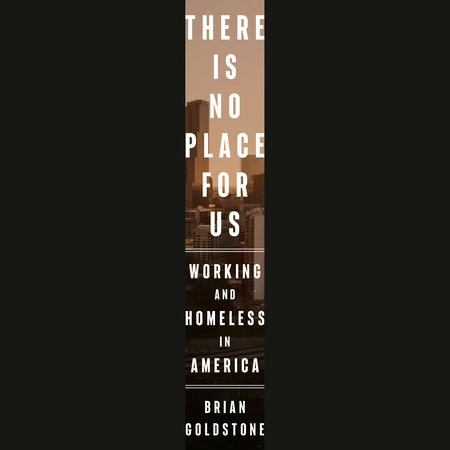
Subscribe nowToday, I want to talk about one of the more consequential books I’ve read recently. On the suggestion of my literary fellow traveler, Halley Knigge, this summer I checked out There Is No Place for Us: Working and Raising a Family in America by Brian Goldstone. It’s about the recent surge in the number of people who are working full-time and experiencing homelessness.
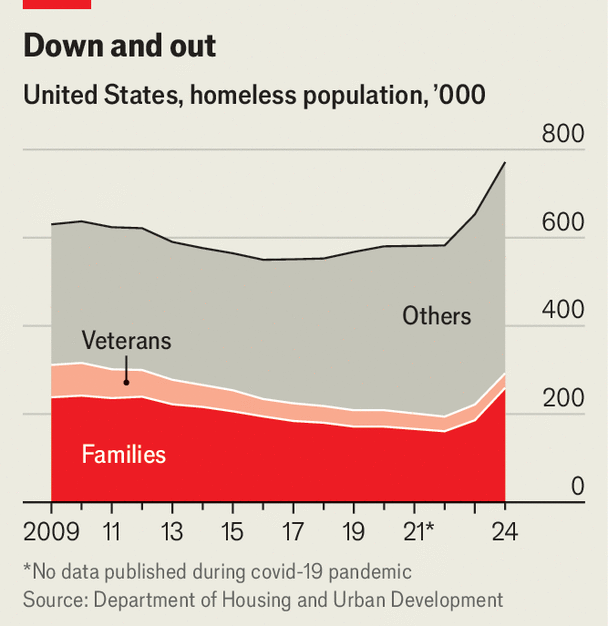
We all have our mental models of what “homelessness” looks like but most of those models are wrong or outdated. According to Goldstone, roughly half of newly homeless in the US have full time jobs but their wages can’t keep up with rents. Government aid programs exist but they're a labyrinthian bureaucratic mess. These programs are also grossly underfunded so there's far more demand for the vouchers and housing slots, than supply of assistance available.
In There Is No Place for Us, Goldstone follows five Atlanta families as they navigate housing instability and the displacement resulting from the rapid gentrification of their neighborhoods. These families end up bouncing between shelters, relatives' homes, and extended-stay hotels that mastered turning housing instability into a business model. And in many locales, these families don't show up in official homelessness statistics.
I want to unpack that last point for a moment. The US has no single definition of homelessness. The feds, states, cities, school districts, and nonprofits all have their own definitions, and some exclude people living in hotels and motels. The result is a classic catch-22: you can be “homeless enough” to qualify for aid from one institution and somehow “not homeless enough” to use that aid with another.
That cycle was repeated throughout the book too many times to count.
In other cases, families sat on waiting lists or showed up before dawn for lotteries, only to receive housing vouchers that come with expiration dates and conditions that make them functionally useless. One Atlanta woman was given a voucher covering up to $1,200 in rent, but because of the size of the family, the housing authority required them to find a three-bedroom apartment. They had 60 days to use it. After an exhausting search, they couldn't find a three-bedroom apartment that passed the required inspection and was under the voucher's limit. The voucher expired, and the family remained homeless.
These families were given assistance but the bureaucratic hoops were out of sync with the reality of the housing market. In addition to an over-taxed and sometimes indifferent bureaucracy, these families face two other major predators: often exploitative so-called extended-stay hotels and (a frequent topic here) scammers.
Extended-stay hotels offer an informal housing system for people who have nowhere else to go, and they're lucrative for their owners and investors. People who can't afford first, last, and a security deposit, or who can't pass a credit check, end up paying rates far higher than they otherwise would for an apartment, with no real stability to show for it (see video below).
There’s a heartbreaking anecdote late in the book about how the residents of an extended-stay hotel were evicted at rifle-point during the pandemic, despite an eviction moratorium. None of the usual due process protections for tenants applied to them because those protections didn’t apply to their “hotels”.
And because human greed is bottomless and creating misery is profitable, there’s a growing ecosystem of scammers who prey on people in desperate situations, posting fake rental ads to collect application fees and deposits from desperate people for phantom listings.
The thing that keeps hitting me is that our system is remarkably good at producing instability. People work, apply for assistance, wait their turn, find a place, and then discover that some other part of the system makes that solution impossible. Meanwhile, there are sharks lining up ready to make money from the gap.
Anyway, you should read There Is No Place for Us. Goldstone's reporting is intimate without being sentimental. I’ll add, there are a number of other books and conversations out there that approach these same questions from different angles, like Evicted by Matthew Desmond, so next week I'm going to talk about a few of them and why I think they're worth your time.
—
Before I go, I briefly want to touch on some happenings related to prior newsletter topics.
I.
Gambling by Another Name: in March Washington's AG, Nick Brown, filed a suit against Kalshi saying their prediction markets weren't “information markets" as they claimed but rather that they are a form of online gambling, not permitted under state law. This week Judge John McHale in King County Superior Court agreed. Here’s a rundown from Qwartz:
Judge John McHale's order, issued Wednesday, requires Kalshi to implement an IP address and residency-based geofence by Aug. 19 and a more comprehensive geofencing solution by Sept. 2, according to GeekWire. Missing the Sept. 2 deadline carries a $120,000-a-day penalty, though Kalshi can submit an affidavit explaining any delay for the court to assess the final amount. Kalshi is permitted to keep running markets on commodities, climate, economics, and finance for Washington residents, and existing positions in the prohibited categories may be wound down by users.
McHale ruled that Kalshi was in violation of a December 2025 notice from the Washington State Gambling Commission banning so-called “event-based contracts.” Yes, the IP geo fence could be circumvented using a VPN or other proxy service but this is still a dub for the people of Washington State and state sovereignty.
Kalshi tried the Airbnb and Uber playbook: enter a market where the legality of your business is murky, establish a foothold, scale as quickly as possible, and make yourself too big to regulate out of existence. But the state ain’t having it.
II.
Antisemitism and Islamophobia. There's an unmistakable rise in Islamophobia and anti-semitism in US political discourse. People of conscience should obviously reject both. Unfortunately we saw examples of each flare up this week.
On Friday, worshippers at the Central Synagogue in NYC had their service interrupted by an intruder who struck a worshipper. This incident rattled many in the Jewish community in the city.
The attack came the same week US Representative Nancy Mace posted the following on Twitter:
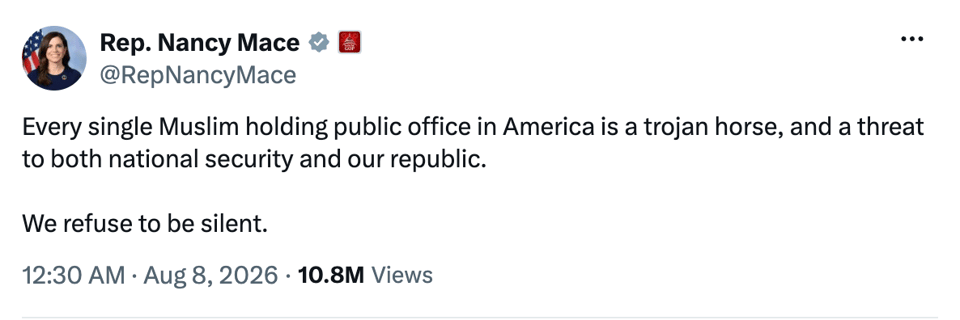
This is vile and echoes an ugly strain of political rhetoric: the idea that an entire religious minority is secretly working against the nation from within. This was a central tenet of Nazi anti-semitism. We should recognize it as a warning sign when politicians cast an entire religion as an internal enemy.
And we need to be consistent. Islamophobes and anti-semites are both increasingly comfortable in American life. We mustn't allow this.
Remember friends, yelling at bigots is protected speech.