
Waves move energy without transporting the matter
Removing the headphone jack did bad things to the public sphere

Hey friends, thanks for clicking in!
I screen. You screen. We all screen at a variety of sizes. Let’s consider the implications. At the end, you’ll find a take-home ground truth exercise. It’s totally optional, but I think you’ll enjoy it.
But first, these messages…
If your team needs help with research, collaboration, or communicating across disciplines, get in touch about an in-house remote workshop, just for you.
[Past upcoming events snipped from archive]
If you or your organization needs help, get in touch anytime: [email protected]
🏄
Remember the Alamo*
Don’t take my word for it, ask a (man who played a) hobbit:
For the first time yesterday, I experienced the new @alamodrafthouse QR code ordering system and I can tell you it’s truly awful. Rather than making ordering food and drink more efficient, it actually adds steps to the process AND if you want to order additional items during the film you HAVE to open your phone. No, your cute reference to that irony in your How To Alamo video doesn’t negate how ridiculous this is. Please don’t cut corners with your staff and revert back to physical menus and order cards.
Elijah Wood on the site formerly known as Twitter, June 2, 2026
Of all the myriad wounds and degradations of enshittification, this one hit me the hardest (I can still bend Google Search to my will…for now). My beloved Alamo Drafthouse Cinema made a deal with the devil (private equity) to survive lockdown, and that devil sold out to Sony Pictures a couple years ago. This was only possible after the Department of Justice terminated the 1948 Paramount Decree, a standard that prevented production companies from owning exhibitors, and ended the old Hollywood studio system (strengthening my opinion that without muscular antitrust enforcement, we don’t get nice things — no competition, no UX, y’all).
If you’ve never been to an Alamo Drafthouse, it’s an Austin-founded theater chain famous for meal service during movies, a lovingly curated 30-minute preshow of interviews and ephemera related to each film, and a ZERO tolerance policy for phone use during movies.
Oh, and quality graphic design.
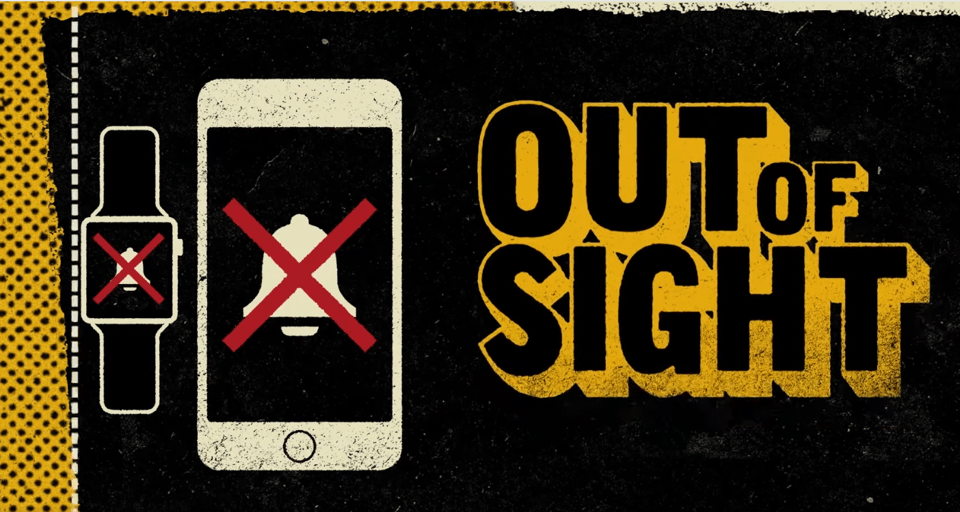
You would order food by writing your order with a wee pen on a little slip of paper they called an order card. Stand it up at the end of your table, and servers would creep around in the dark to take your order and then creep back with your food and drinks. Need anything else, raise an order card. (The phrase “raise an order card” delivers a little dopamine burst for some of you reading this too, I bet.) The creeping-and-eating situation isn’t everyone’s favorite movie-going experience, but it was mine, and Mr. Frodo’s too, apparently.
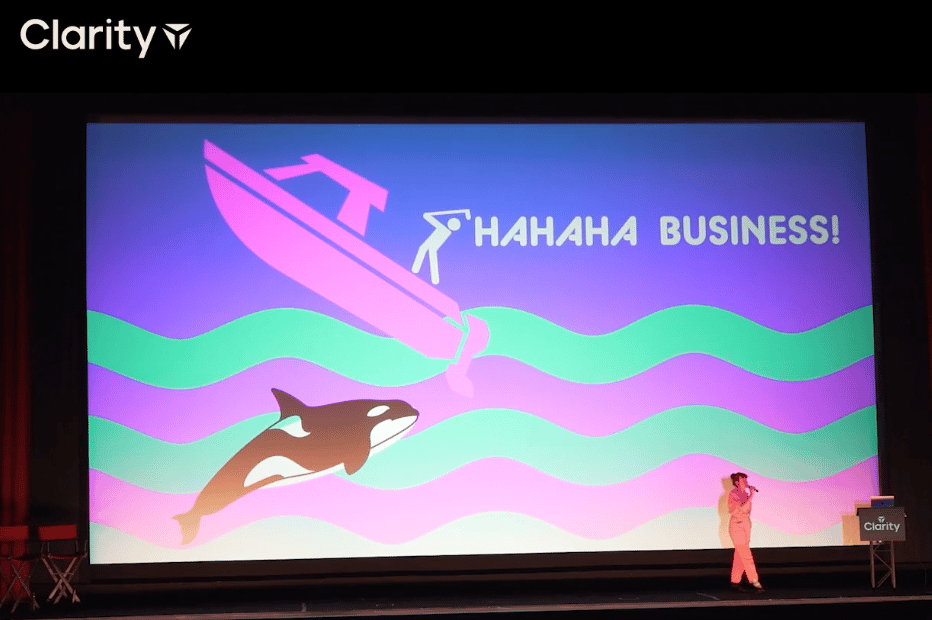
Alamo offered an oasis of OFF in the middle of ALWAYS ON that didn’t require buying a trans-Pacific plane ticket. A faraday cage by consent that served fries. I spoke at Clarity in front of the big screen in 2023, and it was so much fun, we were tossing around the idea of putting on our own conference there.
This is all in the past tense because at the end of last year, Alamo started prepping for major renovations and a switch to mobile ordering. It’s going great.
I’ve been back once since the full changeover. What a bummer. Felt like a breathtaking incineration of so much goodwill, not to mention their unique value proposition, but there’s a lot of that going around as organizations shed workers for reasons. (And I am now very conflicted because Sony Pictures just announced they’re saving the iconic Los Angeles Cinerama Dome.)
This brings us to this week’s topic…
One Thing to Rule Them All
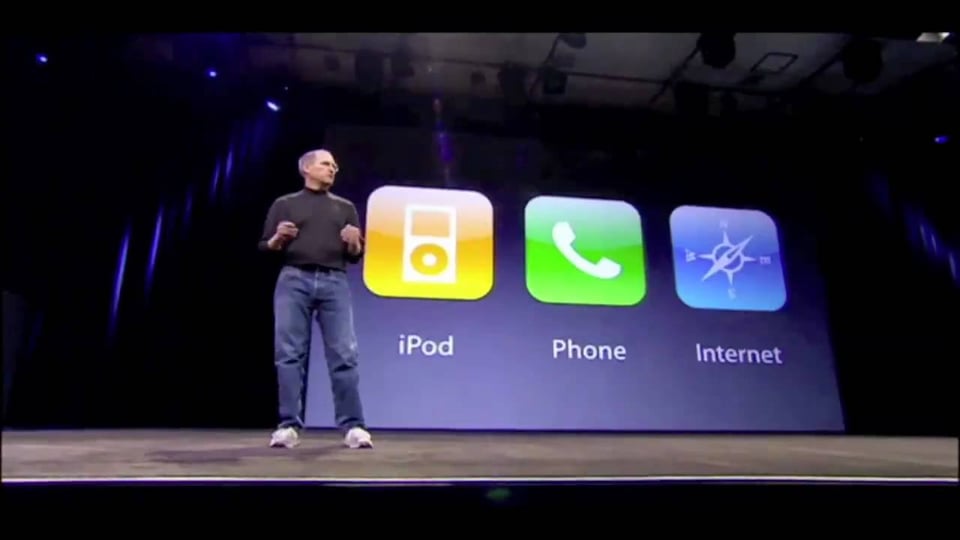
January 9, 2007 the world changed. Or, rather there was an announcement that the world was about to change. Steve Jobs introduced the iPhone.
It's one device called the iPhone, not three separate devices: an iPod, a phone, and an internet communicator.
Due to that pesky Rule of Three, the camera was relegated to “thing on the back” status in the presentation, but it’s key to the consequences. (No video camera at launch though. And no copy and paste either. Both came two years later. Thanks, Obama!)
I was somewhat “OK cool whatever” after the announcement. I had an iPod and a MacBook Pro and a Samsung flip phone I liked fine. So, I had no plans to get on board for V1. Sure wasn’t going to wait in line for it.
When launch day rolled around at the end of June, I happened to be having drinks with some design nerd friends a couple blocks away from the Apple Store. Two Manhattans in, we looked at each other and said “Hey, wanna see if we can get iPhones?”
We strolled into the store around 8pm, and 90 seconds later I was back on the sidewalk, out $600 and holding a little black bag containing a little black box. Apple is nothing if not efficient at parting punters from their money.
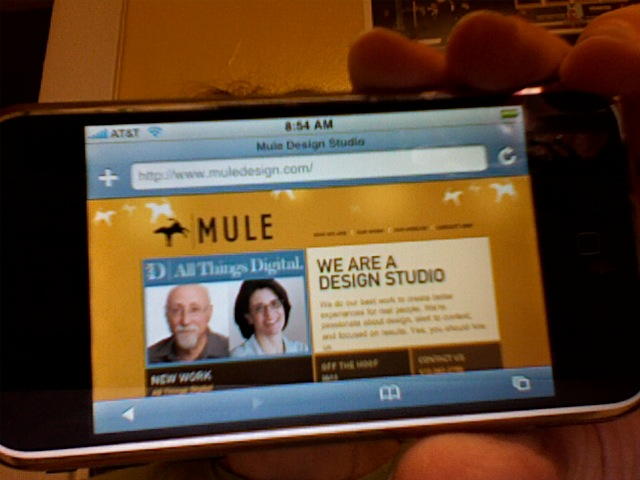
We did, in fact, need iPhones to get a jump on designing things that worked well on the iPhone.
Having an iPhone in a world that had not yet been completely reconfigured around the iPhone was a very fun time. Unfortunately, it soon came to light that it wasn’t so much fun, and in fact horrific, to be one of the people building the iPhone.
A vague afterimage of what happened to companies that waited too long to embrace mobile is perhaps behind some of the “AI FOMO”. (FOMO…another thing exacerbated by iPhones, but coined at Harvard).
The iPhone is the most successful consumer device of all time: around 2.8bn units have been sold since its launch in 2007, racking up over $1tn in revenue for Apple in 15 years. It still accounts for roughly half of Apple’s entire sales.
Financial Times, April 27, 2025
Everyone, maybe even Apple*, continues to misunderestimate the iPhone. We fail to appreciate the position of the phone in the world, because we’re looking at the world through our phones. ”Phones.” This is just how we human.
(Sure, the majority of devices in the world run Android, but come on, they’re iPhones.*)
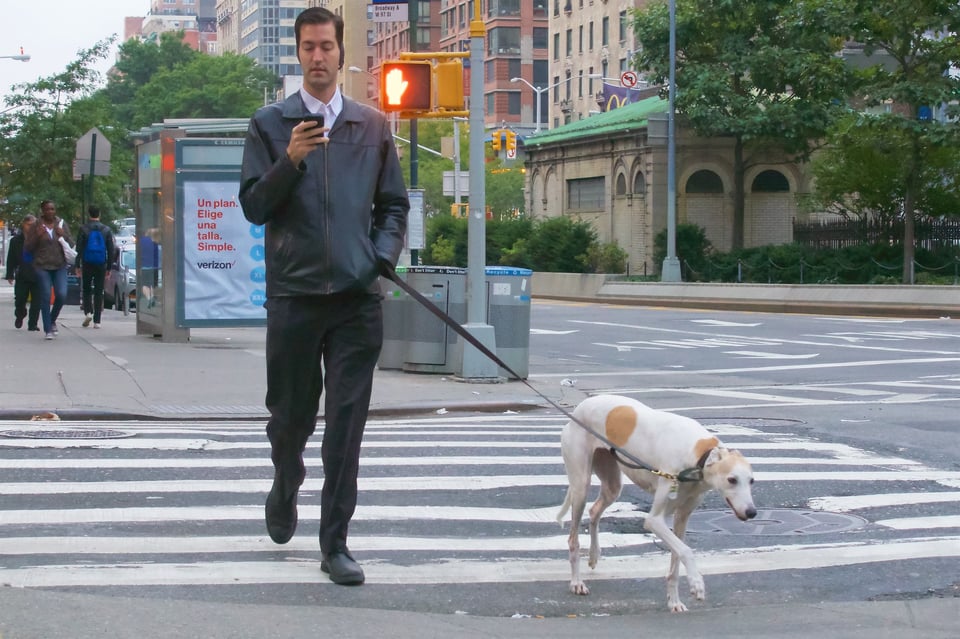
Every day when I bike to the studio, I see drivers driving with phones in their hands and eyes on their phones and pedestrians walking with phones in their hands and eyes on their phones and cyclists having phone calls while riding. And no wonder fatalities are up.
"The 72 percent increase in pedestrian fatalities in the 15 years from 2009 to 2024 outpaces both the growth in population and vehicle miles traveled.”
If the personal computer was a bicycle of the mind, the iPhone is the car. We’ve reshaped the world around it and because it also feels like an extension of the individual self, we aren’t doing a great job reckoning with the systemic harms.
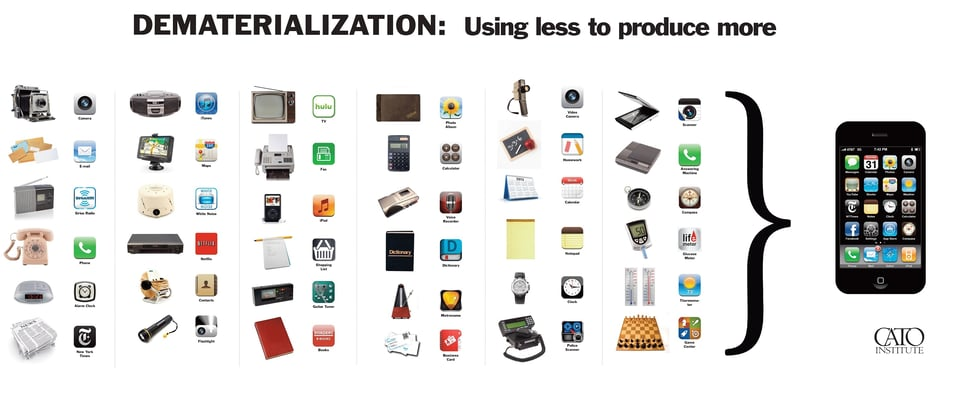
Everything the car did to the built environment, the iPhone has done our rooms and relationships. (Even Apple TV shows have to be set in alternate realities to show visually interesting interactions.) And in the same way, while alternatives exist, it’s not going to suddenly go away.
We've rearranged society, economies, and labor relations around this device and its applications (App Store launch: July 2008). In the US, getting one's own iPhone is taking over right-of-passage status from driving. It’s increasingly difficult to participate in many aspects of society (arranging a playdate, ordering food, getting into a concert, banking, etc.) without one. Most interpersonal relationships are mediated through it one way or another.
When I was in college, I thought Berkeleyan idealism sounded like such nonsense, but so many of us are ignoring material reality, while the world dematerializes around us. Everything that can be seen is looking more the same because everyone can see it and share it. When I see people glued to their phones, as I often am myself, ignoring the world around them, I can’t help but think of the addictive dream visualizer in Wim Wenders’ Until the End of the World (RIP Sam Neill 💔).
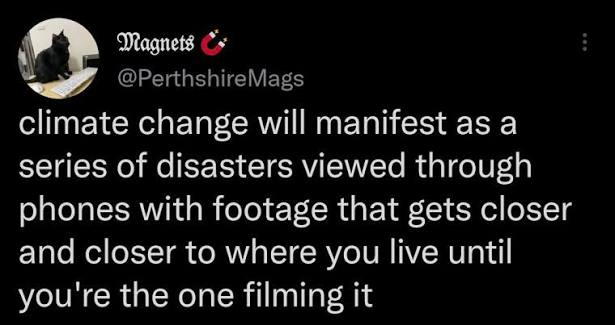
According to one source, there are over 7 billion smartphone subscriptions worldwide, and roughly the same number of iPhones as cars in the world: 1.6 billion, give or take 100 million. And about 5,700 wild tigers.
And yet, iPhones are still treated as luxury goods when it’s time to bash poor people for political points.
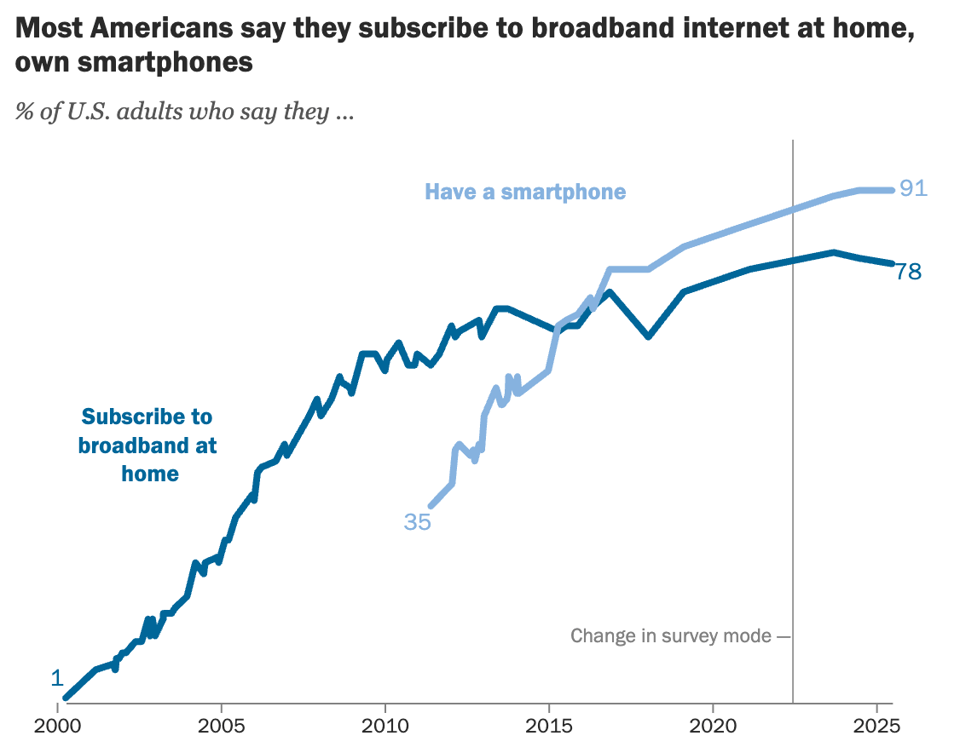
At least 10% of the U.S. population now has a smartphone, but no broadband. And often, those are people with fewer resources. A new iPhone might be the most rational option for anyone, regardless of income, especially given the realities of gig work and content creation. (Yet, you participate in society…)
In 2020, we did a fascinating client research project on personal device use in the US. The client came in with some proposed segmentation based on individuals being “tech enthusiasts” to a greater or lesser degree. But what we learned is that this designation doesn’t make sense like it might have in the past.
There are the Apple fans and gamers, sure, but when it comes to internet-connected devices more generally, a couple of things are true. The quality baseline for hardware — phones, laptops, tablets, e-readers, etc. — is pretty high these days, and they can last a long time. Longer than some companies want to support them.
The determinants of a good online experience are speed, reliability, and predictability more than anything. (Everyone who uses the internet is a strong, fast signal enthusiast.) And hardware comes into people’s lives all sorts of ways. Every company wants to think that individuals and organizations powerfully choose their products and services, but everyone is an opportunist to some degree. And so much depends on sunk cost situations and what any particular employer provides and requires.
(It would be really interesting to do this study again now that it’s 6 years later, also to see to what extent “AI enthusiasts” exist in the wild.)
Find my…attention span
It’s tempting to blame social media apps, when we should be looking at our whole phone-based everything.
We have so many opportunities to track and be tracked, I think very few of us have a comprehensive threat model. (Parties were definitely better before everyone had a connected camera.) It’s good that individuals can document abuses of power. Someone being able to find you on Strava is great if you’re knocked unconscious in an accident, terrible if they want to steal your bike. (My chicken project includes an opportunity for an untracked, mostly analog transaction and wow, this makes some people so itchy. It’s fascinating. Everyone has received their chickens so far, though.)
A few years ago when I was in London for a conference, I failed to mind the gap and dropped my phone right into it, “shloop” just as I was exiting the train. Got to experience 24 hours in London without Maps. It felt like one of my senses got knocked out. My phone returned to me in one piece though. Thank you London Transport and stupid durable Sanrio plastic case.
The bottom line is that being online all the time wherever we are isn’t a lifestyle, it’s just how we live, and the option to have less of it is the luxury good now.
I’m not telling you anything you don’t know, just doing what I do and saying the obvious thing that a lot of people speculating about the future keep pretending isn’t the case.
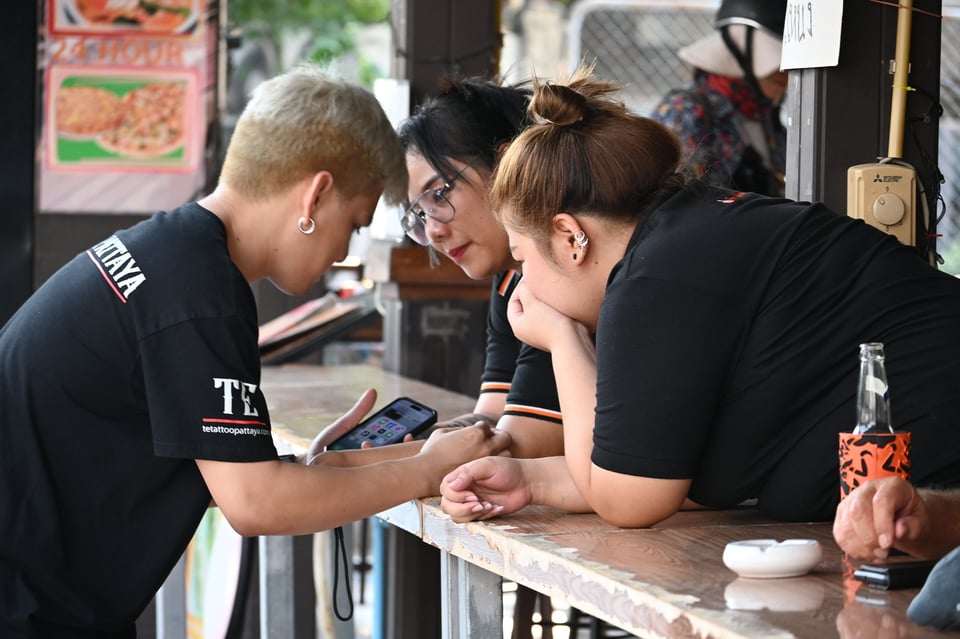
iPhone killer, qu'est-ce que c'est?
The trope of the inevitable “iPhone killer” persists because metaphors — like the brain is a computer — and myths — like that of linear progress — often overpower our ability to look at the world, observe what’s happening, and construct evidence-based explanations. The myth that Steve Jobs didn’t do research still pervades Silicon Valley. He just hated focus groups. I hate focus groups.
There are a lot of start-ups making features they’re marketing as apps, and apps they’re marketing as the One True Way Everyone Will Do Everything From Now On.
Look. At. The. World.
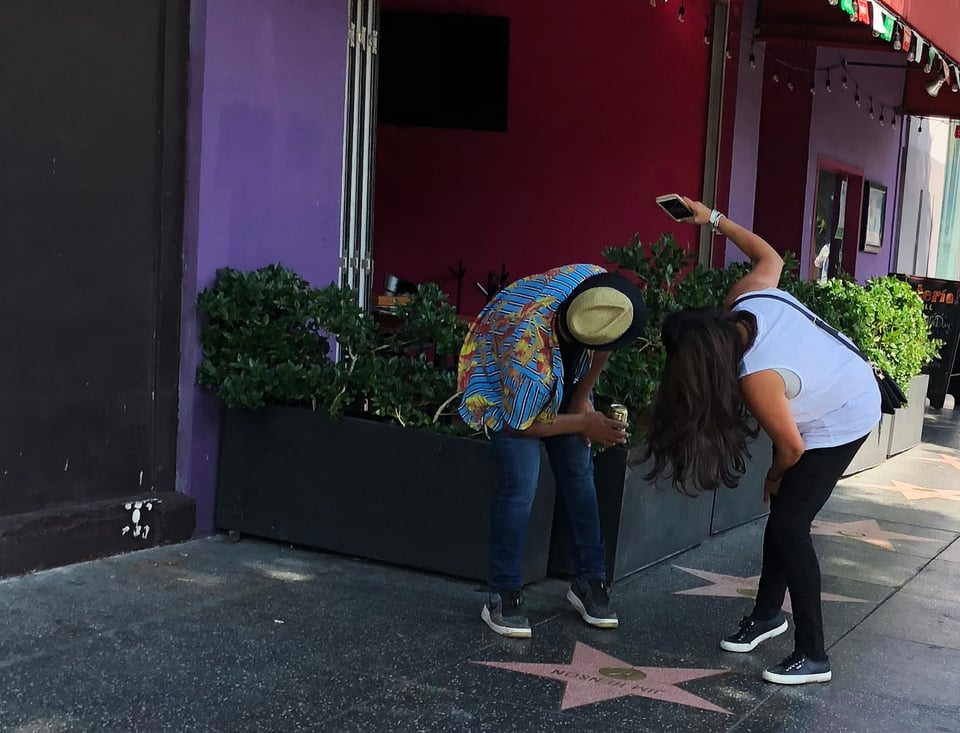
How many products and services have failed because the people making them willfully forgot humans are social, mobile, and multimodal? Not to get all end of history about it, but nothing is going to beat the screen in the hand for primacy in any of our lifetimes.
And far from an iPhone killer, the more of an agentic slopshow everything else becomes, the more valuable the iPhone/Apple ecosystem gets, especially with an aging population.
As a poster on Reddit said:
My face unlocks my phone, my phone unlocks my watch, and my watch unlocks my Mac so I never enter a code or password into any device beyond looking at my iPhone.
Is needing to lock into a high-priced private company ecosystem for safety and reliability ideal, or even preferable? Of course not. A 30% vig is outrageous for any platform and disadvantages small, independent businesses. We should have better regulation and data transparency, more choices (still mad about the headphone jack), interoperability and the right to repair. Life should be good outside the gated community.
We could at least get better about phubbing.
Phones down, pencils up
You don’t have to talk to strangers for this one, just look at them. Here is your 30-minute observational exercise, should you choose to accept it.
Locate a writing instrument, blank paper, and a public-enough place with some foot traffic where you can hang out for half an hour. Don’t be precious about pens or notebooks. As long as you have a hard surface to write on, any paper is fine.
Set a 30-minute timer on your watch or phone or pomodoro, and then put all devices away. Away away. Do not disturb away.
Now look. Just look at the environment around you. The buildings, the shrubbery, the people, the cars, the animals, whatever. When you see a person, notice whether they have any devices on them and whether and how they’re carrying them or interacting with them. And whether and how they’re interacting with other people. Jot down anything you notice. Briefly. A few words. In the worst handwriting. Doesn’t matter.
Also notice how you’re feeling about this. Good bad. Itchy about not touching your phone? Indifferent? Content? Bored? Anything else cross your mind?
Keep noticing the outside world. Notice hard, like you’re doing research for a Busytown reboot.
Stop when the alarm goes off. Think about what you noticed, and what you learned, if anything.
Feel free to report back! I’d love to know how it went and what you observed. Don’t worry. I won’t quote you without explicit consent.
🌳
*The thing to remember about The Alamo is that many Texans wanted independence from Mexico because the central Mexican government had abolished slavery. Even though he was against slavery in principle, Davy Crockett owned human beings, sorry.
*Arguably, smartphones are those things with physical keyboards that predated the iPhone. We should have a more generic term for the specific type of device, but “slate phones” never really took off. And Galaxy Buds totally sounds like a Saturday morning cartoon from the 80s.
*As evidenced by the fact that even Apple can’t get out from under its shadow. It’s the heart of the ecosystem. Face computing is not the future for the masses. Despite the poor sales of the iPhone Air, I wish they’d acknowledge the need and demand for a smaller iPhone in the other dimensions. The MacBook Air was fantastic. But a phone is not a laptop. Thin may be a cool engineering challenge and a buzzy announcement, but it doesn’t offer any advantage for people with smaller hands and pockets.