Dodging evitable futures, together
You are helping by doing what you can

Hey friends, thanks for clicking in!
We’re back with more thoughts about the difference between knowing something’s wrong and doing something about it, and how communication for advocacy can break down.
At the very end, you’ll find a delightful good example.
First, a few messages…
July 15th @ 11am PDT Let’s Do Design Research Right! Get excited about finding out you’re wrong as fast as possible, and help others do the same. Critical thinking for everyone!
📣
July 30th/31st @ 10am PDT Presenting with Confidence It doesn’t matter how good your work is if you can’t tell a good story about it. Enjoy two sessions with a small, supportive group, and emerge focused and energized.
AND, announcing:

In August and September (the Northern Hemisphere Summer Expanded Universe), we’re doing a series of shorter classes, some with guest instructors, on a variety of exciting and useful topics like:
- How to Sell Anything (as long as it’s good)
- How to Make and Market Books
- Talking to Strangers
- Conversational Design
- Design Ethics
- Cooking for Yourself (post-pandemic dinner burnout)
Get hyped. Registration will open next week.
🌴
It’s human to be immune to consultations
Among other things, design is systematic optimism. You have to be optimistic to think you can make meaningful positive changes and additions to the world. And, while there are many ways to attempt these changes and improvements, design is a systematic practice. There’s a process and a plan to meet the goals, even if both the process and the plan are subject to change along the way. It’s this uncomfortably uncertainty that separates doing something new from doing more of the same. (And more often than some people want to admit, doing what’s been done before is the best choice.)
Without optimism, professional design takes a turn for cynical opportunism. Intervening carefully in existing systems is hard. Maintaining a sense of possibility while facing the facts, doubly so. Success is often partial at best. It becomes easier and easier to justify going with the flow. And, over time, what started as an intentional practice leads to a place you maybe never would have intended at the start.
Flames, flames on the side of my face
A few years ago, we did a quick research and strategy project for a climate change NGO. Prior to this, I would have described myself as, I don’t know, climate aware maybe, climate concerned. I know the basics of carbon emissions. I believe the climate crisis is the most critical situation facing humanity and the other living creatures on this, our only planet.
I do things that feel vaguely climate-mindful, mostly because they’re what I want to do anyway: live in a city, ride a bike, avoid meat, use my electronics and clothes as long as possible, donate money, laugh ruefully while chucking plastic bottles into recycling because I know it’s a lie, things like that (avert your eyes from my dog, my cheese drawer, and my Trader Joe’s receipts). I’ve cut way back on flying. But I’m sure there are a hundred other things I buy and do and don’t think about that are incredibly carbon intensive because I live in the US and participate in society.
(NB for US pals: The Trader Joe’s Laundry Sheets are my very favorite thing at the moment because a plastic bottle of liquid detergent is truly indefensible.)
I was very excited about the project because I wanted to learn more about why we weren’t making more progress on this critical situation involving all of us. If shouting “Capitalism!” fixed things, I would have personally healed the planet by now.
The stated goal was to explore reframing some specific consumer-oriented interventions. Because every little bit helps, right?
In order to better understand the relationship between information, belief, and behavior, we did a pile of desk research and a couple dozen interviews. The desk research was eye opening, as it always is. When you stop to take a critical look at anything that hovers on the edges of your awareness, you get a heaping helping of “wow, never thought about it like that.”
Our research question was “How are mainstream publications and advocacy organizations communicating with the general US population about the climate crisis?”
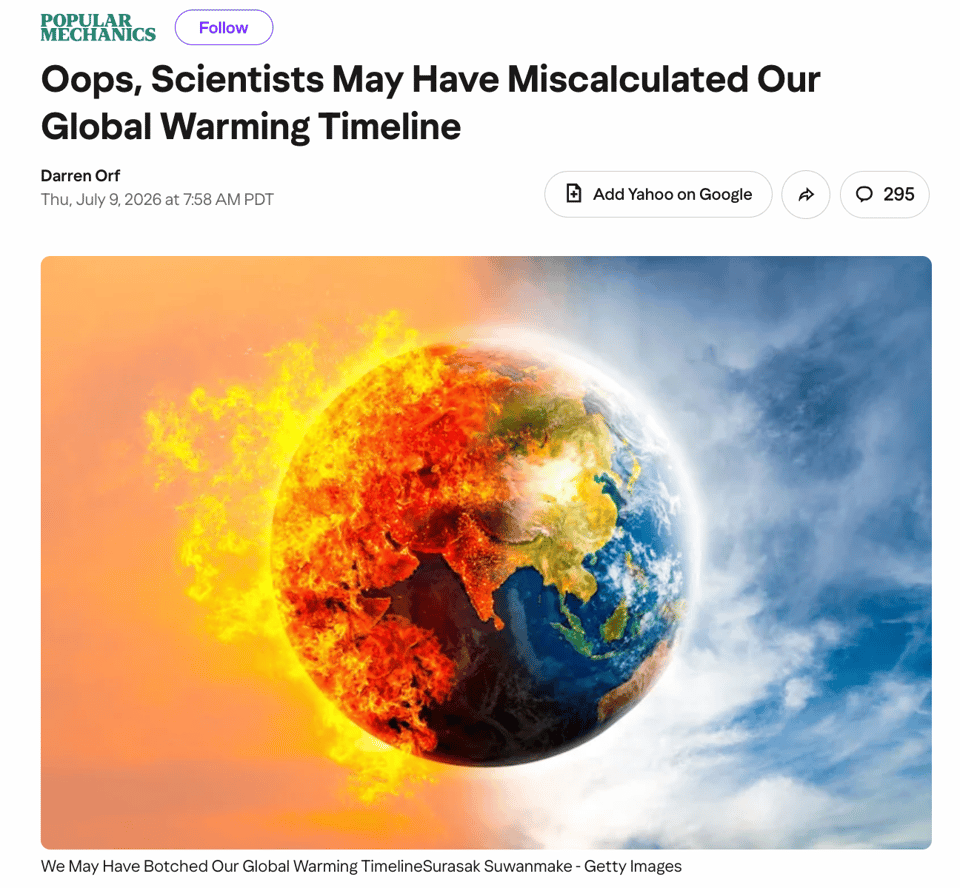
I don’t have to go back into my notes and reports. I can show you a screenshot I took 30 seconds ago.
Cool.
It was (and is) a lot of that. Planet on fire. Starving polar bears. Devastating storms. Scientists say it’s worse than you can imagine, so why even try. And, this just in, rising oceanic carbon dioxide levels are shrinking squid brains. So much for our cephalopod overlords.
On the advocacy and programmatic organization side of things, I found walls of text written at a grad-school level, complex infographics, and videos of such a length and complexity, they were giving “we didn’t test this with our target audience, whoever that is.”
What I found missing in most cases was any clear goal behind the communication, any coherent path forward, any compelling narrative based on a solid and plausible theory of change. It really felt (and still does), like the action in the call-to-action is “freak out.” Freak out and donate. Freak out your friends. Call your representative to say you’re freaked out (which you should still do, of course). Offset your freakout. Buy the t-shirt that says “I’m freaking out.”
The default goal, of course, is raising awareness. Raising awareness is the donor-facing euphemism for freaking out as many people as possible without affecting material conditions. Raising awareness can be good for raising money in the short term, often at the expense of meaningful longer-term progress. We’ll look at fundraising strategy another day.
This brings me to system justification theory.
It is what it is, but why?
Our work often happens in the gap between knowledge and action. It’s luxurious in there, a little messy, but very spacious.
Like I said, improving systems is hard (breaking them is easier) — even in the rare cases where cause and effect are well understood and there is broad agreement on goals. A whole lot of people can know something, but that probably won’t change anything.
Considering that the climate crisis is very much a resource allocation, governance, and justice problem…
There are the obvious barriers, like resistance from those who benefit from the way things are, in large and small ways.
Then there’s the curse of knowledge. The people with deep understanding and good intentions rarely communicate well. Effective communication requires its own set of attitudes and aptitudes. Forming an effective plan of action and communicating about it? Next-level.
And the highest, hardest barrier of all may be the extent to which people reflexively defend existing systems even when they themselves are disadvantaged or harmed by them.
OG Italian antifascist Antonio Gramsci got at this when he wrote “the great mass of people hesitate and lose heart when they think of what a radical change might bring…They can only imagine the present being torn to pieces, and fail to perceive the new order which is possible.”
(Isn’t it striking how many illustrations of a burning planet we see, and how few realistic images of just and sustainable futures we might be working towards? Even Tomorrowland is now completely incoherent.)
Social psychologist John T. Jost set out to explore the social side of this phenomenon in the 90’s.
“Why do people blame victims of injustice and why do victims of injustice sometimes blame themselves? Why do poor people often oppose the redistribution of wealth? Why do we tolerate political and economic corruption? Why is it so difficult to get people to stand up for themselves and each other, and why do we find personal and social change to be so challenging, even painful? Is there a common denominator here – a hidden factor that connects these seemingly unrelated phenomena?”
Based on their research, Jost and his colleague Mahzarin Banaji (of implicit bias fame) answered these questions, at least in part, with system justification theory [PDF].
Turns out justifying the existing system, even for those suffering under it, has significant psychological and social benefits. Rationalizing the status quo reduces uncertainty and threat, while increasing overall satisfaction. It also dampens interpersonal discord. Certainty, security, and strong social ties are deep human needs.
Raising existential threats and describing potential bad outcomes as “inevitable” only leads to more justification for the way things are going.
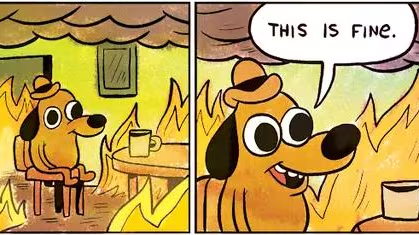
“To truly challenge the status quo…one must be willing and able to tolerate a great deal of uncertainty, potential threats to one’s safety and security, and the risk of being alienated or cut off from friends, family members, and others in mainstream society.” — Jost, 2018
Real change is possible, but it’s really hard. Doing the in-group/out-group thing and scapegoating the people who are suffering feels far easier.
We found that many climate journalists and advocacy organizations communicate in a way that paradoxically seems designed to promote system justification and passivity. They’re apparently still working from the information deficit model instead of engaging the public in a project that connects meaningful action with attainable goals.
Outraging is easier than organizing (look at every fundraising text in your phone right now). And unfortunately, it often provides cover for business as usual. Self-styled changemakers may secretly want something more superficial.
So, what are you going to do?
Our interviews focused on US homeowners with kids, screened for concern about the climate, figuring they would have a lot of stuff and a stake in the future. Our big question was: what are middle-classish people who say they care about the climate crisis actually doing? How should we understand the relationship between knowledge, belief, and action?
We found that even well-informed individuals who expressed concern, wanted to do something, and had capacity for action felt anxious and powerless. There was a lot of guilt and confusion about which choices were actually meaningful, and a lot of laughing ruefully while recycling. Taking care of family came in far ahead of anything else. (Obviously, right? But not enough outreach acknowledges this.)
One member of the client team objected to our report that it felt impossible to know what to do. (The information is right there, online!) So I brought up what was at the time the top Google result, a summary of an article from a few years prior.
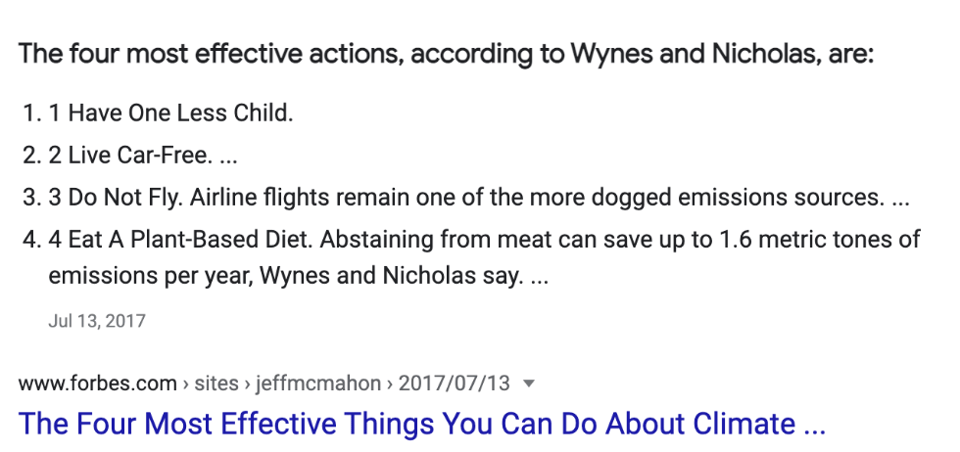
- Fewer. And fewer than what? Don’t think too hard about this. It gets grim fast.
- Impossible for most Americans, currently.
- And not visit grandma or go on vacation? Hard sell.
- OK, sure, but so many people are just trying to feed themselves and their kids in the middle of everything else. It’s not that simple, and again, I’m saying this as a person who loves lentils.
This is making parents feel bad, but not meeting them where they are or showing them the way.
Most of the people I interviewed expressed anger at even talking about this huge systemic situation in terms of individual choices. And they have a point.

I’m a Smokey Bear truther. A legacy of attempted wildfire suppression in place of indigenous practices is one of the reasons California has been having a bad time in the current climate.
The Smokey campaign — most popular public service announcement campaign ever — is emblematic of so many messaging campaigns. Popular and effective are very different things. (If you’ve heard of a “carbon footprint” you probably also know it’s greenwashing.)
This sort of focus on individual action and individual responsibility, absent the larger/historical context, not only shifts attention away from the big bad actors and incentive structures, it makes it easy to blame those who lack power and choice. And, OK, it’s a little funny the Forest Service just put Herbert Kitchener in a fursuit via Uncle Sam.
Compare this poster from a British WWII campaign depicting various ways to decrease individual resource use. It’s not that individual action doesn’t matter, but it is necessary to be realistic about how much responsibility the average person shoulders, and acknowledge that not everyone can or will take every possible useful action.
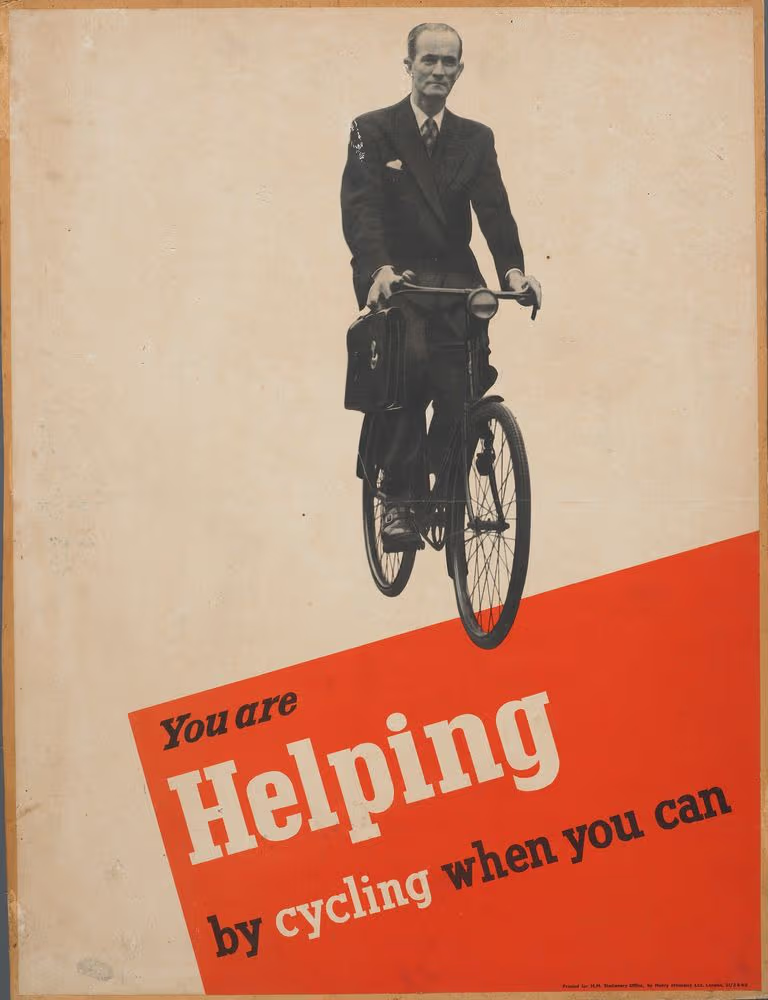
Even in an individualized society, a little encouragement can go a long way to bring people back into community.
Together, we evit
evitable: capable of being avoided
Latin evitabilis, from evitare to avoid, from e- + vitare to shun
(If you haven’t watched Widow’s Bay yet, I don’t want to spoil it, but they really Kobayashi Maru the heck out of the trolley problem. Breathtaking.)
We are all part of the same thing. This means everything is connected. It doesn’t mean we all have the same roles and responsibilities.
If you are trying to rally people to change a system, or change the trajectory of an existing system, you have to start with clarity and honesty about your position, your relationships, and your goals. See who else is doing the work first.
Think about it in terms of a collaborative group project. Who needs to do what in order to make material progress? Are you focusing on informing or “raising awareness” when you should be listening, engaging, and organizing?
Do you even have a plan, or a clear goal?
If you do want to encourage action towards system change — we’re not talking about an immediate crisis here — without triggering system justification, or accidentally undermining your message and demotivating your audience, here are some suggestions:
- Assume you’re talking to people who are some level of freaked out already while dealing with their daily life responsibilities
- Articulate a clear positive vision of where you’re going, with a plan, even if you expect the plan to change
- Put calls to action in context of that plan, to decrease uncertainty
- Be realistic about the amount of effort and time progress will take, to set better expectations
- Celebrate incremental wins
- Emphasize that many people are helping to carry the work forward, and don’t be afraid of sharing credit or attention
- Be mindful of the emotional responses you elicit and how they connect to action
- Try not to trigger existential despair, please, we have so much already
And listen. Always be listening to and interacting with the people whose participation you depend on. This is the only way to make sure you’re really meeting them where they are. Building relationships is foundational work, and fun, if you do it right.
Ultimately, this is all really a verbose way of saying, just do what Mamdani has been doing.
“Just.”
🌻
And as promised…
Berkeley Rent Board Commissioner, architect and artist Alfred Twu made an illustrated guide to California propositions. It’s great. It helped me. We have so many confusing conflicting ballot measures (because money), often the majority votes NO on laws they might otherwise agree with.