Help the socialists save the forest
What to do when there's no undo
Hello friends, thanks for clicking in!
We’re talking about trees and history and acceptance and joy and repair. Read to the end for good vibes and things that technically are not trees.
Right after these messages…
Thursday, October 8 @ 8am PDT| Let’s Do Design Research Right! No matter how fast the answers come in, stakeholders will keep ignoring evidence until your org gets its process in order. So, get in here and learn how to ask the right questions. It’s a good time.
📢
Thursday & Friday, October 22 & 23 @ 10am PDT | Presenting with Confidence Get your soul uncrushed and your story on point in 6 intensive hours of small group instruction and practice and pep talks.

Summer finally ended (here in the NorHemi). We’re keeping the magic going with Spooky School. What’s scarier than negotiating, right?
Friday, October 16 @ 10am PDT | How to Negotiate We’re talking leverage. We’re talking information asymmetry. We’re talking mutually beneficial outcomes and dodging bad deals.
🎃
For our friends in the US, enjoy and share a field guide to overcoming barriers to voting in English and Spanish, created with Dana Chisnell, cover illustration by Lucy Bellwood, and thanks to the participation of a few other volunteers.
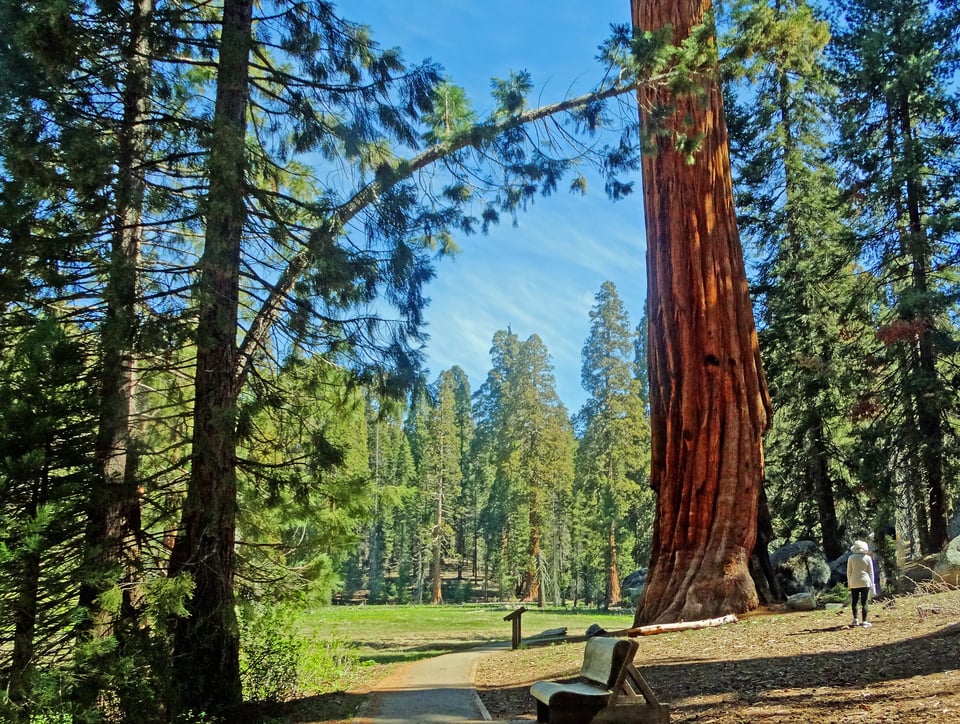
Big trees!
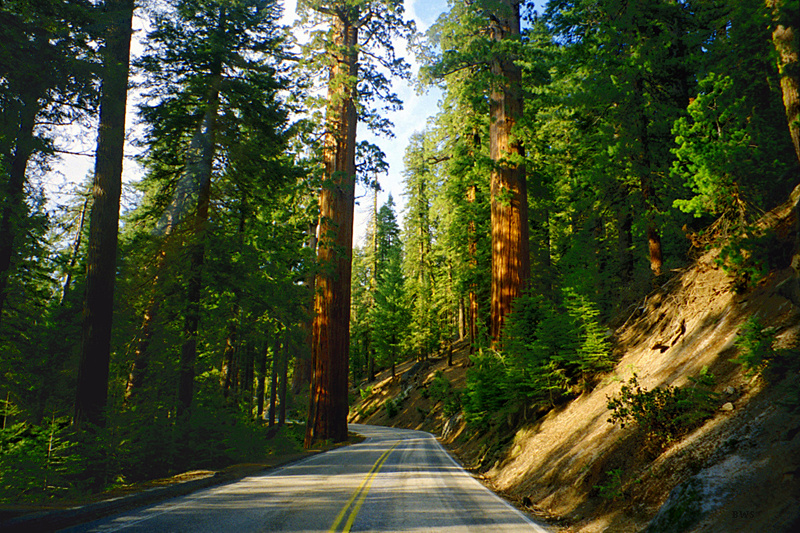
The summer after my first year of college, I went to work as a housekeeper in Sequoia National Park.
I did not have unpaid internship connections (or means). I only had low-paid work connections, that is to say access to the big folder of miscellaneous summer job opportunities in the career center.
Cleaning guest cabins for tourists from all over the world at 7,000 ft elevation among thousand-year-old trees was so much more invigorating than spending the summer in an office. And I learned at least as much. More! (There’s no such thing as unskilled labor.) Housekeeping is a heck of an anthropological field study. Plus, bears.
I developed one of my guiding life principles on that job, cheerful fatalism.
Every morning, we had to arrive ready to work at the laundry dock at 8am. This meant I had to get up at 6am to shower, dress, eat breakfast, and walk the mile down the trail from the employee housing area to the guest cabins.
I had a car with me, but every morning I walked to work. Or rather hiked, in my hiking boots, down the hiking trail. I was living in a place other people came to vacation from around the world, so I treated my morning like I was getting my daily recreational hike in. Most of the way was on the Big Trees Trail around Round Meadow. This is a spectacularly beautiful place with a name so underwhelming, John Muir must have been involved.
The first thing we had to do every morning at 8am was clean the group restroom and shower building. This was a somewhat heinous task. I’ll leave it to your imagination what the guests had wrought overnight.
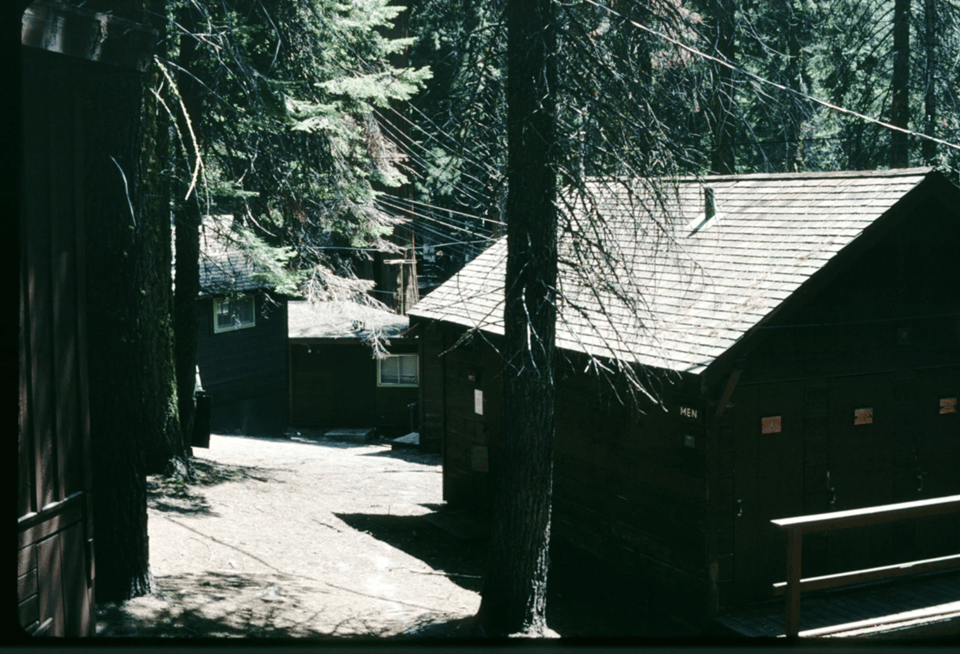
The rest of the mostly youth workers were grumbly about the whole situation, but I looked around and thought, I signed up for this, I’m in a place of unparalleled natural beauty, and I have a tremendous opportunity to be annoying.
It’s important to recognize when you’re a tourist.
So, I skewered several fresh rolls of TP on my plunger, and plunged into the fray, with aplomb. Gotta do it, might as well be cheerful. I might have composed a little plunging ditty to go with it. Then it was on to linens, and bedmaking, and sweeping, and avoiding the scorpions in the woodpile.
The difference between cheerful fatalism and the resigned fatalism of “It is what it is” is that it’s actually essential to be joyful and feel connected so that you can do what has to be done and face what has to be faced. Joy isn’t compulsory, and it certainly isn’t always possible, but if you wait until there are no bad things to appreciate the good things, you will never.
Right now, it feels like a lot of our previously more functional systems have gone sideways because there’s a lack of both joy and accountability. And like everything, those things are connected.
“Our task as humans is to find the few principles that will calm the infinite anguish of free souls. We must mend what has been torn apart, make justice imaginable again in a world so obviously unjust, give happiness a meaning once more to people poisoned by the misery of the century. Naturally, it is a superhuman task. But superhuman is the term for tasks we take a long time to accomplish, that’s all.”
— Albert Camus, “The Almond Trees” (1940)
Destruction can happen so quickly. Growth and restoration take time.
Giant sequoias are the most massive trees on earth. Apart from a few planted in odd locations, these particular organisms exist only on the western slope of the Sierra Nevada mountain range in California in moist sites between about 5,000 — 7,000 feet in elevation. Some have managed to survive thousands of years, just an incomprehensible amount of time (the oldest known clocks in around 3,200 years).
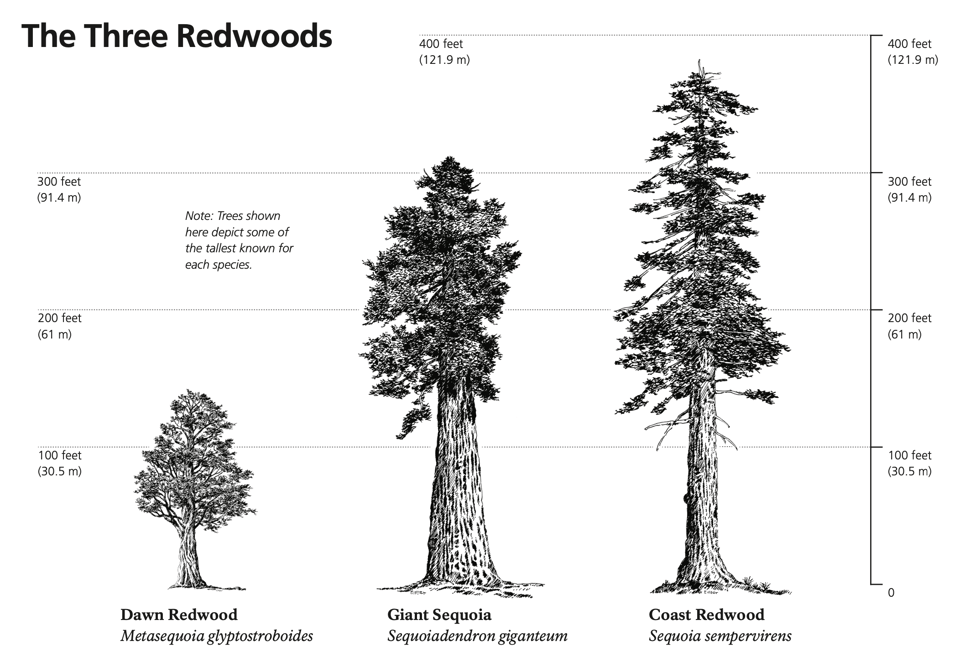
The “General Sherman” tree is the largest (single stem) tree in the world, by volume. (Pando, a quaking aspen in Utah is one tree with 47,000 stems connected by a single root system over 160 acres. So this is also a story about the insufficiency of ranking.)
They are adapted to wildfire, and in fact, require fire, well, at pre-21st century levels.
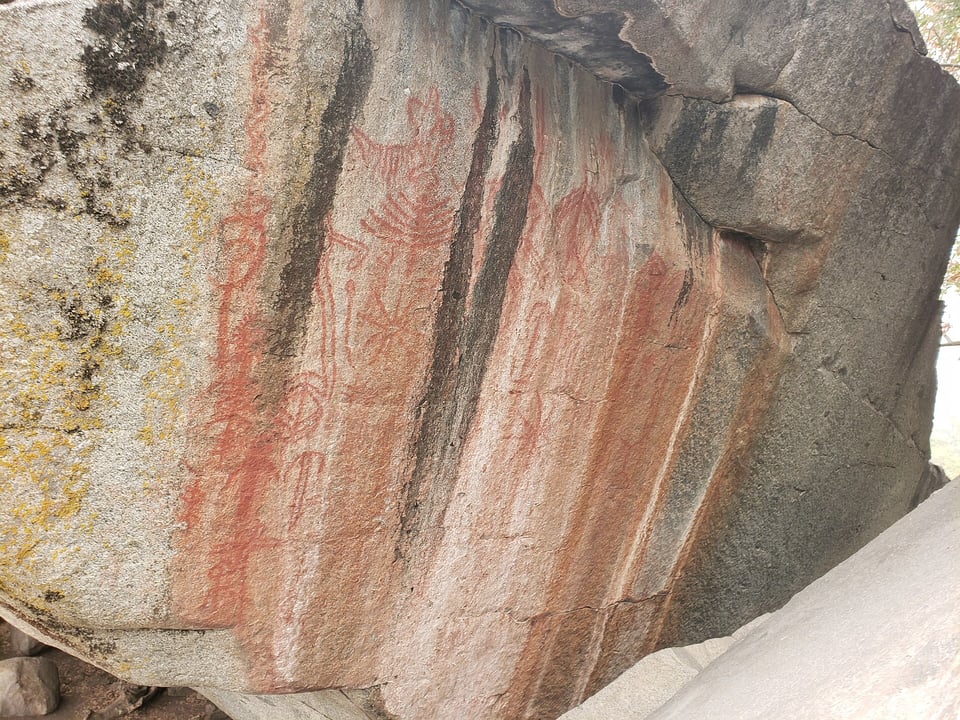
Prior to the US occupying and annexing California in 1849 (coincidentally right at the start of the Gold Rush), Native communities resided in and around the forests and managed them with intentional burning. Small fires clear out the underbrush and branches that could otherwise fuel conflagrations. The practice was outlawed in 1850 with the passage of the Act for the Government and Protection of Indians (a law with a proto-Orwellian name that also effectively enabled genocide and enslavement).
In rapid succession, settlers, logging, tourism, and catastrophic fires followed. Relative to the life of a tree, everything changed in a minute. There was a lot of discussion over which white guy to name the species after.
Business being business
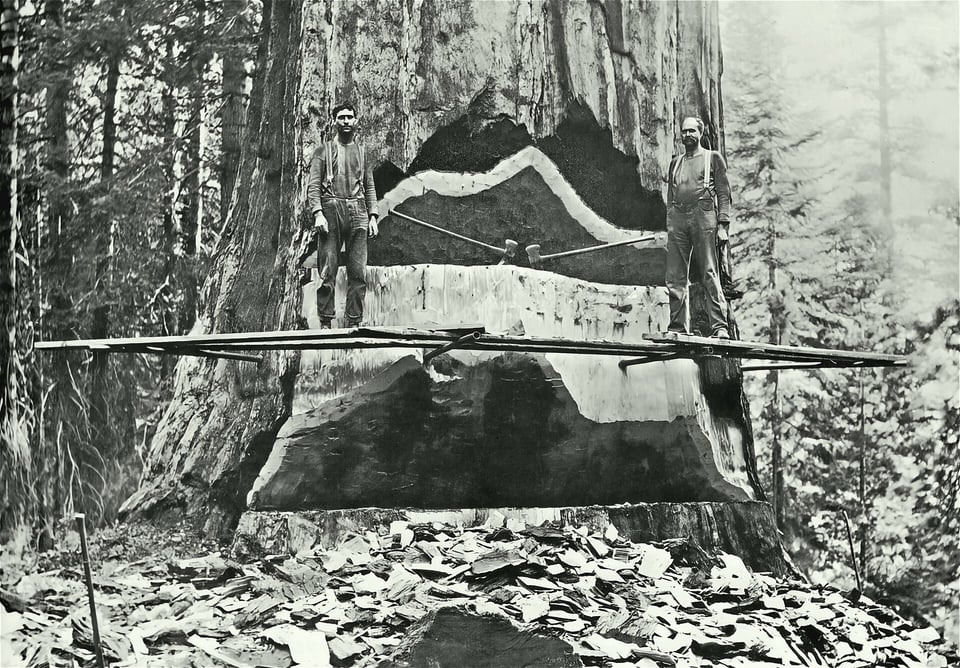
I don’t know anyone who’s spent time around ancient redwoods who doesn’t feel awe. It is viscerally, deeply upsetting to think of cutting them down. (It is also upsetting to learn that the most passionate early redwood conservationists were eugenicists who considered redwoods the Nordic people of the forest.)
The US government didn’t come around on the idea of conservation for quite some time. Initially, the plan was to survey acquired land and sell it cheap to private citizens who could log whatever was unfit for farming.
The San Francisco-based founders of the Kings River Lumber Company acquired 30,000 acres of Sierra forests and soon they were losing so much money logging fir, pine and cedar (giant flumes aren’t cheap), they decided to make it up on volume. Coastal redwoods, like the kind in Muir Woods near San Francisco (as seen in Rise of the Planet of the Apes) produce strong, high-quality lumber. Giant sequoias looked to those logging operators like thicc redwoods stacked with cash. A largely immigrant workforce toiled 6 days a week for years, clearing out the Converse Basin Grove.
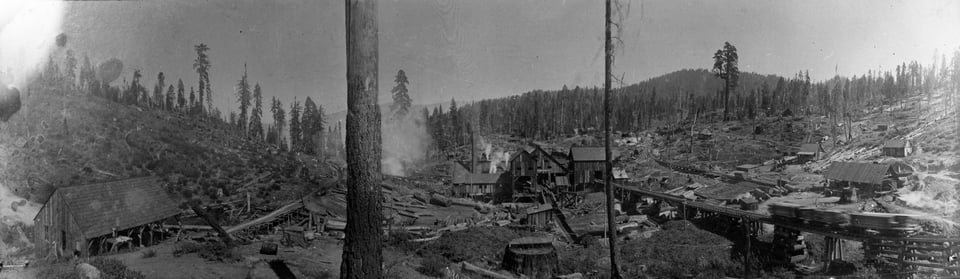
Bad surprise! Sequoia wood is actually light and brittle. About half the trees smashed into useless chunks before making it to the mill. In the words of William “Bill” Tweed, author of King Sequoia: The Tree That Inspired a Nation, Created Our National Park System, and Changed the Way We Think About Nature:
“Business being business, once you’ve invested that much money, you have to keep trying. So they cut down pretty much the entire grove trying to find a way to make money cutting down the grove.”
The more things change…
By the time the company had changed hands a couple times and their creditors caught up with them, 8,000 ancient trees had been reduced to stumps. You can visit the one they spared for being exceptionally large.
A group of utopian socialists called the Kaweah Colony also set up camp in the area. They built roads and operated their own sawmill. Vowing not to cut down the big trees, they renamed the previously designated General Sherman tree in honor of Karl Marx. (Sherman had been an advocate of slaughtering bison to force Native people to relocate, so they weren’t keen on that guy.)
Park Status
“The more one knows of its peculiar history, the more one realizes that wilderness is not quite what it seems. Far from being the one place on earth that stands apart from humanity, it is quite profoundly a human creation—indeed, the creation of very particular human cultures at very particular moments in human history. It is not a pristine sanctuary where the last remnant of an untouched, endangered, but still transcendent nature can for at least a little while longer be encountered without the contaminating taint of civilization. Instead, it’s a product of that civilization, and could hardly be contaminated by the very stuff of which it is made.”
— William Cronon, “The Trouble with Wilderness; or, Getting Back to the Wrong Nature”
President Benjamin Harrison signed legislation that established the Sequoia National Park on September 25, 1890, mostly ending logging in the area.
Ken Burns’ documentary is titled The National Parks: America's Best Idea, not “America’s Flawless Idea.” Conserving the land often entailed displacing people and constructing a romantic myth alongside all the park amenities — then, over many years, reckoning with the origin and its implications. Over time the National Park Service has continued to engage critically with history and adapt their approach to park administration and public education based on scientific evidence and an ethos that balances conservation with accessibility. The argument for returning the land to its original caretakers continues.
The summer I worked in Giant Forest, there was already talk about the changes that were coming. The NPS was planning to rip out a couple hundred buildings, including all the cabins and most of the infrastructure where I worked, restoring the area to protect one of the densest groves of monarch sequoias (the largest and oldest) in the world.
What I didn’t know until about a week ago was that those changes were in the works for 70 years.
Before the NPS existed, the park was managed by the US Army, first by Buffalo Soldiers, members of the Black regiments formed after the Civil war. Brigadier General Charles Young became the first African-American national park superintendent and in very short stints over a couple of summers got major roads and trails built and shooed out the sheep. Read his story. What a life. (NPS has good photos, but glosses over the reason his deserved promotion to Brigadier General only came posthumously. The rank would have required white soldiers to report to him.)
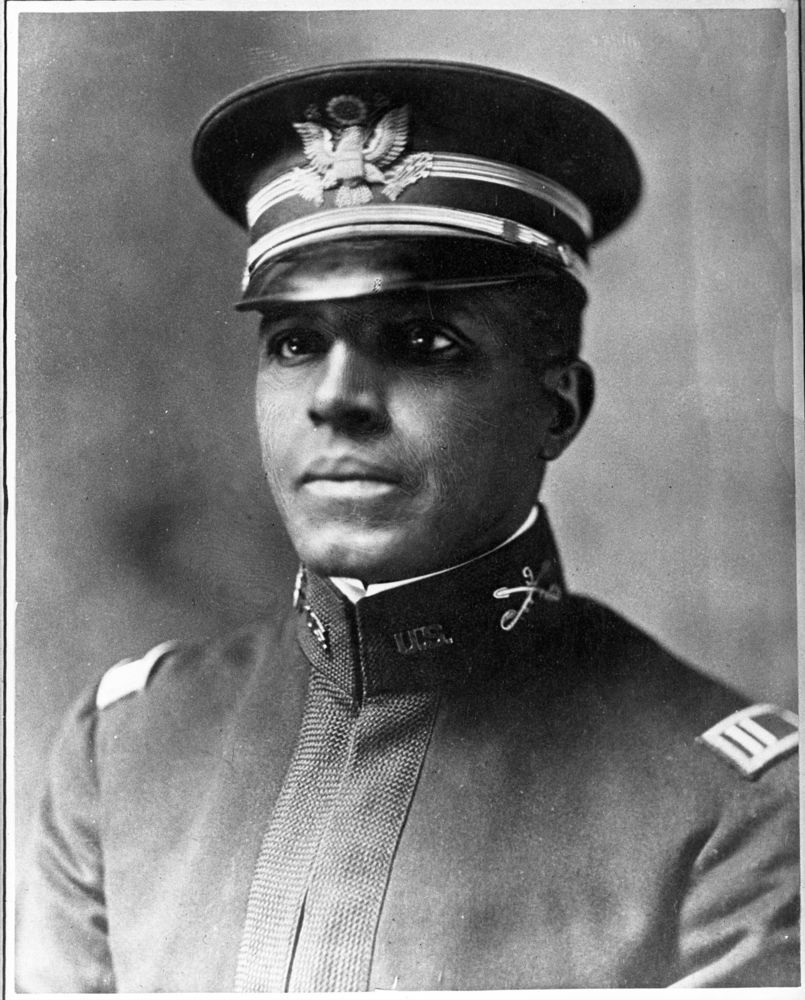
"Indeed, a journey through this park and the Sierra Forest Reserve to the Mount Whitney country will convince even the least thoughtful man of the needfulness of preserving these mountains just as they are, with their clothing of trees, shrubs, rocks, and vines, and of their importance to the valleys below as reservoirs for storage of water for agricultural and domestic purposes. In this, lies the necessity of forest preservation."
– Captain Charles Young in Report of the Acting Superintendent of Sequoia and General Grant National Parks, California, October 15, 1903
That characteristic park ranger hat is a legacy of the federal troops supervising the parks in the early days.
Thanks to improved roads and trails, more tourists could visit. As more tourists visited tent camps were joined by a lodge and cabins and traffic.
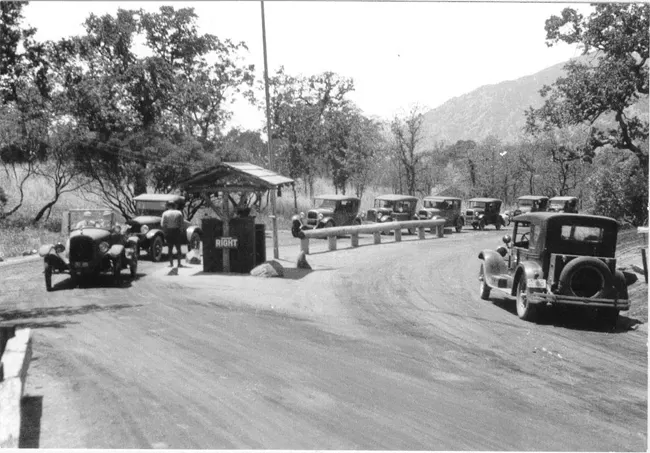
A tension and a power struggle particular to National Parks exists between the Park Service and its concessionaires, the private, for-profit businesses that run the visitor amenities and accommodations. What constitutes “necessary and appropriate” is debatable, as are the reasonable levels of both service and profit. (The official NPS visitor center shop usually has the better merch.)
The railroads built the first facilities. Then it got chaotic. Then it got slightly more organized, and also contentious.
In 1920, Colonel John R. White took over as park superintendent. He was born in England, fought in the Greek Foreign Legion, did a bit of fortune hunting in the Yukon, joined the US military and managed a penal colony in the Philippines. Those are just the major highlights. Before email jobs, people really did some stuff. (If you’re in the mood to read a masters thesis, Colonel John Roberts White and sustainable management from the Philippines to Sequoia National Park by Geoffrey Kida is some compelling material.)
After returning to the US in 1919, Colonel White took a job as a lowly park ranger cleaning stables in the Grand Canyon and quickly moved up and over to run what was then called Sequoia and General Grant National Park.
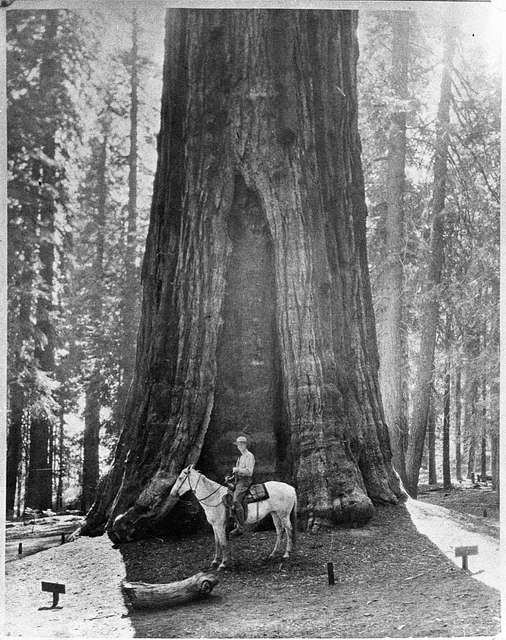
His first priority was to promote the park to the public, but then he was successful. Within a few years, concerns about the impact of tourists and their cars took priority. NPS Director Stephen Mather commissioned Emilio Meinecke, an eminent forest pathologist to conduct a study of the effect of tourism on plant life in 1926 and by 1927 Colonel White was convinced all the Giant Forest cabins had to go (the same cabins I was cleaning over 60 years later). His nemesis during his tenure was Howard Hays, president of the Sequoia and Kings Canyon National Park Company. Hays was adept at working the organization and continuing to build. By 1941, his company owned 180 buildings in and around Giant Forest.
Colonel White retired in 1947. It would be another 50 years, long after he died, before the NPS put his plan into action. They did it, though.
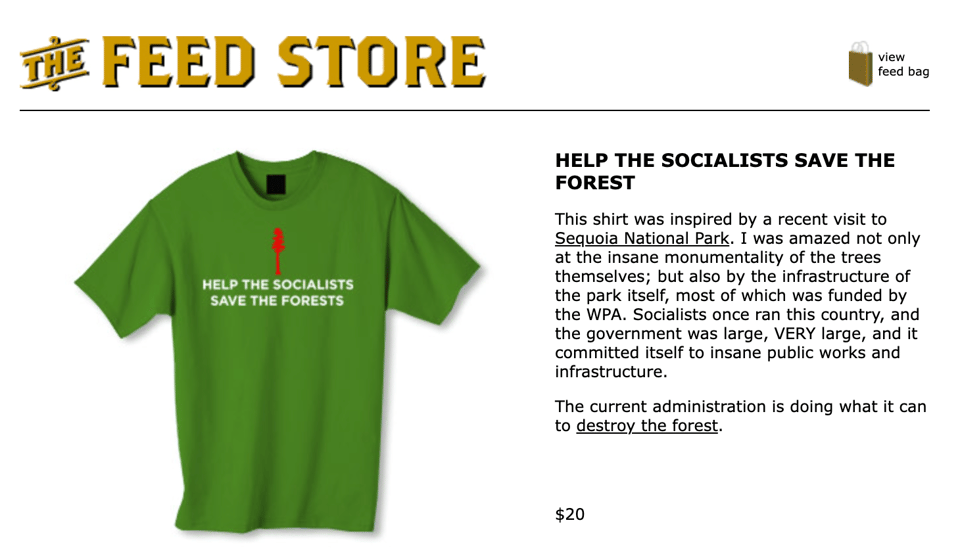
The area where I worked is now beautifully restored to a state of much less human impact. You can see some fun before and after photos The design agency in charge of their part of the work did a case study for Landscape Architect. And if you want that same retro tourist 1930s shack experience, that’s still possible a few miles down the road at Grant Grove.
I’ve visited a few times since all the work was complete. My favorite part of the redesign is the General Sherman Tree trail. Instead of driving right up to the base and being completely unimpressed by one of the largest organisms on earth, visitors now start a half mile away and see the tree top down with interpretive signage along the way. It’s the perfect example of adding the sort of friction that supports an experience.
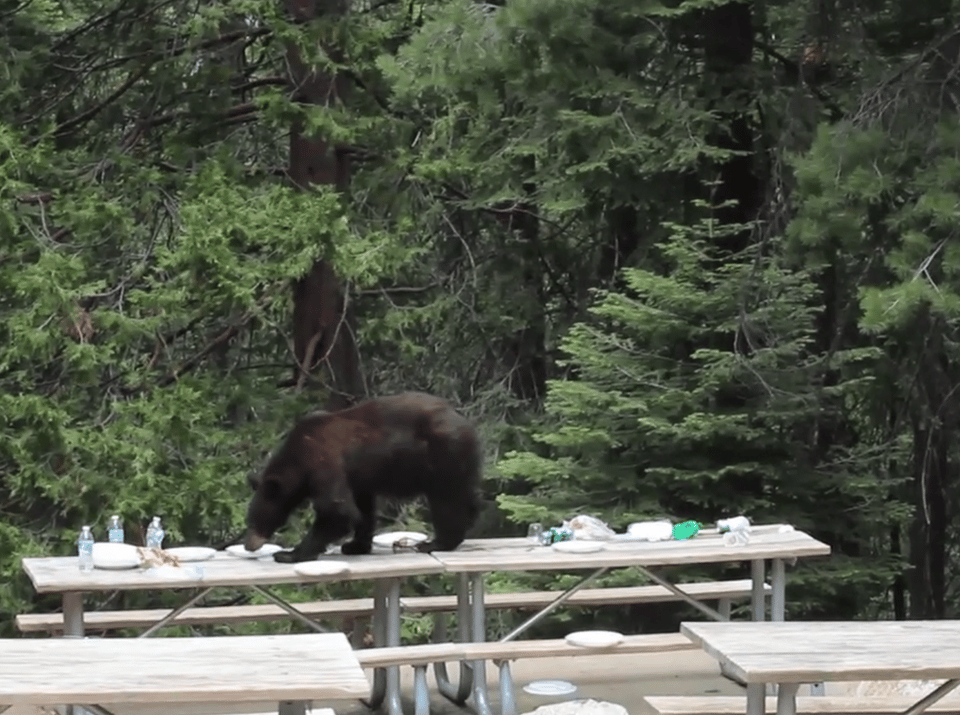
The Pinewood Picnic Area has replaced the former employee cabins. The last time we were there, a young black bear traversed one of the fully-laden picnic tables then plopped down in front of a grill to help itself to some guy’s burgers. Designing a less appealing bear buffet might be next on the list.
So, about that fatalism
We’re in a moment that demands some perspective. So, it felt necessary to take us on a 150-year journey among thousand-year-old-trees. The best time to stop mindless destruction is before it starts, but the second best time is now. And everything and everyone is complicated.
The fatalism I’m talking about isn’t giving up and embracing the inevitability of the evitable. It’s facing how we got here before deciding how to move forward. Staring right into the mess of it all. And not only do you have to plant trees (and plan for trees) you’ll never get to enjoy, sometimes it’s just your job to deal with some shit. And that’s great, if you have the tools. Building gets the glory, but maintenance is the main thing, and repair is where we’re at. Just do what you can, in the time that you have, with a song in your heart.
One must imagine Sisyphus happy, after all.
You know what’s not a tree
The last time I saw LA journalist Alissa Walker in person, she handed me a sticker reading PALMS ARE NOT TREES in so-cal pastels. It’s true. Palms are big grass that developers imported to give early Los Angeles an exotic luxury vibe, and now they’re aging out and dying. That arboreal redesign going to be quite a set of conversations.