
Not without a fight
Good things are possible through uncomfortable conversations
Hey friends, thanks for clicking in!
This week, we’re talking about power, and struggles. And how to get good things. We are still sad about Dolly and Tim.
At the end, a photo of Rupert the day we met, 17 years ago.
Right after these messages…
🥫
[Past upcoming events snipped from archive]
If your team needs help with research, collaboration, or communicating across disciplines, get in touch about an in-house remote workshop, just for you.
Need strategy consulting, practice development, or anything else? We’re happy to receive your inquiry anytime: [email protected]
Take a seat
My first apartment in San Francisco was on Castro St. directly across from the Castro Theatre, a gorgeous 1922 movie palace with a Wurlitzer organ and 1400 seats, running a repertory film program. Because I lived directly across the street, I was always missing movies I wanted to see. Coming attractions were listed on the front of the marquee, but that day’s shows were on the side. Yeah, I probably had the monthly calendar on my fridge.
The Castro Theatre is an iconic part of the Castro District, one of the most famous gayborhoods in the world. The year I moved to San Francisco, HIV/AIDS was the leading cause of death among all people 24-44 years old in the US, and it was devastating in the SF LGBTQ community. I thought a lot about why that beautiful Edwardian 1-BD was standing empty when I arrived, and I tried to be a good neighbor. The Castro was a beacon of community and joy in the heart of loss and grief. Nearly every day, you could go be among people and watch a good movie or two for about five bucks. (I won’t tell you what my rent was.) It hosted and still does, film festivals, drag shows, fundraisers, and memorials.
[Fast forward 25 years]
In the spring of 2020, The Castro, like all indoor venues in the city, went dark. No gatherings. (So grateful for the dog park.)
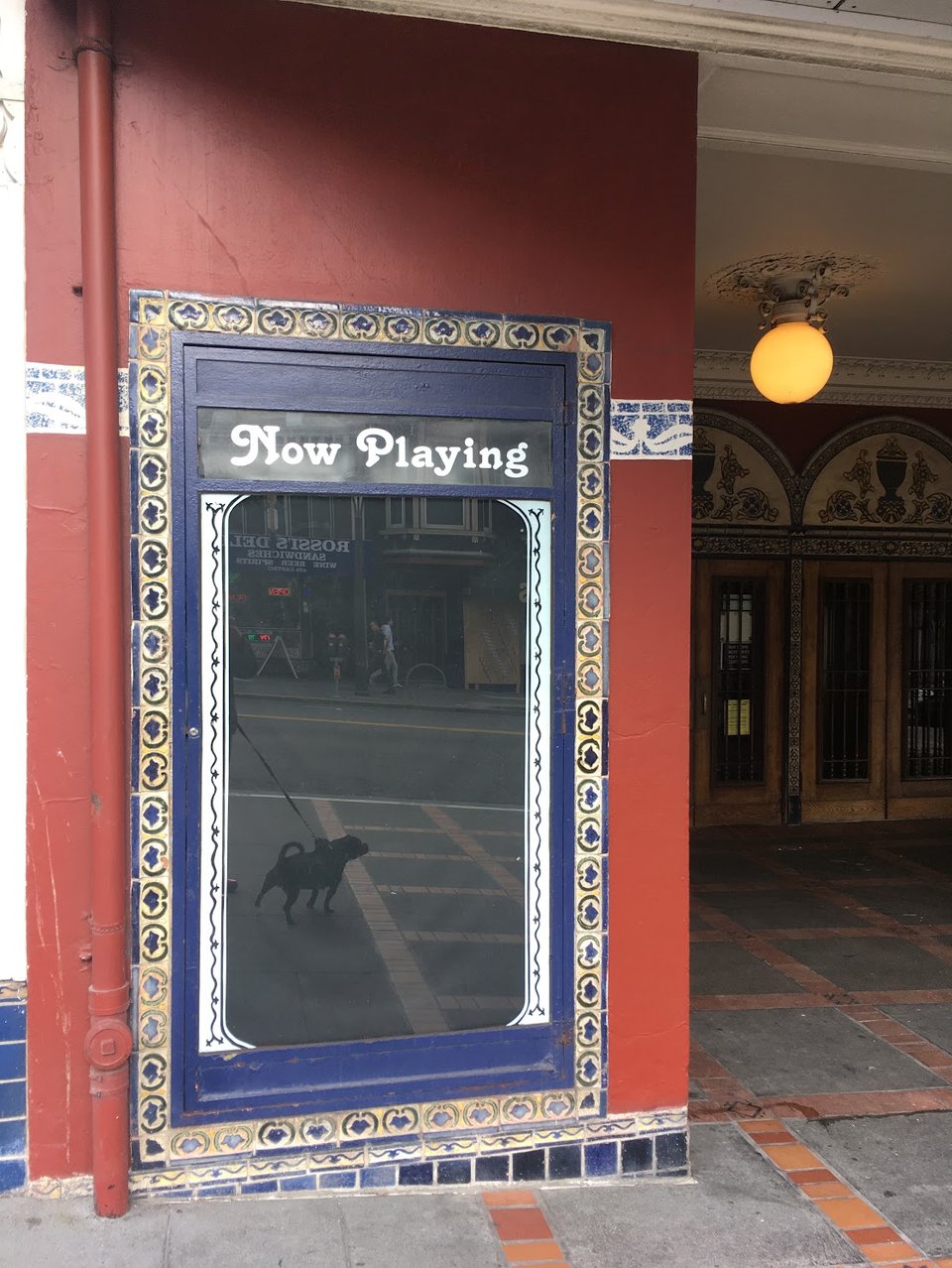
I ran into, or rather spotted from a distance, a friend and her son on a walk through the neighborhood in the early days of Covid. He was excited see Rupert again, and he wanted to come over and pet him. We had to tell him no. We had to assume that wasn’t safe. That’s when I started to feel what we were in for.
The Castro stayed dark for a couple of years. And the rumors did what they did, and swirled. And we worried it was going to be one of those places that would never open again. Then, Another Planet Entertainment (APE) announced they were taking over the lease and doing a major renovation, but into a live music (and movies, too, we promise!) venue. And doing this would require ripping out the seats.
You have to understand, the seats were terrible. I sat through Doctor Zhivago (200 minutes, with one intermission) in those seats. Afterwards, it felt like my ass had endured exile in the Urals.
That’s not the point.
To many people, the seats represented the legacy and identity of a landmark, a sacred queer space, the future of the art of cinema as a big, beautiful, communal experience. OK, the seats themselves didn’t represent all that, but their protection as part of the landmark designation represented a defensible position.
So there was a fight. A whole new preservationist non-profit spun up. There were so many hearings and protests over landmark status, and seats, and the angle of the floor, and programming, and a coffee shop and a nail salon, and all of this was really about history and the future, and trauma, and grief and art and community and neighborhood identity in the middle of another period of massive death and loss.
Plenty of locals thought fighting over a bunch of bad seats was…quixotic to put it kindly. Filling a 1400-seat rep house nightly in a 21st century, Covid-times, streaming-video world is a tough proposition. We have an increasing number of non-profit cinemas, all an order of magnitude smaller.
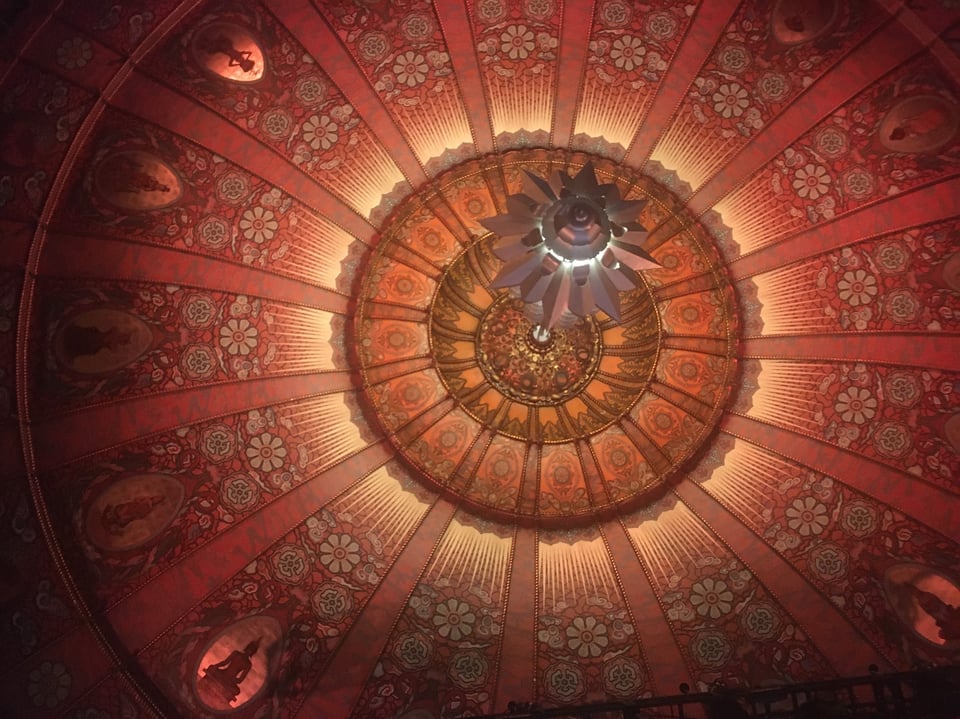
A few years and $41 million later (original estimate $15M), The Castro reopened in February. It’s gorgeous, stunning. APE isn’t making that money back in my lifetime. They got all the nicotine stains off the ceiling, and that’s the least of it. The first thing I saw was RuPaul’s Stop That Train, an incredibly stupid movie (complimentary), in a packed and joyful house. The new seats are perfectly fine for films, and removable for everything else. They are so much more comfortable.
Then, I went to a couple of concerts. The first I saw from the floor, which mechanically converts from raked to tiers. So clever. Fantastic for visibility.
For the next show, I was up in the upper balcony where the historic seats were preserved. The sound is truly phenomenal to the rafters. By the encore, however, my ass felt like it had endured exile in the Urals. So, caveat sessor.
I hope it’s great for local, independent businesses that so many people are out and about before and after shows, and I hope the visitors act like good neighbors.
I ran into our friend Gordon in the dogpark. “Hey,” I said. “After all that fighting, the whole renovation really came out great.”
“It came out great because we fought.” He replied.
Before you ask “How might we…,” ask “What gives us the right?”
I’m getting a little nostalgic about Post-It mania now, given [gestures broadly] but for at least a solid decade there, a somewhat shallow and dogmatic flavor of Design Thinking was the hotness in boardrooms of every description. So many meetings started with someone going up to the whiteboard to write “How might we…?”
Often attributed to IDEO, this framing device dates back to the work of Dr. Sidney Parnes, co-creator of the Osborn-Parnes Creative Problem-Solving Model (every 90s design agency had their own branded variation) with BBDO ad agency founder Alex Osborn. Osborn invented brainstorming, which is bad, sorry, based on his interpretation of Paripraśna, a Hindu tradition of sincere, thoughtful inquiry, which is something else entirely.
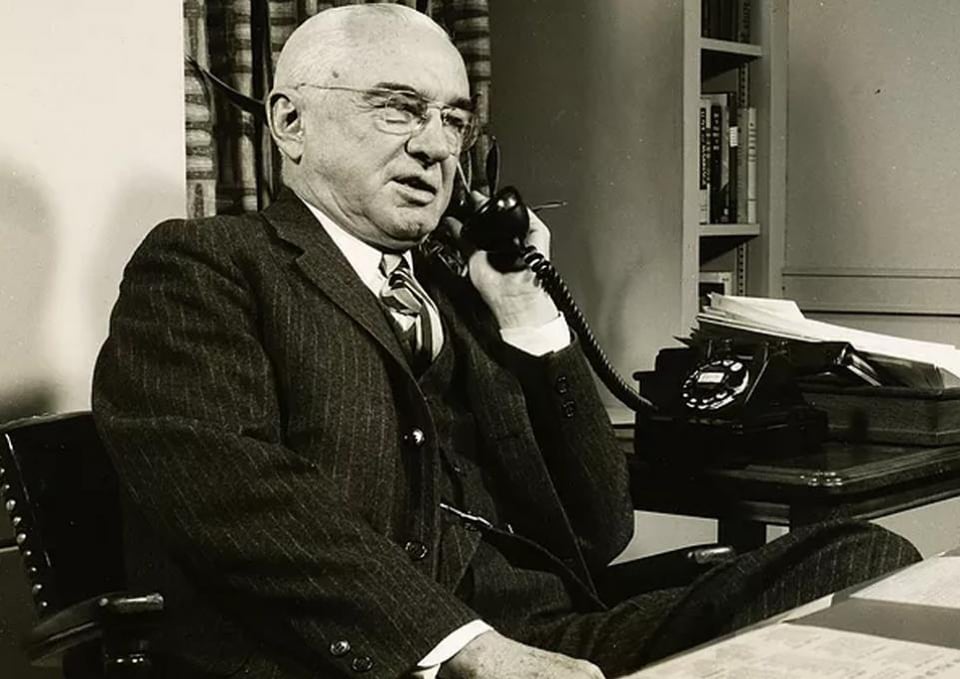
Please, brainstorm questions, not ideas. And always look up the origin of conventional methods. You’ll learn some wild stuff. A Source Book for Creative Thinking is great for historical context.
It’s not that asking “How might we…?” is without utility, but it’s often the wrong place to start. The problem is the embedded assumption, the unexamined embedded assumption that doomed Design Thinking as popularized: that it is a universal approach capable of humanizing and elevating and achieving virtually any goal.
Because sometimes, the truth is maybe you can, but you shouldn’t. Or maybe you actually can’t.
Design is the process of intervening in the lives of others in order to achieve your goal. If you’re designing your own backyard chicken coop and you don’t have any near neighbors, then sure, that’s between you and your chickens. But professionally, we’re talking about design in the context of systems, and products, and policies, and information, things that involve other people.
Asking how you “might”, assumes you have the right. So, that’s really the first thing you need to question. Maybe you or your organization aren’t the appropriate people to be making those choices on behalf of that population. This could be the case for a variety of reasons, including your position relative to the situation, ethical considerations, your (lack of) expertise in that domain, or simply that they won’t buy what you’re selling, metaphorically or with cash money.
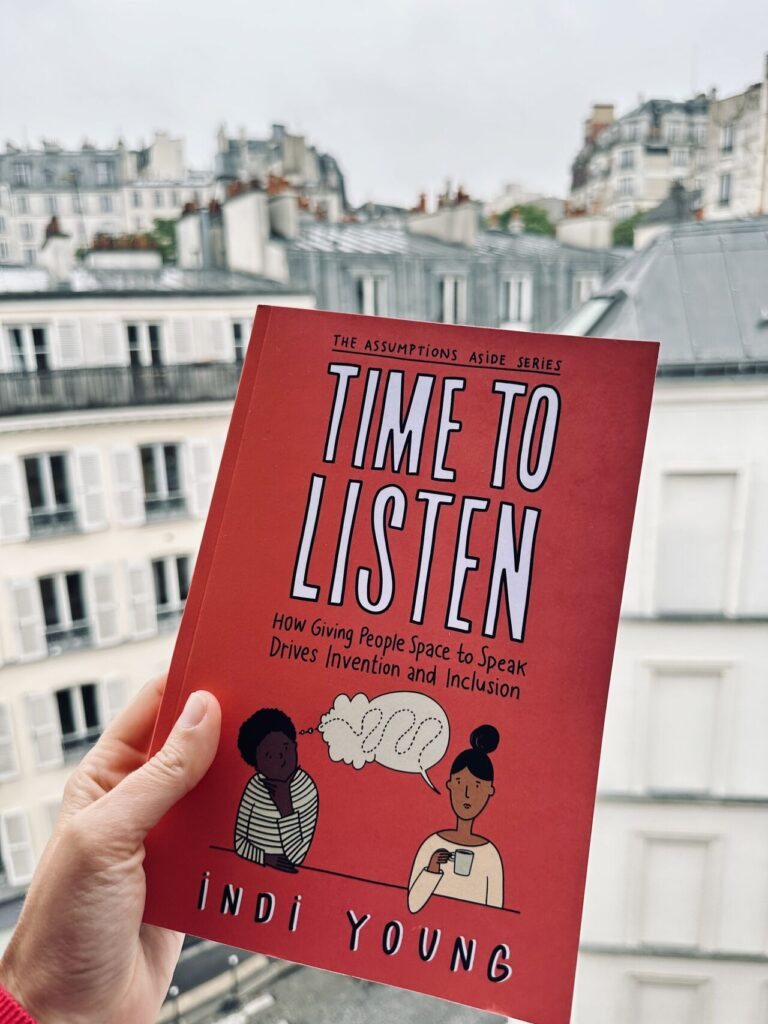
This is one of the many reasons I take a hard line on talking to actual representative humans as part of the design process. No one has the right to make major changes to the lives of people whose lived experience they haven’t attempted to understand, at a minimum. It doesn’t mean taking direction. There are usually multiple, somewhat irreconcilable perspectives to weigh. But you have to listen. There’s no excuse not to. And again, listening is necessary, but not sufficient.
Nothing about us without us is a slogan closely associated with the disability rights movement in the US, but it goes all the way back to 16th century Poland. The degree to which any particular group can or should be involved in any particular decision is the biggest “it depends” of any kind of design. Figuring that out is the work.
The other embedded assumption in “How might we…” is that you have the power to.
Pure energy
Design, on behalf of anyone but yourself, is inherently and fundamentally a power struggle. Intentionally “changing existing situations to preferred ones” as Herbert Simon characterized it, begs the question “Whose preference?”
Paul Ford wrote one of my favorite pieces on this topic back in 2011, when he framed the fundamental question of the web as “Why wasn’t I consulted?”
Power, and how it functions, is the most important missing piece of design education, and really all education. Organizations avoid talking about power like individuals avoid talking about money. The people who study power most closely are often those who explicitly desire to accumulate it, but we all engage with it.
Designers and researchers, among others, are frequently confused by being hired explicitly for expertise they are then prevented from or even punished for applying. The confusion stems from not understanding the power dynamics at play. Most organizations are not actually collaborative, meaning they haven’t established a coherent arrangement of shared goals and incentives. Workers and managers are thus set up for bad fights — unacknowledged power struggles — not good ones — productive conflict towards mutually desired outcomes.
The preferred situation of people with power is doing what they want to do and what they’re rewarded for and what feels right at the time. Is that in the interest of the stated business goals or KPIs or whatever? Maybe.
We tend to focus on the artifacts, but a design project is fundamentally a set of decisions. If you are working with other people to make decisions, it really helps to understand who has what power and what agenda so you can better target your effort and not burn yourself tf out.
“Power thus represents a source of potential influence that may or may not be realized through compliance from others. Power is also distinct from status. Whereas power entails a structural position in which individuals have control over resources, status is a social-perceptual construct in which individuals have high relative respect and admiration in the eyes of others”
—Perspectives on Power in Organizations
Cameron Anderson and Sebastien Brion, Annual Review of Organizational Psychology and Organizational Behavior (2014)
Read that paper. It’s a good time. I found you a legit pre-print linked from the co-author’s CV, and that took some doing.
If designers, design researchers, and technologists have the skills to understand an interactive system, they have the skills to understand the organizations they are working within. It just doesn’t often occur to them to turn that sort of inquiry and understanding inward. Apologies to Schoolhouse Rock, but knowledge alone isn’t power. Intelligence isn’t power. Knowledge about power is power, the power to save yourself from wasting your time and energy doing things that won’t work.
Leadership and power have also been distinguished from each other: “Leadership involves persuading other people to set aside for a period of time their individual concerns and to pursue a common goal that is important for the responsibilities and welfare of a group”.
Thus, leadership is defined by numerous tasks and responsibilities that are not part of the definition of power, such as planning and organizing, problem solving, supporting others, motivating others, and so on. In this sense, powerful individuals do not always serve as leaders.
It’s interesting to note who refers to themselves as a leader.
The L Word, no the bad one
The other thing that’s important to understand when confronting situations in order to change them (design), is negotiation. You can’t just roll up with recommendations without knowing what you actually want, what the other parties want and what your leverage is. (See: every protest without clear demands.)
Negotiation is, like power, a word and a concept that makes many good people who just want to do their jobs uncomfortable — and makes lawyers gleeful. It’s another kind of conversation. Like everything else, negotiating is practice, and it’s also doing your homework. You can exercise more power than you think only if you know what power you have.
Leverage, your ability to move the other party closer to your desired outcome, is situational. A person with a whole lot of power in theory might have more or less leverage here and now. If you can walk away from a negotiation, that’s negative leverage, as is your company’s ability to fire you. If you can give someone something they actually want or need, that’s positive leverage. And your ability to appeal to a shared standard — ethical, quality, whatever — is normative leverage. That’s really the good stuff. Establish a shared standard, then appeal to that standard.
The other factors are urgency, information (often overrated), and allies (people are swayed by larger groups). The primary way I’ve seen people with power in an organization gain leverage is by manufacturing urgency.
“But we don’t have time for research.”
Does that sound familiar?
We’ll get into collective action more in another issue.
All of this might sound mightily tangential to the work of design but it is, in fact, right at the core. Arguing, negotiating, and uncomfortable conversations are all part of functional collaboration, if you have shared goals, good evidence, and the right range of perspectives and priorities at the table. (Otherwise you end up with groupthink and bad work).
It doesn’t matter how smart or skilled or right you are if you can’t influence the decisions that determine what gets out there.
Now…how might we win more fights?