
Nile Cruises & My Donkey Boondoggle
Hello again,
It's now been a month of newsletters! Fortunately, there are so many amazing places in the world to showcase and so many flight deals, despite the sour news we so often hear.
As the weather is turning in Philadelphia, I know I am already looking forward to warm weather escapes. Caribbean cruise, a weekend in an all-inclusive, or a big trip to somewhere on the other side of the equator? All sound good, and reply if you're thinking of your own trip.
For those who are new here — Merakiva Travel, my travel agency, can plan your trip and book travel on cruises, resorts, land tours, and anything else you can imagine. For custom multi-day itineraries, there's a small fee. For other bookings, no extra fee.
And, for the first time, I'm able to book your airfare directly. No extra fees, and I'll bring my aviation obsession (see: Boeing factory newsletter and video) to finding you the best fare and best route option. Just reach out.
For this week, an obsession that goes back decades to my childhood that many of you may also share.
Place I'm Obsessed With

As an archaeologist, one of the most common questions I get asked (other than the incorrect question of "do you dig up dinosaurs") is "why did you become an archaeologist?" While there is plenty that went into that decision and the path, it has to start deep in my childhood with an obsession that so many share: Ancient Egypt.
While my actual archaeological work led down a different path to working in Iraq and elsewhere in the Middle East, anyone with the slightest interest in ancient history has an inevitable love of Egypt. Any bucket list of history destinations will at some point have Egypt's pyramids and temples on it. It's why some clients reached out the other week about Nile cruise options. And it's in that research that I rekindled an ever-present obsession with Egypt, and specifically the location where most Nile cruises start from: Luxor.
Because I was lucky enough to visit Egypt, and Luxor specifically, 14 years ago.
Luxor & the Valley of the Kings
It was during study abroad in Lebanon that my roommate and I took the opportunity to hop on a short flight to Egypt. Study abroad in Europe? Ibiza for the weekend. Study abroad in the Middle East? Pyramids over the Nile. The whole trip was extremely memorable with plenty of early-20s, pre-always-on-smartphone-era hiccups, including the long train ride down from Cairo to Luxor (only one way on the tourist class, not realizing we had to buy round-trip tickets to avoid the... basic conditions of the 2nd class tickets). But it was in Luxor, the religious mecca of Ancient Egypt, that I had perhaps one of my craziest travel stories.
But first, where, and what, is Luxor.
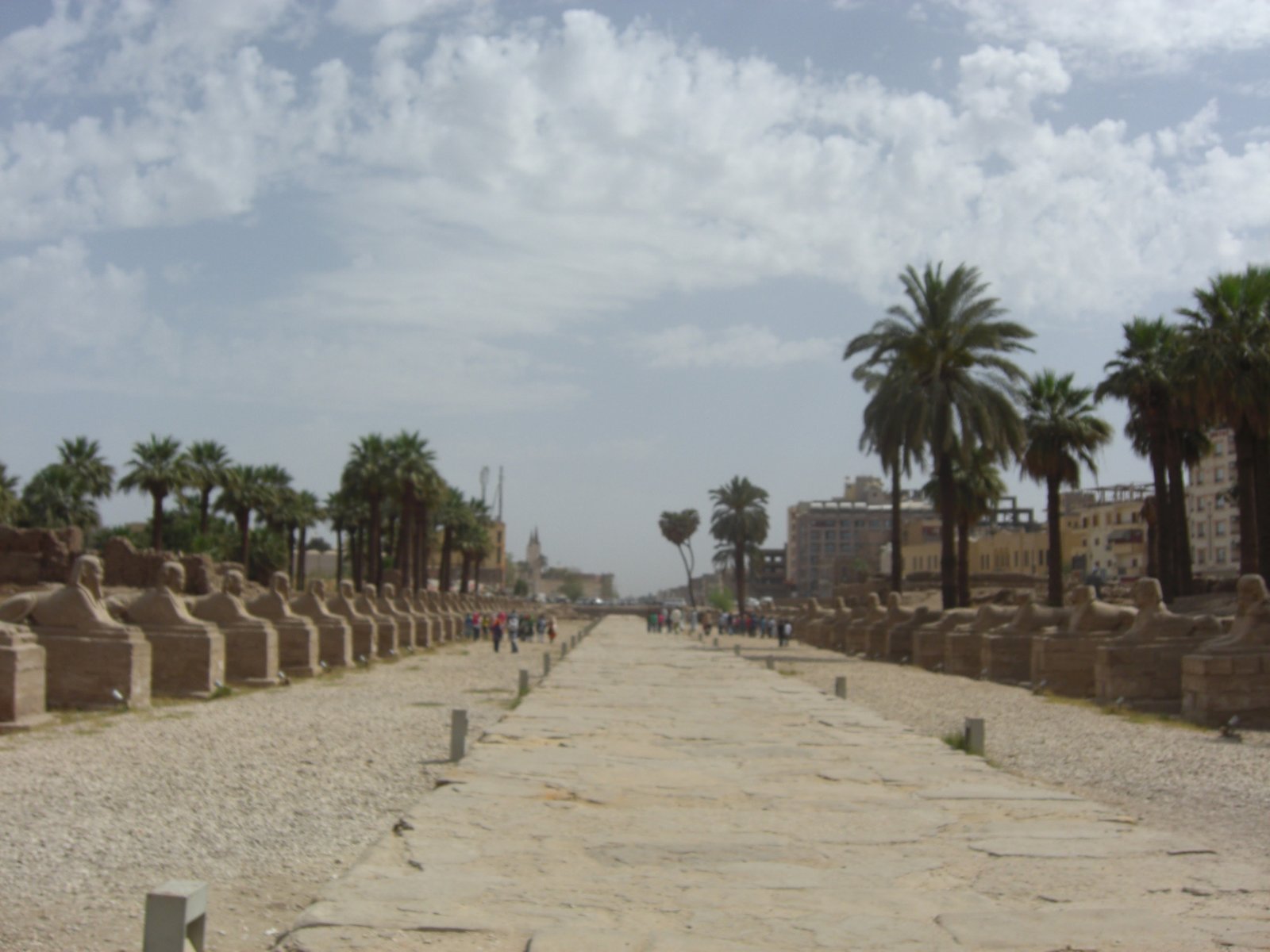
Luxor is located in the south of Egypt, directly along the Nile. If you recall your World History class, you may remember Egypt was split into Upper and Lower Egypt. If you're anything like me, you may also have had a hard time remembering that Upper Egypt is in the south, and vice versa. The capital of Upper Egypt, which eventually became the capital of all of Egypt during the New Kingdom (roughly 1550–1070 BCE), was Thebes. Modern-day Luxor includes the ancient city of Thebes, plus the sprawling temple complex of Karnak. Karnak is arguably the largest religious complex in the history of the world, a site built, expanded and rebuilt by pharaohs over nearly 2,000 years, with towering columns, massive pylons and an open-air museum of Egyptian architecture. It is notable for the 2.7-kilometer-long Avenue of the Sphinxes, lined with over 1,000 sphinx and ram-headed statues, that connects it to Luxor Temple. But Luxor is perhaps most known today not because of its temple complexes but because of what lies on the other side of the Nile: the Valley of the Kings.
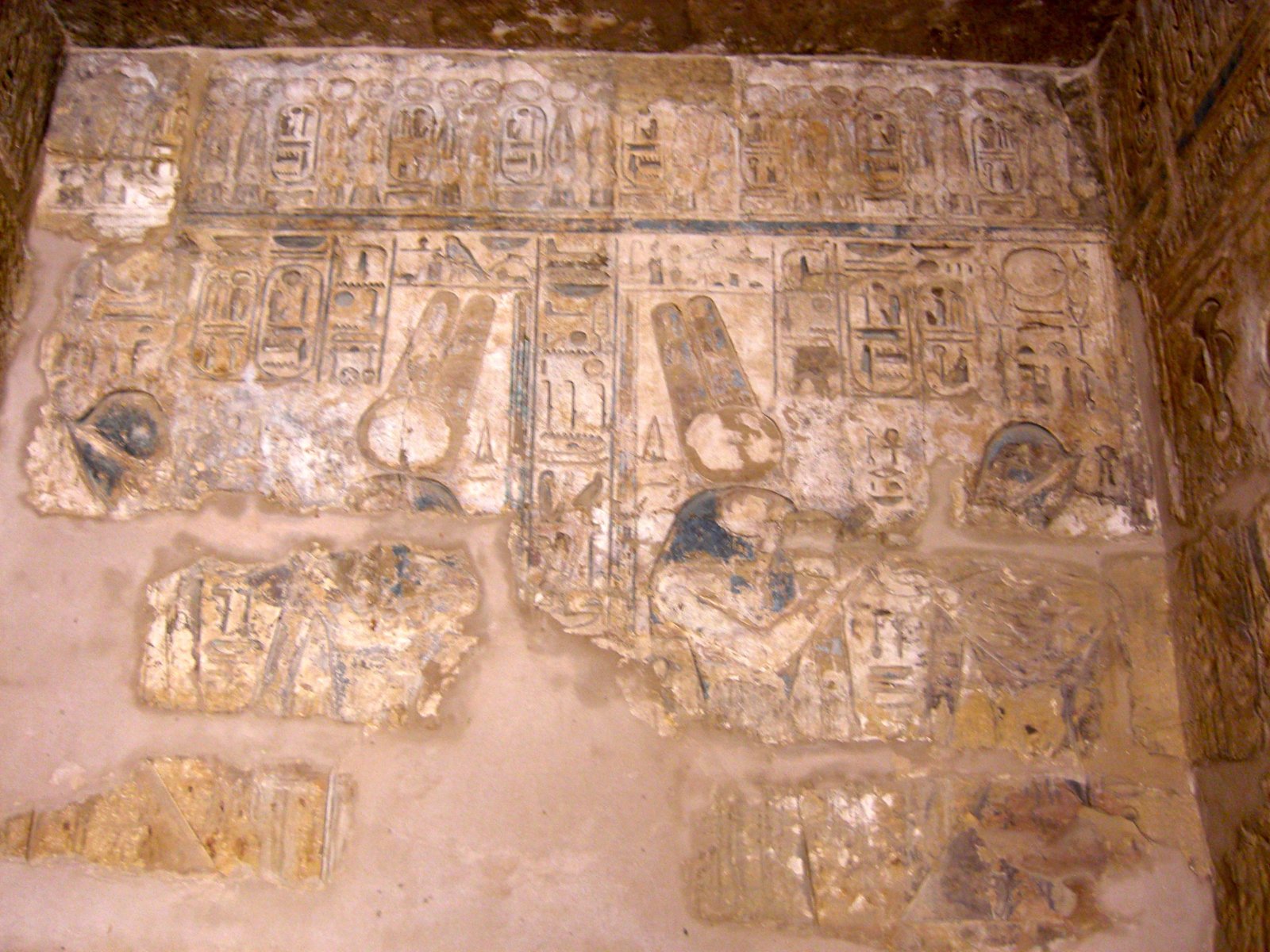
Among famous places in Egypt, the Valley of the Kings is almost certainly 1B, just behind the Pyramids of Giza. It is within this valley that Howard Carter discovered the unlooted treasures inside King Tut's tomb in 1922, inspiring countless generations. But the valley has far more than just King Tut's tomb — archaeologists have uncovered roughly 65 tombs spanning the 18th through 20th Dynasties of the New Kingdom, from about 1550 to 1070 BCE. Even today, new tombs are being uncovered and excavated; in February 2025, archaeologists announced the discovery of the tomb of Thutmose II, the first royal burial found in the Valley since Tutankhamun over a century ago. Plus, there's the nearby Valley of the Queens with its own collection of roughly 90 ornate tombs as well. The Valley of the Kings should be on any history lover's bucket list, so of course, on my college-era visit to Egypt and Luxor, we had to add it to our itinerary.
An Unexpected Donkey Ride
Our visit to Luxor was a few days long, with the trip starting with a visit to the temple complex at Karnak and the trek across the Nile to the Valley of the Kings the following day. While the exact logistics of visiting the Valley have certainly changed in the decade since, it was basically just a public ferry across the river and then hop on a shuttle that takes you to the Valley entrance. From there, small golf-cart-like shuttles, similar to a Universal Studios tour, take you to the actual tomb entrances. Simple enough, and the right cost for a pair of budget-conscious college students. But an evening activity the night before changed our plans.
One of the other top attractions when visiting Luxor specifically, and Egypt generally, is a felucca ride. Feluccas are a type of traditional Egyptian sailboat, perfectly adapted to the restricted boating conditions of the Nile. The modern boats docked along the riverfront today perfectly resemble the paintings of boats found on the walls of those very tombs across the river. So making that mandatory felucca ride a sunset sail? Even better.
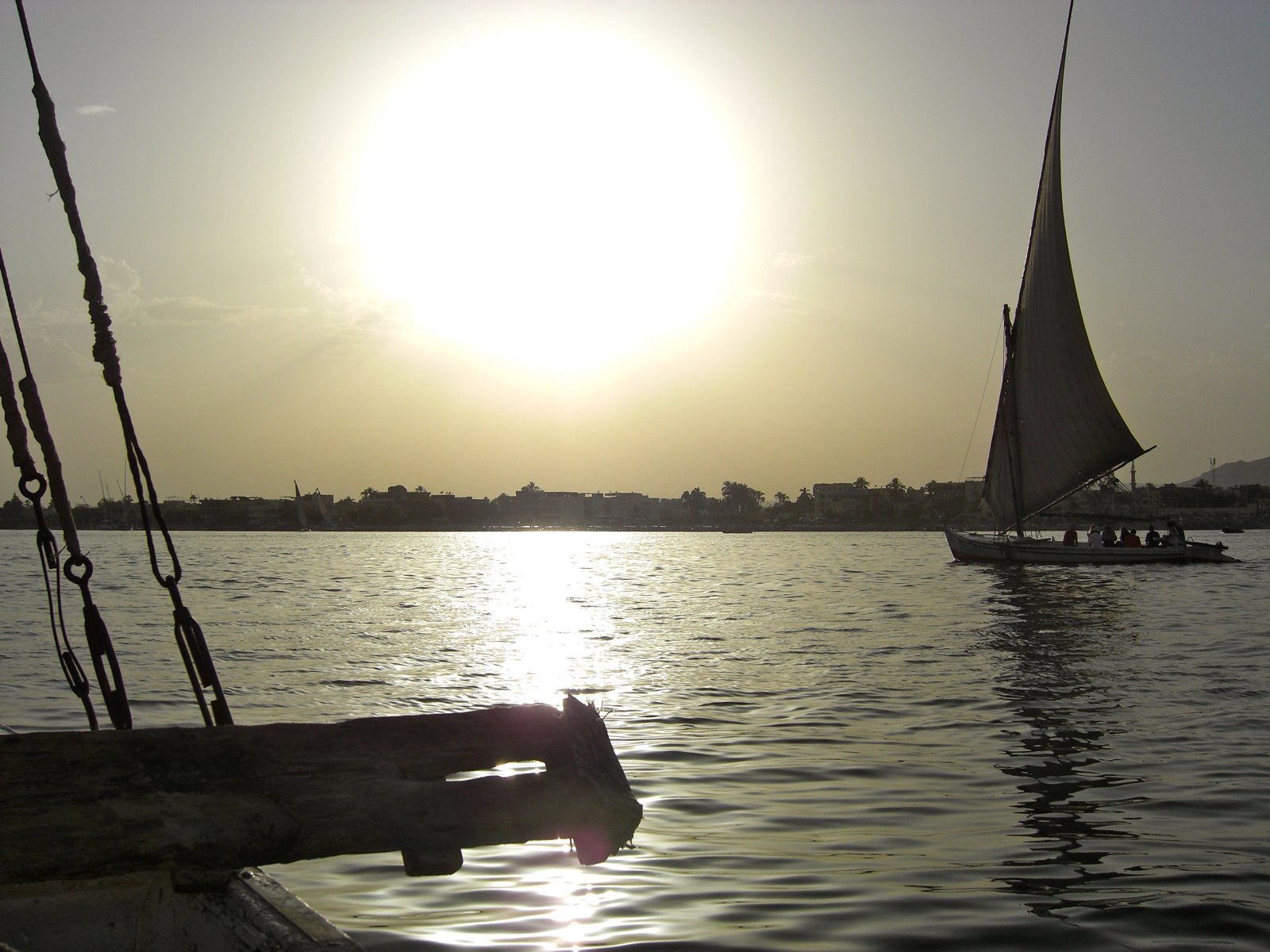
Before the era of booking through online travel agencies (OTAs) like Viator or Airbnb, the best way to take one of these sunset cruises was to simply walk along the docks and look for someone offering a cruise, pay a fare, and hop aboard. Fortunately, my roommate's Arabic was pretty good, so some haggling got us a discount and a seat on one of these departing ships with the two of us and a handful of other tourists.
This ship was crewed, of course, by a captain and his first mate. Unforgettably, the captain spoke no English, apart from a few numbers for haggling, and the entirety of a William Butler Yeats poem, word for word. I'll never forget listening, mouth agape, as this gruff, leathered ship captain recited the entirety of a poem that I, a native English speaker, could never hope to memorize in full, only to revert immediately back to Arabic because he had exhausted his English. His first mate, however, had a bit more of a handle on English, enough for some basic communication between moments where he wasn't climbing up the mast of the ship like he was in a touring edition of Cirque du Soleil on the Nile.

In conversations with the first mate, as the sun went down, he offered to take us on a journey to the Valley of the Kings the following day, riding on the back of his motorcycle. Knowing we already had our plan and that Egyptian upselling is an unavoidable part of traveling around the country, we declined. But in his persistence, we told him the white lie that we would be leaving the following day, so couldn’t join him. With that, his persistence faded and we were able to enjoy the final moments of daylight as the sun set to the west, over the mountains of the Valley of the Kings, the bank of the Nile representing the underworld.
Early the next morning, eager to start a full day of getting to the Valley and the neighboring Hatshepsut temple before the heat of the day, we ran into our first mate friend. Now, we could not use the excuse of a departure, as he was also heading on the ferry back to his home on the western side of the river. This time, his offer was to get a car and drive us around. A lesson of traveling that I learned from this experience and have since internalized.
Do it for the plot.
So, why not, and we followed him to the ferry.
On the ferry, with my Arabic-fluent friend chatting with our first mate friend, he offered an alternative to either the motorcycle or the car:
"How about riding donkeys to the Valley?"
Already in the mode of "do it for the plot," donkeys seemed even more exciting, and less frightening, than the back of a motorcycle. Donkeys it was. But, that now first required a pit stop at his friend's house to pick up a trio of asses for us.
Perhaps the fact that the donkeys were just tied up in a room in his friend's house should have been a sign this wasn't a typical tourist experience. Nevertheless, we continued, starting the long trek from the riverside, about 10 kilometers between the ferry landing and the Valley entrance, on donkey back.
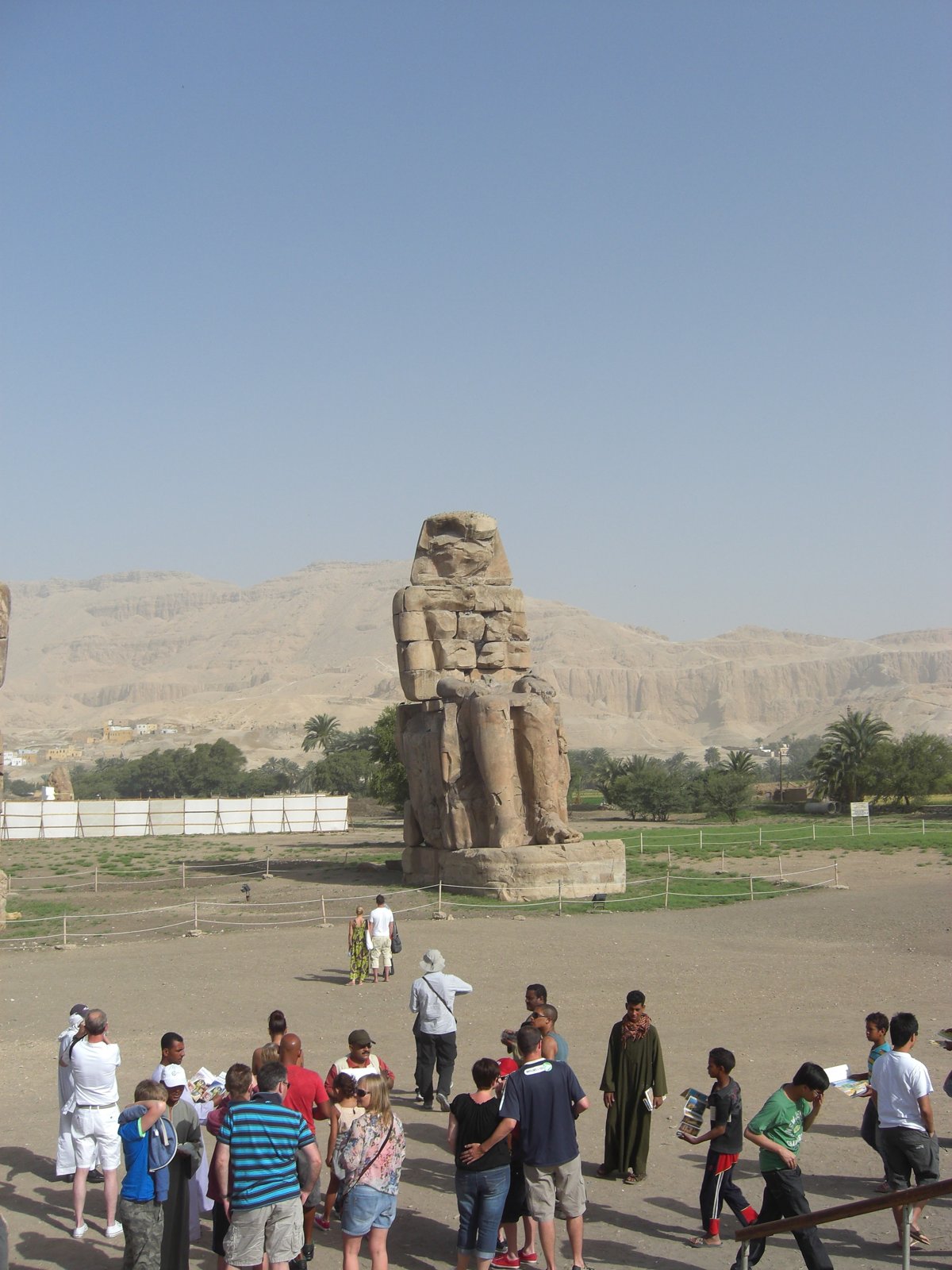
Perhaps passing the coach buses of tourists photographing the Colossi of Memnon while we parked our donkeys for a little break should have been an indication. But, we continued on.
It was only once passing the excavated remains of Deir a-Medina, the excavated a workers' village at the base of a mountain, that I started to ask, "how much further?"
In Arabic, Mr. First Mate just responded, a bit more. When we started going up the switchback trails on the mountain, I asked again, "how much further?"
Just a bit more.
As our legs, barely off the ground, got to be higher and higher up the mountain, I asked again, "how much further?"
As you can guess, the answer was, just a bit further.
Once the the trail narrowed and the drop down the mountain turned from a gentle slope to a cliff that I asked again, "how much further?"
Just a bit more.
Finally, as we crested over the top of that mountain, Mr. First Mate waving to the military guards stationed there, that I realized, oh, we're going all the way.
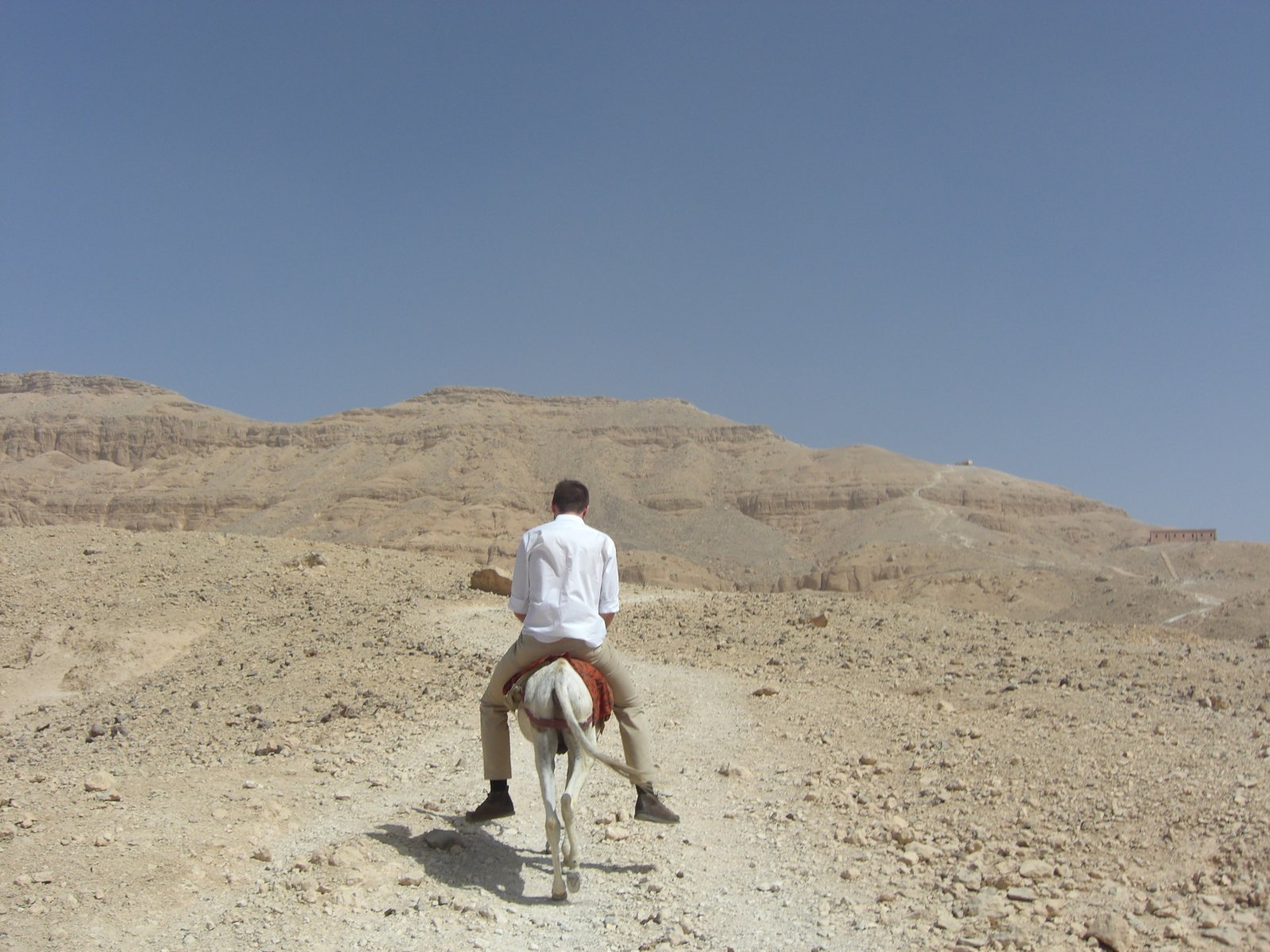
Because before us, down the mountain, was the Valley of the Kings. The only problem is the entrance was on the far side. We had come in the back.
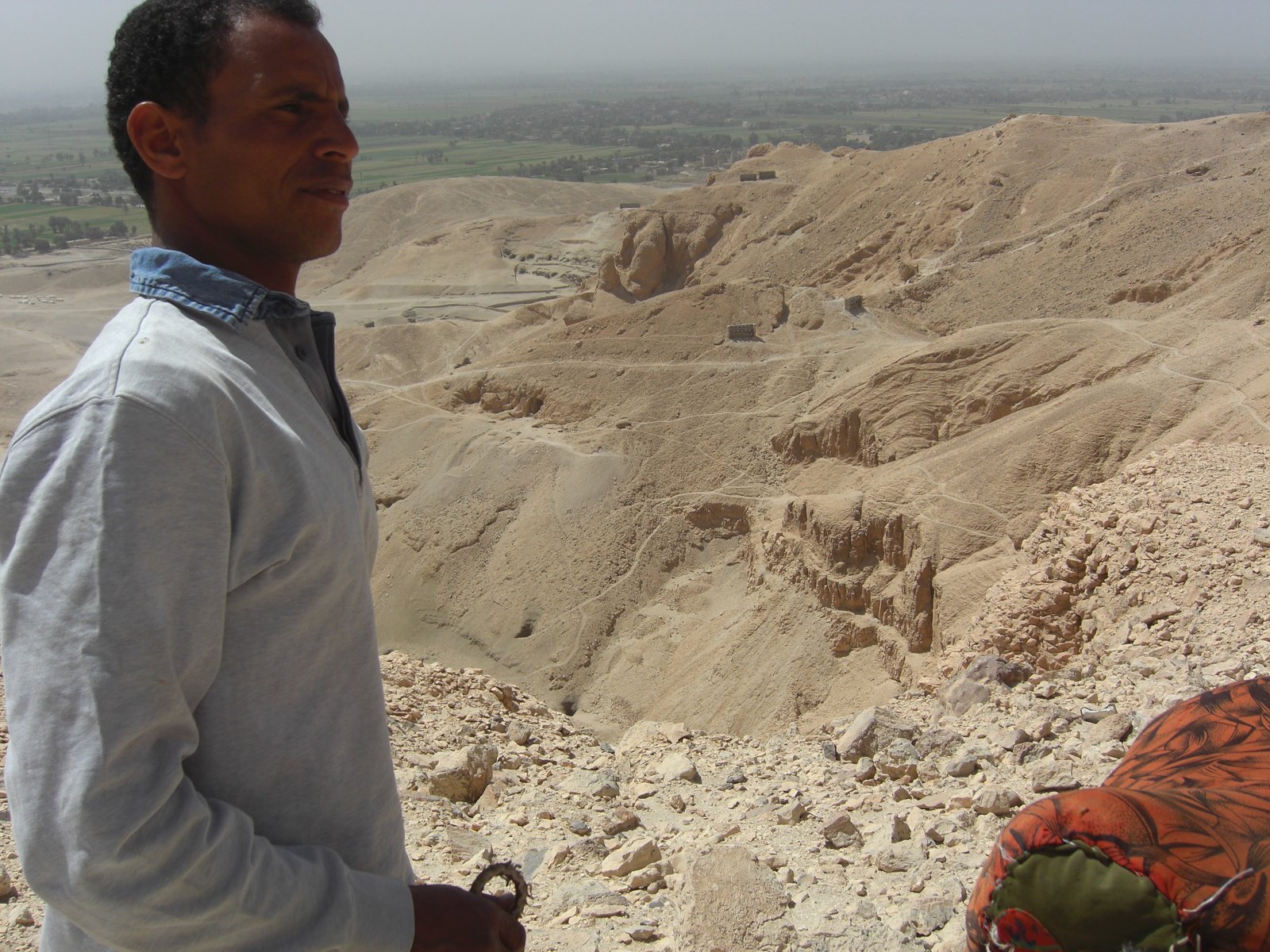
Once down the slope, we dismounted and Mr. First Mate stayed back to watch our short steeds. To actually enter the tombs, however, you need to pay the entry fee. An entry fee that is collected at the entrance, far on the other side. So we were forced to walk the entire distance of the valley, trekking to the entrance. This ran into a quirk — cameras, at least DSLRs like my Nikon, were not allowed in the Valley. But, how would I leave the camera, if we had to go back into the valley to leave? This led to a long and confusing back and forth about trying to explain our donkey situation, ending with me just paying a small "fee" to bring the camera with me (not the only time a conversation in Egypt ended with us needing to pay a "tip" to continue).
However, The Valley of the Kings is as impressive as you think and very much worth the trip. But it was the journey back that I realized how unlikely this donkey trip was.
After rejoining the equines of our small expedition, we now headed to the famous temple of Hatshepsut. Of course, back over the mountain. This time, following a horrifyingly narrow trail on the cliff above the temple. The photo below shows this well, just imagine the three of us traipsing on the cliffside up there.
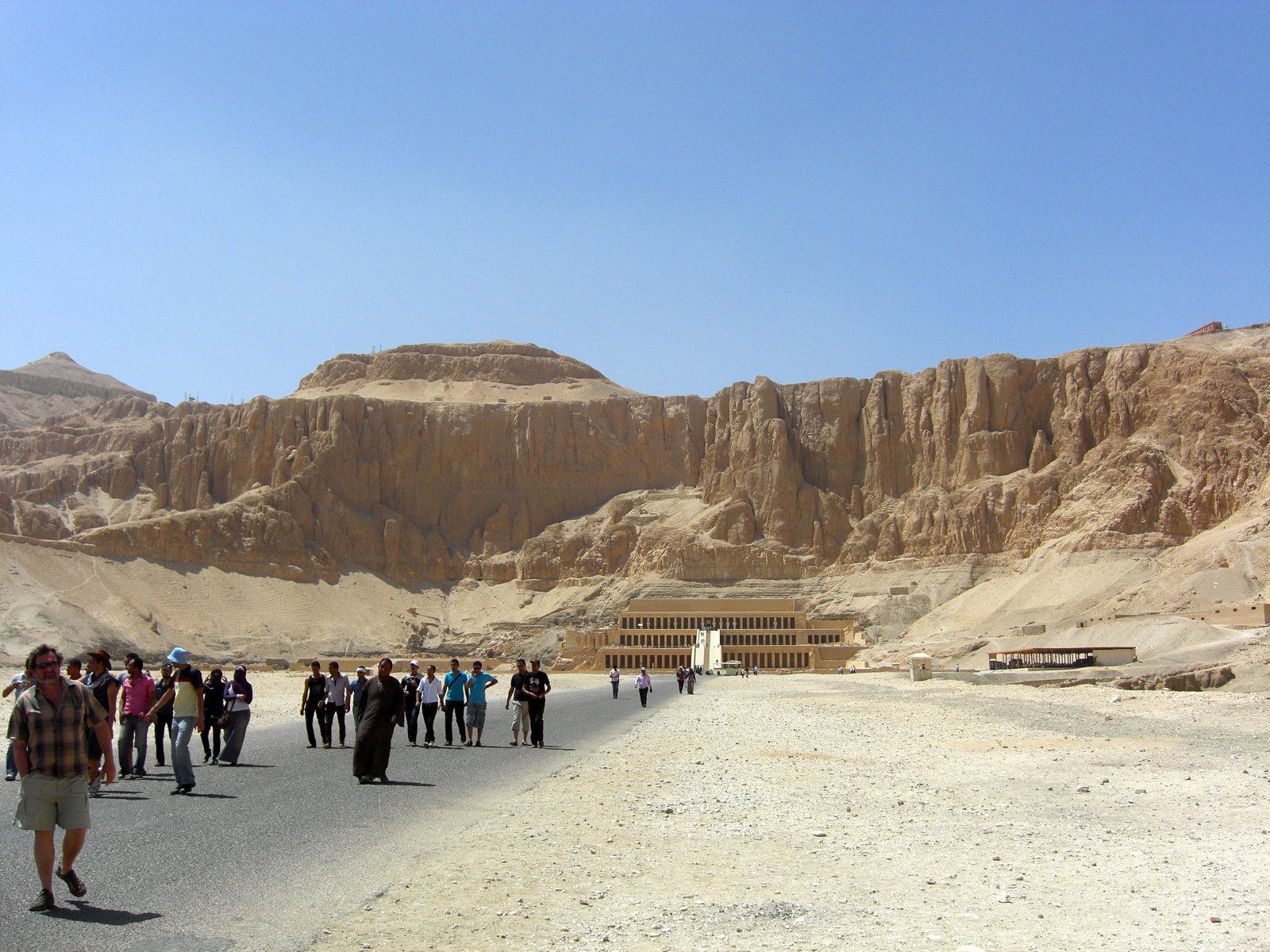
After the frightening experience, we again left our donkeys with our donkey valet and headed to check off a tourist destination. When leaving, heading back to where we had left our companion, he was nowhere to be seen. As you're told to do when lost, wherever you are, we found some police and asked for help. My roommate trying to explain in his formal Arabic to this gaggle of police that we had parked our donkey and our guide left led to them laughing concerningly. It was clear... this was not a normal request. Eventually, we found our guide and trekked back to the river, sunburnt and sore butts from an unforgettable day.
While this was an unforgettable travel day, not one that I would recommend to most people. If I was to visit Egypt and Luxor today — older, wiser, and more sore — I'd opt for a trip that sees Egypt the way the Ancient Egyptians did, from the Nile.
Cruising the Nile Like an Egyptian
River cruising around the world has taken off — the Danube, the Rhine and the Seine in Europe are filled with the many ships of major cruising lines. But to me, the best place in the world to do a river cruise has to be the Nile. Roughly 95% of Egypt's population lives within 12 miles of the Nile River, a reality that has remained unchanged for millennia. It makes traveling along this world-famous river not just a great way to see much of the country, but to experience just a bit of life like the Ancient Egyptians, far more comfortable though.
Interested in your own Nile cruise? Reply to this email and I'll send you a PDF with all the details.
Nile River cruises are somewhat of a contradiction, as almost all of these packages start in Cairo, giving you a chance to mark off your bucket-list places like the Great Pyramid and its accompanying Sphinx. They then fly down to Luxor to begin the cruise. This surprised me in the initial research, as the pull of a Nile cruise would seem to be using the river that has provided transportation for so many people over millennia, as transportation. But realistically, no one wants to spend more than a week traveling down a stretch of river that has few of the sites you see in the travel guides.

When it comes to choosing your Nile cruise, it's a balance of how much time you want in Cairo, how much in Luxor, and if you want a round-trip journey upstream from Luxor. The typical Nile River cruise spends two or three days in Cairo to acclimate you to the country and visit the Great Pyramids and places like the Grand Egyptian Museum. It's after a short flight (sometimes commercial, sometimes chartered) that you arrive in Luxor and check into your boat accommodations.
After visits to Karnak and the Valley of the Kings, these trips head further south up the Nile, turning around at Aswan, the famous dam that flooded the valleys further upstream. In total, this round trip takes about four days and brings you back to Luxor before your journey back to Cairo, and home. It's a great way to see the small sites along the Nile, with ships that range from 50 to 100 passengers, far different from your typical cruise ship tourism.
The other option is combo land-cruise tours that do much of the same, but in a different arrangement. These trips spend longer in Cairo and do a one-way cruise from Aswan to Luxor (or vice versa). What makes these trips so different, apart from the one-way sailing, is they almost always include a flight down to the awe-inspiring and fairly inaccessible site of Abu Simbel.

If you don't recognize the name Abu Simbel, it's likely you've at least seen the images in your life. Massive statues of the New Kingdom pharaoh Ramesses II were cut into the mountainside, with a temple entrance at its base that heads into the rock itself. Perhaps one of the most famous examples of larger-than-life statues in the world, they were brought even more into the public eye in the 1960s when construction of the Aswan Dam and the associated flooding of the new reservoir threatened to drown these exemplars of history. Instead, Egypt and the world raised funds through a UNESCO-led campaign to cut the temples free and raise them 65 meters above the new water line so they would be preserved for future generations to visit. And it's on these more land-focused tours (as well as on extensions for the river cruise options) that you can go visit these statues.
I've put together a PDF that lays out all the options for Nile River cruising for 2027 and 2028, which includes the different lines, prices, and how all the options compare. If you're interested at all in visiting Egypt on the Nile, reply here and I'll send the full PDF details. With the news the last few years, people have been scared off from visiting Egypt, but today a Cairo and Luxor cruise is just about as safe as traveling anywhere else in the world.
My Valley of the Kings story may make a good newsletter or TikTok story, but there are so many better ways to see Egypt. Not just the cruise options, but guided land tours like G Adventures' 12-day Wonders of Egypt and the Nile, Collette's 13-day Treasures of Egypt, or for the luxury end, Abercrombie & Kent's private journeys on their own Nile yachts (what I’d recommend if that’s in your budget). If you'd rather go at your own pace, a DIY Cairo-to-Luxor trip is absolutely doable: fly into Cairo, spend a few days at the pyramids and the Grand Egyptian Museum, then take a domestic flight to Luxor and arrange your own guides and feluccas on the ground. Reach out if you want an archaeologist to plan your Egypt trip.
Now for the deals:
Travel Deals This Week
Your own Egypt trip
Flights
No Cairo fare dropped this week, but round-trip fares from Newark to Cairo typically run $800–$950 on EgyptAir nonstop or via European hubs on Turkish Airlines and Air France (usually ~$1,185). The last deal hit $760 nonstop from Newark. These deals dropped recently, so if Cairo and Egypt is something you’re looking to do, let me know and I’ll keep my eyes peeled.
Cruises & tours
Viking
12-day "Pharaohs & Pyramids," from $6,999 pp
Three days in Cairo plus a round-trip Nile cruise from Luxor to Aswan on one of Viking's all-suite river ships. Guided excursions, meals and drinks on board are included. The polished, mid-range option with ships carrying about 82 guests.
2027 departures
Celestyal Cruises
7-night Eastern Mediterranean with an overnight in Alexandria, from $839 pp
A Greek-run line with an uncrowded, port-heavy style. This just gets you a sample of the north, butt a way to check Egypt off your list. The new December 2027 "Mediterranean Mosaics" itinerary sails Athens–Alexandria–Limassol–Rhodes–Istanbul.
Book by Nov 2 · Dec 2027 sailings
Flight deals
Fares like these tend to vanish within a few days, so if one catches your eye, reply and I'll check live prices for your dates.
This week: cheap winter fares all over Europe, and a rare drop to East Africa.
New York (JFK & Newark)
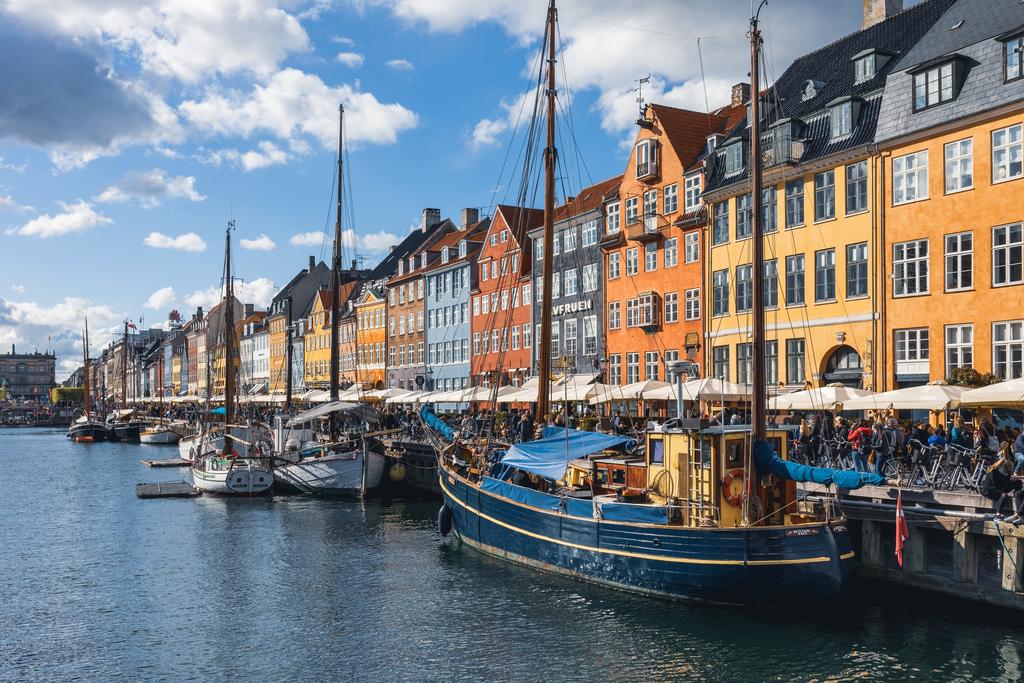
Copenhagen, Denmark
$510 round-trip from Newark (usually ~$1,015)
Half off to the capital of one of the most well functioning countries in the world. I visited for the second time, earlier this year on a friend trip and it was better than I remembered. Daylight runs about seven hours that time of year, so the city makes up for it with candles in every café window and Tivoli Gardens lit up for Christmas through early January. Perfect for a long weekend holiday gettaway. Also from JFK from $624.
Travel: December–January
The Azores, Portugal
$570 round-trip from Newark to Terceira, $578 to Ponta Delgada (usually ~$1,015)
Nine volcanic islands in the middle of the Atlantic, and the standout of a big Europe sale this week. On São Miguel, the village of Furnas cooks its stew (cozido) by burying the pot in the hot volcanic ground for hours, and the hot springs are at their best (and emptiest) in the cooler months.
Travel: October–May
Rome, Italy
$571 round-trip from Newark (usually ~$800)
Winter is Rome's quiet season: highs in the mid-50s, no summer crush at the Pantheon, and much shorter lines at the Vatican Museums. Honestly, when I’d prefer to visit Rome. Come back in fall or spring for the seaside and vineyards.
Travel: January–February
Rio de Janeiro, Brazil · $687 round-trip, nonstop from JFK (usually ~$1,015)
December is the start of Rio's summer, which means beach weather on Copacabana and Ipanema with Sugarloaf and Christ the Redeemer looming over them. Stay through the 31st for Réveillon, when a couple million people dressed in white pack Copacabana for the fireworks off the beach (bring your patience for the crowds).
Travel: December
Kilimanjaro, Tanzania · $944 round-trip from JFK (usually ~$1,690)
This airport puts you at the foot of Africa's tallest mountain and a few hours from the Ngorongoro Crater and Serengeti safaris. For the archaeology people: Olduvai Gorge, where the Leakeys dug up some of the earliest human ancestors, is on the way to the Serengeti. November brings the short rains, mostly afternoon showers, so the parks are green and much quieter than summer.
If you’re looking to hike Kilimanjaro, I’d think you probably need more than 2 months notice. But if you’ve been wanting to go, now’s your chance.
Travel: November–December
Nairobi, Kenya · $845 round-trip from JFK (usually ~$1,525)
Nairobi National Park is a real safari park inside a capital city, with giraffes and rhinos grazing in front of the skyline. Go from there to the Masai Mara, or take the Madaraka Express train down to the Indian Ocean coast at Mombasa in about four and a half hours (my favorite mode of transport). November is the short-rains season; March is the tail end of the dry season, before the long rains.
Travel: November–December, March
Baltimore (BWI)
Tokyo, Japan · $850 round-trip (usually ~$1,525)
Winter is underrated in Tokyo: cold, crisp, mostly clear days, the best odds of seeing Mount Fuji from the city, and short lines at places that are packed in spring. By February the plum blossoms are out at Yushima Tenjin shrine (the festival usually runs early February to early March, a month before the cherry blossoms). The fare is on ANA and United.
Travel: January–February
Got points?
Paris or Dublin · 45,000 miles + $49–$162 round-trip on American AAdvantage, from Philadelphia to Paris or New York to Dublin (cash fare ~$1,000)
Paris on American from Philly, or Dublin on American or Aer Lingus from New York, on dates from November all the way through next September. If you have Citi ThankYou points, they transfer 1:1 to AAdvantage (Chase, Amex and Capital One points don't go to American at all). Marriott Bonvoy points also move over, but at a much worse ratio.
Travel: November 2026–September 2027
Points are one of the most underused tools in travel, and I have tools to find the best redemptions for whatever credit-card points you're sitting on.
Redeeming those points can be more difficult than earning them and you need someone obsessed with optimizing to find you deals, and when to book. How far ahead to book with points →
Cruise & vacation offers
Many of the cruise offers from the last few issues are still running into November: Celestyal, Oceania, HX Expeditions, Windstar, Swan Hellenic, Silversea and Cunard. Virgin Voyages' bar tab ends October 31, so that one is last call.
Grown-up, well-fed, and in no hurry
Holland America Line
free drinks package, Wi-Fi and gratuities, plus up to $300 in shore-excursion credit, with a $99 deposit
Classic, calm, mid-size cruising, and the long-time Alaska specialist (2027 is its 80th year there). Book a select 2027 Europe, Alaska, or Canada & New England cruise by Nov 2 and the Elite Beverage Package, Premium Wi-Fi, prepaid crew gratuities and up to three nights of specialty dining are all included. Book an Alaska & Denali cruisetour and a dining package is added too.
Several of the Alaska sailings are roundtrip from Seattle, so you can add a few days in the city first (and, if you're an AvGeek, the Boeing factory tour I wrote about a couple of weeks ago).
Book by Nov 2 · select 2027 sailings
Want in on any of these? Just reply to this email. I'll check availability, find the right dates or sailing, and handle the booking from there.