
Get Lost in the Bermuda Triangle
Marshall from Merakiva Travel here.
One of the best parts of being a travel advisor is helping clients see the world and going places they’ve dreamed about. One of the worst is jealously looking on as they take these postcard-worthy trips.
I was reflecting on that this week as I dug into some research on a potential destination for a client and went into the busywork rabbit hole of better organizing the many research documents I have about the many places and suppliers I've learned about over the years. Collecting it all into one place helped make the point — there is so much out there.
As Phil Keoghan, the host of The Amazing Race, likes to say (and I like to steal): The World is Waiting for You.
Here's one of those places in the world.
Place I'm Obsessed With
This week's place I'm obsessed with arose because of recent work with my two lines of business — Merakiva Travel and my walking tours through Always Sunny Tour. One because of research into a cruise there and one from visitors who happened to be visiting from there.
This weekend on the Always Sunny Tour, I had an Irish couple (and their toddler) who live in Bermuda join me. Bermuda is a place that I've been thinking a lot about recently because of the newly launched set of Norwegian cruises that depart from Philly. One of which goes to... Bermuda.
So why do cruise ships head to Bermuda, why is it interesting, and is there really a Bermuda Triangle?
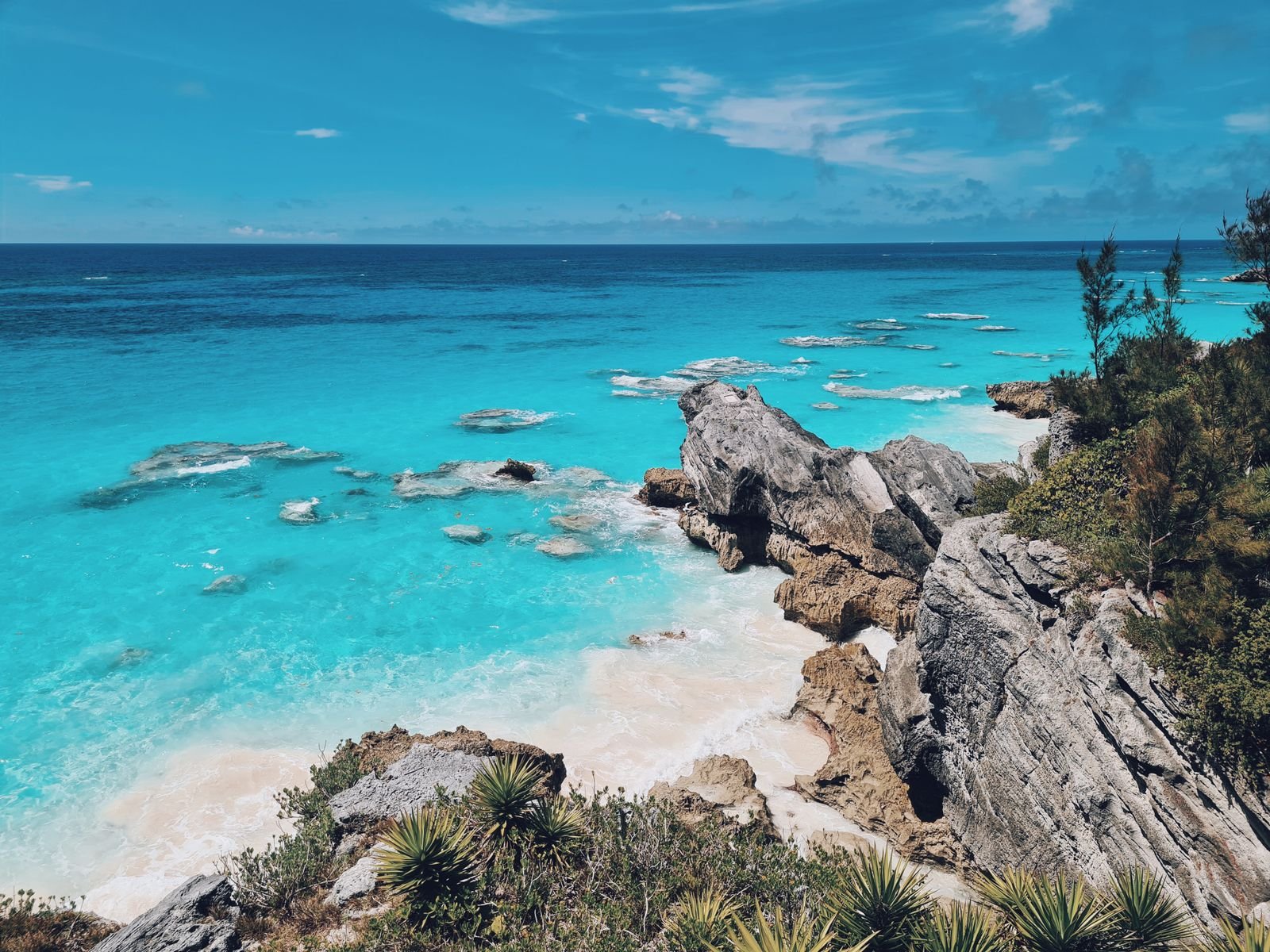
What and Where is Bermuda?
If you've heard anything about Bermuda, it's probably about the Bermuda Triangle. The almost mythical place where ships and planes disappear, never to be heard from again. Amelia Earhart? She's probably there. Flight 19, the five Navy torpedo bombers that vanished off Florida in 1945? Definitely there. The USS Cyclops and her 306 crew, gone without a trace in 1918? Where else.
That gives Bermuda the knee-jerk reaction of "maybe this place is dangerous?" But that couldn't be further from the truth.
Bermuda is a series of nearly connected islands in the Atlantic Ocean, hundreds of miles from the nearest coast. While technically 181 islands, they all make up one crescent shape, with open ocean between it all. That shape comes from the way it was formed and why it is so disconnected from other landmasses. A giant, eroded-away, extinct volcano. Commonly called an atoll (WWII history nerds have certainly heard of the many battles on atolls throughout the 1940s), it shares the same feature of an eroded volcano, but was created through a process similar to how coral reefs form.
The volcano that created Bermuda died 35 million years ago and over millennia the portion above the water was gradually eroded away until fully covered by the sea. Then, limestone began getting deposited on the remains of the volcano's ring, forming a giant limestone cap.
Bermuda has a particularly warm climate, despite sitting some 650 miles off the US coast in the middle of the Atlantic Ocean, because of the Gulf Stream. The current brings warm water and warm air north from the Caribbean, making Bermuda notably warmer than places at the same latitude. (It's the same phenomenon that keeps the Azores mild despite sitting out in the open Atlantic — both benefit from the Gulf Stream and the Bermuda-Azores High, a high-pressure system literally named for the two island groups it warms.)
That provides bountiful rain in the rainy season but also makes going into the water far more bearable than you'd expect, given its location. I think part of the reason people get Bermuda and the Bahamas mixed up is that both have good water and reefs, even though Bermuda is more than a thousand miles away.
The warm waters encouraged growth of organics that effectively mean the surface of Bermuda is an eroded coral reef, based on limestone. A fact that defines everything about Bermuda.
Limestone is a particularly porous stone but is very poorly suited to capture rainwater to provide a renewable source of freshwater for those that live on the surface. Put simply — Bermuda does not have any natural potable freshwater.
Without freshwater and in such a remote location, there was simply no reason throughout almost the entirety of human history for people to settle on this island. Apart from its ideal location on the shipping lanes from North America, the Caribbean, Africa, and Europe, there are no major advantages or reasons for people to have settled this island. And before 1612, no one did.
Bermudian settlers were a complete accident. An accident that almost changed the trajectory of the founding of the United States.
The Sea Venture
During the Age of Empires, ships sailed past Bermuda, noting its location and sometimes making landfall. With no water, they left, but not without accidentally leaving hogs and telling tales of frightening sounds (turns out, just birds).
But in 1609, a British ship, the Sea Venture, forced itself aground to avoid being destroyed by a major storm. This ship was part of a fleet sent from Britain to resupply the newly founded Jamestown colony. The rest of the fleet limped to Jamestown, where the colony was about to enter its darkest chapter: the Starving Time of 1609–1610, when roughly 440 of the 500 settlers died.
However, because the captain deliberately grounded the Sea Venture, the crew survived the landing and was able to salvage most of the tools and material aboard. They survived for 9 months by fishing, hunting the wild hogs left by the Spanish, and gathering wild fruits. Fresh water, the main concern and reason for lack of human occupation before, was solved by digging wells to catch the plentiful rainwater.
After nearly a year of survival on the island, they built two new ships from the native Bermudian cedar and sailed to Jamestown. At Jamestown, they found a colony down to its final 60 people, the rest having died from starvation. Aboard those two ships that helped reinvigorate Jamestown? John Rolfe, the man who would begin the practice of growing tobacco and marry Pocahontas.
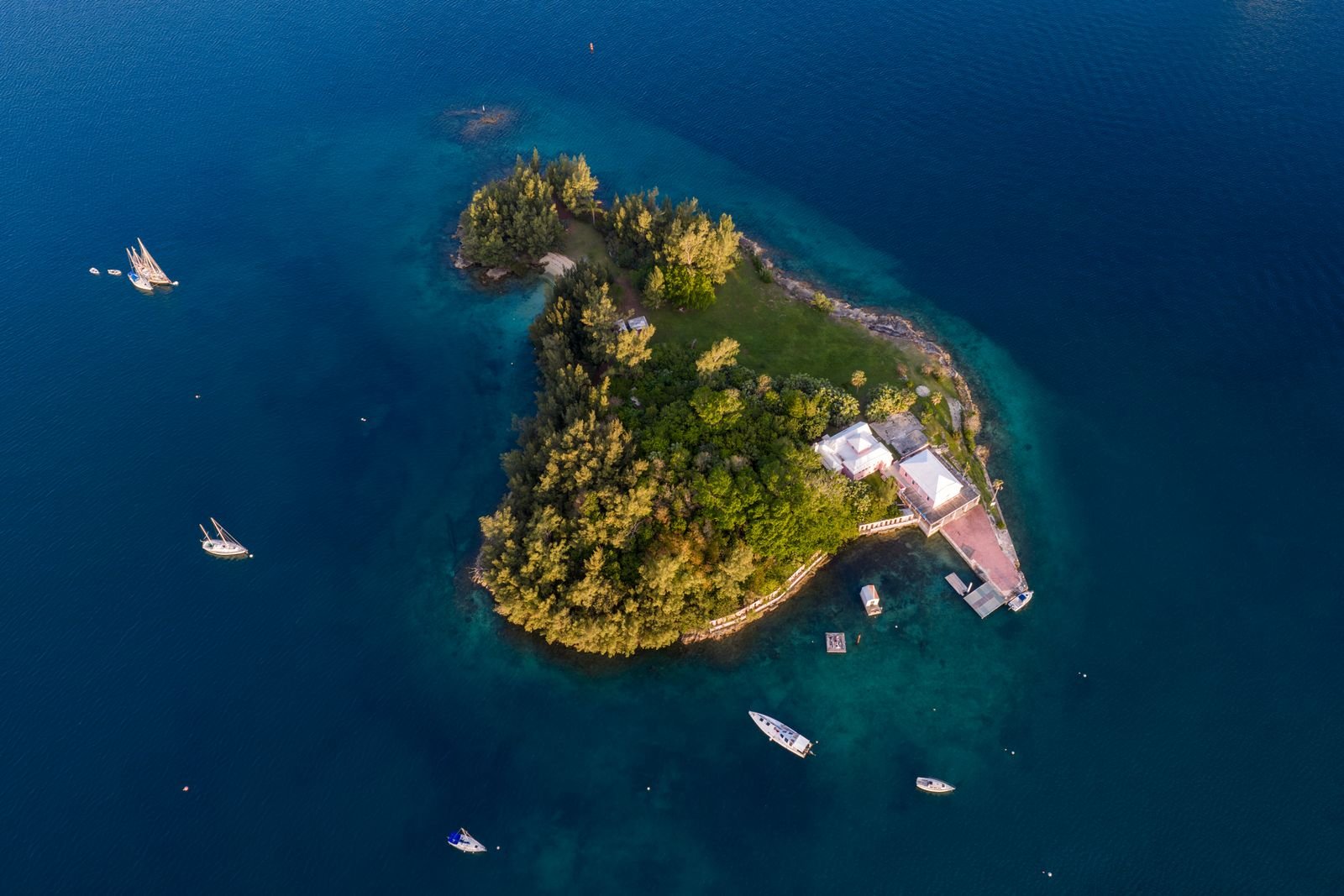
Some of the Sea Venture survivors stayed in Bermuda, creating the first permanent occupation there and the throughline to the modern country.
Bermuda Today
The modern-day country of Bermuda is... not actually a country.
It is rather a British Overseas Territory, with some self-governing features like its own currency, laws, and parliament. But it relies on the UK for defense and foreign affairs. One of 14 British Overseas Territories around the world, it shows a direct connection to those colonists of the 1600s as a modern-day colony of Great Britain. As such, it relies heavily on the UK and the rest of the world to supply it. Though modern Bermudian homes have figured out the freshwater problem with an innovative solution — just catch the rain.
Pictures of Bermudian towns will always show this extremely distinctive stepped white roof, almost like a small bright pyramid. These roofs exist to catch the rainwater and direct it to storage cisterns at ground level. They are an incredibly practical feature to keep the island alive but also give the whole island an incredibly distinctive look.
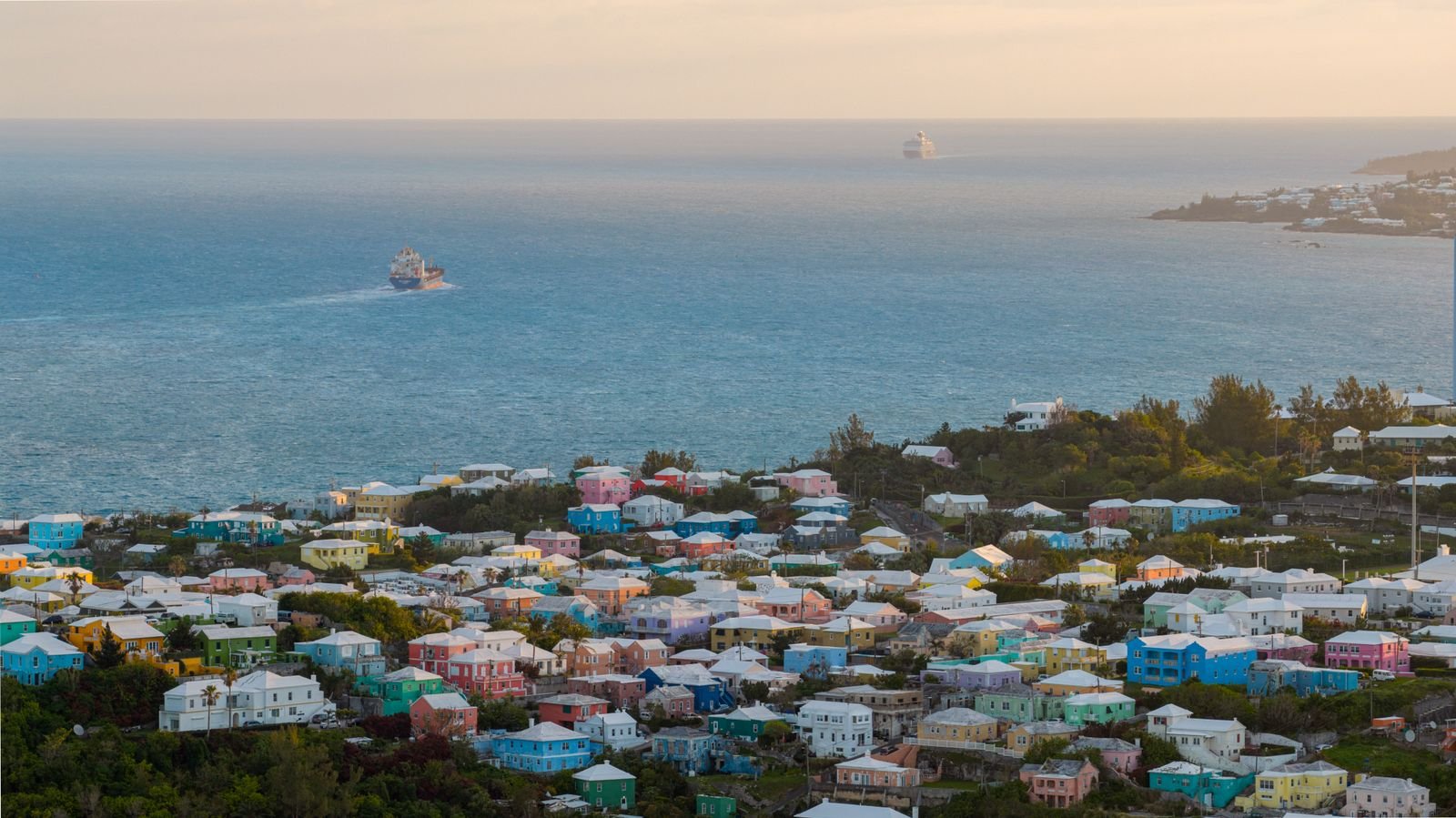
The capital is the city of Hamilton, near the center of the main island. Not far to the east is the historic Town of St. George's, a UNESCO World Heritage Site since 2000 and the oldest continuously occupied English town in the New World, founded in 1612.
St. George's served as Bermuda's capital until 1815, and today its colonial-era fortifications, narrow lanes, and 17th-century buildings draw history-minded visitors (the unfinished church is particularly striking). There is a historic bar crawl in those narrow lanes that I’d love to do, if I get the chance. Some of the popular things to do on the island are exploring the Crystal and Fantasy Caves, spending a day at Horseshoe Bay's pink-sand beach, visiting the Royal Naval Dockyard at the western tip (where the cruise ships dock), snorkeling the reefs, and getting lost in the Bermuda Aquarium, Museum & Zoo.
Additionally, because of the strong currents and reef around the islands, Bermuda has the most shipwrecks of anywhere in the world. With so many shipwrecks in shallow water, diving or snorkeling to visit these drowned ships is one of the top activities for tourists to do on the island. But, those many shipwrecks are, in part, what gave Bermuda its reputation and infamous title — The Bermuda Triangle.
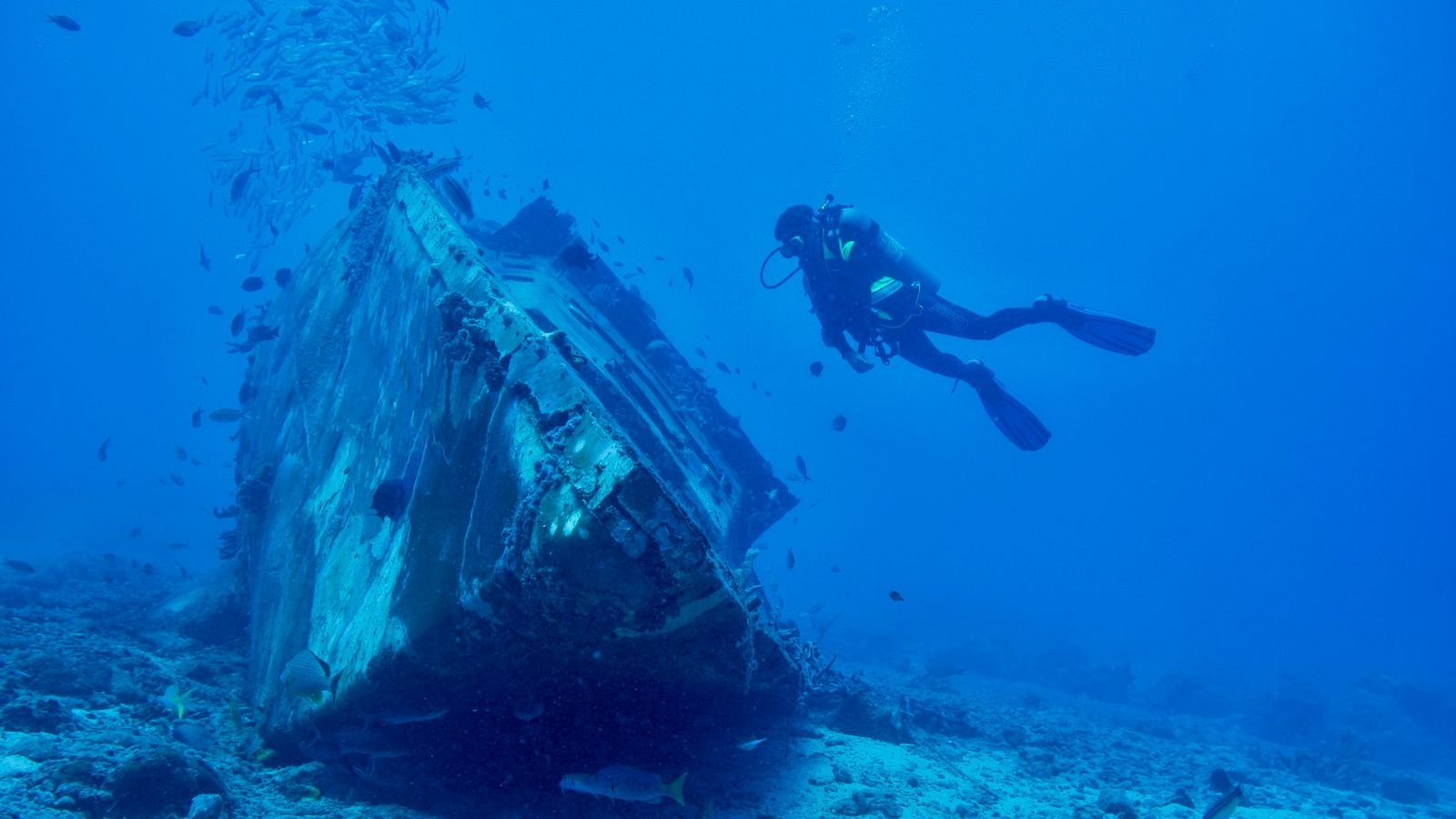
The Bermuda Triangle?
Like most tall tales, it one part fact and one part tales passed down and distorted over generations.
The facts: Bermuda sits in one of the busiest shipping and flight corridors in the world, connecting the US East Coast with the Caribbean, Europe, and beyond. It's also squarely in hurricane alley. Combine heavy traffic with violent storms, strong currents, and a reef that has been shredding hulls since the 1500s, and you get a lot of wrecks.
The USS Cyclops, those five Navy planes, and dozens of other incidents are real — but the rate of disappearances is no higher here than in any other well-traveled stretch of ocean. The US Coast Guard doesn't recognize the Bermuda Triangle as a hazardous area, and NOAA has said flatly that there's no evidence of anything unusual going on. In 1975, journalist Larry Kusche went through every major "mystery" case and found sloppy reporting, exaggerated claims, and incidents that had perfectly normal explanations. The legend is really a product of a few bestselling books in the 1960s and 70s that cherry-picked the scariest stories and left out the boring answers.
Which means taking a cruise to Bermuda is not as scary as the ghost stories make you believe. In fact, it's a great destination from the East Coast as it is often the closest warm-weather port and doesn't involve taking an extra few days to head further down south to the Caribbean.
One of those cruise options leaves from the newly renovated PhilaPort cruise terminal! For the first time in decades, Philadelphians can leave from the city on a cruise. Currently it's Norwegian's Norwegian Pearl, which has routes that go to Bermuda as well as to destinations in the Caribbean like the Bahamas and the Dominican Republic. The Norwegian Gem is confirmed to take over Philadelphia operations starting April 2028, continuing the Bermuda runs — so hopefully this is just the beginning for cruising on the Delaware River. For now, I'm eager to give a Philly-to-Bermuda cruise a try.
If my obsession is turning into your obsession, reply and let me know. Whether it's a cruise from Philly, a flight to the island, or a full trip plan — I can help you get there.
More travel deals below:
Travel Deals This Week
Your own Bermuda trip
Flights
Bermuda · Nonstop fares from Philadelphia on American typically run $500–$600 round-trip; from JFK on JetBlue, similar range. No blowout deal this week, but Bermuda fares do drop — reply and I'll keep my eyes peeled for you.
Cruises & tours
Norwegian Cruise Line · 7-night Bermuda cruise from Philadelphia, from ~$699 per person
The Norwegian Pearl sails round-trip from PhilaPort to Royal Naval Dockyard with two overnights on the island — a full day and a half in Bermuda. First departures: November 14 and November 21, 2026, with a shorter 5-night option on December 18. Norwegian's free prepaid gratuities on balcony cabins and up (in the deals below) ends November 2, so let me know ASAP if you’re interested!
Departures: November 2026–March 2027
Flight deals
Fares like these tend to vanish within a few days, so if one catches your eye, reply and I'll check live prices for your dates (and I can book the flight for you now, too).
This week: warm-weather escapes from all three cities as Philadelphia gets cold, and Cairo finally dropped.
Philadelphia
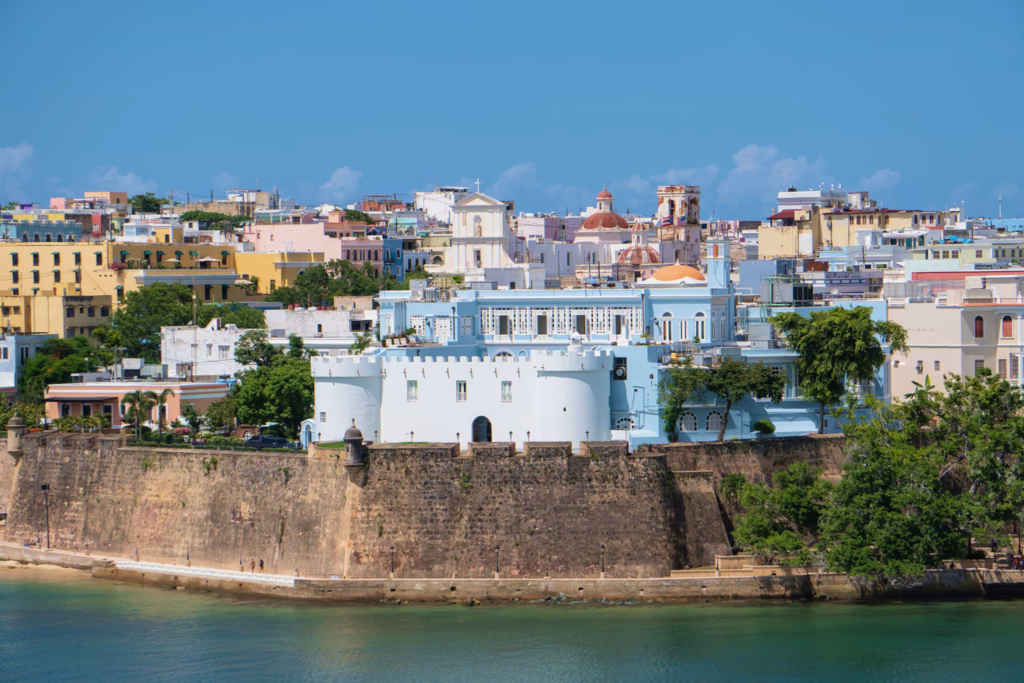
San Juan, Puerto Rico · $204 round-trip, nonstop (usually ~$520)
No passport needed, and a four-hour flight lands you in a 500-year-old walled city, with El Morro's fort guarding the harbor and pastel streets climbing the hill behind it. Late January is the Fiestas de la Calle San Sebastián (Jan 21–24, 2027), Old San Juan's four-day street party, which drew over a million people this year.
Travel: November, January
Cancún, Mexico · $375 round-trip (usually ~$680)
November through February is the Yucatán's dry season, which is exactly when you want to be climbing pyramids. The Tren Maya now runs from a station at Cancún's airport to Chichén Itzá and Valladolid, so you can trade the beach for the Maya world without renting a car (A long YouTube video where I rode all 1000 miles of track is coming out soon, subscribe!).
Travel: November–February
New York (JFK & Newark)
Cairo, Egypt · $717 round-trip from JFK (usually ~$1,185)
Last week I said I'd keep my eyes peeled for Cairo, and here it is.
December and February are Egypt's cool season, the best time to stand in front of the Great Pyramid without baking. Time it for February 22, when the sun reaches into Abu Simbel's sanctuary and lights up the statues of Ramesses II, one of the two days a year it does. If you'd rather do it from the Nile, reply and I'll send you my cruise PDF.
Travel: December, February
San Juan, Puerto Rico · $195 round-trip, nonstop from JFK, $227 nonstop from Newark (usually ~$510). See Philadelphia above.
Aruba · $331 round-trip from JFK (usually ~$680)
Aruba sits outside the hurricane belt, and December and January are dry and breezy, with the trade winds keeping the heat in check. Skip a beach day for Arikok National Park, where the walls of Fontein Cave still carry drawings left by the island's Indigenous Caquetío people.
Travel: December–January
Oslo, Norway · $599 round-trip from Newark (usually ~$800)
February is real winter in Oslo, and the city leans into it: take metro line 1 up the hill to Frognerseteren, rent a sled, and ride the 2-kilometer Korketrekkeren ("the corkscrew") toboggan run back down to the metro. April trades snow for longer days and the fjord thawing out.
Travel: February, April
Manila, Philippines · $825 round-trip from JFK (usually ~$1,200)
January through March is the dry season across most of the Philippines, the best window for island-hopping in Palawan or the Visayas. Start in Manila's Intramuros, the old Spanish walled city, then fly down to Cebu for Sinulog (Jan 17, 2027), one of the country's biggest festivals, with street dancing for the Santo Niño. The fare is on Korean Air through Seoul.
Travel: January–March
Baltimore (BWI)
San Juan, Puerto Rico · $294 round-trip (usually ~$510). See Philadelphia above.
Cancún, Mexico · $392 round-trip (usually ~$660). See Philadelphia above.
Cartagena, Colombia · $361 round-trip (usually ~$700)
A walled colonial port on the Caribbean, with bougainvillea spilling off balconies in the old city and Spanish fortresses facing the sea.
Travel: November–December
Belize · $489 round-trip (usually ~$680)
Maya cities in the jungle (Caracol, Xunantunich) on one side, and the world's second-largest barrier reef system on the other. February is the start of the best stretch for diving and snorkeling, with calmer seas and clearer water, and the dry season makes climbing the temples much more pleasant.
Travel: January–February, April
Got points?
London · 12,000–31,000 points + ~$510 round-trip on Virgin Atlantic, nonstop from JFK (cash fare ~$1,044)
Virgin Atlantic Flying Club points come from almost every card program:
Amex Membership Rewards, Chase Ultimate Rewards, Citi ThankYou, Capital One, Bilt and Wells Fargo all transfer 1:1. Capital One has a 30% transfer bonus through November 20, which makes this even cheaper.
The catch is the roughly $500 in taxes and fees, but at 12,000 points that's still a London trip for about half the cash price. Saver seats run January through early summer.
Travel: January–August 2027
Points are one of the most underused tools in travel, and I have tools to find where yours go furthest. Often the best trip starts with the points, not the destination: find the sweet spot, then build the trip around it. Timing matters just as much. How far ahead to book with points →
Cruise & vacation offers
No new cruise offers cleared the bar this week, but several from the last few issues are still running: Windstar's free all-inclusive package (book by Nov 17), Swan Hellenic's free balcony upgrade (Nov 7), HX Expeditions' extra savings (Nov 9) and Cunard (Dec 7).
Last call: Celestyal, Holland America's free drinks, Wi-Fi and gratuities, Norwegian's free prepaid gratuities on balcony cabins and up, and Silversea (now with an extra $500 per guest on select voyages) all end Monday, November 2. Oceania's sale ends the day after.
Want in on any of these? Just reply to this email. I'll check availability, find the right dates or sailing, and handle the booking from there, flights included.