
Diving into Dubrovnik's Past & Present
Hello again,
First, an ask!
In starting and running a business, friends & family often ask how they can offer support. There are so many ways, but the simplest and oftentimes most impactful is just to share. So I'd ask you to share this newsletter with someone who you think might be interested. And if you know someone who may be interested in having a travel advisor, sharing Merakiva Travel's info would also be greatly appreciated.
Other than that, let me plan your travel :)
That brings me to this week's place I'm obsessed with. Again, it's a place that not only have I visited, but where clients are asking how to visit themselves.
Place I'm Obsessed With
After my travel in Montenegro in 2024, I made the short journey back into the EU to visit Croatia and the extremely popular city of Dubrovnik. Not only have I had a few clients ask about combining a Croatia & Montenegro cruise (great idea — reply if you're interested too!), I also recently published a video about "Real Life" King's Landing from Game of Thrones on my YouTube channel, because Dubrovnik served as the real filming location for that show.
The whole country of Croatia probably deserves its own post, but today I'm focusing just on Dubrovnik because not only have I personally visited it, in many ways Dubrovnik is an island from the rest of Croatia that has drawn disproportionate attention and visitors because of its old city and role in Game of Thrones.
What Is Dubrovnik?
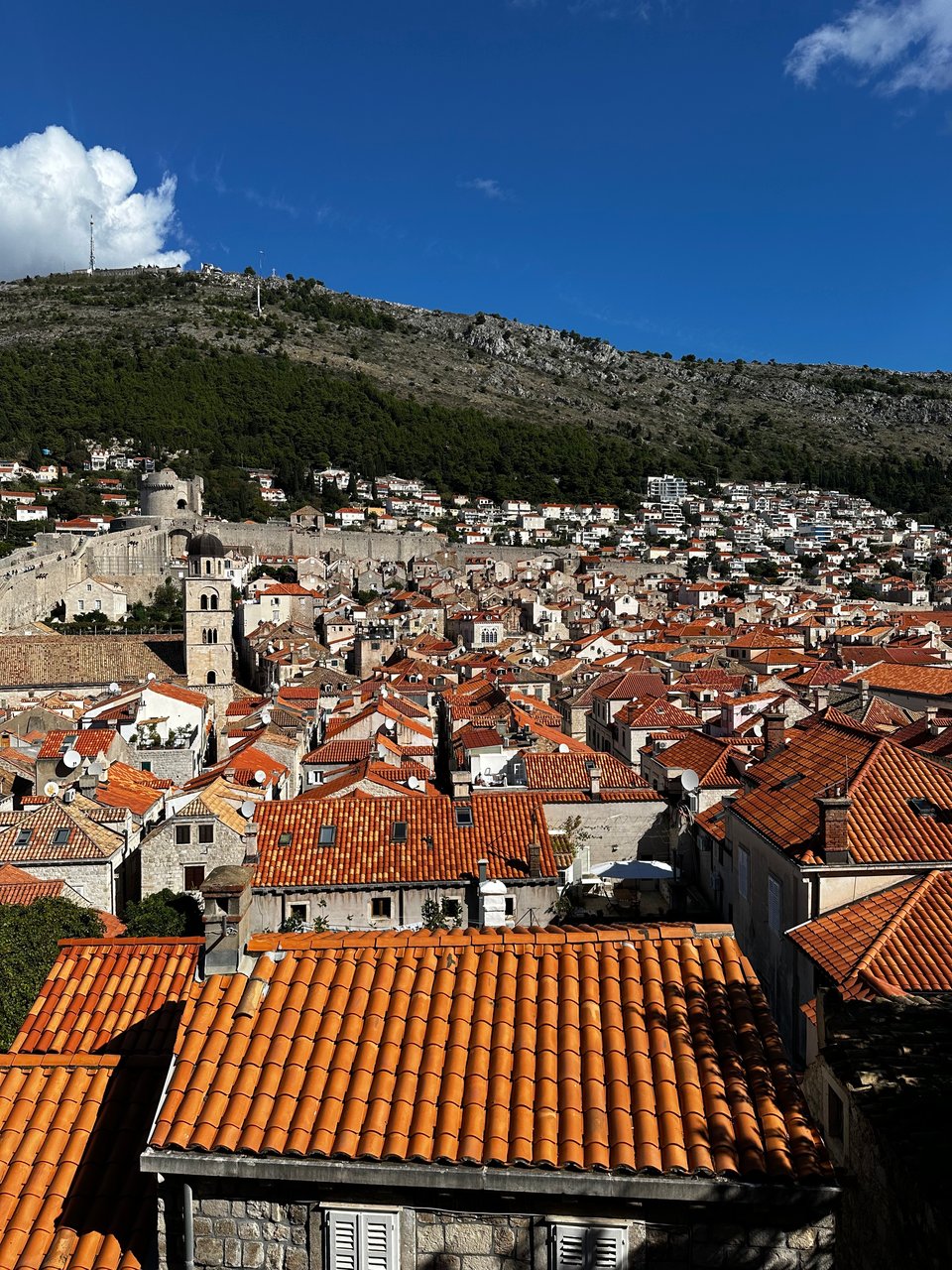
A city in the southeast of Croatia. It is located between Montenegro and a small portion of Bosnia and Herzegovina that connects to the coast, splitting off Dubrovnik from the rest of the rest of the country.
How did that happen? The Republic of Ragusa — the old republic that Dubrovnik was the capital of — intentionally ceded a small strip of coastline to the Ottoman Empire back in 1699 to create a buffer zone between itself and Venice. That strip is now the town of Neum, Bosnia and Herzegovina's only outlet to the sea. It still splits Croatian territory today, making Dubrovnik an exclave, cut off from the rest of the country by about 9 km of foreign coastline. Until 2022, anyone driving south to Dubrovnik had to cross two international borders to get through it.
When most tourists visit Dubrovnik today, what they see, and the highlight of their trip, is undoubtedly the old city of Dubrovnik. That is also where so many Game of Thrones locations were shot. But that old city is the core of what was an old republic. Dubrovnik was originally founded in the 7th century by Roman refugees who fled the nearby city of Epidaurum — modern-day Cavtat — after it was destroyed by invading Slavs and Avars around 615 AD. They landed on a rocky island called Laus (Greek for "stone").
At the time, there was a marshy channel running between that small island and a Slavic settlement on the opposite hillside called Dubrava, meaning "oak grove" — the root of the name Dubrovnik. That is part of the reason that Dubrovnik has such strong Roman influences, it literally goes back to the Romans. Though that's not the only reason, more on that later.
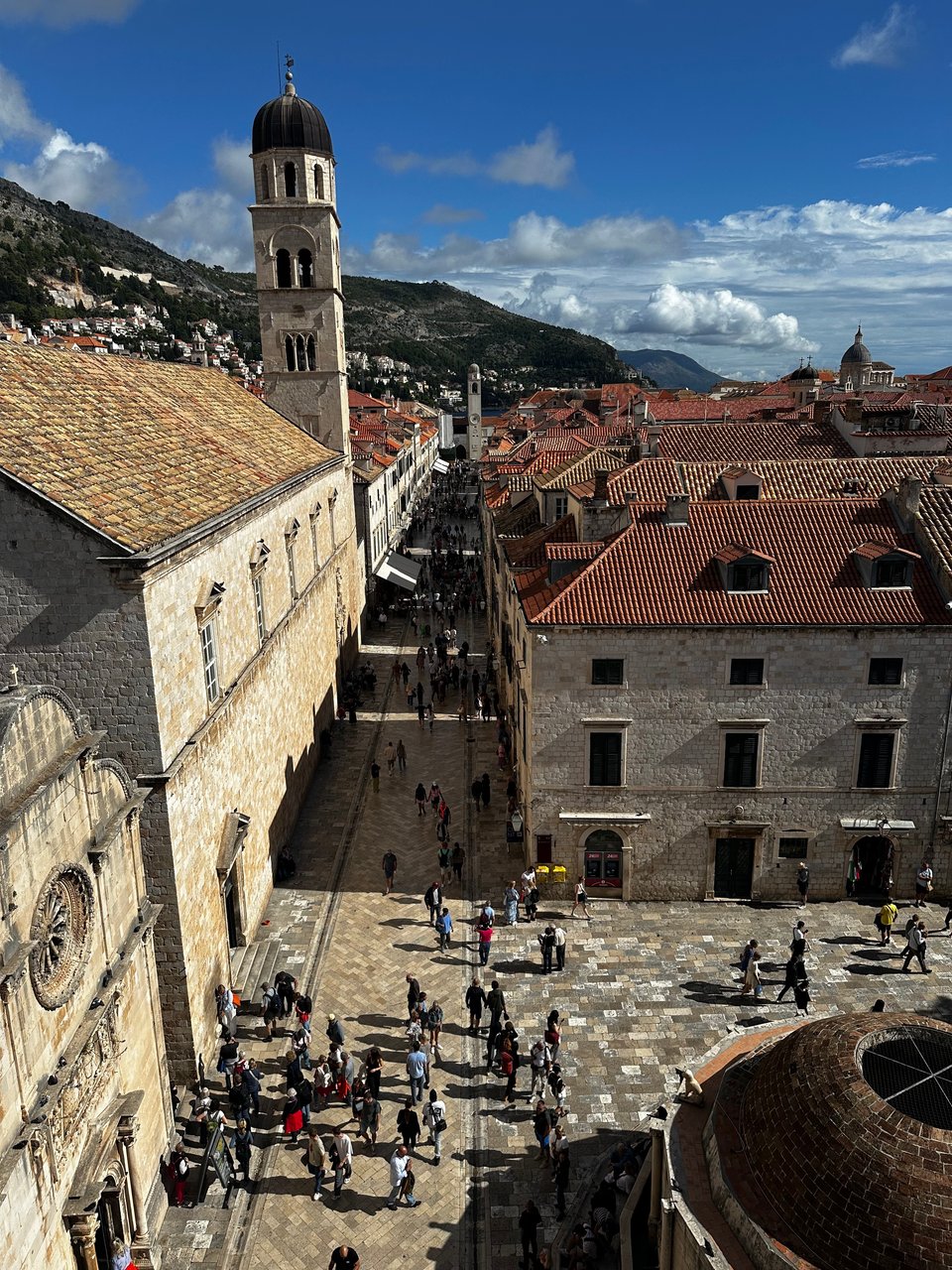
Those two towns, two sides of the channel, eventually grew up together. And as the cities grew, they filled in that channel, connected into one single town. Today, it's actually fairly easy to recognize it on the map because it is the one major straight road going through the town called the Stradun. What is today polished limestone (and many vendors hawking Game of Thrones merch) used to be water.
The Republic of Ragusa
As time moved on, the politics of the region changed, eventually leading to the founding of the Republic of Ragusa. Ragusa had been a Venetian protectorate since 1205, forced to pay tribute and serve as a supply base for Venice in the southern Adriatic. But in 1358, with the help of the Kingdom of Hungary, Ragusa broke free from Venice and became an independent republic — maintaining that independence for the next 450 years.
Ragusa is a fascinating republic because of how it was governed. Starting in the Middle Ages, many of its surrounding kingdoms and empires were led as autocracies, with kings and emperors at the helm. But Ragusa was different. It was made up of a council with a rector that served only one month at a time, representing the council as their head of state. And through a nesting series of political systems, they kept this republic alive. If this sounds familiar, it may be because it has significant parallels to one of Ragusa's adversaries and former protector, Venice.
Both cities were maritime republics governed by elected councils rather than hereditary monarchs. Venice had its Doge; Ragusa had its Rector. But Ragusa took the principle further. The Rector served just one month and was required to live in the Rector's Palace for the entirety of his term, essentially a prisoner of state, to prevent any one person from accumulating power. And while Venice dwarfed Ragusa — perhaps 180,000 people to Ragusa's 30,000 at their peaks — Ragusa punched well above its weight through clever diplomacy, particularly with the Ottoman Empire, whose support kept Venice from swallowing its smaller rival.
As for what Ragusa actually did with its independence: it built a merchant fleet that traded across the Mediterranean and into the Atlantic, becoming one of the wealthiest city-states for its size in Europe. It established one of the world's first quarantine systems in 1377. And it abolished the slave trade in 1416, among the first European states to do so.
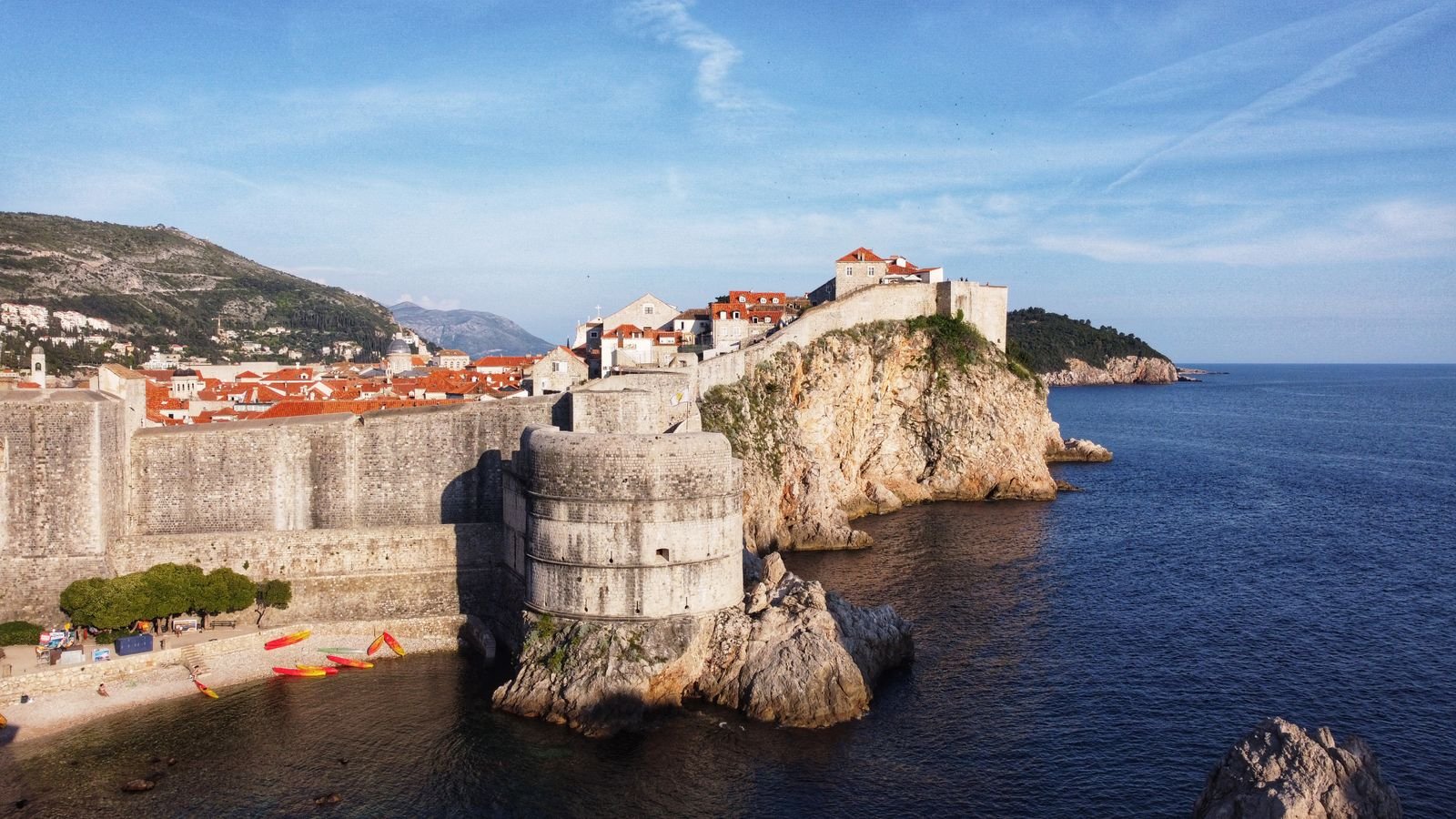
As warfare moved from an age of galleys and cavalry to an age of cannons, Ragusa's capital, the city of Dubrovnik, changed accordingly. Specifically, the walls grew high, they grew thick, and the towers on those walls became even more important. Despite a relatively low population — it's estimated only about 5,000 people lived within the walls — these walls were effectively impenetrable.
The Walls and the Fall
The walls as they stand today were largely complete by the 16th century, stretching nearly 2 km around the city, up to 25 meters high and 6 meters thick in places, with towers positioned to cover every angle of approach. In 1667, a catastrophic earthquake destroyed much of the city inside those walls, killing thousands. But the republic rebuilt. Most of the baroque buildings you see inside the Old City today date from that reconstruction — which is part of why the city looks so unified despite being centuries old.
But eventually, Ragusa and Dubrovnik would fall despite these impenetrable walls, because the people let in the French in 1806. During the Napoleonic Wars, Ragusa opened its gates to Napoleon's army during a siege by Russian and Montenegrin forces. The French promised to respect the republic's independence. They didn't. In 1808, Marshal Marmont (not this type of Marshall) abolished the Republic and took the title "Duke of Ragusa" for himself.
After Napoleon's defeat, the Congress of Vienna handed Dubrovnik to the Habsburg Empire in 1815. It remained under Austrian and then Austro-Hungarian rule until 1918, when it became part of the Kingdom of Serbs, Croats, and Slovenes — later Yugoslavia. Through two world wars and decades of communism, Dubrovnik endured, its walls and old city preserved.
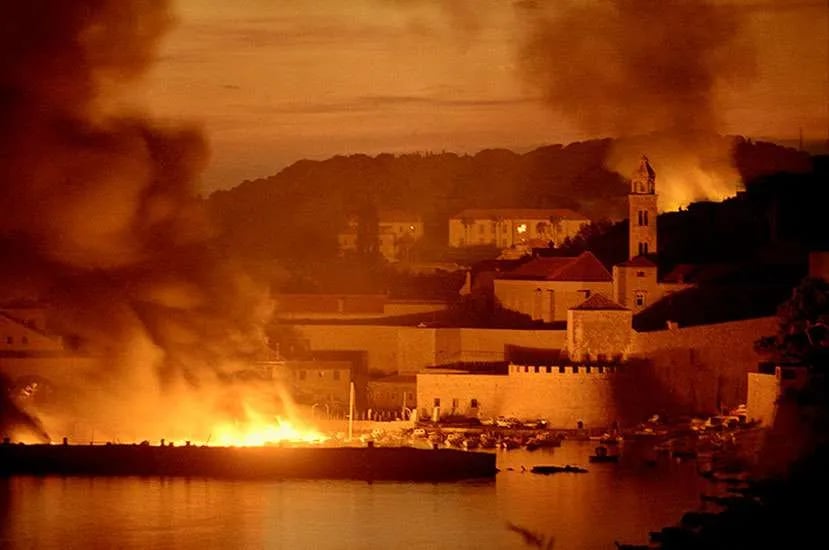
During the Croatian War of Independence in the 1990s, part of the horrific Serbian-Bosnian conflict, Dubrovnik was at the center of fighting. The Yugoslav People's Army besieged the city from October 1991 to May 1992. The worst day was December 6, 1991, when heavy shelling damaged about two-thirds of the buildings in the Old Town, including the cathedral and the Rector's Palace. If you see some of the images from the 90s, it's shocking how this historic city looks like it was on fire. Credit to Croatia and the people of Dubrovnik for restoring it as well as they have.
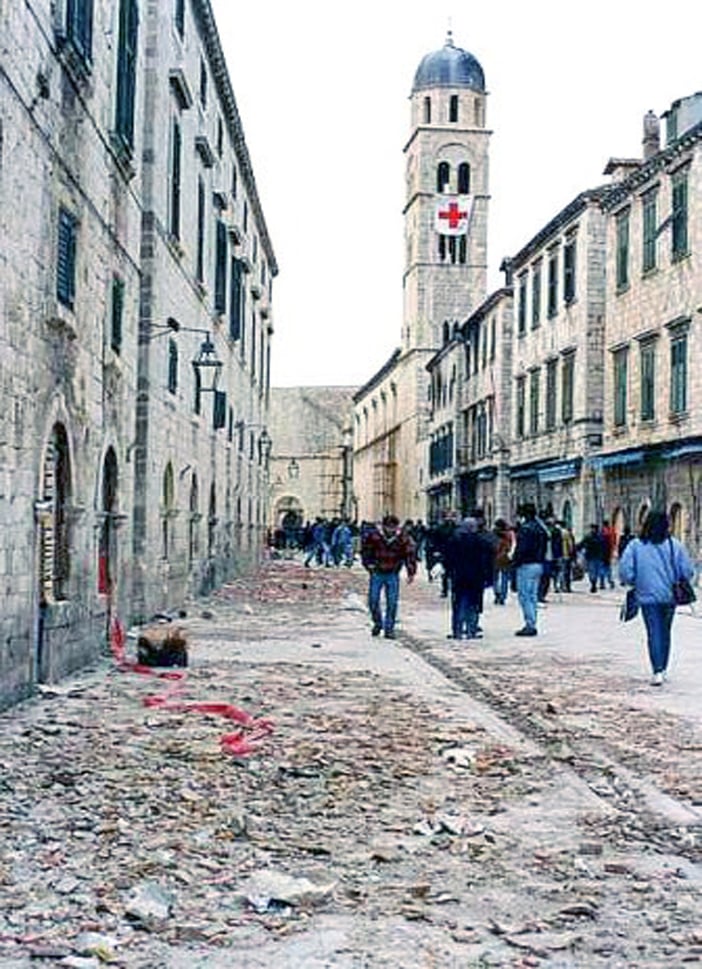
But with that restored wall and historic city, Dubrovnik is an increasingly booming travel destination.
Visiting Dubrovnik
There are many ways to visit Dubrovnik today, from land, sea, or air.
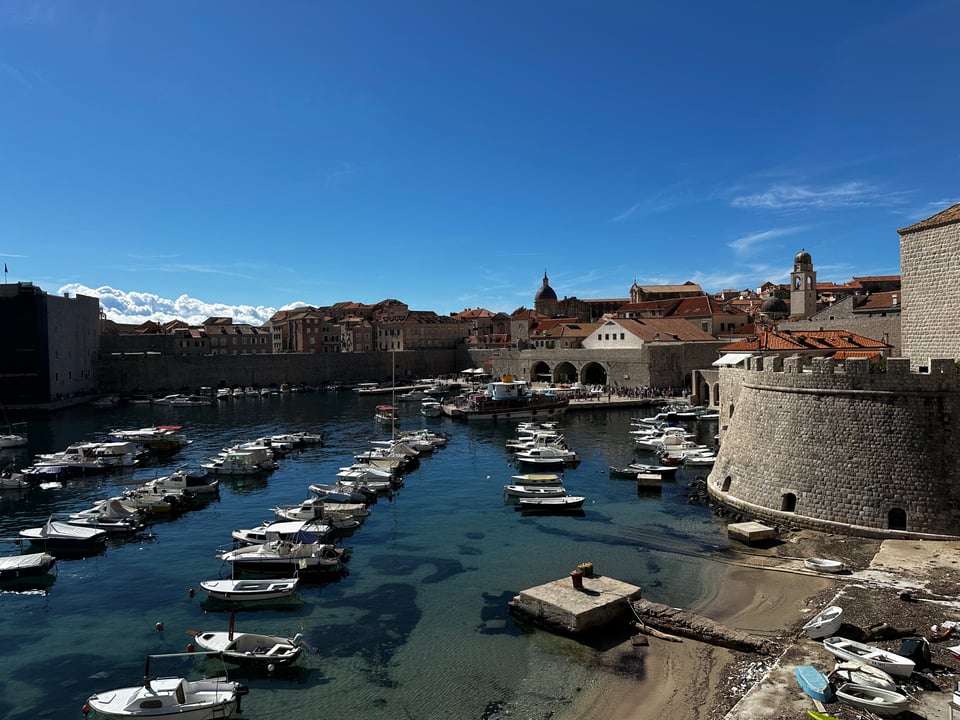
Many cruises stop in Dubrovnik. The cruise port at Gruž sits about 3 km northwest of the Old Town, connected by city bus, taxi, or a shuttle that some cruise lines provide. It's one of the most visited cruise ports in the Adriatic — everyone from the mega-ships to Windstar's sailing yachts and Silversea's all-suite ships call here in the summer months. Unlike its neighboring Montenegro I wrote about last month, the cruise ships have their own dedicated port some distance away from the old city. While this doesn't mean that Dubrovnik is not also crowded with cruise visitors, the distance from the port and the fact that Dubrovnik is far larger than its Montenegrin cousin Kotor make finding the right day far less important.
As yacht week in Croatia has become more popular in the last decade, the prevalence of small yacht trips to Croatia and Dubrovnik has become another popular way to see the coast, going from Split to Dubrovnik or vice versa. G Adventures and Intrepid Travel both run 8-day sailing trips island-hopping through Hvar, Korčula, and Mljet along the Dalmatian coast, from about $2,049 per person. If that kind of trip interests you, reply and I'll find the right one.
Dubrovnik's airport provides plenty of flight options from around Europe for cheap. There is one seasonal direct flight from the US: United flies nonstop from Newark to Dubrovnik from late April through late October. Off-season or from the West Coast, you'll connect through a European hub — Frankfurt, Paris, Amsterdam, or Rome are the most common routings — but every major European hub offers frequent flights, whether you are starting a cruise in Dubrovnik or spending time in the city.
The drive from the airport, off to the southeast, to the town is astonishing, riding on the side of a cliff with postcard views out the windows of Old Town Dubrovnik and the coastline. Not the reason to fly there but a bonus once you land.
To reach Dubrovnik by land is not as straightforward. Until 2022, Dubrovnik and its exclave were cut off from the rest of Croatia, but now with the Pelješac Bridge you can drive from the north. According to some people I met, that small connection, plus the heavy amount of tourism, leads to some of the highest prices in the whole of Croatia. The rest of the surrounding countries, Montenegro and Bosnia & Herzegovina, are not in the EU, so driving involves crossing an international border.
Once in Dubrovnik, where should you stay and what should you do?
Old City vs. New City
In general, the tradeoff between staying in the old city vs. staying outside the city walls depends on how much in the center of the action you want to be, the modernity of the hotel, and how much you enjoy hills. While the Old City is beyond picturesque, with seemingly every street and building out of the heyday of Baroque Ragusa, the steep winding roads are not for everyone. Because of the original two settlements on hillsides, getting from the central Stradun up to the edges of the city can be exhaustingly steep. While there are plenty of beautiful hotels in the Old City, they are limited by the space of the old buildings.
Staying outside of the Old City gets you access to more space, larger roads, and cars, as cars are not allowed to enter the Old City. Coming in and out of the city gates can take some time, but for space, easy access, outside the old city is your best bet.
Me? I made the perhaps uninformed decision to stay at a hostel called "City Walls" that, surprise, was next to the city walls, high on the cliffside near the ocean. If the steep walk up through winding roads and past people struggling to drag rolling suitcases up the stairs wasn't bad enough, off season at this hostel meant it was nearly abandoned. In fact, my second night, I was the only one in the entire hostel so they just gave me the keys and said "lock up!"
But those less busy days and nights in fall Dubrovnik gave me the chance to explore and find some of the lesser known attractions that I would certainly recommend.
The Secret Bar and the City Walls
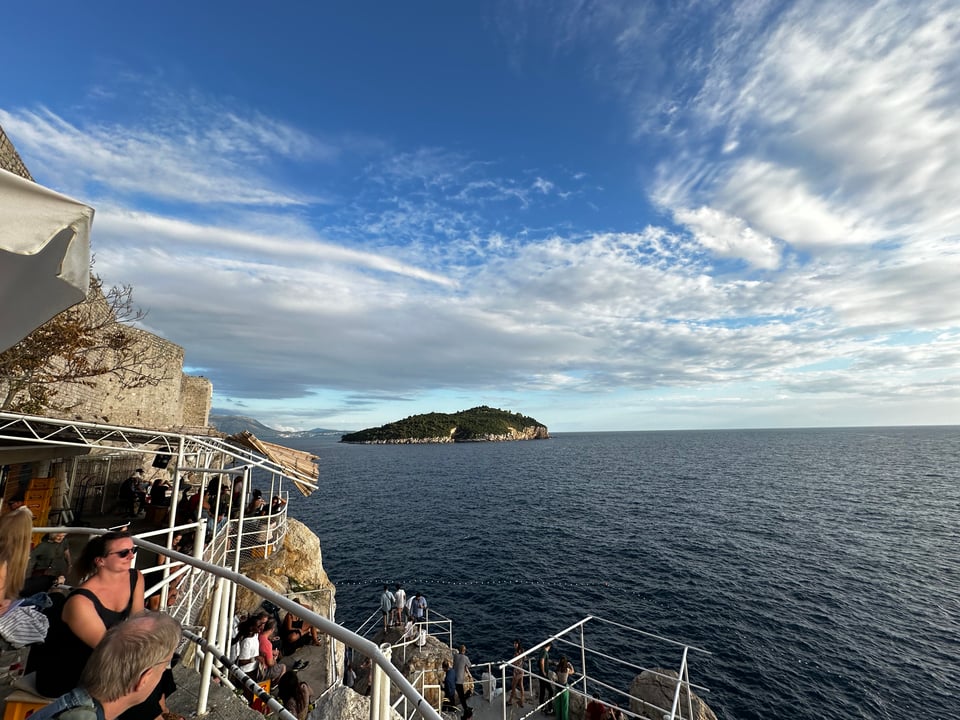
Up the hills, hidden in the winding streets of the Old City, is the extremely cool Buža cliff bar. The only way to find it is by going through a small gate in the wall — buža literally means "hole in the wall" in Croatian — with the bar itself perched on the cliffside outside the walls with some of the most incredible views and some far more courageous visitors jumping off the cliffs into the water. If you watched the most recent season of The Amazing Race, you might remember how hard it was for the teams to find this exact bar — the clue sent them looking for "a hole in the wall and the Buza Bar," and some ended up at the wrong one (there are two, side by side).
The Dubrovnik city walls are one of the main attractions in the city. Despite the steep and slippery steps to get up there, the fact that you are able to walk all the way around the entirety of the city, above all the city's buildings, makes it a requirement for anyone visiting the city who can handle stairs. But the best part of the city walls isn't walking the top of the ramparts — it's below. Because with your Dubrovnik City Walls pass you can go to the archaeological museum (I know, a very on-brand suggestion for me!) which lets you walk through the interior of the walls and explore the preserved foundry inside Minčeta Tower — the tallest tower of all the fortifications. The foundry is one of the best preserved archaeological examples in Dubrovnik, and it was only opened to visitors in the last decade or so. Minčeta itself shows up in Game of Thrones, by the way, but not as King's Landing — it's Qarth.
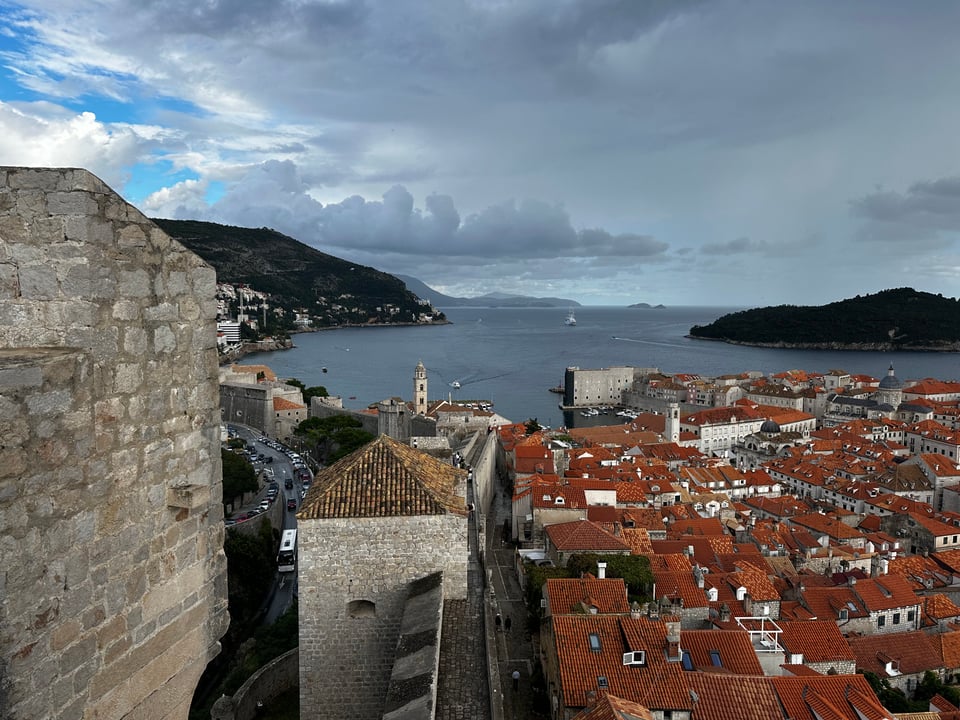
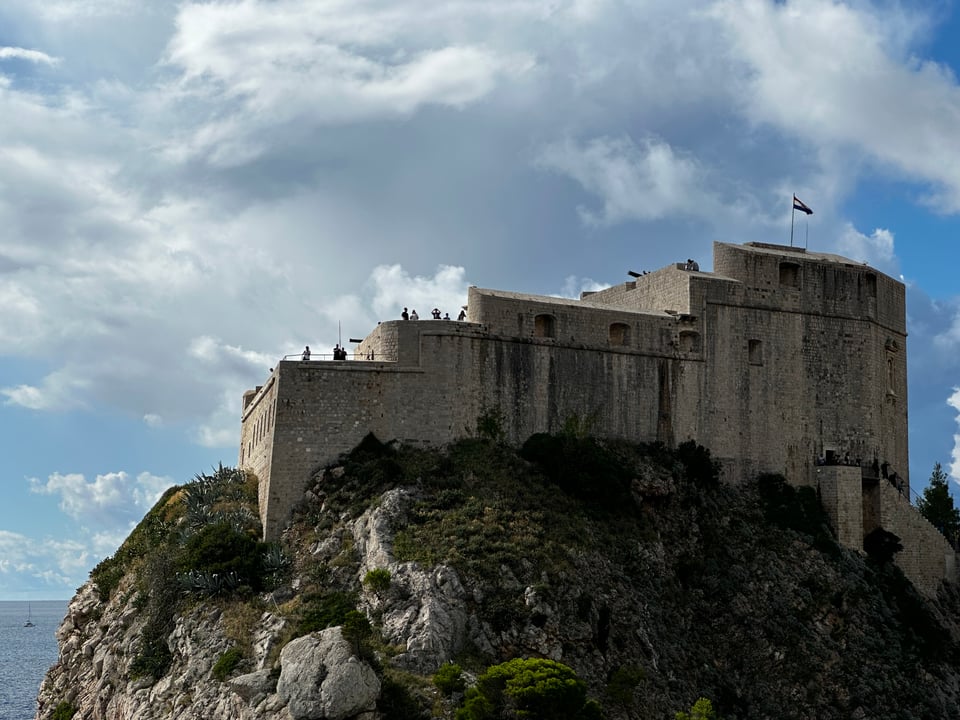
And there's more beyond the walls. Fort Lovrijenac, just outside the Pile Gate, is perched on a 37-meter cliff and served as the exterior of the Red Keep in Game of Thrones (your city walls pass includes it). I’d recommend taking one of the many Game of Thrones tours when there, even if you’re not a fan of the show, as it helps ground the history into pop culture.
The Rector's Palace, where those one-month rectors actually lived and governed, is now a museum filled with artifacts from the republic era — strongboxes, bronzes, and a view back through the republic's centuries. And if you watched Cersei’s Walk of Shame scene from Game of Thrones, that's the Jesuit Staircase connecting the old Jesuit church to Gundulić Square.
In terms of a nearly perfectly historically preserved city, Dubrovnik is one of my favorites I've been to. More compact than Venice, just as historical, and born from the same centuries of Adriatic rivalry.
Looking to visit either on a cruise of the Adriatic or taking yourself there? Let me know and we'll get you set up. And check out the Dubrovnik deals right at the top of this week's deals section.
Travel Deals This Week
Cruises & tours
Windstar Cruises · 7-night Adriatic from Dubrovnik, from $2,536 per person, on the sailing yacht Wind Spirit
Joining one of the tall-masted ships on a cruise of the Adriatic is on my bucket list. Windstar's ships carry a few hundred guests with a platform off the back for kayaking and swimming — not your traditional cruise. The route runs Dubrovnik to Venice through Korčula, Šibenik, and the Croatian coast, with departures June through September 2027. The free all-inclusive package (drinks, Wi-Fi, gratuities) is still running if you book by Nov 17.
Book by Nov 17 (all-inclusive offer) · sailing June–September 2027
Cunard · 7-night Adriatic from Trieste, from about $1,180 per person (inside cabin), on Queen Elizabeth
The grown-up, dress-up-gala-night option. Queen Elizabeth's summer 2027 sailings from Trieste (about two hours from Venice) stop in Split, Kotor, and Dubrovnik, and some add Zadar. Stack it with a cheap flight to Venice or Trieste and you have a week through the highlights of the Adriatic. Still running: up to 35% off plus up to $300 onboard credit and a 50% reduced deposit.
Book by Dec 7 · summer 2027 sailings
G Adventures · 8-day sailing, Split to Dubrovnik (or reverse), from $2,049 per person
A different way to see the coast: island-hopping by yacht through Hvar, Korčula, and Mljet along the Dalmatian coast, with swimming stops and small-town harbors. Departures run May through October 2027.
Departures May–October 2027
Flight deals
Fares like these tend to vanish within a few days, so if one catches your eye, reply and I'll check live prices for your dates (and I can book the flight for you, too).
This week the big drops are to Asia and Scandinavia from New York.
New York (JFK & Newark)
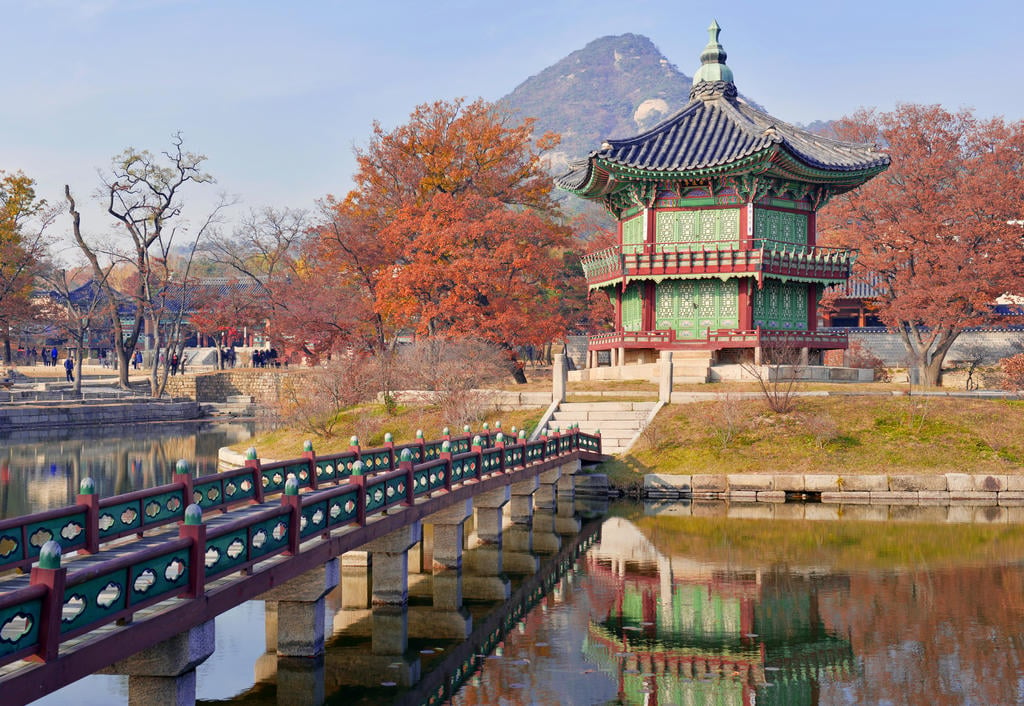
Seoul, South Korea · $774 round-trip, nonstop from Newark (usually ~$1,525)
About half the usual fare, and nonstop. Spend the morning at Gyeongbokgung, the palace the Joseon kings built in 1395, and the evening at a Korean barbecue grill. Despite direct flight options, if you want to avoid basic economy for this nearly 16 hour flight you’ll have to cough up an extra $250.
Travel: November–March
Stockholm, Sweden · $446 round-trip from JFK or Newark, on Icelandair via Reykjavík (usually ~$800)
Stockholm's showpiece is the Vasa, a warship that sank less than a mile into her maiden voyage in 1628 and was raised almost intact in 1961; she now fills a museum of her own. Icelandair lets you stop in Iceland for up to seven nights at no extra airfare, so this can be two trips in one.
Travel: November, January–April
Reykjavík, Iceland · $446 round-trip, nonstop from JFK or Newark (usually ~$780)
Winter is northern lights season, though they're never guaranteed. Despite the amazing nature around the island, spending time in Reykjavík is also worthwhile, with great food and a great nightlife (yes, it is always night there).
Travel: November–April
Bangkok, Thailand · $870 round-trip from JFK, connecting in Seoul on Asiana (usually ~$1,525)
December through February is Thailand's cool, dry season. Take the train (my favorite mode of transport) north to Ayutthaya, the old Siamese capital, where temple ruins still stand from the Burmese sack of 1767.
Travel: December–May, plus September
Baltimore (BWI)
St. Thomas, US Virgin Islands · $330 round-trip, via Atlanta (usually ~$510)
No passport needed, and January is the dry high season. In Charlotte Amalie, Fort Christian, built by Danish colonists in the 1670s, is the oldest standing building in the territory (the US bought these islands from Denmark in 1917).
Travel: January
Stockholm, Sweden · $497 round-trip on Icelandair (usually ~$800). See New York above.
Got points?
Paris · 32,000–38,000 points + ~$401 round-trip on Air France, nonstop from JFK (cash fare ~$1,110)
This month's Flying Blue promo. Flying Blue points transfer 1:1 from:
Amex Membership Rewards, Chase Ultimate Rewards, Citi ThankYou, Capital One, Bilt and Wells Fargo.
You can add a stopover in Paris and fly on to a second European city on the same award, so it's two trips for one redemption (that part has to be booked by phone). [⚠️ Going calls the stopover free; confirm when you price one.]
Travel: November 2026–April 2027
Redeeming points can be harder than earning them, and I have tools to find where yours go furthest. Often the best trip starts from the points and gets built around them, and when you book matters just as much. How far ahead to book with points →
Cruise & vacation offers
Black Friday sales are starting early.
Still running from earlier issues: Windstar's free all-inclusive package (book by Nov 17) and Cunard (Dec 7). Last call for Swan Hellenic's free balcony upgrade (ends Saturday, Nov 7) and HX Expeditions' extra savings (Monday, Nov 9).
The champagne's already poured
Silversea · up to 45% off more than 850 voyages
The ultimate luxury cruise experience: all-suite ships with a butler, and drinks, gratuities and Wi-Fi all included. The Black Friday sale cuts deposits to 15% and covers sailings worldwide, like Vietnam & Thailand on Silver Muse (14 days) or Portugal, Morocco and Spain with Madeira on Silver Ray (11 days), both in November 2027. A favorite of some of my clients.
Book by Dec 7
Want in on any of these? Just reply to this email. I'll check availability, find the right dates or sailing, and book it from there, flights included.