Hidden Gems and a Week in Montenegro
Hello again,
Three weeks of consistent newsletters! Thanks to those who have sent positive messages and have been reading along. I've been enjoying sharing my travel stories and perspectives with those who love travel (or want to travel more).
If you've been enjoying reading about my obsession, I've also been posting a long form video version on the Merakiva Travel YouTube and short reels on Merakiva Travel's Instagram and Facebook. Forwarding this email to someone you think might be interested would be amazing, but for your less literate friends & family, there's the video version.
Elsewhere in the Merakiva Travel universe, I currently have clients traveling around Europe who have never used a travel advisor, like Merakiva, before. One of their text messages, before really even beginning the trip, is perhaps the best endorsement I've ever gotten:
best money I ever spent was you planning our vaca. I haven’t lifted a finger. I haven’t had to use my brain. All is set. Bloody brilliant.
Want to travel like them? Reply to the email or reach out whatever way works for you.
Now for another place I'm obsessed with.
Place I'm Obsessed With
What makes a place a "hidden gem?"
Does calling it a hidden gem fundamentally change your expectations? How many people need to know about a place before it's just a gem?
These are the questions I was struggling with when I went to Montenegro two years ago. And as I've been finishing up an edit of a video on my Marshall Schurtz YouTube channel that I filmed in Kotor, I've been reflecting on my time there. A trip where social media posts about Europe's "next hidden gem" led me to this tiny country of 620,000 people.
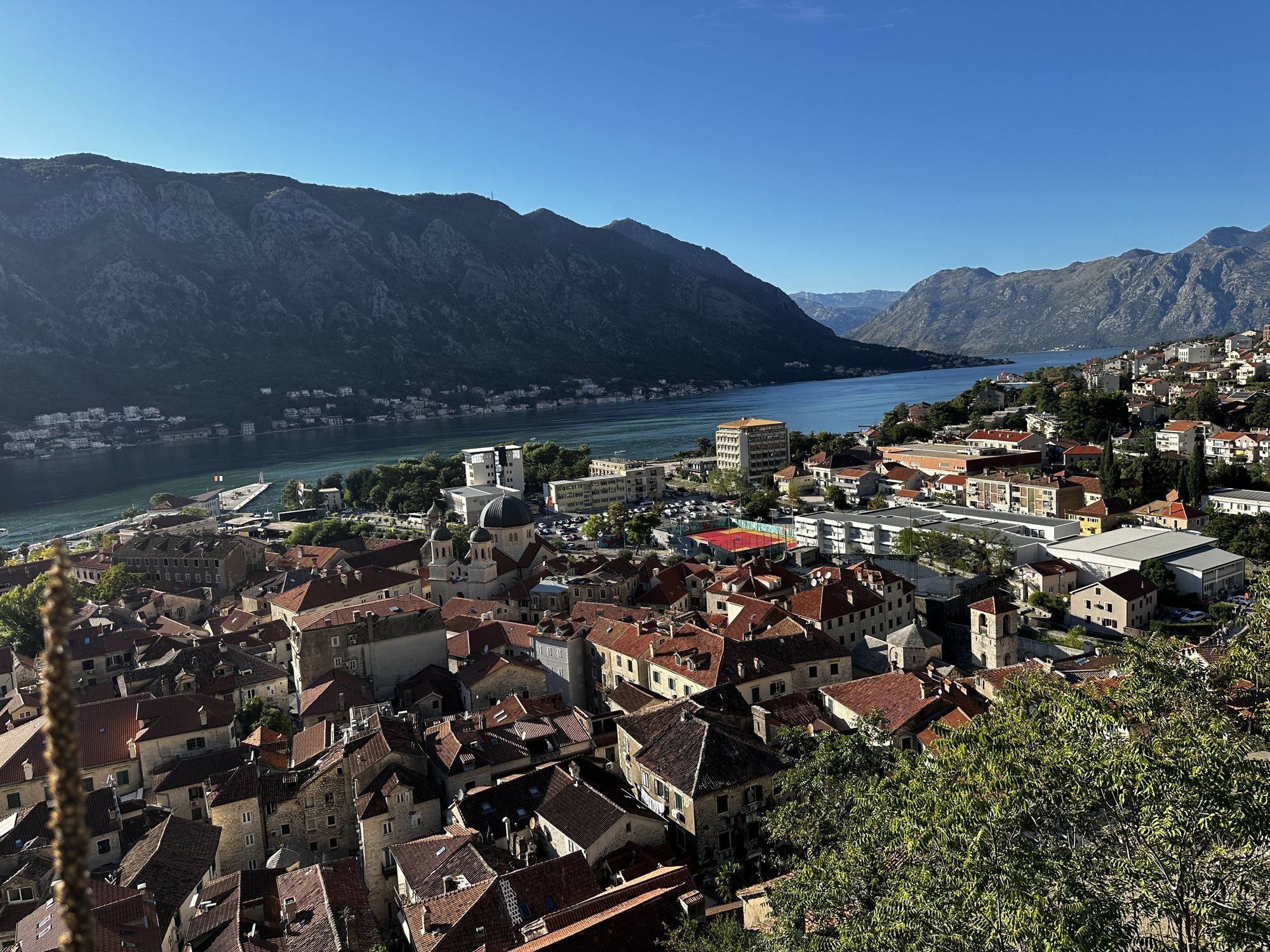
Kotor and the bay from the fortress. Credit: Me
What (and where) is Montenegro?
Montenegro is one of the newest countries in the world, only gaining independence from Serbia in 2006, 20 years ago. But its history goes back hundreds of years.
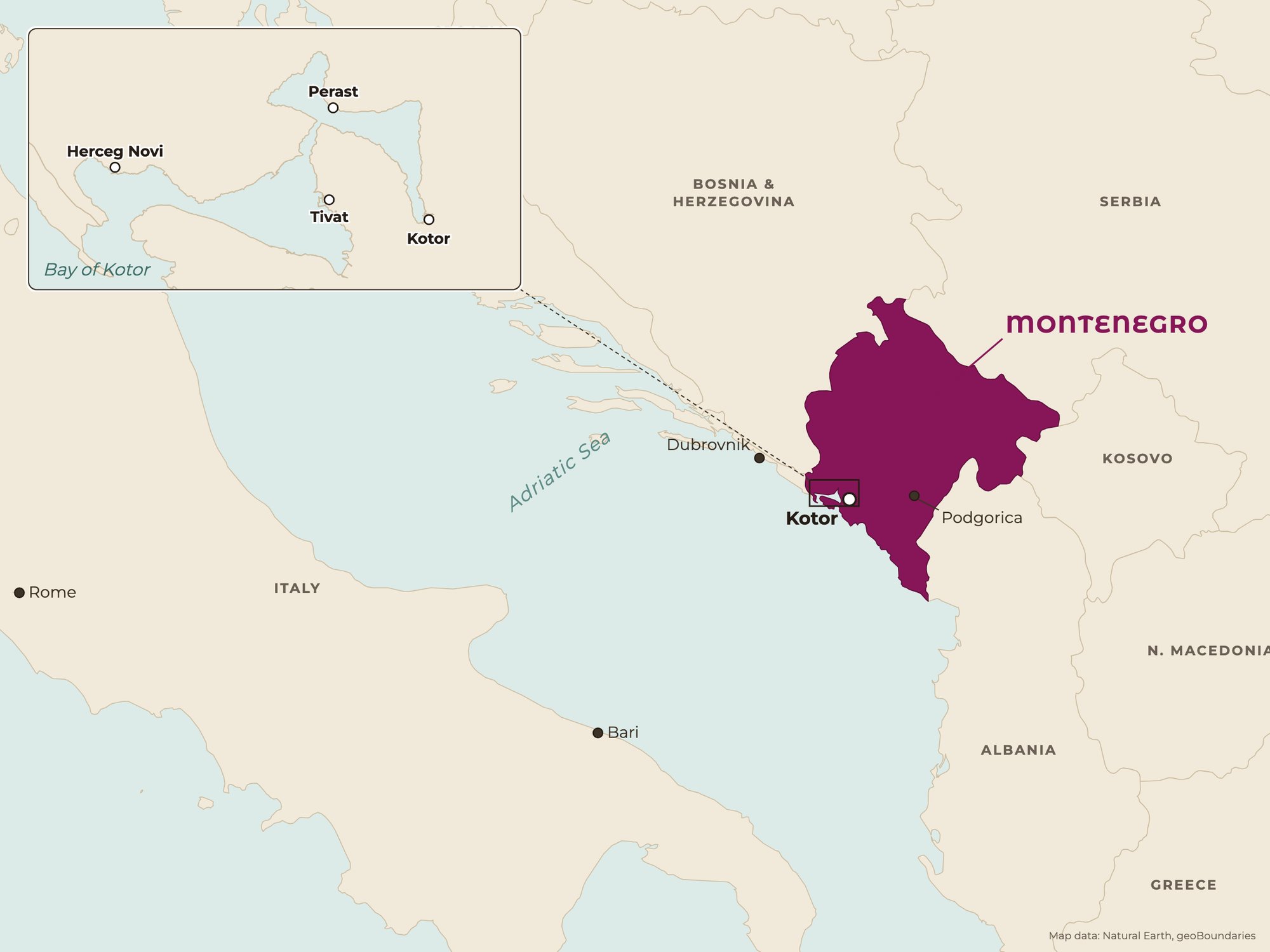
Located in the Balkans, neighboring Croatia and across the Adriatic Sea from Italy, Montenegro's defining geographic features are its uniquely shaped Bay of Kotor and the mountains that divide the coast from the interior. Those mountains are what give Montenegro its name. In Italian, it means the Black Mountain (Monte + Negro), named for the imposing Mount Lovćen behind Kotor. The bay, the mountains, and the Italian name are crucial for understanding how modern day Montenegro came to be.
The Bay of Kotor is not just one of the best ports in the Adriatic Sea, but one of the best in the entire world. Superficially resembling a fjord (subscribe to see the video discussing its actual geologic features in detail!), it is particularly deep and protected from the outside. Naturally, surrounding kingdoms and empires fought over it for centuries, with Venice placing an outpost at Kotor in the 15th century. Because of that influence at Kotor and around the bay, that portion of Montenegro today not only architecturally resembles Italy but shows that influence in food and religion.
Over the mountains was the portion of Montenegro that never fell under control of the Venetians. Much more rugged without notable resources, it largely fell out of the attention of outsiders, even during the centuries it was (at least on paper) part of the Ottoman Empire. But those mountains, and the cultural connectivity as part of the empire, led the people here to have more in common with their inland neighbors, like the Serbians, than the quasi-Italians around the bay. It's why today the architecture is so different and the predominant religion is Orthodox.
But Montenegro, as a state, gained that identity after a series of back and forth claims in the late 19th century, when the Treaty of Berlin (1878) split up the Balkans and created an independent country that was the core of the current day country. After WWI, it was folded into Yugoslavia and remained that way, throughout the breakup of Yugoslavia and the ensuing wars in the 90s, keeping the name of Yugoslavia alive with Serbia until 2003. In 2006, a referendum voted, with a 55.5% majority, to separate from Serbia into an independent state of Montenegro for the first time since 1918.
Today, Montenegro is working hard to gain admission into the EU, like its former Yugoslavian neighbor, Croatia. In fact, earlier this week, they closed an additional 3 of the 33 chapters required for EU accession, bringing them to a total of 21. While there are still significant hurdles to deal with, specifically with the judiciary and corruption, they are aiming to be admitted in 2028. Already today, their official currency is the Euro, making travel from the rest of Europe to Montenegro marginally easier. Because today, as a non-EU member state, visiting the country is not as easy as you might expect.
Visiting Montenegro
I'll be honest -- after spending a week in Montenegro at a cute little Airbnb in the tiny historical town of Kotor, I really thought it wasn't the tourist destination that Instagram posts made it out to be. Maybe it was just the beautiful photogenic coastline, perfect for photos and Reels, that drew in the crowds. The reality was less idyllic. I did have amazing moments, like the sunset over Sveti Stefan or wandering medieval Kotor's streets at night.
But a trip is more than just views. It's also about logistics.
And the first thing you need to know is how to get to Montenegro. As a tiny country, its airport options are limited. The two major commercial airports are at Tivat, near the Bay of Kotor, or at Podgorica, the inland capital. When I visited, neither had many flights, making the best flight option the geographically close major tourist hub of Dubrovnik in Croatia.
The important thing is that's changed since my trip. This spring, Wizz Air opened a base in Podgorica with more than a dozen new routes around Europe, and Tivat added British Airways from London Heathrow and Iberia from Madrid. The flights can be cheap, too: one-way from London next April starts around $82 to Podgorica and $128 to Tivat, compared to $104 to Dubrovnik. The catch is that Tivat is still mostly a summer airport, down to just a handful of routes in the winter, so outside of the summer, Dubrovnik is still the easier option.
For me, getting from Dubrovnik to Montenegro was not as simple as taking a shuttle across the border. Because Montenegro is outside of the EU's Schengen Zone, entering and exiting require going through a major land crossing. That land crossing was the single greatest annoyance of my trip, and it can add anywhere from 30 minutes to over 2 hours, depending on how unlucky you are. And when taking the not-so-glamorous FlixBus (with, at points, a leaking roof) without an onboard bathroom, it gets rough. It stretches what should be about a 90-minute drive to 2.5 hours or more.
The other aspect about a hidden gem is no one specifies how much time that gem needs. Montenegro, despite its wonderful attractions, is not that big of a country.
With a week in Montenegro, even while working part-time, I feel like I did a significant percentage of the tourist activities. On one hand, that gives me a great foundation to talk about and recommend things to do for your future visit. On the other, it did give me the feeling of "and that's it" by the time I left.
But there were so many great, fun, and unique activities to do in the country.
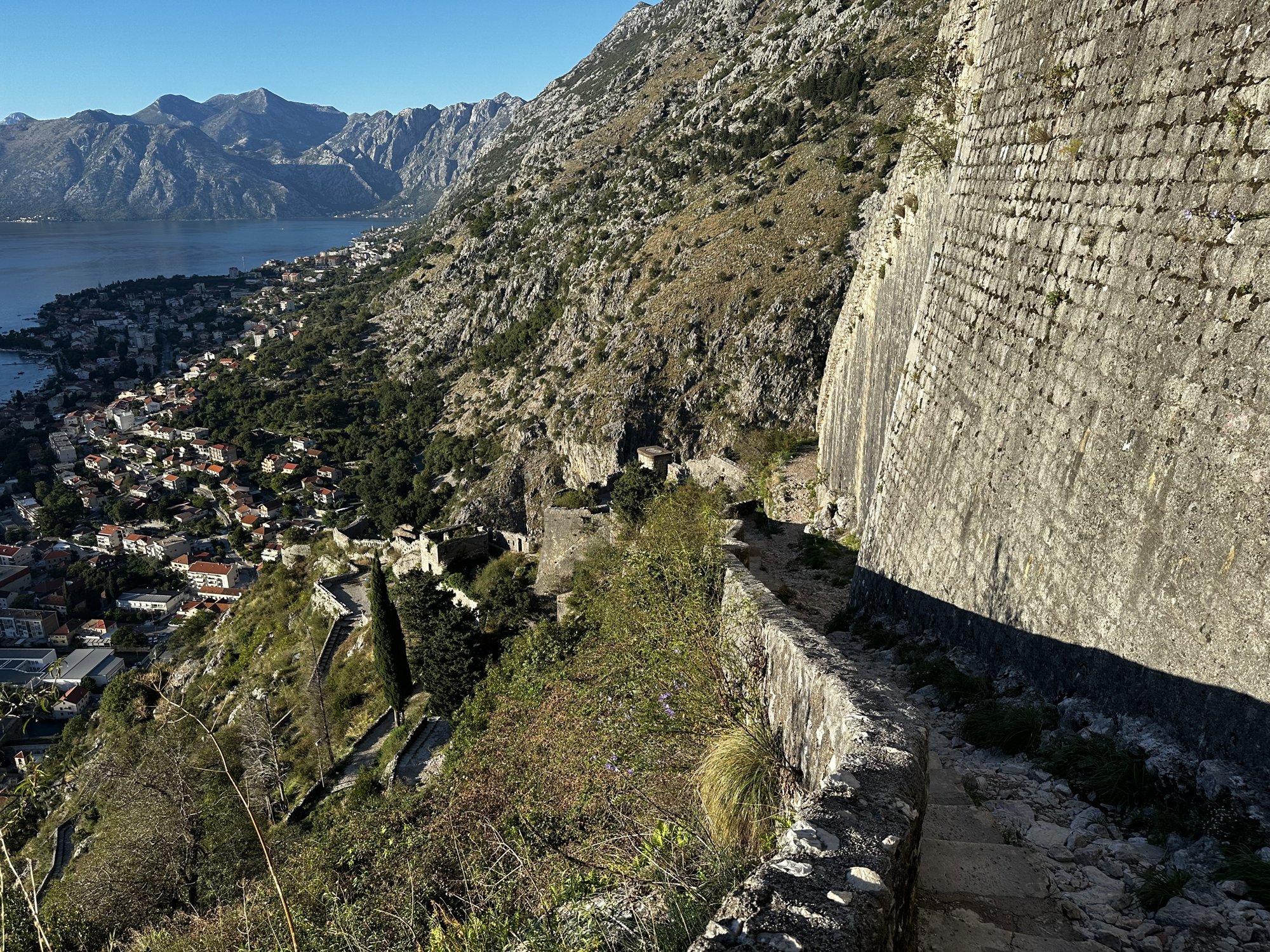
Kotor, the once Venetian small fortress town, is undoubtedly the focus of most tourists' trips to Montenegro and was my home base for my stay. Deep in the Bay of Kotor, the town itself is a near perfectly preserved medieval town, with winding stone-paved streets, imposing city walls, and a ~850 foot climb to a fortress above. Plus, nearby, there's a cable car that takes you up the very mountain that gives Montenegro its name. It's from here that you're able to do many of the attractions around the bay.
A popular activity I did is the full-day boat cruise around the whole Bay of Kotor (about $40), out to the mouth of the bay and back, with a swim stop at the Blue Cave and lunch in Herceg Novi. It included a stop at Our Lady of the Rocks off Perast, a tiny man-made island that was gradually expanded to create a just barely big enough plaza for a church. A wild view to see this beautiful church just sticking up over the water.
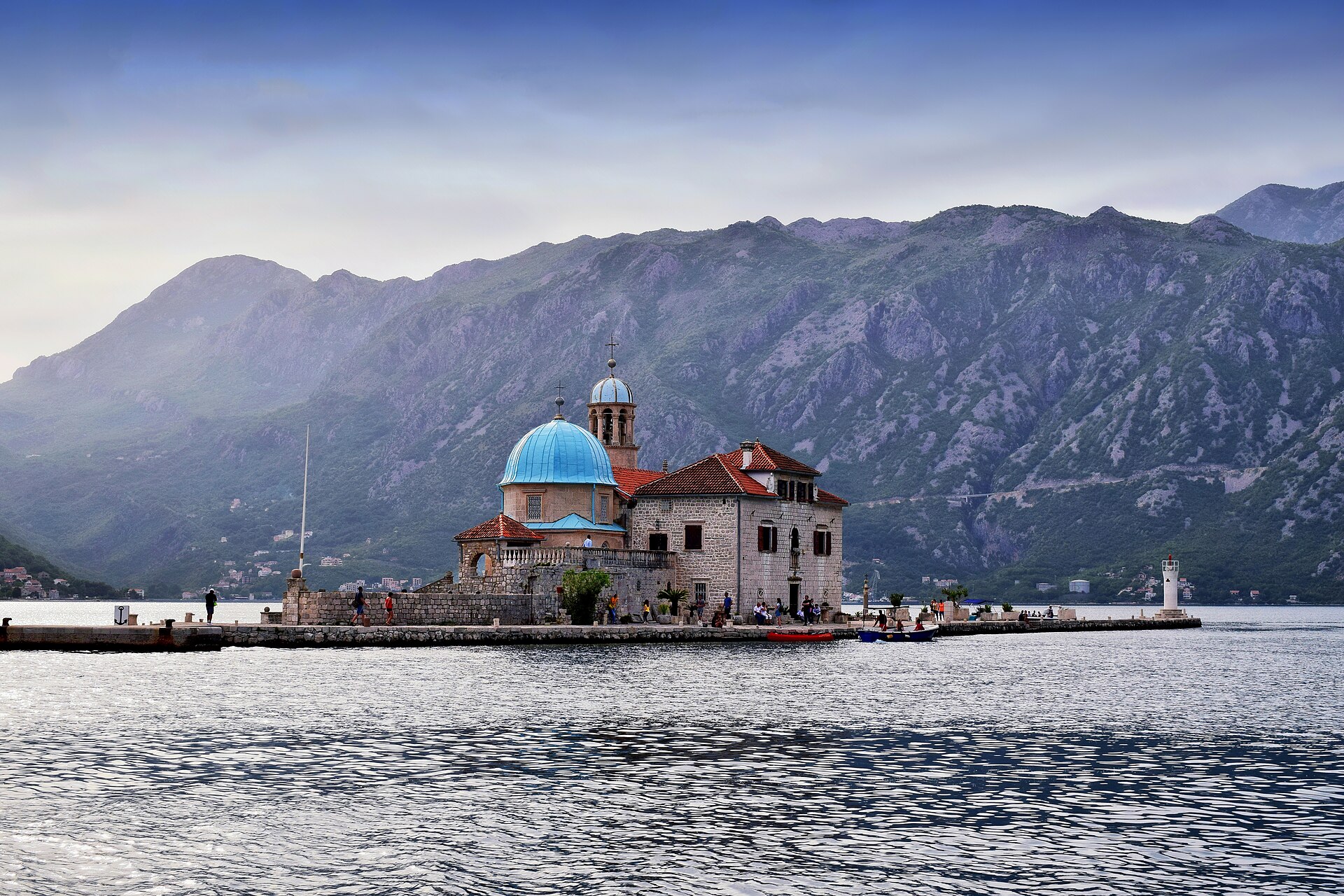
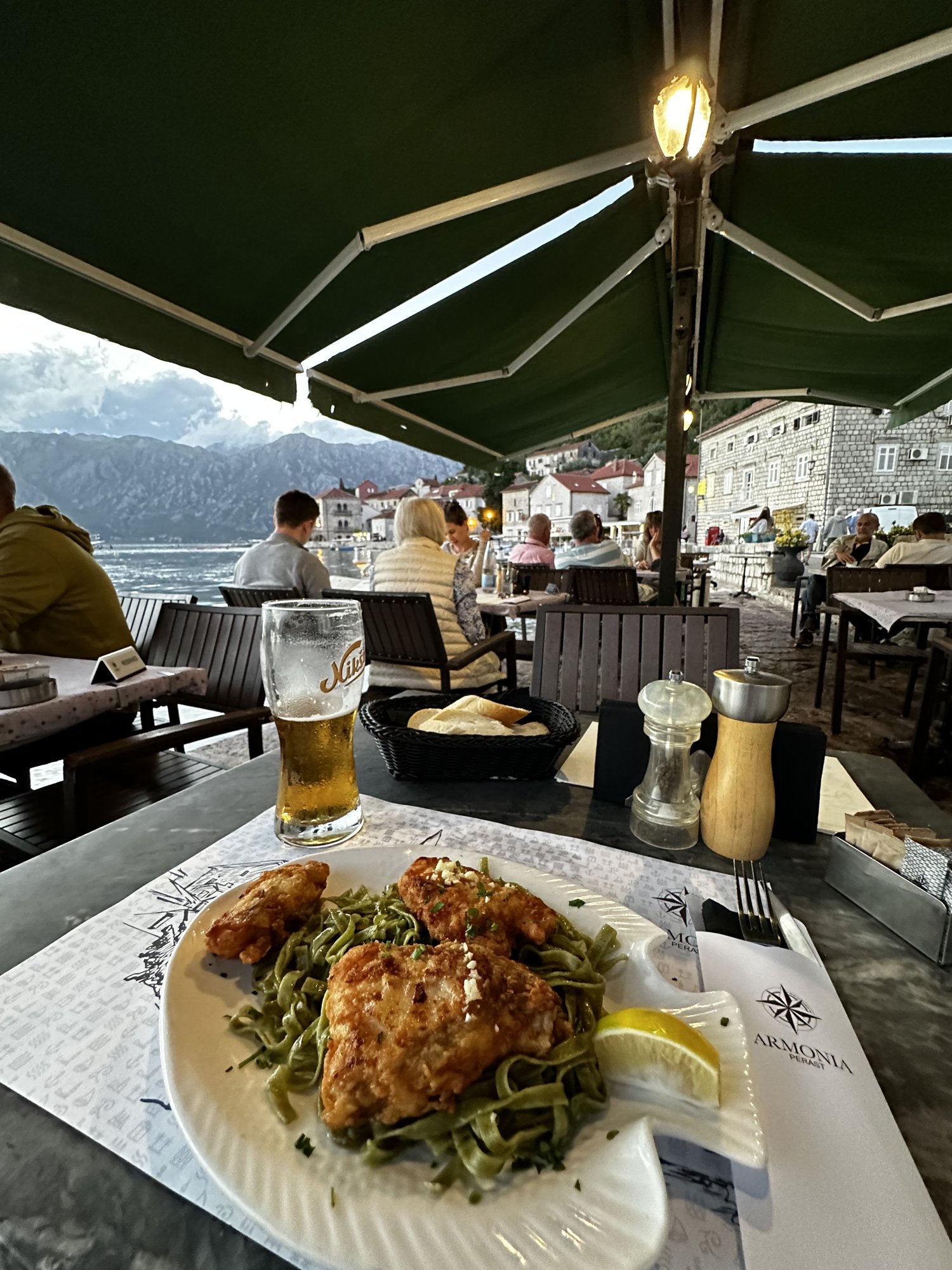
There were also views of Perast (I came back later in the week for dinner on the water), perched between the mountains and the coastline. It's towns like this and Herceg Novi that have the quintessential Italian views that led so many influencers to say "This isn't Italy, it's Montenegro" (I'm also guilty of that).
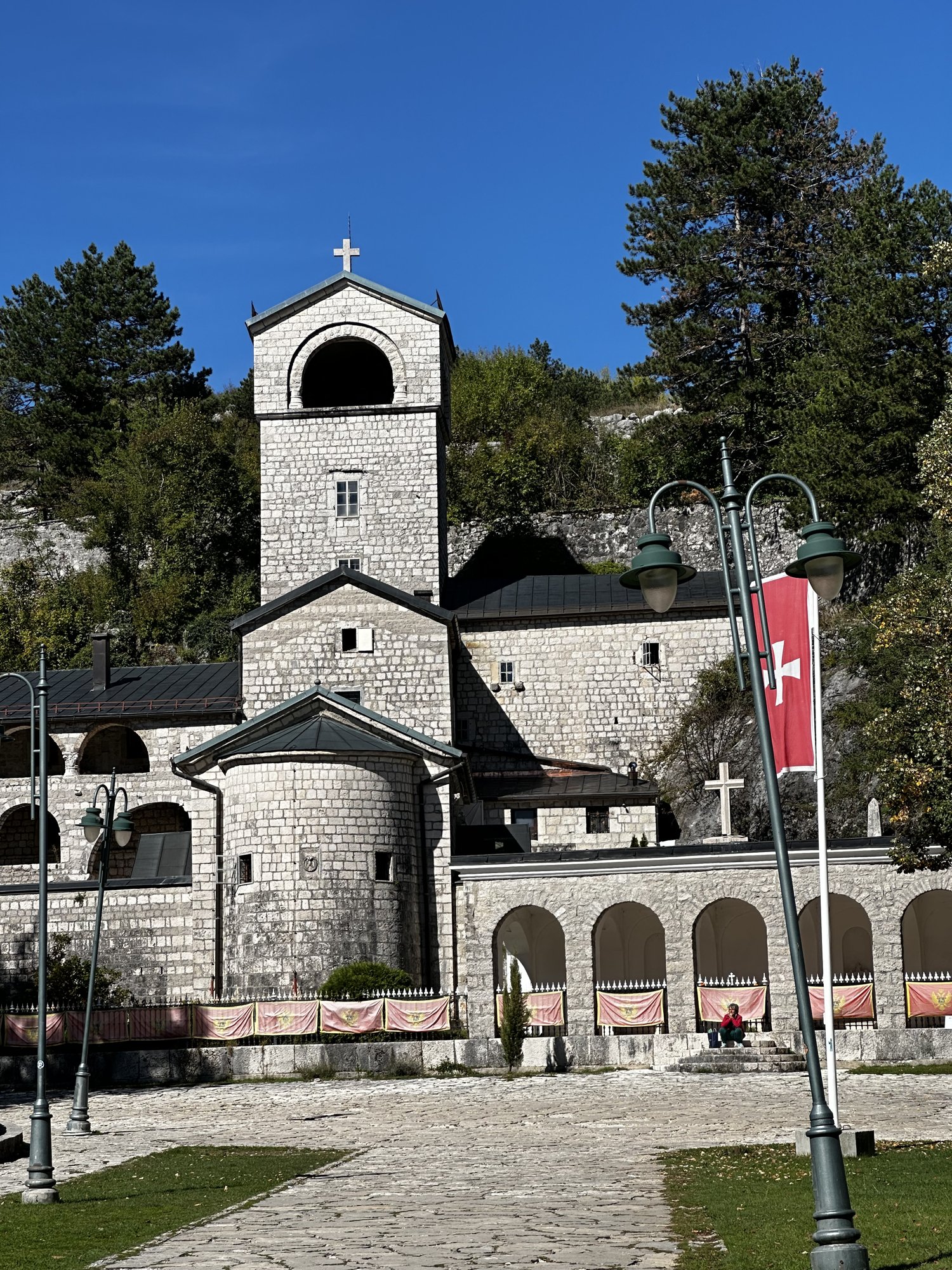
But there is more than just the bay. On my trip, I rented a car and drove inland. Over the mountains where you can see people paragliding (not for me), you'll get to Cetinje, the old royal capital of Montenegro. A charming old town with its own distinct culture from that in Kotor and around the bay, it is undoubtedly worth a visit. The other major geographic feature of Montenegro visible from maps and satellite imagery is the massive Lake Skadar, shared with Albania to the south. Driving over the low bridge with the seemingly endless horizon of the lake was certainly one of the highlights of my trip (though not necessarily worth a detour if you're not already heading in that area).
If you do decide to fly, there's a good chance you'll end up in the capital, Podgorica. While Podgorica does have some historical buildings and neighborhoods, most of the city now is mainly students, workers, and other people living their lives running the country.
But as a country on the east coast of the Adriatic Sea, the coastline has some of the most impressive sunsets I've ever seen. In particular, the sunset over Sveti Stefan, a tiny walled island village turned Aman luxury resort (reopening this year after a five-year closure), from a hillside restaurant's terrace, was up there in my sunset power-rankings and deserves a spot in any influencer's travel sizzle reel.
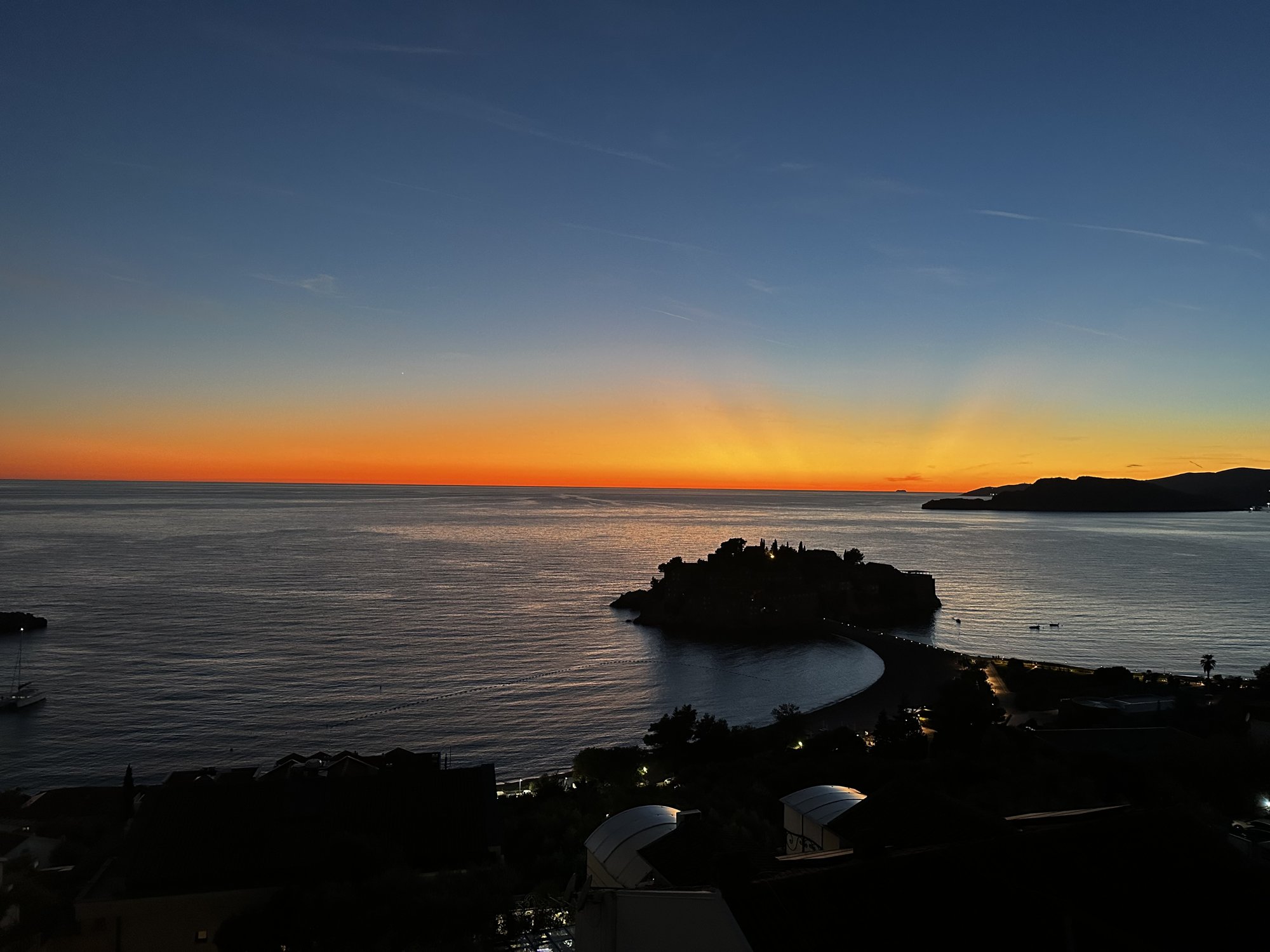
Sveti Stefan at sunset.
One equally photogenic spot that I was unable to visit is Durmitor National Park, up in the mountains to the north, with its glacial lakes and the Tara River Canyon, one of the deepest canyons in Europe. It's at the top of my list for when I go back.
But can a country really be a hidden gem if it's overrun with cruise tourism?
Tips To Visit
The other big thing to know about Montenegro, and Kotor specifically, is the cruise ship tourism. As a town of 22,000 people (which honestly seems like a stretch, and must include the surrounding areas outside of the Old City, from my experience), Kotor gets over 500,000 cruise ship visitors a year, with 2026's total likely to surpass 600,000.
That. Is. A. Lot.
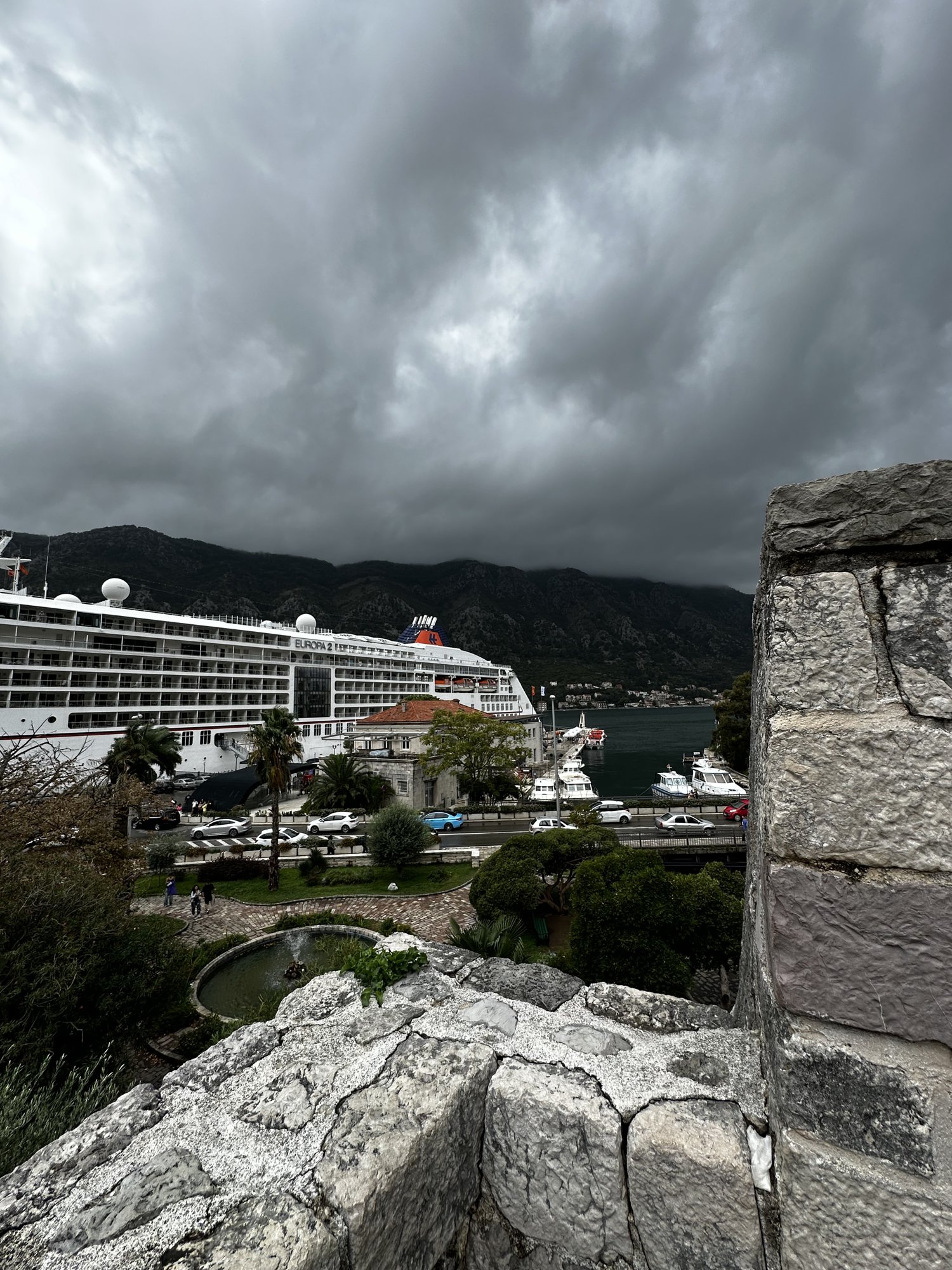
The city gets completely overrun with visitors during the day, creating such large crowds in most of the city that even walking around gets difficult. Fortunately, by staying in the town itself, I was able to experience it when the crowds left and the streets were energized with the sound of music and laughter over terrace dinners.
Which leads to my biggest piece of advice for visiting Montenegro & Kotor:
Avoid the biggest cruise ships. And the busiest days.
Whether you're visiting on your own, as part of a land tour, or on a cruise yourself, avoid going to Kotor when there are many thousands of visitors disembarking to the town. Total guests can peak at over 8,000 on the worst days, but are far fewer on less popular days. The chart below lays out the best and worst times to take your Kotor visit.
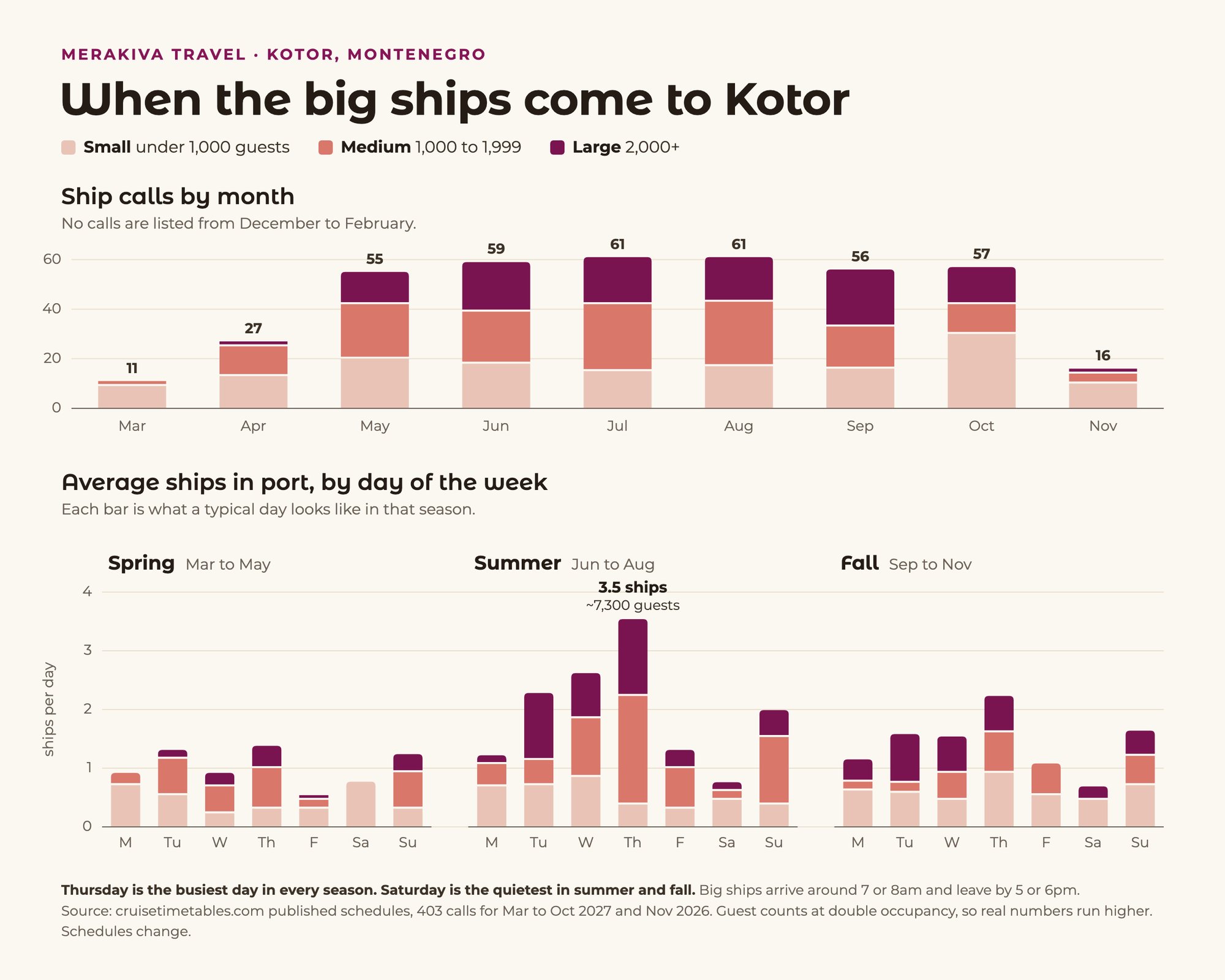
Thursday is the busiest day in every season. On a summer Thursday, there are 3.5 ships in port on average, about 7,300 guests.
Saturday is the quietest day in summer and fall.
The big ships arrive around 7 or 8am and leave by 5 or 6pm. Early mornings and evenings are when Kotor is yours.
Fall isn't empty. October still has about as many calls as July, but more of them are small ships. Then it drops off fast: November has 16, and no calls are listed from December to February.
Working with a travel advisor, like me, can help you identify the right ship size and right ship itinerary to avoid overcrowding by all those other tourists. Reply, reach out, I'll help you find the right cruise fit. (A few of the cruises in this week's deals below stop in Kotor, too.)
An additional option, if you just want a taste of Kotor but don't want a full cruise up and down the Adriatic Coast, is a day trip from Dubrovnik (part bus, part boat) with a stop at Our Lady of the Rocks and Perast that gives you a taste of Montenegro's nature and a chance to at least see Kotor.
For visiting the rest of Montenegro, it's a question of how you get there and how long to stay.
Until Montenegro joins the Schengen Zone, flying into Tivat or Podgorica is now the easiest way in. If you do want to see Dubrovnik too, skip the shared bus and reserve a private transfer: it's far more comfortable and lets you stop for a bathroom break before getting into the border crossing's traffic.
As for how long to stay, don't do as I do. While Kotor is wonderful and highly recommended for an overnight stay so you can see the streets after the cruise tourism clears out, 6 nights was too long. 3 or 4 days in Montenegro, staying in Kotor, would be the perfect amount. For a bit longer trip, I'd recommend having a home base in a more central location, like Tivat or Budva, where you can still experience the best of the Bay of Kotor but more easily get to the rest of the country's interior and the nature within.
So to my original question: What makes a hidden gem?
Anywhere great starts unknown, becomes a hidden gem, and eventually becomes popular. I think Montenegro is no different. With more than half a million cruise passengers a year, Kotor isn't hidden anymore. But on a quiet day, or in the evening after the ships leave, it still feels like a gem. In 2026, it's on the cusp of entering the EU and having its tourism transformed with easy access to the rest of the continent, while the many visitors on cruise ships and in-the-know travelers (like you, reading this newsletter) realize what a small gem Montenegro really is.
I'd go back. Give it 3 or 4 days, spend at least one night in Kotor, and avoid the big-ship days, and you'll see the Montenegro the photos promise. And with more flights than ever, it's never been easier to get there.
Want to visit yourself? Reply to the email and I can help you figure out the cruise or trip that visits Montenegro and the rest of the region.
Travel Deals This Week
Flight deals
Fares like these tend to vanish within a few days, so if one catches your eye, reply and I'll check live prices for your dates.
New York (JFK & Newark)
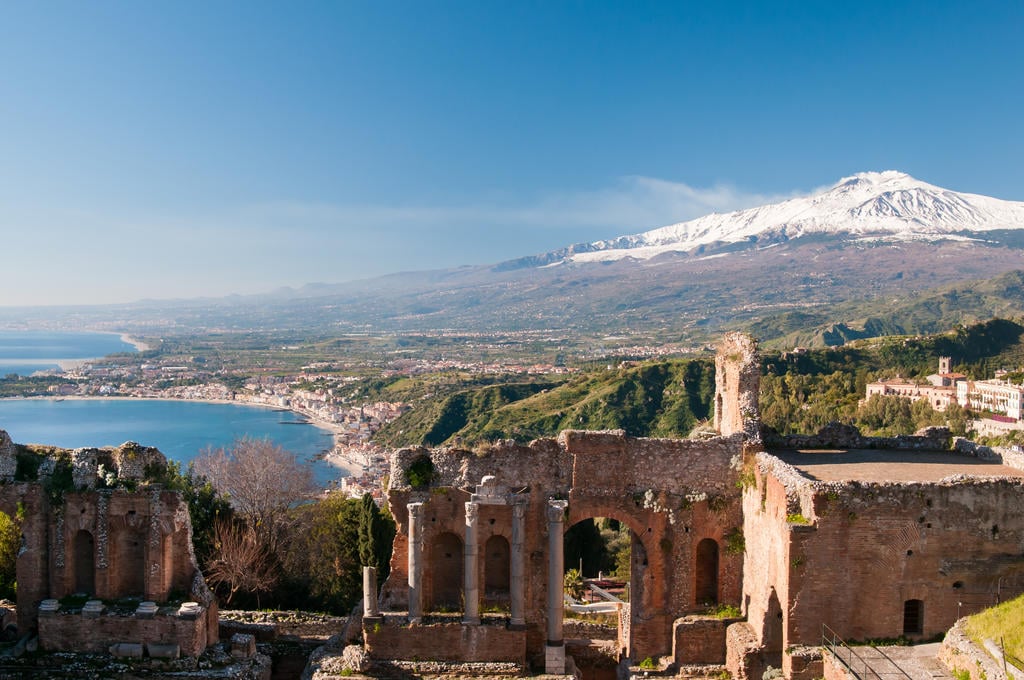
Catania, Sicily · $632 round-trip, nonstop from JFK (usually ~$1,185)
Catania sits at the foot of Mount Etna, Europe's most active volcano, and the ancient Greek theater at Taormina, with Etna as its backdrop, is under an hour up the coast. November and December are mild (60s by day) and quiet, so you get the ruins without the summer crowds.
Travel: November–December
Stockholm, Sweden · $472 round-trip from Newark (usually ~$800)
A city built across 14 islands, with a medieval old town, Gamla Stan, at its center. Winter is dark (about six hours of daylight by December), but that's when the Christmas markets and candlelit cafés come out. Also Stockholm from JFK from $573, and Oslo from $574.
Travel: November–February
Barcelona, Spain · $490 round-trip from JFK (usually ~$800)
Gaudí, tapas, and a beach right in the city. Winter in Spain is one of my favorite times. Stack it with the Celestyal winter cruise from the last two issues, which links Barcelona and Lisbon from $549. Also Madrid from $494.
Travel: November–March, May
San Juan, Puerto Rico · $221 round-trip, nonstop from JFK (usually ~$510)
Old San Juan's blue cobblestones and Spanish forts, no passport needed. Hurricane season ends November 30, and Puerto Rico's Christmas season, one of the longest anywhere, kicks off right after Thanksgiving. Also Newark nonstop from $337.
Travel: November–December
Punta Cana, Dominican Republic · $343 round-trip from Newark (usually ~$600)
White-sand beaches and all-inclusive resorts on the island's eastern tip. November is the end of hurricane season, and January and February are dry and in the 80s. Also JFK from $348.
Travel: November, January–February
Bogotá, Colombia · $388 round-trip from Newark (usually ~$680)
A capital 8,600 feet up in the Andes, with the Gold Museum's huge collection of pre-Columbian goldwork. February and March fall in the dry season. The fare is on Arajet, a low-cost airline that connects through Santo Domingo.
Travel: February–March
Baltimore (BWI)
Montego Bay, Jamaica · $367 round-trip (usually ~$700)
Last week it was JFK; this week it's Baltimore. November is the sweet spot, after hurricane season and before winter prices. Stack it with the new Sandals deal below: Sandals South Coast reopens November 18.
Travel: November
Madrid, Spain · $435 round-trip (usually ~$1,015). The cheapest of this week's Spain fares. See New York above.
Stockholm, Sweden · $590 round-trip (usually ~$800). See New York above.
Cruise & vacation offers
Many of the cruise offers from the last two issues are still running into November (Celestyal, Oceania, HX Expeditions, Windstar and Swan Hellenic), so reply if one caught your eye.
Several of them stop in Kotor next year: Oceania 16 times, Windstar 13 (most often on Saturdays, the quietest day) and Celestyal 11.
Two lines are the focus this week, and they could hardly be more different, but both sail into Croatia and Montenegro next summer. One is for the people who have never wanted to go on a cruise, and one is for the people who have always wanted to arrive somewhere by ship, the old-fashioned way.
For people who swear they're not cruise people
Virgin Voyages
$100 bar tab per cabin, up to $1,000 instant savings, 70% off the second sailor and up to $400 onboard credit
Adults-only, no buffets, no kids' clubs. It feels more like a boutique festival than a floating buffet, and it's built for people who never pictured themselves on a cruise. More than 20 restaurants are included, along with Wi-Fi, fitness classes and entertainment, and you can sail from Miami, San Juan, Barcelona or Athens. The bar tab stacks with the rest of the savings on balcony and suite cabins, and it's only available when you book through me. Sailing with a friend or partner? The 70% off the second sailor is the number to look at.
Next summer, Scarlet Lady sails 7-night voyages from Athens that stop in Dubrovnik and Kotor, plus the coast of Albania. In Kotor it's mostly on Wednesdays, not the worst day.
Book by Oct 31 · select sailings on Scarlet, Valiant, Resilient and Brilliant Lady
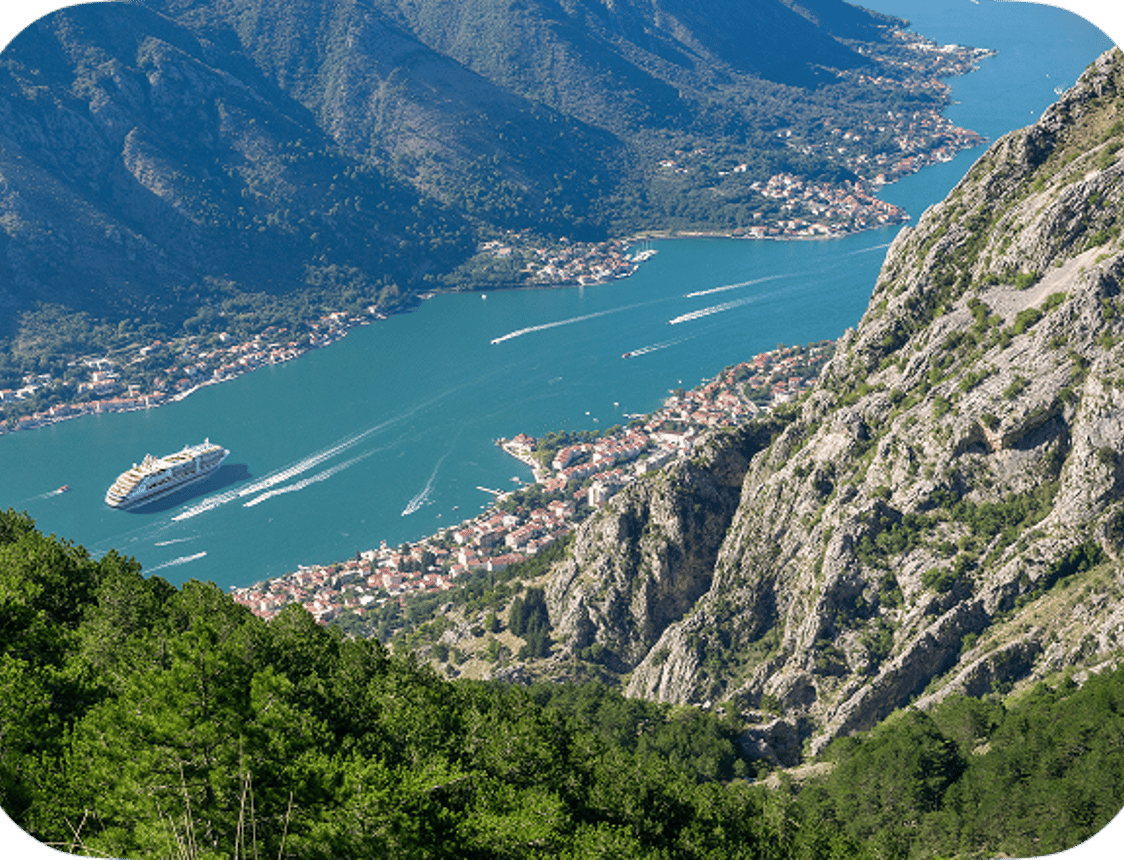
Grown-up, well-fed, and in no hurry
Cunard
Up to $300 onboard credit per stateroom plus a 50% reduced deposit, with fall savings of up to 35% off
Cunard is the last of the great ocean-liner lines: afternoon tea, dress-up gala nights, and the Queen Mary 2 sailing between New York and Southampton. A transatlantic crossing is the opposite of a vacation sprint, with time to relax and watch the ocean go by.
Or explore the land. Queen Elizabeth's summer 2027 Adriatic voyages from Trieste (about two hours from Venice) stop in Split and Kotor, and some add Dubrovnik and Zadar. In Kotor it's always a Tuesday. Seven-night sailings through Italy, Greece and Croatia start as low $1,180 per person.
Book by Oct 31 (credit and deposit offer) · fall savings run through Dec 7
On dry land
Sandals
Save up to $1,500 plus up to $500 in air credit on Jamaica stays
All-inclusive, couples-focused Caribbean resorts with nothing to plan once you land. Three Jamaican resorts are coming back this winter: Sandals South Coast reopens November 18, and Sandals Montego Bay and the new Sandals Caribbean Cay open December 18. Stack it with the Montego Bay flight from Baltimore above.
Book by Nov 2
Want in on any of these? Just reply to this email. I'll check availability, find the right dates or sailing, and handle the booking from there.
Until next week,
Marshall | Merakiva Travel
Just reply to this email to start planning your next trip.