
Inside the World's Largest Building
Welcome back to the Merakiva Travel newsletter.
If you enjoyed reading about Namibia last week, check out Merakiva’s Instagram and YouTube for the video version. Each week, I’ll be posting a video version of the place I’m obsessed with.
This week, I'm taking you inside the largest building in the world.
Place That I'm Obsessed With
What is the largest building in the world?
You might think it's something like the Pentagon or the Burj Khalifa, but the answer depends on how we define "large."
At one point, the Pentagon was the largest office building in the world by the square footage of its offices. The Burj Khalifa is the tallest, but the amount of space inside isn't particularly notable.
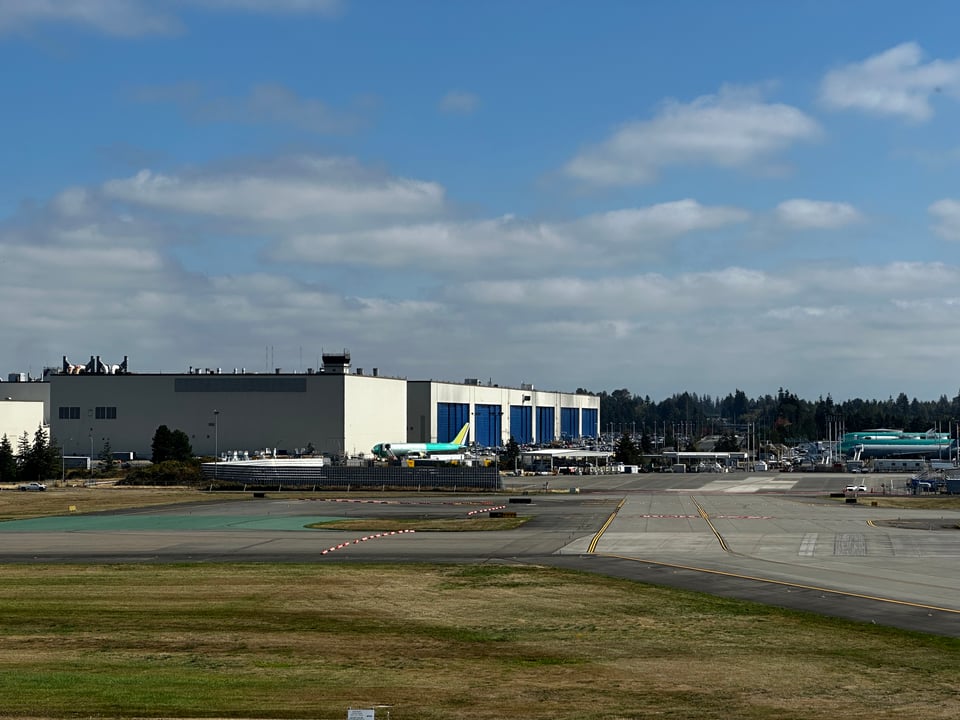
But if we're talking about the building with the most space inside, measured by volume, it is unquestionably the Boeing factory in Everett, Washington. Guinness puts it at 472 million cubic feet.
That is an almost unfathomable amount of space.
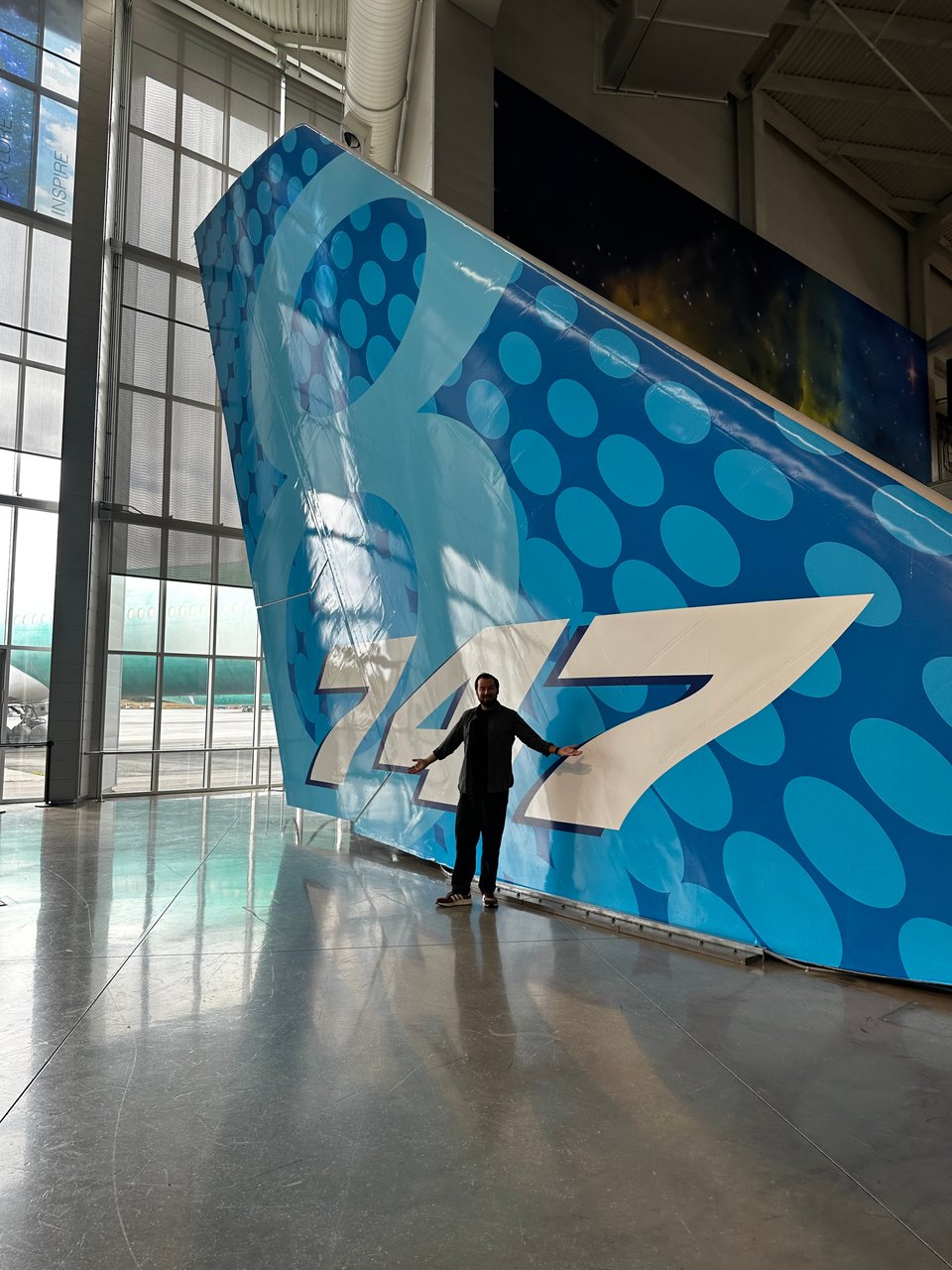
Boeing originally built this factory to construct 747s. As you might guess, the reason for such a massive building was to be able to construct these astronomically large planes.
The main building covers 98.3 acres under one roof and stands 114 feet tall. It has grown hangar by hangar over the decades: about 45% bigger for the 767 in 1979 and another 50% for the 777 in 1990. The scale is sometimes hard to fathom. It is effectively one giant room, although offices within each bay divide it up, making the space feel much smaller from the inside than it really is (I say this from personal experience, having visited it).
When it was first built, the interior was supposedly so vast that clouds formed near the ceiling. It turns out that's an urban legend, and no one knows exactly where that myth came from. I suspect it was based on a kernel of truth: the temperature at the floor and ceiling of the building is drastically different. But managing the hot and cold air is actually fairly simple. There's no need for air conditioning; the heat comes from the workers and roughly a million overhead lights, and when it gets too warm, they just open the doors. Fortunately, Washington stays pretty cool.
But the story stuck in people's minds because it's easy to imagine a building 114 feet tall, with nearly 100 acres of floor, being large enough to contain clouds. There’s something particularly romantic about a building that builds vehicles that fly in the clouds having its own version inside. Alas.
If not clouds, how best to visualize the scale of the structure? I calculated that you could fit about a dozen Empire State Buildings inside, lying on their sides. Or, Boeing's favorite comparison, all of Disneyland.
When you look at a list of other massive buildings by volume, you'll find plenty of aircraft hangars and assembly facilities. Aircraft are uniquely tall and wide, which presents some of engineering’s most daunting manufacturing challenges.
The history
The story of the Everett factory goes back to 1966. Boeing needed somewhere to build the 747, and its existing factories around Seattle were too small. The land next to Paine Field, about 22 miles north of downtown Seattle, was mostly empty forest at the time. But that openness, that emptiness, was precisely why Boeing chose to build there. The first workers showed up in January 1967, before the building was even finished, and the first 747 rolled out the next year.

They could purchase the land they needed (780 acres), and the location was strategically positioned for the deliveries that would eventually make the Queen of the Skies possible. It was close to Puget Sound and the Port of Everett, a rail spur was cut up from the waterfront at Mukilteo, and a new highway, State Route 526, still nicknamed the "Boeing Freeway," connected it to I-5.
And, of course, it was at an airfield. It might surprise you, but the airfield serving the Boeing factory is technically a public airport, owned by the county. There are only a few commercial flights, and today Alaska Airlines is the only airline flying from there.
Boeing needed an airfield because, once you build these planes, you've got to fly them away somehow.
The 747, despite its romantic origins and distinctive silhouette, is no longer in production. The last one rolled out of Everett in December 2022. The factory now builds Boeing's other wide-bodies, the 767 and the 777.

Question: Have you ever flown on a 747? I’ve ridden the Queen of the Skies twice but hope to get a chance to sit in the upper deck before the last are retired.
If you're not an AvGeek like me, you might be reading this thinking: What are all these numbers? What are all these terms? So let's give you a little Aircraft 101.
A narrow-body aircraft is what you typically think of for domestic flights: one aisle, usually with two or three seats on either side. These are the workhorses of the sky, typified by planes like the Boeing 737 and Airbus A321.
A wide-body aircraft is just what it sounds like. It's wider, with two aisles, and built on a vastly different scale. The typical narrow-body that takes you around the country feels large until you see it dwarfed by a Boeing 777 or Airbus A380 next to a Boeing 737.
Boeing's wide-bodies have changed over the years, but the most notable ones today are the 787 and 777. And the development of the 777 is what makes the factory so interesting today.
The 777X is Boeing's next-generation aircraft, a new variation on the traditional 777. Its wings are carbon-fiber composite, the biggest Boeing has ever built, and so long that the tips fold up so the plane can fit at a normal airport gate. Without going too deep into the AvGeek weeds, composites are lighter and stronger than aluminum, which means less fuel and longer range. Airbus's A350 is built with many of the same materials, though that one is already in the skies; the 777X is still working through certification, with first deliveries expected in 2027 (fingers crossed).
The 787 was built in Everett as well, until some pandemic-induced Boeing cost-cutting led to shifting manufacturing to a facility in South Carolina. That left plenty of space for the conventional 777, the next-generation 777X, and, suddenly, an extra bay with no clear use.
In that last bay, now called the North Line, they're just beginning to build narrow-body 737s. The first one started down the line this July. If you’ve read this far, you might realize how big of a deal that is. It is the first time a 737, or any narrow-body, has ever been built in Everett, and the first time a 737 has been built anywhere outside Boeing's Renton factory. Seeing them inside gives you a real sense of the building's scale and just how small even a 777 can look within it.
Because yes, you can actually visit the Boeing Everett factory.
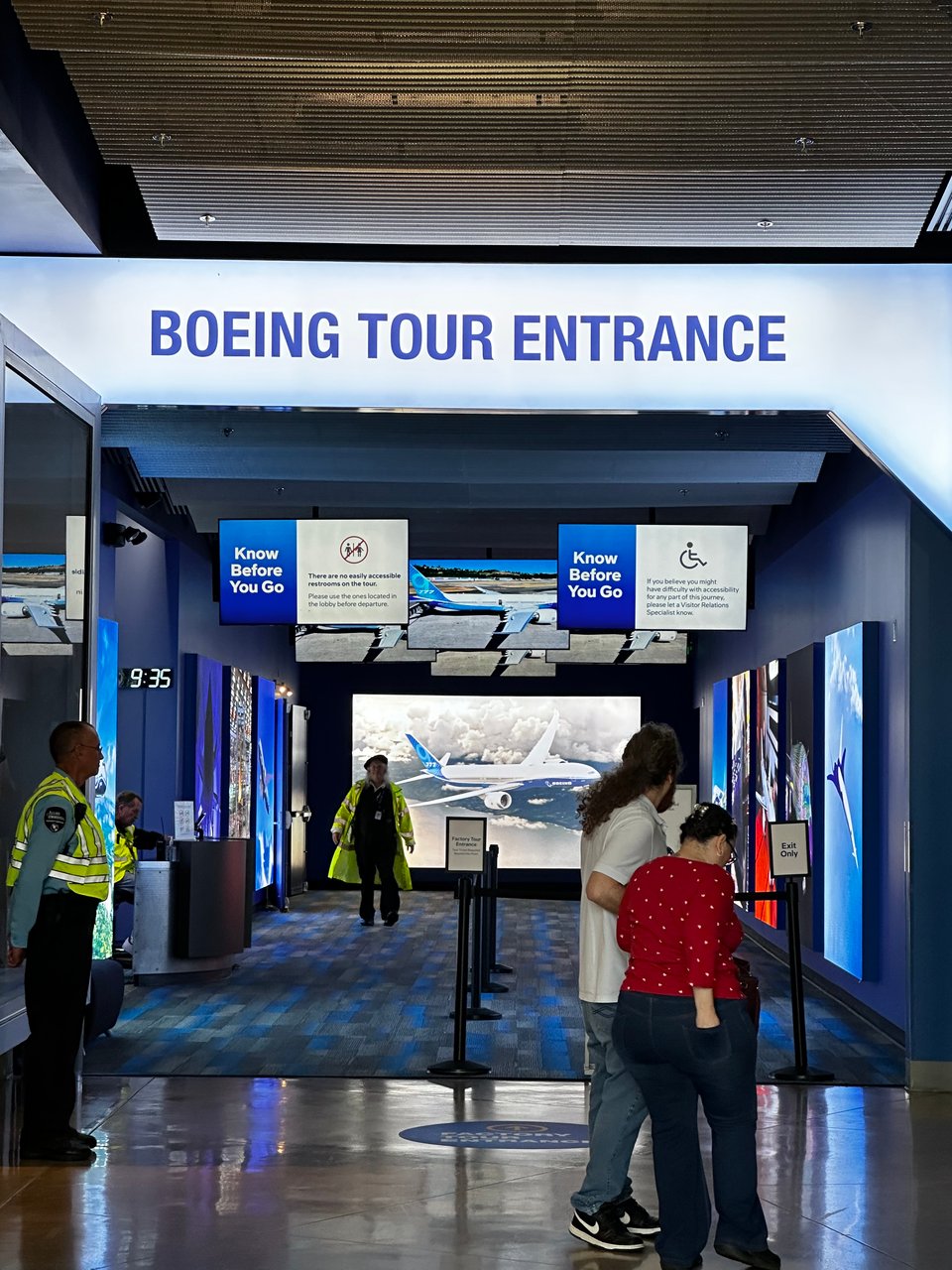
A couple of weeks ago, I was visiting the Pacific Northwest, including Portland and Seattle, and discovered while I was there that the Boeing Everett factory is open for tours. (That's why it's good to have a travel agent looking out for you who knows your interests! My worst client to work with is usually myself.) We changed our entire schedule to make it work.
If you're an AvGeek like me, you have to put this on your itinerary. Reply to this email, and we can figure out the best time for you to visit and how to get there. While websites like Viator and TripAdvisor offer tours departing from downtown Seattle, you're really just paying extra for a coach bus.
Unfortunately, I don't have any photos or videos of the interior to show you, because visiting the factory requires emptying your pockets of things like phones and pens and putting them in storage. I'm not sure exactly why. My guess is that it's some combination of preventing things from falling onto the factory floor and protecting what's being built.
But what was it actually like inside? I don't think my words can really do justice to the scale of it.
You begin in a small visitor center, called The Future of Flight, a little museum that mostly serves as a holding area before your Severance-style promotional video about Boeing. Then you're loaded onto coach buses and taken across the airfield to the actual building.
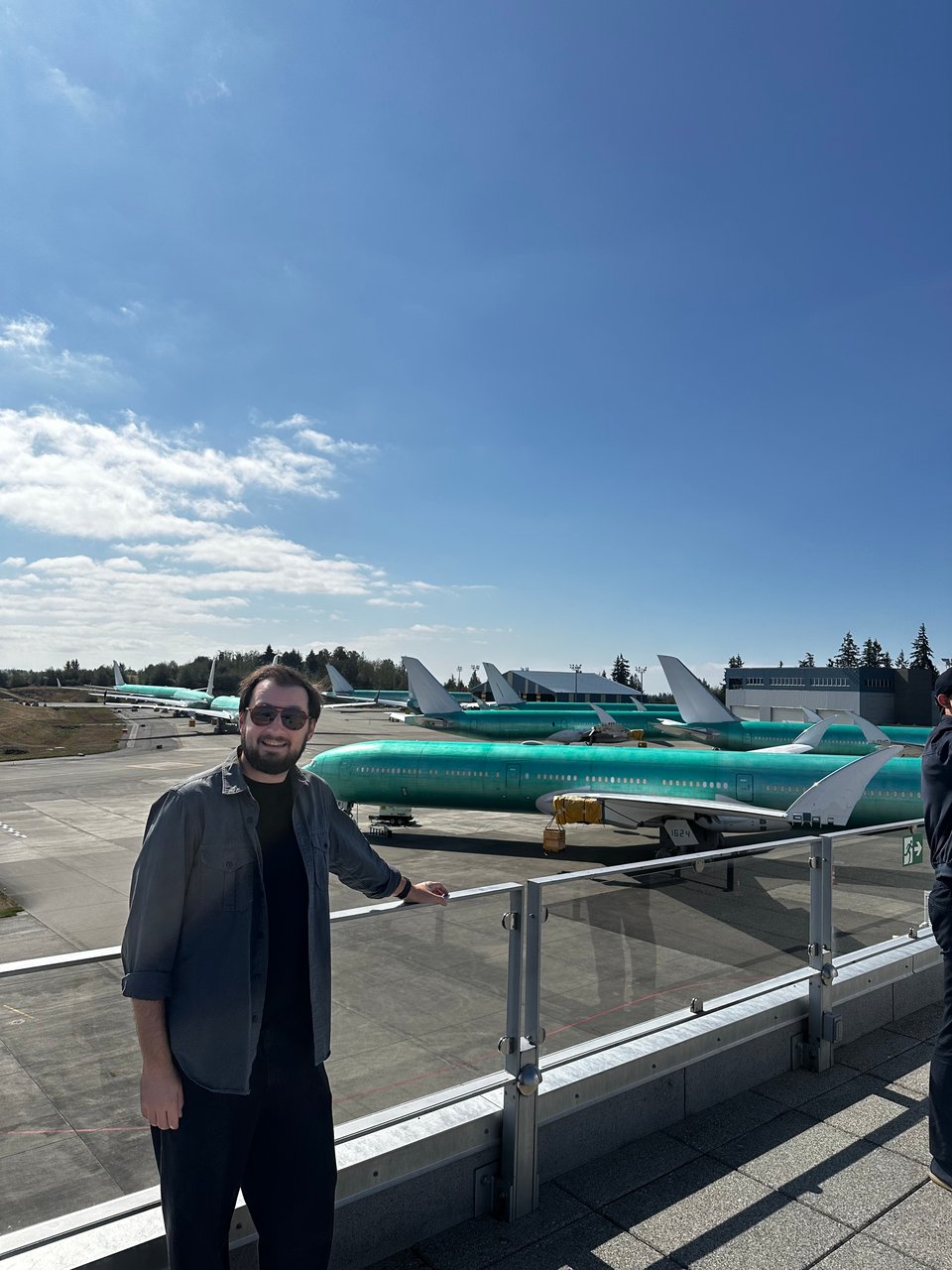
It's basically a small city, with thousands of cars and fully built planes, still awaiting their airline liveries, scattered around the tarmac.
Of course, everything is high security and safety first. You go underground, then take a massive freight elevator up to a viewing platform between two of the bays.
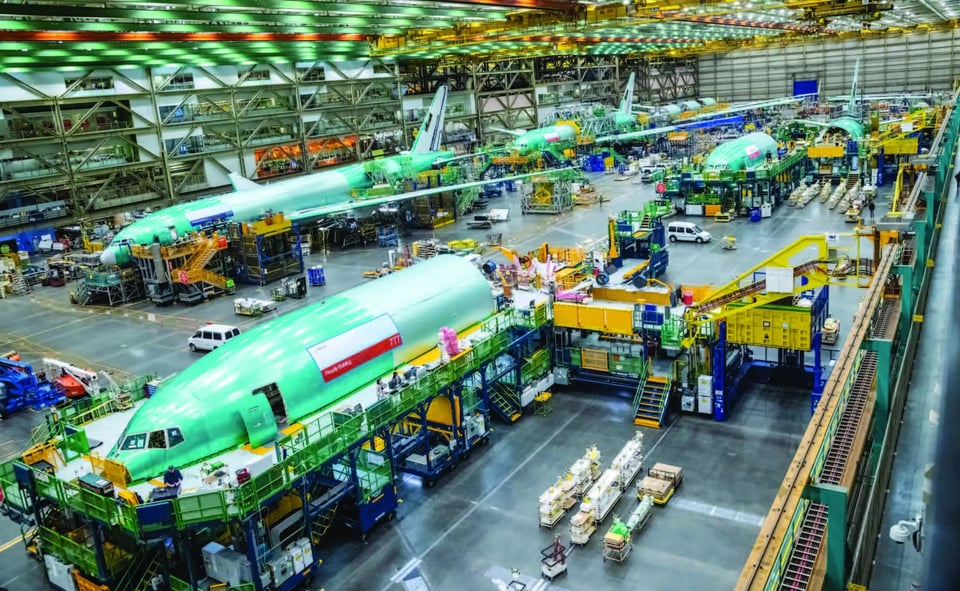
There's something very disorienting about being in a building that large, looking down at several floors of offices and cubicles below you, and seeing the tail of a plane, larger than a house, looking like a toy off in the distance, just on the other side of the room. I'll admit, I got vertigo.
While we were there, construction of the 777X was still going on. Each half-built plane had a banner indicating its place in the production sequence and who had purchased it. I wish I'd been able to write down the planes and their purchasers so I could see whether I ever end up flying on those same aircraft. Oh well.
But it's when you look toward the far bay, the North Line, with its in-progress 737s, that the scale really becomes apparent. After looking at the 777s for a while, your mind adjusts. You start thinking those wide-bodies are normal-sized planes. Then you walk over to the 737s and realize that two, three, or four could fit in the same space. A bay built for something like five wide-bodies will eventually hold a dozen 737s at once.
It is truly one of the most impressive feats of infrastructure I've ever seen: both the building itself and the way they construct these aircraft, some of the most important pieces of technology shaping the world today. Without wide-body aircraft like these, the world would look much more like it did in the early 1900s, or even before that.
But visiting Seattle is so much more than just one giant factory out in the suburbs.
It was my first time in Washington and Seattle, and there's so much more to the city than Pike Place and the Space Needle. In fact, it's pretty easy to skip those cliché tourist sites for some of the more interesting locations in the city.
With good food, walkability, and a new light rail system that can take you all the way from the airport to downtown and beyond (can you tell that I love transit and infrastructure?), I thought it made for a really nice domestic trip.
If you're looking for a spring or fall getaway before the weather turns in the Pacific Northwest, I would highly recommend adding Seattle to your itinerary. And if you want to keep going north, there's an Alaska expedition deal below where you can start in nearby Vancouver or Seattle. Interested in planning, or want some tips? Just reply to this email, and I'll help you plan the epic trip of your dreams.
Travel Deals This Week
Flight deals
Fares like these tend to vanish within a few days, so if one catches your eye, reply and I'll check live prices for your dates.
Winter deals to warm weather are starting to pop up, so as the weather starts to shift, now’s the time to plan your winter getaway.
Philadelphia
San Juan, Puerto Rico · $207
round-trip, nonstop (usually ~$520)
Old San Juan is a 500-year-old walled city of blue cobblestones and pastel houses, guarded by El Morro, a Spanish fortress that still looks out over the Atlantic. And it's a US territory, so there's no passport needed (and no currency to exchange).
Travel: October–February
Santo Domingo, Dominican Republic · $296
round-trip, nonstop (usually ~$700)
The Zona Colonial is the oldest continuously inhabited European settlement in the Americas, with the first cathedral in the New World and the fortress-palace built for Columbus's son. January is the dry season, with highs in the mid-80s. Spend a few days on history, then move on to the beaches to get away from the winter cold. I know I’m already planning my escape.
Travel: January
Cancún, Mexico · $326
round-trip (usually ~$680)
Last week's Cancún fare from Philly dropped another $20. It's still the cheapest way into the Yucatán, with its cenotes, Mayan cities, and beaches, and dates run all the way into next summer.
Travel: October–July
New York (JFK & Newark)
Reykjavík, Iceland · $422
round-trip, nonstop from JFK (usually ~$780)
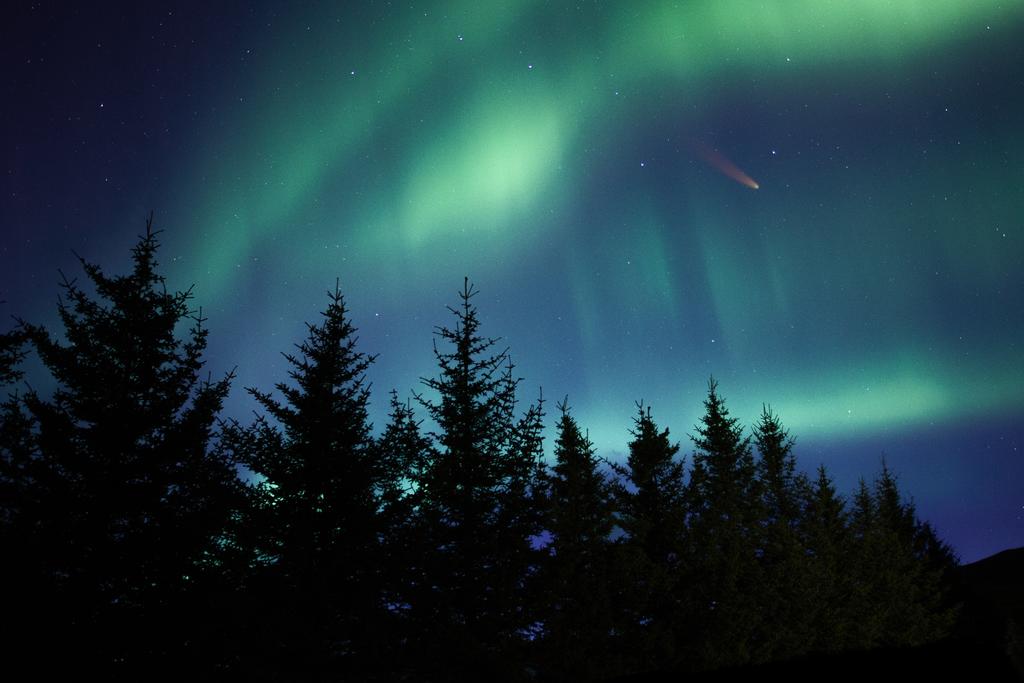
Black-sand beaches, geothermal lagoons, and a whole country that runs on volcanoes. Seeing the northern lights here is a bit of a roll of the die, but the landscape makes up for it. Late fall and early winter mean long, dark nights, which is exactly what you want for the northern lights. By December, you'll only get about four hours of daylight, so plan the hot springs for after dark. Also Newark nonstop from $446.
Travel: October–January
Paris, France · $650
round-trip, nonstop from Newark to Orly (usually ~$1,015)
Cheap and nonstop to Paris is a rare combination. Fall and winter are the museum season: shorter lines at the Louvre and Orsay, and long lunches in heated café terraces. Also JFK nonstop to Charles de Gaulle from $692.
Travel: October–November, January–March
Montego Bay, Jamaica · $347
round-trip from JFK (usually ~$550)
A few years ago, I went down to Montego Bay to one of Hyatt’s Zilara all-inclusives and had an amazing time. If you’re able to eat some jerk chicken, see the Blue Mountains on the horizon, and swim in the warm Caribbean, it’s a great way to get away for a week or a long weekend. Hurricane season ends November 30, and the pricier winter high season starts mid-December, so November and early December are the sweet spot. Also Newark nonstop from $358.
Travel: October–December
St. Thomas, US Virgin Islands · $317
round-trip, nonstop (usually ~$510)
Charlotte Amalie's red-roofed warehouses are a leftover from when these were the Danish West Indies (the US bought them in 1917). Take the ferry to St. John, where most of the island is a national park. No passport needed.
Travel: November–August
Liberia, Costa Rica · $296
round-trip from Newark (usually ~$680)
Liberia puts you in Guanacaste, Costa Rica's dry northwest corner, with Pacific surf beaches, volcanoes, and cloud forests a short drive away. October is the rainiest month, but January is peak dry season: blue skies, breezy afternoons, and sloths that still won't hurry.
Travel: October, January
Baltimore (BWI)
Lima, Peru · $530
round-trip (usually ~$845)
Come for the ceviche, stay for the Andes. Lima is one of the best food cities in the Americas, and Cusco and the Sacred Valley are a cheap domestic flight away. Cusco & Machu Picchu are bucket-list destinations (though I can’t wait to go back a second, third, and fourth time…). December and January are summer on the coast, when Lima's gray haze finally lifts. Up in the mountains, it's the rainy season: Machu Picchu is greener and quieter, but pack a rain jacket. Still worth it.
Travel: December–January
St. Thomas · $210
round-trip (usually ~$510). See New York above.
Costa Rica · $257
round-trip (usually ~$680). See New York above.
Puerto Rico · $265
round-trip, nonstop (usually ~$510). See Philadelphia above.
Cruise & vacation offers
Mostly reposts of last week’s cruise deals, as these run all month.
For people who swear they're not cruise people
Virgin Voyages
$100 bar tab per cabin, stacked with 70% off your second sailor. Adults-only, no buffets, no kids' clubs. It feels more like a boutique festival than a floating buffet, and it's built for people who never pictured themselves on a cruise. Book a balcony or suite this month to get a $100 bar tab on top of the current savings, on almost every sailing through 2028. Last call, and it's only available when you book through me.
Book by Oct 31
Celestyal
7-night Mediterranean cruises from $549 per person
A Greek-run line with an uncrowded, port-heavy style. Think the best of a Mediterranean ferry with the comfort of a traditional cruise. The $549 fares are winter sailings linking Lisbon, Tangier, Valencia, Mallorca, and Barcelona, with port fees, gratuities, Wi-Fi, and drinks with meals included. Winter in Spain is one of my favorite times.
Book by Nov 2
Grown-up, well-fed, and in no hurry
Oceania Cruises
Up to 40% off most stateroom categories
A cruise line that's really about the food, with midsize ships, a country-club-casual style, and no formal nights. Specialty dining, gratuities, and Wi-Fi are included, plus your choice of wine & beer or a shore-excursion credit. The sale covers the Mediterranean, the Caribbean, and Northern Europe.
Book by Nov 3
Cunard
Up to 35% off select voyages
The last of the great ocean-liner lines, with afternoon tea, dress-up gala nights, and the Queen Mary 2 sailing between New York and Southampton. Summer 2027 Mediterranean sailings (Italy, Greece, Croatia) start around $1,180 per person for 7 nights. I already have some clients sailing from England to New York next spring. For a second time. Reply if you want to join them.
Book by Dec 7
Small ships, a big world
HX Expeditions
An extra 5% off cabins, 10% off suites, on top of current sale prices
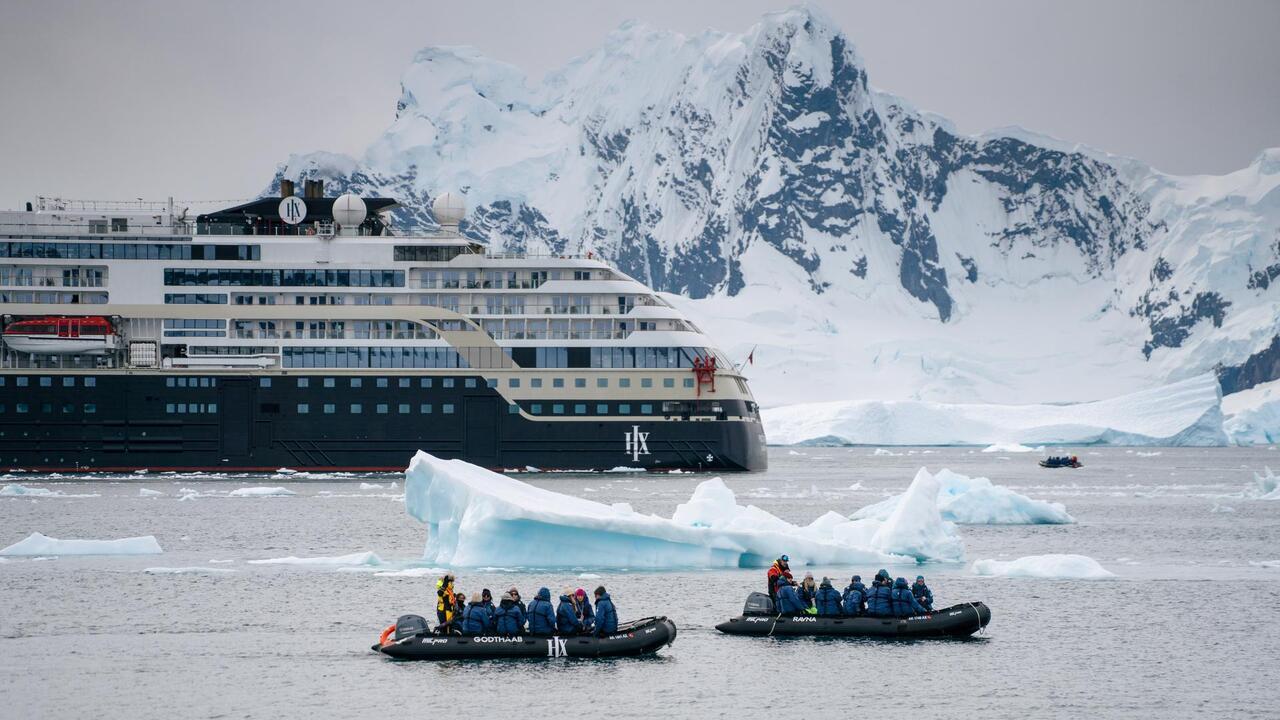
The Norwegian expedition line, now 130 years in, for the once-in-a-lifetime trips: Antarctica, the Galápagos, Greenland, and Alaska.
Most of its Alaska voyages start or end in Vancouver, about four hours north of Seattle on the Amtrak Cascades train. Pair a few days in Seattle (and a Boeing factory tour) with a summer 2027 Inside Passage expedition. Alaska runs from about $5,000 per person for 10 days, and Antarctica from about $9,700. That extra 5% is real money back in your pocket: $250 per person for an Alaska sailing.
Book by Nov 9 · departures through March 2028
Windstar
Free all-inclusive package + $300 deposits
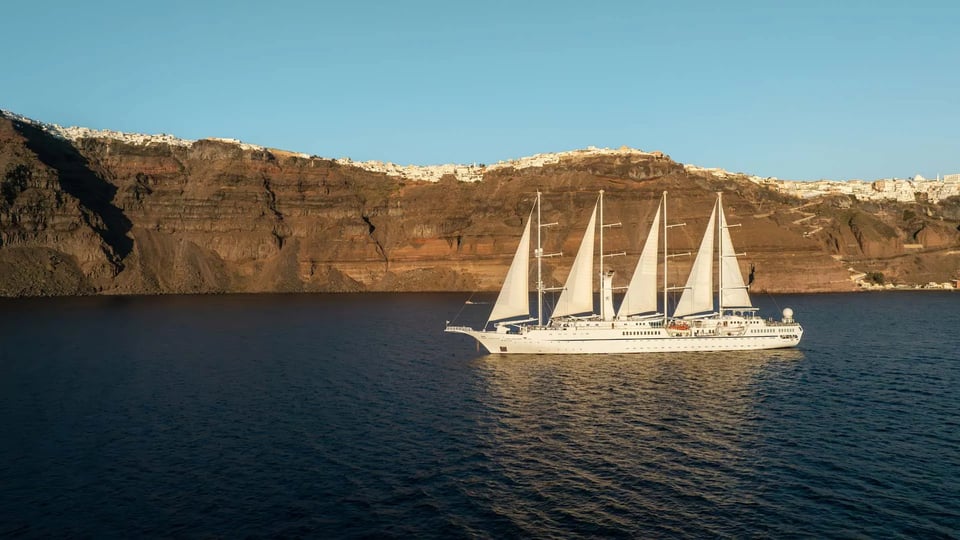
Sailing yachts, not your traditional cruise ship. You travel with a few hundred guests, and there's a platform off the back for kayaking and swimming. The free package covers gratuities, Wi-Fi, and drinks on select sailings through 2027 (Tahiti, the Canaries, the Caribbean, Europe). Joining one of the tall-masted ships on a cruise of the Adriatic is on my bucket list.
Book by Nov 17
Swan Hellenic
Free balcony upgrade + $250 per person onboard credit
Expedition ships with fewer than 200 guests, from the Arctic and Greenland to West Africa and Raja Ampat. Book an oceanview on a select 2027 voyage and sail in a balcony cabin, with reduced solo supplements on some cabins.
Book by Nov 7
The champagne's already poured
Silversea · save up to $2,500 per guest
The ultimate luxury cruise experience: all-suite ships with a butler, and drinks, gratuities, and Wi-Fi all included. Savings apply on select voyages worldwide, with deposits from 15%. A favorite of some of my clients.
Book by Nov 2
Want in on any of these? Just reply to this email. I'll check availability, find the right dates or sailing, and handle the booking from there.
Until next week,
Marshall | Merakiva Travel
Just reply to this email to start planning your next trip.