
Remembering Mel Brooks (Guts N' Gutters #22, July 2026)
Lessons in Comedy, Lessons in Good Art
ISSUE #22
TL;DR (Too Long, Don’t (Wanna) Read)
Salvaged Relics, Vol. 1 Ends Soon!
Rise of the Flightless is funded!
Into the Gutters: Happy Birthday Mel Brooks, Let Me Gush About You!
Gutter Buds!
Something Old: High Anxiety
Something New: Go back I Just Came From Hell #1, Eureka!, Issue 1, and Neon Pantheon
Something Borrowed: All About Me! by Mel Brooks
Something Blue: Bad Dream: A Dreamer Story
WHAT’S THE WORD?
Rutabaga - a turnip (Brassica napus var. napobrassica) that usually produces a large yellowish root that is eaten as a vegetable; a funny-sounding word I think Bugs Bunny might have said a lot.
Salvaged Relics Cancelled
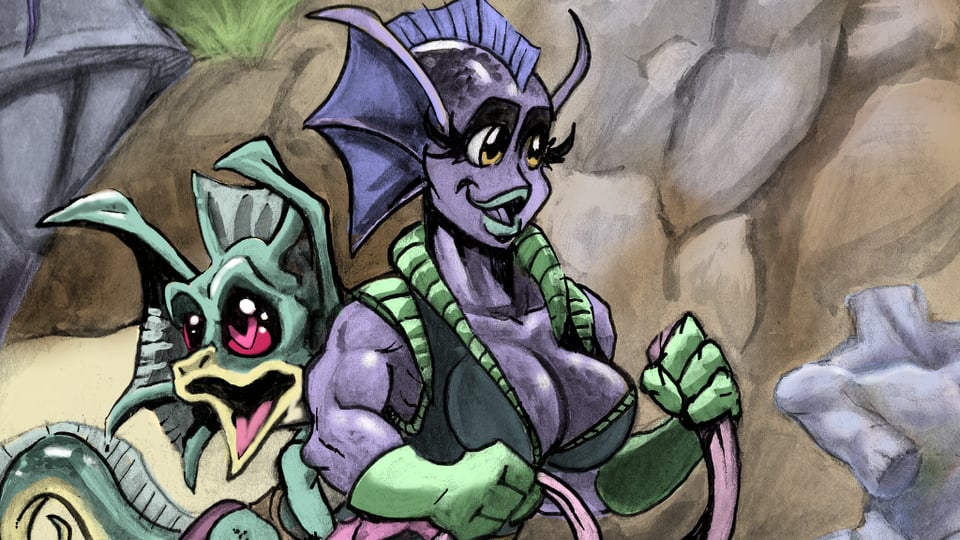
As it goes sometimes for indie creators, this project just didn’t find its audience, and Edward chose to cancel it now instead of riding it out.
From Edward:
“I made the choice to cancel this project instead of riding it out because like Rafael Nadal said "Losing isn't my enemy, fear of losing is my enemy."
Thank you to all the backers of this project and everyone who believes in and supports my work. You're all great and this is a defeat, but it comes with the territory. Everything can't be a hit.
I don't want to do a post-mortem here, but as the campaign went on, I realized some of my missteps/mistakes with this one. I still really love all of these stories and I don't think the content is necessarily the problem. I told Trey yesterday that I'd rather succeed on our own than ride the coat-tails of a big name. Though, I did try to get a couple heavy hitters for this one. Ultimately, I wanted to succeed on our own, a bunch of early career creators doing the things we wanted to do.”
Edward and I have been talking about next steps and how to relaunch Salvaged Relics with a better chance of success. Stay tuned for more info!
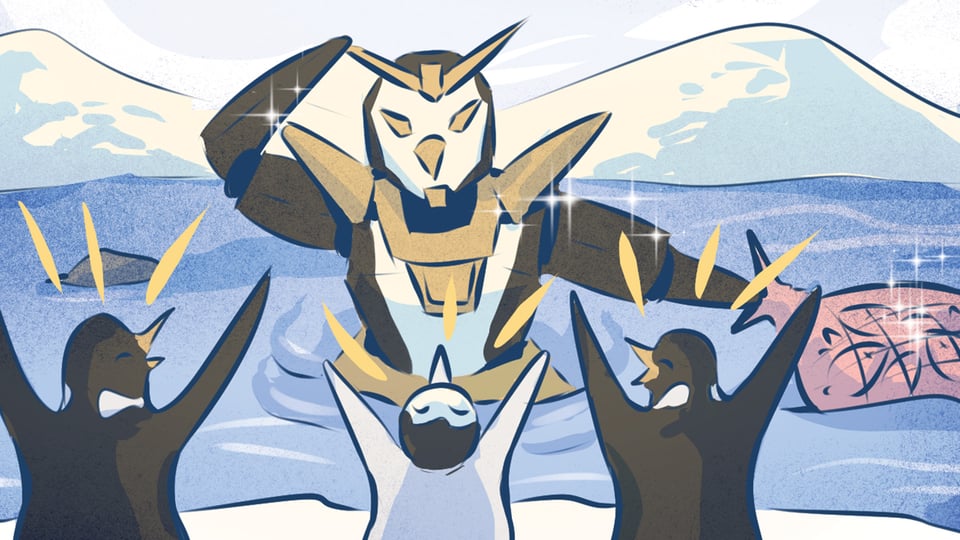
We are fully funded and looking to raise even more for the penguins and environmental science! Should we reach $1500, an epic crossover comic (where many of the characters do a final showdown with the robots) will be added to the back of the book as an epilogue.

Vecchio Rossi
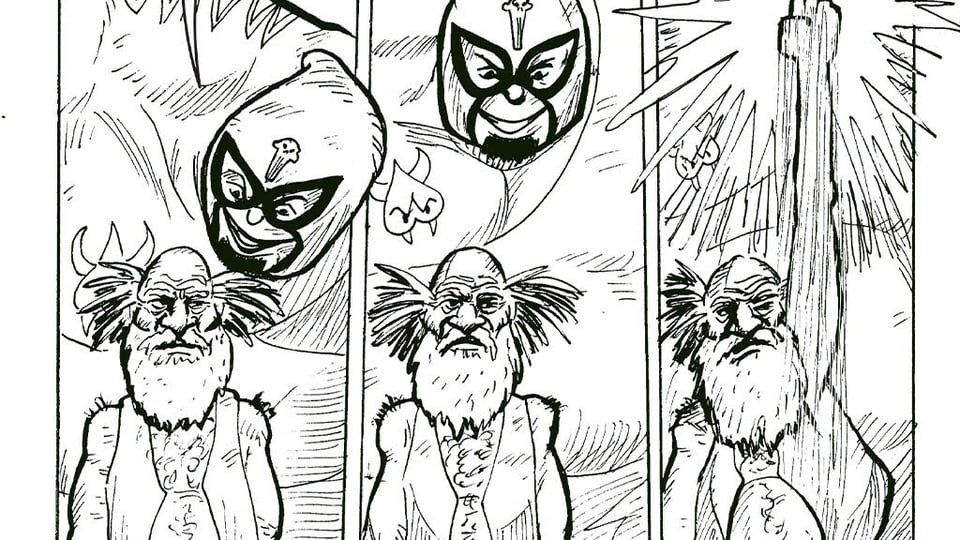
I lettered another chapter of KVGir’s Vecchio Rossi series which should be coming out in Fugitive Pieces soon! Sign up at FugitivePoems.com to have it hit your inbox and see all future issues.
INTO THE GUTTERS
Remembering Mel Brooks (Don’t Worry He Isn’t Dead, I Just Remember Him)
One of the world’s greatest comedians, Mel Brooks, turned 100 last month, simultaneously giving death the middle finger while post-production is completed on a sequel to one of his most beloved films. Truly, it’s a feat only someone as sarcastic and irreverent as he could pull off. If my melodramatic language didn’t make it clear, Brooks is a huge inspiration of mine and holds a special place in my heart. His work has been there for many tough times, and looking back, I can see his fingerprints all over my writing style.
I was first introduced to him in middle school toward the beginning of my Scouting career. A friend and I had joined a troop outside of our family’s usual friend group, and the entire situation was very cliquey. Everyone else went to school together, or their families spent time with each other, so my friend and I mostly stuck together. One of the ways we created our own in-group was quoting movies and reenacting scenes during campouts. He introduced me to a lot of classic comedies like Monty Python and the Holy Grail, and Kung Pow, but most memorable was Mel Brooks’ Spaceballs.
My curiosity about Brooks also led to some of my most cherished moments with my dad. When he found out about my introduction to Monty Python and Brooks, he broke out his VHS collection of Monty Python’s Flying Circus and found the tape with the Ministry of Silly Walks sketch. It was largely thanks to my dad that I grew to love comedy in my early teens.
Brooks has that rare ability to make not just universal comedy, but universal stories (and I don’t just mean the one set in space). While much comedy ages poorly or is so context-specific that it’s never quite as funny after it's released, Young Frankenstein, High Anxiety, and even lesser-known films like The Twelve Chairs are still hilarious. It’s why I keep returning to these films and interviews with Brooks; dissecting why they work and what makes them timeless. There are many lessons to be learned from Brooks’ decades of work, not just about telling jokes, but about making good art that is still valuable today.
The Engine
One of Brooks’ biggest contributions to comedy is his idea of “The Engine”. He argued that to make great work, it has to have some underlying idea that fuels everything. In Blazing Saddles, that idea is racial prejudice. In Life Stinks, it's the divide between the rich and the poor, and in Young Frankenstein it's the idea of familial legacy.
In the latter film, Frederick Frankenstein is ashamed of his grandfather, the infamous Victor Frankenstein, who brought the dead to life, and everything stems from this shame. He naively corrects people that his name is pronounced “Frahn-ken-steen” so that there’s distance between himself and his family, and this creates some of the movie's best jokes. When Frederick meets the grandson of Victor’s assistant–ironically still named Igor–he goes through the motions of correcting his name. Igor is incredulous and eventually mockingly tells Frederick that his name is actually pronounced “Eye-gor”.
It shows the ridiculousness of Frankenstein's attempts to distance himself when Igor has clearly embraced his legacy. Reinforcing his naivety (or perhaps stubborn refusal to acknowledge his silly ventures in pronunciation), Frederick continues to call him Eye-gor throughout the film. It’s a small breadcrumb of the film’s larger theme that fervently pushing against the truth will ultimately cause the legacy to continue. Frederick falls into the same trappings as his grandfather because instead of learning from it, he runs away. Without that engine moving the story and characters, the jokes or the story wouldn’t be nearly as memorable.
Integrity Matters
Related to The Engine, Brooks always wanted to make art that was true to people’s experiences. At a memorial for the renowned Sid Caesar (another comedian worthy of study), Mel Brooks reminisced on the lessons he learned being a writer on Caesar’s Your Show of Shows:
“Sid taught me not to write jokes but to write people and find out what made them tick and find the common denominator in all people so that the humor would be lovely, translatable and understandable.”
Imagine hanging out at a bar, and that guy (gal or nonbinary pal) from your job who thinks they're the funniest person alive comes up and says:
“So, Mickey and Minnie Mouse are in court getting a divorce, and the judge says, ‘I can’t give you the divorce, Mickey. She just doesn’t seem crazy to me.’ Mickey replies, ‘I didn’t say she was crazy, I said she was fucking Goofy.’”
You shake your head, and that coworker walks away chuckling to themselves. Then, they go up to a gorgeous bar patron, lean onto the wall, and try to talk smooth. They don’t realize that someone has spilled a drink exactly where they’re leaning and slip and fall. You bust up and go, “Good job, you finally got me to laugh”.
Which part is funnier? The spontaneous dirty Disney dud or the situational spoof?
Comedy is subjective, but to me, the second bit works because it feels authentic. Even in that brief scenario, the not-so-funny guy is given a personality and then a foil, which brings a bit of schadenfreude and a satisfying conclusion. It’s this feeling that Brooks constantly chased in his work and what makes the characters last.
Brooks even went so far as to insist on specific actors playing his part. Famously, Brooks’ producer on The Producers wanted Gene Wilder replaced for a more typical, chisel-jawed leading man, but Brooks wouldn’t have it. Wilder’s character, Leo Bloom, was mild and nervous but could easily slip into panicked shouting. It was the actor’s ability to swiftly go from calm to chaotic that Brooks admired in Wilder.
He was a perfect fit for Bloom, and Brooks wanted someone who could complement the loud and bombastic Max Bialystock (played by Zero Mostel), one who shies away from danger instead of running into it headfirst. To appease the producer, Brooks allegedly said “You’re right! Gene Wilder is out!” and then continued making the film he wanted.
Integrity and intention are vital to making incredible art, and Brooks’ catalogue has it in spades. He cares about his characters and what they do for the story. Every joke and funny situation stems from this passion for truth-telling and humanity.
Consider The Audience
“On Your Show it Shows I had watched some very good directors work. But sometimes they chose a close-up or something that to me was very bizarre. I would say, Go to the recipient of the joke! Don’t zoom in on the guy telling the joke—which seemed natural to them, but was all wrong to me.”
It’s clear in Brooks’ work that he always considers how the audience will experience the art. The above quote is one small example. The audience doesn’t need to see the joke guy–they already think they’re hilarious–what they need is the straight man or the reactionary character. It’s the reaction that gives the audience context for how a scene should be perceived.
“...you need someone to do the reaction takes. When someone does something funny, the audience doesn’t laugh unless another character on the screen does the ‘take.’”
Take the “Assholes” scene from Spaceballs.
What makes this scene work is not the crass language, but the combination of total sincerity from Colonel Sanders and the rest of the ship’s crew and incredulity from Darth Helmet. The Assholes are completely serious. They don’t see anything wrong with their family name, and apparently, neither does Helmet’s right-hand man. It’s Helmet (played by the amazing Rick Moranis) that signals to the audience that everything is a joke. His upturned lip and curling brows signal that this situation isn’t simply a normal occurrence, but something unusual. In a way, he gives the audience permission to laugh.
It’s this consideration of character, performance, dialogue, and how the audience will perceive all of it that makes Brooks’ films masterful. It’s not enough to be funny; the artist has to construct the joke (or image, scene, line, etc.) so it lands as intended, and that means considering the audience. Every artist should put themselves in the shoes of their consumer and consider their experience.
Conclusion
Chuck all of these ingredients in a pot and one will understand why Brooks cooks up such delightful films that have stood the test of time. Yes, he is hilarious and irreverent, but it’s his passion for his chosen art form that makes him a thoughtful, talented artist. His mark would be hard to rub off on the history of film, comedy, or art. Heck, even death can’t seem to get rid of him. After a century of life, he still has a lifetime of lessons to teach everyone.
GUTTER BUDS
SOMETHING(S) OLD
High Anxiety directed by Mel Brooks
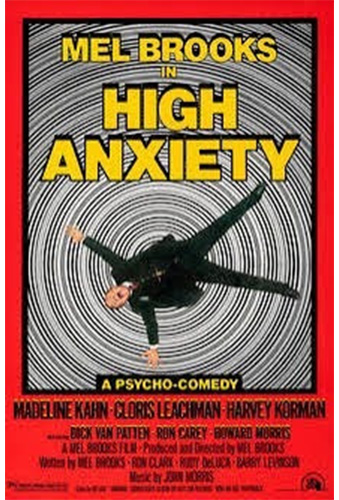
I think this film shows Brooks’ creative genius more than any other. Instead of being a spoof of a genre, it’s a spoof of a specific director: Alfred Hitchcock. Not just that, it’s a stunning dissection of what made Hitchcock great, and because of this intense study, the film is both thoughtful and hilarious.
SOMETHING(S) NEW
Check out these campaigns by friends, colleagues, and things I just thought looked cool:
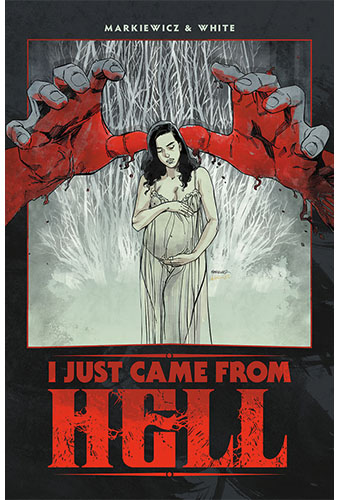
10 years after the release of their successful True Crime documentary, THE BRIAR QUEEN, focusing on the life and untimely death of All-American sweetheart Sarah Shaw*, the investigative journalist couple, Jes Ruiz & Dave Williams are looking for a new challenge.
The stability of their previous success brings its own insecurities. Jes can’t escape the feeling that she peaked with Sarah Shaw and will never rise back to those heights again. Dave prefers to have consistent work regardless of the quality especially now that they have a baby on the way.
While researching topics to cover for their next documentary, Jes stumbles across the story of Sacred Heart Church in Devil's Garden, Florida. In 2015, Lisa Johnson, was the sole survivor of a church fire that took the lives of 33 people including her husband Johnathan and his parents. Lisa was found miles from the church on the side of a single lane road, naked and covered in blood. To this day, she has never revealed the details of her story and still lives by herself in Devils Garden, Florida.
Eureka!, Issue - Flights of Fancy
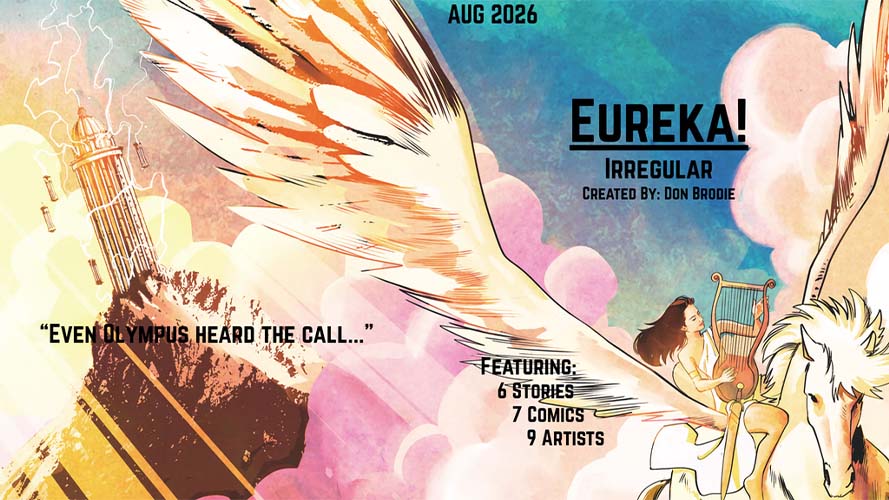
Eureka! is a labor of love by its creator Don Brodie; his first foray into the comics medium and he's swinging for the fences.Made in the tradition of Heavy Metal/Metal Hurlant and creator-owned books of the Underground. This book contains fantastic, human-made stories, as well as behind the scenes content and articles about the arcane process of comics making.
Don reached out to me on Instagram and as a fellow Missourian comic creator, I want to give him a little boost on his first comics campaign. Go check out Eureka!
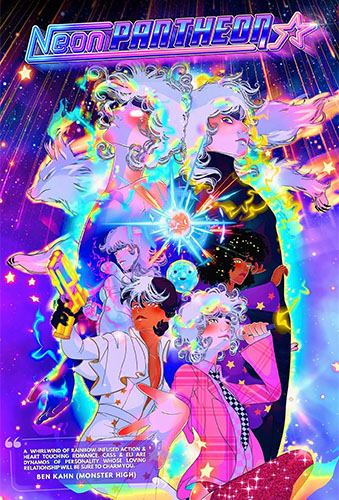
Former mortal Cass never asked to be a demigod, technically, they didn’t even ask to be alive. A century after their twin sibling Pollux unknowingly sacrificed half his eternity to bring them back from the dead, Cass has unreliable powers, a mountain of baggage, and a bratty attitude. Cass spends their time doing party tricks, dodging responsibilities and being head over heels in love with Eli Drayden, a mortal detective who keeps them grounded in a universe that never stops spinning.
Then, out of nowhere, a struggling author from Earth crashes into their life, dropped into their path by a future version of Cass with an ominous warning: their brother Pollux has gone full cosmic menace in order to reclaim what he lost saving Cass’s life, and now, obsessed with death, he’s fighting through time and gunning for them all!
Cass has to take responsibility and rally an unlikely team to stop Pollux before he turns his existential crisis into an extinction event. Which is hilarious, because Cass has never successfully taken responsibility for anything. But taking responsibility might mean Cass has to become something unrecognizable, and risk losing the love that keeps them human.

SOMETHING(S) BORROWED
All About Me! by Mel Brooks
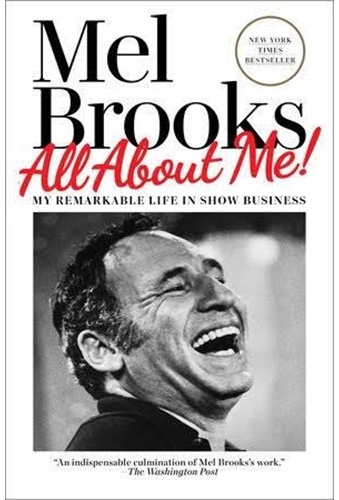
Many of the quotes for my essay were pulled from this book. It’s a lovely deep dive into the mind of a master comic, but also an excellent memoir. There’s a lot of great advice and insights I keep returning to.
SOMETHING(S) BLUE
Bad Dream: A Dreamer Story
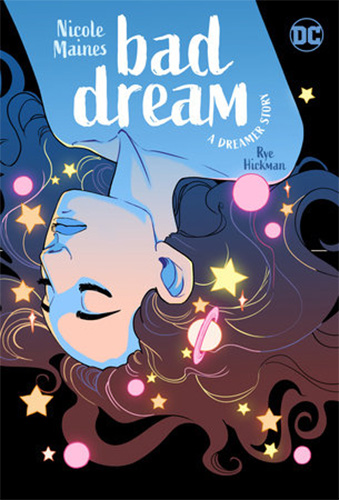
I was on a quest this past month to read everything featuring Dreamer so I could understand the character better and this origin story is SO good. It’s emotional and shows how being a member of a marginalized group doesn’t always protect you from hatred. The story is heartbreaking and the art is beautiful, so have some tissues handy when reading.