
Can Passion Overcome Flaws? (Guts N' Gutters #19, April 2026)
I'm back and discussing if a labor of love can overcome its flaws, plus new campaign announcements!
ISSUE #19
TL;DR (Too Long, Don’t (Wanna) Read)
A Break Recap!
Letters from the Void & Crit One 4 are Completed!
I Have a Short Story in Salvaged Relics, Vol. 1!
Rise of the Flightless and Letters from the Void #2 Coming Soon!
Into the Gutters: Passionate Art with Flaws vs. Technical Perfection
Gutter Buds!
Something OId: An Untamed Sense of Control by Roscoe Holcomb
Something New: Go back The Comics Staple - A Comics News Zine, How to Touch Grass: Comics to get You Outside, and Drunk Mom #1-3
Something Borrowed: Lost Marvels No.1: Tower of Shadows
Something Blue: Galloway’s Gospel by Sam Rebelein
WHAT’S THE WORD?
Refresh - to restore strength and animation to; to restore or maintain by renewing supply; to update or renew (something, such as an image, the contents of a computer memory, or the displayed version of a web page) especially by sending a new signal.
Somehow, The Writer Has Returned…
Guess who’s back?
Hi, it me. I’ve returned from my monthish-long break, not necessarily stronger than ever, but definitely feeling better. Outside of fulfilling my campaigns, I chased my bliss and checked out a bunch of books from the library on graphic design, Bauhaus, Robert Crumb, and whatever else I felt the urge to read about.
Though I’ve been doing graphic design for over a decade, I don’t have a ton of formal education, so I went back to basics and learn some first principles, but also read some fun stuff like design history and more philosophical works. Like I said last month, I find studying to be very relaxing, so this was a great.
I even went on a family vacation to a Tiger Sanctuary!
But alas, all good things must come to an end, so I’m ready to get back at it.
Letters From The Void and Crit One 4 Have Shipped!
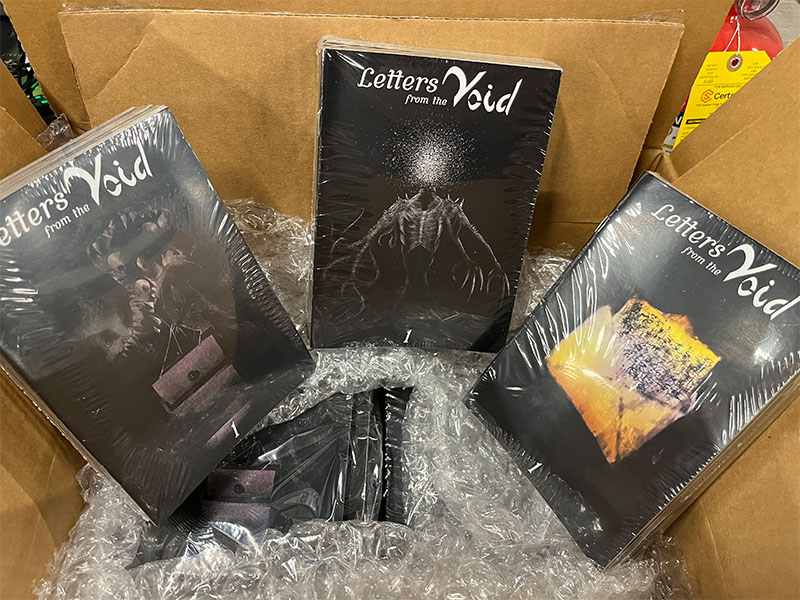
Letters from the Void #1 arrived on the last day of March (of course, the same day last month’s newsletter went out), Crit One 4 arrived at the beginning of April, and every book has been sent to backers.
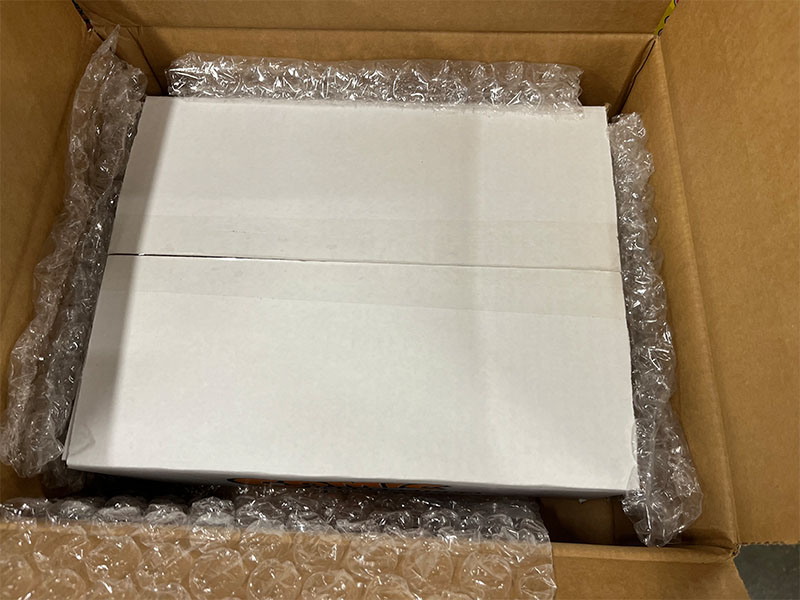
I wanted to shout out Comic Impressions for the amazing job they did with this order. Your eyes don’t deceive you. That is a box within a box. This is the best-packaged order I’ve received from any printer and no books were damaged. I will be using them for all my larger orders for the foreseeable future.
This was my most-funded, most-backed campaign ever, so I had to make five trips to the post office.
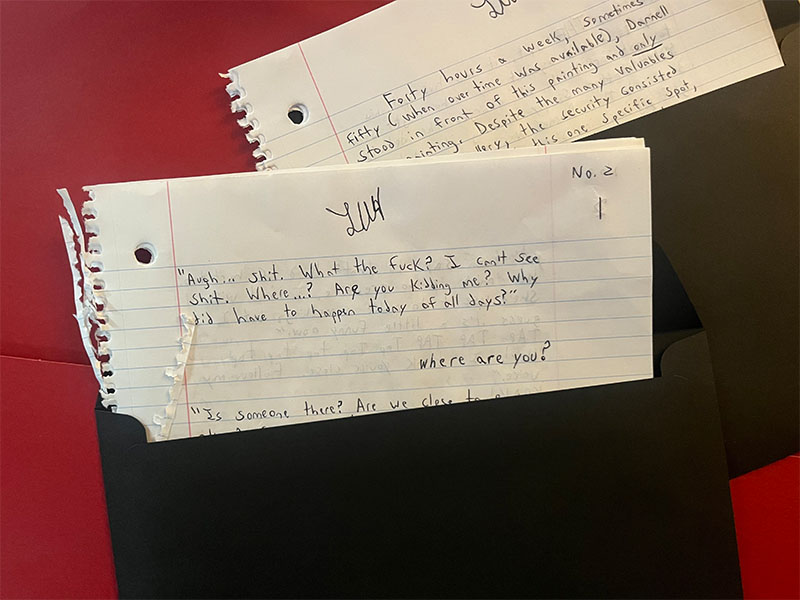
Handwriting the personal letters from the Void (short stories written by me) was a lot of fun, but my hand is in pain. Crafting the stories and handwriting them probably took me a collective 12 hours (about an hour per story, except for the longest, which took almost two hours!), so I may have to raise the price on this reward in the future. Who knew handwriting stories between 500-1500 words would take so long?
Salvaged Relics Coming Soon to Kickstarter!
A short story I wrote for an anthology that was cancelled finally found a home in Edward Kane’s Salvaged Relics, Vol. 1!
It’s called Weightless and is very personal to me. It’s about body image and weight loss and the conversations we have with ourselves. Be sure to follow the campaign.
New Campaigns in Pre-Launch!
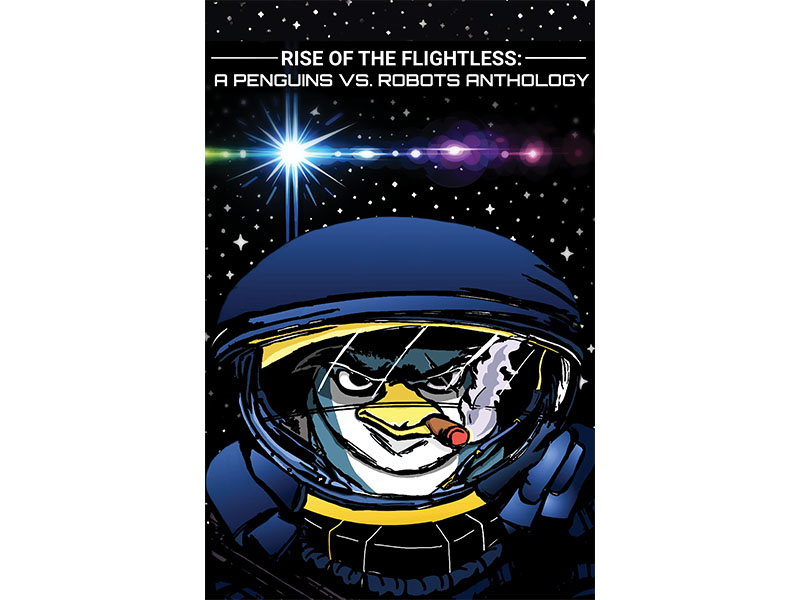
This is newsletter is getting lengthy, so I’ll just say that Rise of the Flightless and Letters from the Void #2 are in pre-launch! Following the campaigns will be the quickest way to get updates as they happen.
Check out the new Holofoil cover (above) and design for our penguin pilot wing acrylic pin:
INTO THE GUTTERS
Tenderly Tracing Along Cracks
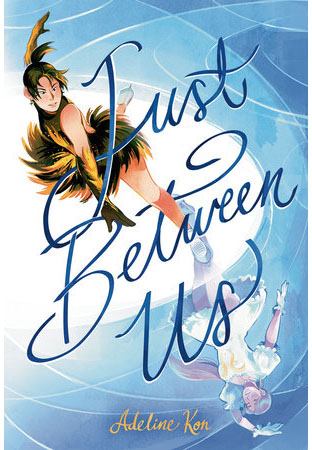
Just Between Us, the debut graphic novel by Adeline Kon, is a stunning sports romance about two figure skaters who are polar opposites. Lydia Chen, the sullen perennial champion with a slight ego, has flawless technique, making difficult jumps that give her the highest scores. But she lacks the artistry that only comes from loving her craft. That’s where her rival, Elaine Yee, enters the ice, enchanting everyone who watches.
She oozes grace and always gets high marks for her performance, but her shaky technical skills always put her in 3rd place. Now, it’s a romance story–so it’s obvious where this goes–but for the sake of spoiling less, I’ll only say that Lydia comes to a point where she has to learn that her pristine technique and emotional rigidity have their limits and that she cares about Elaine because of her passion.
This story perfectly encapsulates something I’ve been thinking about for the past few months: the flawed piece of art that was clearly loved by the artist. Can passion overcome shortcomings? To explore this, I want to talk about two things I’ve recently watched: Maggie Gyllenhaal’s The Bride! and Glitch Productions' Murder Drones.
The Bride!
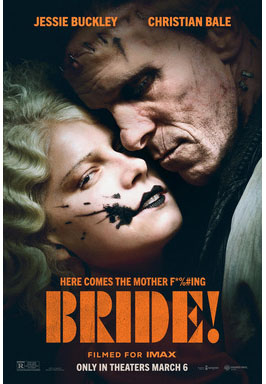
Classic monster reimaginings have surged in recent years. Nosferatu and The Wolf Man have returned, and moviegoers have been blessed with TWO Frankenstein films: Guillermo del Toro’s film of the same name and Maggie Gyllenhaal’s woman-focused The Bride! While both are marvelous, I think I prefer the latter adaptation simply because it's obvious that Gyllenhaal was compelled to make this film. It’s such a mash of ideas and inspirations that it could only have come from a specific person, and this care is how it overcame its flaws.
The Bride! follows a woman named Ida, played by Jessie Buckley for most of the film (this makes more sense after watching), who is brought back to life by Frankenstein’s Monster (called “Frank” and played by Christian Bale) through the machinations of Dr. Euphronius, who is an admirer of his creator’s work. Lacking any memory of her previous life and told she was made to be Frank’s bride, she has to learn to navigate her second life while evading the police. It’s almost more of a crime film than a romance-tinged science fiction or horror film.
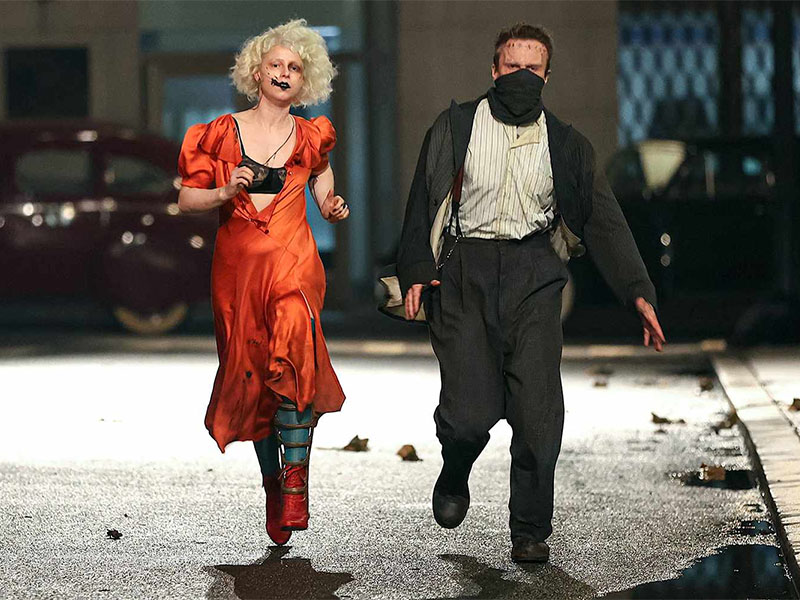
While I loved this film, I recognize that it was a dense, slow, and sometimes confusing plot. Even on later reflection, I’m not sure why certain things were included when the follow-through was fairly weak. It would have benefited everything for particular subplots to be shortened and facts about the story’s world made clearer. That being said, I wouldn’t change a thing about it. It has wonderful pathos and is a visual treat, even if it’s a bit bloated. There’s a lot in this film, but none of the scenes and stylistic choices were made by accident. One choice in particular leads me to believe this.
Much like Mary Shelley’s Frankenstein, the film is about humanity’s reactions to something (or someone) who doesn’t fit into the mold of society. Ida and Frank, who seem to be immortal now, have beaten the human confines of death, among other things that I won’t say to avoid ruining the film. Throughout their misadventures, one background visual returns again and again: Bauhaus posters. It’s easily my favorite thing about the film because of how it serves as an inverse metaphor.
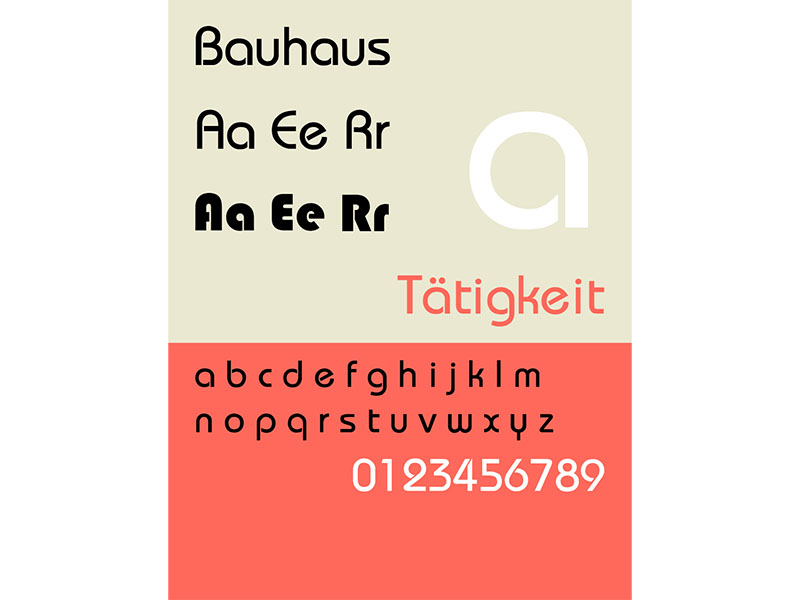
For the unfamiliar, the Bauhaus was an early 20th-century German design studio (whose ideas may come up in a future essay wink) whose members desired to create an objective, efficient standard for everything from architecture to weaving. In terms of typography, they found serifs (the little flourishes at the ends of letters in fonts like Times New Roman) to be superfluous. They served no function outside of decoration. These aesthetics are influential even today, for Steve Jobs directed Apple’s products to be designed according to Bauhaus ideas.
Bauhaus is a perfect metaphor for the film because the philosophy revels in finding arbitrary norms of what is beautiful, and the film intentionally places it where things are against the norm. The posters appear twice (to the best of my memory): First, toward the beginning of the film, in an alleyway next to an underground queer nightclub where Frank and Ida commit their first killings as a couple. Then, second, near the climax, outside of Dr. Euphronius’ home. Both are locations where people who don’t conform to objective standards reside, ironically making these posters with their clean, thick fonts the outsiders.
It’s this detail that convinced me that The Bride! is exactly as Gyllenhaal envisioned. Even the title logo seems Bauhaus-inspired, giving everything a delicious cohesion. Despite its flaws with plot and coherence, the film is incredibly thoughtful in overall execution, and I can’t help but admire the ambition.
Murder Drones
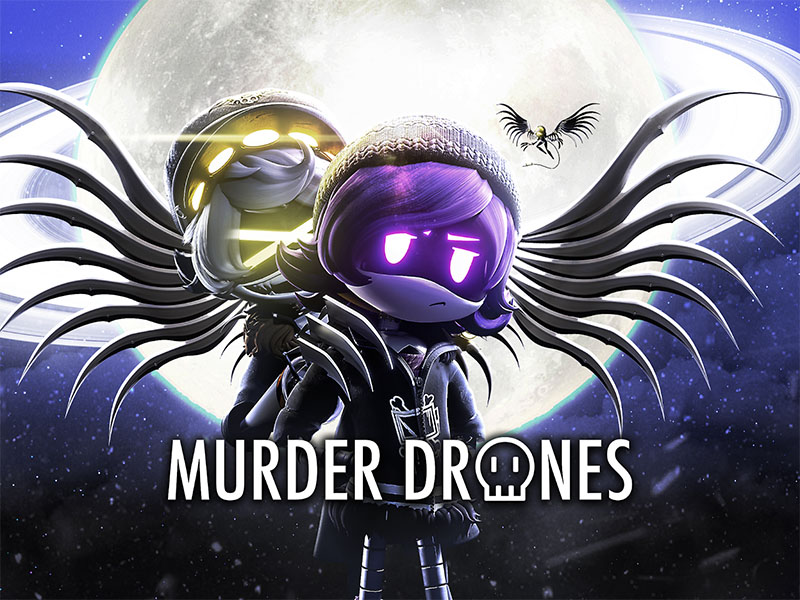
After falling in love with The Amazing Digital Circus and Knights of Guinevere, I decided to give Murder Drones a try, and I quite enjoyed it, but the story itself was rough. The show tried to cram too much into eight episodes, so some worldbuilding was rushed, and certain inconsistencies were covered up with fourth-wall-breaking humor. Sometimes, it was funny, like when one character goes outside to find his glasses and goes, “Ah, there’s where I left my excuse to be outside right now.” Other times, it felt like a Band-Aid for a shaky plot. Finishing the show is what prompted me to write this article because I had so many thoughts about it.
Murder Drones takes place on an exoplanet where humanity accidentally killed all biological life, including themselves, leaving their worker drones alone and in charge of their own lives. The corporation in charge of the operation, not liking the idea of AI running about freely, sends three drones with an arsenal of weapons and a vampiric drive to drink the oil of their victims to eliminate the problem. The robots hide away in a fortress with locking doors to protect themselves. Uzi, the daughter of the Khan who invented the doors, invents a crude weapon that can fight back and foolishly goes into the frozen wasteland to test it. She successfully takes down one of the murder drones, who ends up being an extreme optimist named N, and learns that things may be more complicated than a simple corporate cleanup.
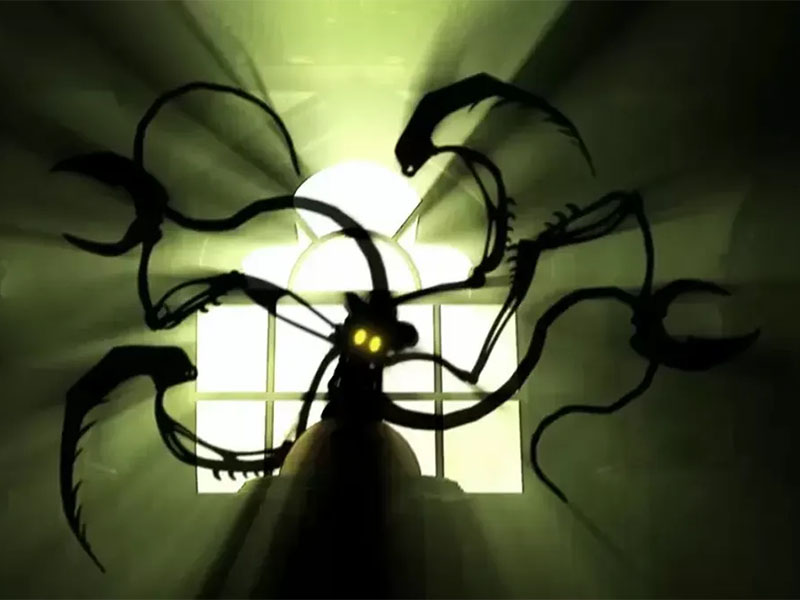
While the show is a mixed bag, I think it’s one of the most creative sci-fi horrors I’ve seen. To me, most of this genre falls into either remakes of Alien (stories about things beyond our understanding) or Black Mirror (stories about the hubris of man). Murder Drones has a little bit of both, and I love how its eldritch horrors are developed. Instead of the usual vague elder god or indecipherable extraterrestrial, where the cosmic horror is external, the existential threat is of man, a reflection of humanity’s internal desires. At the same time, because the show revolves around robots abandoned by their creators on a desolate planet, it is also external to the characters. It’s a tender balance, and how the horror is crafted reveals how much the creators loved making this show.
The challenge of a horror story with robot characters is creating situations that would make be scary to them, but not alienate the audience. It would be easy to make the robots just humans that go “beep boop”. The audience would easily empathize with them, but it's much more fun for the creator and the viewer to have the horror crafted for these specific robots. It’s here that the passion of the creators shines brightest as their attention to detail shows a love for building a world where terror is tailored to these worker drones.
Firstly, the worker drones don’t appear to eat. Though they do appear with coffee mugs occasionally, it's more for the aesthetic of relaxation than a need. In the world of the worker drone, there is no food chain, no natural drive for energy that necessitates consuming. This makes the murder drones something truly unfathomable for them. They have teeth, and they must obtain oil from the worker drones, or they will stop functioning. While the audience can see this as insidious programming by humanity, the drones are experiencing predation for the first time. They don’t understand it, and that adds to their anxiety.
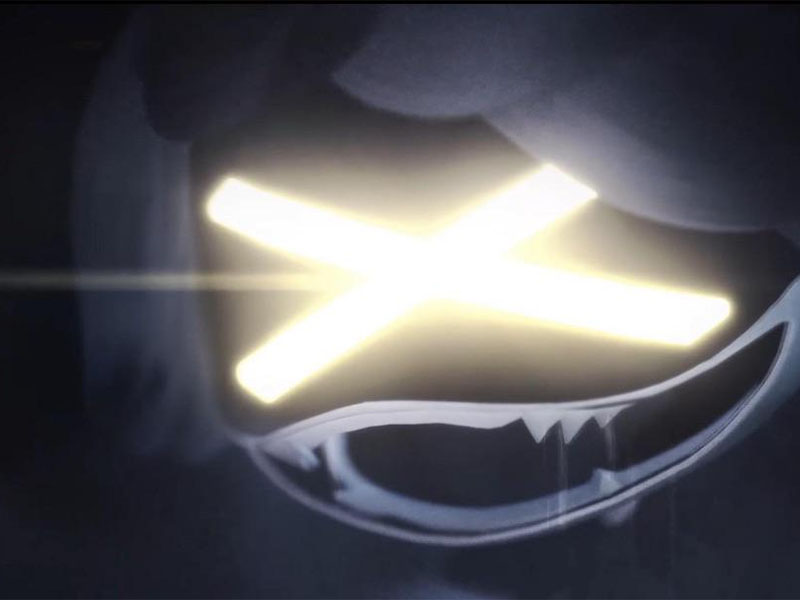
Another thing that adds to this anxiety is the murder drones having X’s across their eyes/screens. Throughout the show, the eyes are shown to be regular tools of communication for the workers. Whenever they want to convey something nonverbally, they can make their eyes/screens show symbols or text to “speak” more directly than body language or even sign language could. Eyes are vital to human communication, but even more so for the drones. The murder drones' lack of eyes (at least in their first appearances) alienates their prey in a highly nuanced way that is specific to them, but is also familiar and relatable to the audience.
This care in worldbuilding is what kept me engaged with Murder Drones despite its shaky plot. I was fascinated by these robots, craved more information about their world, and couldn’t wait to think about what things would become existential threats. This is why I argue the show manages to do a little bit of both kinds of sci-fi horror: the cosmic horror works on multiple levels. It’s flawed, but I will return to Murder Drones in the future.
Conclusion
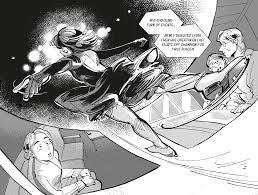
Technical prowess is stunning, but it means nothing if there isn’t a clear love for the art, be it film, TV, or figure skating. Just Between Us suggests that it’s a middle ground between craft and passion that makes things beautiful. The book is fairly blunt with this idea, dressing Lydia in black and Elaine in white, symbolizing their yin/yang relationship. These women learn from each other and grow by taking a piece from the other, learning to embrace where the other excels. They both show that it’s the imperfections that make people interesting and make them human. Love means finding beauty in the things your paramour sees as lacking because they are a part of their unique character. It’s the same with art.
So, can passion overcome flaws? I’d argue yes and that it’s vital to appreciate–maybe even love–the cracks in the art we make and consume. It’s what makes them human. A flawed labor of love is better than something perfect, but soulless.
GUTTER BUDS
SOMETHING(S) OLD
An Untamed Sense of Control by Roscoe Holcomb
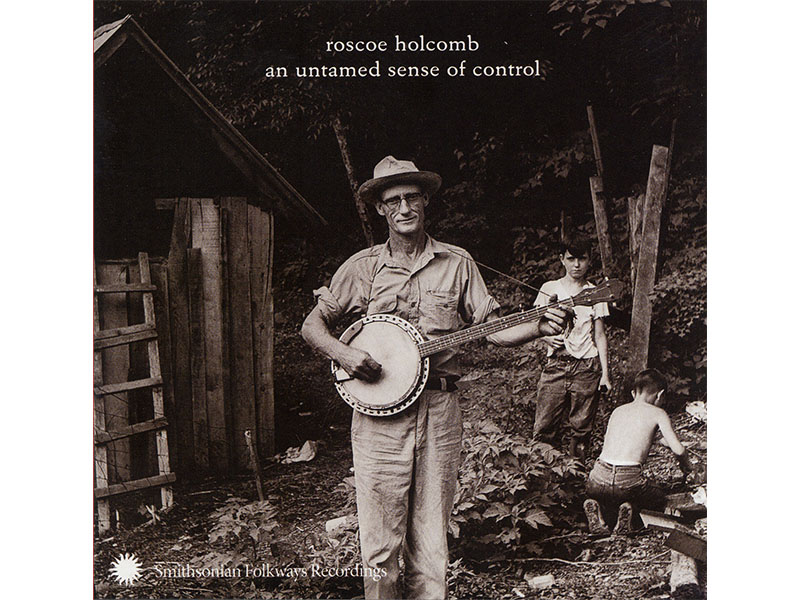
My family history research led me to the Primitive Baptists, which then led me to Roscoe Holcomb. He’s an Appalachian folk singer and picker of the banjo and guitar, whose voice has captured me currently. It’s so unique and full of emotion, and it reverberates deep in my jellies. You have to experience it yourself to truly understand.
SOMETHING(S) NEW
Check out these campaigns by friends, colleagues, and things I just thought looked cool:
The Comics Staple - A Comics News Zine
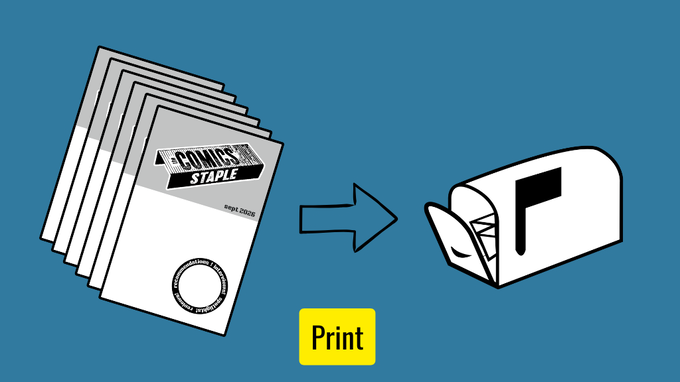
The Comics Staple is a monthly, twelve page, black-and-white zine for anyone who wants to stay in the know when it comes to comics.
Each issue of The Comics Staple will feature writing about a whole range of comics from manga, to superheroes, to your next favorite indie comic. Expect top comics picks, reviews, interviews with creators, news roundups, creator spotlights, and weird comics history - all brought to you by an amazing team of comics critics and reporters.
How to Touch Grass: Comics to get You Outside
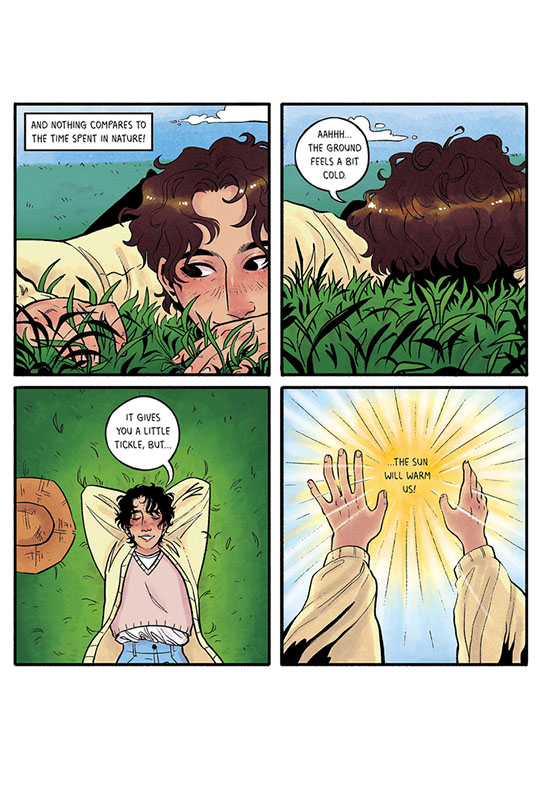
HOW TO TOUCH GRASS is a comics anthology about the joys (and stakes) of going outside! The book is 300+ pages long with a full-color interior and boasts over 30 adult non-fiction stories.
Vanishing third places, burnout, doomscrolling, car culture, and health barriers have been trapping us in our homes (and in our social bubbles).
Meanwhile, the grasses upon which we feed (literally and spiritually), upon which we congregate as communities, and where chance encounters could change our world for the better... go untouched by us.
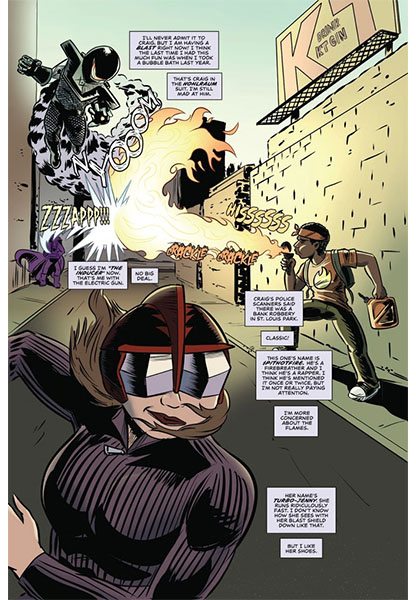
Monica Lanie is a single mom and a recovering alcoholic. A chance encounter leads Monica and her intern, Craig Kendall, to spend their nights fighting organized crime in the Twin Cities. When she’s behind on sleep, people assume Monica is hungover. But she can't correct them, so she must live with the label... her son's Drunk Mom.
SOMETHING(S) BORROWED
Lost Marvels No. 1: Tower of Shadows
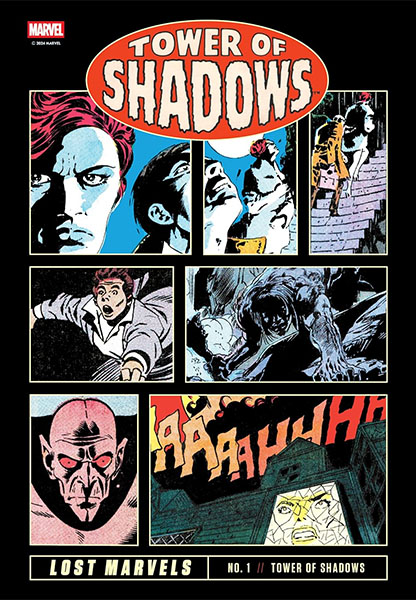
This collection really surprised me with the creative comics inside it. I picked this up from the library mostly out of curiosity–it’s Marvel, so I knew the art would be good, but I have issues with the older style of narration-heavy horror at times. What I didn’t expect was there to be excellent layouts and genius ways of using narration in non-traditional ways. A couple of the stories utilize a second-person perspective (something almost unheard of in comics), and one comic’s twist relies on the reader misattributing the narration to other characters. This is a solid horror collection from a short-lived title and has a lot to offer for both casual fans and history buffs.
SOMETHING(S) BLUE
Galloway’s Gospel by Sam Rebelein
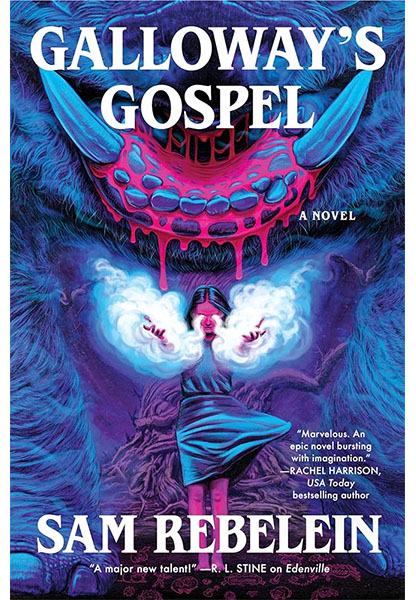
This one’s actually blue this month!
Galloway’s Gospel is a fantastic horror fantasy novel that serves as a brilliant metaphor for the times we live in. One teenager’s secret fantasy world becomes the basis for a new religion, and shit hits the fan quickly. Please read this book, so I have someone to talk about it with!