#11: filipinos against ICE
advice for hosting your own fundraiser or political event
You’re reading Other Kinds of Intimacy, a newsletter by me, writer and journalist Juliana Feliciano Reyes. You can subscribe here. I usually publish Sundays but it was my birthday so I allowed the missed deadline :)
Before I moved to Manila, the center of my Filipino life was the potluck.
It started as a dinner in a West Philly apartment, just six of us cooking for each other as a way to make Filipino friends. (Filipinos were not so easy to find in Philly unless you went to church, and you know…we didn’t.)
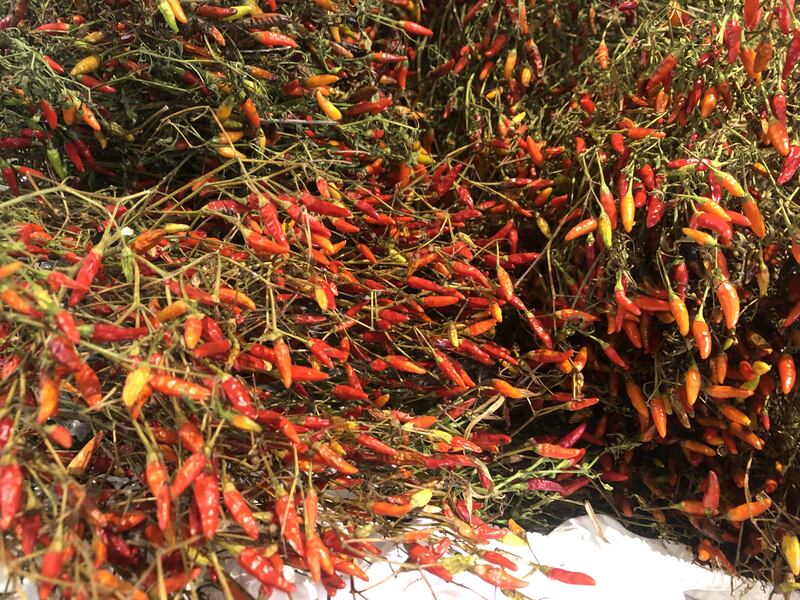
Over the last ten years, it’s grown into a whole thing, with more than a hundred people on the WhatsApp group, giving life to artistic collabs, romance (!), generations of Filipino chili pepper plants, and plenty of tsismis (it’s a community after all).
The way it operates is casual: If you’re Filipino, you’re invited. I was notorious for inviting people everywhere—in cafes, over Twitter (extreme 2017 vibes), on the dance floor.
People usually brought Filipino food but also sometimes Hawaiian pizza, or Korean fried chicken, or just whatever they could manage.
And anyone can host. Sometimes people who had only been to one potluck hosted the next at their house.
In March, a few of the group members organized a special, open1 all-adobo potluck fundraiser.
They raised $2,100 for two orgs supporting immigrants: Philly-based Asian Americans United and Collective Freedom, which supports Southeast Asian immigrants facing deportation.
I called up my friend Larissa Pahomov, who hosted the potluck with her boyfriend at their house, to talk about the event.
Larissa, a longtime public school teacher, had hosted candidate fundraisers before so the concept of asking people (sometimes strangers) to donate money was not new to her. But she told me she wouldn’t have attempted this kind of event without the community.
“It’s like putting a colored filter on an already existing phenomenon, right? And then inviting people to contribute but in a channel that they're already familiar with.”
Larissa, who is 42, started coming to the potluck a few years ago. “I must have outed myself as being Filipino to you,” she said. (She’s a quarter Filipino and identifies as culturally Russian.) She was one of those who hosted at her house soon after attending her first. I still think about the crispy coconut rice (from the cookbook Filipinx) she brought to her first potluck.
She’d been interested in doing an all-adobo potluck to try all the different takes on the dish, but it was last fall when she got the idea to turn it into a fundraiser. Her boyfriend, Nick, who is Vietnamese American, was supporting family who was facing deportation.
As he got help from a legal org, he marveled at how the people advising him were volunteers, how they’d take your calls at any time. It was obvious, Larissa said, that these orgs could use all the financial support they could get.
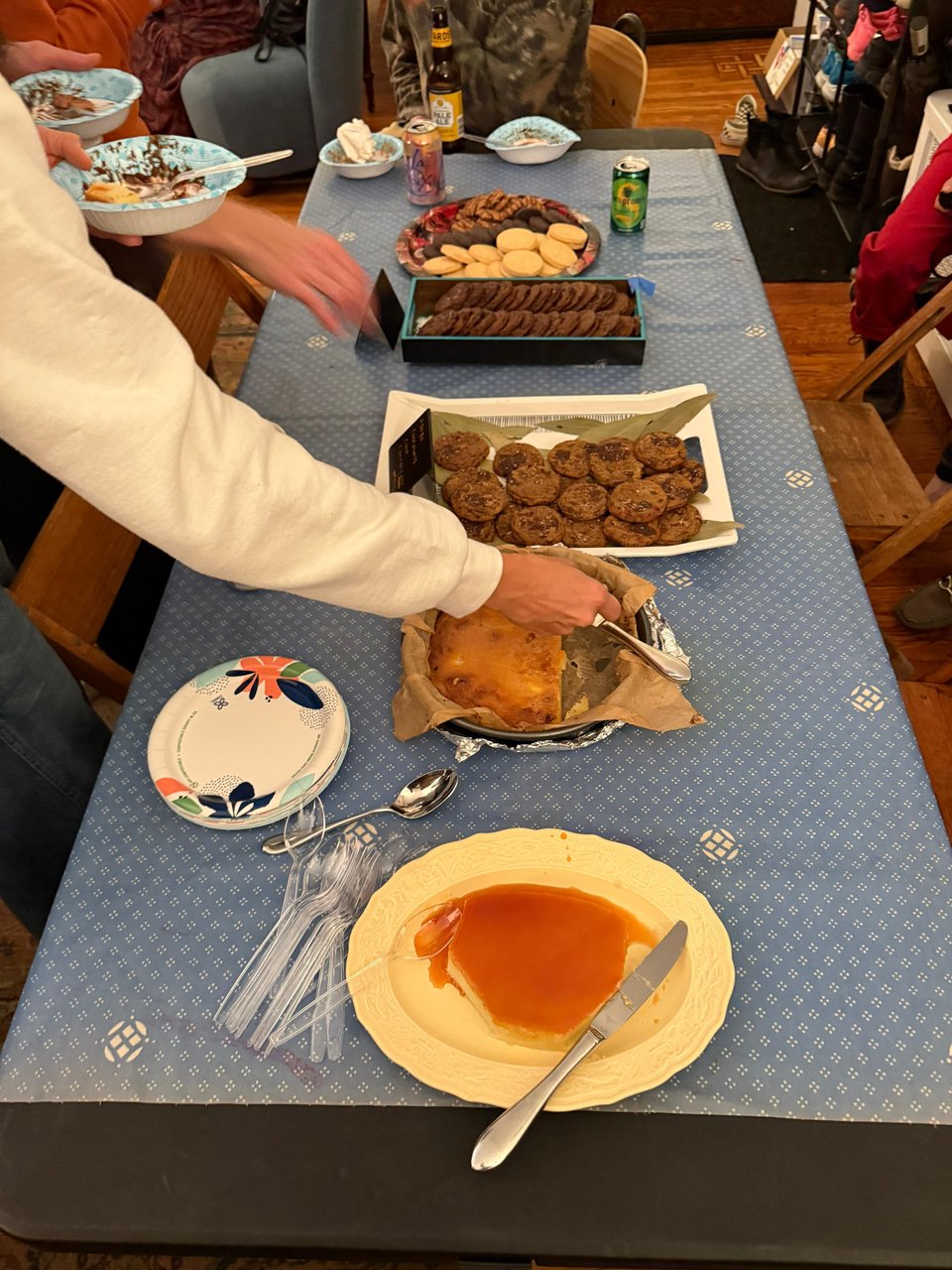
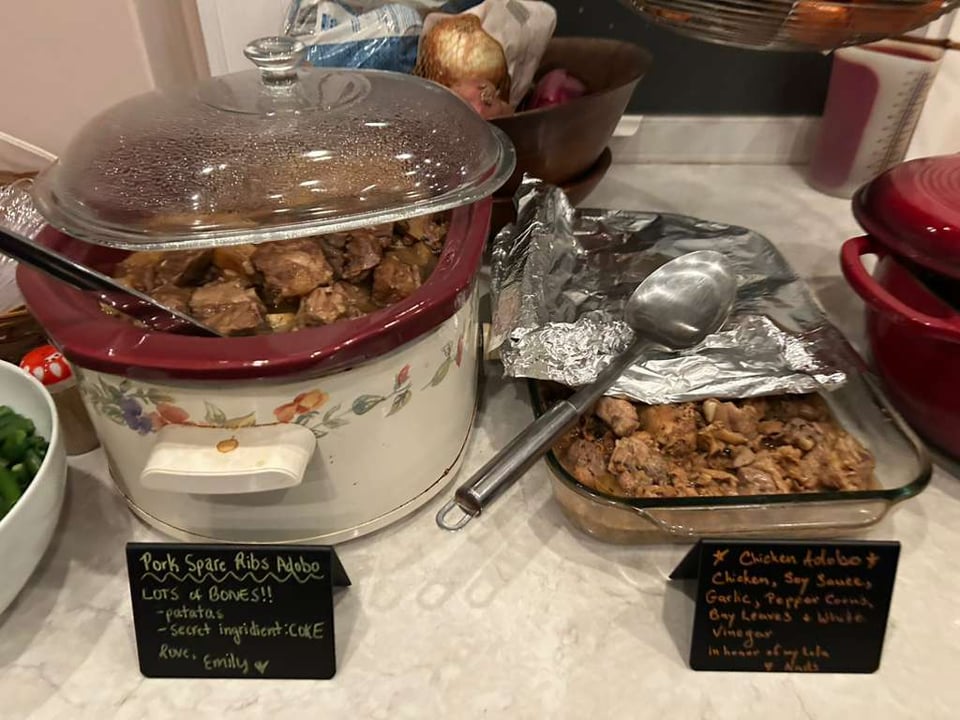
About 45 people attended the event, with a dozen people bringing eight kinds of adobo (Pork spare ribs! Seitan & mushroom!), side dishes, and dessert.
Larissa and Nick initially wondered if they should try to host a bystander training at the potluck but ultimately decided to keep programming minimal: just a short speech encouraging people to attend those trainings and to talk about their own immigration stories to counteract “the narrative that immigrants are bad and need to be removed.” (A narrative that, infuriatingly, some Filipino immigrants themselves perpetuate.)
Here’s what I learned from Larissa about doing political work like this.
Find ways to integrate activism into what you already do.
Larissa said she’s sometimes frustrated by the narrative of political change and activism “where it's heroes doing incredible acts.”
“And not only is the bar very high but that bar involves some massive change from your own life, that you're going to have to upend everything to do the thing that will help.”
Change can be more systemic, Larissa said, if you figure out how to shift your existing practices and resources.
“So this is something we already do. And spending money on a Saturday night is something people already do. So why not combine those things in a way that is meaningful and allows people to have their regular life imbued with those values and that mindset?”
“You're always an actor. There's no passive voice in the political landscape.”
It reminded me a lot of what Glen, whom I spoke to for letter #3, queers against ICE, said to me. Glen and his friends had organized a series of bystander trainings and fundraising parties focused on the queer community, and he emphasized that we already all have the skills to organize.
“Organizing is just the stuff we all do everyday,” he said, “we just don’t call it that or have the same intention or focus on it.”
That said, adjust the customs of the group if necessary.
In regular potluck custom, no one shares ahead of time what they’re going to bring or even really RSVPs. We gave up on doing that early on because it just didn’t work. As Larissa put it: “The universe provides and it always works out.”
But since this was a fundraiser, it was important to both get a headcount and make sure there was enough food. So the organizers asked people to RSVP, emphasized that the event would reach capacity, and relied on a spreadsheet that required the cooks to sign up.
There was plenty of food, and in traditional potluck fashion: “I wouldn't say a wild amount of additional food showed up, but additional food showed up.”
Set a goal.
Larissa called this “standard fundraising protocol.” They set the suggested donation to $25 to $100 and calculated that if 50 people (the number of RSVPs) donated $40, they’d get $2,000, which they made their goal. It’s a nice thing to be able to email people after, she said, and be like, we hit our goal!
Also, she said, when you set a range of suggested donations, the most common donations are usually either the suggested minimum or maximum. “People are like, I can do one or the other of those.”
‘Remember that you are always in the play.’
At the end of our interview, when I asked Larissa if she had anything else to add (very typical reporter question, which tends to deliver gold), she spoke to the spirit behind the event very eloquently.
Because of her nearly two decades as a public school teacher in Philadelphia, she said, “the political context in which you live is always apparent to me.”
“The circumstances of my students, the resources of my school, what the budget looks like for next year and who's potentially gonna lose their job—that's all in the mix and it all has to do with politics and power.
“And so it doesn't feel like a leap to me to invite people to think about their active role,” she said, “the fact that we all are active players in the landscape.
“We’re not the focus of America’s fear the way Minneapolis is at the moment, but ICE is in Philadelphia. … This is happening here now.
“And so, it's not perfect, but trying to make space for myself and for others to remember that you are always in the play and that you're always an actor. There's no passive voice in the political landscape. Daily life kind of can trick you into that if you're feeling secure, but it's a fallacy.”
Thanks, as always, for your attention, and thank you to Larissa for her time, as well as Nick and OG potluck organizer Lauren for this special potluck. I’m dreaming of attending one this summer…
Until next time,
Juliana
I say “open” because it’s more or less Filipino-only, with special exceptions for partners or housemates, though I won’t name names but some of us had been known to kick their housemates out of the house…OK, it was me. ↩

Add a comment: