#10: elaborate commitments
on writing something new everyday with a friend
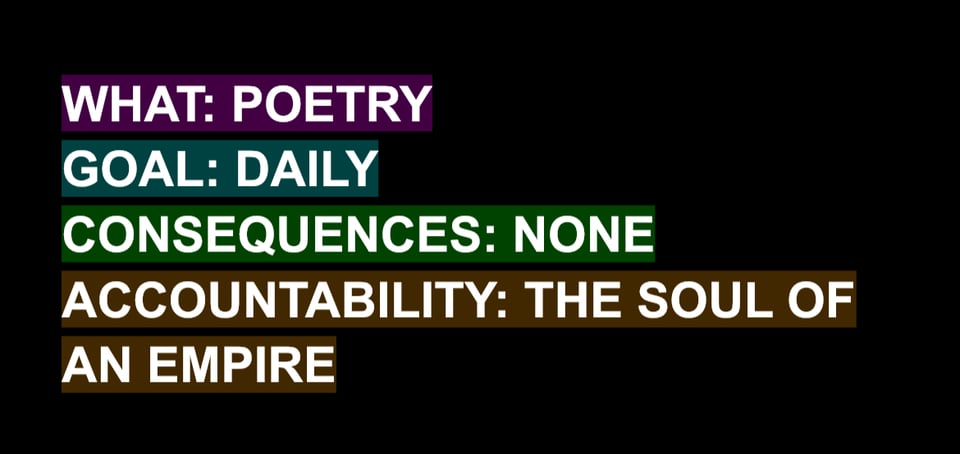
In this letter: voice memos as podcasts, Aurelie Sheehan, Ander Monson on turning grief into DIY collective art projects, Danez Smith on discipline, Harryette Mullin’s tanka walks, tiny house lizards, being disciplined to a person or a project or both.
A few weeks ago, my friend Nicole texted to say we needed to address the elephant in the room: National Poetry Month was approaching. We needed to get ready. “Maybe start cultivating poetic content.”
We had spent last April cultivating poetic content aka writing a poem a day and posting it in a shared Google Doc. It was her idea, riffing off something I was already trying to do. (How much easier it is to follow through with someone else than with yourself.)
The collab was born in approximately seven minutes over text one morning for me/evening for her. The “flash poem Google doc” showed up in my inbox soon after. “Don’t overthink it,” she told me.
Nicole would never identify as a poet (as for me, that’s simply too personal of a question), but she is v much out as someone who can go from idea to execution in seven minutes flat. I want to throw a karaoke party next week, she’ll say, and she’ll have made and sent the (very funny & visually chaotic) invite in an hour, less.
To be friends with Nicole is to be swept up in action, even if you’re still in bed, not fully awake, and not so sure you can deliver.
“I’m v big into elaborate commitments,” she said.
It was as much a commitment to ourselves as it was to each other.
What discipline allows us to understand
When I moved to Manila and nearly all my relationships became long distance, some of my friends and I developed routines to make sure we’d have time together: weekly video calls, regular writing time.
Nicole and I had no such arrangement, instead sending long memos (which she calls podcasts) when the feeling hit, until we had our poem doc.
As she wrote one night, showing up even after a long day: “Toiling for my audience of one, disciplined in the things that matter.”
Or as I liked to think of it: Hot and heavy for one month then byeeee.
Or as poet Danez Smith said: “What discipline allows us is to understand the units of that measure between ourselves and the heights of our work.”
Riffing off of Audre Lorde’s “the erotic is a measure between the beginnings of our sense of self and the chaos of our strongest feelings,” Danez was talking about how a daily writing practice can get you back in touch with your creative self whenever you might need it. A haibun every day for as long as you can stand it, or a tanka written on a daily walk, as practiced by the poet Harryette Mullin.
Or starting something new everyday for a month, which is the goal of the Aurelie 30, a project inspired by the late writer Aurelie Sheehan that happens every April.
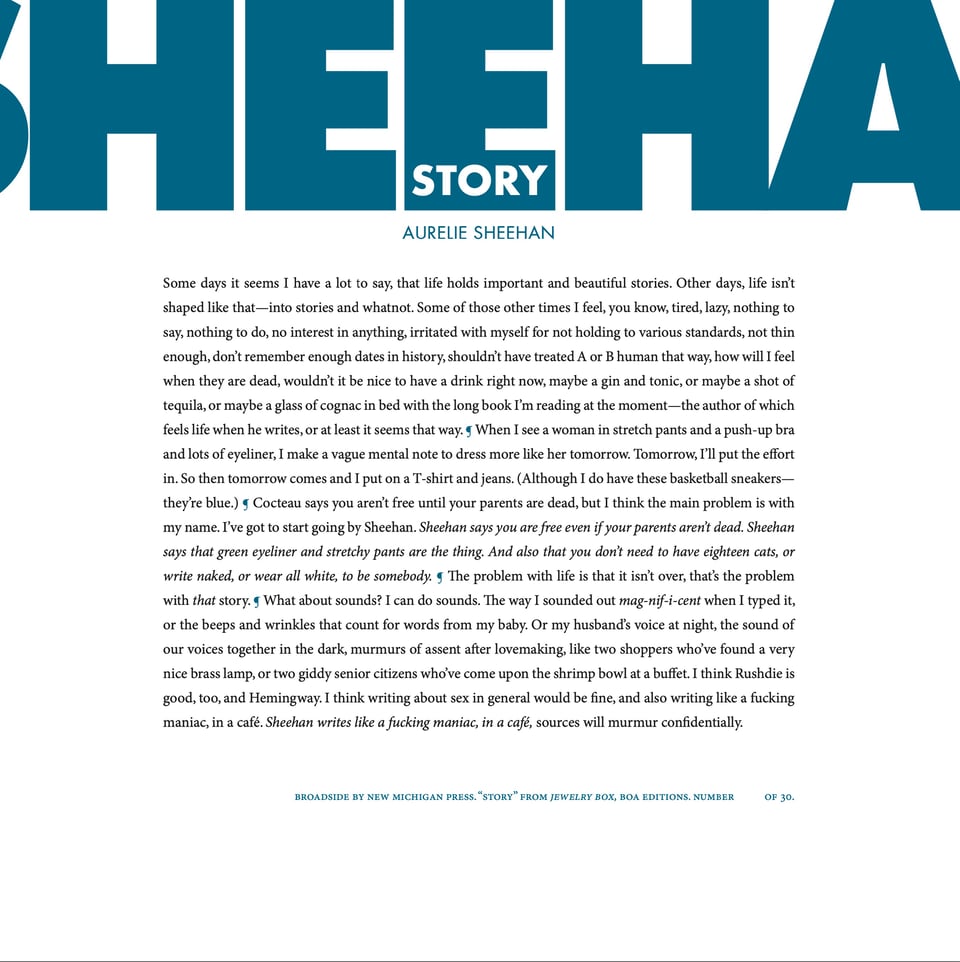
My friend Bea invited me to participate in the Aurelie 30 for the first time last year—it’s run by a professor of hers—and I was already writing the poem a day with Nicole, so why not add one more. But also I love any kind of ruse to get me writing, even better if it’s with other people.
You don’t have to finish everything you start, but try to at least finish some, writes Ander Monson in the very loose guidelines. “It’s supposed to be a little bit hard.”
Ander, author/University of Arizona MFA professor/Aurelie’s friend, started the project as a way to channel his grief over Aurelie’s death into something “that I think she would have approved of.”
Aurelie loved generative writing projects, Ander told me.
He wrote in an email:
For some years she taught a short novel writing workshop at UA’s MFA program in which students both read a bunch of short novels and also wrote short novels. It was less a workshop with a heavy focus on close reading and giving feedback on each others’ work than a collective work group, which impressed on me that there are many different ways to think about what we can do for each other as writers. One of them is simply being there to witness our collective work and focusing on generating pages, on forward momentum, because THAT, not endlessly fussing over one chapter or essay or story, is how you write a book.
I loved the idea that one of the things we can do for each other as writers, as people is to be there to witness our collective work. Because isn’t that what so much of love is? The living alongside?
A direct line to her artist brain
Outside of this monthly sprint, I rarely write poems.
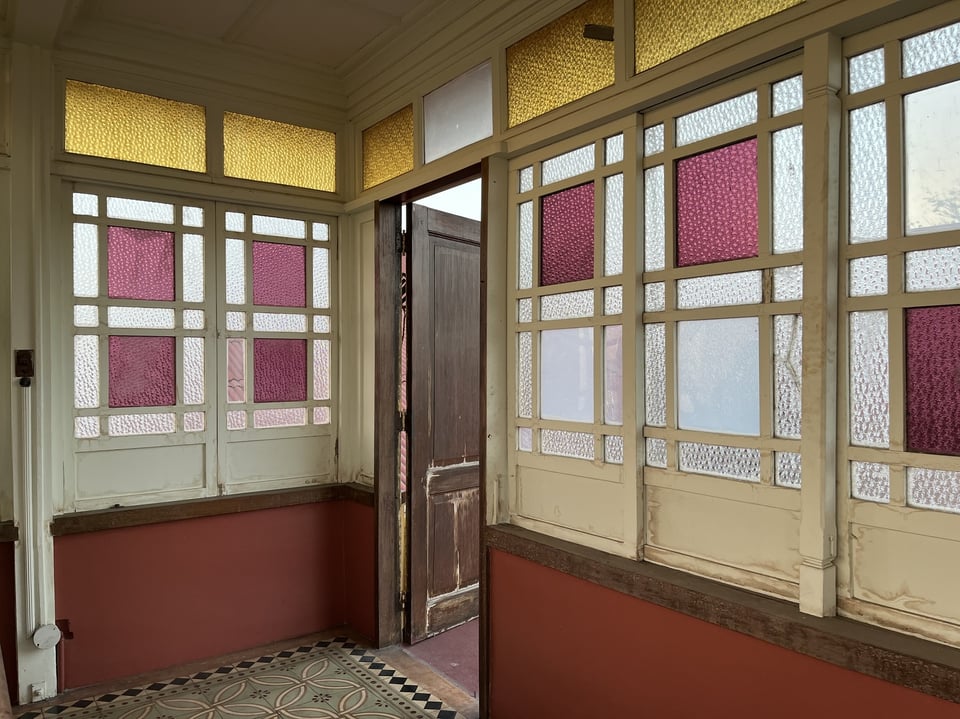
But after just one week of the daily project, which I wouldn’t have done this year without Nicole’s prompting, I notice my body orienting toward what might become one: the tiniest house lizard on the stairs, persimmon window panes, the way I couldn’t make eye contact with the hot guy at the gym because my glasses are so old. The poems are for her, but they’re also for me.
Each morning, I wonder what I’ll find in the doc. A piece Nicole wrote with a few other friends, or one inspired by the memory of an unhinged boss and what her car smelled like (rotten milk).
I marvel at this direct line to her artist brain, feel a little jealous that someone who’s so good at seemingly everything—organizing for workers’ rights and getting laws passed in City Hall, for one—is also, somehow, of course, a beautiful writer.
I don’t often get the full story behind what’s in the doc. Why Nicole remembered that specific moment, or where she and the guys were sitting when they wrote one together, whose idea it was to share in the act. It’s an alternative chronicle of her day, one I couldn’t get from a memo or a phone call. For me, and also not for me at all.
We witness each other like this, if only for a month, or less (truthfully, the doc shows I gave up halfway through the month last year). I know it feels more precious now since I’m so far away, unable to witness and be witnessed in the ways I’m used to.
But we find other ways to honor our commitments to each other, to ourselves. Come up with new, more elaborate ones, even if they’re hard to keep. It’s supposed to be a little bit hard.
If I may direct you to “The Orange-Fish Heart of the Avalanche,” an essay of Aurelie’s that I returned to again and again last year while doing my first Aurelie 30.
It’s not too late to join this year’s. There’s a delightful “accountability/hype doc” where people share the titles of what they’ve been writing. Details here.
Lastly!!! I’m still glowing over the fact that THEE Ann Friedman, newsletter doyenne, shared my last letter, plus these words about Other Kinds of Intimacy: “I love this newsletter.” Thanks, Ann, and hi to the new folks who found me through it.
Thank you for being here.
Till Sunday again,
Juliana

Add a comment: