
October: Heaven for hikers
Frontenac State Park Association newsletter
October 2026 (Vol. 4, No. 10)
Comments, contributions, compliments, complaints? Reach your newsletter editor at [email protected].
October: Heaven for hikers
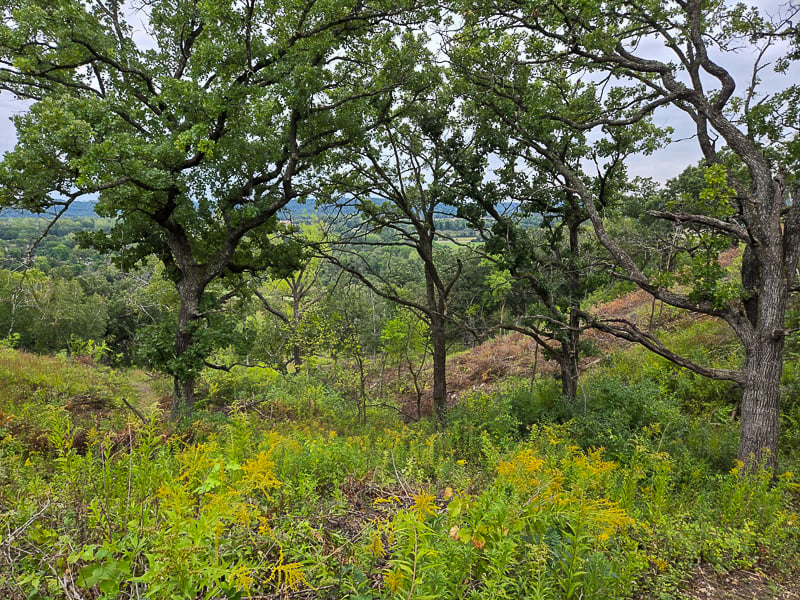
At last, we have gloriously cool weather, and even a break in the drought with late September rains. Not to mention, October is a grand month, as leaves turn and fall, opening up beautiful blue-sky vistas. No wonder it’s historically the busiest month for visitors to Frontenac State Park. Our advice to you, even more avid than usual, is … take a hike!
Here are some excellent events coming up, some of them hikes …
October/November events:
Saturday, Oct. 3, 9 a.m.: Prairie bird walk with Minnesota Master Naturalist volunteers Janet Malotky and Steve Dietz. Meet at the campground shower building kiosk.
Saturday, Oct. 17, 10 a.m: Nature walk with ranger extraordinaire Jake Gaster. Meet at the campground shower building kiosk.
Tuesday, Oct. 20, 10 a.m.: FSPA (and anyone else’s) monthly work day. Park rangers will give us the one-hour assignment then. Join us! Meet at the ranger station.
Saturday, Nov. 7, 9 a.m.: Sand Point bird walk, led by Minnesota Master Naturalist volunteer Steve Dietz. Meet in the little parking lot across from the Sand Point trailhead.
Thursday, Nov. 12, 2 p.m.: Frontenac State Park Association quarterly (and annual) meeting. An important one, in which our goals for 2027 are laid out. Interested in joining us? Attend to find out who we are and what we do! Location: 2533 Eagle Ridge Dr, Red Wing.
Saturday and Sunday Nov. 21 and 22: Frontenac State Park closed for annual deer hunt.
Friday, Nov. 27 (the day after Thanksgiving): Free-admission day at all Minnesota state parks.
A great new place to take that hike
By Pamela Miller, Minnesota Master Naturalist volunteer
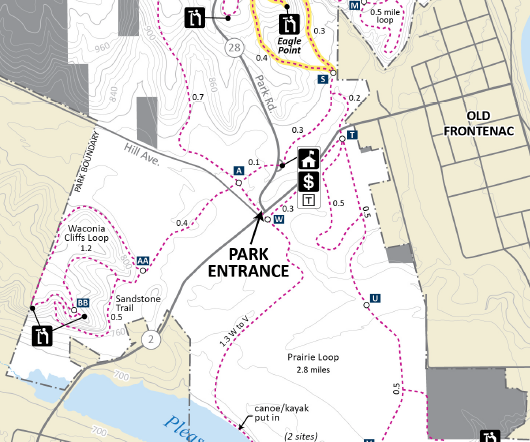
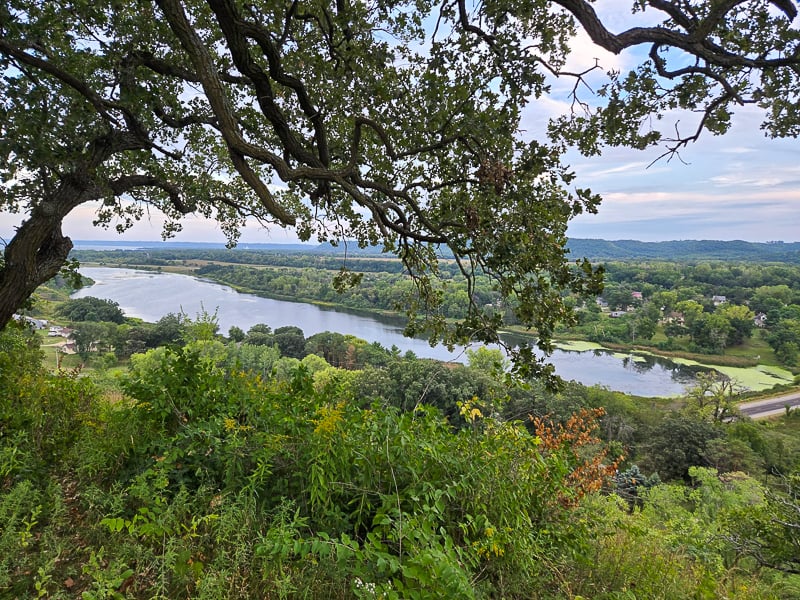
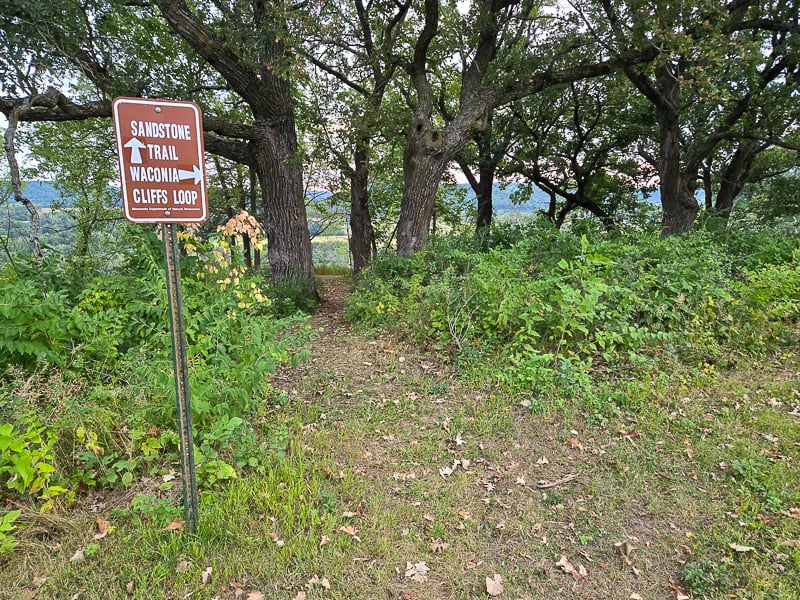
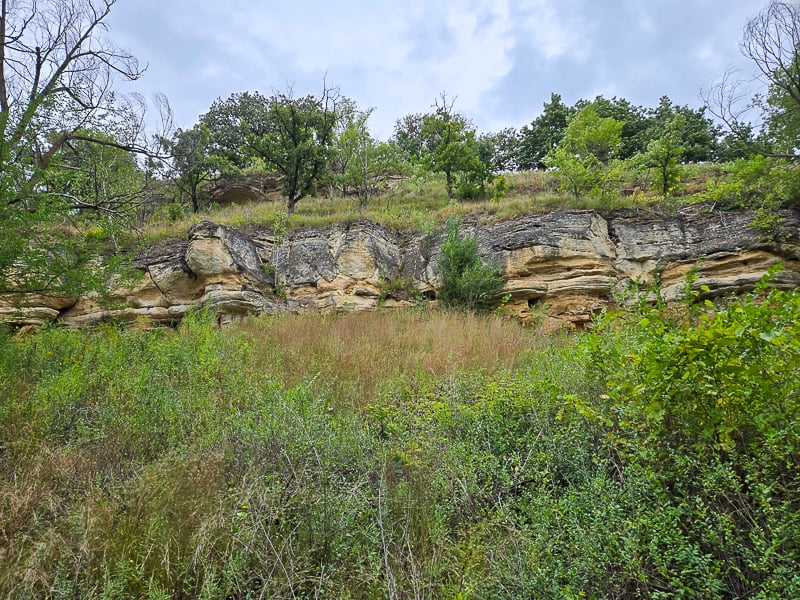
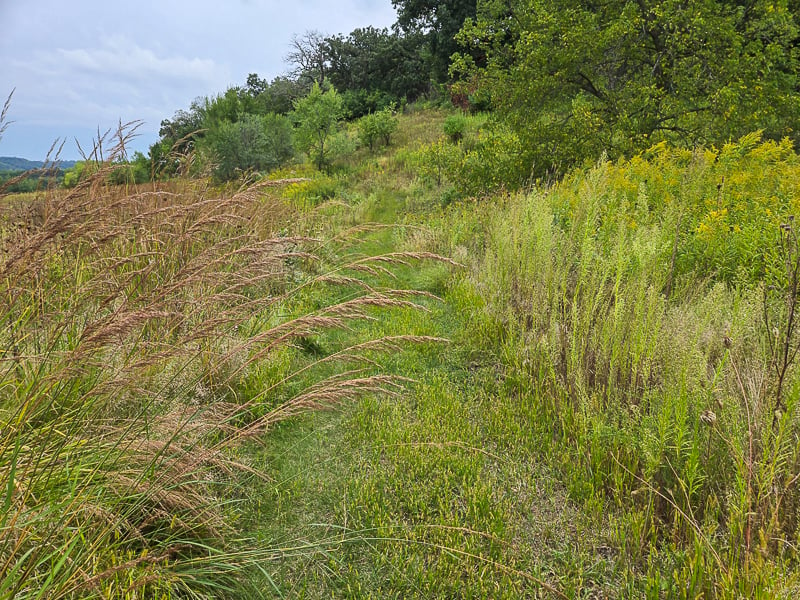
Many a Frontenac State Park visitor is still surprised to learn about the sprawling new-ish part of the park, the Waconia Cliffs/prairie area (once a bison farm) acquired in 2020. Work to add various amenities to the property is still underway, but two wonderful new trails have been created – the Waconia Cliffs Loop and the Sandstone Trail. Both are gorgeous — and excellent workouts. To access the trailhead to both, park along Goodhue County Rd. 2 about ⅓ of a mile west from the park entrance (unless you want to walk west from park headquarters) and head north around the closed gate up the trail toward a now-shuttered structure. Before you reach that structure, you’ll see a trail heading west that will take you to both new trails. (See the trails map below.)
The Waconia Cliffs Loop leads you up a lovely prairie path past a cathedral of oaks and occasional apple trees to amazing overlooks in all directions, then back down the hill through waving prairie grasses. The even newer Sandstone Trail takes you past the limestone/dolomite/sandstone bluffs you can see from County Rd. 2 that you always wanted to examine up close – now you can! It too heads up the bluff, meeting up with the Waconia Cliffs trail near the top.
Park manager Jake Gaster tells us that future plans for the area include removal of the structure and development of a parking area, a day use area with restrooms, an open-air picnic shelter, and a few backpack campsites atop the bluff.
A few photos:
Where the prairie and woods meet: The oak savanna
By Brian Henkel, Minnesota Master Naturalist volunteer
A sure sign of fall is acorns, and this year has brought a bumper crop. Speaking of oaks, let’s continue our journey through Minnesota’s prairies and explore that transitional space between the woodlands and open prairie: the oak savanna.
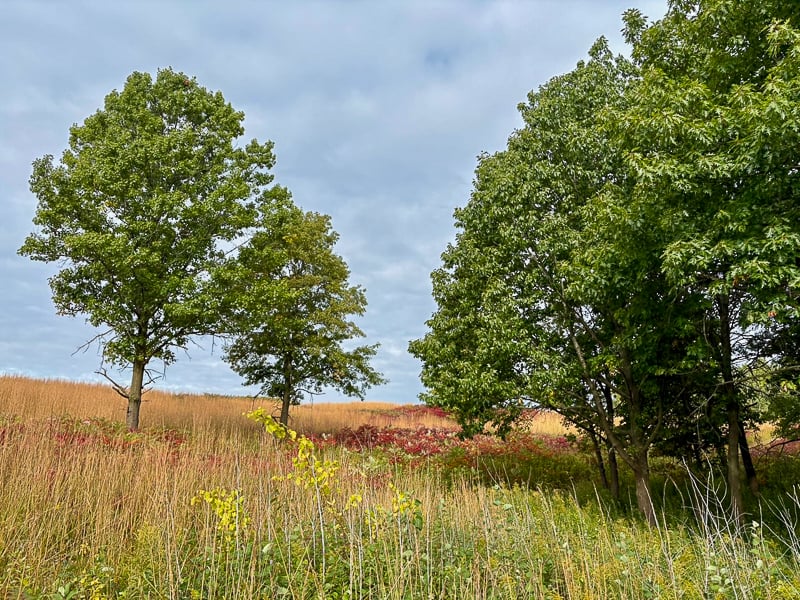
An oak savanna is an open stand of oaks (Quercus spp.) with a scattered canopy above an understory of native grasses and forbs. What distinguishes a savanna from either open prairie or woodland is primarily the density of its trees. There must be enough tree coverage to shape the ecosystem (10%-60%) while allowing sunlight to support the prairie plants below.
Like other prairie ecosystems, an oak savanna depends on periodic fire. A burn helps prevent the encroachment of woody plants, which left unchecked, would eventually turn the savanna into woodland. Mature bur oaks (Quercus macrocarpa) are particularly well suited to this environment because their thick bark protects them from fires that historically swept through the prairies.
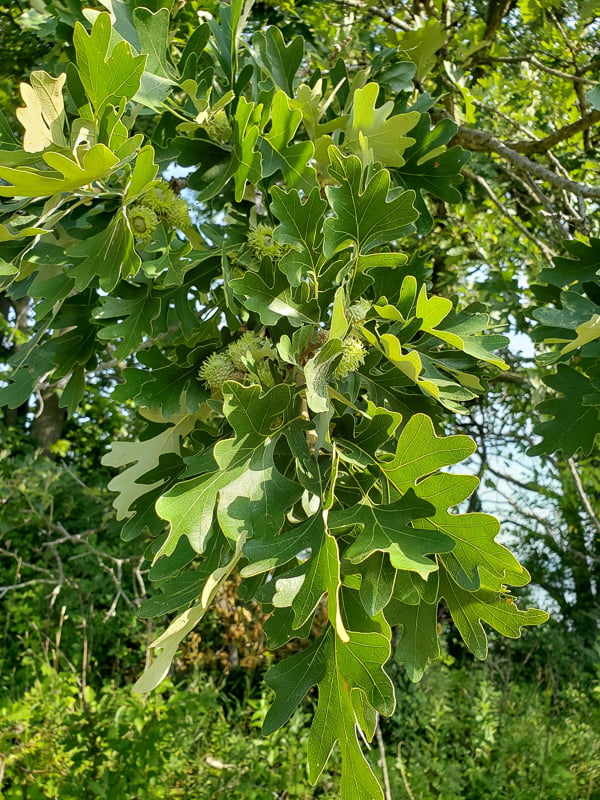
This blending of prairie and woodland makes oak savannas both unique and important. The combination of mature trees, open ground, grasses, and flowering plants creates valuable nesting and feeding habitat for many mammals, insects, and birds. Notably, the red-headed woodpecker thrives in oak savannas, though sadly their numbers are dwindling. (See more about Red-headed Woodpeckers in the park in our January 2025 newsletter.)
As with all Minnesota native prairies, today only a tiny fraction of Minnesota’s original oak savanna remains. That makes the restoration work underway at Frontenac State Park especially worth highlighting. Imagine what it takes to restore an oak savanna from former cropland. It is an exercise in patience:
Establish native grasses and forbs.
Plant young oak trees.
Control invasive and competing woody vegetation.
Introduce a regular schedule of prescribed burns while protecting young oaks until they are large enough to withstand fire.
Continue land management, not for a few years, but for decades.
In the meantime, one of the best places to see oak savanna at Frontenac State Park is between intersections J and K along the Hiking Club Trail. Its tree canopy may lean toward the denser end of the savanna spectrum, but this area is under active management to encourage the open character and diverse understory that make oak savannas such an important part of the park’s prairie ecosystem.
Knowing that this work is underway, guided by talented park staff and supported by dedicated volunteers, gives us one more reason to appreciate Frontenac State Park. As you walk the trails and find yourself among large oak trees and tall native grasses, you are in one of Minnesota’s rarest landscapes.
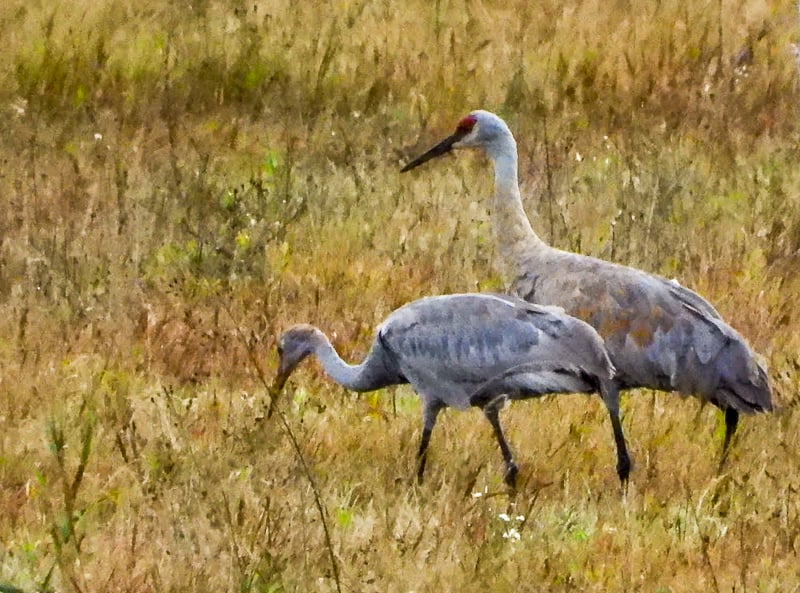
Birdnote: What’s the gullabaloo?
By Janet Malotky, Minnesota Master Naturalist volunteer
As I write this note, dozens of gulls swoop over Lake Pepin or bob in the water. At this time of year, these are all or mostly Ring-billed Gulls, so named because of the black band encircling their yellow bills. They are migrating to the southern United States and Mexico for the winter after summer breeding in Canada and the far north of the U.S.
Ring-bills don’t breed in southeastern Minnesota, but there is a massive breeding colony of thousands of birds on Interstate Island in Duluth. This is a human-made island of dredge sludge that contains the perfect flat, gravelly, predator-free landscape they need for creating their ground nests and tending their hatchlings. But even though they don’t nest here, they are so numerous during the long periods of migration in both spring and fall that they seem like permanent residents. A few will even stick around until the lake freezes over.
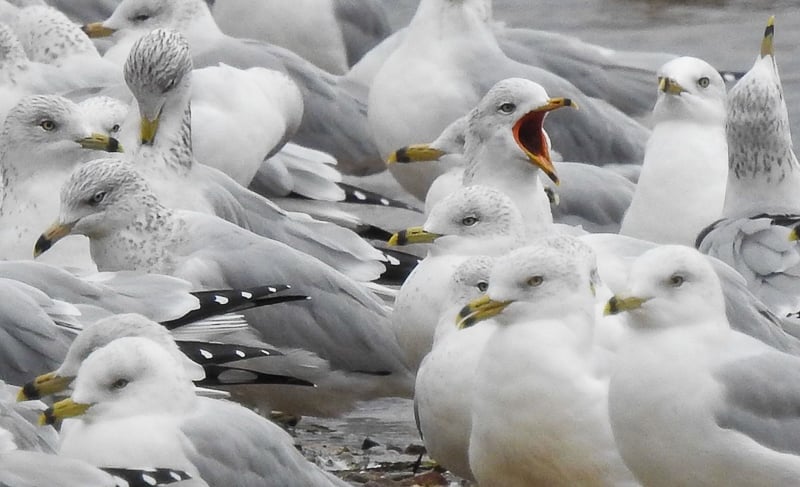
Because we see (and hear — they are noisy!) Ring-billed Gulls so frequently, it’s hard to imagine that they were nearly wiped out between 1850 and 1920 due to hunting for hat-making enterprises and habitat loss. Fortunately, since passage of the Migratory Bird Act of 1918 afforded them some protection, they have largely recovered across the United States and Canada.
Their recovery has complex underpinnings, but a significant contributor is their adaptability to human-impacted landscapes (like the human-made island in Duluth) and their indiscriminate palates. They’ll eat just about anything: fish, insects (which they can catch on the fly — hence the swooping over the lake), invertebrates (creatures without backbones like worms and crayfish), eggs and nestlings of other birds, dead things, and all manner of people-food, be it the sandwich you’re about to munch at the beach, french fries dropped in the parking lot, or trash at the landfill. They are excellent scavengers and thieves.
Where do they hang out besides Lake Pepin? The aforementioned town dumps, parking lots, and beaches. Also lakeshores and ball fields. A good place to see them in Frontenac State Park is at Sand Point, where they crowd the Point at this time of year, usually mixed with American White Pelicans.
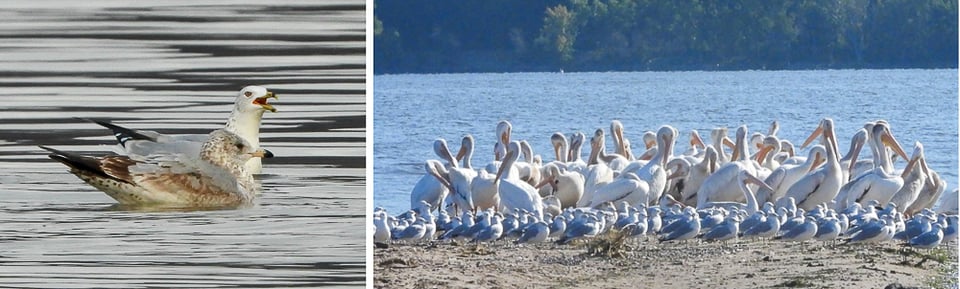
Sometimes you’ll see other interesting birds tucked in with them on the Point: assorted shorebirds, terns, and other kinds of gulls. We should note, however, that none of the birds will be seagulls. Although many folks use the term, technically there is no such thing as a seagull, especially not Ring-billed Gulls, who hang out so often by fresh water rather than the sea. They are all just gulls of one kind or another.
There are 52 species of gulls worldwide of which 19 have been recorded in Minnesota. Only three species breed in Minnesota though, the Ring-billed Gull, the American Herring Gull (much larger, with pink legs and a red dot at bill’s end rather than a ring) and Franklin’s Gull (smaller, with a black head and legs, and red bill during breeding season). Even though those three sound easily distinguishable, they are not. Gulls take years to get their adult coloring and they change significantly from season to season. The in-between and non-breeding stages are confusing for many of us who are trying to learn more about what and who we are seeing. And the other types of gulls who show up occasionally confuse things further. Ugh! Fortunately, gulls are fun to watch no matter what kind they are. Just be sure to hang onto your sandwich.
Notes from the field: The freshwater drum — an unlikely hero?
By Steve Dietz, Minnesota Master Naturalist volunteer
I should state up front that my primary fishing experience is one week every year in the Quetico — the Canadian side of the BWCA. It’s fun and fish are tasty, but I claim no particular expertise, and you should probably take this all with a grain of salt and perhaps some chips with malted vinegar.
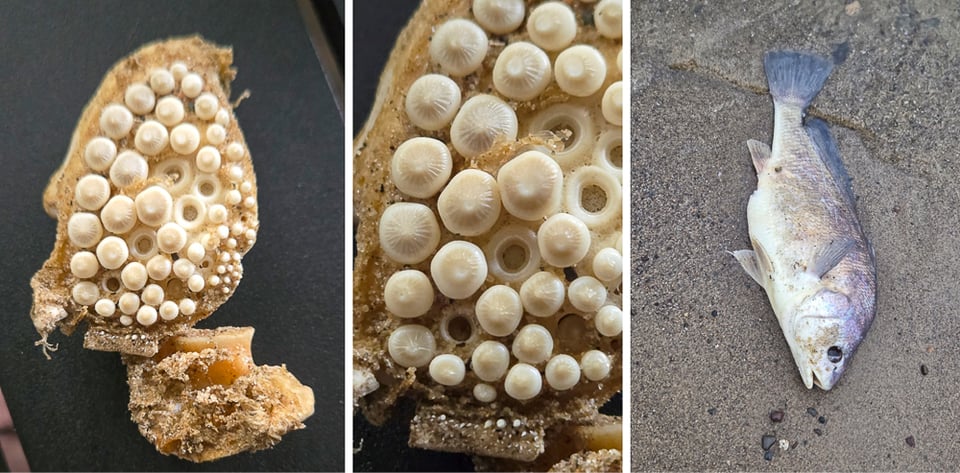
Walking along Sand Point recently, I picked up an odd something that looked like a slightly hallucinogenic vision of a field of bony mushrooms. When I popped an image into iNaturalist, the AI had no hesitation: freshwater drum was the sole possibility provided. Even though it didn’t look like any of the freshwater drums I had recorded washed up in other years, I accepted the suggestion and asked what the image was of specifically. The answer from a human reviewer quickly came back: pharyngeal plate.
This didn’t exactly enlighten me, so I decided to trawl the interwebs for more info.
Freshwater drum fish (Aplodinotus grunniens) have two sets of “teeth,” essentially. The externally visible, upper set are more or less what you would expect to find on many fishes. Behind these teeth, however, is a pair of fused plates that contain the aforementioned field of mushrooms, which is actually a grinding mechanism like a nutcracker, which the drum uses to digest shells and other hard-bodied calories. These molar-like pharyngeal teeth are not unique to drums, but only a few North American fish have them and none of this size. Hence, presumably, iNaturalist’s ability to ID the specimen so authoritatively.
Freshwater drums’ shell-grinding capabilities lead to a tantalizing possibility. They eat mollusks, right? Non-native zebra and quagga mussels are persona non-grata in the Mississippi basin — or almost anywhere in North America — right? Perhaps the crushing capabilities of our plentiful drums can help out with our too plentiful zebra mussels?
This possibility was studied in the Great Lakes in the 1990s, a decade after quagga and zebra mussels were first introduced (unintentionally), but the evidence gathered at the time couldn’t verify such a hypothesis — and literally trillions of these mussels have infested our Great Lakes since then. A study published this past June in the Journal of Great Lakes Research, however, concludes that freshwater drum may be eating more zebra mussels than reproduce annually in one part of Lake Erie. As stated in a report of the research: “This suggests that drum are consuming enough mussels to not only keep up with their high annual production, but also to reduce their standing biomass. While other factors like low oxygen levels and high temperatures may also have had a role in the decline of dreissenid mussels in Lake Erie’s West Basin, the evidence points to our native freshwater drum as an unlikely hero in the fight against Great Lakes invaders.”
There is still much that is unknown about the interactions of non-native species in complex environments, but according to a 2008 report from the DNR on Lake Pepin, freshwater drum “consistently ranked #1 by raw abundance among all fish over the five-year window 2004–2008 — well ahead of common carp, channel catfish, walleye, and sauger.” Can they help us eat our way out of a crisis? At least make it more digestible? Who knows? Maybe?
It is fascinating to learn more about some of the environmental factors at play on the shores of Frontenac State Park. Thank you for joining me down this month’s rabbit hole. Or should I say pharyngeal gullet?
iNaturalist moment: False boneset is truly deepset
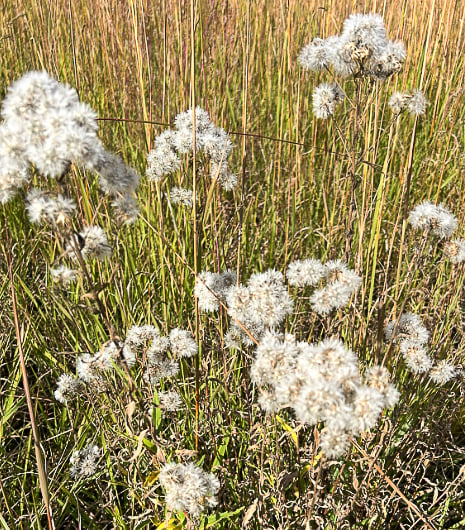
— Steve Dietz, iNaturalist ambassador
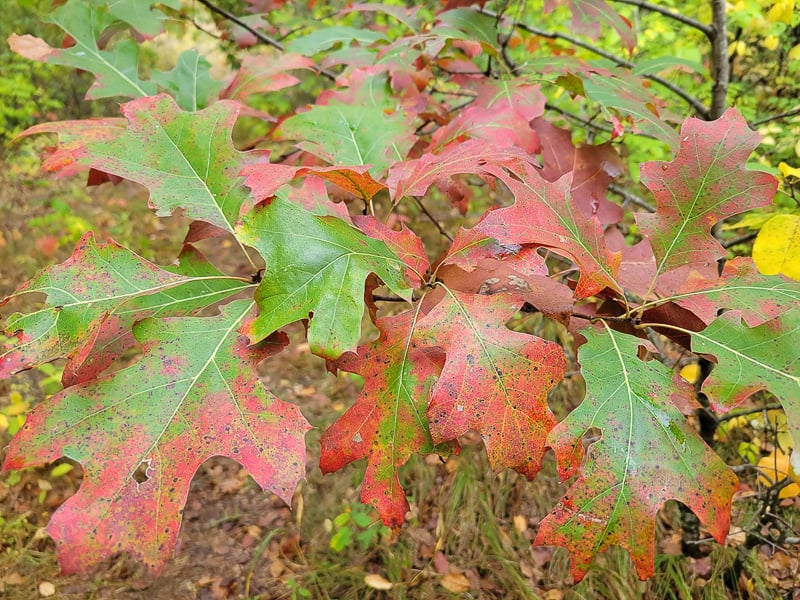
Poem of the month
“All Hallows”
By Louise Gluck
(American, 1943-2023; used by permission)
Even now this landscape is assembling.
The hills darken. The oxen
sleep in their blue yoke,
the fields having been
picked clean, the sheaves
bound evenly and piled at the roadside
among cinquefoil, as the toothed moon rises:
This is the barrenness
of harvest or pestilence.
And the wife leaning out the window
with her hand extended, as in payment,
and the seeds
distinct, gold, calling
Come here
Come here, little one
And the soul creeps out of the tree.
Interested in joining the FSPA?
If you are a member, thank you! You help us pursue our mission of supporting this treasured park in myriad ways.
If you’d like to join us, we’d be honored to have your support. Dues are $25 per year for an individual, $35 for household membership. Here’s a link with signup information.
A reminder that joining us occasionally to help with volunteer efforts is awesome too, even if you’re not a member. The FSPA’s goals are to support Frontenac State Park activities and share our love of this beautiful park with as many people as possible.
To sign up to regularly receive this free, spam-free monthly newsletter, click on “Subscribe” below. Feel free to send questions or comments to your newsletter editor at [email protected]. Questions about the FSPA? You can reach FSPA president Steve Dietz at [email protected].
Handy links for more information and education
Frontenac State Park
Frontenac State Park Association
If you take pictures in the park, tag us on Instagram
Frontenac State Park bird checklist
Frontenac State Park on iNaturalist
Parks & Trails Council of Minnesota
Website for our township, Florence Township
Minnesota Master Naturalist programs
Red Wing Environmental Learning Center
Lake City Environmental Learning Program on FB
Visit Lake City
Zumbro Valley Audubon Society
Bruce Ause’s Wacouta Nature Notes blog
Marge Loch-Wouters’ Hiking the Driftless Trails blog
Frontenac State Park staff
Jake Gaster, park manager; Amy Jay, assistant park manager; Amy Poss, lead field worker.
Parting shots
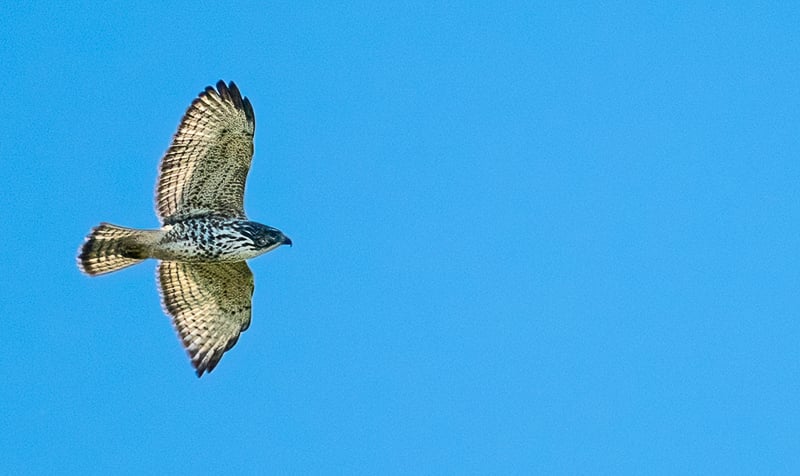
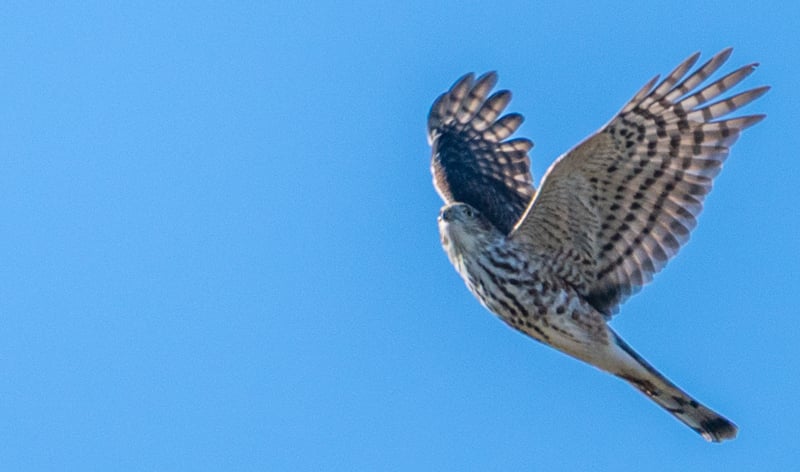
Thank you, readers and park visitors!
This is Volume 4, No. 10 of the Frontenac State Park Association newsletter, which was launched in April 2023.
Here’s where you can browse the full archives of this newsletter.

