
September: Slowly, the seasons turn
Frontenac State Park Association newsletter
September 2026 (Vol. 4, No. 9)
Comments, contributions, compliments, complaints? Reach your newsletter editor at [email protected].
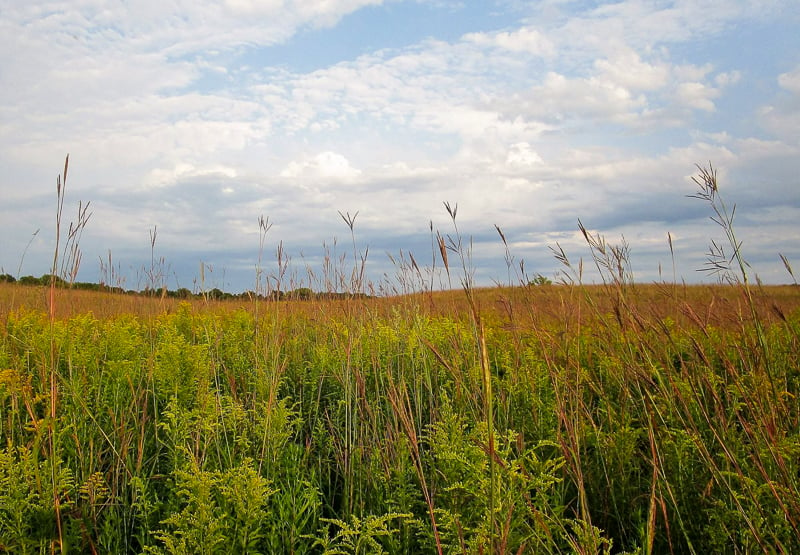
September: Slowly, the seasons turn
Your Frontenac State Park Association newsletter editor is typing this while lolling on my Old Frontenac screen porch with ears tuned to the sounds of a late-August night (after listening to Dolly Parton songs all day, sigh). These night sounds include brisk crickets, katydids and tree frogs; the mournful long-long-short-long calls of trains two or three miles off, which trigger the wistful howls of their coyote acolytes; the brisk, urgent hoots of great horned or barred owls, and the occasional spooky death cry of a cottontail rabbit in the jaws of the aforementioned coyotes, foxes or owls. (I’ll say it again – rabbits are the potato chips of the wild – they feed so many wild creatures, and yet there are always plenty of them left.)
Ah, here comes September. Who doesn’t welcome it, after yet another excessively hot, humid, dry, smoky summer? May it bring us cooler, wetter weather! But whatever it delivers, nature lovers, Frontenac State Park remains our, and your, pride and refuge. Visit it all you can, with family and friends or on your quiet own. Here are some events being offered by your Frontenac State Park Association friends, in case you’d like to learn something new in the company of kind and knowledgeable people:
Saturday, Sept. 5, 9 a.m.: Sand Point bird walk with Minnesota Master Naturalist volunteer Steve Dietz. Meet at the little parking lot across from the Sand Point trailhead.
Sunday, Sept. 6, 11 a.m.: Live peregrine falcon presentation with biologist and wildlife educator Jackie Fallon of the Midwest Peregrine Society. Meet at the ranger station.
Saturday, Sept. 12, 10-11 a.m.: Park manager Jake Gaster leads a nature walk. Meet at the kiosk at the campground shower building.
Tuesday, Sept. 15, 10-11 a.m.: FSPA volunteers’ work hour: Assignment to come from our trusty park rangers. Join us if you’d like to help! Meet at the ranger station.
Saturday, Sept. 19, 11 a.m.: Fall fungi walk with Minnesota Master Naturalist volunteer Pam Miller. If it rains, we’ll find mushrooms. If not, we’ll just have a nice little walk. Meet at the campground shower building kiosk.
Saturday, Oct. 3, 9 a.m.: Prairie bird walk with Minnesota Master Naturalist volunteers Janet Malotky and Steve Dietz. Meet at the campground shower building kiosk.
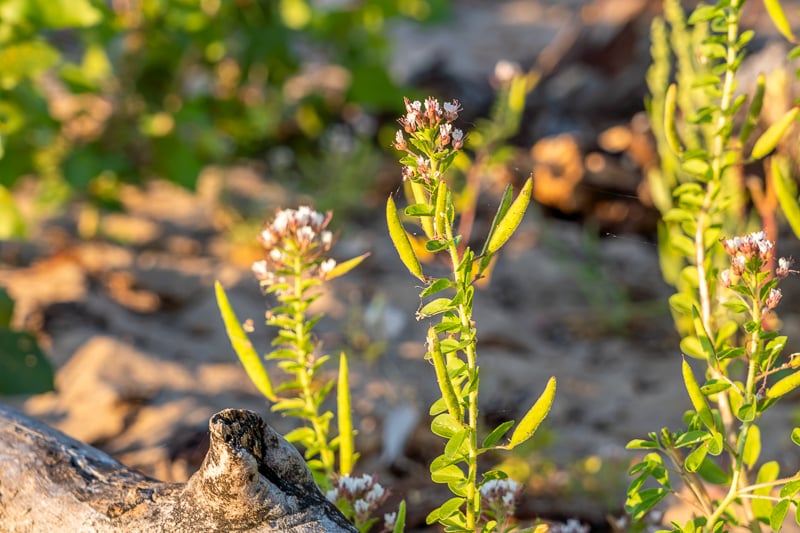
Park updates from ranger Jake: This news may rattle you!
By Pamela Miller, Minnesota Master Naturalist volunteer
At the FSPA’s quarterly meeting on Aug. 20 (whose audience included two charming, sleepy dogs, neither of whom, so far as we know, has paid the modest FSPA member dues for the privilege of attending these scintillating meetings), park manager Jake Gaster peppered us with news tidbits, including these:
Attendance: The number of total Frontenac State Park visitors so far this year, 108,000, represents a dip for reasons you can guess – this summer’s exceptional heat and humidity, not to mention wildfire smoke. But it’s still above attendance back before the COVID era (when park attendance skyrocketed). It’s hard to hike or enjoy a campfire in tropical weather, whew. But overnight visitors (campers) weren’t deterred — so far this year, the park has had 11,500, the highest ever recorded.
New trails, new maps: As trail development continues on the newest park land (north of Goodhue County Road 2 and west of the main park entry road and Hill Avenue), new trail signs and maps will be needed; you can expect to see them in a few weeks. There may also be slight changes to existing trail intersections. What?? This venture appears to be designed solely to drive some of us FSPA members who have those alphabetical intersections memorized mad, quite mad! On the other hand, what’s more fun than a new map? Bring it on! We’ll adjust.
“Prairie Dreams” event updated attendance: More than 2,500 people – yes, you read that right — came up to the park on that beautiful Saturday in June to see the artful “Prairie Dreams: Trail of Quilts” exhibit and frighten the wildlife. Many of you have asked us if it will happen again. As soon as the FSPA’s awesome Arts Committee recovers from this one, they will ponder that question.
Small herds of headstrong goats have once again been busy devouring invasive buckthorn near Rattlesnake Bluff. Still no sign of the enigmatic White Lightning, so we can probably safely and sadly say that he or she has passed through the Great Veil into legendary status.
Coming soon … an amphitheater?: Jake and assistant park manager Amy Jay are meeting soon with an architect who is putting together conceptual plans, including a cost estimate, for a new amphitheater in the main picnic area. Stay tuned for more as it develops.
Pleasant Valley Lakelet (Frontenac pond): Our favorite pretty pond, some of which is Frontenac State Park territory and some of which is township property, continues to shrink amid this year’s relentless drought, as is evident to anyone driving by. But work is underway to bring it back to better health. Largely thanks to the generosity of the Frontenac Sportsman Club, engineers are scoping out what kind of dam is needed at its southern end, and who knows, maybe the busy if unpredictable local beavers will return to help us out. Despite the pond’s low tide, fishing is still good there — we have reliable reports that a local kid recently caught an impressively large northern off the dock. The pond has at least two natural springs feeding it, so it’s not going away anytime soon.
A dream trail nears reality: The long, careful, but ultimately trusty process that will lead to Frontenac State Park acquiring some of the beautiful prairie/oak savannah land behind the former Villa Maria continues. At some point soon, a state park trail will cross that land via an easement, connecting the park’s prairie stretches south of Goodhue County Rd. 2 with the Sand Point area. That trail will head down the hill southeast of the Villa and a bridge will serve as a boardwalk across the Wells Creek floodplain area. Jake describes this project as a dream he’s harbored for a long time. We describe it as a long, lovely hike in the park.
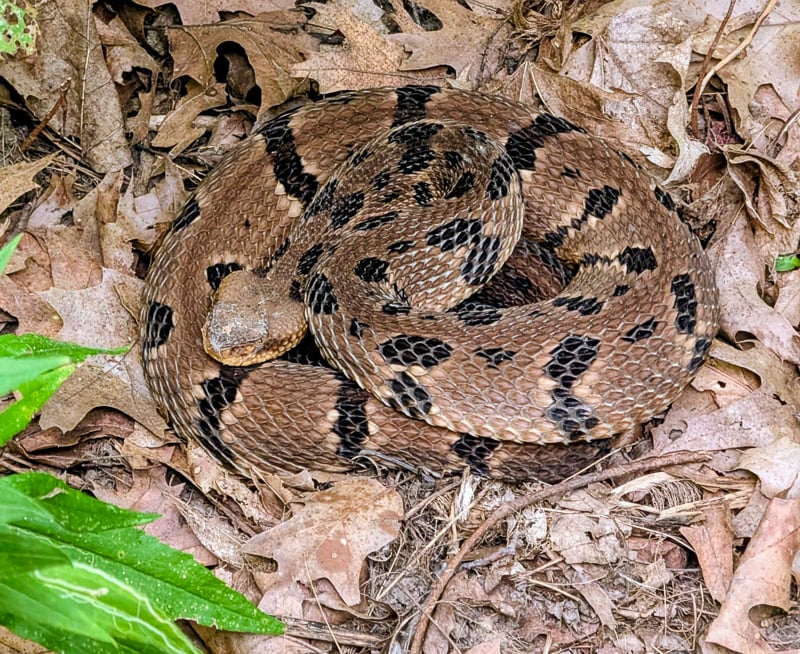
Whoa now, we saved the best for last! On Aug. 14, Jake and the park crew got an interesting call from campers who claimed to have spotted an endangered timber rattlesnake in their campsite. Now, that’s not an unheard-of report, but usually the snake in question turns out to be a fox snake, an impressive but harmless rattlesnake mimic. Jake and his trusty crew, perhaps a little more relaxed than they should have been, moseyed up to remove said fox snake from the campsite, and lo if it wasn’t a real timber rattlesnake! They’re endangered in Minnesota, and the last confirmed sighting in the park was decades ago. (Full disclosure: We’ve heard several anecdotes of sightings through the past few years, but nothing confirmed by park staff. Also, when your newsletter editor told her Friday morning Whistle Stop breakfast companions, a tough crew of jaded old fellas, about this exciting sighting, they looked at each other and rolled their eyes under their feed store caps, claiming to have frequently seen the precioussss reptile on their own rural, rocky Wabasha or Goodhue County lands. But we digress.) Jake said it was a startlement to find a rattlesnake in the campground, which is shaded and not on a south-facing sandstone bluff of the type they prefer. It slid away, and no one was hurt, just … excited! And listen, Mabel, before you dis rattlesnakes, remember how important native snakes are in our prairie ecosystem. Among other things, they help keep the rodent population in check. And they were here before we were. And they’re beautiful, in a kind of terrifying way.
Prairie perspectives: More than just wildflowers — the prairie in bloom
By Brian Henkel, Minnesota Master Naturalist volunteer
As summer arcs towards fall, the colors in the prairies at Frontenac State Park continue their seasonal shifts thanks to forbs — the flowering, broad-leaved plants that grow intermingled with grasses in a prairie ecosystem.
The word “forb” came into use among ecologists in the early 20th century as a simple way to distinguish these broad-leaved herbaceous plants from grasses and other grass-like plants. The word has roots associated with pasture or fodder. (Because apparently “wildflower” was too easy? ;-) )
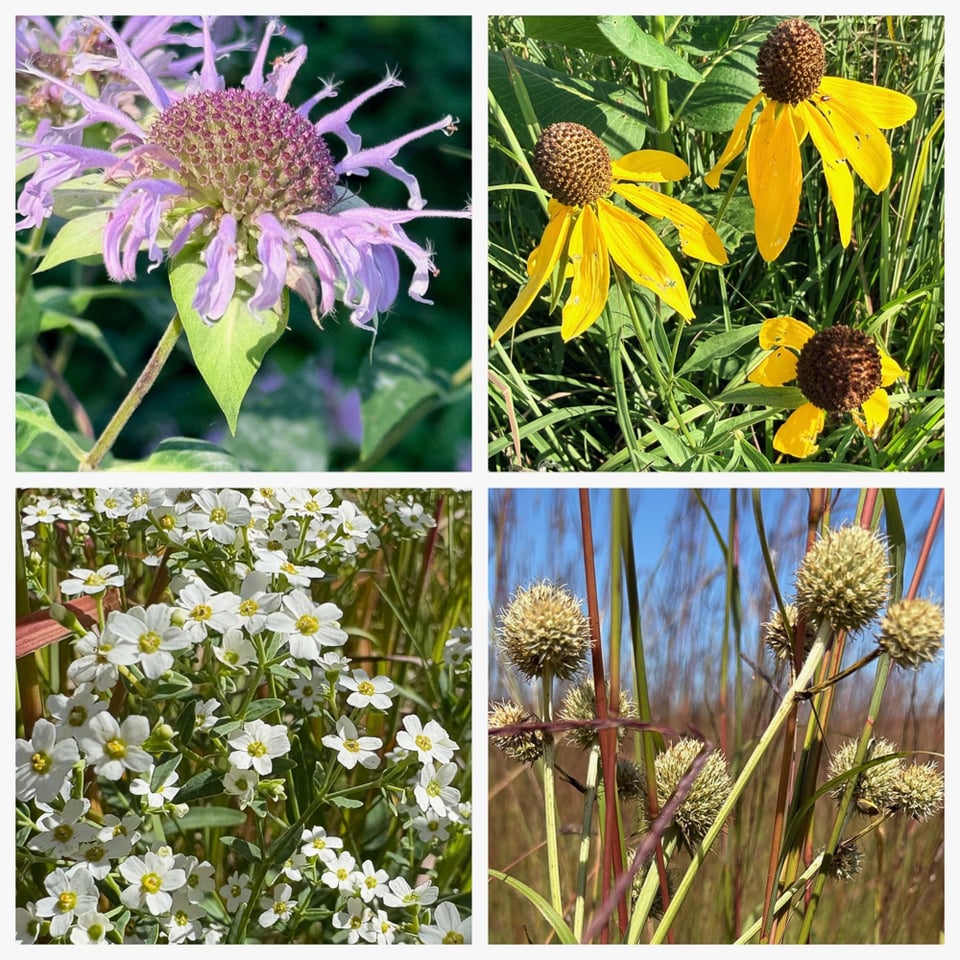
Forbs are a remarkably diverse group of plants with different strategies for surviving and reproducing. Most prairie forbs are perennials, but some are biennials or short-lived perennials, such as Black-eyed Susan (Rudbeckia hirta), while others, like Partridge Pea (Chamaecrista fasciculata), are annuals. Pale Purple Coneflower (Echinacea pallida) develops a substantial taproot that helps it survive dry prairie conditions. Wild Lupine (Lupinus perennis) partners with bacteria in its roots to fix nitrogen. Wild Strawberry (Fragaria virginiana) spreads through above-ground stolons, while Wild Bergamot (Monarda fistulosa) can spread through underground rhizomes. Different plants, different strategies, but the same prairie.
Their bloom times are equally varied. Pasque Flower (Anemone patens) is one of the earliest prairie flowers to appear in spring, while Golden Alexanders (Zizia aurea) provide an important early source of nectar for pollinators. Summer brings the brilliant orange of Butterfly Weed (Asclepias tuberosa) and purple spikes of Prairie Blazing Star (Liatris pycnostachya). As summer gives way to fall, Smooth Blue Aster (Symphyotrichum laeve) and colonies of Canada Goldenrod (Solidago canadensis) continue the display.
But all that color and variety aren’t there just for us to enjoy. Forbs play a critical role in the prairie ecosystem. Their color, fragrance, pollen and nectar attract bees, butterflies and other pollinators. Milkweeds provide essential food for Monarch caterpillars, while late-blooming asters and goldenrods provide nectar when many other flowers have disappeared.
The connections continue throughout the prairie food web. Forbs produce seeds and harbor caterpillars, beetles and other insects that become food for birds and small mammals. Those animals, in turn, become prey for hawks, snakes and other predators. What may look from a distance like a field of colorful flowers is actually a remarkably complex community of interconnected life.
September is a wonderful time to visit Frontenac State Park. Slow down, look more closely, and share in the joy of discovery while observing the beauty of creation around you.
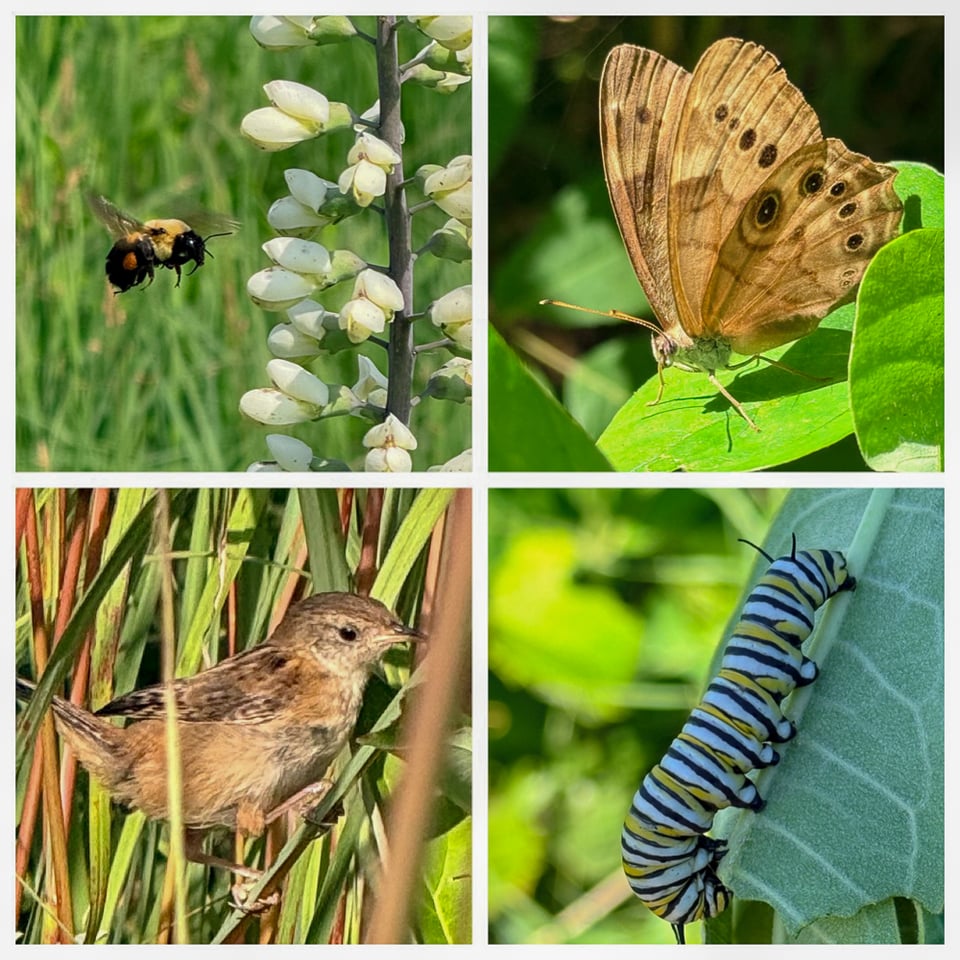
iNaturalist moment: The circle of life
Birdnote: Elusive and quiet, Henslow’s Sparrows are a treat to see
By Janet Malotky, Minnesota Master Naturalist volunteer
Frontenac State Park’s prairies guard a secret. It’s a bird, it’s small, and it’s very hard to find.
Henslow’s Sparrows are classic “little brown birds,” a description given mostly to sparrows that are difficult to distinguish one from the other. Henslow’s are especially difficult because they’re so secretive, scurrying along the ground hidden by tall grasses. They prefer to scurry rather than fly even when escaping perceived danger, so we don’t often get to see them fly, and when they do, they quickly disappear into the grass again.
The best chance of seeing one is in springtime, when the males perch a bit higher on prairie forbs and grasses to “sing” for a mate and establish a territory.
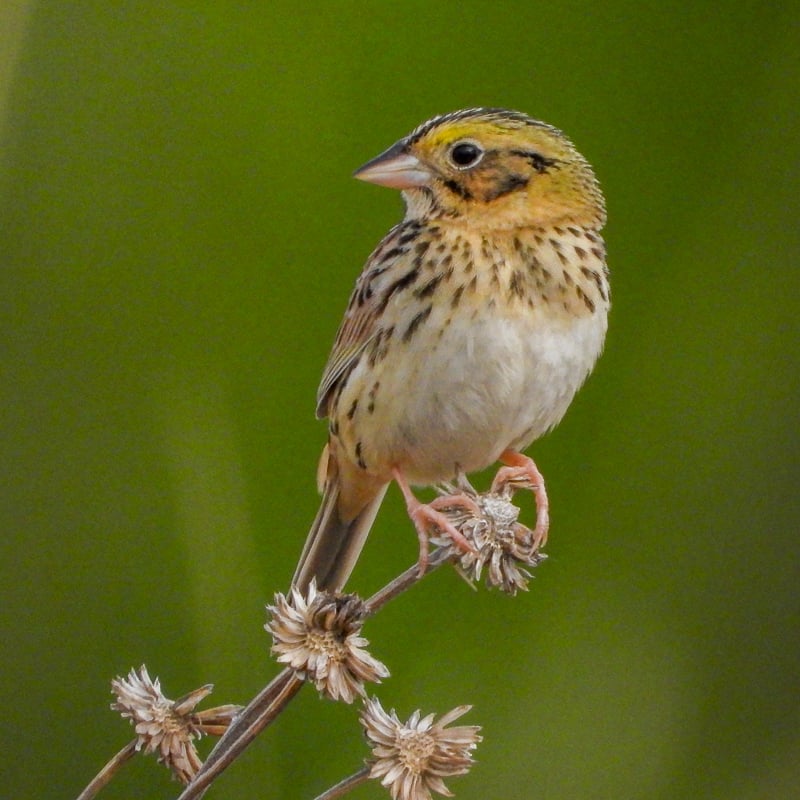
“Sing” gets quotation marks here because the Henslow’s insect-like “song” is barely any help in finding the birds. The quiet two-note sound has been described as a “weak hiccough" (“Birds of the World,” attributed to David Sibley), and “one of the poorest vocal efforts of any bird” (R.T. Peterson, “A Field Guide to the Birds”). When examined on a spectrogram (a visual graph of sound), the song is more complex than expected, but what we humans are able to hear sounds pretty spare. It’s kind of endearing, how much effort they appear to put into such a little sound.
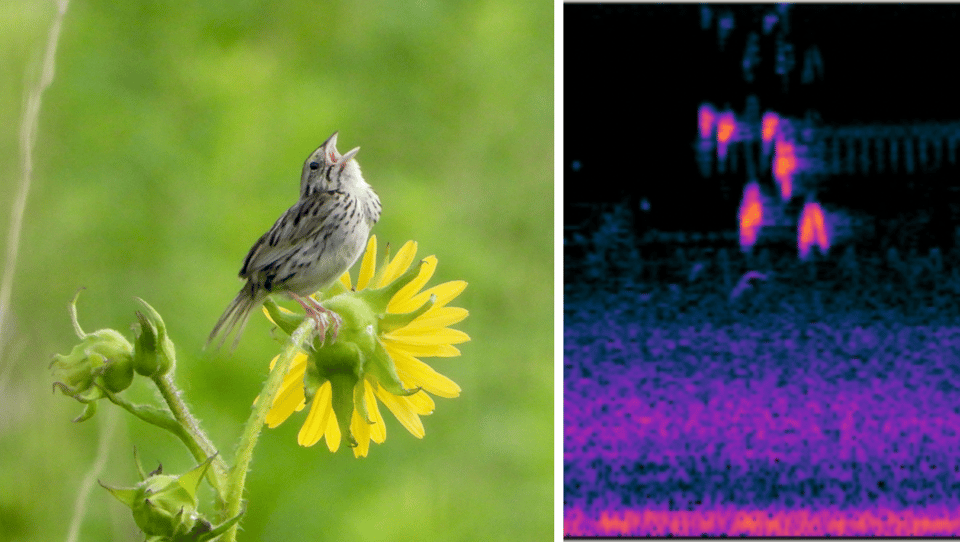
Like all grassland birds, Henslow’s Sparrows have experienced a steep decline in population over the past 50+ years due primarily to habitat loss. The birds nest in accumulated grass debris on the ground in prairies, wild fields, and hay fields, so have suffered from conversion of those spaces to agricultural purposes, especially drainage and row crops. They are also dependent on the insects attracted to the forbs of the prairie for food, and they eat the berries as well. Due to efforts to re-establish prairies across the Midwest, there have been signs of possible recovery in some parts of their range, and so Henslow’s have not been listed as endangered. Nevertheless, they are considered a species of significant concern in Minnesota for whom ongoing conservation efforts are needed to prevent further decline. We are so lucky to have nesting Henslow’s in our park —- one hopeful result of the reestablishment and preservation of the prairie landscape from our heritage past.
Notes from the field: Evolution is amazing … and a little twisted
By Steve Dietz, Minnesota Master Gardener volunteer
Returning from a long trip to the Canadian maritime provinces, I was excited to walk once more in our prairies and see what was in bloom — and what I had missed. 🥲
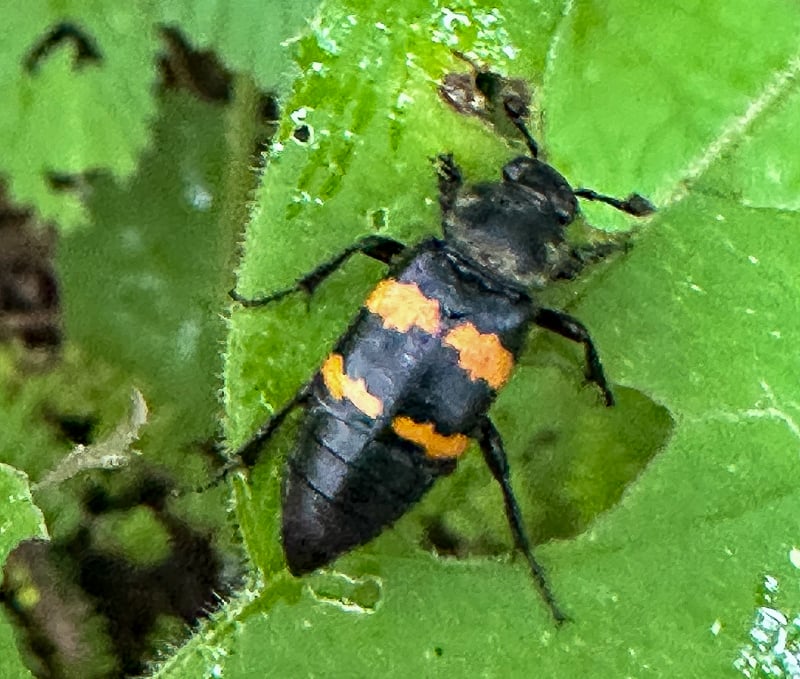
The goldenrods were out in force, big bluestem was over my head, cardinal flowers shining through, pockets of tall and false boneset, flowering spurge, purpley hoary vervain, drooping cutleaf coneflowers and so much more. There were “flutter byes,” as I think of butterflies and dragonflies and bees, but what surprised me was, I came to learn, the goldenrod soldier beetle (Chauliognathus pensylvanicus). Dozens, maybe even hundreds of them were crawling on and flying to many of the flowers. And yes, it was like the onslaught of an army, albeit with no bite.
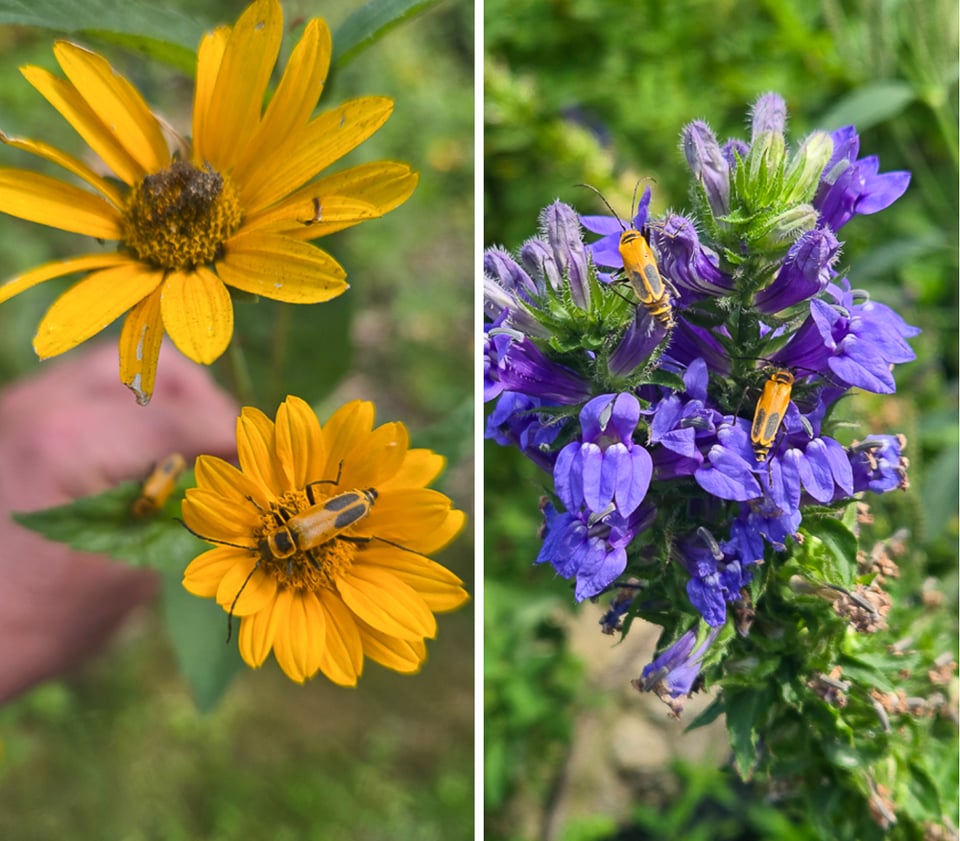
Some species of soldier beetles are bright red, reminiscent of the British red coats of yore, hence the moniker, but the orange and black goldenrod soldier beetle is so-named because it is often, but not exclusively, seen on goldenrod flowers. One study has identified C. pensylvanicus using the flowers of 183 species in 29 families. Another, based on iNaturalist observations, found that goldenrod soldier beetles used yellow flowers less than 25% of the time. So much for nomenclature.
But let’s get to the real question: Are they “good” or “bad”? Evolutionarily (is that a word?) speaking, they are good for themselves, of course. As for human-centered concerns, they are also good. They are pollinators. As they ingest nectar from flowers, eat aphids and other honeydew-excreting insects on those flowers, and often mate on the flowers, pollen is captured and transferred to the next flower tryst. Impregnated females lay eggs in the leaf litter below the flowers, and in the spring larvae feed on insect eggs, including those of some garden pests. (Another reason to consider leaving leaf litter in your garden.) And importantly, they don’t bite humans, although they do defend themselves by producing a white viscous fluid that contains (Z)-dihydromatricaria acid, which acts as a deterrent to many of the beetle’s potential natural enemies.
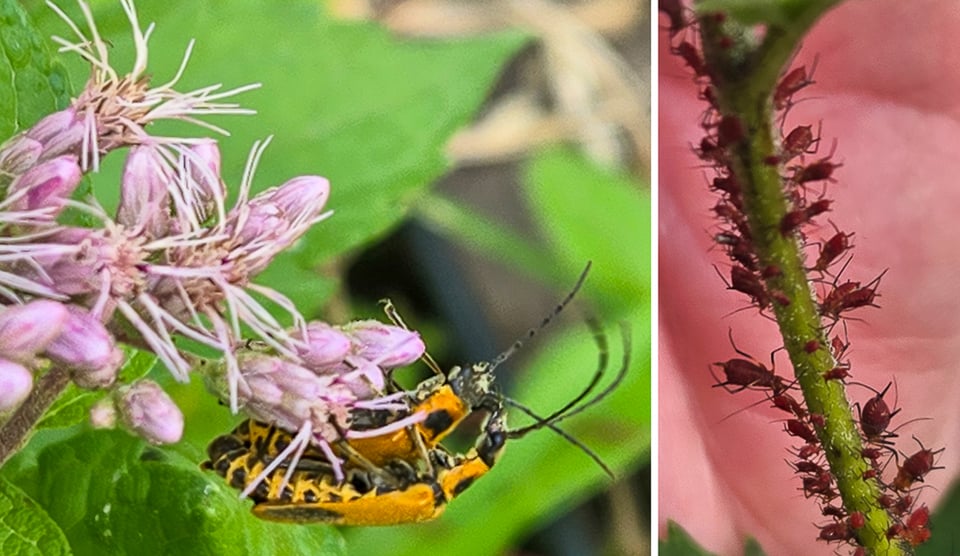
All is not always sunny days for these soldiers, however. Goldenrod soldier beetles can be infected by the fungus Eryniopsis lampyridarum. It takes about two weeks for the fungus to kill its host, and toward the end, it “orders it” — the mechanism for doing this is not well understood — to climb a plant and attach itself to the flowerhead by chomping down on it. Hanging there, the fungus extrudes from the beetle's abdomen, and spores drop to the ground or are passed to other beetles on the flower. But wait, there’s more. About 22 hours before the beetle finally expires, the fungus causes it to spread its wings, as if still alive and kicking, so to speak. This can be a signal — what isn’t? — for a male to mate with it, further spreading the fungus. I know, gross. And evolutionarily spectacular.
Whether walking in the prairie or working in your garden, if you notice an army of goldenrod soldier beetles this fall, hands off the insecticide, take a moment to appreciate the millenia-honed ingenuity of the beetle C. pensylvanicus — and its fungal nemesis E. lampyridarum.
Poem of the month
“STARS”
By Sara Teasdale (American; 1884-1933)
Alone in the night
On a dark hill
With pines around me
Spicy and still,
And a heaven full of stars
Over my head
White and topaz
And misty red;
Myriads with beating
Hearts of fire
The aeons
Cannot vex or tire;
Up the dome of heaven
Like a great hill
I watch them marching
Stately and still.
And I know that I
Am honored to be
Witness
Of so much majesty.
Interested in joining the FSPA?
If you are a member, thank you! You help us pursue our mission of supporting this treasured park in myriad ways.
If you’d like to join us, we’d be honored to have your support. Dues are $25 per year for an individual, $35 for household membership. Here’s a link with signup information.
A reminder that joining us occasionally to help with volunteer efforts is awesome too, even if you’re not a member. The FSPA’s goals are to support Frontenac State Park activities and share our love of this beautiful park with as many people as possible.
To sign up to regularly receive this free, spam-free monthly newsletter, click on “Subscribe” below. Feel free to send questions or comments to your newsletter editor at [email protected]. Questions about the FSPA? You can reach FSPA president Steve Dietz at [email protected].
Handy links for more information and education
Frontenac State Park
Frontenac State Park Association
If you take pictures in the park, tag us on Instagram
Frontenac State Park bird checklist
Frontenac State Park on iNaturalist
Parks & Trails Council of Minnesota
Website for our township, Florence Township
Minnesota Master Naturalist programs
Red Wing Environmental Learning Center
Lake City Environmental Learning Program on FB
Visit Lake City
Zumbro Valley Audubon Society
Bruce Ause’s Wacouta Nature Notes blog
Marge Loch-Wouters’ Hiking the Driftless Trails blog
Frontenac State Park staff
Jake Gaster, park manager; Amy Jay, assistant park manager; Amy Poss, lead field worker.
Parting shots
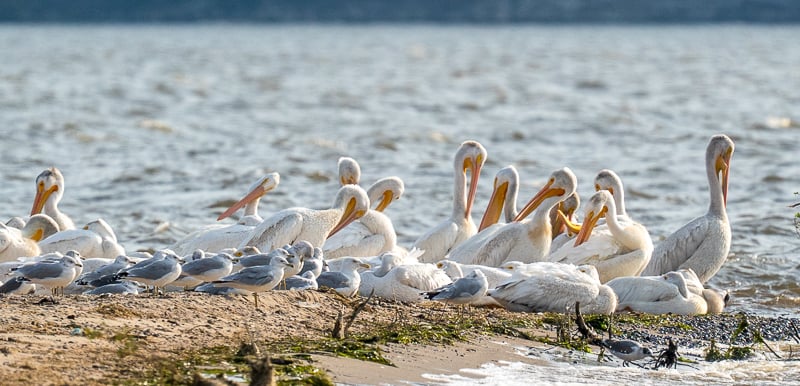
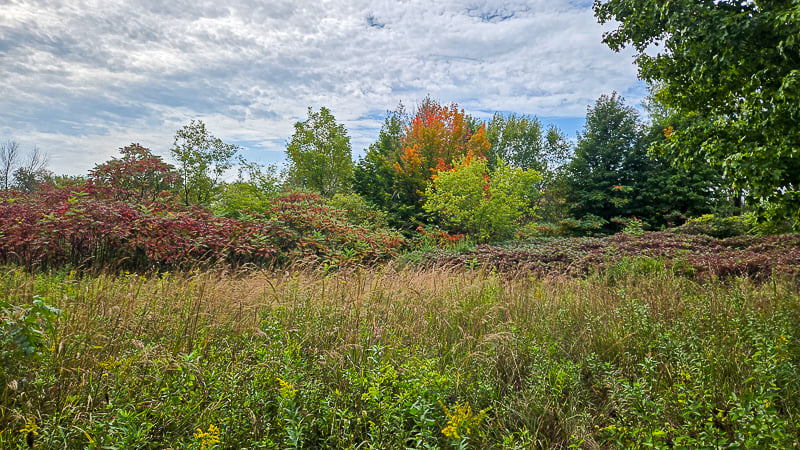
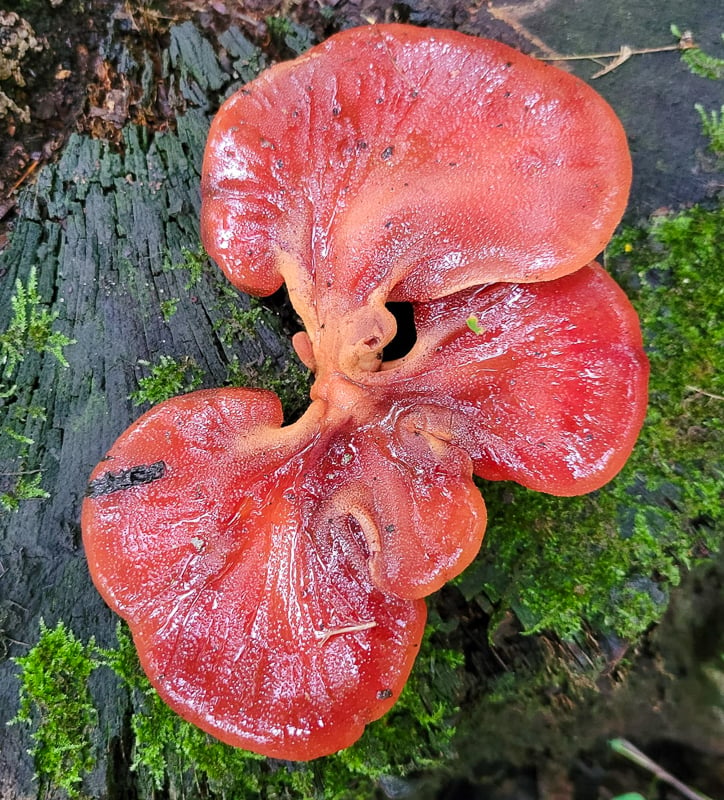
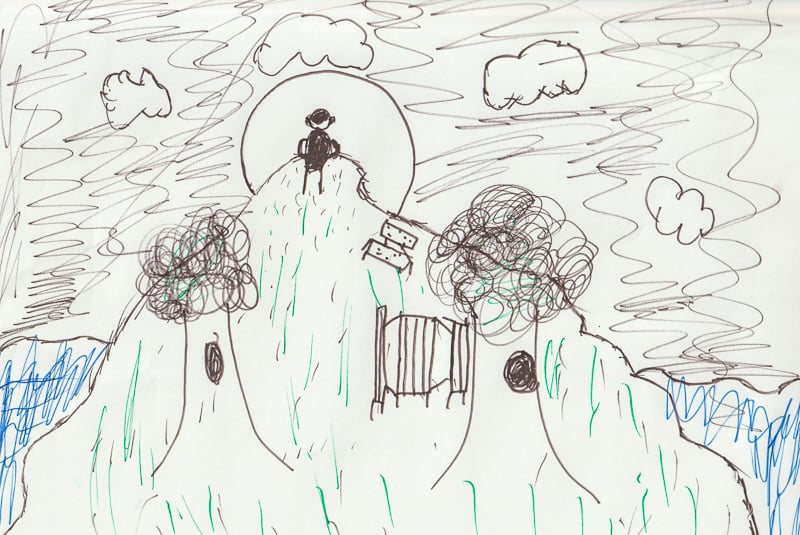
Thank you, readers and park visitors!
This is Volume 4, No. 9 of the Frontenac State Park Association newsletter, which was launched in April 2023.
Here’s where you can browse the full archives of this newsletter.

