August: Summer peaks — but what kind of summer is this?
Frontenac State Park Association newsletter
August 2026 (Vol. 4, No. 8)
Comments, contributions, compliments, complaints? Reach your newsletter editor at [email protected].
August: Summer peaks — but what kind of summer is this?
Ye gads, July was hot. And humid, and smoky … we don’t have to tell you about it, since you most likely were here, or nearby, enduring the smelly sauna-temp air as you strolled in Frontenac State Park or along your rural or (if you’re reading us from a few miles afar) suburban or urban road, or as you toiled in your garden in any of those places, probably in the firefly-flecked evening, hoping for relief from the relentless heat, humidity and smoky air.
Yeah. We were out there with you.
Interspersed in that relentless run of steamy days were a few perfect ones, cooler and with clearer air. We hope, dear readers, that you got outside on those days. And of course we hope August is less hot, less humid, less smoke-infused by the fierce and unprecedented wildfires to our north.
You all know the immediate as well as long-standing reasons for such unusually oppressive and smoky weather, so we won’t dive into the weeds here. May August bring us days when the weather is agreeable to hiking in our beloved Frontenac State Park without melting or charring!
Here are some cool (we hope!) upcoming events to put on your calendar:
Wednesday, Aug. 12, 10 a.m.: Nature Explorers: Feathered Friends with interpretive naturalist Sara Holger and FSPA volunteers. For preschoolers ages 3-6; must be accompanied by an adult. Meet at the main picnic shelter.
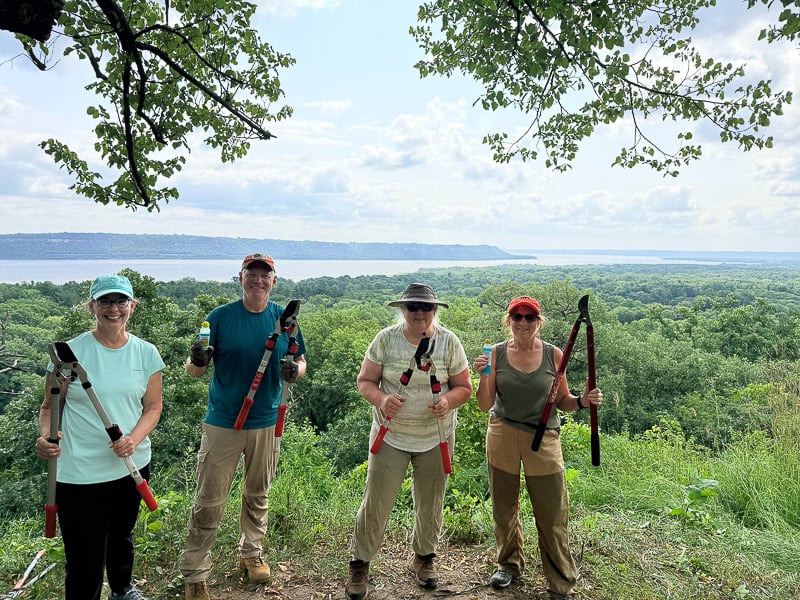
Saturday, Aug. 15, 8:30 a.m.: Invasive species removal and trails volunteer day: Volunteers will support early restoration efforts on a newly acquired park addition and assist in the development of a new trail.
This event is organized by Great River Greening; registration is required: https://www.givepulse.com/event/891490-2026.08.15-Invasive-Species-and-Trail-Support-at-Frontenac-State-Park
Saturday, Aug. 15, 10 a.m.: Nature walk with ranger Jake Gaster. Meet at the campground shower building kiosk.
Tuesday, Aug. 18, 9:30-10:30 a.m.: FSPA volunteers’ work hour: Assignment to come from our park rangers. Join us if you’d like to help! Meet at the ranger station.
Thursday, Aug. 20, 2 p.m.: Quarterly FSPA meeting: Curious about who we are and what we do? Drop by and find out! Main picnic shelter.
Saturday, Aug. 22, 9 a.m.: Prairie Trail bird walk with Minnesota Master Naturalist volunteer Janet Malotky. Meet at the ranger station.
Saturday, Sept. 5, 9 a.m.: Sand Point bird walk with Minnesota Master Naturalist volunteer Janet Malotky. Meet at the little parking lot across from the Sand Point trailhead.
Tuesday, Sept. 15, 9:30-10:30 a.m.: FSPA volunteers’ work hour: assignment to come from park rangers. Join us if you’d like to help! Meet at the ranger station.
Saturday, Sept. 19, 11 a.m.: Fall fungi walk with Minnesota Master Naturalist volunteer Pam Miller. Meet at the campground shower building kiosk.
Prairie perspectives: Why should we care about prairie?
By Brian Henkel
Minnesota Master Naturalist volunteer
Some visitors may drive through Frontenac State Park, see its large open grasslands, and wonder, What's the big deal about prairies, anyway?
Unlike forests, with their towering trees and colorful fall leaves, prairies can seem quiet and unremarkable at first glance. Yet they are among Minnesota's most valuable ecosystems, providing benefits that reach far beyond park boundaries.
Prairies do much more than provide scenic landscapes. They:
Support pollinators essential to our food supply.
Reduce soil erosion and help keep sediment out of rivers and lakes, thereby improving water quality for fish and recreation.
Protect nutrient-rich topsoil that helps sustain productive farmland.
Absorb and store rainfall, reducing flooding while helping the land withstand drought.
Provide habitat for a remarkable diversity of birds, mammals, reptiles, insects and other wildlife.
Enhance the natural beauty of our parks, attracting visitors and supporting local tourism.
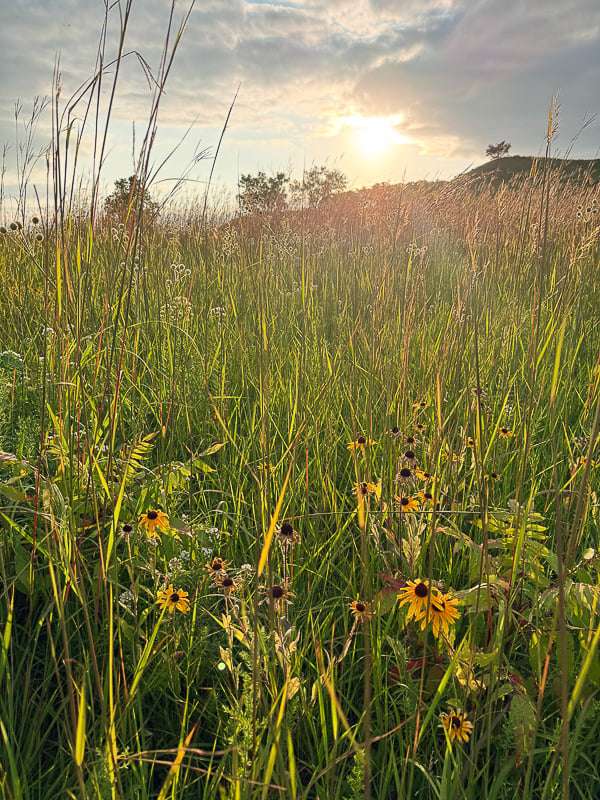
Much of a prairie's true value lies hidden beneath the surface. The roots of many native prairie plants extend 10 to 15 feet into the ground. Because these plants are perennials, they pop up year after year, unlike annual agricultural crops that must be replanted each season. In fact, most of a prairie's biomass is underground, earning it the nickname “an upside-down forest.”
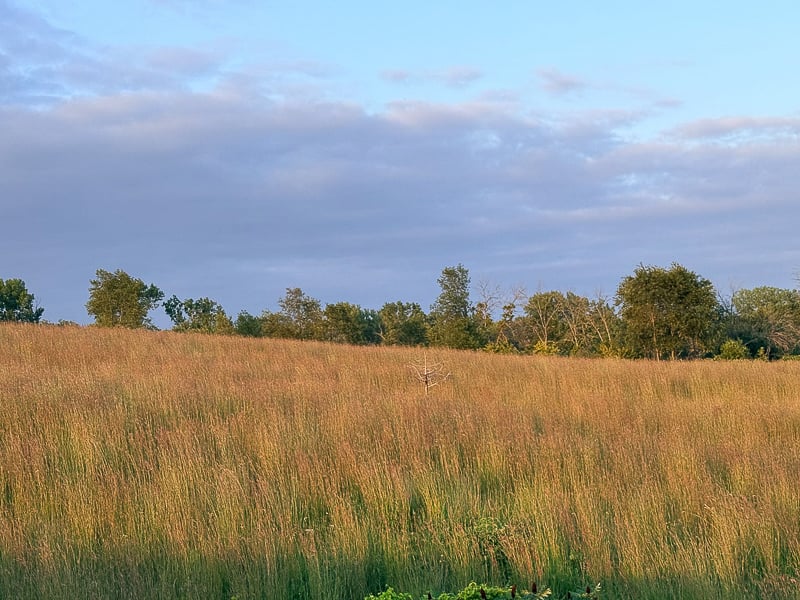
In the winter, prairie plants die back above ground while their roots remain alive. As leaves and stems decompose, they return organic matter and nutrients to the soil, building the rich, fertile soils that once covered much of the Midwest. It is no surprise that these fertile prairies became some of the nation's most productive farmland after European settlement.
Unfortunately, the vigorous conversion of native prairie to cropland left much of the soil vulnerable to erosion. Poor farming practices contributed to the Dust Bowl of the 1930s, when millions of acres of topsoil were carried away by wind and rain. Today, many farmers use conservation practices such as reduced tillage and cover crops to protect the soil and rebuild its health.
The ecological and economic value of prairies are closely connected. Healthy prairies improve water quality, protect farmland, support wildlife, and strengthen local communities.
Whether you come to Frontenac State Park to hike, bird-watch, fish, or simply enjoy the scenery, the prairie is quietly working behind the scenes to provide benefits that extend far beyond what we see.
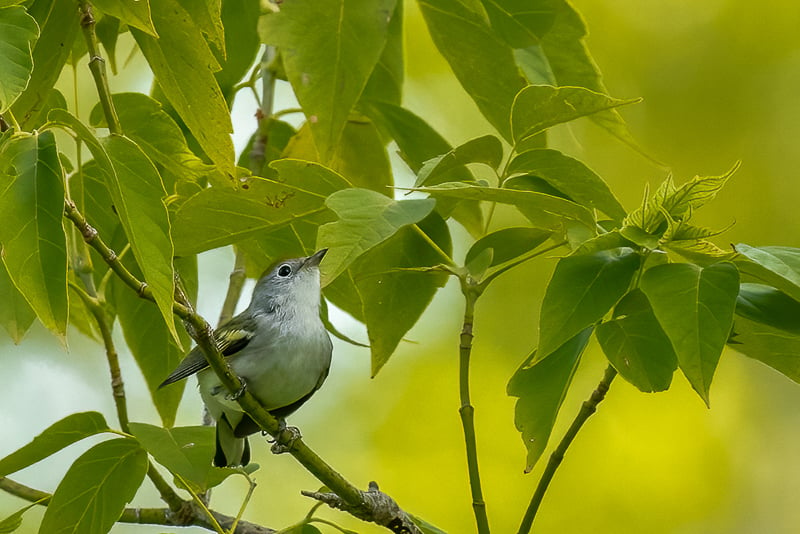
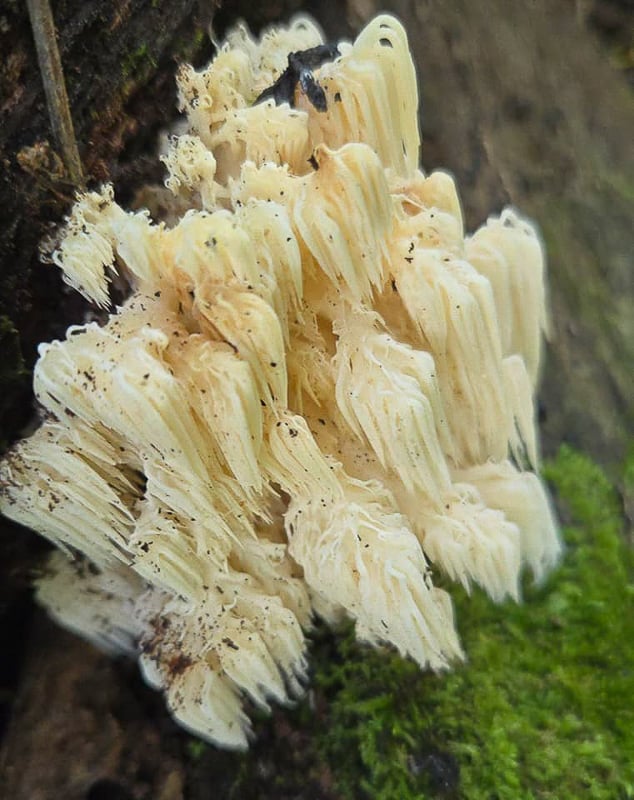
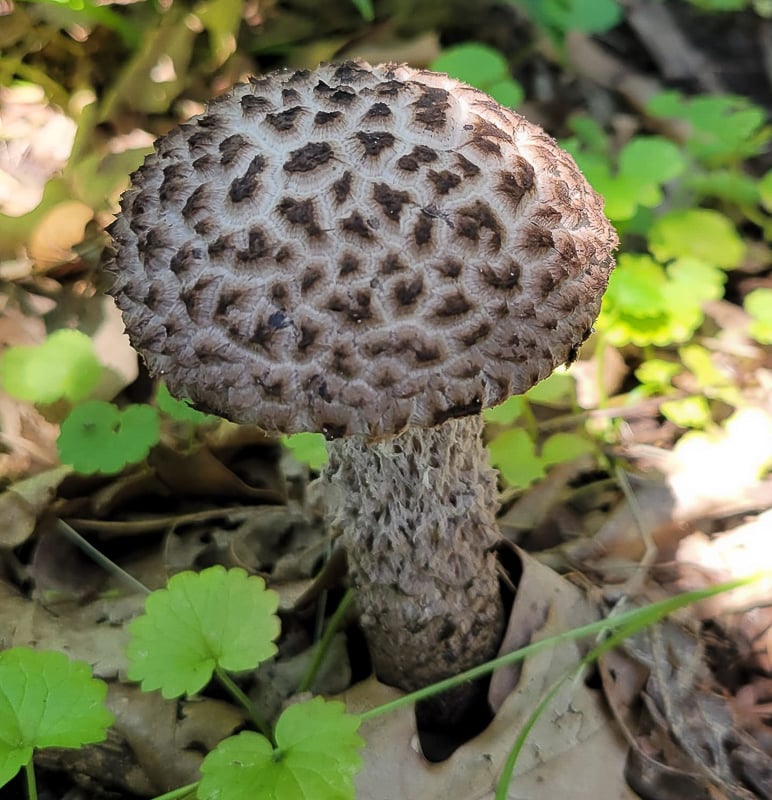
iNaturalist moment: Seeing red, in the very best way
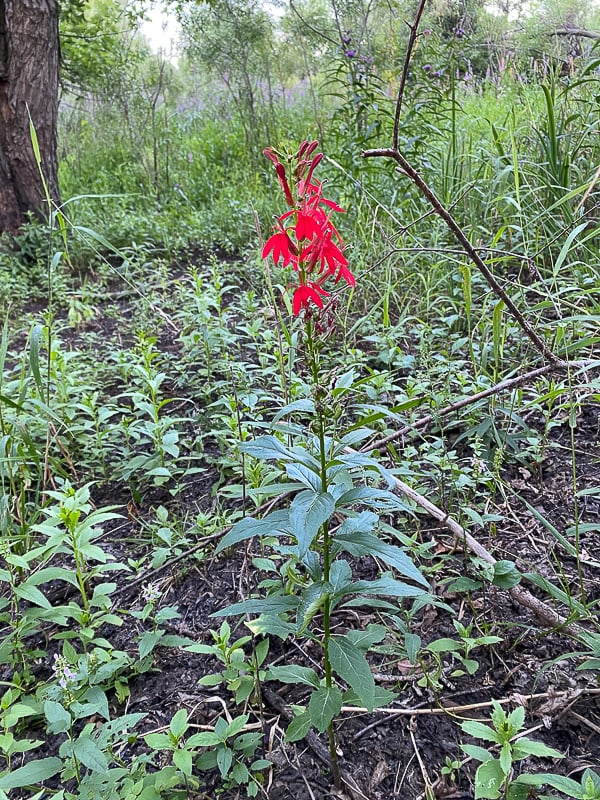
— Steve Dietz, iNaturalist Ambassador
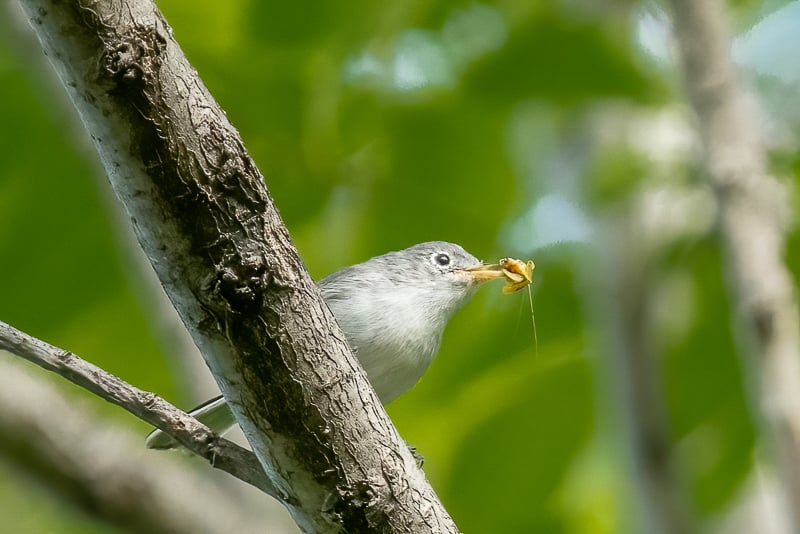
Birdnote: The can-do Killdeer
By Janet Malotky
Minnesota Master Naturalist volunteer
Sometimes when I’m watching birds, I feel like I’m witnessing their slow extinction. That opening statement might prompt you to quickly scroll down to the next feature, but hang in there with me for a moment, because there are definitely some birds who give me hope. The Killdeer is one.
Why do Killdeer make me feel hopeful? Because they are everywhere, tenaciously trying to make a living, no matter what we throw at them. You can find them in Frontenac State Park, where they nest along the edge of Frontenac Pond and in the prairie. But you can also find them running around in suburban yards, parking lots, athletic playing fields, construction zones, and along roadsides.
Across the street from our previous home in the Twin Cities, a golf course was being replaced by a housing development and Killdeer were all over the place. I even saw a chick following its parent across the dug-up turf, so breeding was happening amid all the hubbub. They are also attracted to burned fields. In northern Minnesota we once saw dozens of Killdeer foraging in a freshly burned field that was still smoldering. They also follow farmers in their fields in hopes of snagging any turned-over worms or insect larvae. In addition to these delicacies, their diet includes insects, snails, frogs, crayfish and seeds.
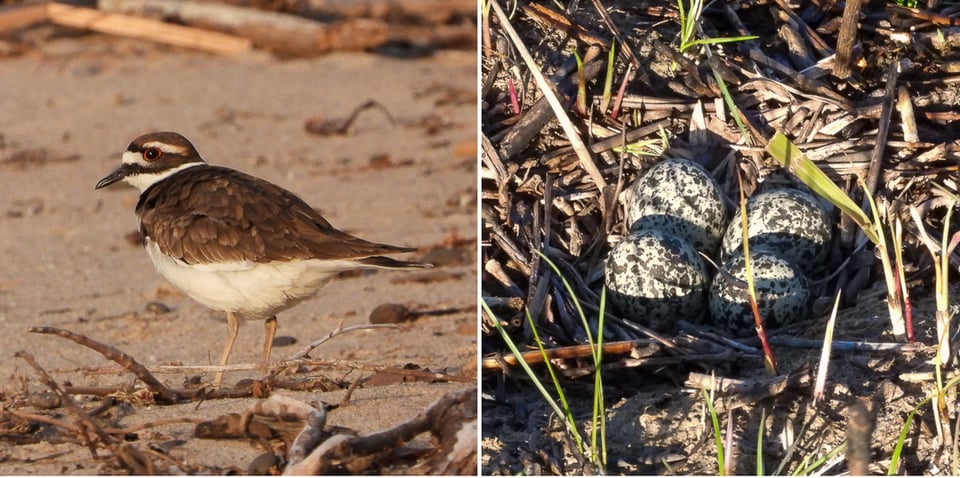
Killdeer fly up from the southern United States, Mexico, Central America and northern South America to breed in the northern U.S. and Canada, including in our area. They nest on the ground in an empty, shallow depression that they gradually decorate with pebbles, sticks, bits of shells and sometimes trash. But they only decorate after their eggs are laid, which is kind of odd behavior for a bird.
If you ever get close to a nest or chicks, you will likely see their famous broken wing distraction behavior, where one adult pretends to have a broken wing in an attempt to lure you (or any perceived predator) away from the nest. They are quite dramatic in their display, even more so than a World Cup soccer player, dragging their pretend broken wing and flopping along the ground while moving steadily away from the nest.
Everybody wonders how Killdeer got their name and I still do as well, even though I know the answer. Their song (click the “listen” button in the link) supposedly sounds like “killdeer.” I’m not sure how they come up with this stuff. But the birds are chatty, so you’ll likely hear them around now that you’re familiar.
Despite their ability to live near people and their can-do attitude, Killdeer numbers are decreasing. According to the North American Breeding Bird Survey, Killdeer populations decreased by 26% from 1966 to 2019. Interestingly, that makes them a species of low conservation concern compared to many other birds, especially other grassland species who have lost 55% of their population in the United States over the same period. We can help them and all birds by avoiding use of pesticides and herbicides and by conserving the land that supports them. Let’s do that.
Bad news, good news: A creature feature
Your newsletter editor recently winced hard upon seeing a sorrowful post on friend Sara Grover’s Facebook page. On June 24, Sara was driving from Red Wing to Wabasha when she spotted a dead bobcat on the north side of Hwy. 61 near Frontenac Station, near a southern section of Frontenac State Park. Sara stopped to check it out and moved the poor thing off the road so scavengers wouldn’t also be in danger.
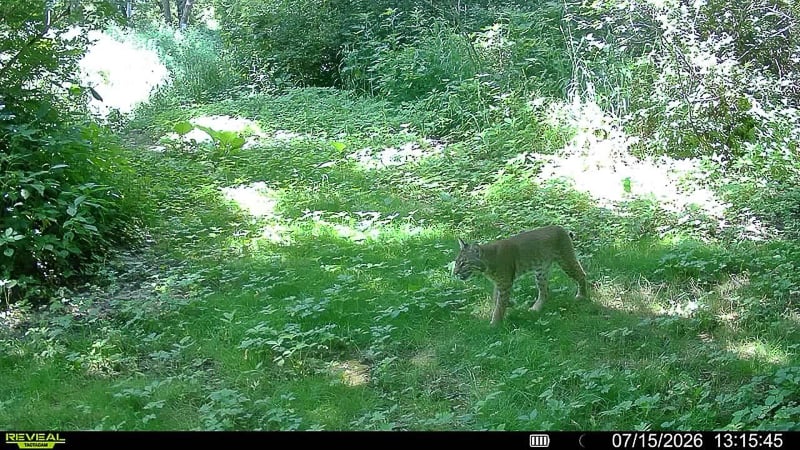
A friend’s trailcam had recently caught many photos of a lively bobcat trotting to and fro, and I feared it was probably that one. (A bobcat has also been sighted high in the main part of the park.)
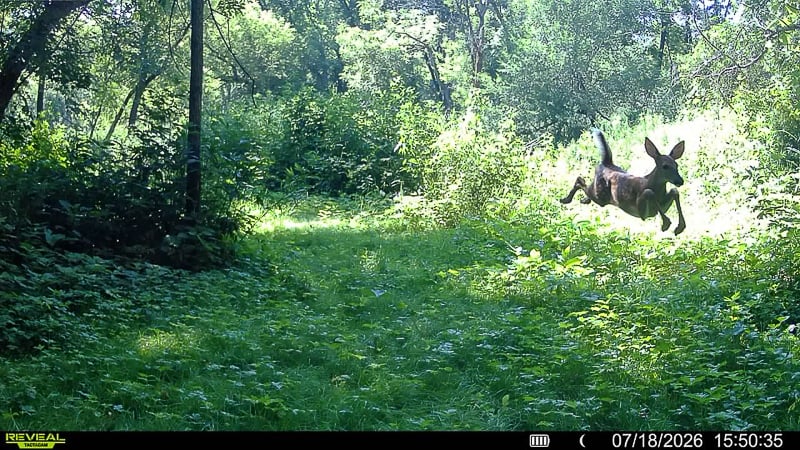
But lo and behold, trailcams in the area have continued to catch footage of a bobcat near the crash site. It appears that more than one — many, we hope! — of these elusive creatures live in our area. So glad to know that. And folks, please be careful when driving in our rural area, especially at night. So many wild creatures are crossing the roads then.
— Pamela Miller, newsletter editor
Notes from the field: A weed is a weed is a weed?
By Steve Dietz
Minnesota Master Gardener volunteer
Many of us feel that “weed” is an immutable category that must be extirpated at all costs, including killing off beneficial flora and fauna. But don’t worry, we are not diving into lawn wars this month. It’s useful, however, to understand weeds as a cultural construct. Most programs and experts, when pressed, define weeds along these lines: a wild plant growing where it is not wanted, especially among crops or garden plants. On a tour of He Mni Can, Nicky Buck, a member of the Prairie Island Indian Community, referred to so-called invasive species as “misplaced relatives.”
Don’t get me wrong. A weed can cause severe damage to agricultural output, hence the Minnesota Department of Agriculture’s noxious weed list. And very few of us really love creeping charlie inundating our cultivated gardens. But in the wild environment of Frontenac State Park, what is a wild plant growing where it is not wanted — besides buckthorn and garlic mustard and wild parsnip? Of course, the argument that these should be at least controlled if not eradicated is based on the fact that they aggressively take territory and prevent the growth of native flora that have evolved over millennia to support a host of dependent native insects, birds and mammals.
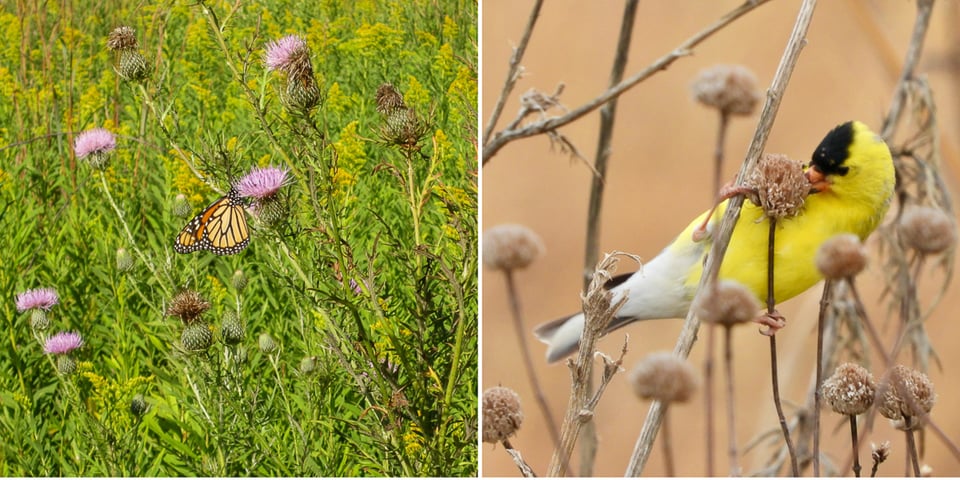
Often in the prairie, especially in August, I come across a butterfly feeding on a thistle in purple bloom. Beautiful! Somewhere inside me, however, is some unformed concern about a weed in the prairie. Did I not wipe my boots and accidentally bring it to the trail on a past walk? Perhaps. I do not know where this association of thistles with weeds first arose, but in this case the concern is specious. Or should that be species-ist?
The field or pasture thistle (Cirsium discolor) is a native plant that is a prodigious food source. The most important pollinators of the flowers are bumblebees, digger bees, leaf-cutting bees and butterflies. Among the butterflies are such floral visitors as Monarchs, Fritillaries, Painted Ladies, Swallowtails and Sulfurs. Sphinx moths and bee flies also visit the flowers for nectar. The caterpillars of the Painted Lady butterfly and several moths feed on the foliage., Other insect feeders include the Thistle Tortoise Beetle, the Bumble Flower Beetle, the Thistle and Artichoke aphids, the Northern Grasshopper and many others. The American Goldfinch eats the seeds and uses the tufts of hair as lining material in its nests, and the Ruby-throated Hummingbird has been known to visit thistle flowers for nectar.
The USDA also cites uses of the field thistle by Native Americans, who made a paste of the roots for treating wounds, boils and piles, and used an infusion of the root for treating stomachaches. Some also used the thistle down (or pappus) from the seeds to fletch the tail end of blow darts.
The field thistle can be confused with the bull thistle (Cirsium vulgare), an aggressive non-native species. The way to tell them apart visually is that bull thistle has leaves that are green on both sides. Field thistle leaves have white underneath and spineless stems. The former blooms in spring; the latter blooms summer into fall.
Interestingly, while both native and non-native thistles provide useful eco services, the aggressive territoriality of non-native species puts them in the “growing where not wanted” category, although probably not enough to need additional control measures at the park.
“Maintaining” a natural environment is a complex and sometimes contradictory endeavor, and the answers are not always obvious. Question assumptions. Become informed about the life cycle and eco and cultural services of a plant. Consider what is acceptable and practical in your unique circumstances. Be humble.
About those felled oaks: Beavers have their reasons
By Pamela Miller
Minnesota Master Naturalist volunteer
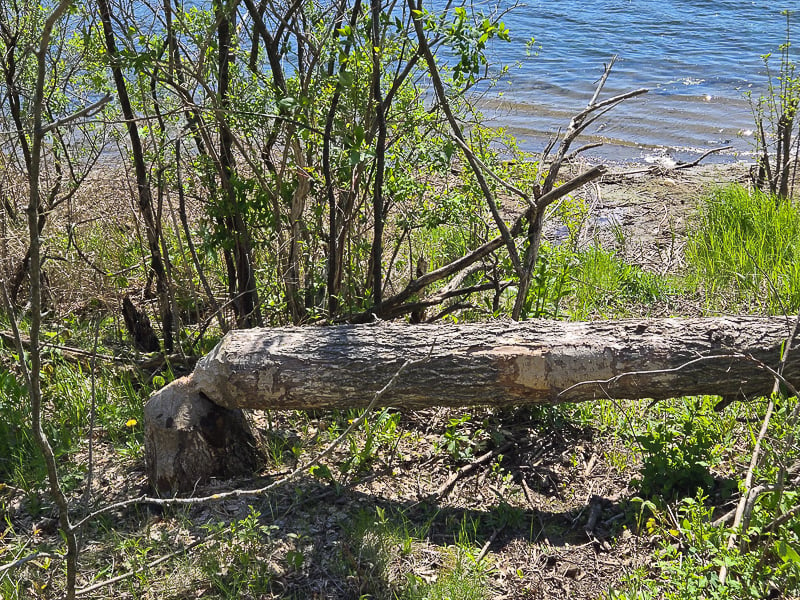
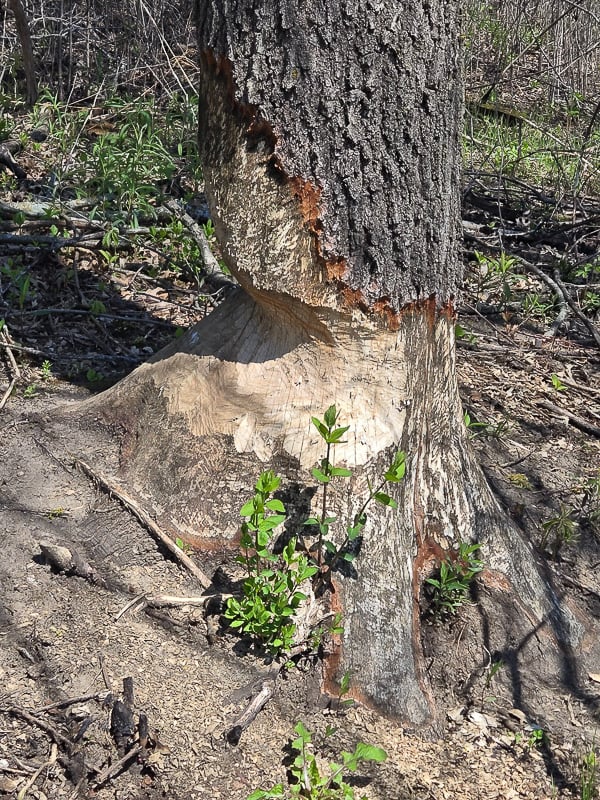
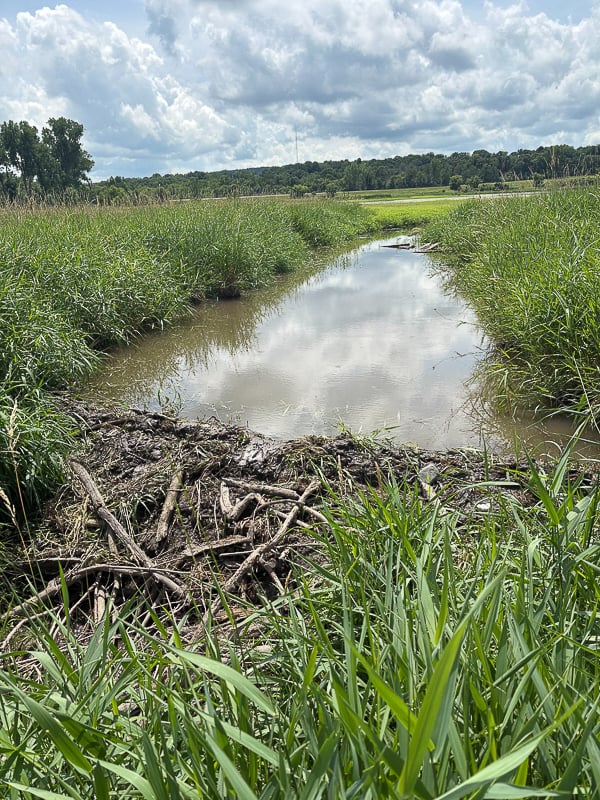
It’s a painful sight — large, beautiful oak trees downed, one after another, along the north end of the Prairie Loop Trail along Pleasant Valley Lakelet, with beavers’ telltale gnawing pattern. Why would they do something so seemingly destructive? We asked FSP ranger Jake Gaster, who had this to say:
Beavers don’t cut down trees with a single purpose in mind. Sometimes the destruction isn’t as wasteful as it seems. They’ll often fell trees before they have an actual need for them so they have material to work with once the need arises. Oak wood is really dense and heavy, and as they often will take trees down in a specific location rather than taking specific species, they may find the fallen oaks too large or cumbersome to work with once it’s on the ground. Young or inexperienced beavers may take trees in a less than responsible manner, as they are still learning the quantities and qualities of trees needed to support their colony.
As for how we treat such activity within the park, we may not like the beavers taking down those trees, but they are a part of the natural habitat and thus have the right to pursue their environmental engineering as they see fit. That being said, when their activities threaten permanent infrastructure (for example, should they dam the pond outlet so high that County Road 2 flooded), then we would need to intervene, as has been done in the past along the pond. Thankfully, their taking trees down along the trail does not elevate to this level of intervention. Let’s hope they continue their broader work of restoring the pond!
Poem of the month
“My Father Gave Me Seeds”
By John Foster (English, contemporary)
My father gave me seeds.
I gave the seeds to the earth.
The earth gave me flowers.
I gave the flowers to the bees.
The bees gave me money.
I gave the money to a merchant.
The merchant gave me cloth.
I gave the cloth to a tailor.
The tailor gave me a cloak.
I gave the cloak to a farmer.
The farmer gave me seeds.
I gave the seeds to my father.
My father gave thanks for the seeds.
Interested in joining the FSPA?
If you are a member, thank you! You help us pursue our mission of supporting this treasured park in myriad ways.
If you’d like to join us, we’d be honored to have your support. Dues are $25 per year for an individual, $35 for household membership. Here’s a link with signup information.
A reminder that joining us occasionally to help with volunteer efforts is awesome too, even if you’re not a member. The FSPA’s goals are to support Frontenac State Park activities and share our love of this beautiful park with as many people as possible.
To sign up to regularly receive this free, spam-free monthly newsletter, click on “Subscribe” below. Feel free to send questions or comments to your newsletter editor at [email protected]. Questions about the FSPA? You can reach FSPA president Steve Dietz at [email protected].
Handy links for more information and education
Frontenac State Park
Frontenac State Park Association
If you take pictures in the park, tag us on Instagram
Frontenac State Park bird checklist
Frontenac State Park on iNaturalist
Parks & Trails Council of Minnesota
Website for our township, Florence Township
Minnesota Master Naturalist programs
Red Wing Environmental Learning Center
Lake City Environmental Learning Program on FB
Visit Lake City
Zumbro Valley Audubon Society
Bruce Ause’s Wacouta Nature Notes blog
Marge Loch-Wouters’ Hiking the Driftless Trails blog
Frontenac State Park staff
Jake Gaster, park manager; Amy Jay, assistant park manager; Amy Poss, lead field worker.
Parting shots
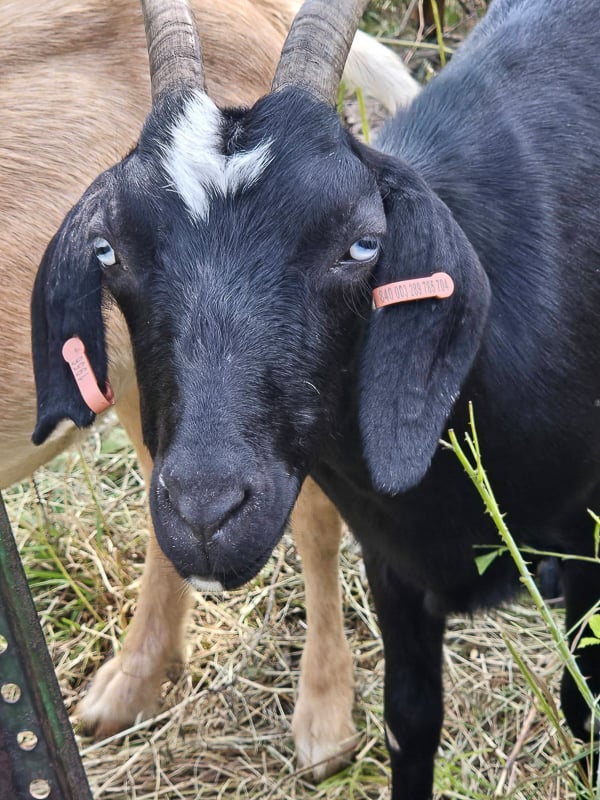
Thank you, readers and park visitors!
This is Volume 4, No. 8 of the Frontenac State Park Association newsletter, which was launched in April 2023.
Here’s where you can browse the full archives of this newsletter.

