
July: The fabulous, fleeting heart of summer
Frontenac State Park Association newsletter
July 2026 (Vol. 4, No. 7)
Comments, contributions, compliments, complaints? Reach your newsletter editor at [email protected].
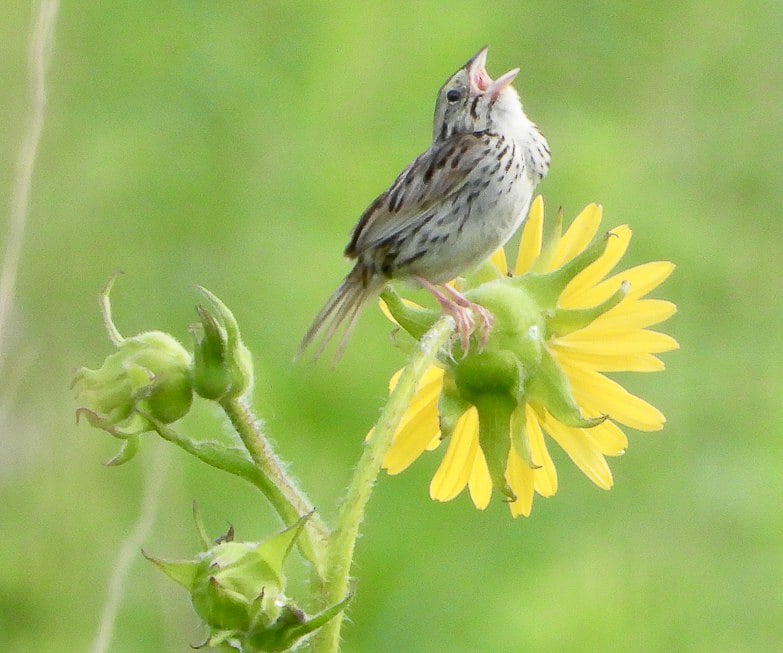
July: The fabulous, fleeting heart of summer
How did July arrive so fast? We could say that every month, about every month, about the passage of time in general, but July seems to have pounced faster than a firefly’s glimmer, faster than a bobcat pouncing on a rabbit, faster than a tree swallow grabbing an insect in flight, faster than a doe fleeing you on a Frontenac State Park trail, faster than you pulled that deer tick off your hairline. And ticks aside, midsummer is wonderful. We hope you take advantage of its cool days to hike in the park, and of its steamy ones to hang out at a picnic table in the shade with a cool beverage, good friends or a riveting summer read.
The Frontenac State Park Association has lots of events coming up – something for every one of you! Check them out:
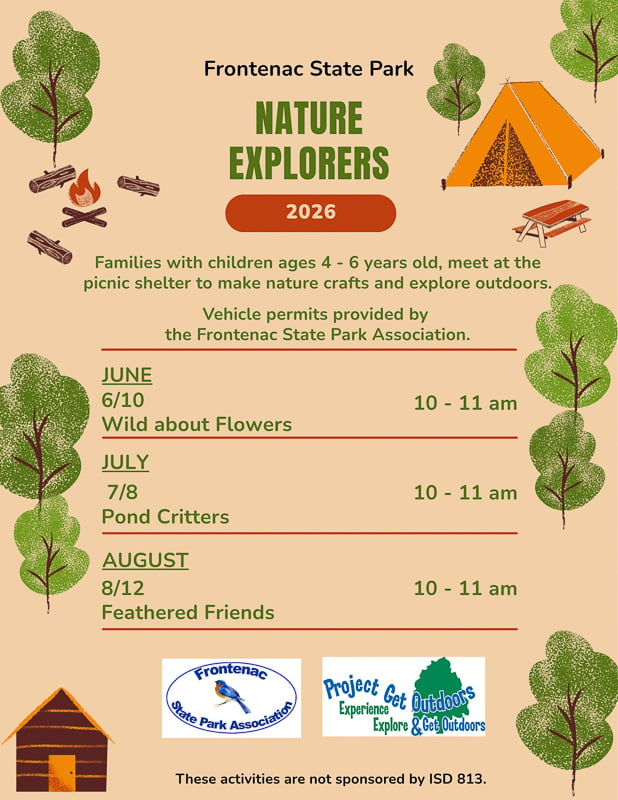
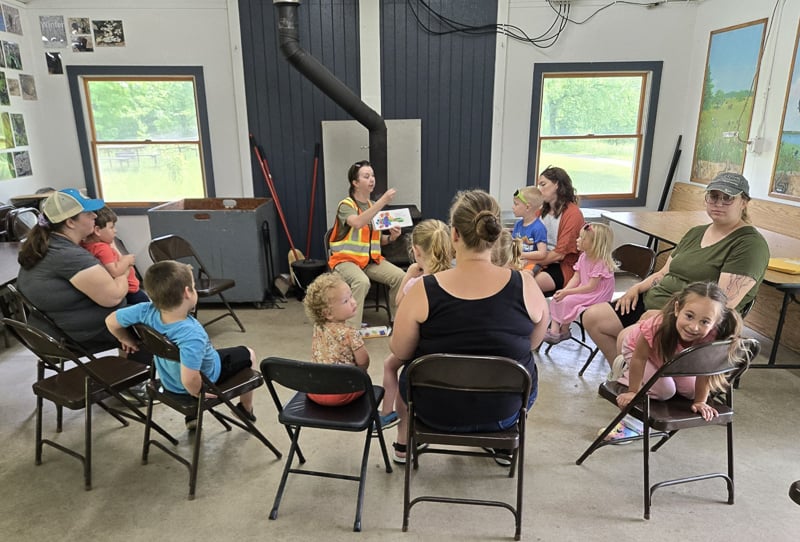
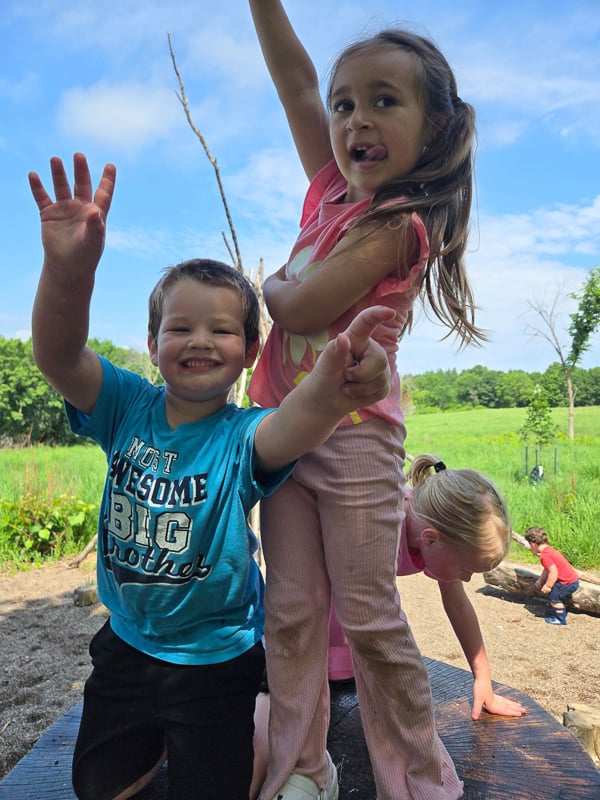
Wednesday, July 8, 10 a.m.: Nature Explorers: Pond Critters, with interpretive naturalist Sara Holger and FSPA volunteers. For preschoolers 3-6; must be accompanied by an adult. Main picnic shelter.
Saturday, July 11, 10 a.m.: Walk with lichen expert Tanner Barnharst. Meet at the campground kiosk.
Saturday, July 18, 10 a.m.: Nature walk with ranger Jake Gaster. Meet at the campground kiosk.
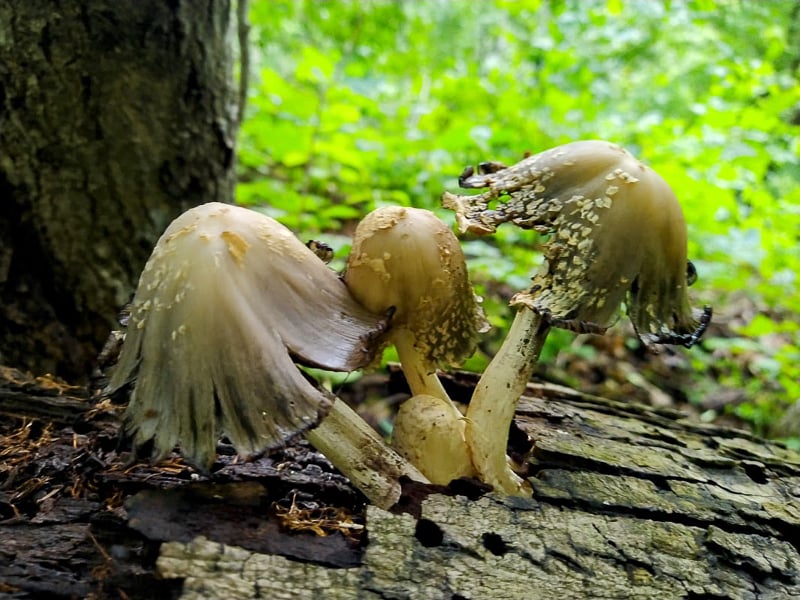
Saturday, July 18, 11 a.m.: Summer fungi walk with Minnesota Master Naturalist volunteer Pam Miller. Will we find some chanterelles and lobster mushrooms? Maybe! Meet at the campground kiosk.
Tuesday, July 21, 10-11 a.m.: FSPA volunteers’ work day. Meet at the ranger station for a helpful task chosen by the park rangers.
Saturday, Aug. 1, 10 a.m.: Post-fire ecology walk with ranger Jake Gaster. Meet at ranger station.
Wednesday, Aug. 12, 10 a.m.: Nature Explorers, Feathered Friends with interpretive naturalist Sara Holger and FSPA volunteers. For preschoolers ages 3-6; must be accompanied by an adult. Meet at the main picnic shelter.
Saturday, Aug. 22, 9 a.m.: Prairie Trail bird walk with Minnesota Master Naturalist volunteer Janet Malotky. Meet at the ranger station.
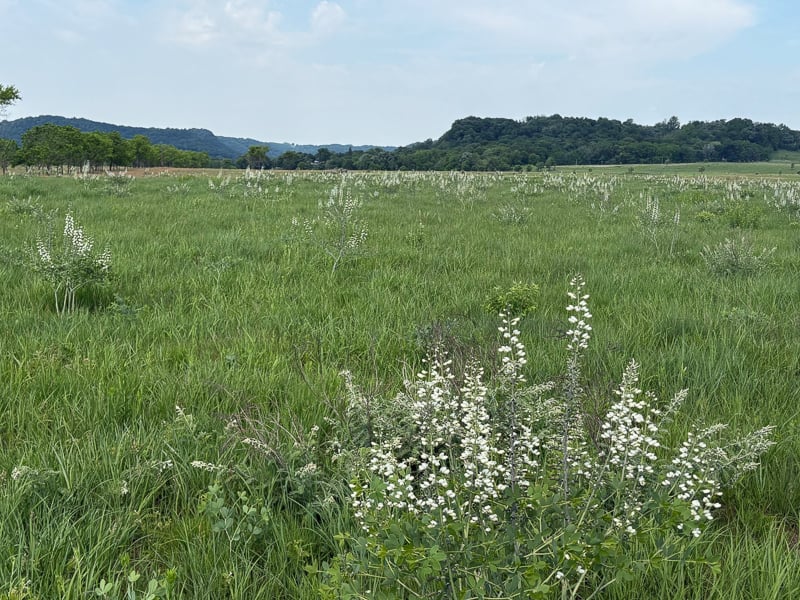
Prairie perspectives: A sea of grass and wildflowers
By Brian Henkel
Minnesota Master Naturalist volunteer
We hope you were able to attend the remarkable June 14 Prairie Dreams: Trail of Quilts exhibit at Frontenac State Park and see the amazing creativity and skill displayed in the quilts while taking in the beauty of the prairie that inspired them. The novel idea behind that unprecedented event was to let us enjoy interpretations of nature while in nature. That event led me to a serendipitous segue into a series of articles about prairies. Here’s the first, an overview of the amazing biome that is the prairie. There are a plethora of future topics to explore: plants, pollinators, mammals, reptiles, birds, oaks, bluffs and seasonal changes. If I’m not careful, we could spend years in this series!
In Minnesota’s distant past, about one-third of the state was covered with a mixture of native grasses and colorful wildflowers (forbs). It is easy to envision a bucolic scene of a living green carpet undulating in the breeze for as far as the eye could see. Fast forward to more recent times, when agriculture and development have displaced much of those prairies. Less than one percent of Minnesota’s original prairies remain. However, concerted conservation efforts over many decades are reestablishing these critical areas of Minnesota’s biome.
At Frontenac State Park, the park staff manage roughly 1,000 acres of different prairie types (mesic, oak savanna, and bluff top or goat prairies). The original herds of bison and lightning-induced wildfires have been replaced by goats, managed burning and mowing. Without these regular disruptive activities, all prairies would transform into woods as woody plants shaded out grasses and provided space for tree seedlings to grow.
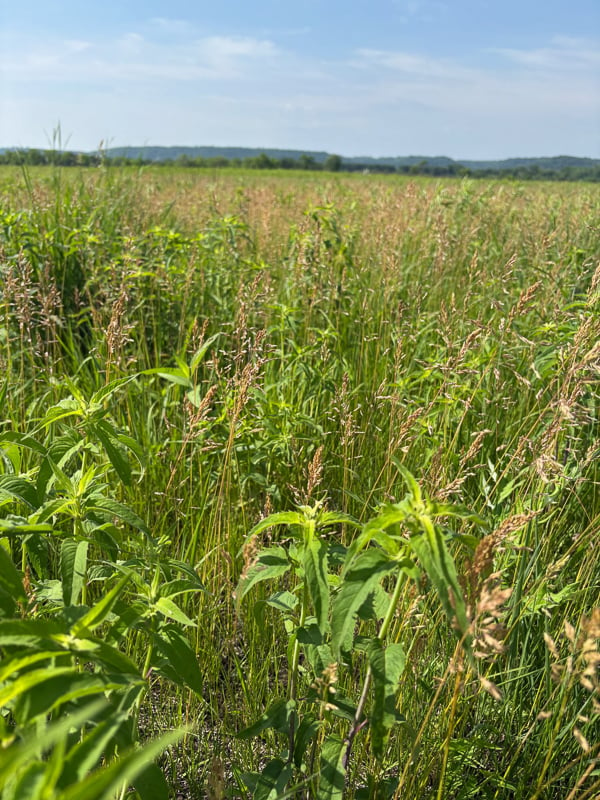
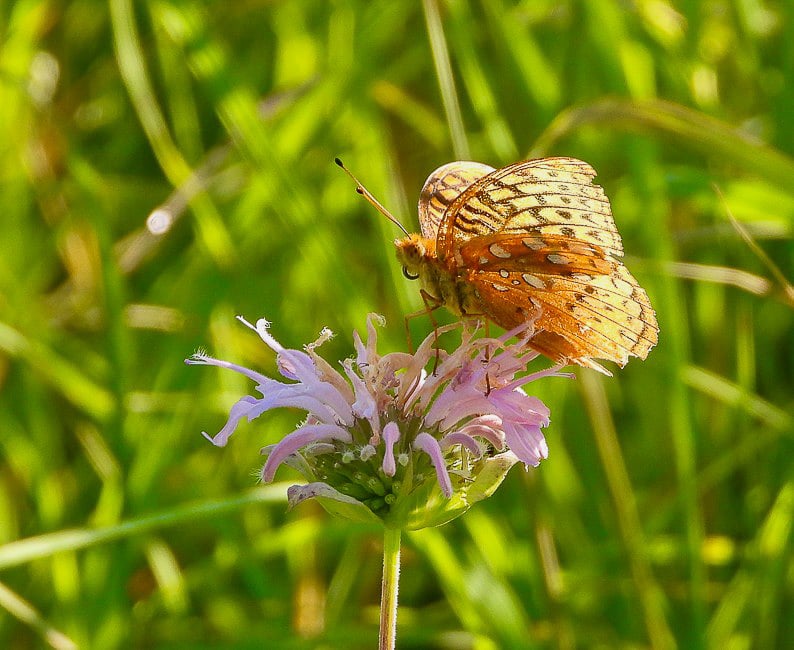
If you walked the Trail of Quilts, then you’ve seen a small part of the prairie at Frontenac State Park. Now is a great time to walk the park’s other prairie areas, like the Prairie Loop Trail. The view changes regularly as grasses mature and form seed heads. The colors rotate as a wide variety of wildflowers bloom. What appears open and maybe, to some eyes, empty is actually quite alive with pollinators, birds, mammals, and — yes — even snakes. At the time of this writing, the white false indigo (Baptista lactea) is stunning, and the next wave of color from wild bergamot (Monarda fistulosa) will soon appear.
If you are up for a little more adventure, head up to the bluff prairie on Rattlesnake Bluff — the views, especially the ultimate one overlooking Wacouta Pond, are amazing. (The trailhead is off of Hill Avenue, which runs through and adjacent to much of the park.)
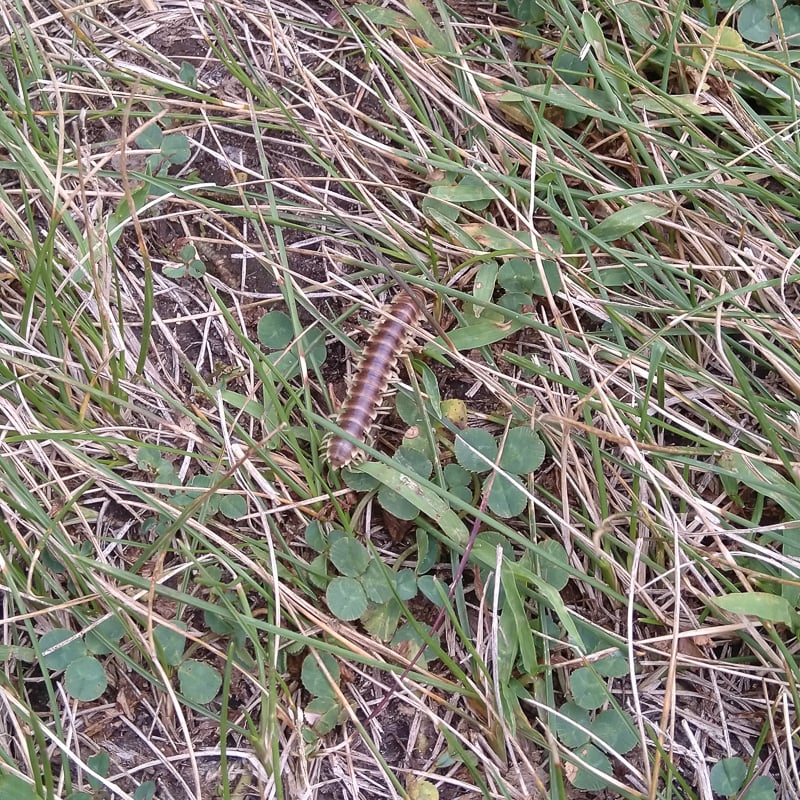
iNaturalist moment: Millipedes en masse
Birdnote: Diorama drama
By Janet Malotky
Minnesota Master Naturalist volunteer
In the October 2025 newsletter, I wrote about the Bell Museum’s diorama of our own Frontenac State Park’s Sand Point — a picture of which is displayed in the parking lot for the Sand Point Trail.
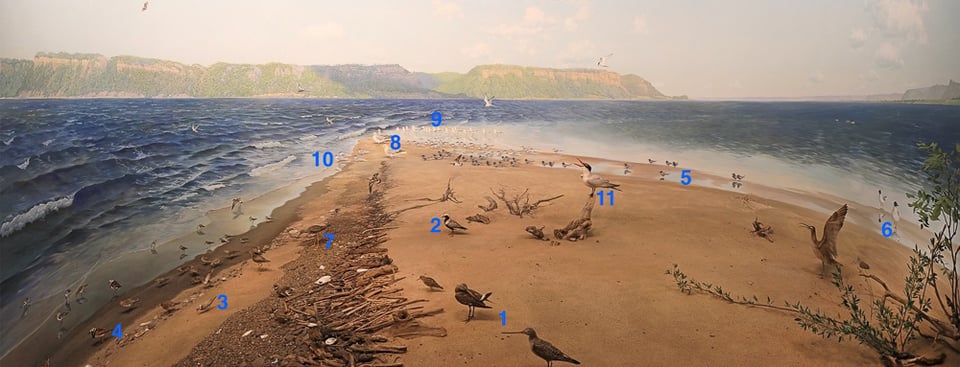
I noted that the diorama, created in 1940 to accurately reflect a spring migration scene, was a snapshot in time that could help track changes in the environment and in animal populations. Several of the depicted birds had either rarely or not been reported on Sand Point in recent years. Writing about this made me feel a little sad about the apparent loss.
But hikes to Sand Point during this year’s spring migration gave me reason to cheer. Not only were most of the depicted bird species reported, but several of the species rarely seen in recent years were present as well. These included the large Hudsonian Godwits, whose crazy-long bills arc upward, seen in the diorama at (1). A Black-bellied Plover (2) was there for several days, along with the endangered Piping Plover (3). There were Ruddy Turnstones (4), birds that hunt by flipping rocks and eating what scurries underneath. There was even a single Black Tern (5) one day, swooping and dipping into the waves.
In addition to these surprising and delightful birds, there were also a good variety of other depicted species who, while not as unusual, are also infrequent visitors. There were Willets, Dunlin, Semipalmated Sandpipers and Plovers, Caspian (11) and Forster's (10) Terns, and Greater (7) and Lesser Yellowlegs. There were the expected Spotted Sandpipers and Herring (8) and Ring-billed (9) Gulls, but there were also Bonaparte's Gulls (6). There was even a rare bird from up north: a Lesser Black-backed Gull, one that’s not depicted in the diorama. And there were Franklin's Gulls, also not depicted.
So why did all these birds show up on Sand Point this year? Does this mean they aren’t in trouble after all?
I’m not an ornithologist and can’t answer that question for certain. Variability in timing, stopovers, and exact route during migration are certainly the norm. And there is an element of chance — did someone happen to hike out there, recognize and report them when they were there? Stopping over is also weather dependent, and conditions on the ground (or water in some cases) play into it as well. For example, when Sand Point is flooded, very few shore birds stop there.
Certainly, though, birds are threatened due to habitat loss and climate change. All populations of birds except waterfowl (ducks and geese) are decreasing dramatically. Hence many of us were grateful for the chance to enjoy these birds on Sand Point again this year. We hope they’ll keep coming back during many migrations to come.
Notes from the field of Prairie Dreams
By Steve Dietz
Minnesota Master Naturalist volunteer
Well, we did it! Thanks to all the quilters, volunteers, park staff and FSPA members, especially the Arts Committee, who helped Prairie Dreams: Trail of Quilts bloom in the upland prairie of Frontenac State Park on June 13.
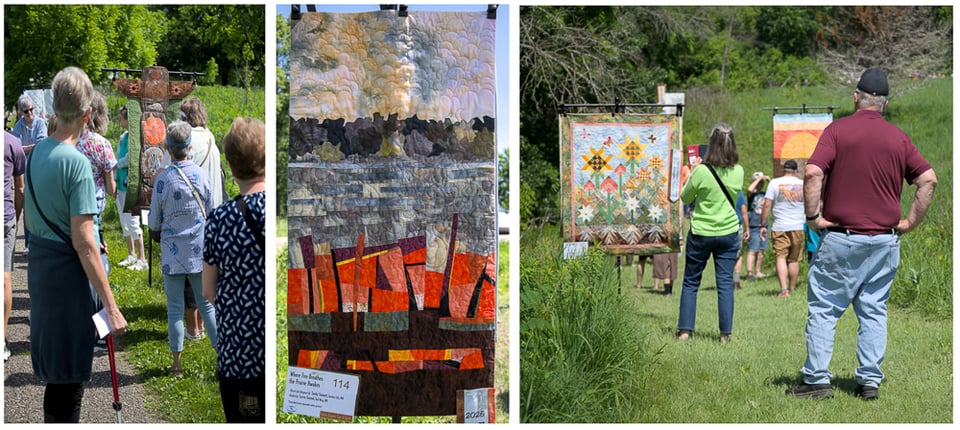
Walking the prairie on a slightly windy but sunny and NOT rainy day 🌞, we thought every quilt was a winner. Congratulations to award winners Marge Kaufer, Debra Ninas and Sandy Siewert. To find out more, the citations for their awards are here. Download illustrated checklists for A-K and L-Z. A slideshow of the installation is forthcoming.
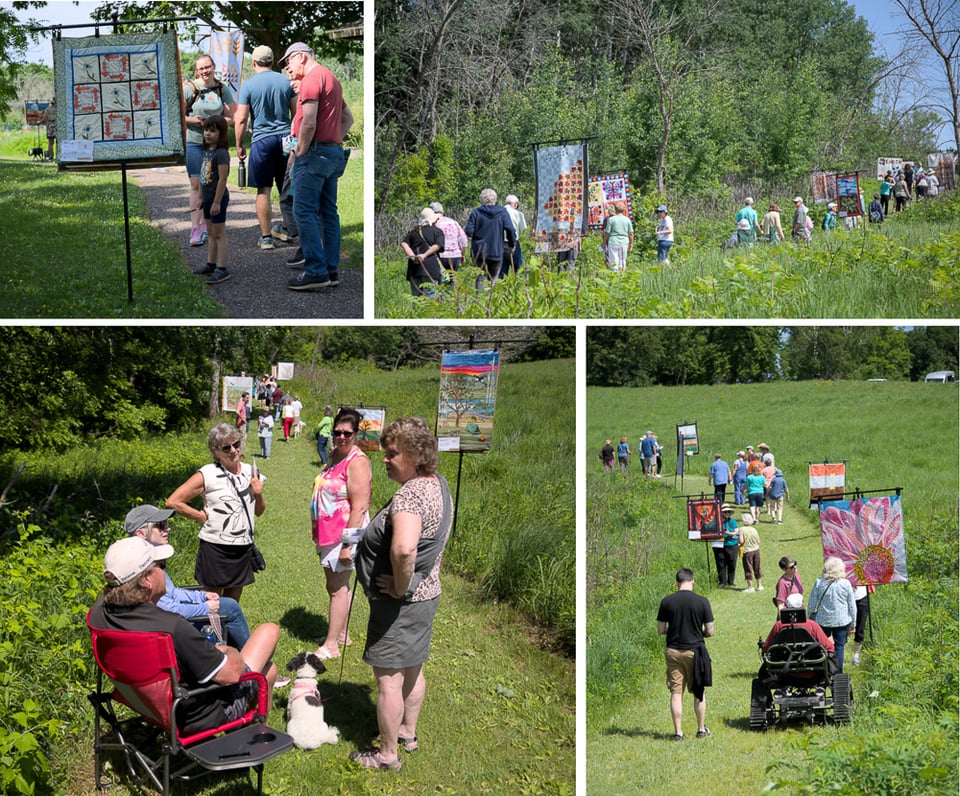
More than 2,500 people visited the Trail of Quilts, and of those, 502 filled out a brief survey (576 voted for the People’s Choice Award). Some interesting tidbits: 55% of respondents had made a quilt and 42% had not. 34% had never been to Frontenac State Park and 94% of all respondents said they would very likely or possibly return in the next 12 months. We hope so! 93% rated their experience as “This was awesome” or “I really enjoyed it” and 87% liked the idea of more art or music at the park (11% chose not to answer).
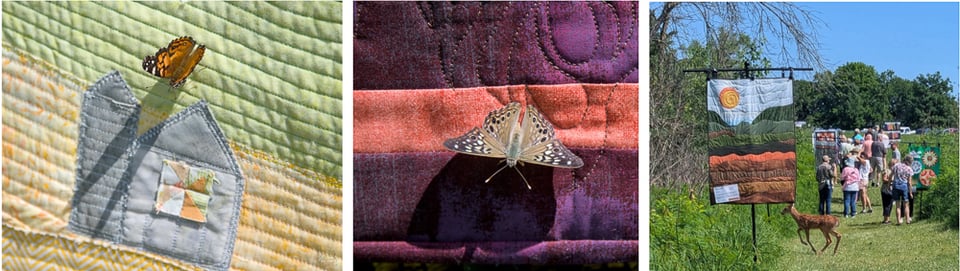
We wanted to show off the artistry of the local and regional quilting community, and we wanted to introduce new people to Frontenac State Park. ✅ We also wanted people to have a memorable and unique experience, writing:
[Prairie Dreams] is an experiment. What does the rich diversity of (mostly) area quilters think of when they think of the prairie? What will you think of their quilts as you walk the trail of these prairie dreams with birdsong in the air, the sun and breeze on your face, the living prairie before you? How will memories of past walks in Frontenac State Park and elsewhere affect your viewing, understanding and appreciation of the quilts? How will this walk become a memory to unpack and enjoy during future walks in the park and elsewhere in nature?
We believe we succeeded and hope you do too.
📣 If I may get up on my soapbox for one moment. Prairie Dreams was supported with a grant from the Southeastern Minnesota Arts Council, which means it was supported by you, the residents and taxpayers of Minnesota. In 2008, citizens of Minnesota — hunters and anglers and historic preservationsists and trail runners and artists and, yes, quilters — approved the Clean Water, Land and Legacy Amendment to preserve and enhance some of the most important elements of our state. Since then, it has provided funds for more than 40,000 projects related to Environmental and Natural Resources, Parks & Trails, Outdoor Heritage, Clean Water, and Arts & Cultural Heritage. The amendment will be up for renewal in the not-too-distant future. I hope you will support it.
Those little lights in the summer dusk
By Pamela Miller
Minnesota Master Naturalist volunteer
We originally wrote this item back in the summer of 2023, but are reviving and updating it because fireflies are so prolific and beautiful again this summer …
Insects are vital to life on Earth, but we, in our human Umwelt (a German word meaning the world as it is perceived by a particular organism), appreciate some more than others. Along with butterflies, dragonflies and (real) ladybugs, fireflies, which emerge in June and blink through July, delight us.
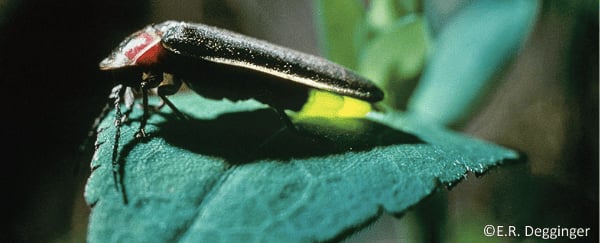
What’s going on there? Entomologists tell us that the flying males use their abdomen lights to attract females nestled in the vegetation below. If the female likes what she sees, she responds with her own light, and mating commences. According to the Minnesota Department of Natural Resources, Minnesota is home to many native species of fireflies (family Lampyridae – get it? lamps!). Those that fly at dusk flash yellow, while those active in the dark glow green. Watching — and perhaps chasing — fireflies is a wonderful way to help children discover beauty in nature.
But fireflies are under a grave threat from habitat loss and light pollution. Ways to help them thrive? Leave leaf litter in your yard in the fall. Plant native plants. And turn off your outdoor lights at night.
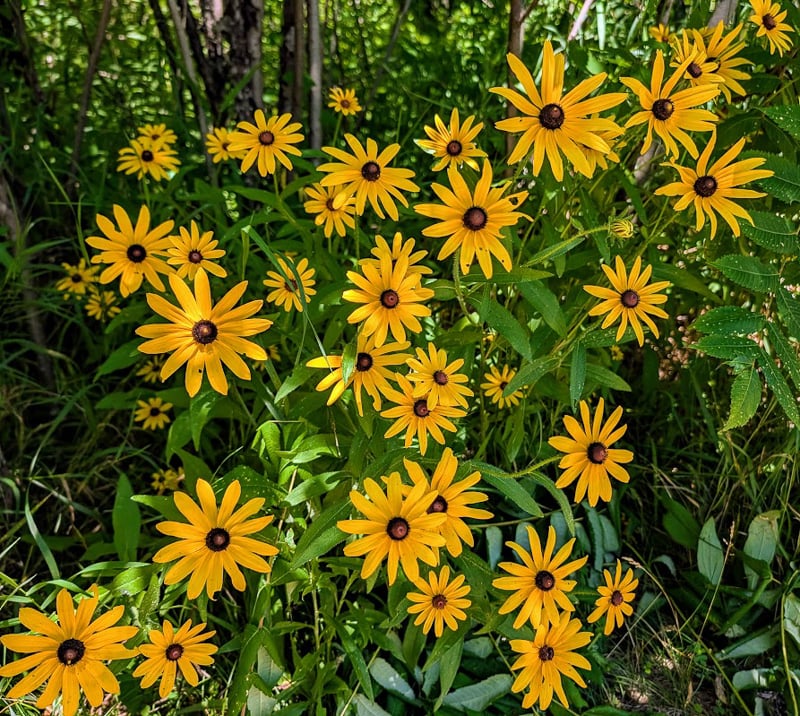
Poem of the month
We’re thrilled to say that this month’s poem is by our very own wise and gentle bird columnist, Janet Malotky, of Old Frontenac, Minn.
“Summer Night”
By Janet Malotky
Lie awake in the grass
in the grass with dandelions
closed and sleeping
the smell freshly cut and barely
damp on the nape
shins and shoulders draped in the shawl of night
eyes afloat in wide open pools
of touch me
It must be night
black as a black water lake and
astounding with stars,
each reaching down their
threads of distilled dream
like tiny lightning
that raise from the skin
filaments of desire
And the fireflies
whose unpredictable patterns of flight
measure out the dimensional night
and rivet in their dark interludes
their code calling down the stars
Night’s fingertips graze
the skin of the sky
reach down and brush
the breast bone
trail with bare pressure
over the heart
where urge and need condense
in a bubble of heat
in the throat of a loon
tremolo ready
No words are needed
in the grass at night
The world itself is sufficient word
round as a vowel and plump
a plum word exhaled by dandelions
closed and sleeping
a mouth shape made by stars and fireflies
all through the summer night.
Interested in joining the FSPA?
If you are a member, thank you! You help us pursue our mission of supporting this treasured park in myriad ways.
If you’d like to join us, we’d be honored to have your support. Dues are $25 per year for an individual, $35 for household membership. Here’s a link with signup information.
A reminder that joining us occasionally to help with volunteer efforts is awesome too, even if you’re not a member. The FSPA’s goals are to support Frontenac State Park activities and share our love of this beautiful park with as many people as possible.
To sign up to regularly receive this free, spam-free monthly newsletter, click on “Subscribe” below. Feel free to send questions or comments to your newsletter editor at [email protected]. Questions about the FSPA? You can reach FSPA president Steve Dietz at [email protected].
Handy links for more information and education
Frontenac State Park
Frontenac State Park Association
If you take pictures in the park, tag us on Instagram
Frontenac State Park bird checklist
Frontenac State Park on iNaturalist
Parks & Trails Council of Minnesota
Website for our township, Florence Township
Minnesota Master Naturalist programs
Red Wing Environmental Learning Center
Lake City Environmental Learning Program on FB
Visit Lake City
Zumbro Valley Audubon Society
Bruce Ause’s Wacouta Nature Notes blog
Marge Loch-Wouters’ Hiking the Driftless Trails blog
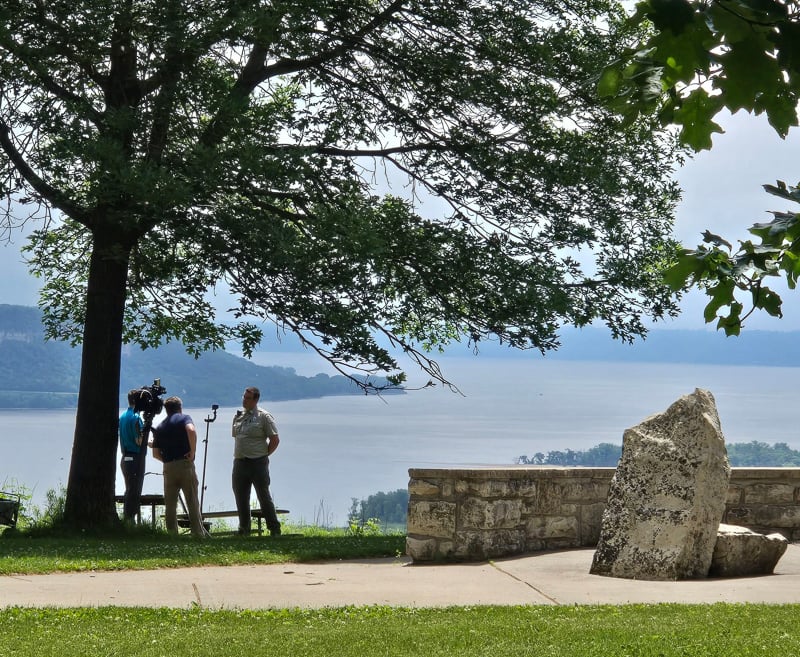
Frontenac State Park staff
Jake Gaster, park manager; Amy Jay, assistant park manager; Amy Poss, lead field worker.
Parting shots
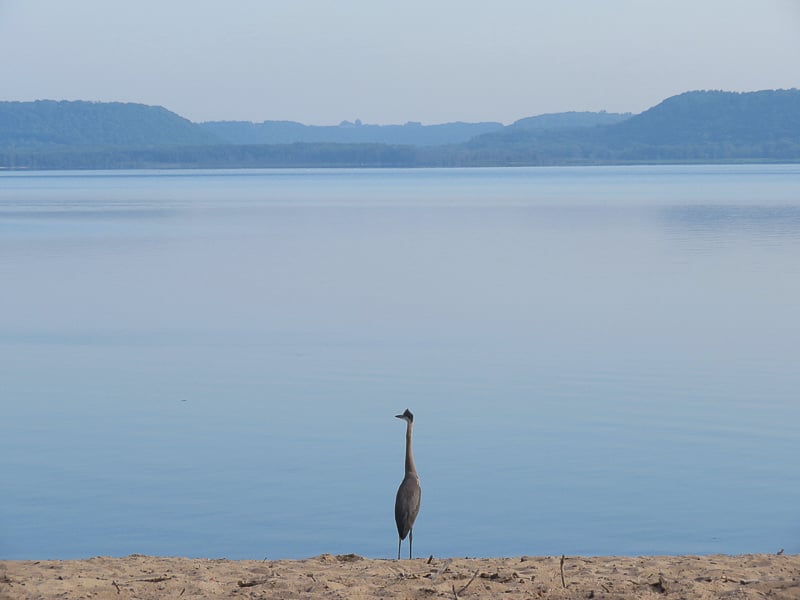
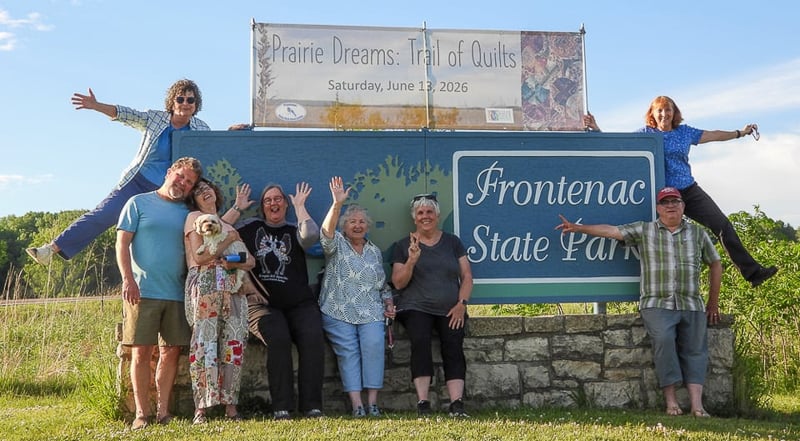
Thank you, readers and park visitors!
This is Volume 4, No. 7 of the Frontenac State Park Association newsletter, which was launched in April 2023.
Here’s where you can browse the full archives of this newsletter.

