
June: Long, languid days — and a Saturday in the park you won’t want to miss
Frontenac State Park Association newsletter
June 2026 (Vol. 4, No. 6)
Comments, contributions, compliments, complaints? Reach your newsletter editor at [email protected].
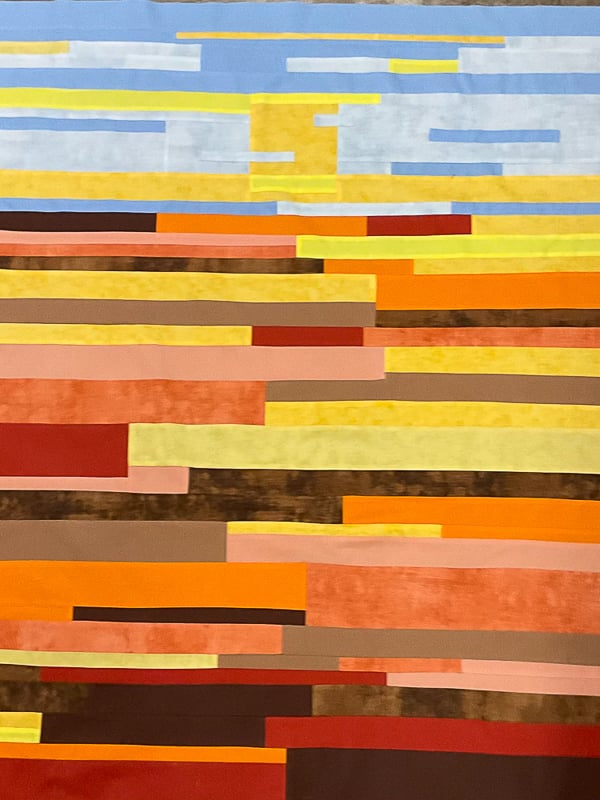
June: Long, languid days — and a Saturday in the park you won’t want to miss
In what other month might you find yourself preparing to hit the sack when dim sunlight is still present, fireflies are winking and blinking, and robins, catbirds and orioles are singing like drunken sailors? June is like that! On the other hand, it’s easier to rise at dawn, even if it’s 5:30 a.m., as the birds start up again with their beautiful racket and sunlight intensifies and pours back. Here’s to June!
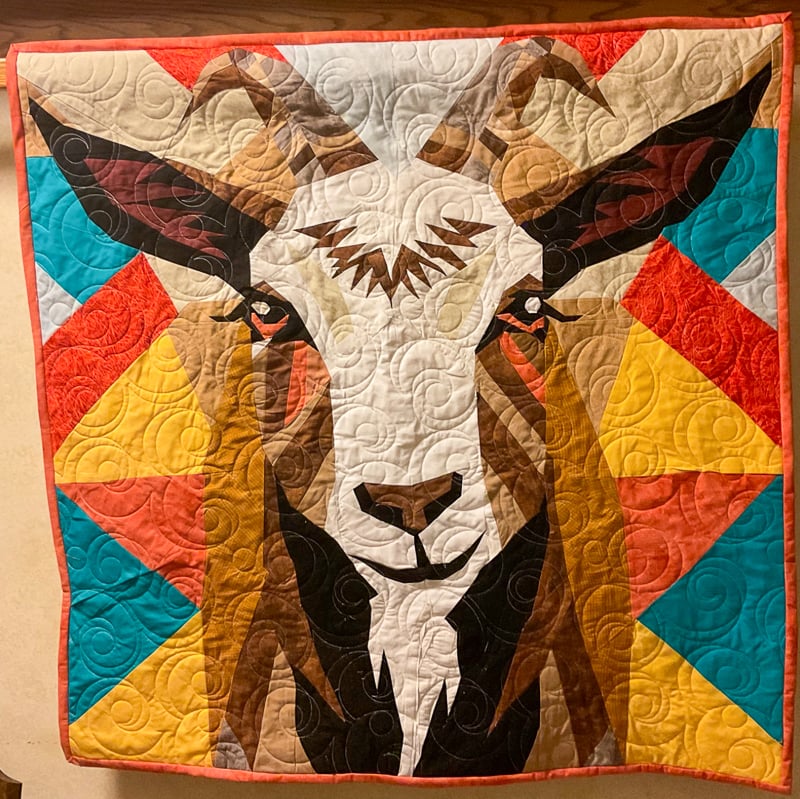
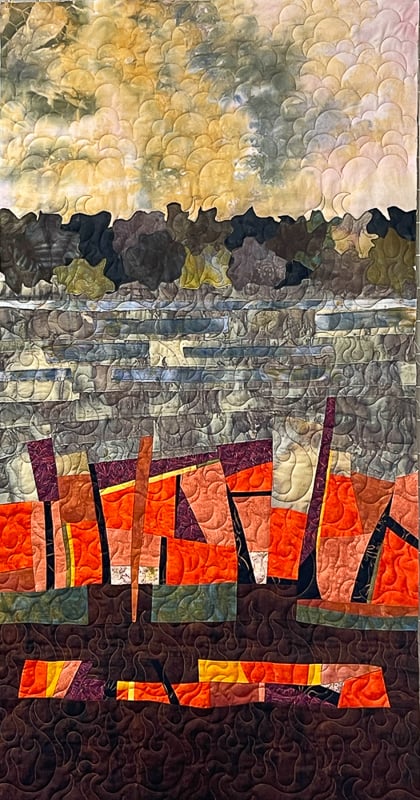
We members of the Frontenac State Park Association have been waiting for June 2026 for a long time. That’s because on Saturday, June 13 ( bonus — it’s a free day up at the park), we will be presenting a truly astounding and unprecedented event — a day in which you can stroll along a mowed, grassy prairie path high in the park that’s lined with more than 120 beautiful quilts reflecting the theme “Prairie Dreams.” Nearby we’ll have a big tent with information, exhibits and treats. We’re so excited about this event that you’ll also be getting a special June newsletter edition from us that’s just about the show. Watch for it in your inbox on June 8! Here are a couple of the quilts you’ll see at our awesome event:
Other upcoming park events:
Saturday, June 6, 10 a.m.: Ranger walk and talk on post-fire ecology with park manager Jake Gaster. Meet at the ranger station/park headquarters.
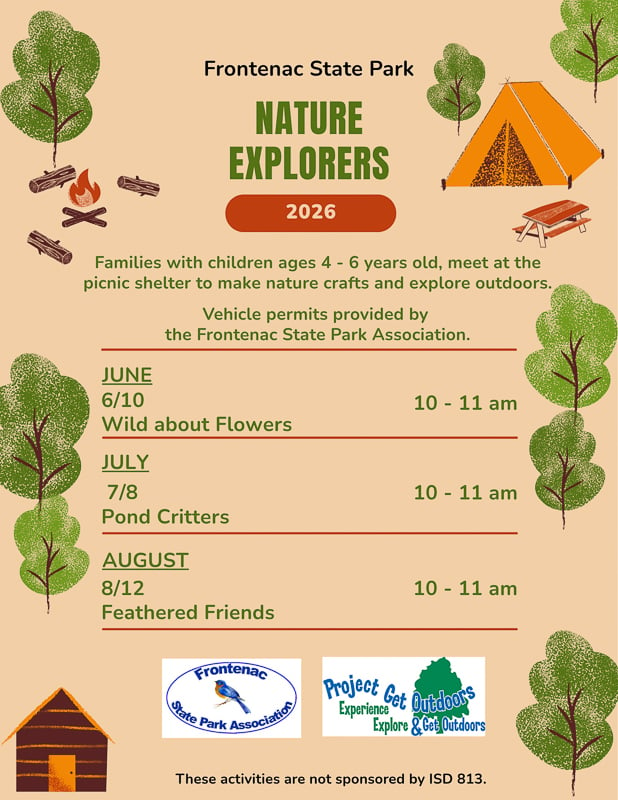
Wednesday, June 10, 10-11 a.m.: Nature Explorers program for preschoolers (ages 3-6) with Project Get Outdoors interpretive naturalist Sara Holger and FSPA volunteers. This month’s program is “Wild About Flowers.” Children must be accompanied by an adult. Meet at the park’s main picnic shelter.
Tuesday, June 16, 9:30-11 a.m.: FSPA volunteers’ monthly work day (tasks will be chosen by park rangers). If you would like to be informed about these and future work days, email [email protected].
Saturday, June 20, 9-11 a.m.: Prairie trail birdwalk led by Minnesota Master Naturalist volunteer Janet Malotky. Meet at the kiosk in the front of the campground shower building.
What’s new in the park? Updates from Jake
Park manager Jake Gaster recently provided us with these news tidbits from and about the park:
2025 attendance: We had 205,000 total visitors and more than 20,000 campers, the highest camping ever recorded for us!
We’ve burned 550+ acres so far this spring, which is great, considering 600 acres for a whole year is considered a good burn year.
Buckthorn-eating goats are coming to the Rattlesnake Bluff unit again in July and will be here through October.
Our trail maps will be updated in a few weeks, both the paper maps and the aluminum signs on the trails. We’ve modified the trails on the most recent acquisition (Waconia Cliffs) and have added an awesome new trail, the Sandstone Trail.
A new vault toilet has been stalled outside the ranger station. Good news for so many reasons!
And some very big news!: The lands bill for Frontenac State Park, which adds Jeff and Ann Bolin’s property behind the Villa Maria to the park statutory boundary, has been approved by the Legislature. We can now officially pursue a trail easement with the Bolins, allowing for a potential trail connection to the Sand Point parking lot. This opens the door for a valuable future potential acquisition for the park.
Tree burls: Beauty born of stress
By Brian Henkel, Minnesota Master Naturalist volunteer
As you walk the trails at Frontenac State Park, you may notice trees with large, bulbous growths along their trunks. Some trees bear a single growth, while others carry several, each with its own irregular shape. These unusual formations are called burls.
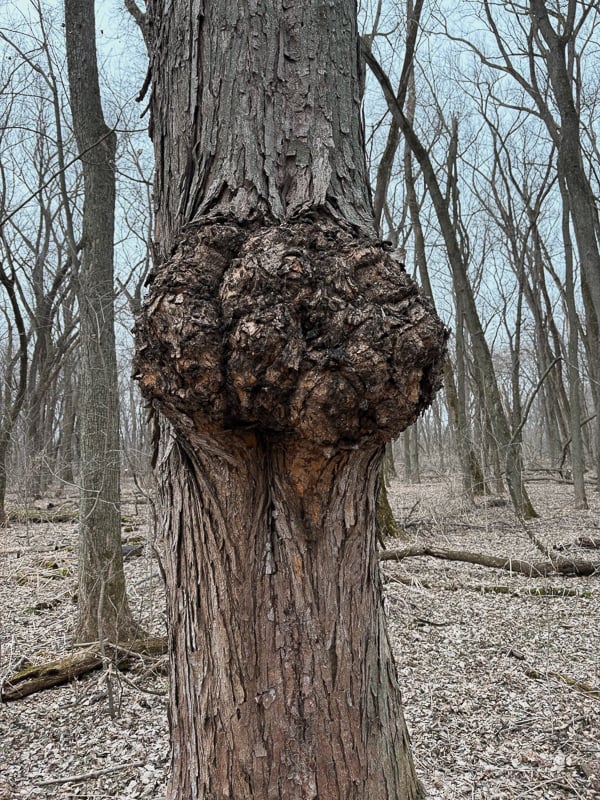
A burl forms as a tree’s response to stress that triggers rapid, disorganized growth. The exact cause with each burl isn’t always clear, but it may be linked to injury, insects, fungi, bacteria or environmental stress. Over time — sometimes decades — burl growth continues, producing the rounded masses we see on the outside of the tree.
Inside a burl, the wood grain twists and swirls in unpredictable patterns. Unlike the orderly rings of typical wood, burl grain is intricate and unique, which is why it is highly valued by woodworkers and artisans.
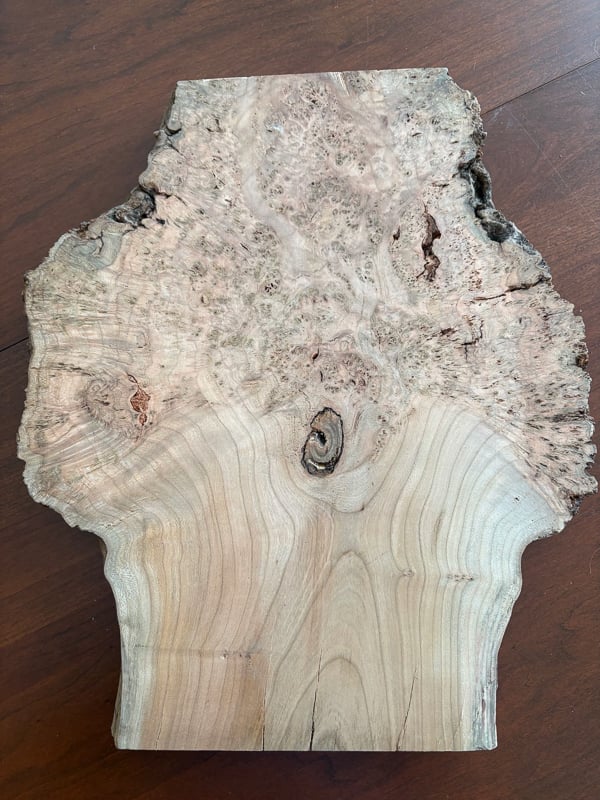
Despite their unusual appearance, burls generally do not harm the tree. But removing one would leave a significant wound, exposing the tree to disease and decay.
As you encounter these strange growths along the trail, take a moment to notice their texture, shape and individuality. They are quiet reminders that even stress in nature can give rise to something unexpectedly beautiful.
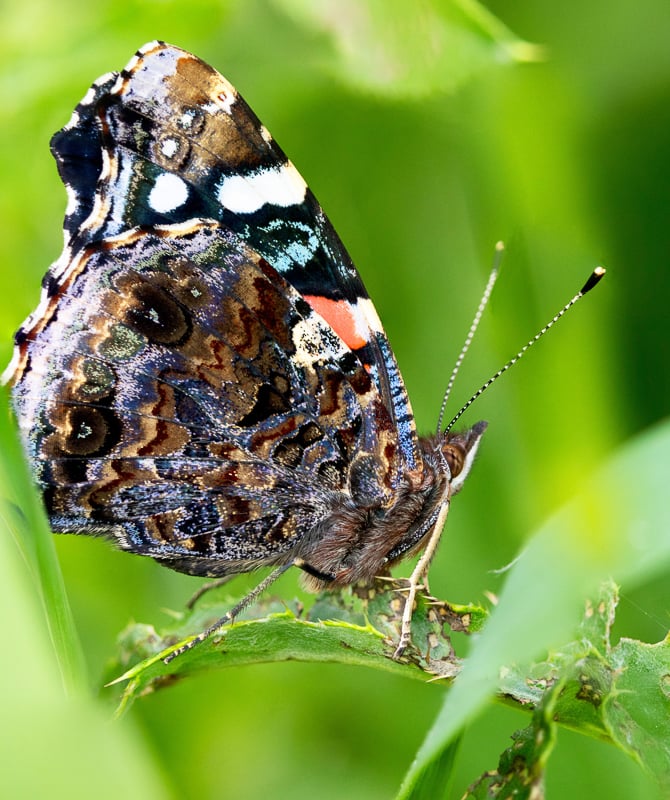
iNaturalist moment: A palette aflutter
Birdnote: Cat chat
By Janet Malotky, Minnesota Master Naturalist volunteer
Why is my neighbor’s cat crying from the underbrush?
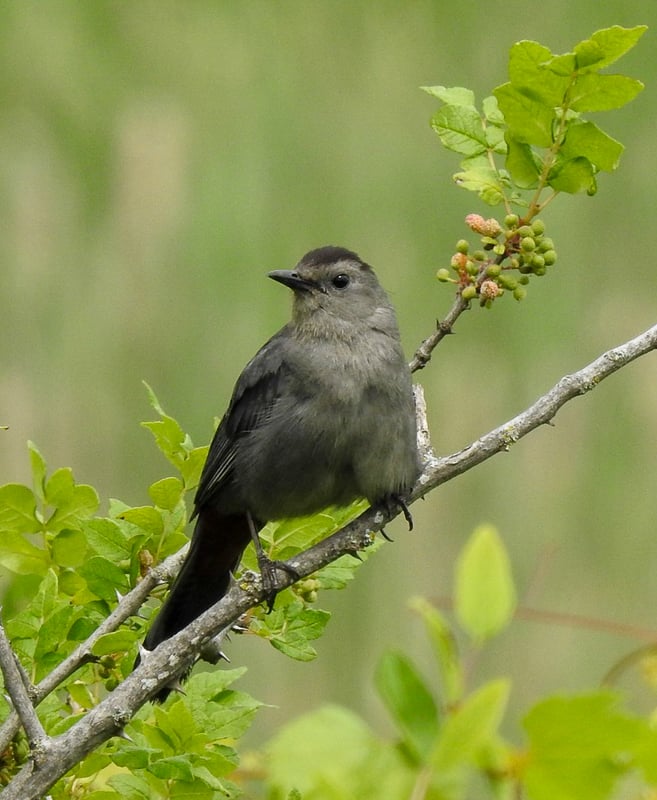
This time of year, that sound is more likely to be a Gray Catbird (Dumetella carolinensis), whose name reflects its call, which sounds like a whiny cat with a sore throat.
Catbirds are a study in contrasts. Smaller and more slender than robins, they are elegant to look at, with silky gray bodies and a dapper black cap, bill and eye. If you catch an undertail view, you’ll see the bird’s velvety chestnut underside. Catbirds are charmingly active, frequently bobbing their long tails, and they are not especially skittish of people, so you can often get a nice view.
The sounds they make, however, veer from the elegant to the comical. First there’s that meow call. But their song is even more surprising and goofy. Gray Catbirds are imitators like Thrashers, Mockingbirds and Bluejays. They copy other birds, but also other environmental and mechanical sounds. They string bits of these other sounds together in seemingly random order. Their songs have been described as a series of “whistles, squeaks, gurgles, whines and nasal tones,” meandering on and on for many minutes without a repeated sequence.
I call this silly sounding chatter “cat chat.” One day in late May four Catbirds were hanging out in our back yard having quite the gab session. They definitely do not take polite turns when talking. None of our other birds sing like this.
I say “our birds” because Gray Catbirds are common here, breeding in our area. They are found in every part of Frontenac State Park and are pretty easy to encounter, especially if you’re listening for their song. They can also be found across most of the United States during breeding season. They nest in dense shrubs and low trees, so be especially aware when you are near those features. In winter, Gray Catbirds hang out all the way down the East Coast from New England to the very top of South America, including all of Florida and the Caribbean. They eat insects, fruits and berries.
Male Gray Catbirds do most of the singing, but females sing too, just more quietly. We’re told they sing to defend their territory. Really though, when I hear their song, I feel there must be more to it than that. Gossip? Political commentary? Poetry? Talk of the weather? Perhaps sometimes they simply sing for joy. I like to think so.
Notes from the field: It’s a colt!
By Steve Dietz, Minnesota Master Naturalist volunteer
(All photos by Steve Dietz)
Last June, Janet Malotky suggested in her FSPA Newsletter Bird Note that our initial excitement about a possible Sandhill Crane colt (juvenile) in Frontenac Pond/Pleasant Valley Lakelet was premature. After 52 days of unsuccessful incubation of their eggs by the intrepid parents, hatching was unlikely. She wrote: “Though there are daily miracles and wonders in nature, like the timing of bug life and warbler migration, a fresh and fuzzy Sandhill Crane colt on the lakelet is not likely to be one of those this year. Alas.”
Well, about 300 days later, we’re in luck! This is the story of Frontenac Pond’s 2026 Sandhill Cranes.
April 10 - May 4
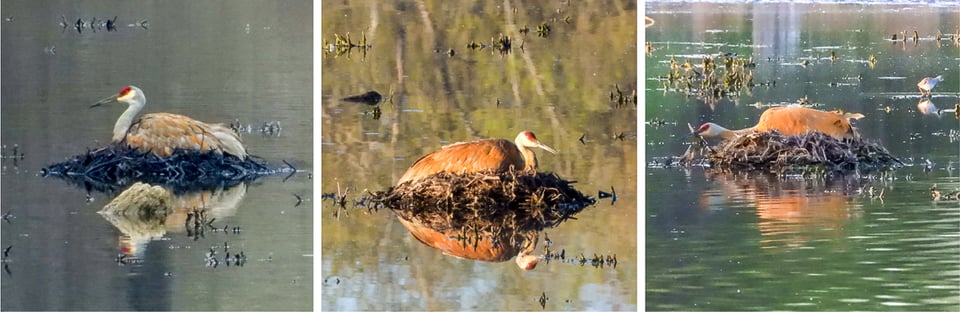
Just before we left on a trip on March 22, we counted 28 Sandhill Cranes, mostly flyovers in migration to elsewhere. We knew from experience, however, that several were likely to stay in the area, so when we got back, we checked the pond, and sure enough, a Sandhill was sitting resolutely on the same nest as last year.
We don’t know for sure if the cranes are the same pair as last year, but cranes do show high fidelity to breeding locations, and as this is the third year of a Sandhill nest on Frontenac Pond, it is certainly possible.
Over the course of the month, I made almost daily visits to the nest site and was rewarded with different poses in different light of the same scene every time. Still, it was exciting to hope that the cranes might successfully hatch their eggs this year.
May 5-8
Crane parents share brooding responsibility, and eventually I figured out that they make the first switcheroo of the day around 5:45 a.m., when the male comes back from wherever he has been resting and takes the place of the female, who has been on the nest all night. (“Sharing” responsibility means that the female broods all night and takes a couple of shifts during the day as well — so about 70% of the time. Sound familiar?)
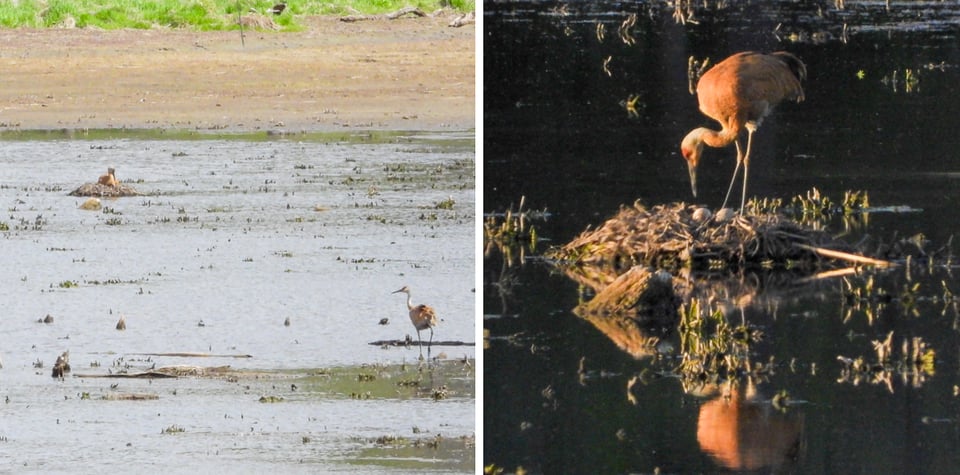
Once I knew their schedule, I awoke with hope and greeted the dawn at Frontenac Pond to watch for signs of new life. I was able to watch their changeovers most mornings and to confirm that there were still two eggs — and no colts — in the nest. Normal incubation time is 30 to 32 days. Since we first saw the adults brooding on April 10, I knew that if the pair was going to be successful this year, the eggs could hatch any day, and likely would do so no later than May 11.
May 9
May 9 started out like most other mornings. At 5:33 a.m., the male Sandhill showed up and took over brooding duties. Normally, once the female stands up, she steps off the nest, walks languidly away and then flies off. This time, however, something different happened. In my notes I wrote: “Switcheroo, but both stand around nudging, looking down at 2 eggs. Expectant? Can they hear something?”
Maybe. According to Cornell’s “Birds of the World,” hatching begins with “pipping” sounds from the hatchling inside the egg, and the parents give “purrs” of encouragement. This can happen up to 25 hours before hatching. So yes, they may have been hearing something. What’s more, these sounds also stimulate the second embryo to pip.
May 10
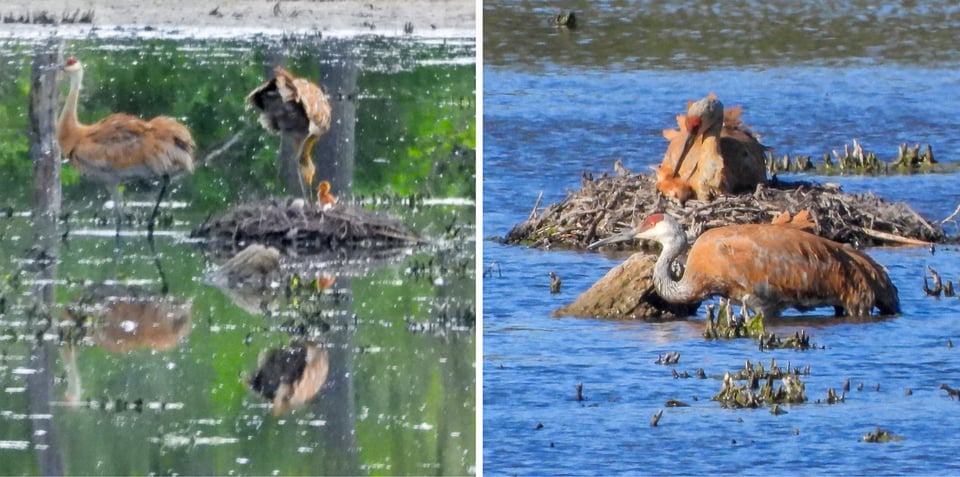
On May 10, the scenario played out a bit differently than normal. Around 5:45 a.m., the female stood up as usual for the male to take her place, but then they both nudged the eggs for a minute or so. When the male sat down, the female stayed close to the nest instead of flying off. Finally, at 7:11 a.m., the dad stood up, and there on the nest was a young chick, also standing, apparently in the remnants of its shell! All three of them spent the rest of the day hanging out together, with the colt, only a few hours old, able to walk and try to climb under the wing of one of the adults.
May 11
The next morning the second colt hatched. Normally, eggs are laid two days apart, suggesting that they should also hatch two days apart. But once the first colt hatches, all that pipping and purring can speed the second hatch up by a day. When this happens, the second colt has one day less of the nourishment in the egg.
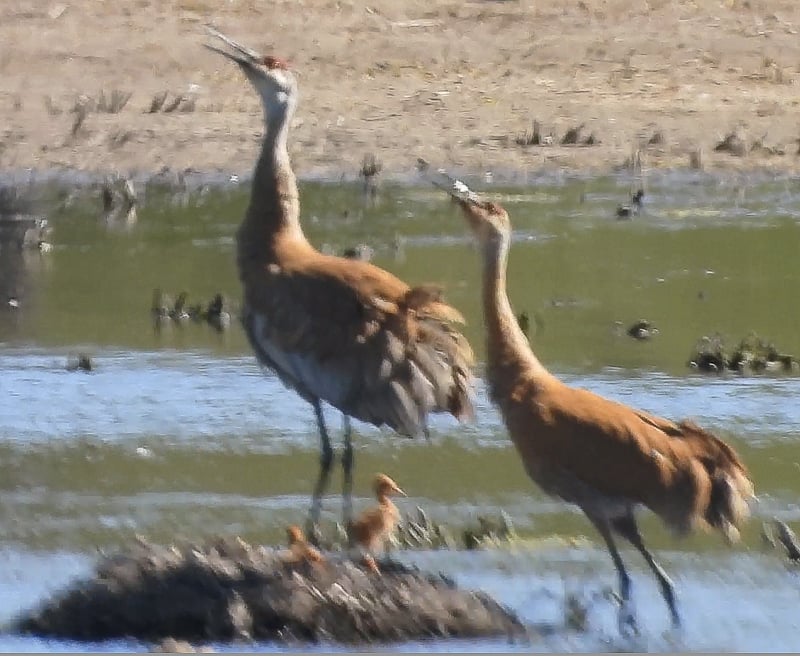
Once both colts were born, it was quite moving to hear the parents trumpet triumph to the skies. I feel certain they were yodeling, “We did it!”
May 12
The next morning, the adults spent time feeding the young colts and apparently trying to coax them into the shallow water around the nest. At about 8:25 a.m., they were successful. The two colts, barely 24 and 48 hours old, followed their parents out of the nest. It took about an hour and a half to journey into the grass beyond the mud flat, with many stops along the way. It was clear that the younger colt was less coordinated and had much less stamina. It often fell and took a while to get up. Ironically, when this happened, the adults fed the older colt, and the younger one missed its chance for food. Twice during the journey, an adult Bald Eagle swooped by low, and the adult Sandhills warned it off with ferocious calls and their so-called “upright forward” stance. Eventually, all four cranes disappeared into the grass, but in the evening they were all back on the nest.
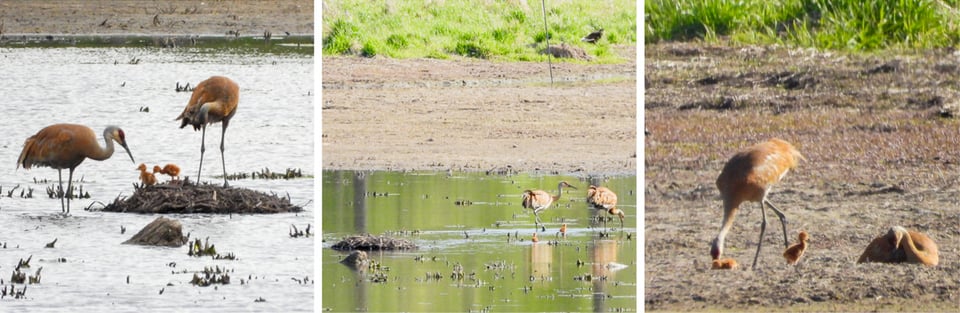
May 13
The next day, May 13, only one colt was to be seen, even though the previous evening all four had returned to the nest. No body was visible in the nest, but overnight, somehow the second colt had perished.
According to “Birds of the World,” “siblings are aggressive toward each other and conflicts are frequent. …. Sibling aggression may be one reason why even though cranes typically lay two eggs, often only one bird is raised to fledging.” Predation? Sibling rivalry? Premature birth? We will never know, but some research pegs the average survival rate for Sandhill chicks at 30%.
May 14 - May 30
The Sandhill family of three has continued a routine of foraging on the mudflats and resting in the tall grasses during the day, then returning to the nest at night. The surviving colt probably doubled in size in the first seven days and soon strode about confidently. After a few days, it appeared to do some foraging on its own, but was still being fed by the adults.
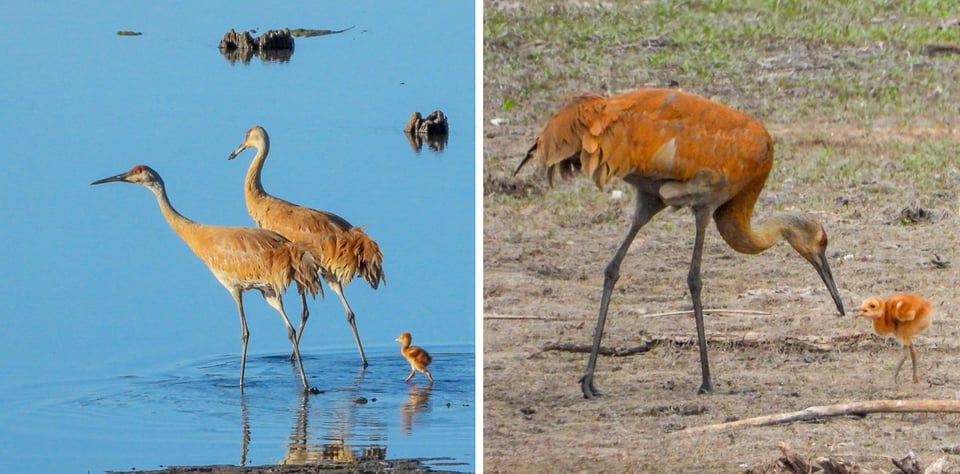
May 31
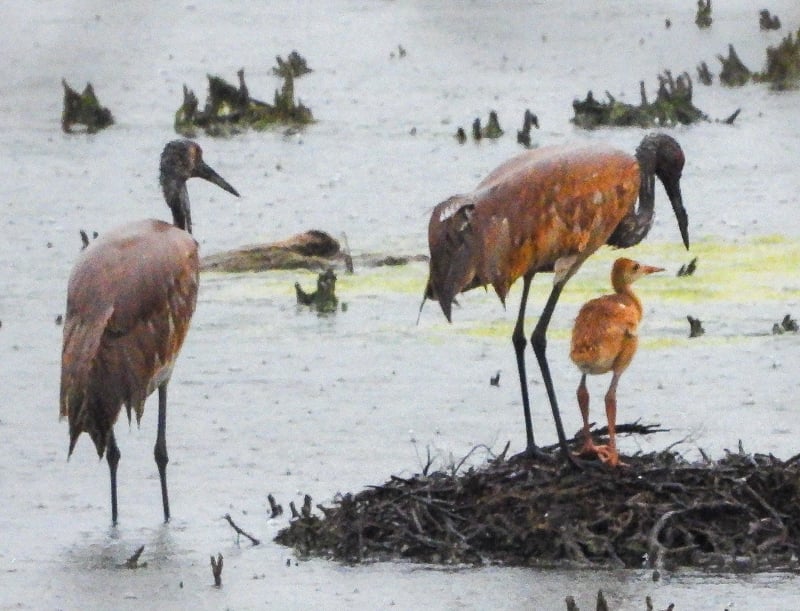
The colt is now as tall as its parents’ legs. It is 23 days old today. It will be able to fly 49 to 75 days from hatching. If it survives, the colt is expected to migrate south with its parents in October. It will continue to have some dependence on them for about 10 months. We will endeavor to keep you posted.
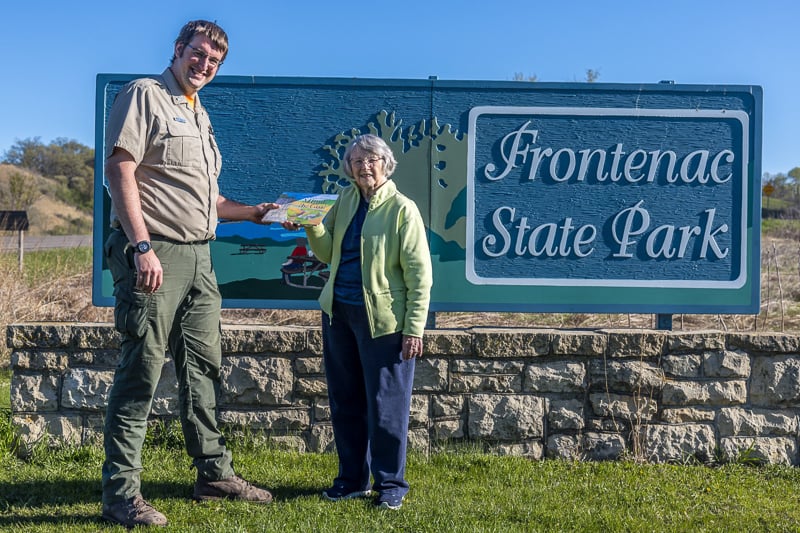
New children’s book honors the life and legend of White Lightning
By Pamela Miller, Frontenac State Park newsletter editor
The big (and brave!) white goat that survived on its own in Frontenac State Park for more than two years is the subject of a new children’s book by Wacouta Township resident Kathy Ause.
Dubbed White Lightning by locals who often spotted it on Rattlesnake Bluff, the goat gets a new name — Minnie — in “The Blufftop Adventures of Minnie the Goat,” published by Beaver’s Pond Press of St. Paul.
“It’s a true story with a fictional twist,” Ause said. “Minnie is a real goat, part of a herd of about 30 that has spent the past three summers munching invasive buckthorn on the prairie blufftops at Frontenac State Park. The story follows her year-round adventures, including the moment she escapes the fall round-up and earns her nickname. Along the way, she befriends wildlife and discovers what it truly means to be brave.”
The book is illustrated by Kari Vick, who grew up in Red Wing and now lives in Lutsen, Minn.
Ause took a few questions from us about her book:
Q: How did you come to write the book?
A: My husband, Bruce Ause [retired director of the Red Wing Environmental Learning Center], and I kept noticing a white goat who would wander to the edge of the bluff and linger there. She seemed to be watching the trains and Hwy. 61 traffic as well as the bikers and hikers on the prairie trail below. Something about her was simply captivating.
Q: Tell us about yourself.
A: I'm a longtime Wacouta resident and, with this book, a first-time author. Bruce and I have always felt that nature is at the heart of our lives. Living in the rural Red Wing area has given us a front-row seat to the natural wonders of the bluff country and the Mississippi River, and we never take that for granted. We have three grown daughters and three wonderful grandchildren who have brought more joy to our lives than we ever could have imagined.
Q: What do you hope your young readers (and their parents) take away from Minnie’s story?
A: I hope they come away with a deeper appreciation for bravery in everyday life. There are so many moments, big and small, when being brave helps us face the day, and I hope Minnie's adventures inspire that. I also hope readers find themselves happily lost in Kari Vick’s stunning artwork. She has a true gift for capturing the lush landscapes of the park and the sweeping vista of the river valley.
Q: The latest word from the park is that no one has seen White Lightning since last fall. If he or she is gone, what do you see as his or her legacy?
A: We like to think she has simply found a fresh patch of buckthorn to munch on another bluff somewhere. White Lightning has always done things on her own terms, so it only makes sense that her whereabouts remain a bit of a mystery. That independent spirit is exactly what made her such an irresistible character.
Q: Where can people buy the book?
A: Find the book and more information at www.minniethegoat.com. On Saturday, June 6, we'll be at the Fairy Festival in Red Wing from 11 a.m. to 2 p.m., behind Mandy's Coffee and Café at 419 W. 3rd St. On Saturday, June 13, we'll be at Frontenac State Park for its “Prairie Dreams: Trail of Quilts” exhibit, from 10 a.m. to 5 p.m., with readings at 11 a.m. and 1 p.m. Park entrance is free that Saturday. Locally, you can pick up a copy at Fair Trade Books at 320 Bush St. in Red Wing, Red Wing Restyle (Tootsie’s Too) at 401 W. 3rd St. in Red Wing, DogHouse Books Reading Room and Bookmobile at 128 S. Washington St. in Lake City, the Frontenac State Park office and the Whistle Stop Café in Frontenac Station. Books also will be available soon at Stockholm Pie and General Store in Stockholm, Wis.
And a few words from illustrator Kari Vick:
My husband, Jim, and I have been friends with the Auses for decades. Frontenac State Park has been an important part of our lives as well. Jim worked there in high school (in the 1970s), both as a naturalist and helping build the trails and campground. A trip to the park was one of our very first dates.
For the past 40 years, we have lived in Lutsen, on the North Shore of Lake Superior, but the Mississippi River and bluff country continue to call to us. My childhood bedroom overlooked the river; barge lights often lit up the walls at night. When Kathy called me to tell me about White Lightning, I said, “That sounds like a children’s book!” And she said she had already written it!
I have previously illustrated a dozen books, but this one was the first that allowed me to focus on the landscape of my childhood -- rolling farmland, bluff country, the river valley and Lake Pepin. We made several trips with our camper to Frontenac so I could paint on location ... this story is, indeed, locally home-grown!
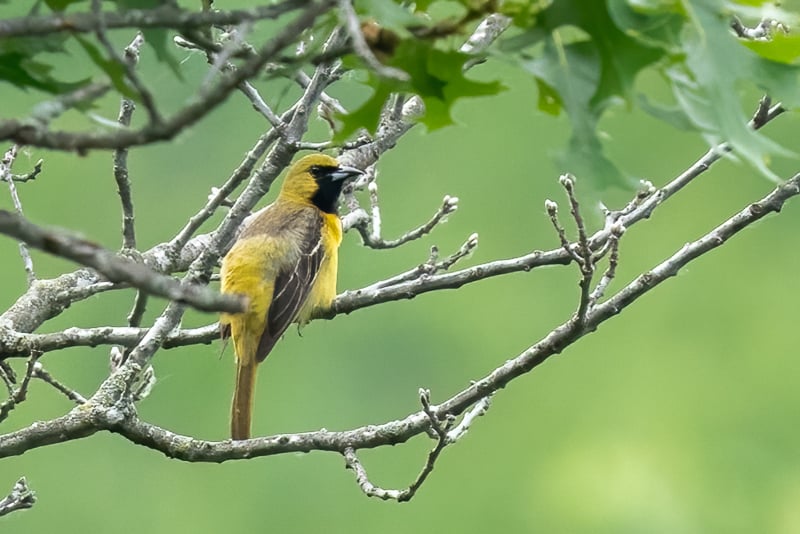
Poem of the month
“A Hot Day” By A.S.J. Tessimond (English; 1902-1962)
Cottonwool clouds loiter.
A lawnmower, very far,
Birrs. Then a bee comes
To a crimson rose and softly,
Deftly and fatly crams
A velvet body in.
A tree, June-lazy, makes
A tent of dim green light.
Sunlight weaves in the leaves,
Honey-light with leaf-light,
Green interleaved with gold.
Sunlight gathers its rays
In sheaves, which the wind unweaves
And then reweaves – the wind
That puffs a smell of grass
Through the heat-heavy, trembling
Summer pool of air.
Interested in joining the FSPA?
If you are a member, thank you! You help us pursue our mission of supporting this treasured park in myriad ways.
If you’d like to join us, we’d be honored to have your support. Dues are $25 per year for an individual, $35 for household membership. Here’s a link with signup information.
A reminder that joining us occasionally to help with volunteer efforts is awesome too, even if you’re not a member. The FSPA’s goals are to support Frontenac State Park activities and share our love of this beautiful park with as many people as possible.
To sign up to regularly receive this free, spam-free monthly newsletter, click on “Subscribe” below. Feel free to send questions or comments to your newsletter editor at [email protected]. Questions about the FSPA? You can reach FSPA president Steve Dietz at [email protected].
Handy links for more information and education
Frontenac State Park
Frontenac State Park Association
If you take pictures in the park, tag us on Instagram
Frontenac State Park bird checklist
Frontenac State Park on iNaturalist
Parks & Trails Council of Minnesota
Website for our township, Florence Township
Minnesota Master Naturalist programs
Red Wing Environmental Learning Center
Lake City Environmental Learning Program on FB
Visit Lake City
Zumbro Valley Audubon Society
Bruce Ause’s Wacouta Nature Notes blog
Marge Loch-Wouters’ Hiking the Driftless Trails blog
Frontenac State Park staff
Jake Gaster, park manager; Amy Jay, assistant park manager; Amy Poss, lead field worker.
Parting shots
Thank you, readers and park visitors!
This is Volume 4, No. 6 of the Frontenac State Park Association newsletter, which was launched in April 2023.
Here’s where you can browse the full archives of this newsletter.

