Complicated Things: a review of Nović's Mother Tongue
In Sara Nović's memoir, accepting our children as whole people means understanding the forces that shaped us
Deutsche Gebärdensprache im Herbst
I’ve been too slow to get out a new newsletter, and the truth is that post-book-launch, with the enforced idleness of chasing the kids around all summer, I’ve been feeling kinda like crap as a writer. But post-publication malaise can’t last forever. School’s back in session, the grapes hang heavy on the vine, and I was given an amazing opportunity last week when Deaf psychologist Sofia Wegner invited me to address the German Federal Association for Mental Health and Deafness, mhDeaf.
This was my first time presenting to an overseas audience. Speaking to the two-dozen or so parents and professionals who came together on the call was thrilling, and a bit scary. Since this was a psychiatric organization, the themes were the emotional and relational sides of parenthood. Addressing these meant opening myself up more than I usually do—talking about the long periods of fear and uncertainty I experienced after Oscar’s birth, getting into the mechanisms of betrayal at the hands of well-meaning (and sometimes straightforwardly malevolent) professionals, and generally sticking to the trauma.
All that left me feeling a little crazed, an unhinged American showing up and badgering a group of very kind and interested foreigners.
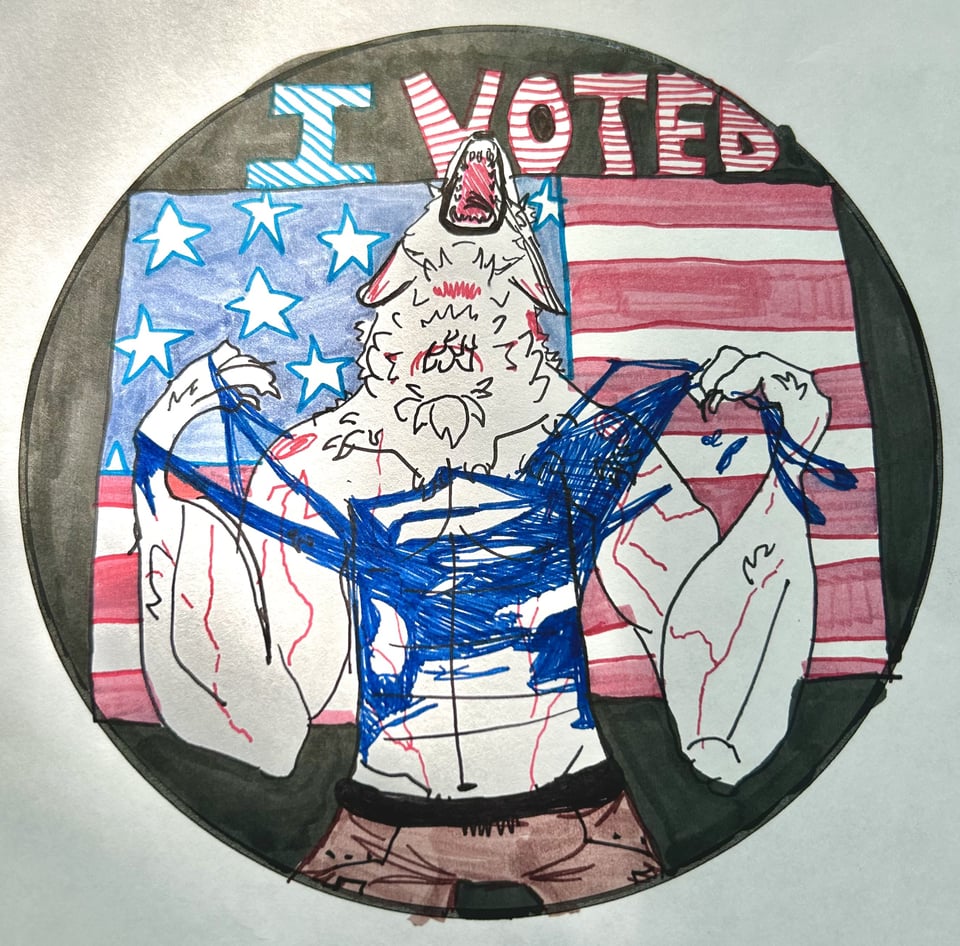
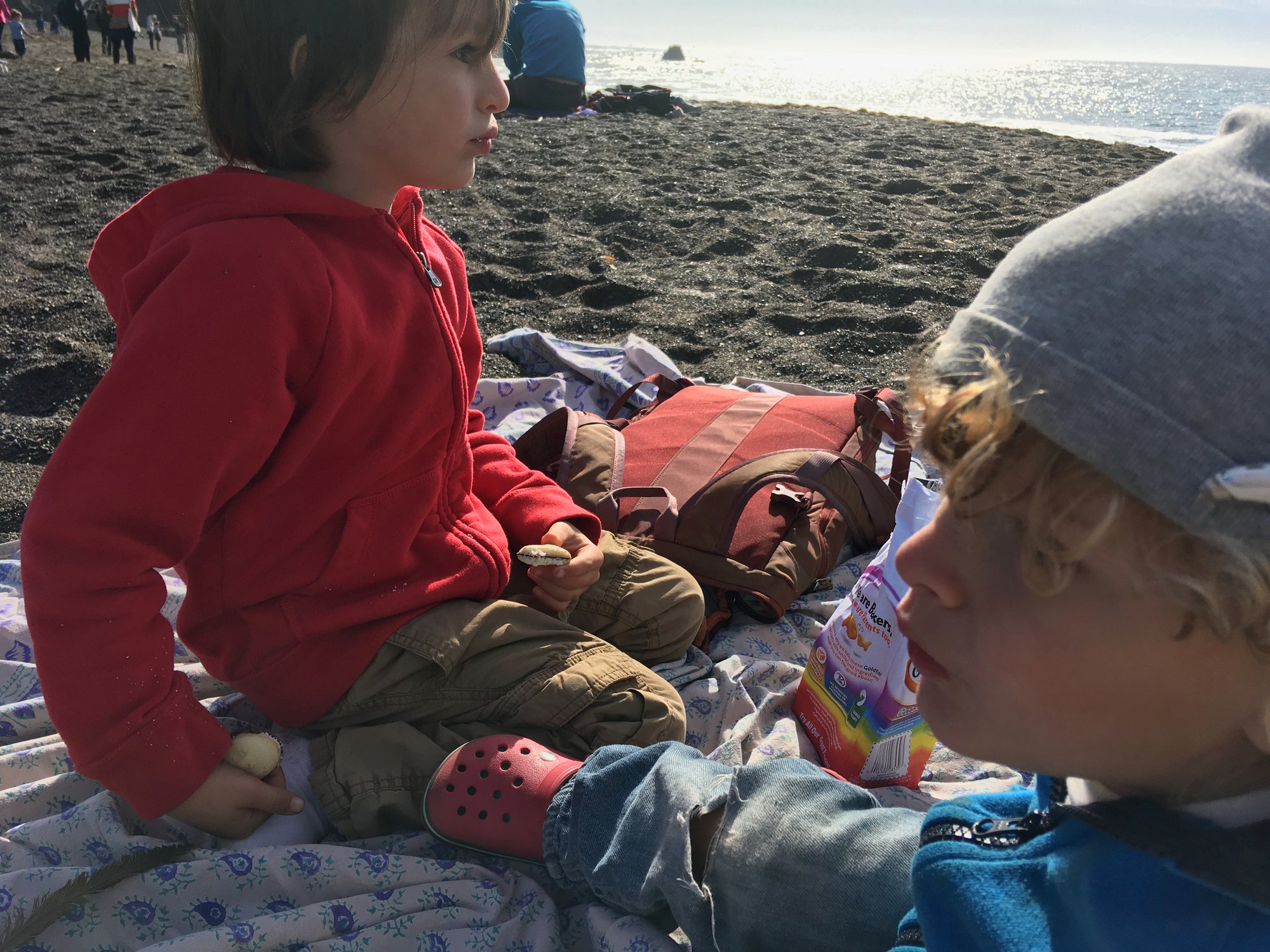
(And the second time using this pic)
But in this case, “angry, traumatized and betrayed” turned out to be a pretty relatable starting point. Just like in the US, German parents were mad at the audism they encountered from all sides: that their doctors downplayed their children’s need for language access, that early intervention systems discouraged sign (Deutsche Gebärdensprache / DGS in this case,) and that schools weren’t prepared to give their children competent interpreters or access other resources. And of course, the Deaf psychiatric professionals were furious that they were left to pick up the pieces years later.
But I was impressed with the persistence, intelligence and care that these parents and professionals showed in the face of all this abuse. Not to mention the language skills—the whole event was in English with DGS interpreting, and plenty of Deaf folks attending also knew ASL. The multilingual reality of the audience just underscored the frustration at how hearing German professionals and administrators systems resist sign language and the benefits of Deaf culture.
Over the next few years, I’ll be trying to get the DBIM translated into various languages with the help of local partners—Germany is one of the first. If you’re interested in supporting that effort, please drop me a line.
Mother Tongue and marinara
Deaf author Sara Nović’s Mother Tongue was published in May of this year. You’ll recognize the name from 2022’s True Biz, a barn-burning novel of punk-rock rebellion set at a school for the deaf; it’s a book I recommend constantly.
So I ordered this book of nonfiction essays in advance, and read it pretty much in a single sitting back in the spring. My excuse for not covering it earlier was that it came out a couple weeks after my own book launched, and I’ve been too busy with promotions and childcare to give it a proper write-up. But The National Book Foundation just stepped in and saved my ass by naming it as a finalist it for this year’s National Book Award in nonfiction, so I can now pretend that this is a timely review.
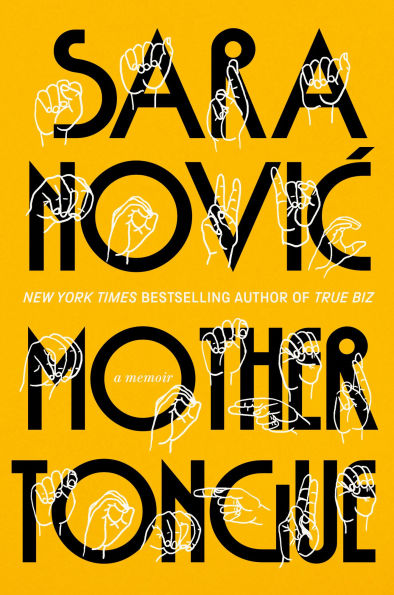
Mother Tongue an extraordinary work on parenthood, deafness and disability. I almost wrote “parenting memoir,” but the book is less straightforward than that, and parenthood, deafness and disability are only three of about a dozen animating topics for a series of essays that loop around from present to past and back, covering Noivć’s experience growing up and building a family with multiple overlapping identities.
Despite its complexity, the book isn’t a puzzle—Nović is an exceptionally clear writer and thinker. We know from the first pages that they have a hearing partner and two kids, close in age: one their hearing biological son, one their adopted deaf son. From there, the topics are laid on in layers—having a racially-mixed family during BLM, forming a deaf identity in late adolescence (and the ways being a hopelessly ambitious nerd complicates that process,) the experience pregnancy as a disabled person, a harrowing story of adopting a child internationally, and coming through an 80’s evangelical upbringing into a queer sexuality and gender identity, and more. Each chapter adds flavor and texture to the one before: a life like lasagna.
Since Nović’s an outspoken advocate for ASL and Deaf culture, especially for kids, there are big pieces of Mother Tongue connect directly to my main themes—”[ASL] was like aloe for a burn, or a brace for a broken bone.” The chapter about their struggle with early intervention is especially salient, as is the one about the assault on disability rights by the Trump administration, but Nović is writing from the inside out as a deaf adult and parent to a deaf (and a hearing!) child. They don’t gloss over the ironies and pains of an adult life and the history that informs it, and folks who read the Deaf Baby Instruction Manual will find much deeper, rougher and more personal accounts of the issues I touch on in my book.
One anecdote features a frightening assault on the subway, where the attacker cycles through rage, pity, and predatory opportunity as it dawns on him that his catcalls literally fell on deaf ears. Another is about growing up with music, and how choir was the perfect place to hide as a teen with progressive hearing loss, and the joy, years later, of lovingly, deafly signing to a baby. The history sections are especially bracing, reminding us that no matter their value, Deaf culture and institutions have never been fully welcoming places, and have always reflected the privilege, racism and ableism of the wider world.
There are also connections to hobby horses I don’t ride too much in public: Nović writes movingly about the suffocation and discoveries of COVID lockdown with a partner and young child. I alternated cheers and gasps for that chapter, which reflected so much of my own experience trying to nurture my family in the darkest days of the pandemic, and I gasped again when lockdown intersected with the dramatic story of adopting their second son from Thailand. As someone with adoption stories in my family, I appreciated the clear-eyed view of the predatory nature of the business, and the sometimes mixed motives of adoptive parents, contrasted with the urgency of bringing a deaf child out of a loving, but language-less orphanage in Bangkok, and the happy family that grew from that wild chase.
Of course, there’s plenty in the book that doesn’t meet my personal history at all—just very smart, angry, well-cited chapters that meet the moment in a time of rising bigtory of all kinds. But what really stands out is the book’s joy. As a nonbinary person, Nović embraces motherhood on their own terms and with their whole self. They love being a parent and watching their kids grow, separately and together, and the best parts of Mother Tongue glow with that love, even as the future, powered by a dark and never-finished past, comes rushing towards their family and all of us.
It’s not a simple picture, and as parents or as professionals caring for deaf children, the complexity is the point. Accepting our children as whole people means understanding the forces that shaped us and our view of them, and then allowing them to build themselves up in their own ways like this book was built: layer over layer, cheese over noodles over sauce. Delicious and nutritious, a whole, hot, nourishing thing.
Monster Hands, the ASL Story
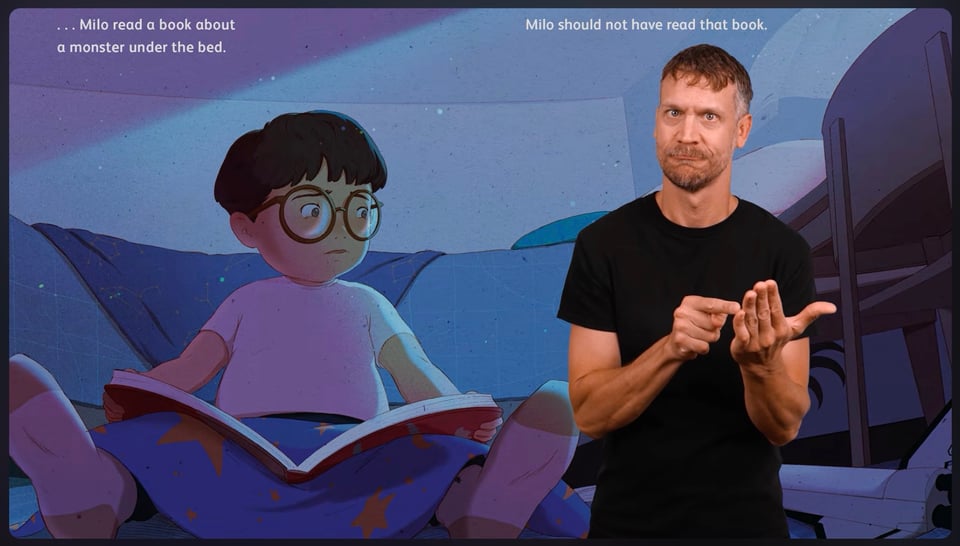
Finally, I just wanted to leave you with Texas School for the Deaf’s recent rendition of Monster Hands. I still think it’s among the best depictions of Deaf characters in children’s literature, and I think TSD does some of the best story-signing online—enjoy!