
Future Visions: Brand Museums with Olivier Flaviano
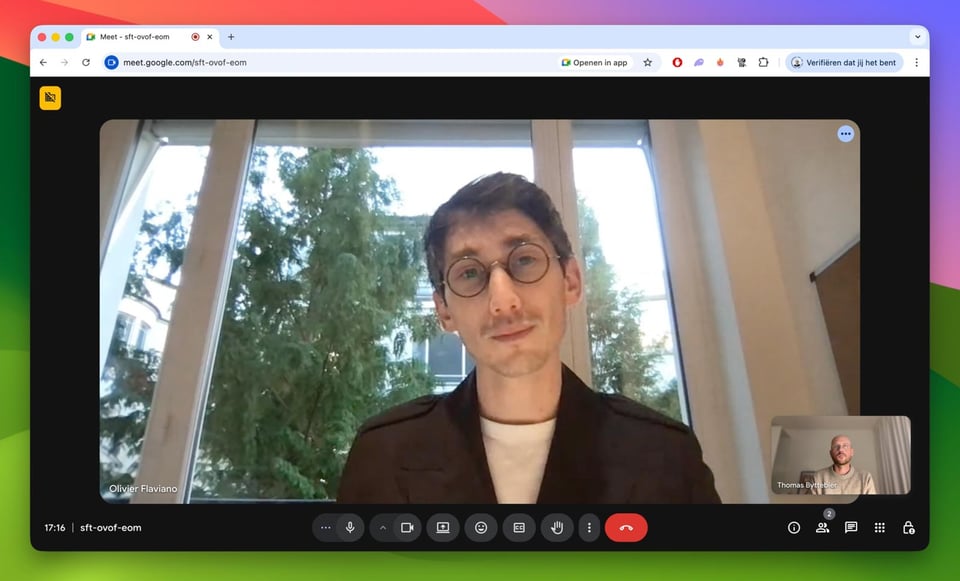
An interview with Olivier Flaviano, head of the Dior Museum in Paris. We talk about why luxury houses invest in archives, how new technology can help museums, and how to design immersive exhibitions.
You are reading Future Visions, a newsletter by Uncommon Practice. This edition looks at the future of immersive exhibitions. I spoke with Olivier Flaviano, Head of the Dior Museum in Paris. We talked about why luxury houses invest in archives, how past and present interact, and what technology can and cannot replace.
Why Dior built a museum
Luxury brands were not always concerned with archives. Why was it important for Dior to create their own museum? And how does it fit in Dior’s broader brand communication?
Olivier Flaviano: At the time of Christian Dior, couture houses did not keep their prototypes. There was no awareness of heritage yet. Garments were worn every day for weeks during client shows, and by the end they were not in a state worth preserving.
Things changed only in the 1980s. The first major fashion retrospectives showed how culturally significant these creations were. Dior created its heritage department in 1987 and began buying garments back, building conservation spaces, and assembling a team. It has taken decades of investment.
The purpose of a museum is not commercial. It is to share a story. Dior’s story is 80 years long, rich, continuous, and still being written. A museum allows us to tell it with clarity and depth.
Heritage as a strategic asset
Many brands look to the future, but Dior invests heavily in its past as well. What does this heritage bring to the brand today?
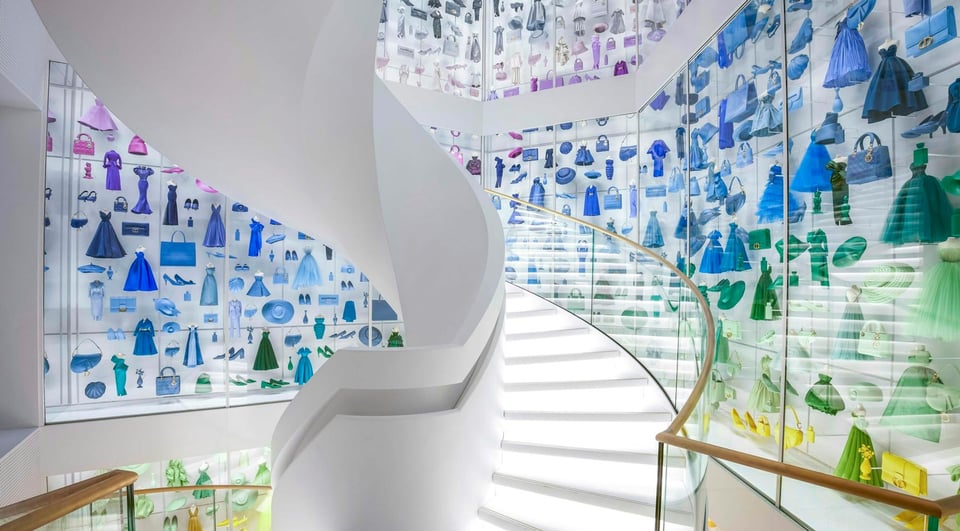
Olivier Flaviano: What makes Dior Dior can be found in the archives: the silhouettes, the codes, the attitudes. Every designer who arrives to lead the brand, first looks at the archives. They look at the same history through their own, new lens.
Remember Christian Dior created the house in 1946 and died in 1957, but the story did not stop. Yves Saint Laurent followed, then Marc Bohan, Gianfranco Ferré, John Galliano, Raf Simons, Maria Grazia Chiuri, and now Jonathan Anderson. Each adds a chapter while speaking to the same foundation.
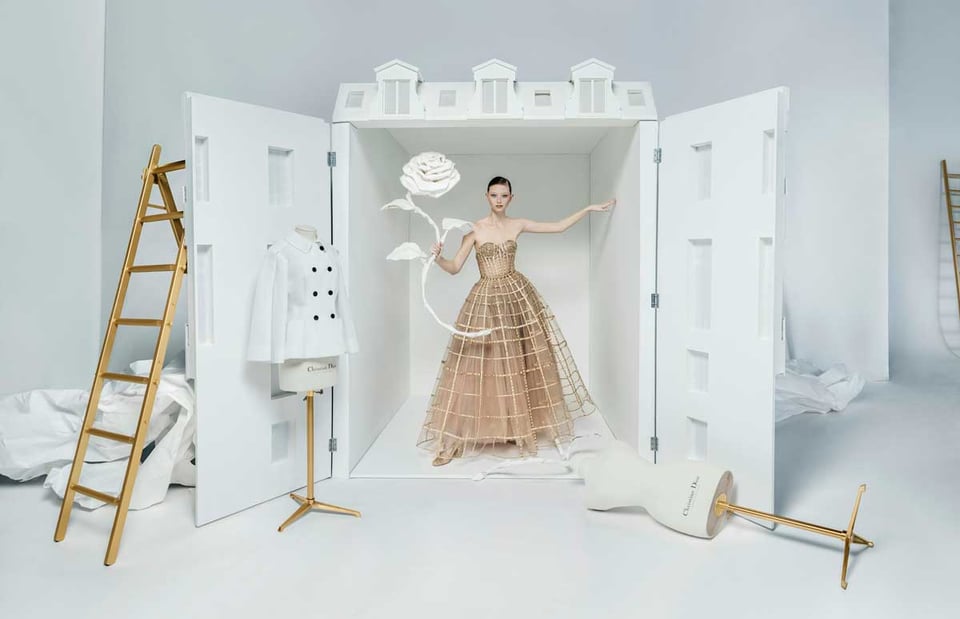
You can think of a fashion show as a living exhibition, and an exhibition as a still fashion show. The two worlds inform each other. The past inspires the present, and the present gives the past new meaning.
Designing an immersive experience
The Dior Gallery feels unusually alive. Visitors see seamstresses at work and encounter film, sound, and scenography. How did you design that experience?
What we’ve talked about so far is the tangible heritage. But there is also intangible heritage: craftsmanship. Without craftsmanship, there would be no dresses to display.
What makes the Dior Museum unique is that it is inside the historic Dior house, where it all started and where a lot of activity is still ongoing. When we renovated the building complex, we kept the haute couture ateliers above the museum. So while visitors are downstairs looking at history, upstairs couture is being created.
We wanted visitors to feel that connection: the continuity of craft. That’s why the seamstresses are present. They bring life and immediacy.
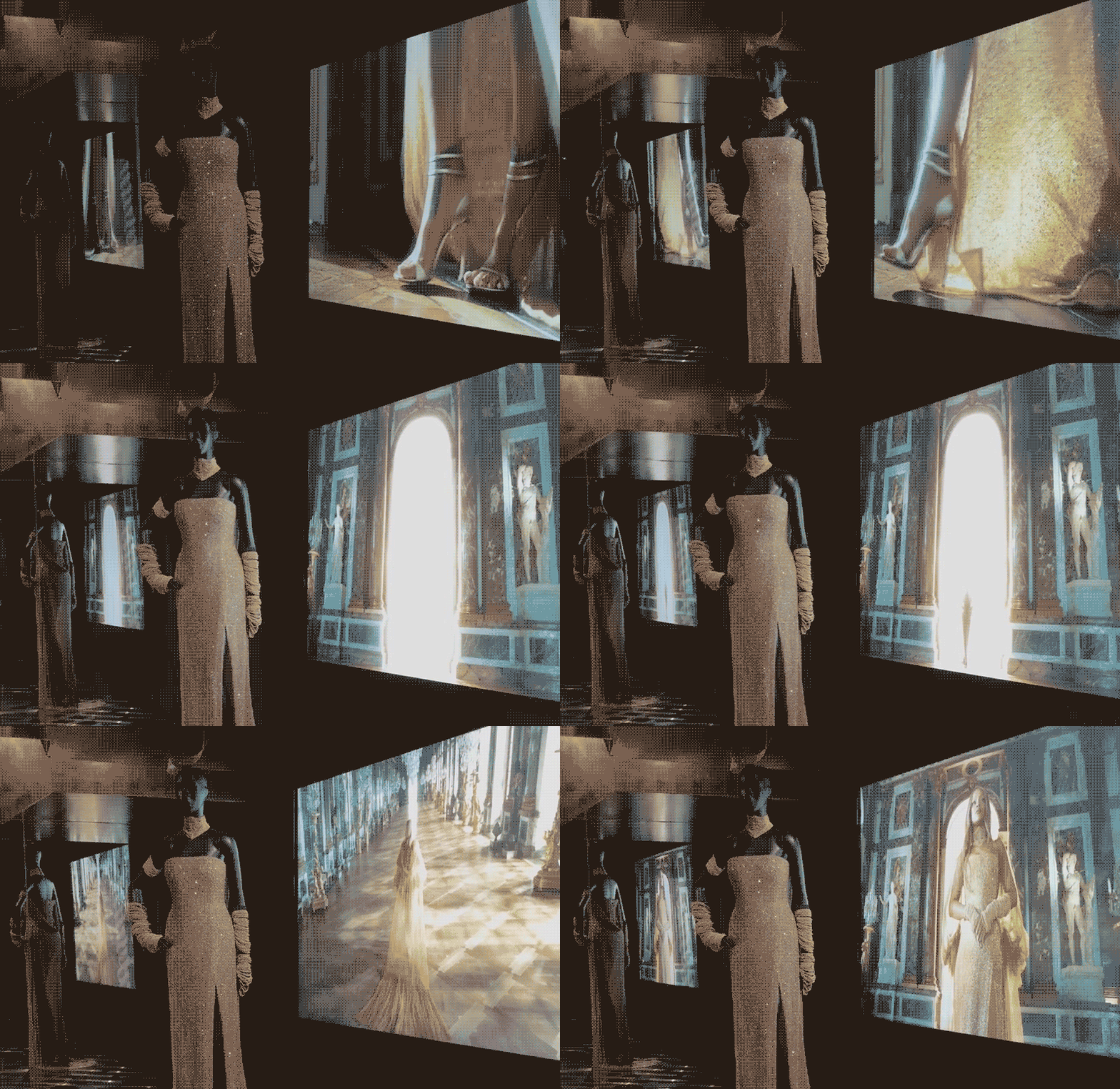
Fashion objects are made to move. Exhibiting garments is always a challenge, because they are static. Videos, photos, and other media help restore movement and context. But all those tools are there to serve the garment, never to overshadow it. A museum’s magic is the encounter with the original object.
Digital to complement, not replace
That brings us to digital technologies. New tech can simulate fabrics, scan garments, or recreate past shows. How do you see their potential and their limits?
Olivier Flaviano: Technology moves quickly, and it can add valuable layers. High resolution scans can reveal technique. Digital tools can bring archives alive for people who may never travel to Paris.
But technology cannot replace authenticity. You can see images of the Mona Lisa everywhere; but people still queue at the Louvre for the original work. A museum is a social space. You walk, you point, you react with others. Digital experiences are individual. Standing in front of an original garment and feeling its presence… that experience cannot be replicated.
Is that also why the Dior Museum website is telling the Dior story in another way?
Olivier Flaviano: Yes. I don’t think we should replicate the museum online. We should use digital tools to create something different. Not to imitate the physical space, but to offer complementary storytelling.
I love that. People often try to bring the physical museum to the screen, which never works. Your approach, using digital to create something different that embraces the medium, makes a lot more sense.
Olivier Flaviano: Exactly. And beyond that: a museum is a social space. You come with family, friends, children. You talk, you point at things, you react together. You interact with seamstresses. You have a coffee afterwards. It’s a whole ritual. Digital cannot replicate that.
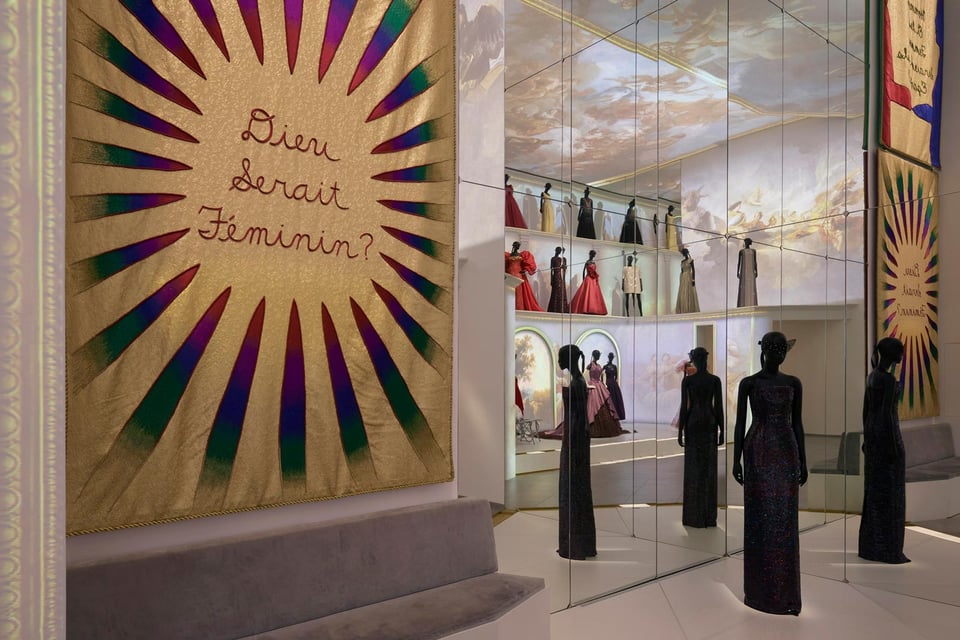
Machines vs The Poetry of Life
To conclude: the Dior Museum is so well designed. I’m sure you thought about this: what is the lasting impression you want people to take with them when leaving the museum?
Olivier Flaviano: I’ll make a parallel with couture. Christian Dior once said, I think in his 1955 Sorbonne lecture, that couture must be preserved because machines will never replace the human touch. There is something in a couture dress crafted by hand that embodies what he called “the poetry of life.”
I believe our museum must transmit that poetry. That is the lasting impression we want visitors to take.
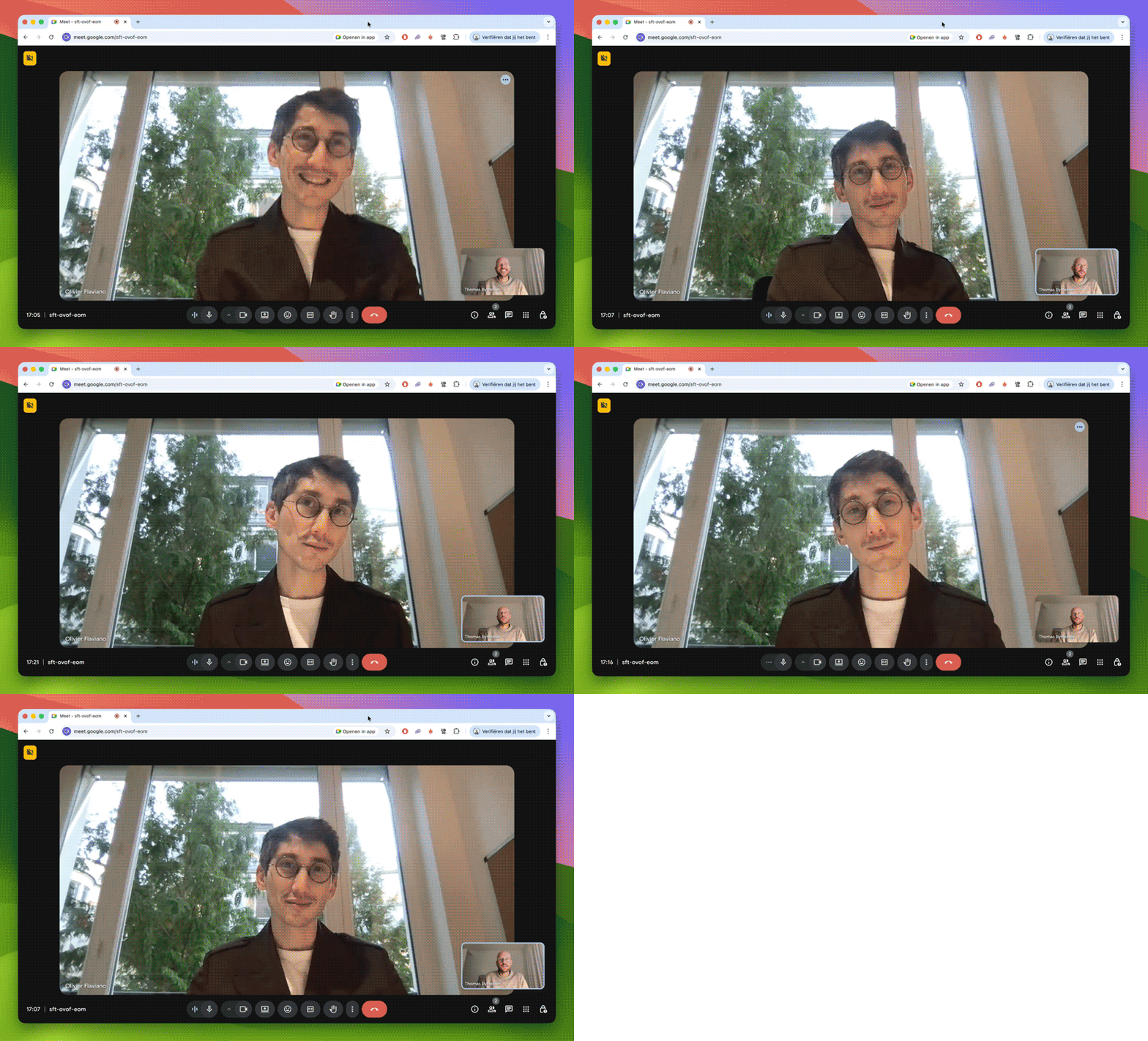
Before we go
A long while ago, at Base, I worked together with Olivier Flaviano to create an online experience that allows visitors to discover the original Dior house at 30, Avenue Montaigne, room by room. (And BTW, we also designed the official Dior Museum website.)
If you’re ever in Paris, make sure to visit the Dior Gallery. As you can guess, it’s extremely well done. Hats off to Olivier and his team.
If you missed it: in a previous interview, we looked at the future of hospitality with Koen Malfait, creative director at Airbnb.
We teamed up with Artem Lyustik to create something special: send your friends a message they can only reveal by blinking their eyes. See how it works or try it out yourself here.
If you enjoyed this, please forward or share the subscription link. It helps!
Until next time,
Thomas Byttebier
Uncommon Practice