
Notable Sandwiches: Philadelphia, On A Roll

Welcome back to Notable Sandwiches, the feature where my editor David Swanson and I eat our way through Wikipedia’s List of Notable Sandwiches. This week we shake things up, with David recounting a sandwich tour through the City of Brotherly Love.
Assuming you're reading this the Friday after Thanksgiving—welcome to my favorite sandwich day of the year. As much as I love the traditional feast, it's the leftovers I most look forward to: turkey, stuffing, cranberry sauce, mashed potatoes, and gravy, piled between two slices of good bread, makes for a nearly perfect sandwich. There’s a decent chance that as you read this, I’ll be eating one.
But today I'm going to talk about Philadelphia, which has a reasonable claim to being the sandwich capital of America. Last week, for the second straight year, I headed down to the City of Brotherly Love, where my friend Rob had organized a weekend devoted to cheesesteaks, hoagies, roast pork, and whatever other sandwiches we could reasonably stuff into our faces. We'd visited several of the city's celebrated institutions the previous year. This time, we intended to explore some less familiar territory, revisit a few favorites, and settle, once and for all, the question of what makes Philadelphia such a remarkable sandwich town.
I arrived on Friday afternoon, and we headed directly to McNally's Tavern, a neighborhood institution in Chestnut Hill that has been serving sandwiches since 1921. We ordered two of its specialties, the Schmitter and the Tobias, along with a couple of refreshing, nonalcoholic beverages. The Schmitter is one of Philadelphia's more improbable sandwich expressions, a combination of ingredients that seems to have been assembled out of whatever the cook on hand: grilled beef, salami, melted American cheese, fried onions, tomato, and a Thousand Island-like dressing, all piled onto a Kaiser roll. The Tobias adds pepperoni and substitutes provolone. Neither bears much resemblance to a traditional cheesesteak, although both belong to the same family of hot, cheesy, beef-filled sandwiches.
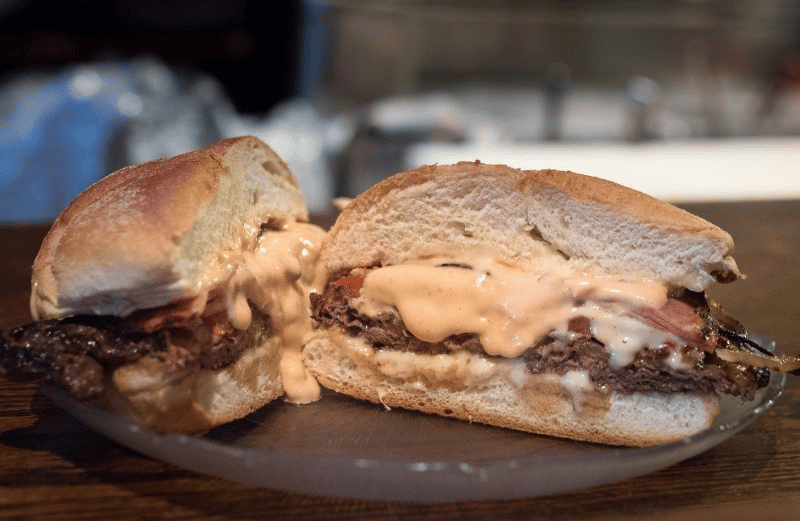
According to the pub, the Schmitter was invented by owner Hugh James McNally for a regular named Dennis Krenich, whose fondness for Schmidt's beer earned him the nickname Schmitter. It’s been celebrated in the national press, praised by television food personalities, and served to generations of Philadelphians. For years, it was a fixture at Citizens Bank Park, home of the Phillies. That's an impressive résumé for a sandwich, and a tough one to live up to. The Schmitter was good enough: substantial, pleasantly greasy, with the salami supplying a salty counterpoint to the beef and cheese. It’s a mess, albeit a tasty one. The Tobias, with its additional pepperoni, was an even busier proposition. To be honest, neither struck me as a sandwich I'd go out of my way to eat again, but I can imagine the Schmitter tasting considerably better at a Phillies game. Unfortunately, due to issues of quality control it is no longer a regular offering at the ballpark, so that's one pleasure I'll probably never experience.
Our next stop was Van Horn's Steaks, in the suburb of Media, which Rob had heard made an exceptional roast pork sandwich. While the cheesesteak gets most of Philadelphia's publicity, the roast pork is arguably the city's more crave-worthy contribution to American sandwich culture. Its origins can be traced to Abruzzo, the mountainous region east of Rome whose emigrants helped populate South Philly in the late nineteenth and early twentieth centuries. Pork cooked with garlic, herbs, and other seasonings formed a familiar part of their cuisine, particularly for celebrations and communal meals. In Philadelphia, it became an everyday sandwich: slow-roasted pork, sliced thin and piled onto a long Italian roll with cheese and sautéed greens, usually broccoli rabe or spinach.
The Sword and the Sandwich is a newsletter about serious extremism and equally serious sandwiches. Please consider supporting this work with a paid subscription:
Van Horn's takes a slightly unorthodox approach. Rather than slicing the meat, the kitchen braises it, producing something like Southern pulled pork, though without the barbecue sauce or smoke. The meat, stuffed into a custom-baked Corropolese roll with broccoli rabe and sharp provolone, is softer and more yielding than the traditional version, but the bitter greens and cheese give it the character of a more typical offering. It's an excellent variation.
To ensure that we were eating a balanced meal, we also ordered Van Horn's Drunken Meatball hoagie: homemade meatballs with spicy vodka sauce, basil pesto, and burrata on a seeded roll. The vodka sauce provided some heat, the pesto an herbal note, and the burrata a creamy richness. It was not a traditional meatball parm, but it was delicious, and it gave us something to eat between bites of pork.
By Saturday morning, we were ready to turn our attention to Philadelphia's two other great sandwich traditions: the hoagie and the cheesesteak. I had some experience with cheesesteaks, but hoagies were another matter; while I've eaten plenty of subs and heroes, I wasn't entirely sure what made a hoagie different.
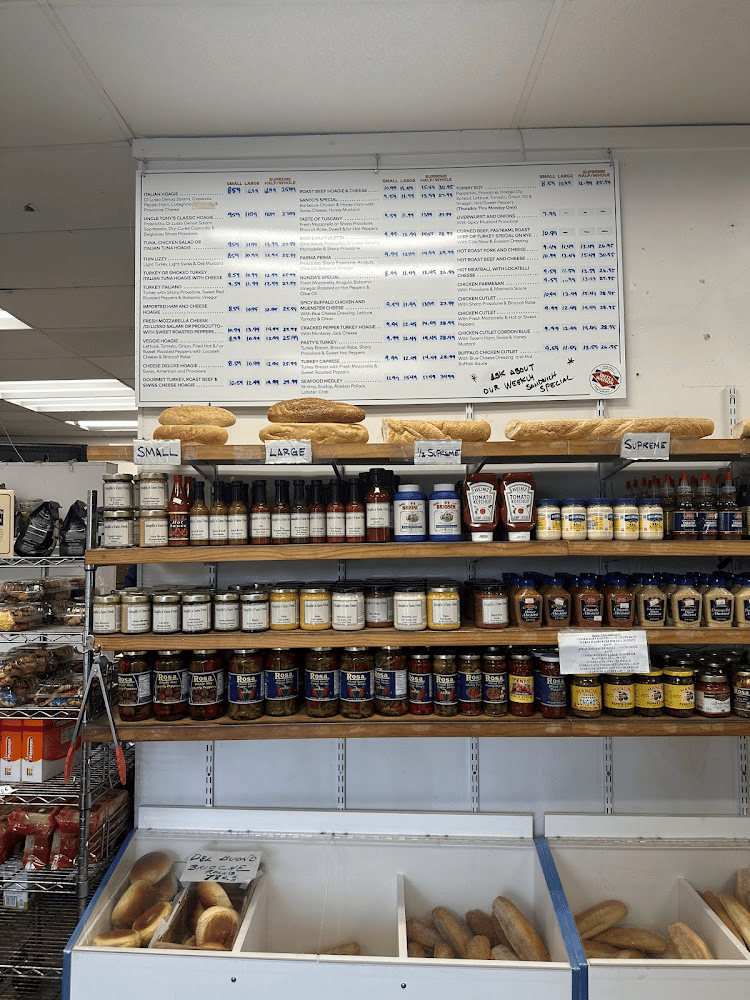
Our first stop was Sangillo's Farm Fresh Produce & Deli, a family-run market in Drexel Hill, where we ordered the Original Italian, an imposing assemblage of pepper-crusted ham, spicy capicola, prosciutto, coteghino, Genoa salami, and provolone, dressed with lettuce, tomato, onions. (At Rob’s insistence, we held off on the house-roasted sweet peppers, and long hots.)
Before getting to the sandwich, a little history is in order. The hoagie belongs to the same family as the submarine sandwich, the grinder, and the hero, all of them descendants of the long Italian roll filled with meats, cheeses, and vegetables that became popular in immigrant neighborhoods of the American Northeast (a history Tal has covered in previous essays). The differences are largely geographical. In New York, it's a hero; in much of New England, a grinder; elsewhere, a sub. Philadelphia calls it a hoagie, and takes the distinction seriously.
The name's origin is disputed. The most familiar explanation traces it to Hog Island in the Delaware River, where thousands of laborers worked during the First World War. Italian immigrants supposedly brought their oversized sandwiches for lunch, which became known as hoggies and, eventually, hoagies. It's a plausible story, although there's little contemporary evidence to support it. Whatever its origins, in 1992, Philadelphia Mayor Ed Rendell proclaimed the hoagie the city's official sandwich.
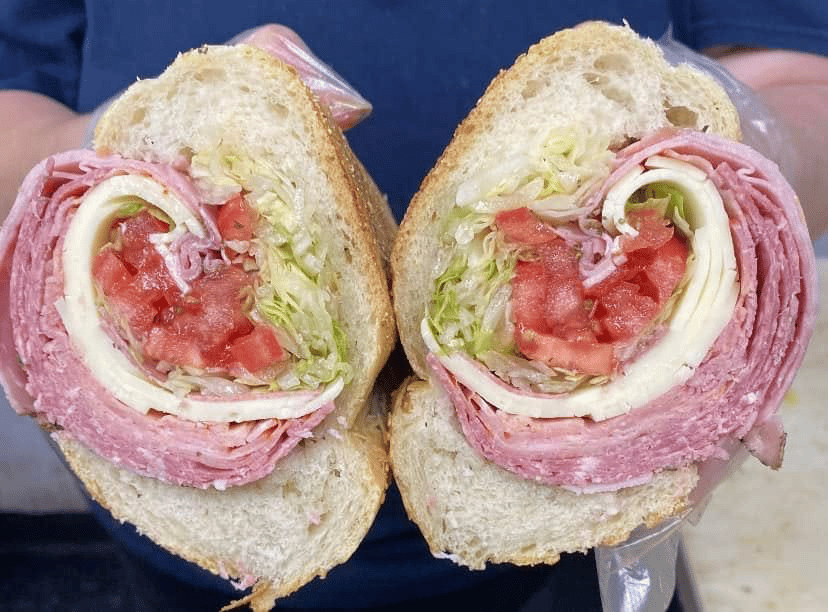
A good Italian hoagie isn't simply a matter of piling on as much meat as possible. The roll can’t be sliced through—the bread hinge is crucial—and it has to stand up to the fillings without overwhelming them. Sangillo's gets the balance right: the assortment of cured meats supplies salt, fat, and spice, the lettuce and onions add coolness and crunch, and the provolone ties everything together. It's a big sandwich, but meticulously composed, and one of the best things I ate all weekend.
Next came Johnny's Pizza in Bryn Mawr, which has developed a devoted following for its cheesesteaks, although its principal business is New York-style pies. For his steaks, owner John Biscgelia starts with house-cut ribeye, chopped on the griddle with onions and cooked in butter. The cheese is Cooper Sharp, a Pennsylvania-made American cheese with a more pronounced flavor than the usual variety, and the bread is a substantial sesame-seeded roll, toasted just before serving.
The sandwich was exemplary. The beef was juicy and well seasoned, the onions sweet, and the Cooper Sharp melted into the meat without overwhelming it. The seeded roll provided a sturdy, slightly crisp exterior that held everything together. It was, in fact, so good that I found myself thinking about another cheesesteak I'd eaten the previous year, one that had fundamentally changed my understanding of what a cheesesteak could be.
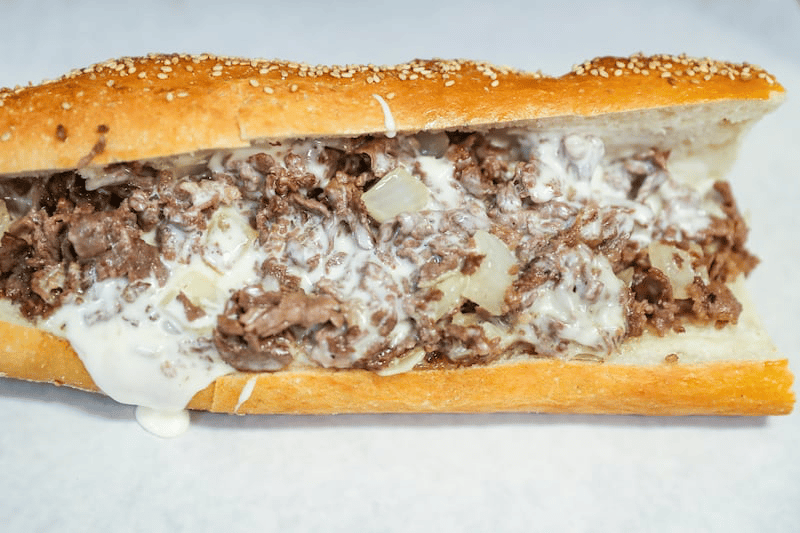
That sandwich came from Angelo's Pizzeria, in South Philadelphia, where Rob had taken me on our first tour. I'd eaten cheesesteaks before, but nothing had prepared me for Angelo's. The shop, which owner Danny DiGiampietro opened in 2019, has become something of a pilgrimage site for cheesesteak enthusiasts. The lines are long, and the ordering process requires patience, but the sandwiches are worth it.
Angelo's has helped revolutionize the culture of the Philadelphia cheesesteak by reconsidering each of its components. The beef is prime ribeye, chopped on the griddle with onions. The cheese is Cooper Sharp, which has become something of a signature ingredient among the city's new generation of steak makers. But the bread may be the decisive component: a crusty, sesame-seeded roll baked in-house. It's a remarkably simple sandwich, but eating it was a revelation.
Which brings us back to Johnny's. The similarities were striking: chopped ribeye, Cooper Sharp, seeded roll. It was nearly as good as Angelo's, and I found myself wondering whether my preference for the latter was entirely fair. Angelo's had the advantage of being first. Had I eaten Johnny's before Angelo's, would it have been my favorite? I suspect it might have.
Our next stop provided a useful contrast. Dalessandro's Steaks, in Roxborough, has been serving cheesesteaks since 1960, and belongs to the older school of Philadelphia sandwich making, its approach closer to that of Pat's and Geno's, the dueling, neon-lit establishments in South Philadelphia that have helped define the cheesesteak for generations—and turned the intersection of South 9th Street and East Passyunk Avenue into Philly’s very own mini-Times Square.
Tal has previously covered the cheesesteak’s origin in detail, so I won’t belabor it here. Suffice it to say that the sandwich is generally credited to Pat Olivieri, who began selling grilled beef on rolls from a hot-dog stand in South Philadelphia around 1930. Cheese was a later addition, and Cheez Whiz, introduced commercially in the nineteen-fifties, eventually became one of the sandwich's most recognizable ingredients. Geno's, founded by Joey Vento in 1966, opened directly across the intersection, creating one of America's most enduring culinary rivalries.
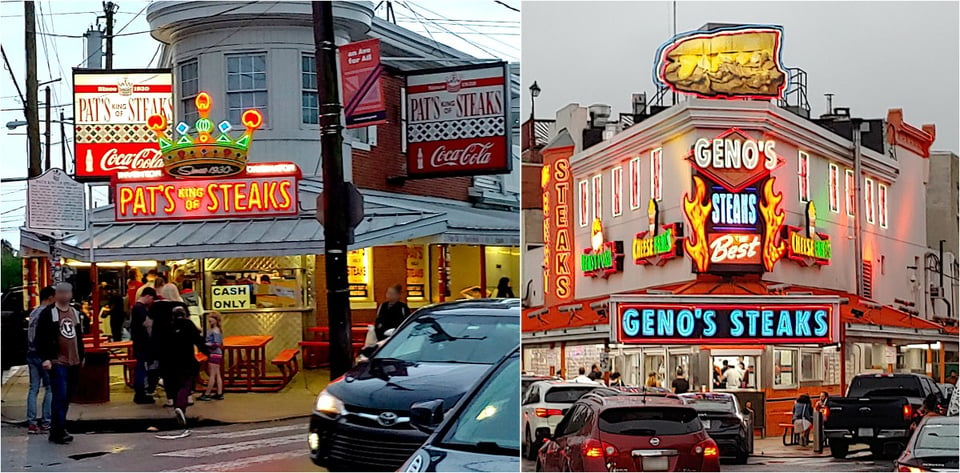
I've eaten at both Pat's and Geno's on previous visits. Their cheesesteaks are classic, which isn’t to say they’re necessarily great. The traditional version consists of ribeye cooked on a griddle, usually with onions, then piled onto a long roll with a choice of cheese—American, provolone, or the famously fluorescent Whiz. The meat is often chopped into small pieces, the onions cooked alongside it. It's fast food in the best sense.
Dalessandro's follows that tradition. The meat is chopped finely until the individual pieces practically disappear into one another, then combined with fried onions and a generous application of Cheez Whiz. The processed cheese product is less fashionable these days than Cooper Sharp, but it has its virtues: salty, creamy, and almost sauce-like, it helps bind the chopped meat together. The result is sloppy, satisfying sandwich, though after Angelo's and Johnny's it seemed decidedly old-fashioned.
Our final stop on Saturday was A Cut Above Deli, in Newtown Square, where we returned to the world of Italian hoagies. The shop, opened in 1995 by Michael and Traci Carneglia, has a reputation for its imported Italian meats and carefully assembled sandwiches. We ordered the Gravesend, named for the Brooklyn neighborhood, a combination of mortadella, soppressata, prosciutto, fresh mozzarella, arugula, sun-dried peppers, olive oil, and balsamic glaze. On paper, it sounded irresistible, and the ingredients were unquestionably first-rate. But something was missing. The Gravesend tasted like a sandwich I could have gotten at any number of excellent Italian delis in New York. There was nothing particularly Philadelphian about it, apart from the fact that I happened to be eating it in the suburbs of Philly. Sangillo's, by contrast, had felt like a proper local institution. The Gravesend may have been more refined, but Sangillo's had more character.
By Sunday morning, we were ready for one last assault on Philadelphia's culinary landscape. Unfortunately, we had overlooked a basic fact of local sandwich life: Sunday is a terrible day to go looking for sandwiches.
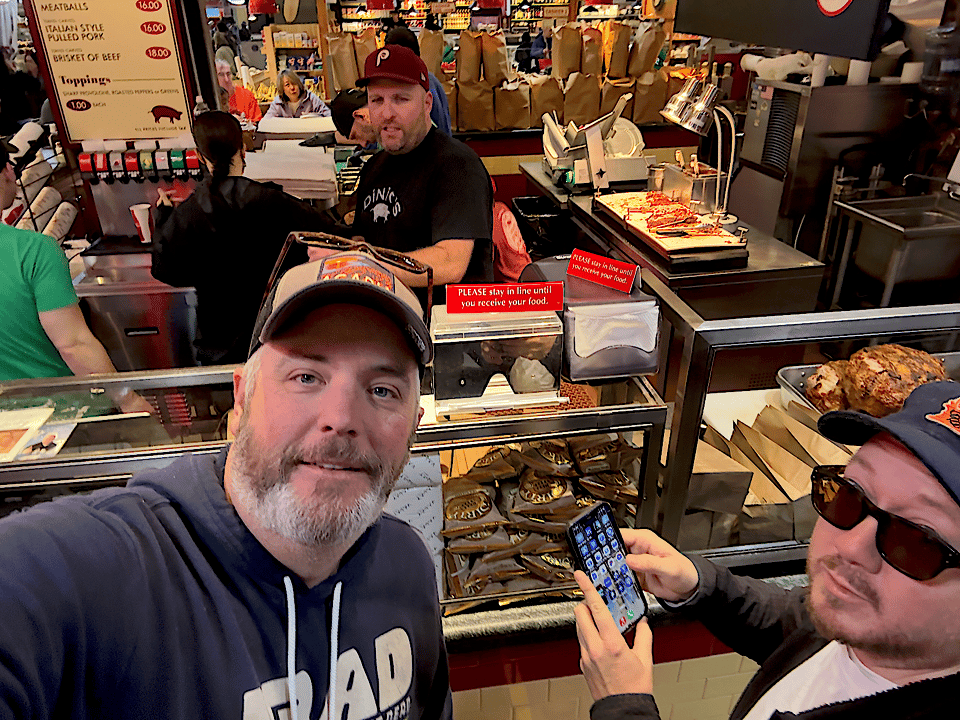
Our first destination was the usually-bustling Reading Terminal Market, where we headed straight to Tommy DiNic's, one of the city’s most celebrated purveyors of roast pork. The business traces its origins to a South Philly butcher shop opened by Gaetano Nicolosi in 1918, and the family has been selling sandwiches for generations. DiNic's roast pork, served with sharp provolone and broccoli rabe, is widely regarded as one of the city's finest examples of the form.
We had visited DiNic's the previous year, but instead of ordering the roast pork, we'd made the questionable decision to try the beef brisket. It was a perfectly respectable sandwich, with tender, slow-roasted meat stuffed into an Italian roll, but it left no lasting impression. This time I was determined to correct that mistake and see how DiNic's version stacked up against the pulled pork sandwich I'd sampled at Van Horn's and John’s. Alas, DiNic's was closed. The roast pork would have to wait.
Rather than leave Reading Terminal empty-handed, we settled for a pastrami Reuben at Hershel's East Side Deli, a Jewish delicatessen that opened in 2000. The shop takes its name from co-founder Stephen Safern's uncle, a Polish immigrant who spent more than forty years working at Katz's in New York. The family connection is evident in the menu, which features corned beef and pastrami prepared in-house and hand-carved to order. The Reuben was excellent: a generous helping of pastrami with Swiss cheese, sauerkraut, and Russian dressing on grilled rye. It was one of the better Reubens I've eaten outside New York, but let's be honest: a Reuben is a New York sandwich, and we'd come to Philadelphia for something else.
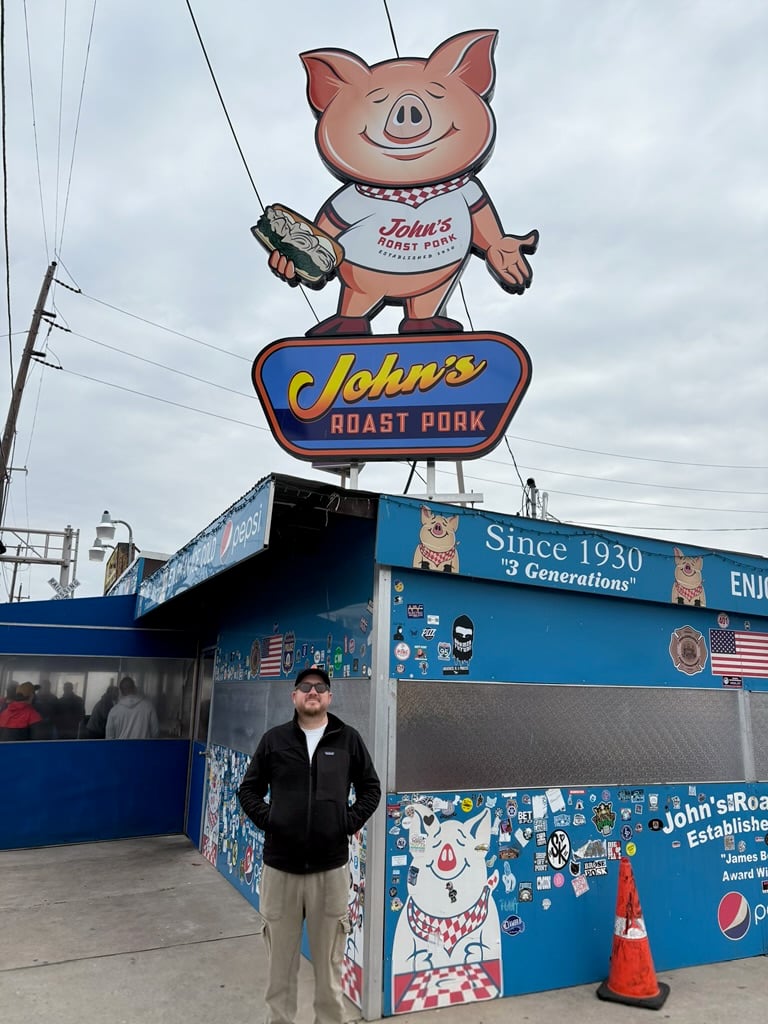
Still craving porcine goodness, we decided to try John's Roast Pork, a modest South Philadelphia spot that had provided my most transcendent sandwich experience of the previous year's trip. John's traces its history to 1930, when Domenico Bucci began selling pork and meatball sandwiches to dockworkers and railroad employees from a small stand near the Delaware River. The business has remained in the family for generations. There is still no proper dining room, only a counter and a few outdoor picnic tables. The menu remains reassuringly straightforward.
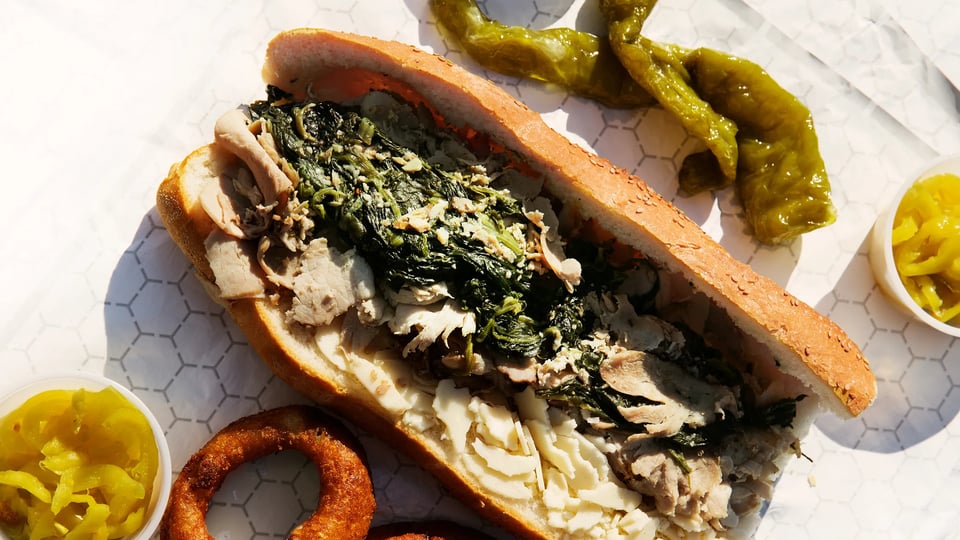
The first thing I noticed on our previous visit was the sign outside, featuring a large, cheerful pig. But the sandwich itself was the real draw: thin slices of well–seasoned pork piled onto a sturdy seeded roll with sautéed garlic spinach and sharp provolone. The meat was tender but retained enough texture to distinguish it from pulled pork, the spinach added a garlicky punch, the provolone a sharp, salty bite, and the bread absorbed the juices without falling apart. What made it so good? The individual ingredients were excellent, but there was nothing particularly exotic about any of them. Perhaps it was the balance of flavors, or the way the juices soaked into the bread without compromising its structural integrity. Whatever the explanation, it was one of the best sandwiches I've ever eaten.
A brief note on taxonomy: the Philadelphia roast pork sandwich is sometimes confused with porchetta, the classic Italian preparation of pork seasoned with herbs and garlic, roasted slowly until tender, with a layer of crunchy, brittle skin. The two share a common ancestry, but they're not quite the same thing: porchetta is generally made from a boned and rolled section of pig, with the skin left on to produce a layer of glossy crackling. The meat is heavily seasoned with garlic, rosemary, fennel, and other aromatics, then roasted until the exterior is crisp and the interior succulent.
Porchetta happens to be my absolute favorite sandwich, and I have extremely high standards for it. On our previous Philadelphia tour, Rob had taken me to Porco's Porchetteria, on Washington Avenue, where the kitchen produces a noteworthy version of the Italian classic. The pork comes from Berkshire and Duroc pigs raised on Pennsylvania farms, and the crackling provides the sharp, satisfying crunch that distinguishes a proper porchetta sandwich from ordinary roast pork.
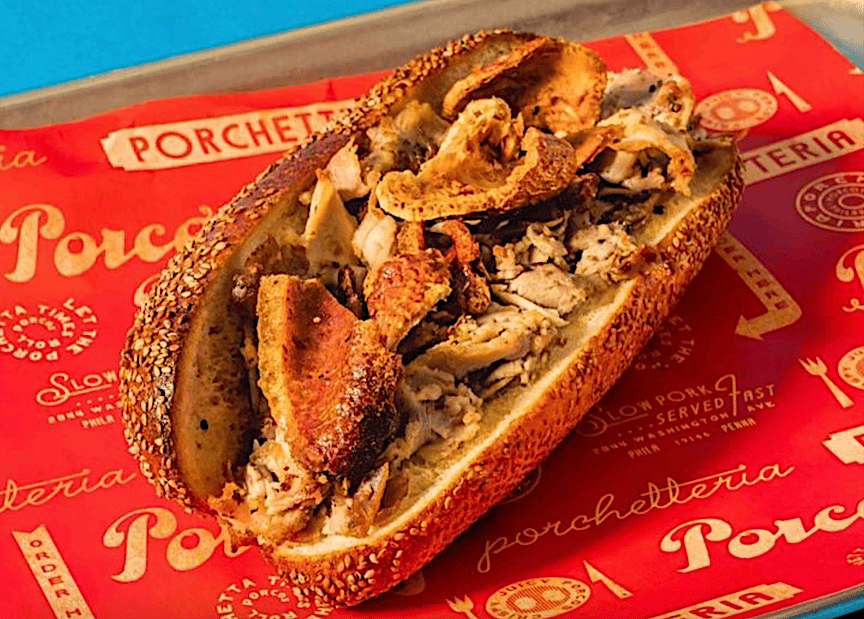
It was excellent, and I'd happily eat it again. But as good as it was, it couldn't compare with the versions I've eaten from market stalls in Italy, where the meat is carved from a whole roasted pig and served on a simple roll, often with little more than a sprinkling of salt. Those sandwiches have become something of a personal obsession, and I've spent years chasing that dragon, so far, without success.
Unfortunately, John's was closed, too. By this point, Rob and I were getting cranky. We'd spent the morning driving around Philadelphia in search of roast pork, only to discover that the city's most celebrated spots had selfishly decided that Sunday was a day of rest. (I blame those damned Quakers.) DiNic's was closed. John's was closed. The list of available roast pork sandwiches was dwindling by the minute. Then Rob discovered that Van Horn's, where we'd eaten on Friday afternoon, was open. So we headed back to Media and ordered a couple more of their pulled roast pork sandwiches. After a morning of frustration, it was exactly what we needed.
Philadelphia may be a cheesesteak town, and it may be a hoagie town, but for my money, roast pork is the city’s crown jewel. The cheesesteak has the fame, the hoagie has the local pride, and both have earned their places in the city's culinary pantheon. But the roast pork sandwich strikes me as the supreme expression of Philadelphia's sandwich genius. It was the one that brought us back to Van Horn's, and the one I'll be thinking about when I return next year.

-
Thanksgiving weekend is the best time to visit Porco's. Not only do they have all their regular sammies, but they add the seasonal Turketta to the menu -- "brioche bun with our signature smoked, herbed turkey breast - a slab of savory bread pudding - cranberry mostarda - housemade turkey gravy - heirloom tomato - romaine lettuce"
Reply: