
The Gong on the Road 3: Love is Tempered Steel
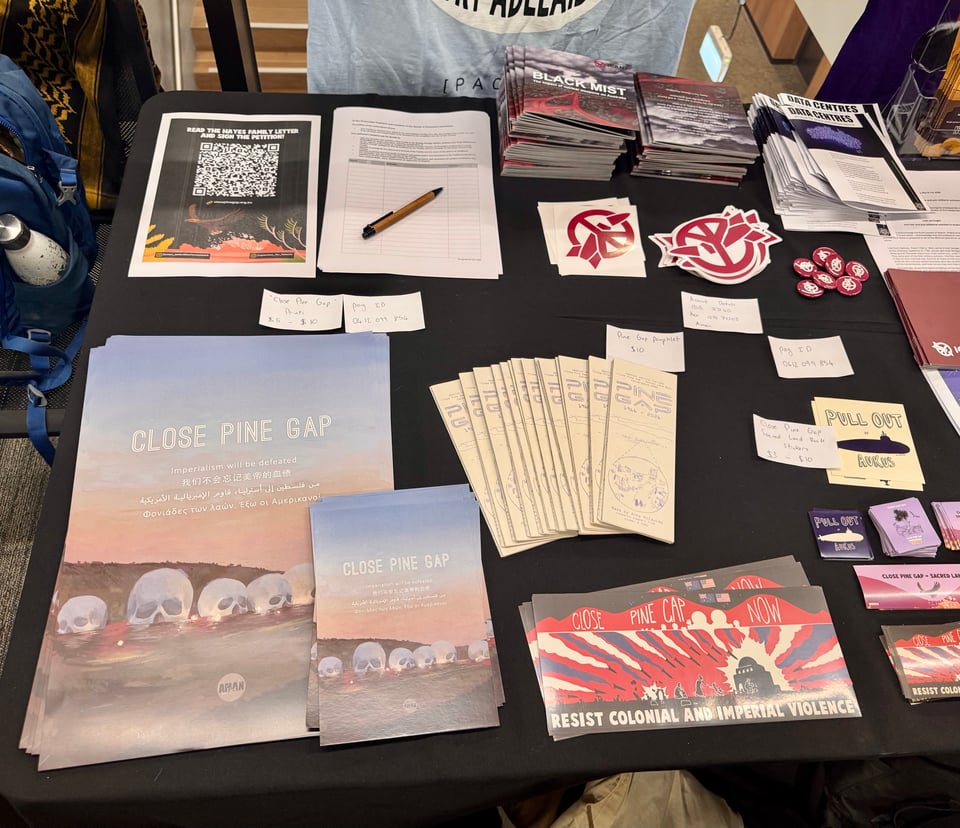
It’s my third day in Adelaide and the conference is in full swing. The hall fills up and the conference comes alive. I meet new comrades and greet old ones. Put faces to names and drink in the pandemonium. I scan tables put out by the various peace groups sharing leaflets, books, stickers, and campaigns, picking up more bits of paper than I could ever hope to read. I sense the restless, expansive energy of the multitude. As the day wears on, I watch the pile of ‘No Place for a Nuclear Base’ bumper stickers brought from Wollongong starts to dwindle as Port Kembla’s struggle enters the hearts and minds of activists all over the country. At another table I see our iconic logo, an early gift to our campaign from an artist, repurposed by the Port Adelaide campaign for their t-shirts. You can substitute ‘Port Kembla’ for any city or town. There’s no place for a base anywhere.
My mind swirls as Abby Martin regales us with tales of repression and resistance in America. Her key message is that the fascists have lost the propaganda war. The mask is off and they are unleashing all their fury. But we must not live in fear. The desperation of the ruling class is a sign of their weakness and people are on the move everywhere. Her film Earth’s Greatest Enemy, she tells us, is a tool for popular education, so that movements can learn more about what they are up against.
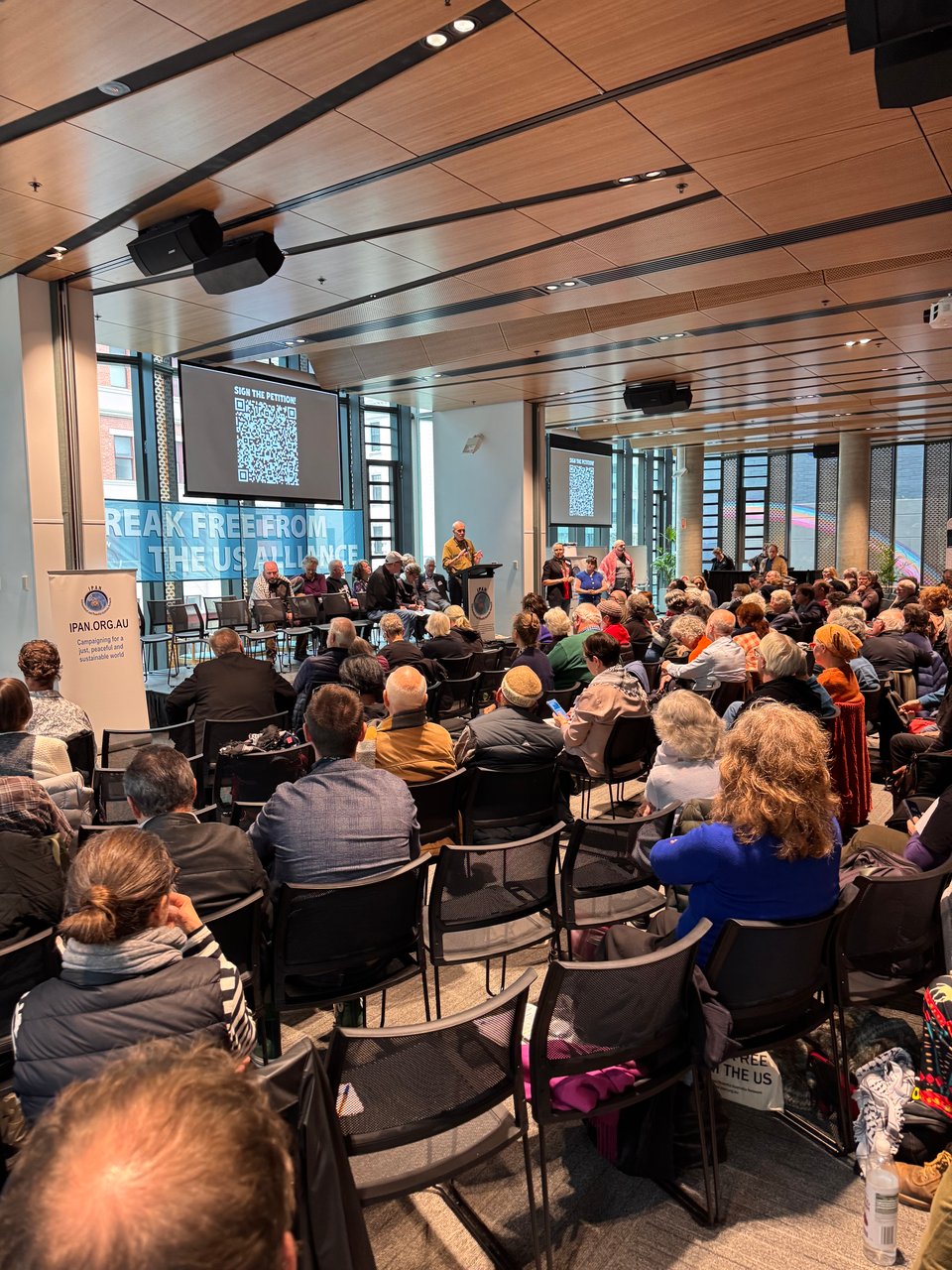
Presentations continue. Auntie Sue Haseldine speaks on the impact of rocket testing on her lands, damaging the sacred rockholes of Googatha Country. Lawyer Nick Hanna outlines the raft of repressive legislation being unleashed to support the war machine, suppress speech, and outlaw dissent. When ASIO comes calling - and they really do call on him - don’t talk to them, he tells us. They rely on the aura of a power greater than they really have and we can and must resist. Echoes of Abby’s words - we must not live in fear.
After lunch I struggle through another session dominated by ‘progressive patriotism’. IPAN has an alternative defence policy for Australia but it perpetuates the myth that an Australian nation state can somehow be a force for peace and justice in the world. John Land’s presentation, drawing on his long history as an Australian diplomat in China and Iran, symbolises for me the lost Whitlamite world inhabited by progressive patriots. I sense his genuine professional dedication to service, diplomacy, and international friendship. But listening to it is like slipping through a time-warp to a world when decent fellows decided the fate of nations in the proper way. Except I remember what Whitlam did to East Timor.
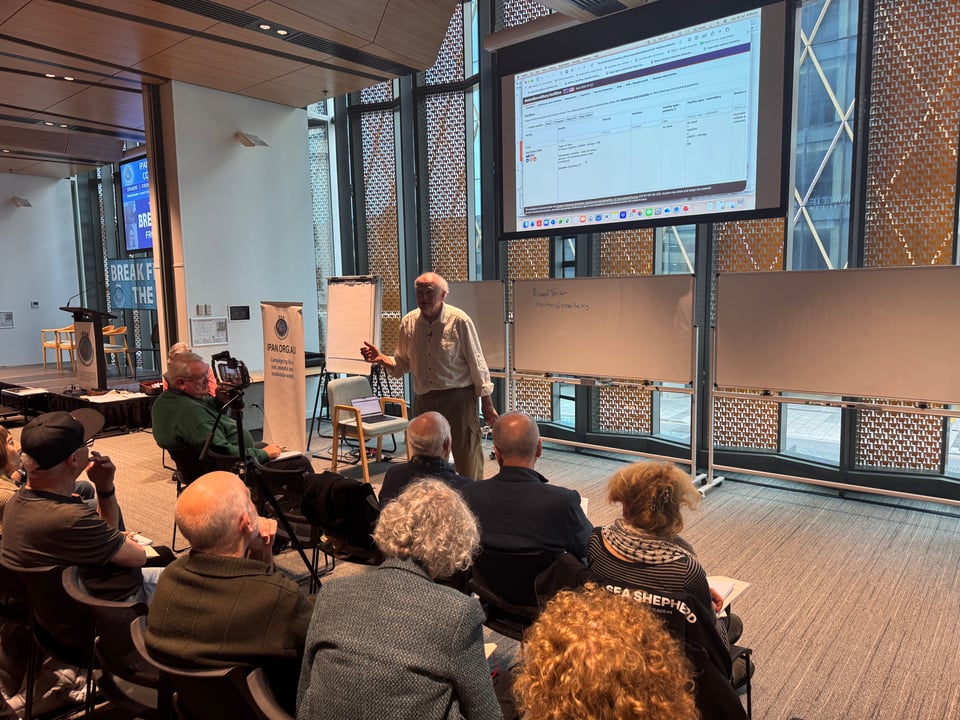
The afternoon is given over to workshop sessions and I join one led by Professor Richard Tanter of the Nautilus Institute. Having worked in academia, I’m familiar with his work but have never met the man. Tanter outlines a soon-to-be-launched collaborative project that will make publicly available a comprehensive database of Australian military activity in Australia. Many large defence contractors, he tells us, have the right to enter and operate within Australian bases, further blurring the lines between public and private, Australian and American. I ask him about his thoughts on the east coast submarine base. He is somewhat reassuring, arguing that he has yet to see a strong case for an east coast base in the American security dialogue. The priority, he says, has always been the base at Stirling in Western Australia, which can provide fast access to China through the Indonesian archipelago. This was one of the reasons, he observes, that the US supported the Indonesian invasion of East Timor. Control of nearby deepwater straits by an Asian Cuba would have posed a serious problem for the movement of US submarines through the region.
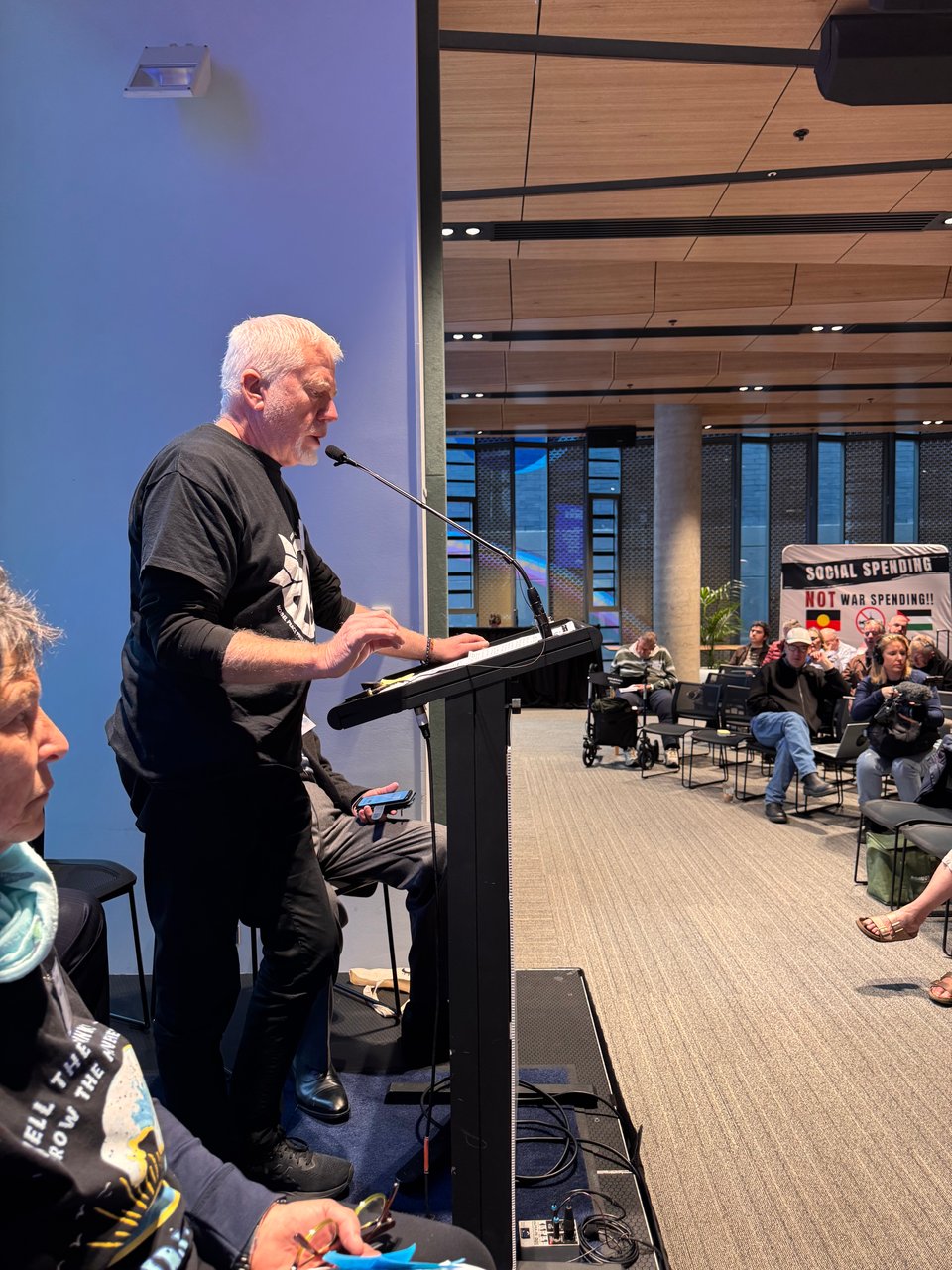
Sunday gives WAWAN a time to shine during a session on ‘Growing the Grassroots to Build a Mass Movement’. Groups from around the country have three minutes to share their campaigns and organising experience, with an emphasis on ‘what works’. Early that morning, I lay awake in bed thinking about what I would say. How do you condense down one of the defining features of your life for five years? How to encapsulate a movement that has engaged in a wide range of action, organising, education, lobbying, media, and protest?
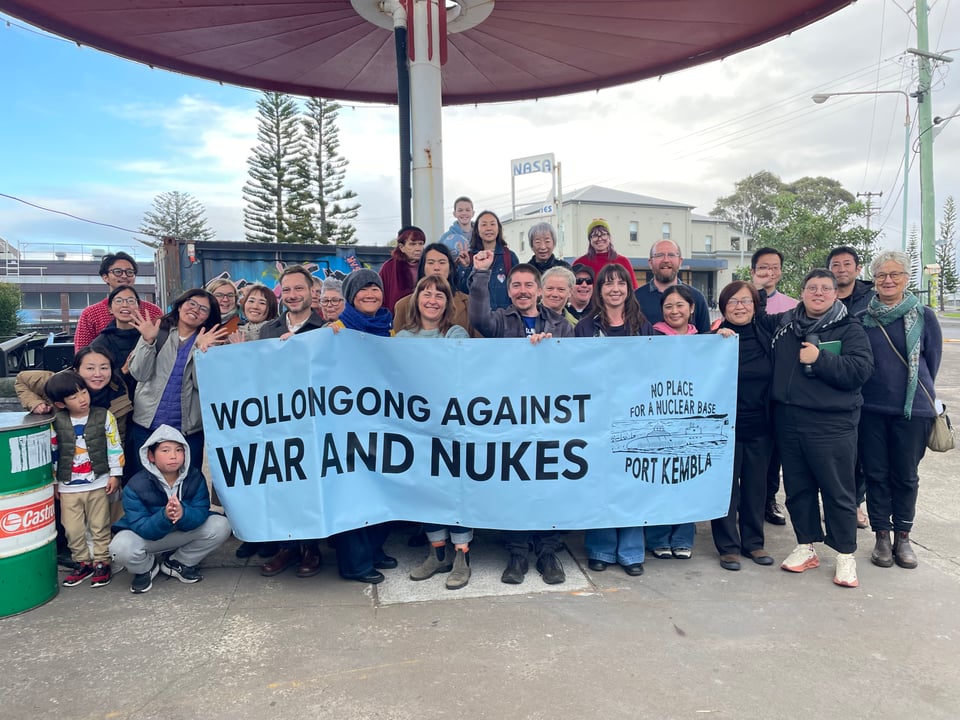
Swapping notes with a fellow Wollongong activist, NSW Teachers Federation Deputy President Natasha Watt, I commit to my strategy of three points for three minutes: democracy, ecosystems, and love. Democracy because we cannot challenge the undemocratic power of a militarised state apparatus or war capitalism without developing a counter-power rooted in democratic praxis. Ecosystems because we are working to sustain the natural world and because movement ecosystems are essential to thinking about the relationships between different groups with a stake in the anti-base movement in Wollongong. Love because the best organising tool we have is our relationships with one another.
I feel the need to elaborate on love, so I tell tell Port Kembla’s favourite tale. The legendary Dalfram Dispute, when the wharfies of Port Kembla refused to load pig iron in solidarity with the Chinese workers under bombardment by Imperial Japan. Their action, I argue, should be understood as a form of love and solidarity with other workers. Because the workers have no country. Importantly, I point out, their ability to take this militant action stemmed from a decade of bitter struggle with unemployment, poverty, and police violence. They literally nourished one another - rabbiting and fishing - in order to survive. This gave them the confidence to stand up to the shipowners, the Federal Government, and ultimately the Big Australian itself. They had built an alternative form of power that could sustain them. This, I suggest, is the communist praxis of peace and of love that sustains WAWAN’s campaign today and can and should sustain all of our struggles against AUKUS.
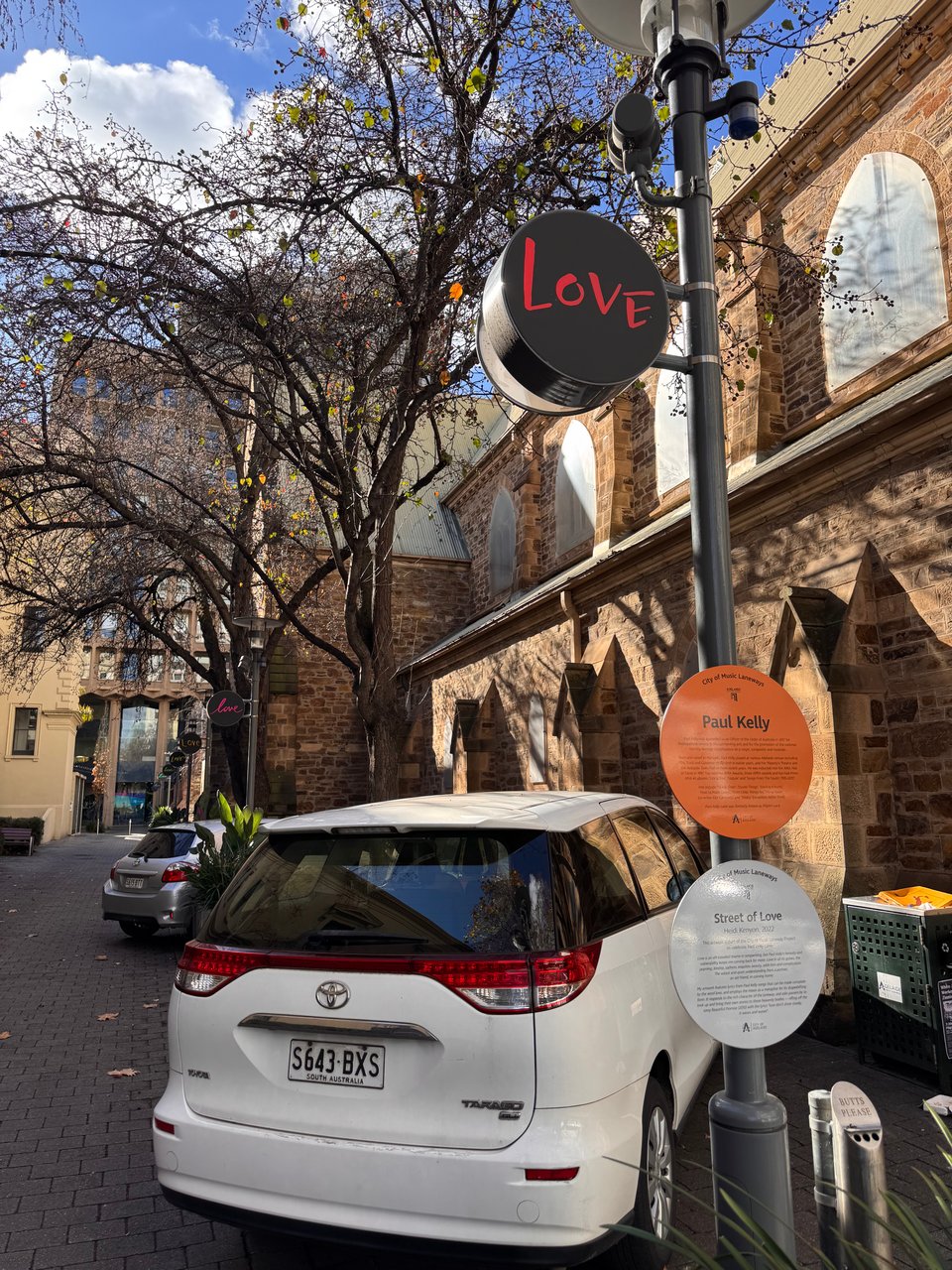
I am followed on the podium by another activist, Leena Sudarno from Rising Tide, who links their campaign with the sentiments I have expressed and adds the anarchist Emma Goldman’s adage ‘if I can’t dance it’s not my revolution’. An old comrade of mine who is at the conference with the MUA jokes with me later that he had expected nothing less from the Wollongong tendency than a lesson about love. We are notorious for banging on about it, but despite the occasional ribbing, are respected for it too.
After the session, a woman comes up to thank me. She recalls how, growing up in Chile under the Pinochet dictatorship, the harsh times she faced were also the best of times because those who were working underground to resist the dictatorship depended on one another and cared for one another so deeply.
As the day unfolds, people continue to come up to me and thank me. I am grateful that my words have been well received. Compliments are always nice, but there is a more important reason. In my previous post I expressed my concern about the thread of ‘progressive patriotism’ that connects the AUKUS-supporting ALP and the AUKUS-opposing IPAN movement. The reaction my words receive heartens me that many within the room agree we don’t have to play the game of ‘serious politics’ and couch our demands in terms acceptable to the state. We can dare to go further, to fight for the world we actually want to live in.
The previous evening at my billet’s home in the suburbs of Adelaide, I stayed up late with my kind host and another activist from Tasmania. We debated some of these questions and whether or not it is too unrealistic to make a world without nation-states and wars and armies the basis for our struggle for peace. I try to express my view that as unlikely as it sounds, the abolition of war is actually the only realistic course of action. I insist that actually, anything less is simply a repetition of past mistakes. We argued about whether Albanese has original sin and how to explain his trajectory from young Labor Left activist to chief enforcer for AUKUS and Israeli genocide. Was he always an opportunist or did he find himself there through a process of political decline?
The road the ALP and many within the union movement have taken is not the result of a single decisive commitment to genocide and ecocide. It is and was taken one tiny compromise, one lesser evil, one electorally expedient policy at a time. Apart from anything else, the ‘alternative defence policies’ and nation-building rhetoric of some anti-AUKUS activists simply ignores how bad things really are. There is no progressive, social democratic Australia for us to build – even if it was a good idea. We are standing on the brink of an increasingly violent and chaotic world and there is no going back. As the climate crisis intensifies and fascism grows in power and confidence, we have little choice but to focus on survival.
For some months, I have been translating the work of Japanese Marxist Kohei Saito. His new book is filled with terror and rage at the descent of the world into climate fascism and technofascism. Too much of the environmental movement, he contends, remains fundamentally wedded to the modern myth that capitalist economic growth can, if tamed, produce prosperity for all. But in a world where any number of climate tipping points have already been breached, the only real alternative to some form of eco-socialism will be fascism. There just won’t be enough to go around if the rich keep hoarding more than their share.
I think Saito is right. Fantasies about a return to a responsible role for Australia in a world that looks anything like the heyday of post-war capitalism are just that, fantasies. The future is dark, no matter which way you look at it, and our role as a movement is not to build castles in the air but create light in the actual darkness we inhabit. If we take each other by the hand, we can struggle through it. The power that can make peace and the power to dominate as exercised by capitalist states are not the same kind of power. Love might appear weak, but as Eric Bogle once sang, it is actually ‘tempered steel’. It is the strength we need to heal the wounds of war.
Farewell Adelaide and farewell IPAN. Thank you to everyone for organising this conference, providing this opportunity to debate the way forward for our movement, and for taking such good care of me.
May our struggles continue!