
The Gong on the Road 2: 'Progressive Patriotism'
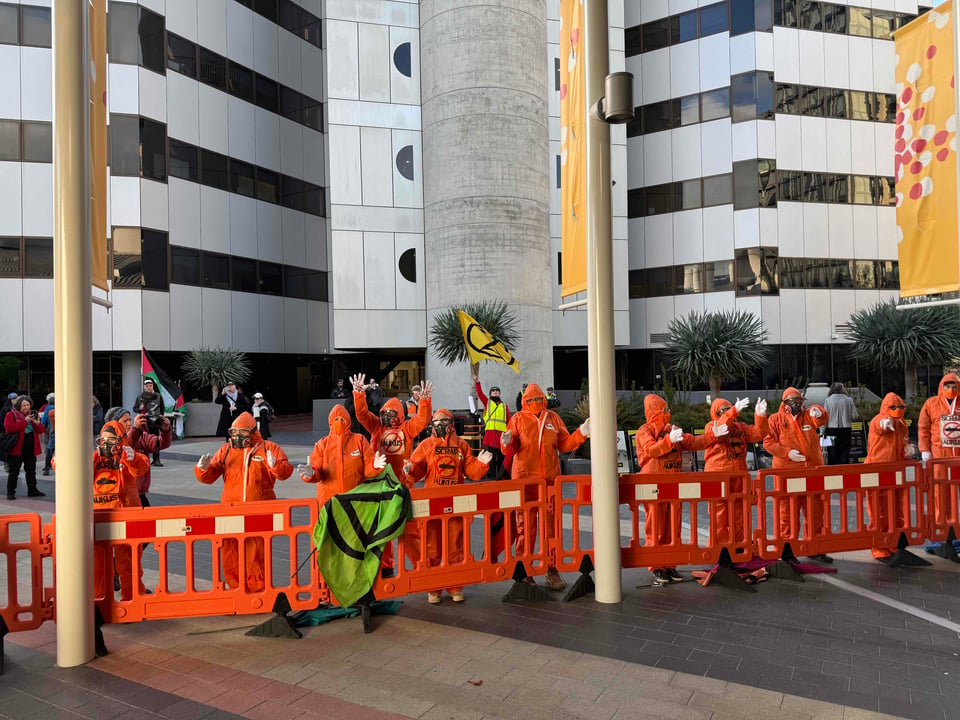
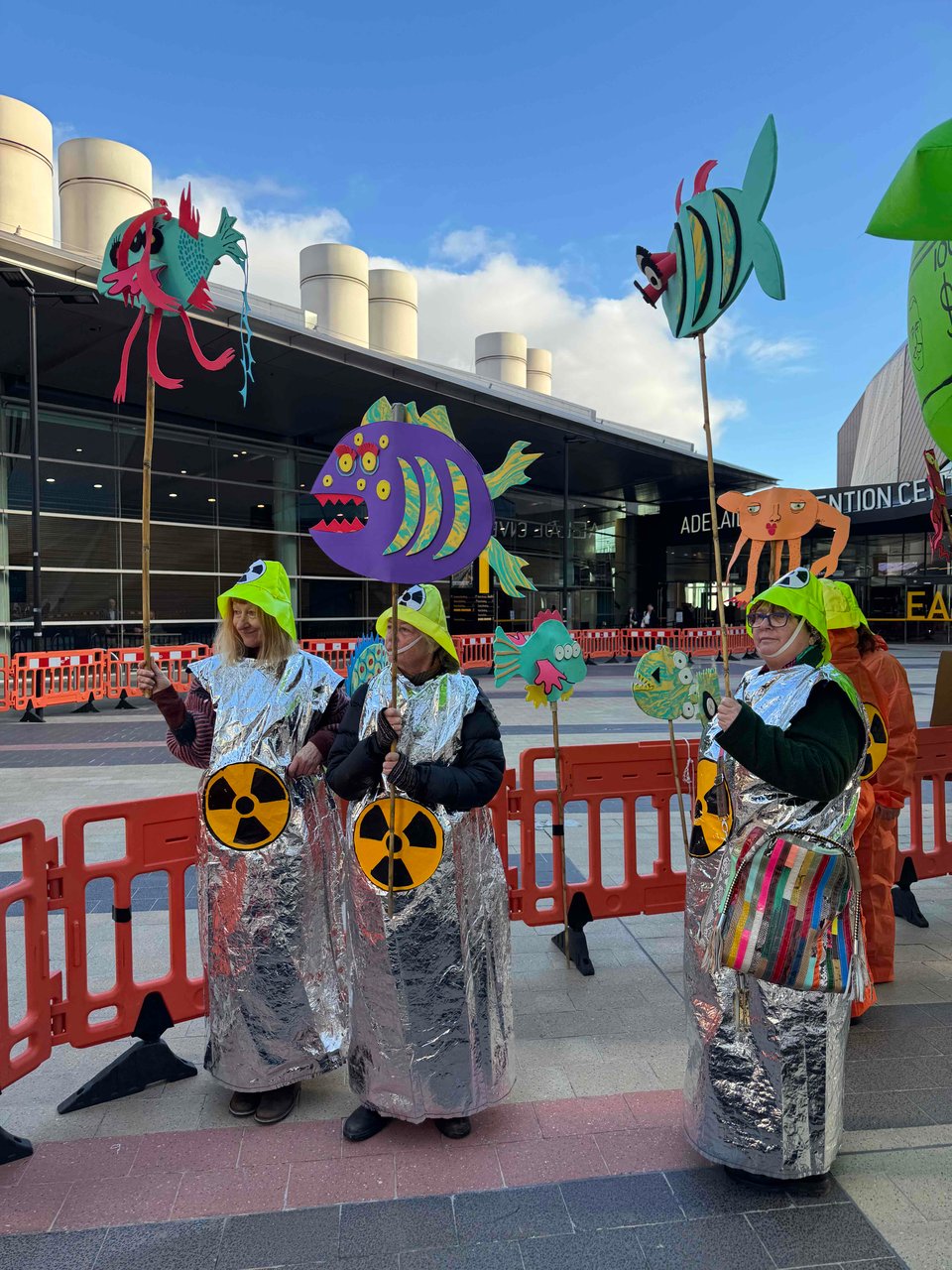
Day 2 in the Defence State begins as I join a hundred or so protesters outside the ALP National Conference. Sing For Palestine’s rendition of ‘Backbone, Labor, no backbone’ resonates through the dark concrete valley and I note with satisfaction the discomfort on the faces of delegates as they file into the Convention Centre to take part in Labor’s set-piece theatre. The media keep telling us that debate has been largely gagged inside Conference, with all controversial points worked out beforehand and ‘unity’ and ‘fighting One Nation’ prioritised over genuine exchange of views. It’s a mentality that the great Australian communist writer Frank Hardy described as ‘party-mindedness’, drawing on his experience in the Communist Party. It is a mentality that places loyalty above thought and enables members to bury their doubts about the leadership and party line.
‘Party mindedness’ helps explain the ALP’s embrace of the AUKUS pact. As one wag in the media observed recently, the ALP Caucus spent less time considering the $368 billion agreement that it takes to process a student visa. Richard Marles took the opportunity today to announce the latest payment to flow from Australia’s coffers to the defence contractors - an additional $4.5 billion for the Osborne shipyards on the Port Adelaide River. Like every part of this horror show, the announcement was announced before it was announced, in a media briefing on Thursday.
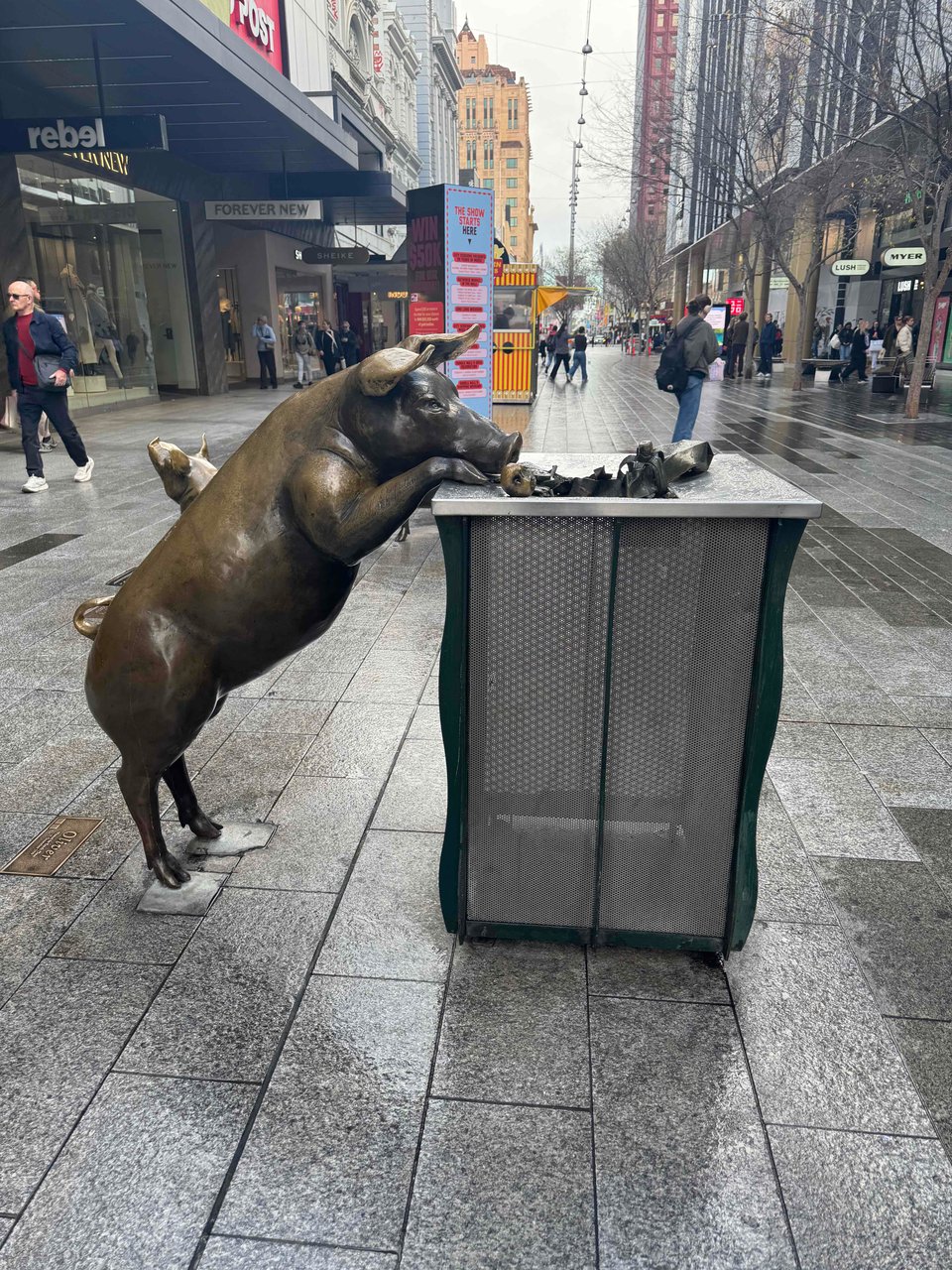
It’s worth taking some time to understand Labor’s ideological justification for its military-industrial free-for-all. Or is it? Like every policy position and move of Australia’s ruling party, one can’t help but feel that all principle, all thought left the building long ago. What remains are just the exigencies of retaining office. Power, or at least the appearance of it, for power’s sake. That, and the opportunity to stick your snout in the trough and hoover up as much of the flow of wealth as possible. Walking through Adelaide’s glittering Rundle Mall after the protest, I find Labor’s basic ideological position has already been captured in bronze before the conference is even concluded.
Seriously, though, even if just for appearances, there has to be something for them to tell themselves, and convince the rusted-on members and voters who help keep the gravy train on the tracks. That’s where Defence Industry Minister Pat Conroy comes in. Borrowing liberally from Labor greats of the past, Conroy’s recent speech to the National Press Club sought to articulate the relationship between Labor’s ‘progressive’ values with its no-holds-barred commitment to handing bucketloads of cash to American defence contractors. This is his ‘progressive patriotism’.
Conroy’s foundation is the great responsibility ‘of any government to protect the nation’s people, its interests, and its sovereignty’. Desperate to be seen as just as a big a war-monger as any conservative, Conroy continued by explaining how Labor has always been at the forefront of war and militarism in this country – from Fisher’s establishment of the Royal Australian Navy and leadership during World War One, to Gillard’s embrace of our current subordinate position through the Force Posture Agreement with the United States, which allows thousands of US Marines to ‘rotate’ through Australian bases in the Northern Territory each year.
Despite no actual military threat to Australia from any quarter, we are expected to believe that it is to protect ‘the nation’s people, its interests, and its sovereignty’ that Labor has breathlessly embraced Morrison’s commitment to fund American shipyards. Hang on a minute, don’t we get some subs out of this? Isn’t that the point? No, the point is and always has been to facilitate the robbing of the Treasury by every defence contractor, consultant, and highly paid huckster with the wherewithal to get their snout into that trough. That’s why, as Conroy proudly admits in his speech, Albanese Labor is making ‘the largest increase in peacetime defence investment ever’. That’s right. There is no war. There is no threat. War is peace.
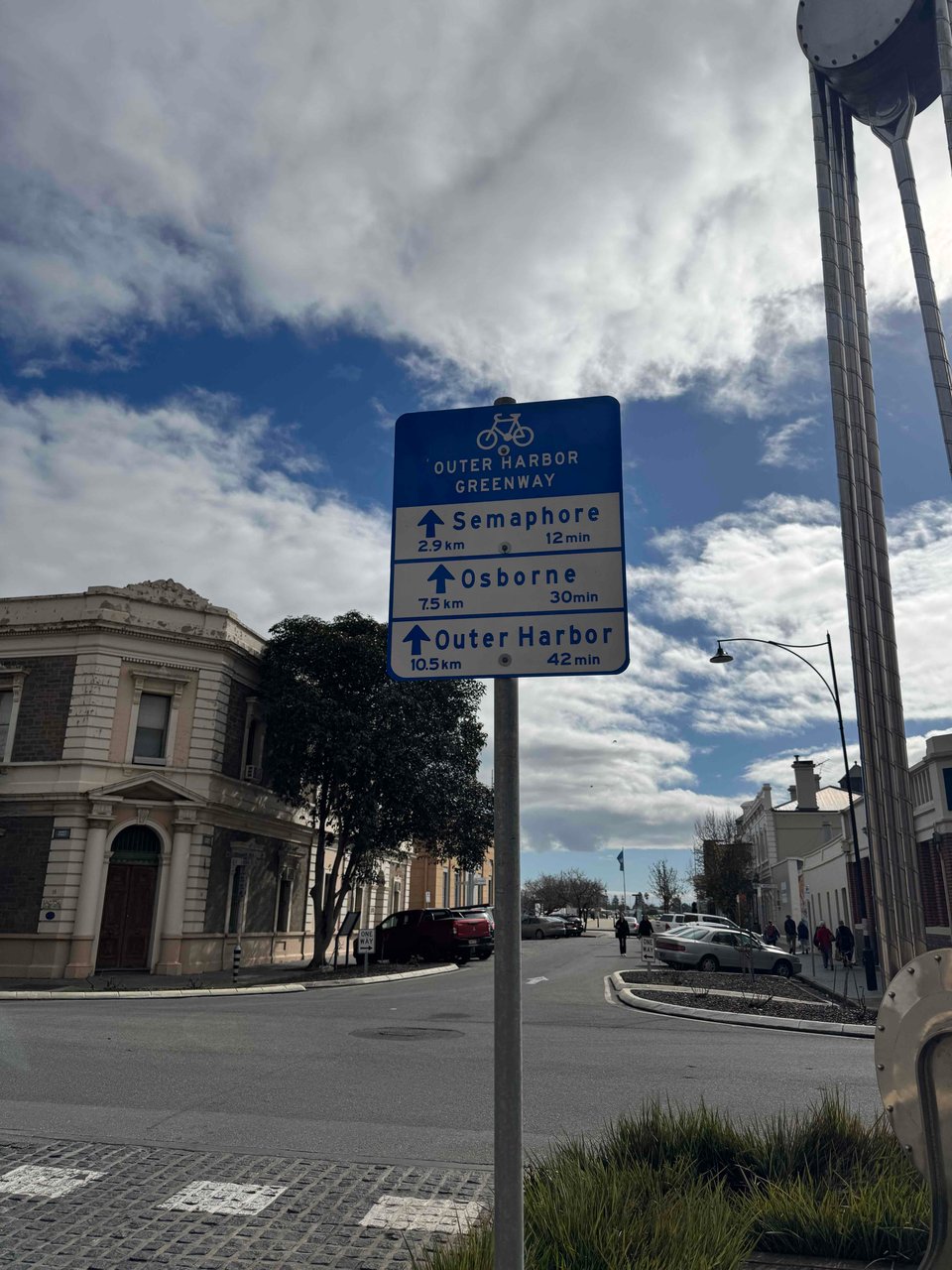
After lunch, the IPAN gang heads off to Port Adelaide to board a hundred-seater boat to see the Osborne shipyards with our hosts from peace group Port Adelaide Community Opposing AUKUS (PACOA). As we cruise slowly down the Torrens, local resident Hayden Shaw treats us to a detailed environmental history of Port Adelaide, and of the many polluting industries that continue to harm people, animals and plants – from river dolphins to endangered mangrove species.
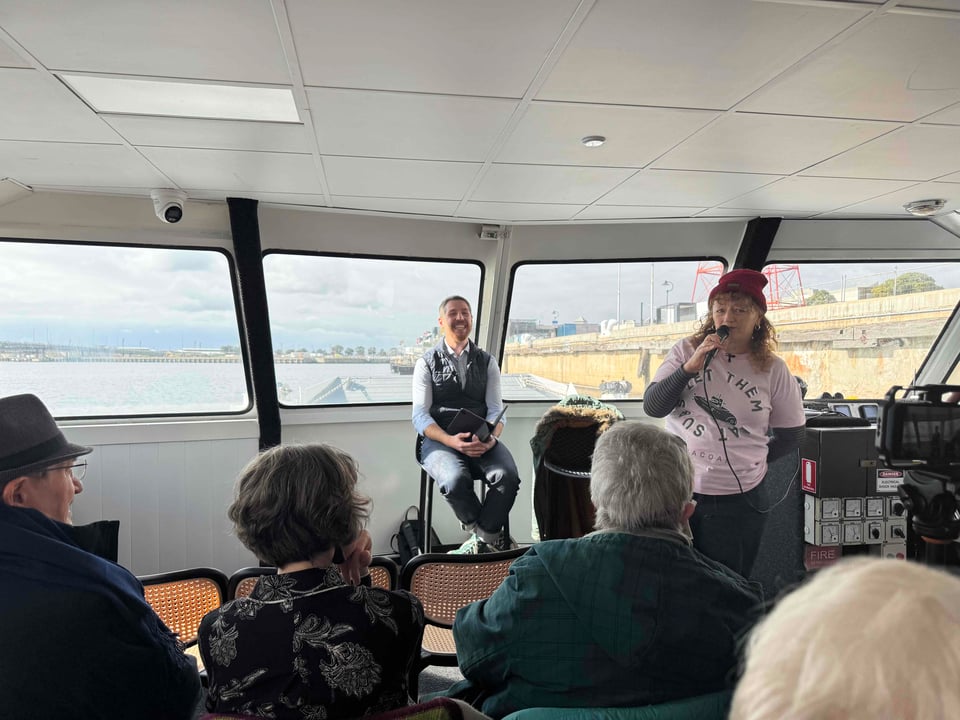
We arrive at last at the Osborne Naval Shipyards, where we see enormous steel structures under construction. Towering under scaffolding are BAE Systems Australia’s Hunter Class Frigates while squatting beside them is the Collins Class Life of Type Extension (LOTE) Program, delivered by the Australian Submarine Corporation. As has been widely reported, the Collins Class is reaching the end of its life. The LOTE program aims to cut out the rusty panels and patch the old boats back together while we wait for the arrival of the AUKUS subs. It could be a while.
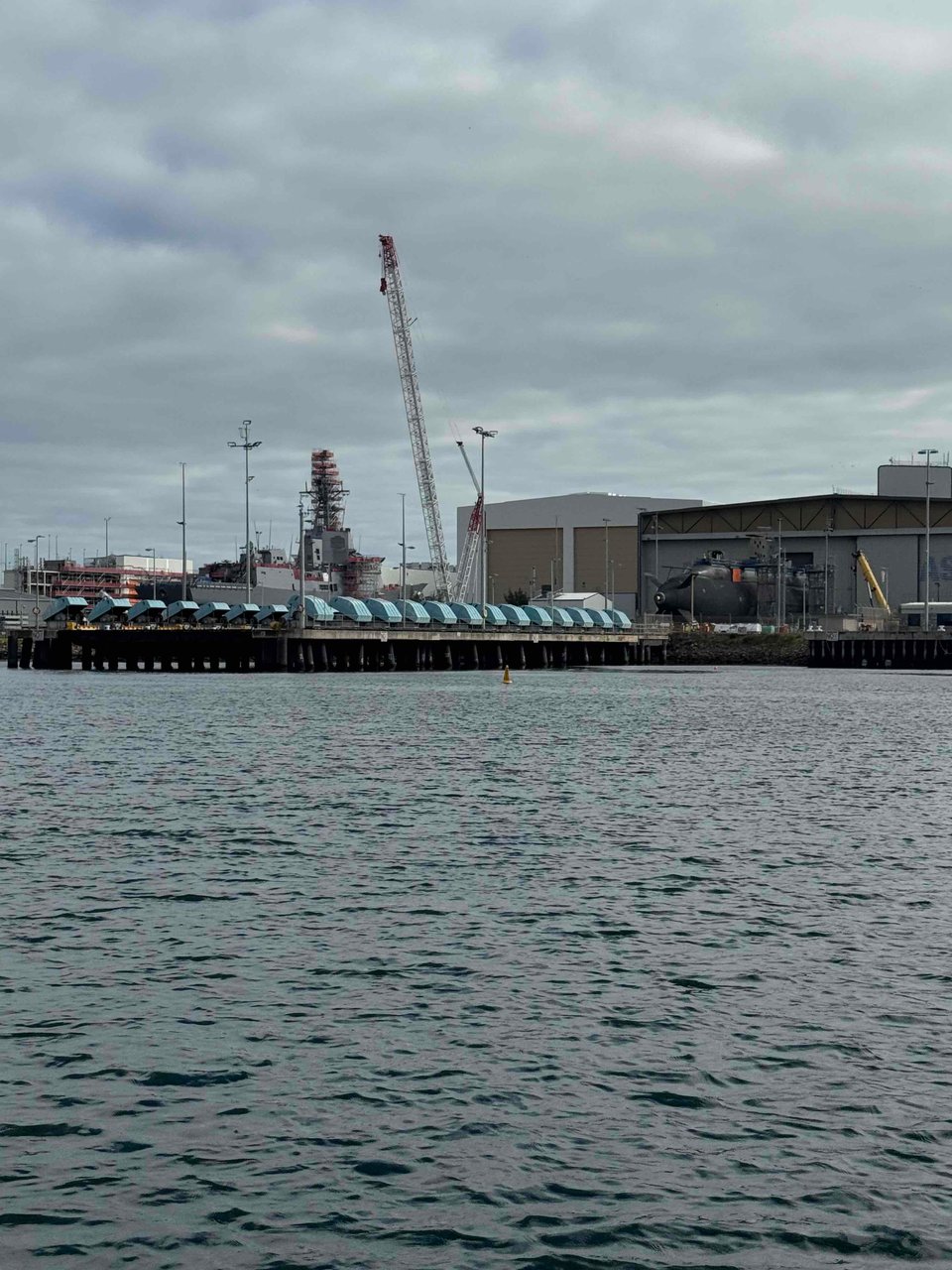
Senator David Shoebridge is onboard with us and takes over the mike to explain how much these rust buckets are costing us. Like every major defence procurement, the costs continue to balloon while they deliver less and less equipment. Shoebridge refers us to the Australian National Audit Office reports on both projects and I can’t help but take a look. The Hunter Frigate project is experiencing an 18-month delay (that was three years ago) and the report confirms that ‘Defence’s procurement process and related advisory processes lacked a value for money focus, and key records, including the rationale for the procurement approach, were not retained.’ Shoebride referred this failure to retain records and account for decisions to the National Anti-Corruption Commission. Anyone working in social service or education, where every decision to acquire so much as a postage stamp generally requires a business case, would no doubt feel envious of the way Defence officials get to spend our money. But hey, I guess this is what progressive patriotism is all about.
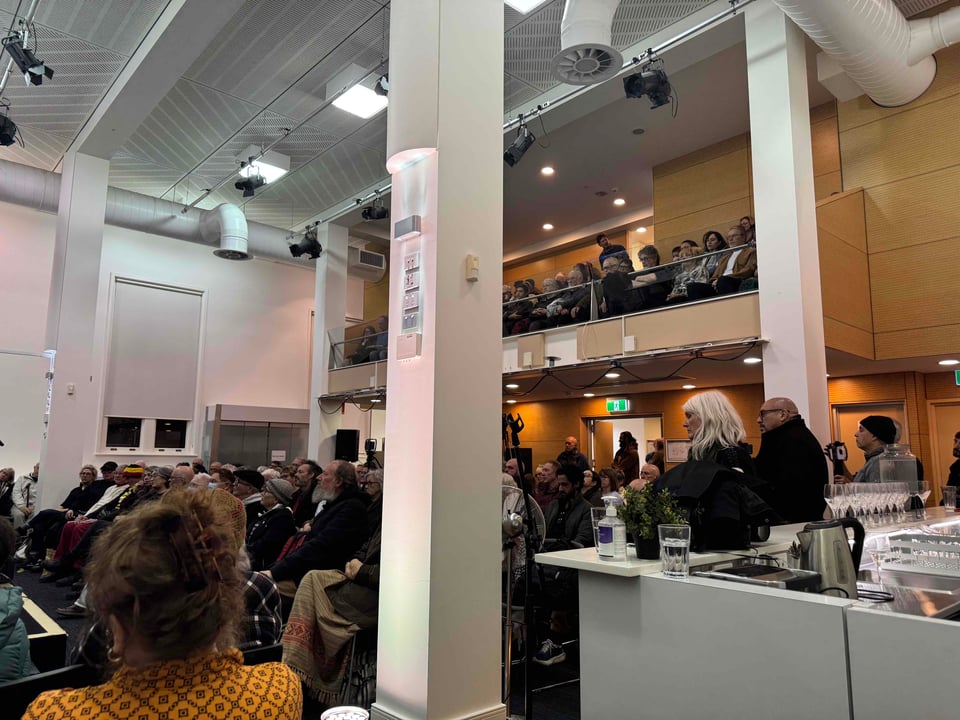
Shoebridge continues to regale us with stories from his battles in Federal Parliament during the evening Public Meeting to open the Independent and Peaceful Australia Network Conference. He tells us of how, in January this year, Major General Jeremy King walked out of his job in Defence overseeing Australian procurement of Lockheed Martin helicopters to take up the position of Lockheed Martin chief executive in Australia. When Shoebridge tried to raise questions about this in Senate Estimates – shouldn’t there at least be a cooling-off period (the Australian Public Service code of conduct recommends 12 months at least)? – his concerns were dismissed.
As Shoebridge stressed during the meeting, officials dismissed his concerns because they could perceive no conflict themselves. After all, King was still working for ‘us’. The Chief of Defence Force responded to Shoebridge’s questions in estimates, noting that:
Major general King (retired) has extensive experience brought over his career, not just the latter part of it. Moving to defence industry to allow an individual of that calibre to continue to contribute to our nation is to our benefit.
And now we can see what Conroy means when he says that handing our future to American defence contractors under AUKUS is actually in our own sovereign interest. Because ‘our’ interest is really ‘their’ interest. War is peace, dependence is independence, and Australian ‘sovereignty’ really means sovereignty for the Empire of capital and its chief of police, the United States.
I’m leaning on Shoebridge’s outstanding work in Parliament heavily here but this is also where the story gets more complex. Because during the Public Meeting one question from the audience pierced the heart of the contradiction that is an ‘independent and peaceful Australia’. Why, one young man asked during the Q&A, have the Greens adopted a defence policy that pledges billions to missile development? Who made this decision? And given its abject failure to appeal to the ‘mainstream’ of voters at the last election – the ostensive rationale for the policy – has it been retained? The question went down like a lead balloon, with calls from the audience for the questioner to ‘get to the point’.
David failed to clarify how the Greens decided on this policy, but he did articulate his rationale for it. The Greens have to appeal to mainstream Australia, he explained, and abolition of the Australian defence force iss not Greens policy. What is needed instead is to draw-down defence spending and appeal on our neighbours to do the same, while retaining a purely defensive posture.
I am getting into the weeds here because I think its important to note that despite the valiant effort that our comrades in the Australian Greens have put into the fight against AUKUS, their policy demonstrates that ‘progressive patriotism’ is not merely the empty rhetorical flourish of a Labor minister with his lips firmly planted on the American behind. It is a deep-rooted contradiction within the peace movement that will become increasingly difficult to paper-over as our struggles with war and fascism intensify. The truth is that ‘Australia’ as a political project is not compatible with peace. It is a fake nation-state constructed through colonial domination, land theft, racist exclusion, and developmentalist capitalism. The workers have no country and we cannot compromise with nationalism. That’s what got us into this mess in the first place, particularly when it comes to the Labor Party.
As Marcus Strom argues in his piercing critique of the Greens policy of missile-based national defence, our failure to grapple with the necessity of abolishing war and militarism, prevents us from having difficult conversations about what it is we are really fighting for and how we should go about it. The reality is that the peace movement in Australia remains firmly wedded to a Whitlamite ‘progressive patriotism’. That is why the politics of moral outrage and elitist appeals to expertise, diplomacy, and technocracy continue to dominate its politics.
The Greens’ policy on defence missiles is absurd. Complex global supply chains are required to make modern weapons, as demonstrated by the F35 project. They are global because capitalism is global and war is a capitalist industry. While labourist nostalgia for a time when ‘we made stuff here’ – or as Conroy puts it ‘A Future Made in Australia’ – suggest that everything will be OK if we could only resurrect our manufacturing base, modern industries just don’t work like that. From the blood-soaked extraction of cobalt in the Congo, to the data centres where targeting calculations are performed before a drone or missile strike, you can’t make a missile without global cooperation. Even Iran, whose resilience to US bombardment has prompted belated recognition its successful developmentalist nationalism, couldn’t do it without its Chinese and Russian defence links. We don’t want to rebuild nationalist war, we want to end the nation-state to end war itself.
Strom’s critique also demands we consider our response to capitalist violence. When it come to the real and present threats we face – primarily climate change, but also increasing levels of human violence – we need to think about organising to confront and overcome it. Which brings me to my afternoon in Port Adelaide. After the boat trip, I visited the South Australian Maritime Museum to get a sense of the port city’s long history. I came across a display of a bark canoe made by Ngarrindjeri Elder, Uncle Major ‘Moogy’ Sumner. Uncle Moogy, who later that day opened the IPAN public meeting in Adelaide, has re-awakened his people’s tradition of making these canoes, known in their language as ‘yuki’. An accompanying video display documents the process whereby Uncle Moogy reclaimed this tradition to create the first bark canoe made on his Country in one hundred years. It goes on to show him teaching and sharing his culture, with young Aboriginal people speaking to camera about what it means to them to connect with their own history and culture, of the strength it gives them and the sense of who they are.
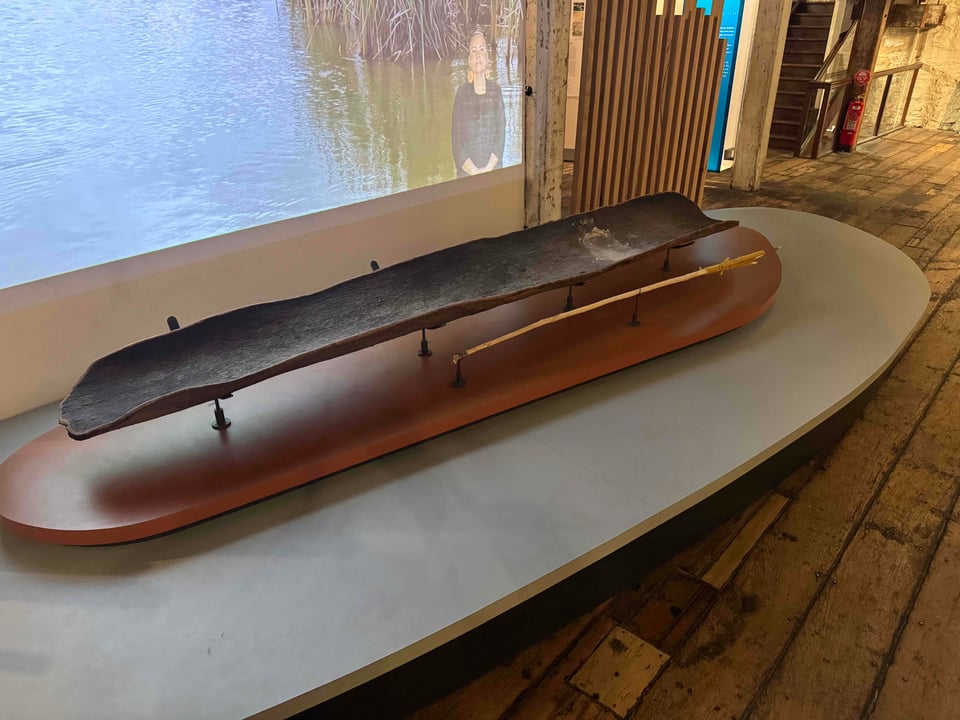
As I watched the video and handled the sample canoe provided as part of the display, I thought about the canoe as a symbol of our struggle against AUKUS. Where they have their BAE Systems Hunter Class Frigates, we have something closer to a handmade bark canoe. Their power rests upon vast global capitalist supply chains, ours depends on the resilience of our connections with each other and with the Country.
During the Public Meeting, David Shoebridge recalled how, at the Close Pine Gap Convergence last weekend, he walked with the Elders up to the gates of Pine Gap, and felt their roots going down deep into Country and back through thousands of years. Compared with this, the hold Pine Gap has on the land is incredibly shallow. Uncle Moogy’s work reawakening his culture and sharing it with young people and with us through the museum piece, is but one example of the powerful resistance Aboriginal people on these lands have sustained against capitalist colonialism for more than two hundred years. Their long struggle is far from over. But while we now have extensive documentation of the brave armed resistance that Aboriginal people mounted against the theft of their land, in the long-run their survival and their successes have depended on their development of powerful loving relationships. We can’t resist the violence of capital through armed struggle and we can’t defeat war through ‘progressive patriotism’. Instead we have to grow deep roots, build our connections with one another, and become a powerful multitude that can resist capitalism and militarism directly.