
The Gong on the Road: The Defence State
On Thursday 23 July 2026, I made the journey to Adelaide by train and plane from my home in Port Kembla. I was heading to South Australia for the Independent and Peaceful Australia Network conference, the national gathering of the Australian peace movement in all its contradictory glory. As the plane descended over the suburbs of the South Australian capital, I looked down at the patchwork of homes and streets, winding green corridors and watercourses, and thought about how a city looks from the air when they bomb it. So far away, like a Lilliputian land of make-believe, not a place where flesh and bone are rent asunder in the ‘precision’ bombing raids that continue in Palestine, Lebanon, Iran, Ukraine, Yemen, and elsewhere as a flailing American Empire tries to hold back the dying of the light.
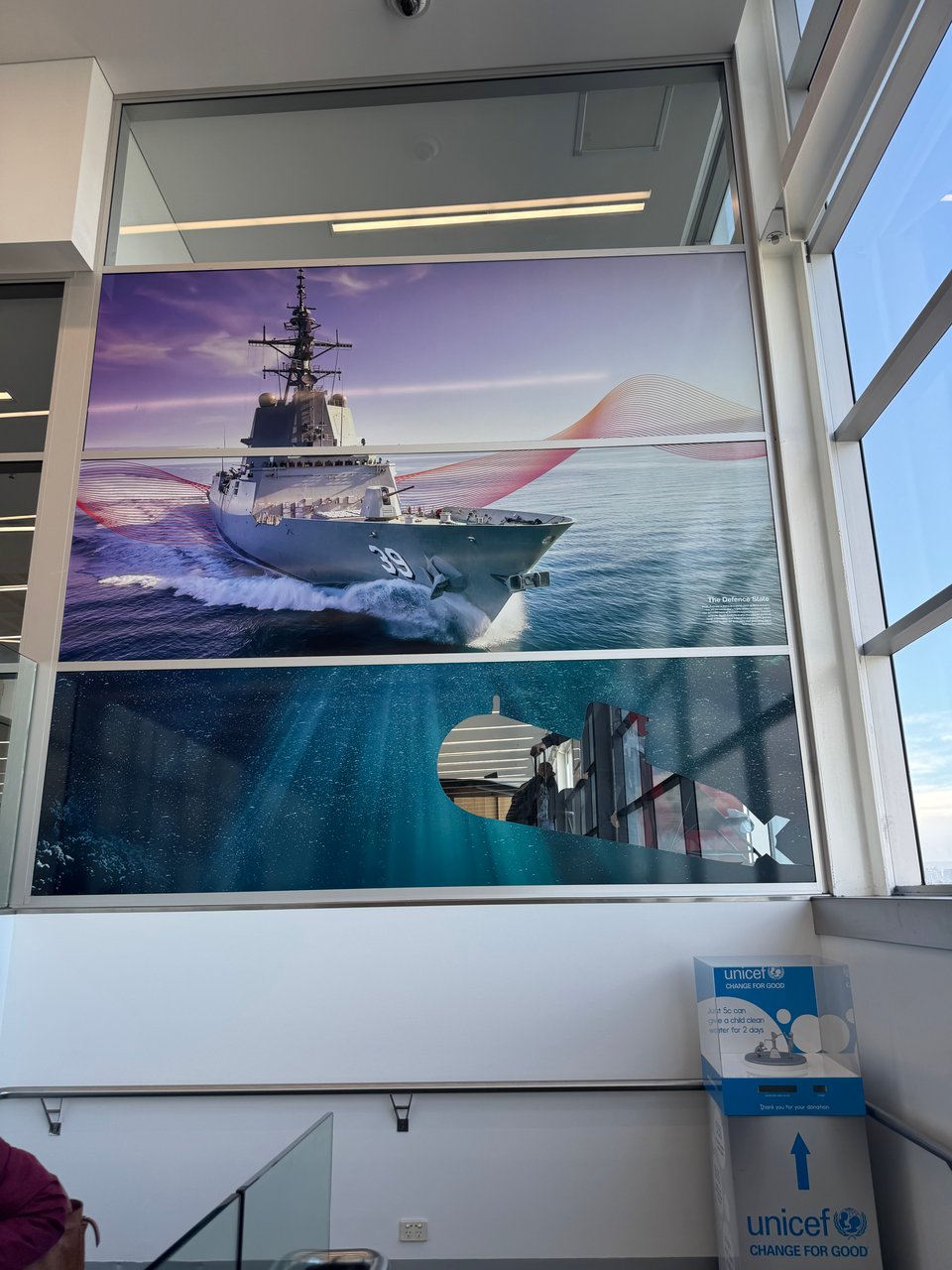
The first thing to greet me when I trundled my bag up the ramp from the aeroplane to the terminal was a giant photograph pasted onto the glass wall of a warship and the silhouette of a submarine. Tucked into the far-right corner beneath the warship was SA’s new state motto ‘The Defence State’. ‘South Australia’, the text continues, ‘is home to a world-class defence industry, key infrastructure and a highly-skilled workforce …’ The State is also, we are told, ‘the confirmed location for Australia’s next generation future submarines and frigates’. It didn’t take me long to arrive at AUKUS. Just a few short hours from Port Kembla really.
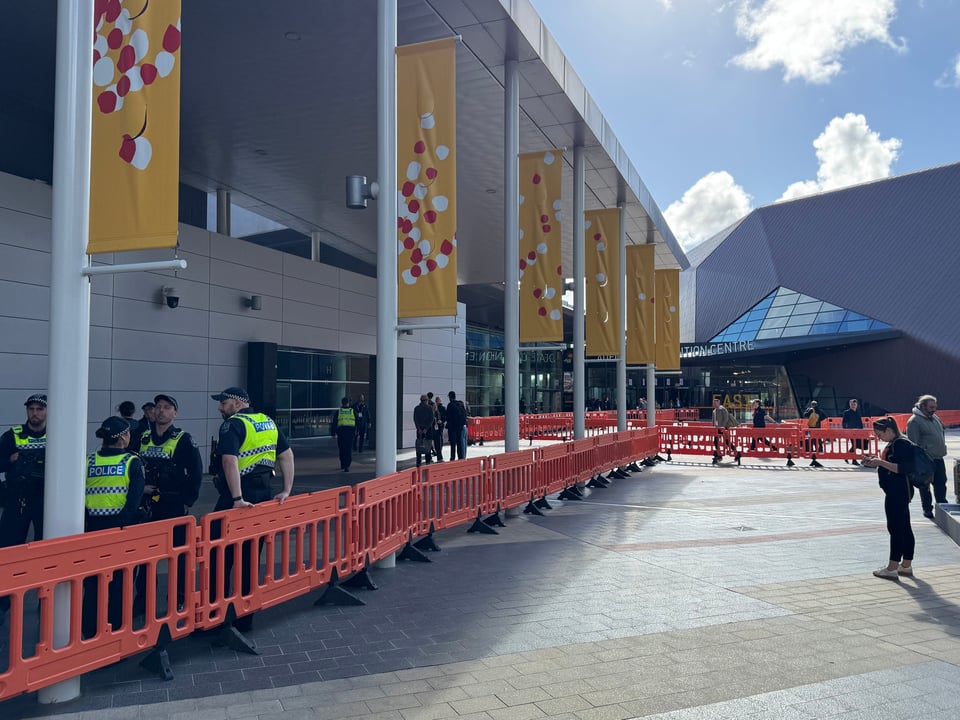
I remember South Australia from car number plates that declared it the festival state. But there is little sign of festivity now. The Labor Party’s national conference is in full swing at the Adelaide Convention Centre. Making my way there for a bonus protest about Labor’s failure to deliver on its commitments to address the health-impacts of climate, I found myself lost. Misreading the map, I had to make a full circle of the Convention Centre before I arrived back at the entrance, more or less where I had started. No wonder I couldn’t find it. Not a poster, not a flag, not a banner, not even a polite little A4 sign, not a whisper that Australia’s ruling political party is holding its night of nights right here in the former-festival-now-defence state. A few pieces of temporary fencing strategically positioned around the Convention Centre and a few police standing about. And that’s it.
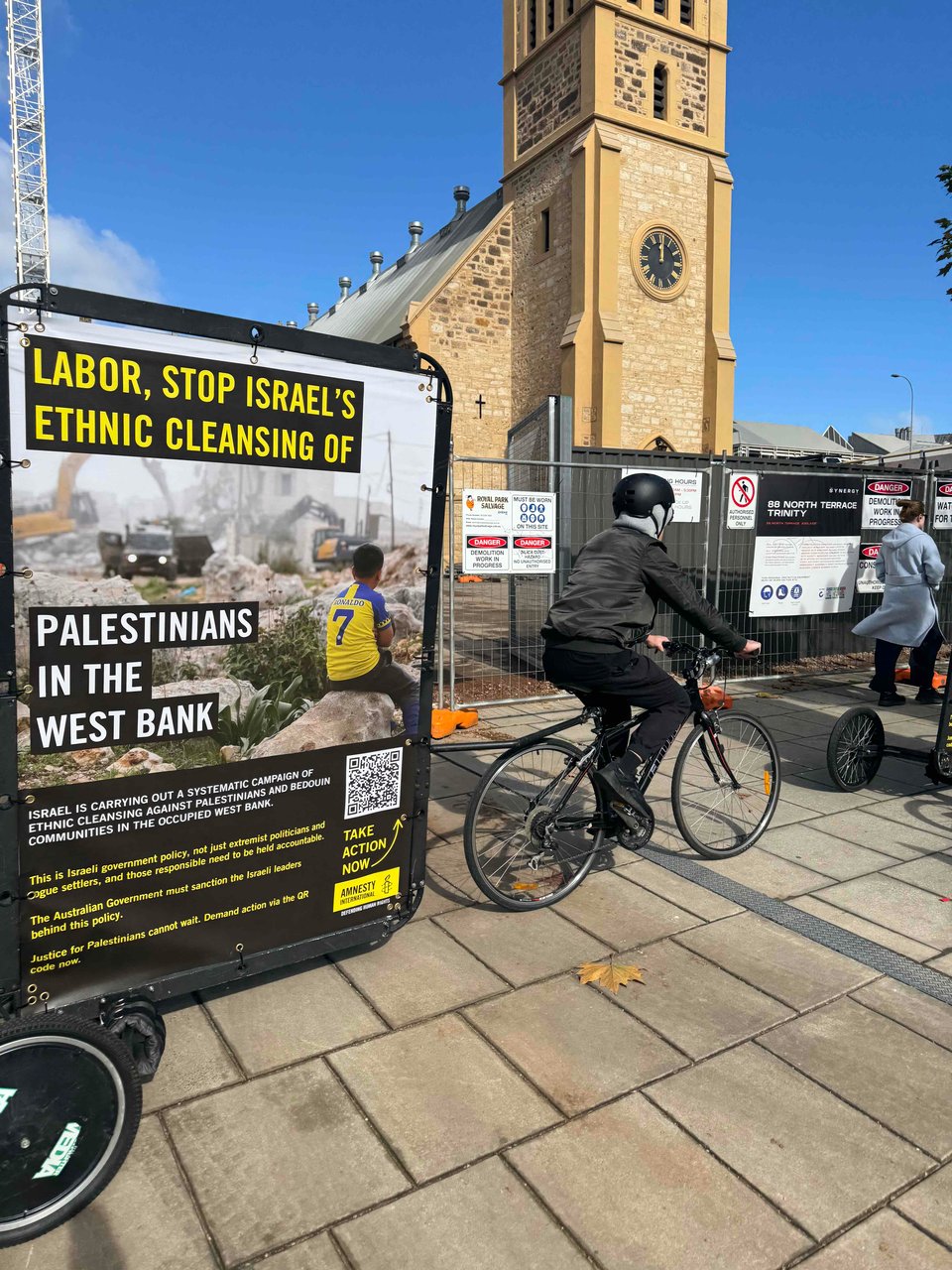
And while you wouldn’t know the Labor Party was here from its own banners or pennants, the signs of the NGO-industrial complex were easy enough to divine, especially for someone who like me who works within it and knows its language. Amnesty International wants Labor to do something about Palestine and has spared no expense in its roll-out of professionally designed and billboards on buildings and on trailers pulled by trucks and bicycles around the Convention Centre to catch the eye of Labor delegates. I detected the Australia Institute’s latest campaign, too, as I ascended the escalator to the Convention Centre and was handed a couple of free beer coolers asking Labor to tax gas not beer (I think as a public health professional, I’m supposed to want them to tax both). Of course, this is the same Convention that has received gambling industry sponsorship to help it debate the best way not to act on that scourge of Labor’s primary voter base.
Wandering off to explore the city, I stumble into a second-hand bookshop where the proprietor bemoans the fact that you just can’t find a copy of Mein Kampf in new bookshops these days. It’s been censored, apparently (though I suspect it is available on back-order for the right price). His own approach, he tells me, is to let the reader curate their own reading experience and I can see here that the argument is about censorship. The proprieter is true to his word, with Liu Shiao-Chi’s little yellow book (the lesser-known counterpart to Mao’s red one) and other left-wing pamphlets on prominent display. But his choice of example, and the discomfort it suggests about the ‘woke’ content dominating new bookshops these days, feels to me like it captures the zeitgeist.
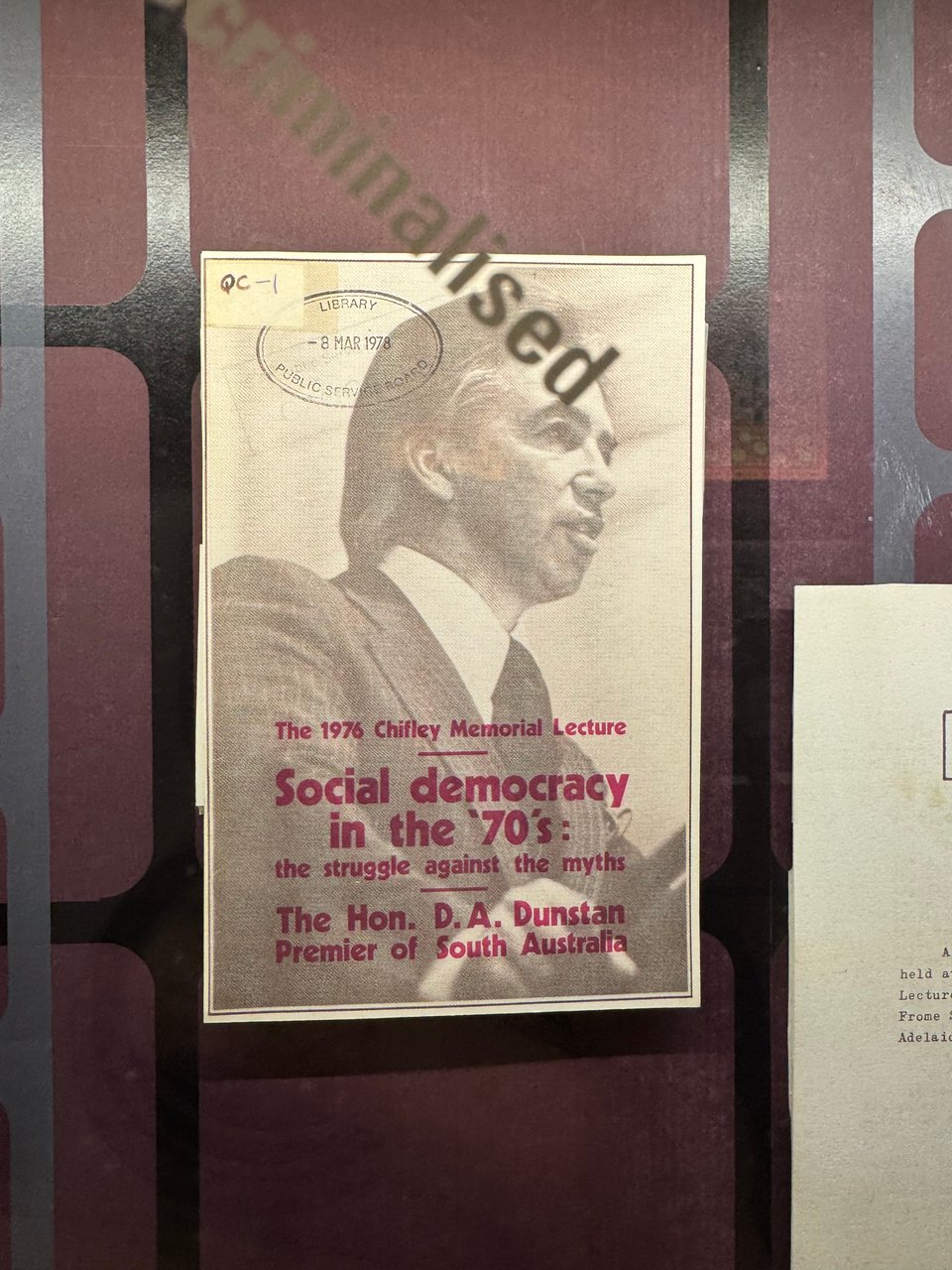
It was only a few months ago that One Nation captured more than 20 per cent of the vote and won 4 seats in the South Australian election. Interestingly, my conversation with the bookshop owner continues as he shows me former SA Premier Don Dunstan’s raunchy cookbook ‘The Joy of Cooking’ (referencing classic sex manual ‘The Joy of Sex’). In Dunstan’s day, he tells me, South Australia had given decent funding to the arts that put Adelaide on the cultural map. Now, he says, this is withering. And now I know why. It’s the Defence State now.