The Cosmic Chronicle #9
Sky Watchers' Association's 48th, stargazing guide, black hole 'wakes up', life on waterless planets, and space news!
Hi ,
One day late, but still here nonetheless. Unfortunately, rain still wreaks havoc, so I haven’t been able to photograph anything lately. Hopefully, the clouds will clear out this week.
First of all, I have some good news to share! Sky Watchers’ Association, Kolkata, celebrated its 48th anniversary on 11th August, 2025. It was founded in 1978 by a group of sky-lovers who revolutionised science popularisation among the common masses in West Bengal.
What started with public Observation Programs, Astronomy Workshops and Annual Astronomy Camps, has now extended its activities over the years and incorporated more and more of school-college level Seminars, Undergraduate Internships, Basic Astronomy Courses and AstroTours for all, organising training camps for Indian contingents at Astronomy Olympiad, Hands-on Activity and Observation Programs at Orphanage and Cancer Hospitals and even Astronomy Exhibitions.
Members also continue to contribute observational and computational data to various reputed organisations like AAVSO.
Sky Watchers' Association has always been a comfortable home for amateur astronomers. We welcome everyone, regardless of age or academic background. If you love the sky, we welcome you to be a part of this family.
What’s on the Sky This Week
MONDAY, AUGUST 11
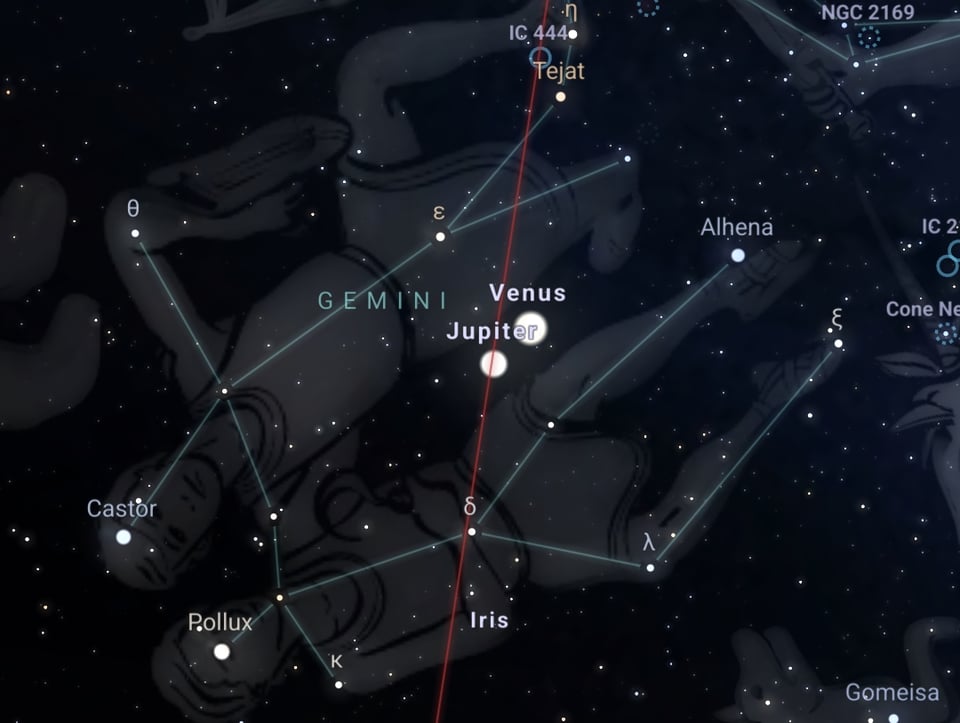
Venus and Jupiter in conjunction in the east during early morning on the 12th.
TUESDAY, AUGUST 12
The predicted peak of the annual Perseid meteor shower. Unfortunately, the bright moon is going to whitewash most of the meteors, but if you’re lucky, you’ll catch some of the brightest ones.
For best results, find an open field away from the city lights. Take a group of friends and lie down in a circle, each one observing one part of the sky. The meteors will span the entire sky, so keep count of how many each one sees!
WEDNESDAY, AUGUST 13
The Perseids are still active. If you missed it last night, there’s your chance.
THURSDAY, AUGUST 14
Tonight Vega is almost overhead. Vega is the brightest star in the constellation Lyra, which almost looks like a kite - a parallelogram body with a stick attached that ends in Vega. Once you find Vega, you’ll be able to find the parallelogram of Lyra.
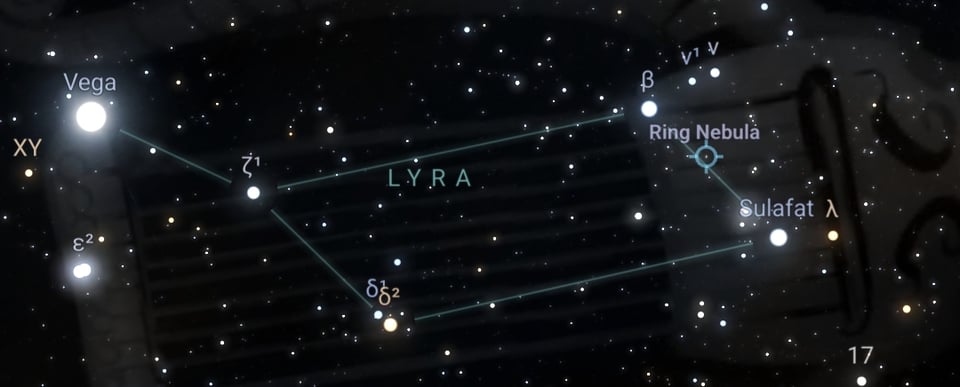
The two stars on the parallelogram opposite to Vega are Sheliak and Sulafat. On about one-third of the line joining these two, you’ll find the famous Ring Nebula.
What’s Happening in Astronomy
Astronomers catch supermassive black hole in the act of 'waking up'
Astronomers have made significant discoveries regarding a supermassive black hole in the galaxy cluster CHIPS 1911+4455, located about 6 billion light-years away, which has recently entered an active phase after approximately 1,000 years of dormancy. Utilizing advanced radio telescopes like the Very Long Baseline Array (VLBA) and the Very Large Array (VLA), researchers observed jets extending roughly 30 parsecs from the black hole, providing insights into its early-stage activity and the mechanisms of "black hole feedback" on its surrounding environment. The findings indicate a high star formation rate in the central galaxy, suggesting a complex relationship between black holes and galaxy evolution that involves feedback processes potentially triggered by recent cluster mergers. This research highlights the importance of complementary observational techniques in understanding the interplay between black holes and their host galaxies.
Planets without water could still produce certain liquids, a new study finds
Recent research indicates that the presence of water may not be a prerequisite for life on other planets, as ionic liquids can form from the interaction of sulfuric acid and nitrogen-containing organic compounds, even in extreme conditions unsuitable for water. Studies show that these ionic liquids are stable at high temperatures and low pressures, suggesting they could persist on rocky planets or moons, including those like Venus, where sulfuric acid is abundant. This discovery broadens the criteria for habitability, indicating that unique chemical processes could enable life in environments previously considered inhospitable, thus expanding our understanding of potential extraterrestrial life.
The universe's first stars unveiled in turbulent simulations
Recent supercomputer simulations have provided new insights into the formation of the universe's first stars, known as Population III stars, which emerged during the Dark Ages following the Big Bang. These studies reveal that high-velocity turbulence in primordial gas clouds facilitated the formation of smaller, more numerous stars rather than the massive solitary stars previously thought to dominate that era. The simulations demonstrate how gas fell into dark matter mini-halos, generating turbulence that led to the creation of dense gas clouds, ultimately challenging earlier models and explaining the absence of expected metallic signatures from supernovae in subsequent star generations. This research enhances our understanding of the early universe and the complex processes impacting star formation.
Intuitive Machines to build its own lunar communications satellites
Intuitive Machines is advancing its space initiatives by producing its own lunar communications satellites, which will improve scheduling control and expand satellite opportunities in cislunar communications. Meanwhile, the 39th Annual Small Satellite Conference highlighted innovative technologies and collaborations in the small satellite sector, notably a partnership between ZAITRA and Xiphos focused on enhancing edge-AI processing for SmallSats, as well as the launch of MMA Space's FlexArray Solar Array System. The event also served as a platform for job exchanges in the growing space industry.
Satellite observations overturn assumptions about charge distribution in Earth's magnetosphere
Recent satellite observations and large-scale magnetohydrodynamic (MHD) simulations have significantly advanced our understanding of charge distribution within Earth's magnetosphere, revealing a reversal in polarity where the morning side exhibits negative charge and the evening side positive, particularly in the equatorial region. This challenges the traditional belief of a positive charge in the morning and negative in the evening, which still holds true in polar areas. The findings underscore the complex interplay between plasma motion, electric forces, and magnetic field orientation, thereby enhancing our knowledge of magnetospheric dynamics and their broader implications for planetary environments, particularly for magnetized planets like Jupiter and Saturn.
First asteroid sightings push Hera's camera to the limit
The European Space Agency's Hera mission, launched on October 7, 2024, is making significant strides in planetary defense by successfully capturing images of distant asteroids (1126) Otero and (18805) Kellyday from 2.8 million kilometers away. These observations, conducted on May 11, 2025, validate Hera's capability for precise deep space imaging and agile target acquisition, enhancing techniques for asteroid deflection as it prepares for its approach to the Didymos binary asteroid system in late 2026. The mission's advancements not only contribute to the understanding of potentially hazardous near-Earth asteroids but also support the upcoming assessment of impact scenarios following the DART spacecraft's intervention at Didymos and Dimorphos.


Add a comment: