The Cosmic Chronicle #8
Get prepped for a lunar eclipse live-stream, spot Hercules' cluster and enjoy the Perseids meteor shower!
Hi ,
Another week, another issue of The Cosmic Chronicle. First of all, I’d like to share some upcoming news. As you know, a total lunar eclipse is set to be visible from East Africa, Asia, and Australia on 7th September, 2025. On the day, I’m planning to live-stream the event on my YouTube channel. Over the coming weeks, I’ll share more details. So, stay tuned.
With that out of the way, let’s go ahead with today’s newsletter.
What’s in the Sky this Week?
MONDAY AUGUST 4
Watch the gibbous Moon halfway between Antares to its right and the Sagittarius Teapot to its left.
TUESDAY, AUGUST 5
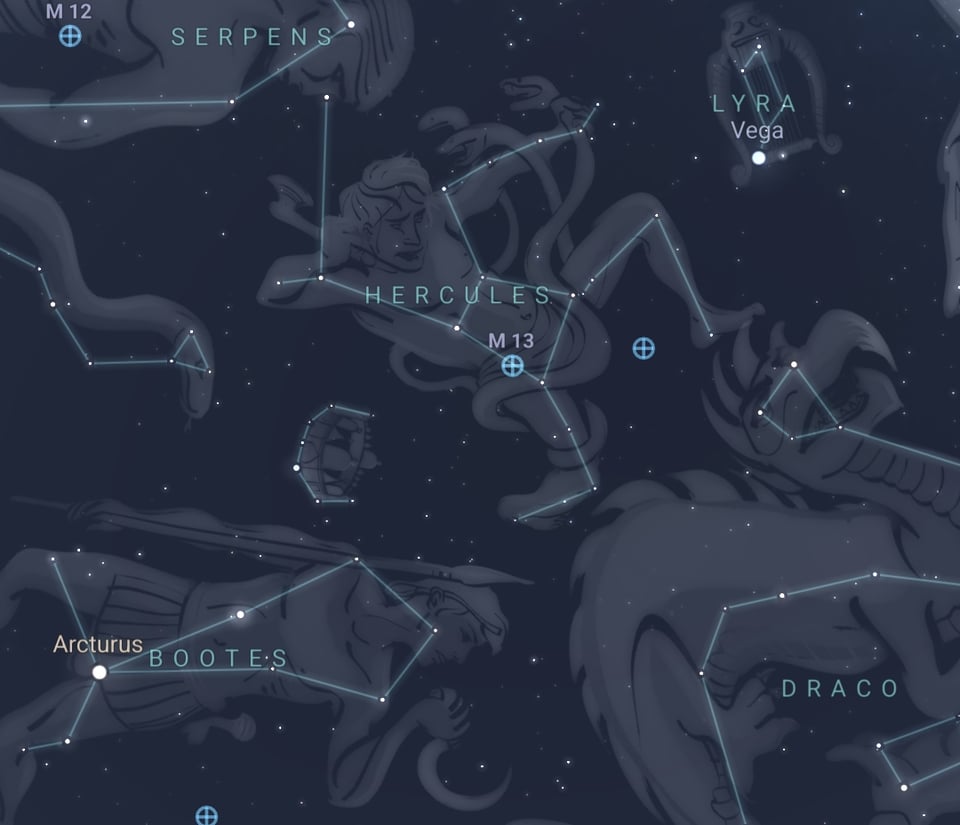
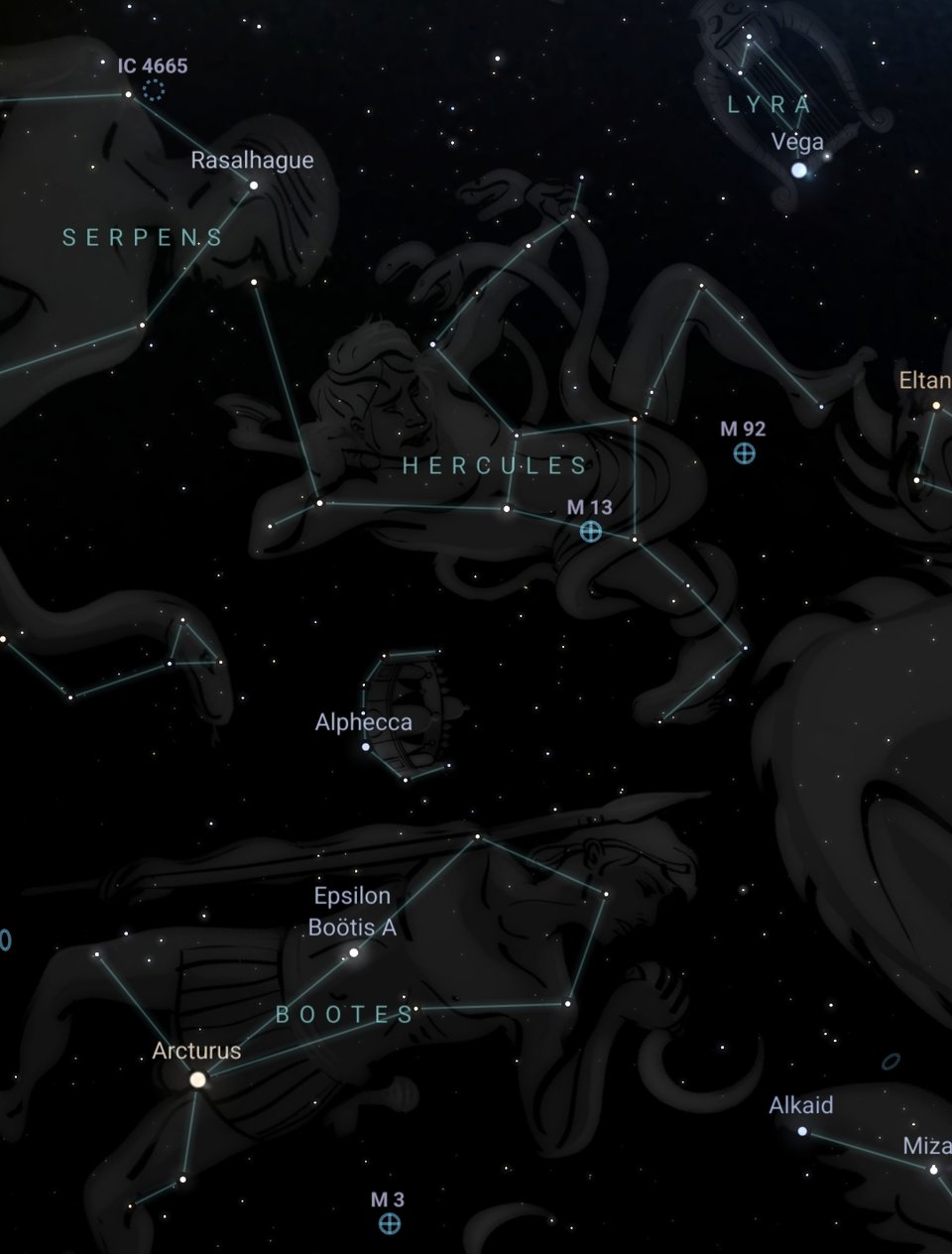
Watch the majestic Globular cluster M13, also known as the Hercules cluster (you’ll need a telescope for this). At around 8, spot the bright star Vega almost on top of your head. Slightly towards the west is the star Arcturus; M13 lies on the line joining these two, slightly towards Vega.
WEDNESDAY, AUGUST 6
Now the Moon sits just left of the Teapot's handle.
THURSDAY, AUGUST 7
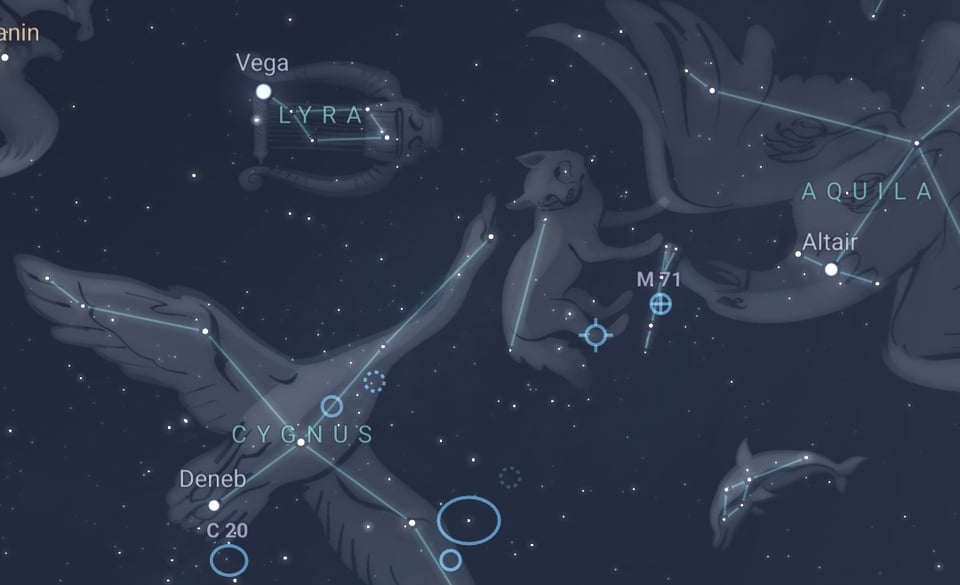
At around 8 pm, you can spot the Summer Triangle. Almost above your head, find Vega in Lyra, Deneb in Cygnus, and Altair in Aquila.
FRIDAY, AUGUST 8
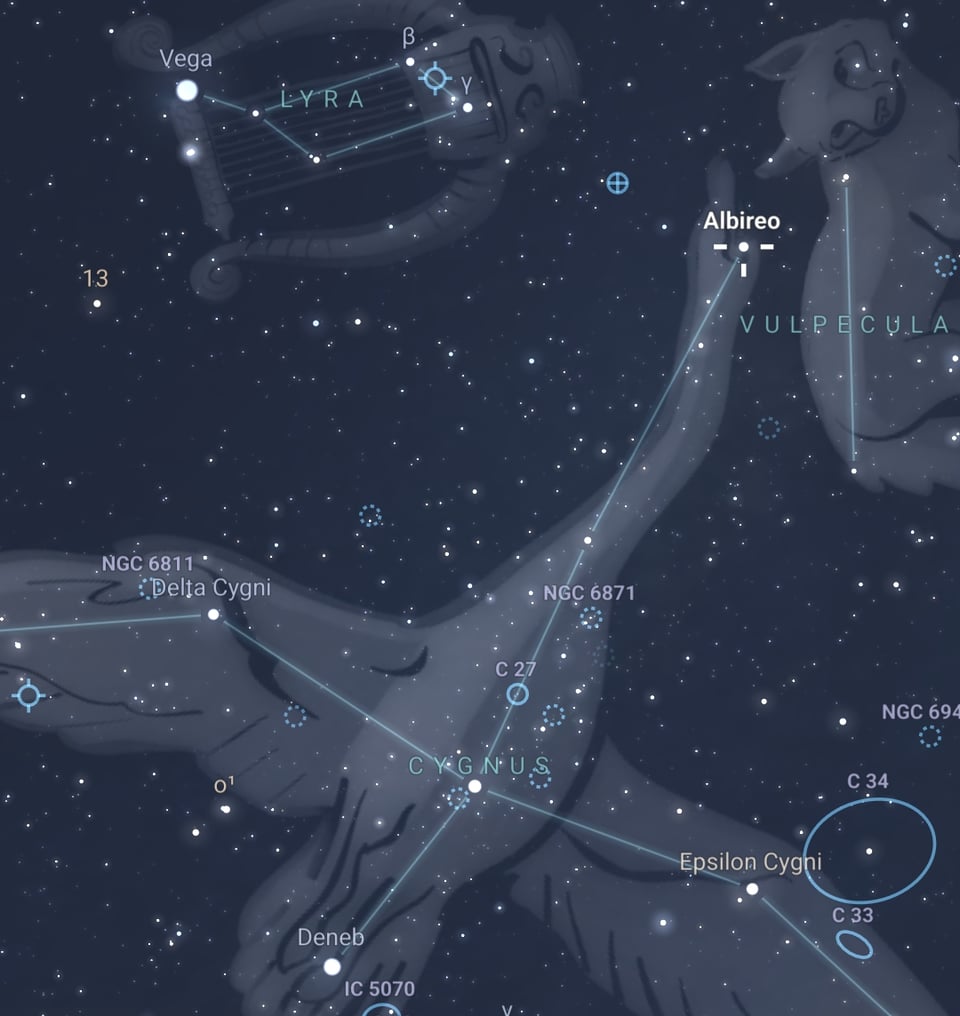
Tonight is a great time to observe Alberio - the famous binary star in Cygnus. Find Vega and Altair. Alberio lies almost halfway between them, on the tail of Cygnus.
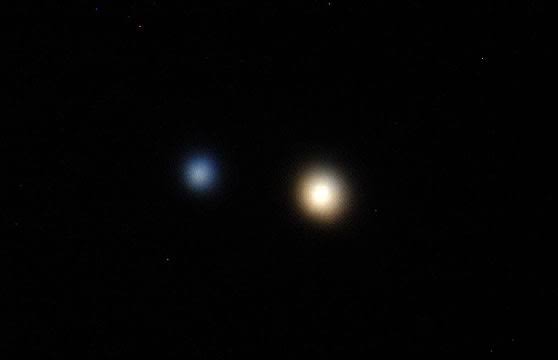
To the naked eye, it looks like just a normal star, but a telescope reveals that it is, in fact, two stars. The colour difference is noticeable: The big one is bright orange, and the small one is faint blue!
SATURDAY, AUGUST 9
Find Vega and Arcturus. Two-thirds of the way from Vega to Arcturus, you’ll cross the faint semicircle of Corona Borealis. The brightest star there is Alphecca, or Gemma.
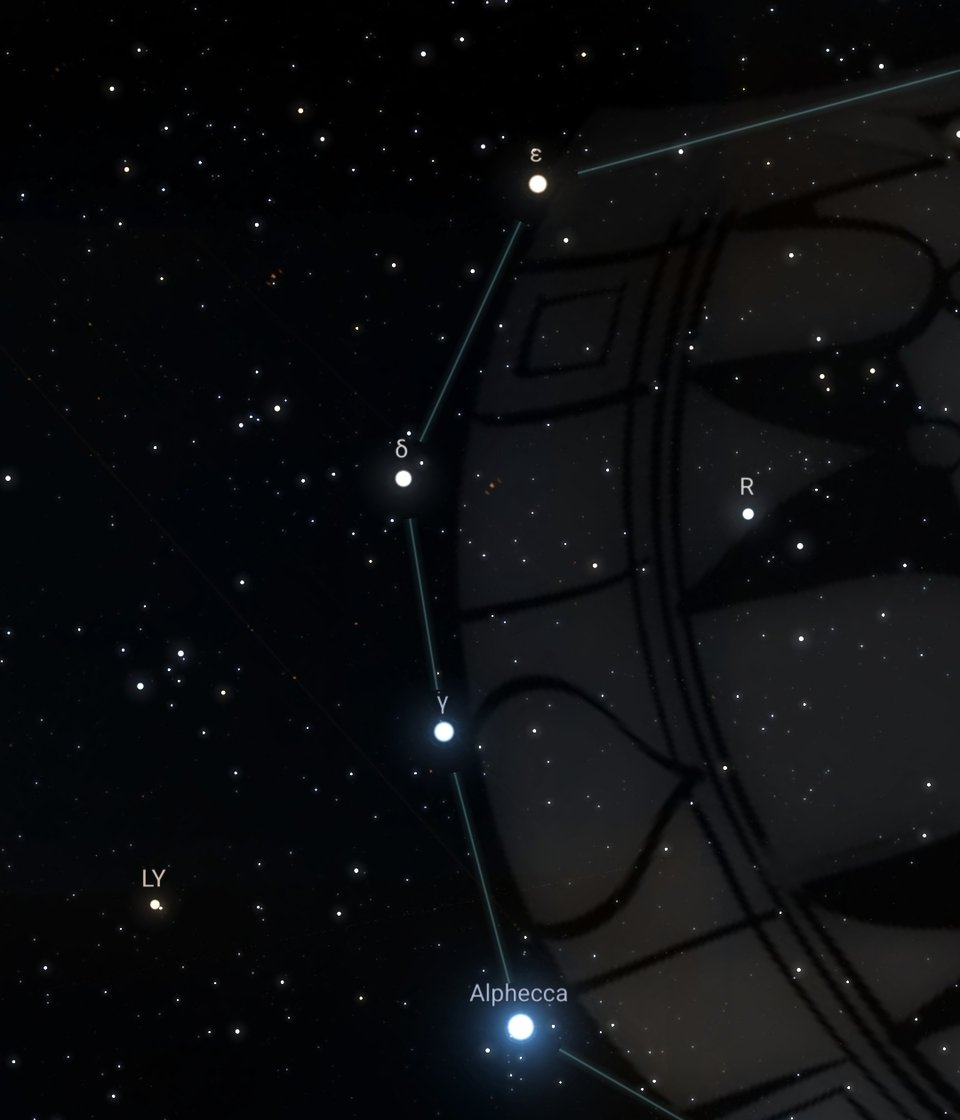
Just to the east of Alphecca, you’ll find Gamma and Delta Coronae Borealis
From Alphecc, if you go straight through Gamma and Delta Coronae Borealis, you’ll hit the very faint T Coronae Borealis.
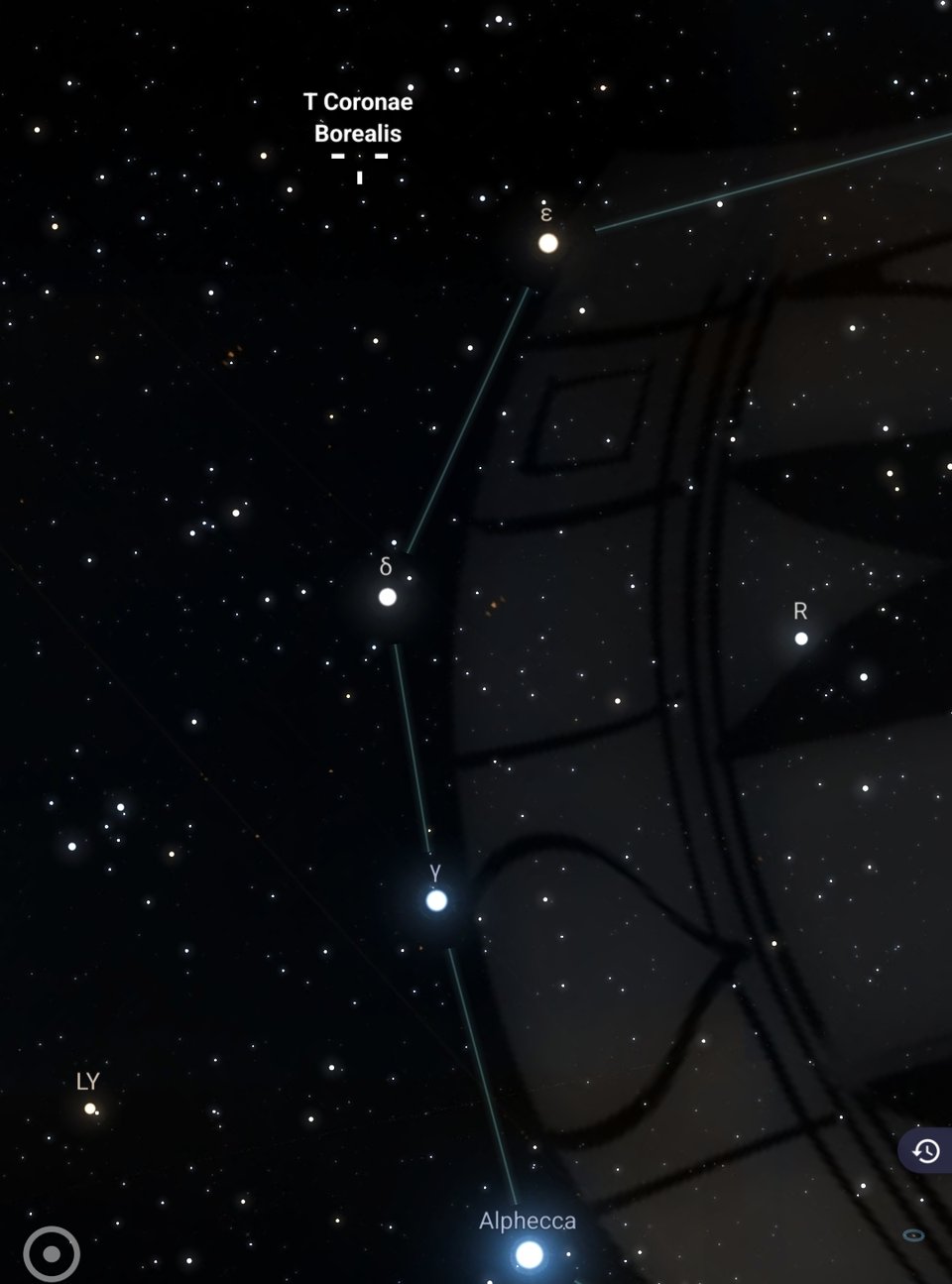
This star was supposed to go Nova, but unfortunately, it hasn’t happened yet.
SUNDAY, AUGUST 10
Despite the moonlight, in a clean sky free of clouds and light pollution, you might be able to see the Perseids meteor shower. The Perseids are active for many days before and several days after their peak, which this year is predicted for the night of August 12-13.
What’s Happening in Astronomy
Image: Webb takes a fresh look at a classic deep field
Recent advancements in astronomy, particularly through the James Webb Space Telescope (JWST), have significantly enhanced our understanding of the universe, revealing detailed images of thousands of distant galaxies with unique characteristics, such as those exhibiting red and orange hues indicative of dust or stellar activity. Notably, the MIRI Deep Imaging Survey captured one of the deepest images yet, uncovering over 2,500 sources that allow researchers to study galaxy evolution and structure in unprecedented detail. This work builds on prior observations from the Hubble Space Telescope, offering fresh insights into cosmic structures and the formation of galaxies. Concurrently, the integration of deep learning in imaging mass spectrometry has improved virtual histological analysis, and recent discoveries in biodiversity, including a new tarantula species with exceptionally long genitalia and a long-necked marine reptile from Germany's Jurassic period, reflect ongoing scientific exploration across various fields.
Life could survive beneath the surface of Mars and other planets using high energy particles from space
Recent studies highlight the potential for life to exist in extreme environments on celestial bodies like Mars and icy moons such as Enceladus and Europa, challenging traditional beliefs that life requires sunlight or volcanic activity. Research introduces the "Radiolytic Habitable Zone," which suggests that microbes could thrive underground by utilising energy from cosmic rays that split water molecules, a process known as radiolysis. This new understanding shifts the focus from the conventional "Goldilocks Zone" around stars to seeking life in colder, darker habitats, providing guidance for future exploratory missions. Additionally, various scientific discoveries, including new species of spiders and marine reptiles, underscore the diverse range of research being conducted in the field of astrobiology and related disciplines.
Webb reveals more than one star contributes to the irregular shape of planetary nebula NGC 6072
The James Webb Space Telescope has provided new high-resolution images of the planetary nebula NGC 6072, revealing its complex, irregular, and multi-polar structure influenced by the interaction of at least two stars at its centre. Observations highlight multiple elliptical outflows, concentric rings, and varying gas and dust features, suggesting that a companion star significantly impacts the nebula's morphology and mass loss. This research enhances our understanding of stellar life cycles and the role of such nebulae in contributing to the interstellar medium and future star formation.
Astronauts launch to the space station after sidelined by Boeing's troubled Starliner
On August 1, 2025, astronauts from a U.S.-Japanese-Russian crew successfully launched to the International Space Station (ISS) aboard a SpaceX Falcon 9 rocket with a Crew Dragon capsule, following delays caused by technical issues with Boeing's Starliner spacecraft. This mission marks a pivotal moment as NASA plans the future of the ISS, including a deorbit strategy aimed for late 2030, with considerations for extending crewed missions up to eight months to reduce costs amidst ongoing challenges with the Starliner program. In a separate advancement, scientists achieved a significant milestone in synthetic biology by minimising the genetic code of E. coli to just 57 codons, suggesting promising implications for genetic research and applications.


Add a comment: