The Cosmic Chronicle #12
Catch up on lunar eclipse pics, two cosmic events, and breakthroughs in astrobiology!
Hi ,
Yes, yes, I know. I didn’t send a newsletter last week. Unfortunately, I was up until 2 AM for the eclipse, so I woke up with a foggy head on Monday, and then got unexpectedly busy over the week.
Anyway, in case you missed it, here’s the live stream. And here are a few pictures:
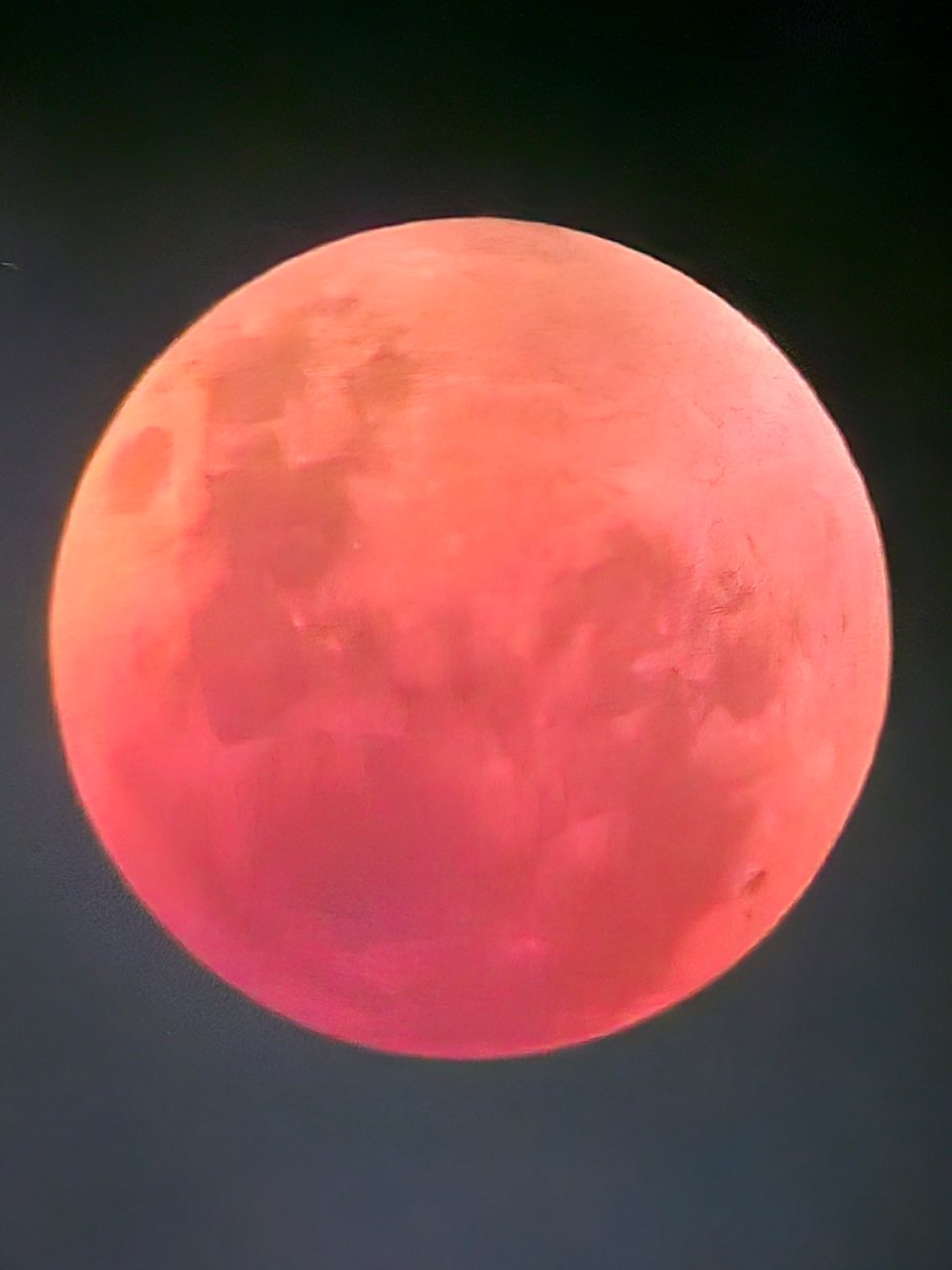
This is the “blood moon” during the total eclipse.
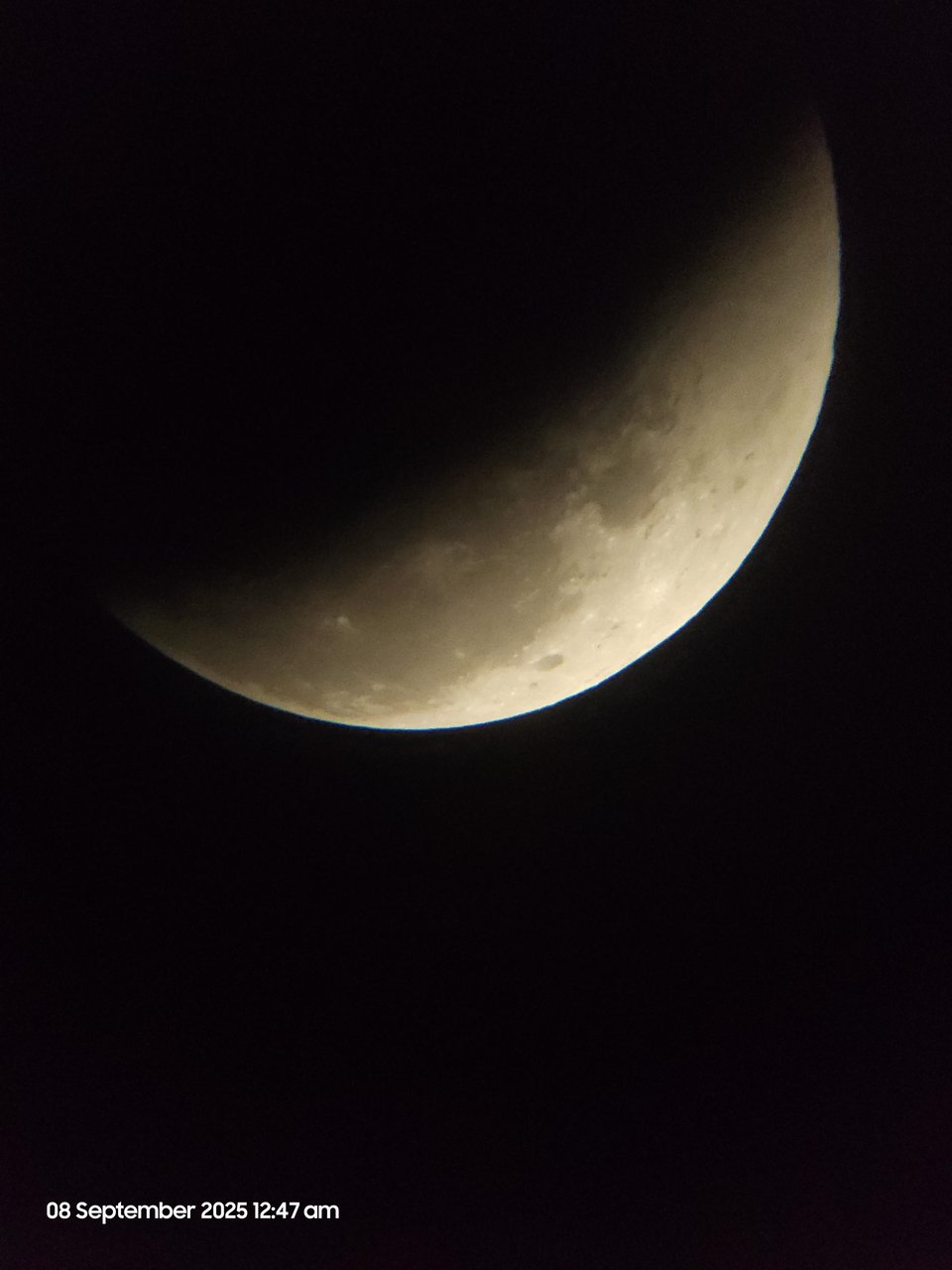
This is about halfway through the exit phase of the eclipse.
With that out of the way, this week you have two interesting cosmic events lined up - on the same day!
Partial Solar Eclipse on 21 September
An eclipse does not come alone. Solar and lunar eclipses always come in pairs, with one following the other in a period of 2 weeks. That means a partial solar eclipse on 21st September will follow the total lunar eclipse of 7th September. Yay!
But hold your horses. Unfortunately, it’ll be visible only in a very, very, very small region in the southern hemisphere.
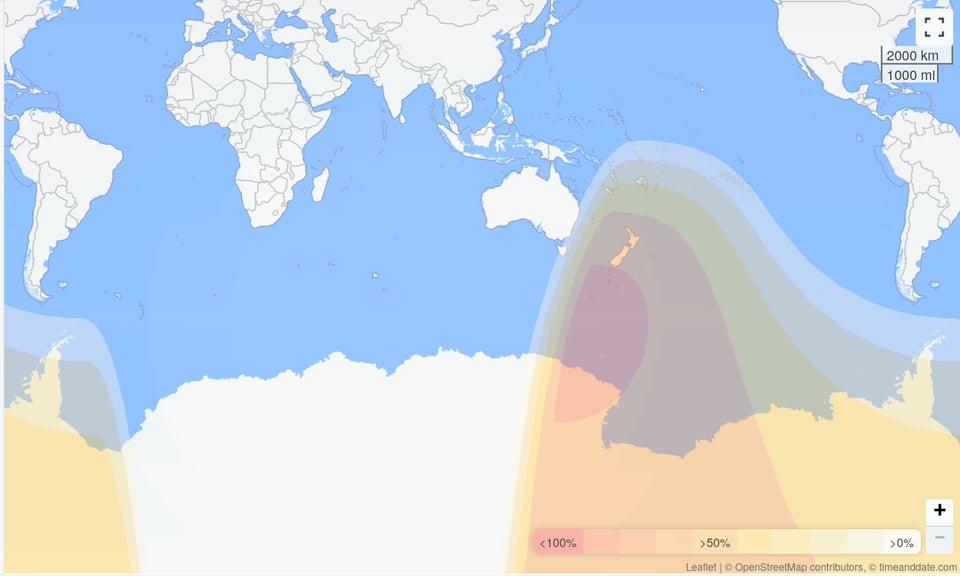
Take a look at the timing for more information.
Warning: Please do not look at the sun directly. Do not point any optical instrument at the sun without any protective solar filters.
If you want to learn more about eclipses, I have found the perfect resource for you.
Saturn at opposition on 21st September
Also on the same day, Saturn reaches opposition for this year. Being in opposition means Earth will be between the Sun and Saturn, and Saturn will be the closest to us for this year. The term “opposition” originates from the fact that Saturn will be “opposite” to the Sun, rising in the east when the Sun sets in the west.
At opposition, Saturn will be approximately 1.28 billion kilometers away from us. During this time, Saturn is also at its brightest for the year, with a magnitude of 0.6.
Following the opposition, Saturn will remain in the evening sky throughout the rest of the year and gradually disappear in the sun’s glare in February 2026.
What’s Happening in Astronomy
Isotopic analysis determines that water once flowed on asteroid Ryugu
Recent research on the asteroid Ryugu, based on samples returned by Japan's Hayabusa2 spacecraft, has revealed significant insights into the history of water in our solar system. Isotopic analysis indicates that liquid water once flowed through Ryugu, challenging previous assumptions that such activity was limited to the early solar system. This fluid movement suggests that carbon-rich asteroids may have served as substantial water sources for Earth, potentially reshaping our understanding of planetary formation and the conditions that allowed for the development of life. The findings also emphasize the importance of isotopes in studying asteroid geology and hint at the broader implications for the origins of water on our planet, as ongoing research seeks to compare these results with samples from other asteroids.
Planets without plate tectonics and too little carbon dioxide could mean that technological alien life is rare
Recent research highlights the rarity of technologically advanced extraterrestrial civilizations due to specific environmental conditions required for life, such as plate tectonics and appropriate carbon dioxide and oxygen levels. Studies indicate that the nearest advanced civilization could be about 33,000 light years away, necessitating civilizations to possess a lifespan of at least 280,000 years to coexist with humanity. Expert opinions suggest that Earth's conditions for sustaining life are unique, making extraterrestrial intelligences (ETIs) likely rare across the Milky Way. This underscores the challenges faced in the Search for Extraterrestrial Intelligence (SETI), with the overarching theme that either confirming the rarity of ETIs or making new discoveries could yield profound insights into our place in the universe.
Mars Perseverance rover data suggests presence of past microbial life
Recent research from NASA's Mars Perseverance rover, co-authored by Texas A&M University geologist Dr. Michael Tice, points to the potential presence of ancient microbial life on Mars, particularly in the Jezero Crater's Bright Angel formation. The analysis of sedimentary rocks rich in oxidized iron, phosphorus, sulfur, and organic carbon suggests these materials could have served as an energy source for early microorganisms, with chemical signatures indicative of biological activity. Notably, the co-location of organic matter and redox-sensitive minerals raises questions about past life, although definitive proof remains elusive. Findings indicate that geological features on Mars, which have been less altered than those on Earth, offer a unique opportunity for future exploration and advanced analysis of potential biosignatures.
Models explain mysterious feature controlling magnetic properties of the sun
Recent research has focused on the sun's tachocline, a crucial layer beneath its surface that plays a significant role in generating its magnetic fields, which are responsible for solar phenomena like flares and coronal mass ejections that impact Earth. Utilizing advanced models powered by NASA's supercomputers, scientists have gained deeper insights into the solar dynamo process, which produces the sun's magnetic properties. This research not only enhances understanding of solar dynamics but also has implications for the magnetic activities of other stars and the potential habitability of their planets.
The exoplanet TRAPPIST-1 e takes its turn in the JWST's spotlight
Recent observations of the exoplanet TRAPPIST-1 e by the James Webb Space Telescope (JWST) indicate that the planet has likely lost its primordial atmosphere, potentially due to stellar activity such as flaring. While initial findings suggest the absence of a significant carbon dioxide or methane-rich atmosphere, the possibility of a secondary atmosphere containing some methane remains under investigation. Ongoing studies, part of the JWST-TST DREAMS program, employ advanced techniques like infrared spectroscopy to analyze TRAPPIST-1 e's atmospheric composition and its potential habitability. These explorations represent a pivotal shift from merely discovering exoplanets to understanding their atmospheres in detail, marking an exciting era in astrobiology and the search for potentially habitable worlds.


Add a comment: