When Catherine Wears Red: How “Wuthering Heights” (2026) Dresses a Classic in Something Stranger
The film Wuthering Heights immediately signals something unusual before audiences even watch the first scene. Its title appears as “Wuthering Heights”, framed in quotation marks, a subtle but deliberate signal that what viewers are about to see is not meant to be a definitive or strictly faithful adaptation of Wuthering Heights, the 1847 Gothic novel by Emily Brontë. Instead, the punctuation suggests something more interpretive— a cinematic retelling that acknowledges the original story while reshaping its tone, imagery, and atmosphere for contemporary audiences. Directed by Emerald Fennell and starring
Margot Robbie as Catherine Earnshaw and Jacob Elordi as Heathcliff, the 2026 film appears less interested in recreating historical realism than in exploring how fashion and visual storytelling can reinterpret the emotional landscape of Brontë’s novel.
Much of the early discussion surrounding the film centers on its striking costume design, created by acclaimed designer Jacqueline Durran, known for her work on films such as Little Women and Anna Karenina. In early previews and production stills published by fashion outlets such as, the costumes appear intentionally unconventional: Catherine’s wardrobe reportedly includes bold red garments, dramatic hats, and fabrics that range from velvet to unexpectedly glossy materials. Rather than strictly adhering to the mid- nineteenth-century fashions of Brontë’s original setting, the costumes blend multiple historical influences— Elizabethan silhouettes, Victorian shapes, and even touches of twentieth-century glamour. The result is a visual language that feels theatrical and slightly surreal, reflecting Catherine’s emotional volatility and the novel’s famously intense atmosphere. In interviews, Durran explained that the goal was not strict historical accuracy but rather a wardrobe that could capture the psychological intensity of the characters and the wild energy of the Yorkshire moors.
This approach has already sparked debate among fans of the novel and viewers of earlier adaptations. Some audiences have praised the stylized costumes for giving the story a fresh visual identity, while others worry that the modernized fashion distances the film from the world of Brontë’s text. But the tension between historical fidelity and artistic reinterpretation is not new for Wuthering Heights. The story has been adapted numerous times, including the famous 1939 film starring Laurence Olivier, which emphasized romantic melodrama and carefully researched period dress, as well as later television and film versions that experimented with darker or more psychologically complex portrayals of Heathcliff and Catherine.
Each adaptation reflects the cultural moment in which it was made, and the 2026 version appears to continue that tradition by translating the
emotional extremes of the novel into a bold visual aesthetic. Fashion plays a particularly powerful role in this reinterpretation because clothing
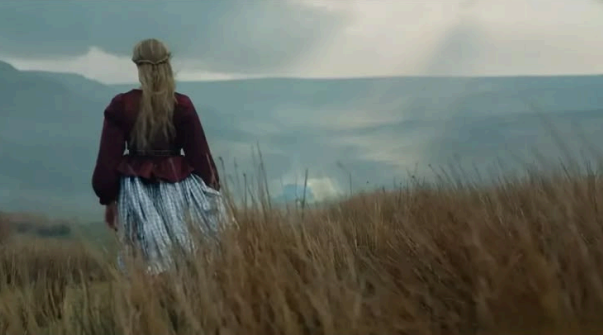
becomes a visual shorthand for character psychology. Catherine’s red garments— seen in early promotional images— seem designed to embody both passion and defiance, echoing her famously intense personality in the novel. Heathcliff’s darker wardrobe, by contrast, emphasizes his outsider status and brooding presence. The interplay between costume and environment also appears significant: against the windswept landscapes of the moors, the characters’ dramatic clothing transforms them into almost mythic figures, reinforcing the story’s Gothic tone. Rather than presenting the characters as strictly realistic nineteenth-century individuals, the film appears to frame them as symbolic
figures in a larger emotional drama.
In this way, the fashion of “Wuthering Heights” (2026) becomes more than decoration— it becomes part of the film’s interpretation of the novel itself. Brontë’s original text is famously intense, filled with themes of obsession, revenge, love, and social conflict. By embracing stylized costumes and visually striking fabrics, the film seems to amplify those themes rather than quietly illustrating them. The quotation marks in the title, then, begin to make sense: this is not the Wuthering Heights but “Wuthering Heights,” a version shaped by modern artistic sensibilities, fashion experimentation, and contemporary storytelling Whether audiences ultimately embrace the film’s aesthetic risks remains to be seen, but the conversation surrounding its costumes already demonstrates how enduring Brontë’s story continues to be. Nearly two centuries after the novel’s publication, filmmakers, designers, and audiences are still debating how best to visualize its haunted landscapes and turbulent characters. In that sense, the 2026 adaptation participates in a long tradition of reinterpretation, proving that classic literature is never static— it is constantly being redressed, reframed, and rediscovered through new artistic lenses.