The Weekly Dive

Archives
Log in
Subscribe

The Weekly Dive

Archive

Weekly Dive — CoralDB: a comprehensive functional and evolutionary multi-omics data…

Weekly Dive — Saturday, November 21, 2026
2 items from 2 outlets, led by “CoralDB: a comprehensive functional and evolutionary multi-omics database for stony corals”
Weekly Dive — The Lone Aquarist. Saltwater and reef news for the marine aquarist.
Saturday, November 21, 2026 · 2 items · read on the web
 

Howdy, it's Isaac again.

Happy Saturday, reefing family, and welcome back to my Weekly Dive.

Not much moving this week.

This week
  • CoralDB: a comprehensive functional and evolutionary multi-omics database for stony corals
  • Integrating transcriptomics into environmental risk assessment: gene sensitivity distributions for coral exposed to 1-methylnaphthalene
Let's dive into the news touching our hobby…
Husbandry & Science 2
CoralDB: a comprehensive functional and evolutionary multi-omics database for stony corals
CoralDB consolidates genomic, transcriptomic, and phenotypic data for stony corals across evolution, development, and symbiosis. This resource enables research into coral biology and stress responses directly applicable to understanding what corals need to thrive.
Nucleic Acids Research · Caiyin Tang et al. · Nov 19 · doi.org
Integrating transcriptomics into environmental risk assessment: gene sensitivity distributions for coral exposed to 1-methylnaphthalene
Researchers developed toxicity thresholds for coral larvae exposed to petroleum hydrocarbons using gene expression. Understanding contaminant sensitivity at the molecular level informs what water quality and bioload matter for keeping corals healthy.
Marine Pollution Bulletin · Heidi M. Luter et al. · Nov 19 · doi.org
 

Every item above links to its source. This week's reporting comes from Marine Pollution Bulletin, Nucleic Acids Research. Headlines and links belong to them; go read the originals.

Back issues · About & sourcing policy · RSS feed · [email protected]

Weekly Dive is an automated digest from The Lone Aquarist that links to reporting it does not own. Edited by Isaac.

#17
November 20, 2026
Read more

Weekly Dive — Nutrients and consumer pressure influence coral and microbiome recove…

Weekly Dive — Friday, November 20, 2026
31 items from 21 outlets, led by “Nutrients and consumer pressure influence coral and microbiome recovery following sequent…”
Weekly Dive — The Lone Aquarist. Saltwater and reef news for the marine aquarist.
Friday, November 20, 2026 · 31 items · read on the web
 

Howdy, it's Isaac again.

Happy Friday, reefing family, and welcome back to my Weekly Dive.

Heavy week; settle in.

This week
  • Nutrients and consumer pressure influence coral and microbiome recovery following sequential marine heatwaves
  • Lance Ichinotsubo Series | Part 2: Understanding Marine Ich (Cryptocaryon irritans)
  • 📈 Since the start of the year, scientists with Scripps Oceanography's Shore Stations Program and Coastal…
  • ACER Ventura is booming and blooming!
  • Plus 27 more across husbandry & science, wild reefs, community
Let's dive into the news touching our hobby…
Community 6
Lance Ichinotsubo Series | Part 2: Understanding Marine Ich (Cryptocaryon irritans)
Lance Ichinotsubo explains marine ich (Cryptocaryon irritans) biology and behavior. Essential disease pathology for anyone maintaining saltwater fish.
Reefs.com · Afishionado · Nov 18 · reefs.com
Reefs App 7.5: Free Reef Guides, Coral ID, Events and a Rebuilt Forum
Reefs app updated to v7.5 with guides, coral ID, event calendar, and forum rebuild. Community infrastructure for hobbyists looking for local swaps and information.
Reefs.com · Josh Saul · Nov 18 · reefs.com
Big Win for IMARCS and Stichodactyla haddoni
IMARCS has achieved captive spawning of the carpet anemone Stichodactyla haddoni in Japan. Anemone reproduction in captivity opens pathways for sustainable supply and study of a key reef symbiont.
Reefs.com · xeniaforever · Nov 17 · reefs.com
Don't Promote Difficult to Keep Animals - Reef Beef Chunks
Reef Beef podcast episode discusses retail practice of selling difficult-to-keep livestock. Direct critique of hobbyist experience and industry ethics relevant to informed aquarium stocking.
5 min · Reef Beef · Reef Beef Podcast · Nov 15 · youtube.com
450 FISH IN TROUBLE! WHAT WENT WRONG!
Polo Reef documents challenges with 450 arriving Anthias, quarantine issues, and coral pests in their 17,000-gallon display. Real-world husbandry problems at scale offer practical lessons for managing large mixed systems.
15 min · Polo Reef · Polo Reef by Andrew Sandler · Nov 20 · youtube.com
We Built a Copepod Factory at the Coral Farm
Coral farm implements copepod cultivation system for live food production. Scaling live-feed propagation directly improves nutrition and husbandry protocols in captive coral systems.
Reefs.com · Tidal Gardens · Nov 19 · reefs.com
Husbandry & Science 8
Nutrients and consumer pressure influence coral and microbiome recovery following sequential marine heatwaves
Five-year field experiment shows nutrient enrichment and consumer exclusion both influence coral survival and microbiome stability during and after marine heatwaves. Local stressor management directly affects reef resilience in aquarium-relevant ways.
Scientific Reports · Alex D. Vompe et al. · Nov 16 · doi.org
Non-zooxanthellate coral skeletal phenotype persists under end-of-century ocean acidification at a carbon dioxide vent
Non-zooxanthellate coral (Caryophyllia inornata) maintains normal skeletal structure under acidified conditions at a natural CO2 vent. Some corals show resilience to acidification, shifting expectations for end-of-century survival.
BMC Biology · Arianna Mancuso et al. · Nov 18 · doi.org
Genome of the precious red coral Hemicorallium imperiale provides insights into the molecular basis of axial skeleton formation in octocorals
Chromosome-level genome of precious red coral reveals molecular mechanisms of calcification and pigmentation in octocorals. Genomic insight into octocoral biomineralization advances understanding of soft-coral physiology.
Marine Life Science & Technology · Yanshuo Liang et al. · Nov 15 · doi.org
Divergent temporal variability in calcification and primary production of central Red Sea calcifying macroalgae
Study quantifies metabolic rates of two key calcifying reef macroalgae—Halimeda and Lithophyllum—over seasonal cycles in the Red Sea. Understanding their calcification and production underpins nutrient dynamics in reef systems.
Frontiers in Marine Science — Journal · Maggie D. Johnson · Nov 20 · frontiersin.org
Linking benthic dynamics and herbivore assemblages across a chronically disturbed Caribbean reef
Study of benthic community and herbivore interactions across Caribbean reef sites under thermal and chronic stress. Field data on coral-algae-grazer dynamics informs tank management.
Frontiers in Marine Science — Journal · David Arturo Ortega-Vargas · Nov 18 · frontiersin.org
Integrative metagenomics and cultivation reveal host- and environment-driven structuring of coral microbiomes in the Andaman Sea
Environmental Microbiome · Vijaya Raghavan Rangamaran et al. · Nov 17 · doi.org
Assessing the potential distribution of the endangered coral Polycyathus chaishanensis in Taiwan using environmental DNA metabarcoding
Environmental DNA metabarcoding maps the distribution of an endangered Taiwanese scleractinian coral difficult to locate by conventional survey. The technique enables conservation strategies and applies broadly to locating cryptic reef species in the field.
BMC Marine Science · Yi‐Ling Chiu et al. · Nov 16 · doi.org
📑 NEW SHORT COMMUNICATION: Cortelezzi et al. spot an unusual relationship between a young fish and protective…
Research on symbiotic relationship between young fish and protective crustacean. Headline alone provides insufficient detail to assess reef relevance or novelty.
Australian Society for Fish Biology — Bluesky · Nov 18 · bsky.app
Livestock & Corals 2
ACER Ventura is booming and blooming!
ACER Ventura staghorn coral strain shows strong growth over one year in captive restoration. Florida's most resilient wild strain, intended for spawn in 2027.
Coral City Camera — Bluesky · Nov 18 · bsky.app
Have you ever seen coral grow like this before?
Laboratory-reared Acropora cervicornis 'Ventura' staghorn coral shows exceptional growth over 317 days in Miami. Captive-bred resilient genotypes offer hope for reef restoration if the strain can be scaled and outplanted.
Coral City Camera — Bluesky · Nov 17 · bsky.app
Wild Reefs 14
📈 Since the start of the year, scientists with Scripps Oceanography's Shore Stations Program and Coastal…
Scripps Pier has recorded 73 record-high water-temperature days since January 2026. Sustained marine heatwave conditions signal ecological stress relevant to understanding reef bleaching drivers.
Scripps Institution of Oceanography — Bluesky · Nov 13 · bsky.app
Indo-Pacific Interactions in the Industrial Era: Insights from Coral Records
Four new coral records from Tanzania combined with published WIO data reconstruct 160 years of Indian Ocean temperature, revealing Indo-Pacific climate interactions. Understanding wild reef oceanography illuminates the conditions that shape coral resilience.
Journal of Climate · Yunfan Chen et al. · Nov 16 · doi.org
Outplanting laboratory-cultivated Ericaria amentacea germlings at Gyaros Island (Eastern Mediterranean): a 22-month field trial
Laboratory-grown Mediterranean seagrass (Ericaria amentacea) was outplanted and monitored for 22 months, tracking survival from cultivation through field establishment. Restoration outcomes for foundation macroalgae inform what works in active reef recovery.
Frontiers in Marine Science — Journal · Drosos Koutsoubas · Nov 18 · frontiersin.org
The Northwest Pacific corals unravel the NPGO- and Victoria Mode-related temperature variability back to the 19th century
Coral skeletal records from the Northwest Pacific reveal temperature variability driven by NPGO and Victoria Mode back to the 1800s. Coral paleoclimate records extend understanding of Pacific climate patterns affecting reef systems.
Climate of the past · Saori Ito et al. · Nov 18 · doi.org
Coral health and environmental associations in the Espíritu Santo Archipelago, Mexico: A 2023 Assessment
Coral health survey in the Gulf of California's Espíritu Santo Archipelago documents disease and environmental stress in an Eastern Tropical Pacific marine park. Local coral-health assessment informs regional reef status and conservation priorities.
Revista de Biología Tropical · José Carlos Fernando San Esteban-Belmar et al. · Nov 17 · doi.org
Monitoreo comunitario en arrecifes coralinos: trayectoria de una brigada en el Parque Nacional Arrecife de Puerto Morelos
Mexican researchers document a community-led reef monitoring program in Puerto Morelos, strengthening local stewardship and generating ecological data. Community participation bridges conservation knowledge and local reef protection.
Revista de Biología Tropical · Ana Molina‐Hernández et al. · Nov 17 · doi.org
A proposal to phase out bottom trawling on high-seas seamounts was withdrawn at the UN General Assembly after…
UN proposal to ban deep-sea bottom trawling on seamounts withdrawn after opposition led by Japan. Policy failure threatens deep-reef ecosystems that inform reef science.
UBC Oceans — Bluesky · Nov 18 · bsky.app
Attenuated total reflectance infrared spectroscopy as a potential tool for the identification of illegally traded black corals
Infrared spectroscopy offers a presumptive method to identify illegal black coral trade and distinguish genuine specimens. This tool supports enforcement of CITES protections on threatened Antipatharia species.
Australian Journal of Forensic Sciences · Barbara H. Stuart et al. · Nov 17 · doi.org
Centuries of bottom trawling and human impact have stripped the North Sea of its oysters
North Sea oyster populations depleted by trawling; restoration underway using filter feeders. Historical ecosystem collapse and recovery relevant to reef resilience principles.
UBC Oceans — Bluesky · Nov 18 · bsky.app
ReefFM-SCS: physics-guided foundation-model-assisted weakly supervised framework for fine and stable coral reef extent mapping in the South China Sea
A new AI-assisted framework maps coral reef extent in the South China Sea with improved precision over global datasets. Better reef mapping supports conservation planning and monitoring in optically complex tropical waters.
International Journal of Digital Earth · Xue Liu et al. · Nov 17 · doi.org
After falling short the first time, the Trump administration is again trying to roll back protections on…
The Trump administration is pursuing rollback of Pacific marine protections for culturally significant and ecologically vital waters. Changes to protected-area status directly affect wild-reef conservation.
UBC Oceans — Bluesky · Nov 16 · bsky.app
The return of red coral: zoology, fisheries and resource management in French colonial Algeria and post-Unification Italy
Historical study of red coral (Corallium rubrum) research, fishing, and regulation in Algeria and Italy from the 1800s onward. Red coral's role in Mediterranean reefs and its trade history matters, though the focus is historiography rather than current biology.
The European Zoological Journal · Giorgio Bavestrello · Nov 18 · doi.org
Port Phillip Bay has much less drifting seaweed than in the 1990s
Port Phillip Bay drifting seaweed biomass declined from the 1990s; reduced nitrogen inputs suspected but unconfirmed. Nutrient cycling in coastal ecosystems informs reef systems, though causation remains uncertain.
Great Southern Reef Foundation — Bluesky · Nov 15 · bsky.app
Adapt or die, only the strong survive
Coral City Camera tracks 325 days of a monitored staghorn coral (Acerventura) in the Rubble Zone. Long-term visual documentation of a threatened species under Florida's restoration efforts provides useful recovery data.
Coral City Camera — Bluesky · Nov 19 · bsky.app
Resource
35 Years in the Hobby: Inside Brazil's Ultimate Mixed Reef Display | São Paulo, Brazil — World Wide Corals 35 Years in the Hobby: Inside Brazil's Ultimate Mixed Reef Display | São Paulo, Brazil
Profile of a 400-gallon mixed-reef display in Brazil operating 35 years with Acropora, soft corals, and anemones together, showing old-school success contrary to modern dogma. Demonstrates that rigid taxonomic separation may not be essential for stability.
13 min · World Wide Corals · Nov 19 · youtube.com
 

Every item above links to its source. This week's reporting comes from Australian Journal of Forensic Sciences, Australian Society for Fish Biology — Bluesky, BMC Biology, BMC Marine Science, Climate of the past, Coral City Camera — Bluesky, Environmental Microbiome, Frontiers in Marine Science — Journal, Great Southern Reef Foundation — Bluesky, International Journal of Digital Earth, Journal of Climate, Marine Life Science & Technology, Polo Reef, Reef Beef, Reefs.com, Revista de Biología Tropical, Scientific Reports, Scripps Institution of Oceanography — Bluesky, The European Zoological Journal, UBC Oceans — Bluesky, World Wide Corals. Headlines and links belong to them; go read the originals.

Back issues · About & sourcing policy · RSS feed · [email protected]

Weekly Dive is an automated digest from The Lone Aquarist that links to reporting it does not own. Edited by Isaac.

#16
November 20, 2026
Read more

Weekly Dive — Vertical Characteristics of Marine Heatwaves in Global Coral Reef Reg…

Weekly Dive — Friday, November 13, 2026
31 items from 20 outlets, led by “Vertical Characteristics of Marine Heatwaves in Global Coral Reef Regions”
Weekly Dive — The Lone Aquarist. Saltwater and reef news for the marine aquarist.
Friday, November 13, 2026 · 31 items · read on the web
 

Howdy, it's Isaac again.

Happy Friday, reefing family, and welcome back to my Weekly Dive.

A lot landed this week.

This week
  • Vertical Characteristics of Marine Heatwaves in Global Coral Reef Regions
  • Steps Toward Vitrification and Banking of Coral Larvae Using Field‐Friendly Cryomesh Technology
  • Reproductive-state and life-stage variation in oxyregulation of reef-building corals
  • Occurrence of five non-native and invasive taxa on natural and artificial reefs within the Florida Keys National Marine Sanctuary
  • Plus 27 more across wild reefs, livestock & corals, husbandry & science
Let's dive into the news touching our hobby…
Community 6
Behind the Scenes of Shedd Aquarium's Massive Renovation with Noel Heinsohn
Shedd Aquarium's renovation replaced a 53-year-old Caribbean reef exhibit with two 28,000-gallon habitats including live coral. Large-scale institutional reef husbandry and design provides valuable examples for advanced hobbyists managing complex systems.
1h 15m · Tidal Gardens · Nov 6 · youtube.com
Properly Acclimating New Fish Arrivals – Lance Ichinotsubo Series Part 1
Properly acclimating new fish arrivals, part one of a Lance Ichinotsubo series. Fish acclimation is fundamental husbandry practice every reef keeper must master.
Reefs.com · Afishionado · Nov 11 · reefs.com
CIPS 2026: What to Expect at the World’s Biggest Aquarium Trade Show
CIPS 2026 trade show runs November 12–15 in Guangzhou with aquarium industry announcements and awards. Major sourcing event for equipment and livestock.
Reefs.com · danireef · Nov 9 · reefs.com
A Diver’s 1,000-Gallon Reef Oasis Built on Natural Ocean Water | Rio de Janeiro, Brazil
Feature on a 1,000-gallon Brazilian reef system running exclusively on natural seawater with calcium reactor and Balling Method dosing. An interesting system build showcasing unconventional husbandry decisions and natural water chemistry management.
24 min · World Wide Corals · Nov 12 · youtube.com
We Built a Copepod Factory at the Coral Farm
Tidal Gardens built a dedicated copepod culture station at their coral farm using two species. Copepod husbandry and culturing techniques directly apply to food production in captive reef systems.
10 min · Tidal Gardens · Nov 12 · youtube.com
Sicce Syncra Silent 2.0 Retested After 14 Years: Real Flow, Head and Power Draw
Sicce Syncra Silent 2.0 pump retested after 14 years, measuring real flow, head, and power consumption. Actual performance data on a widely-used circulation pump is rare and directly useful for tank selection.
Reefs.com · danireef · Nov 11 · reefs.com
Industry & Products 1
Kessil Releases AP9XE
Kessil releases the AP9XE reef light, raising output 10% over the AP9X while maintaining low profile and power draw. A meaningful iteration of a flagship product helps aquarists evaluate if the upgrade justifies the cost.
Reef Builders · Rob Mougey · Nov 12 · reefbuilders.com
Husbandry & Science 7
Steps Toward Vitrification and Banking of Coral Larvae Using Field‐Friendly Cryomesh Technology
Study advances cryopreservation of coral larvae using cryomesh technology across multiple species. Successful coral larval banking secures genetic diversity and enables future restoration and research.
Advanced Science · E. Michael Henley et al. · Nov 10 · doi.org
Reproductive-state and life-stage variation in oxyregulation of reef-building corals
Research shows that oxygen regulation capacity in reef corals varies by reproductive state and life stage, with larvae especially vulnerable during ocean deoxygenation. Understanding hypoxia tolerance across coral life stages is critical as dead zones expand on warming reefs.
Marine Pollution Bulletin · Alexandra Skeer et al. · Nov 7 · doi.org
Microplastics in the oceans: the many ways they can harm coral life
Microplastics ingested by red coral (Corallium genus) accumulate and harm the animals. Plastic ingestion is a documented stressor affecting coral physiology and ecosystem health; a direct concern for both wild reefs and captive systems.
Climanosco Research Manuscripts · Cinzia Corinaldesi et al. · Nov 10 · doi.org
An autonomous imaging system for reef fish monitoring in the southern Gulf of Mexico
Autonomous cameras deployed at a Gulf of Mexico reef provided 191,000+ images for fish assemblage monitoring, replacing diver surveys. This method scales reef fish observation and could inform aquarium-holding practices for difficult species.
Frontiers in Marine Science — Journal · Nuno Simoes · Nov 12 · frontiersin.org
Submarine groundwater discharge and nutrient enrichment in Kingston Harbour, Jamaica: geochemical evidence and spatial and seasonal dynamics
Submarine groundwater discharge identified as a major nutrient pathway in Kingston Harbour, Jamaica, driving coastal eutrophication. Understanding nutrient pathways informs why reef systems decline and what water chemistry management requires.
Frontiers in Marine Science — Journal · Debbie-Ann D. S. Gordon-Smith · Nov 12 · frontiersin.org
PFAS Occurrence and Bioaccumulation in Marine Organisms and Implications for Coral Reef-Associated Food Webs and Biomonitoring
Review examines PFAS bioaccumulation in marine organisms including three studies of reef fish and corals. PFAS contamination threatens reef systems and animals kept in tanks; understanding pathways matters for water quality.
Applied and Computational Engineering · Hangchen Liu · Nov 10 · doi.org
📑 #NewStudy by Forsman et al. look at the role of habitat and seascape on fish communities on sea Country in…
New study examines how habitat and seascape affect fish communities on northern Australian sea country. Research on reef fish assemblies and habitat architecture is relevant, though the link is minimal.
Australian Society for Fish Biology — Bluesky · Nov 12 · bsky.app
Livestock & Corals 1
Updated occurrence, habitat associations, and genomic resources of syngnathids in the Sembilan Archipelago, Malaysia
Survey documents seahorse and pipefish occurrence, habitat use, and genomic resources in Malaysian reefs. Syngnathids are traded marine livestock; their conservation status and ecology directly affects aquarium availability and husbandry understanding.
Frontiers in Marine Science — Journal · Peng Zhan · Nov 11 · frontiersin.org
Wild Reefs 15
Vertical Characteristics of Marine Heatwaves in Global Coral Reef Regions
Marine heatwave subsurface characteristics across coral reef regions reveal deep events are stronger but less frequent than surface events. Vertical MHW structure changes understanding of bleaching mechanics and reef thermal stress.
Geophysical Research Letters · Yulong Yao et al. · Nov 10 · doi.org
Occurrence of five non-native and invasive taxa on natural and artificial reefs within the Florida Keys National Marine Sanctuary
Five non-native and invasive taxa documented on natural and artificial reefs in the Florida Keys National Marine Sanctuary. Invasion biology directly threatens reef health and management in a critical US sanctuary.
Frontiers in Marine Science — Journal · Chris Langdon · Nov 13 · frontiersin.org
Temporal dynamics of coral bleaching and live coral cover at the Cayman Crown Reef, Gulf of Honduras (2016–2025)
Nine-year survey tracks bleaching and coral recovery at Cayman Crown Reef in Honduras, showing resilience despite offshore depth. Documented recovery patterns inform understanding of reef trajectory under climate stress.
Frontiers in Marine Science · Ana Giró et al. · Nov 10 · doi.org
Rubble stabilization alone cannot overcome the deleterious effects of soft coral dominance
Research shows rubble stabilization structures alone cannot overcome soft coral dominance on damaged reefs. Reef restoration ecology directly informs conservation strategy and reef resilience science.
Restoration Ecology · Tania M. Kenyon et al. · Nov 9 · doi.org
🔊 Two Scripps-led studies examined how underwater sounds could help rebuild damaged coral reefs and fish…
Two Scripps studies found that playing healthy reef soundscapes attracted more fish larvae and adult settlement to damaged reefs. Acoustic cues are an emerging restoration tool for reef recovery.
Scripps Institution of Oceanography — Bluesky · Nov 7 · bsky.app
Impacts of the Boreal Summer Intraseasonal Oscillation on marine heatwaves in the Taiwan Strait
Boreal Summer Intraseasonal Oscillation drives marine heatwaves in the Taiwan Strait, a hotspot for intense summer MHWs. Understanding the atmospheric drivers of regional heatwaves matters for predicting bleaching pressure on wild reefs.
Frontiers in Marine Science — Journal · Ying Zhang · Nov 13 · frontiersin.org
A two-year fishing ban in Portugal led to the recovery of seafloor vegetation and overall habitat – one…
A two-year Portuguese fishing ban recovered seafloor seagrass habitat, with one seahorse species thriving relative to another. Fishery regulation and recovery outcomes inform understanding of wild seahorse ecology and conservation success.
Project Seahorse — Bluesky · Nov 12 · bsky.app
Known as seamounts, these geological structures can become biodiversity hotspots, supporting corals, sponges…
Seamounts host coral, sponge, and fish biodiversity but face industrial bottom trawling. Conservation of wild reef structure protects the genetic and ecological sources reef keeping depends on.
UBC Oceans — Bluesky · Nov 9 · bsky.app
eDNA metabarcoding and random forest identify super-connector fish species across mangrove–seagrass–coral reef continuums in the South China Sea
eDNA metabarcoding and machine learning mapped fish species across mangrove-seagrass-coral reef habitats in the South China Sea. Understanding connectivity and key species that move between these ecosystems informs conservation priorities and reef resilience.
Frontiers in Ecology and Evolution · Chunchun Liu et al. · Nov 9 · doi.org
A 1951–1998 Lutao coral Pb isotope record reveals site-specific, marine-integrated anthropogenic Pb pollution signals in the Northwest Pacific
A 48-year coral Pb isotope record from Taiwan reveals site-specific anthropogenic lead pollution patterns in the Northwest Pacific. Coral archives document marine pollution exposure that affects reef ecosystems across the region.
Frontiers in Marine Science — Journal · Chen-Feng You · Nov 13 · frontiersin.org
From the sky to the deep sea: ecosystem structure and ecological integrity across the National Marine Sanctuaries of Bikar and Bokak, Marshall Islands
Biodiversity survey across terrestrial-to-deep-sea gradients at remote Marshall Islands atolls characterizes ecosystem structure and condition. Understanding intact tropical reef ecology informs conservation priorities and baseline conditions for comparison.
Frontiers in Marine Science — Journal · Enric Sala · Nov 11 · frontiersin.org
📑 #NewStudy by Jalali et al. consider attempts to bring back kelp forests by curbing the urchins that have…
A new study examines urchin culling as a method to restore kelp forests. Urchin population dynamics and kelp forest collapse illustrate reef ecosystem tipping points and the mechanics of regime shifts.
Australian Society for Fish Biology — Bluesky · Nov 8 · bsky.app
IMAS and UWA researchers leave Esperance today to re-survey reefs in the Recherche Archipelago
Researchers are re-surveying reefs in Australia's Recherche Archipelago to track changes in the Great Southern Reef. Long-term monitoring of wild reef health informs understanding of what healthy reefs maintain.
Great Southern Reef Foundation — Bluesky · Nov 9 · bsky.app
Behavioural Responses of Angelfish (Centropyge tibicen and C. nox) to Exogenous Food Around Peak Abundance (MaxN) Using Baited Remote Underwater Videos
Baited video footage revealed behavioral changes in two angelfish species around peak feeding. Detailed behavior data on reef fish aggregation dynamics adds to understanding of fish ecology in wild systems.
Journal of Marine Science and Engineering · Heidi Kelsall et al. · Nov 8 · doi.org
Assessing anthropogenic thermodynamic influences on marine heatwaves near the Korean Peninsula using a coupled regional climate model
Study models anthropogenic influences on marine heatwaves near the Korean Peninsula using regional climate simulation. Rising temperatures drive wild-reef bleaching and shape collection logistics, making this regionally relevant.
Frontiers in Marine Science — Journal · Seung-Ki Min · Nov 12 · frontiersin.org
Resource
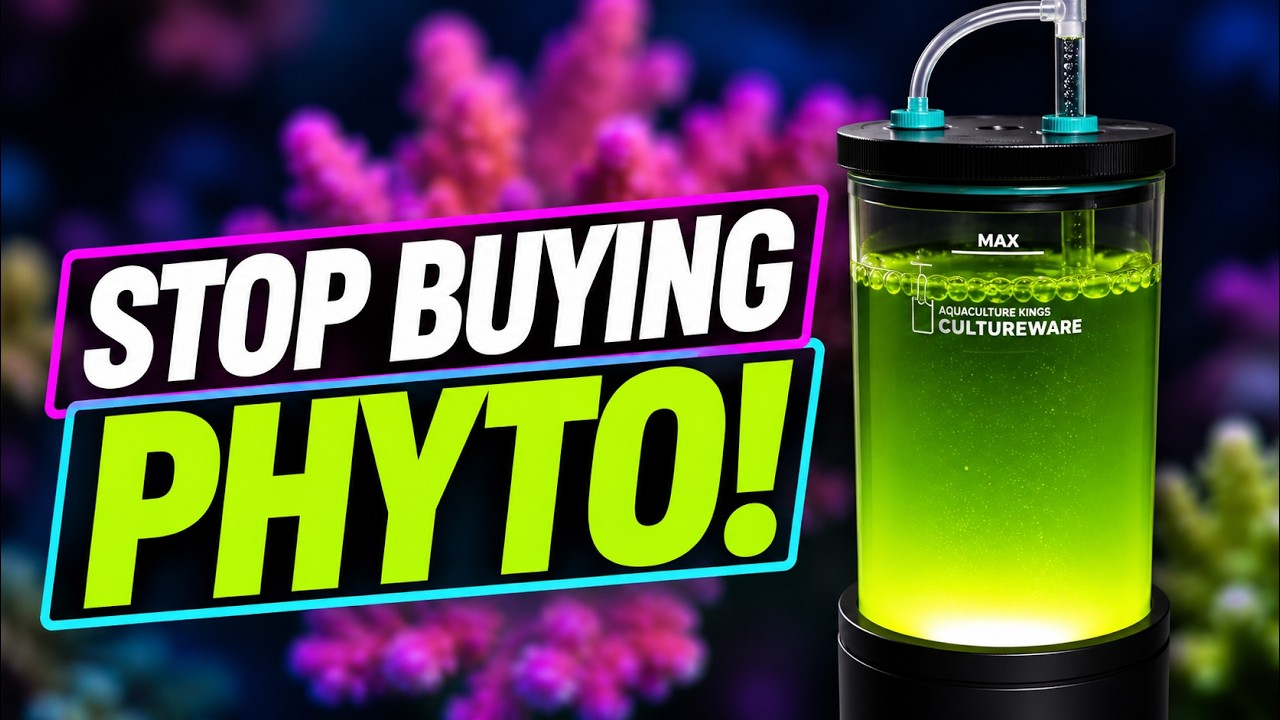
How to Culture Phytoplankton at Home | AK Culturi-S Reef Tank Reactor — ReefDudes How to Culture Phytoplankton at Home | AK Culturi-S Reef Tank Reactor
Video demonstrates phytoplankton culturing with AK Culturi-S reactor to feed copepods for mandarins. Live food culture is core husbandry for sustaining obligate microphagous fish.
5 min · ReefDudes · Nov 9 · youtube.com
 

Every item above links to its source. This week's reporting comes from Advanced Science, Applied and Computational Engineering, Australian Society for Fish Biology — Bluesky, Climanosco Research Manuscripts, Frontiers in Ecology and Evolution, Frontiers in Marine Science, Frontiers in Marine Science — Journal, Geophysical Research Letters, Great Southern Reef Foundation — Bluesky, Journal of Marine Science and Engineering, Marine Pollution Bulletin, Project Seahorse — Bluesky, Reef Builders, ReefDudes, Reefs.com, Restoration Ecology, Scripps Institution of Oceanography — Bluesky, Tidal Gardens, UBC Oceans — Bluesky, World Wide Corals. Headlines and links belong to them; go read the originals.

Back issues · About & sourcing policy · RSS feed · [email protected]

Weekly Dive is an automated digest from The Lone Aquarist that links to reporting it does not own. Edited by Isaac.

#15
November 13, 2026
Read more

Weekly Dive — OC Coral Show Winter 2026 (November 8)

Weekly Dive — Friday, November 6, 2026
24 items from 20 outlets, led by “OC Coral Show Winter 2026 (November 8)”
Weekly Dive — The Lone Aquarist. Saltwater and reef news for the marine aquarist.
Friday, November 6, 2026 · 24 items · read on the web
 

Howdy, it's Isaac again.

Happy Friday, reefing family, and welcome back to my Weekly Dive.

This week
  • OC Coral Show Winter 2026 (November 8)
  • 5 Saltwater Cleaners That You NEED to Stop Buying (And 4 You Should Buy Instead)
  • Marine Heatwave and Extreme Hypoxia Coincide With Rapid Coral Bleaching and Mortality on a Central Red Sea Coral Reef
  • Coral Reef Long-Term Monitoring at East and West Flower Garden Banks: 2025 Annual Report
  • Plus 20 more across wild reefs, husbandry & science, community
Let's dive into the news touching our hobby…
Community 5
OC Coral Show Winter 2026 (November 8)
The OC Coral Show returns on November 8th in Placentia, CA. Reefkeepers should care because it offers free admission and parking, making it an accessible opportunity to connect with the community and find new livestock.
SoCaliReefs · Oct 8 · socalireefs.com
5 Saltwater Cleaners That You NEED to Stop Buying (And 4 You Should Buy Instead)
Unique video teaching reef aquarists how to avoid wasting money on generic cleanup crews that starve. Instead, it teaches how to select specific species tailored to their tank's unique waste, ensuring a healthy, balanced aquarium.
YouTube · Oct 24 · youtu.be
A 9-Foot SPS Masterpiece on the 23rd Floor! | Brazil Reef Tour
Tour of a mature 430-gallon peninsula SPS system in a São Paulo high-rise, highlighting 7 years of Acropora cultivation under Orphek lighting and precise calcium management. Demonstrates advanced husbandry techniques and system longevity for experienced keepers considering large display builds.
16 min · World Wide Corals · Nov 5 · youtube.com
New Fish Day! How I Add Fish to My Reef Tank Safely
Guide to quarantine and acclimation procedures for reef fish. Standard practice explanation with limited new information for experienced aquarists.
7 min · ReefDudes · Nov 2 · youtube.com
Reefs.com Tour of New England Aquarium
Reefs.com visited the New England Aquarium's behind-the-scenes operations. Public-aquarium tour documentation offers institutional husbandry perspective.
Reefs.com · Afishionado · Nov 4 · reefs.com
Husbandry & Science 9
Physiological response of corals of the genus Pocillopora (Scleractinia: Pocilloporidae) during the 2023–2024 heat wave in La Paz, Baja California Sur
Study documents Pocillopora physiological response to 2023–2024 heat wave in the field. Understanding heat-stress thresholds in wild corals directly informs how to manage temperature in captive systems.
Revista de Biología Tropical · Alexa Karime Rojo-Acosta et al. · Nov 2 · doi.org
Formal Description of Cladocopium proximale sp. nov., a Coral Photosymbiont From the C1 Radiation
New Symbiodiniaceae species formally described, advancing taxonomic resolution of coral photosymbionts essential for nutrition and thermal tolerance. Clearer symbiont classification supports research on coral health and heat resilience.
Ecology and Evolution · Giorgio Terzi et al. · Nov 1 · doi.org
Automated Coral Detection and Instance Segmentation in Underwater Imagery: Evaluating YOLO Model Performance and Transferability to Mesophotic Coral Ecosystems
Researchers trained deep-learning models to automatically detect and identify 57 Caribbean coral species in underwater images with 79% accuracy at the species level. Automated identification tools improve monitoring capability for both researchers and aquarists tracking live corals.
Journal of Marine Science and Engineering · Elvin Cordero et al. · Nov 5 · doi.org
Caring for High-End Bounce and Jawbreaker Mushroom Corals
High-end mushroom corals reward careful attention to light, placement, and quarantine despite their forgiving nature. Guidance on keeping premium morphs alive improves husbandry outcomes for collectors.
Reef Builders · Scott Shiles · Nov 4 · reefbuilders.com
From co‐occurrence to temporal coupling in a coral defender guild
Research reveals temporal dynamics of coral-defending crustaceans—guard crabs and snapping shrimp—showing complementary roles in host fitness. Understanding these symbiotic relationships clarifies how corals maintain health against predators and sediment.
Oikos · Amalia Murgueitio et al. · Nov 1 · doi.org
Avaliação dos efeitos da oxibenzona e estresse térmico sobre o branqueamento do coral formador de recife Seriatopora Caliendrum
Research shows oxybenzone (BP-3) and thermal stress together trigger bleaching in Seriatopora caliendrum. Sunscreen contamination is a tangible stressor affecting reef systems even in tanks exposed to outdoor light.
Anais do Encontro Nacional de Pós Graduação · Ana Beatriz Santos et al. · Nov 4 · doi.org
Spatio-temporal variation of the pocilloporid coral-associated symbiotic crustaceans (Decapoda) of the central Mexican Pacific
Research characterizes symbiotic crustaceans associated with pocilloporid corals in the Mexican Pacific, examining their biomass and ecological roles. Understanding these defender-host relationships clarifies how coral colonies maintain health.
Revista de Biología Tropical · Armando González-Salazar et al. · Nov 2 · doi.org
Nice blog post from Canada's 🇨🇦 group working on #OceanAcidification
Canadian ocean acidification research group published on OA impacts. Direct relevance to reef chemistry and what drives carbonate saturation in tanks.
Ocean Acidification Research Center — Bluesky · Nov 3 · bsky.app
NOAA has a new video highlighting the surface buoys monitoring seawater CO₂
NOAA's ocean acidification buoys now have public video documentation of monitoring methods. Reef keepers benefit from understanding how pCO₂ and carbonate chemistry are tracked in real seawater systems.
Ocean Acidification Research Center — Bluesky · Oct 30 · bsky.app
Livestock & Corals 1
📸 Say hello to the magical Bigbelly seahorse, or 𝘏𝘪𝘱𝘱𝘰𝘤𝘢𝘮𝘱𝘶𝘴 𝘢𝘣𝘥𝘰𝘮𝘪𝘯𝘢𝘭𝘪𝘴, logged onto iSeahorse by citizen…
iSeahorse logged a Bigbelly seahorse sighting through citizen science. Seahorses are kept in reef tanks and citizen monitoring expands aquaculture and wild-collection data.
Project Seahorse — Bluesky · Oct 30 · bsky.app
Wild Reefs 7
Marine Heatwave and Extreme Hypoxia Coincide With Rapid Coral Bleaching and Mortality on a Central Red Sea Coral Reef
Red Sea reef experiences severe bleaching and mortality during marine heatwave coinciding with extreme hypoxia events in mid-2024. Combined thermal and oxygen stress demonstrates complex stressors beyond heat alone driving contemporary coral collapse.
Ecology and Evolution · Shannon Grace Klein et al. · Nov 1 · doi.org
Coral Reef Long-Term Monitoring at East and West Flower Garden Banks: 2025 Annual Report
NOAA releases 2025 monitoring report for East and West Flower Garden Banks, two protected reef systems off the Texas coast. Long-term monitoring data directly informs understanding of healthy reef dynamics and bleaching resilience in a working marine sanctuary.
NOAA National Ocean Service — Newsletter · Nov 5 · links-1.govdelivery.com
Influence of soft coral density and depth on benthic communities on Fiji's Rainbow Reef
Soft coral density and depth shape benthic-community structure on Fiji's Rainbow Reef via spatial association and niche partitioning. Understanding how soft corals reorganize reef communities informs predictions as they expand under climate change.
Royal Society Open Science · Nile P. Stephenson et al. · Nov 4 · doi.org
Dynamics of algal overgrowth and predation related tissue loss in corals from the Southern Gulf of California, México (2019–2025)
Study tracks algal overgrowth and predation-related tissue loss in Gulf of California corals over six years, quantifying visible health indicators. Direct measurement of stressors affecting reef resilience informs understanding of coral decline mechanisms.
Revista de Biología Tropical · Paola M. Espinosa-Torres et al. · Nov 2 · doi.org
Reef fish functional groups show variable declines due to deforestation-driven sedimentation, while flexible harvesting mitigates this damage
Model shows deforestation-driven sedimentation reduces herbivorous fish populations and ecosystem function on reefs; flexible harvest policies can mitigate damage. Quantifies how terrestrial land use degrades reef fisheries through indirect sediment pathways.
Theoretical Ecology · Russell Milne et al. · Oct 31 · doi.org
Beta diversity analysis reveals high turnover in benthic assemblages between tropical coral and subtropical rocky reefs
Study analyzes benthic community structure and species turnover in transitional zones between rocky and coral reefs along the Brazilian coast. Biogeographic patterns inform understanding of reef ecosystem organization under anthropogenic pressure.
Biodiversity and Conservation · Herick Simas dos Santos et al. · Nov 1 · doi.org
Fine‐Scale Variability of Cold‐Water Coral and Sponge Communities on Protected Northeast Pacific Seamounts
Study maps cold-water coral and sponge communities on Northeast Pacific seamounts within marine protected areas, examining depth-occupancy patterns in low-oxygen zones. Data on structured biodiversity inform conservation strategy for deep-reef ecosystems.
Aquatic Conservation Marine and Freshwater Ecosystems · Megan A. Davies et al. · Nov 1 · doi.org
Events 1
📣 The full program for ASFB & AFSS 26 is here!
Australian Society for Fish Biology announces the full conference program for ASFB & AFSS 26. Relevant to marine-science professionals and may include reef-related sessions, but context is minimal.
Australian Society for Fish Biology — Bluesky · Nov 4 · bsky.app
Resource
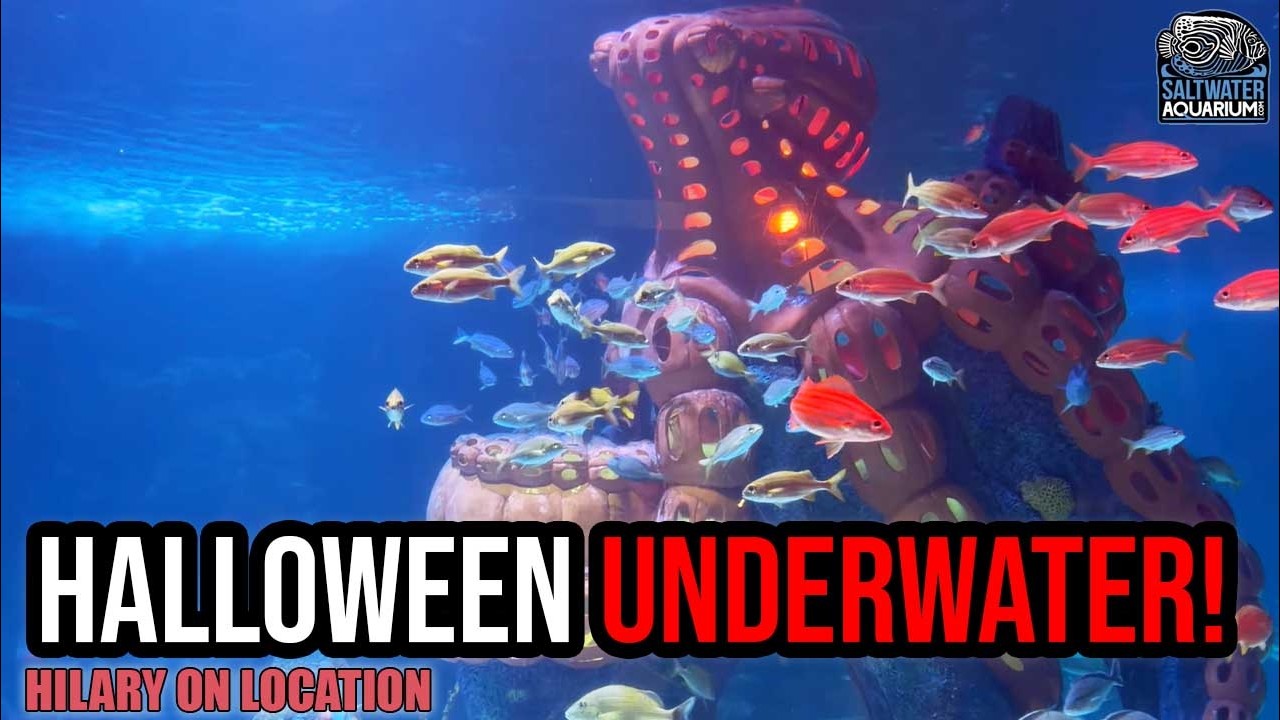
Halloween Underwater! Festive Fish Enrichment at Newport Aquarium | Hilary On Location — SaltwaterAquarium.com Halloween Underwater! Festive Fish Enrichment at Newport Aquarium | Hilary On Location
Newport Aquarium uses seasonal décor as environmental enrichment for marine animals, including pumpkin structures for fish and invertebrates. Public-aquarium enrichment strategy demonstrates institutional approach to animal welfare and keeper practice.
7 min · SaltwaterAquarium.com · Oct 31 · youtube.com
 

Every item above links to its source. This week's reporting comes from Anais do Encontro Nacional de Pós Graduação, Aquatic Conservation Marine and Freshwater Ecosystems, Australian Society for Fish Biology — Bluesky, Biodiversity and Conservation, Ecology and Evolution, Journal of Marine Science and Engineering, NOAA National Ocean Service — Newsletter, Ocean Acidification Research Center — Bluesky, Oikos, Project Seahorse — Bluesky, Reef Builders, ReefDudes, Reefs.com, Revista de Biología Tropical, Royal Society Open Science, SaltwaterAquarium.com, SoCaliReefs, Theoretical Ecology, World Wide Corals, YouTube. Headlines and links belong to them; go read the originals.

Back issues · About & sourcing policy · RSS feed · [email protected]

Weekly Dive is an automated digest from The Lone Aquarist that links to reporting it does not own. Edited by Isaac.

#14
November 6, 2026
Read more

Weekly Dive — Cumulative thermal stress predicts functional change in coral reef fi…

Weekly Dive — Friday, October 30, 2026
29 items from 20 outlets, led by “Cumulative thermal stress predicts functional change in coral reef fish communities”
Weekly Dive — The Lone Aquarist. Saltwater and reef news for the marine aquarist.
Friday, October 30, 2026 · 29 items · read on the web
 

Howdy, it's Isaac again.

Happy Friday, reefing family, and welcome back to my Weekly Dive.

This week
  • Cumulative thermal stress predicts functional change in coral reef fish communities
  • Marine heat waves in vulnerable coral reef regions are skillfully predictable on multi-year timescales
  • Fisheries are becoming increasingly indiscriminate – they catch an estimate of 29 million seahorses a year…
  • Why might corals settle on Lithophyllum prototypum? A hypothesis linking non-geniculate coralline algal architecture to coral recruitment
  • Plus 25 more across husbandry & science, wild reefs, community
Let's dive into the news touching our hobby…
Community 5
Everything You Should Know About ICP Testing
Tidal Gardens explains ICP testing for trace-element dosing in reef tanks. ICP measurement directly determines which additives reef keepers actually need, avoiding unnecessary supplementation.
19 min · Tidal Gardens · Oct 29 · youtube.com
Building a 650-Gallon Peninsula Reef | WWC Custom Aquarium Install
World Wide Corals documents a 650-gallon custom aquarium build with large-tank circulation solutions and remote water mixing. The video covers practical engineering for long tanks, dead-zone mitigation, and equipment selection.
15 min · World Wide Corals · Oct 29 · youtube.com
AFERIY P180 Review: 31+ Hours of Reef Tank Backup Power From a 1 kWh Power Station
A 1 kWh LiFePO4 power station kept a reef tank running 31+ hours during a power outage in real-world testing. This is actionable data for emergency backup planning in system design.
Reefs.com · danireef · Oct 26 · reefs.com
Inside a German Saltwater LFS! Low-Maintenance Reefing & Simple Coral Care with Mr. Saltwater Tank
A tour of a German reef shop showcases low-tech soft-coral husbandry without heavy testing, emphasizing natural aquascaping and regional differences in LFS practice. European and North American approaches offer comparative perspective on tank setup philosophy.
9 min · SaltwaterAquarium.com · SaltwaterAquarium · Oct 27 · youtube.com
Chainlink Moray Eel Care & More | Echidna catenata
The Chainlink Moray Eel is a moderately sized, banded moray suitable for experienced aquarists in larger tanks. Moray husbandry details help keepers choose and care for this striking centerpiece fish.
Reefs.com · Marijke Puts · Oct 28 · reefs.com
Husbandry & Science 6
Why might corals settle on Lithophyllum prototypum? A hypothesis linking non-geniculate coralline algal architecture to coral recruitment
Non-geniculate coralline algae in the Lithophyllum prototypum complex consistently trigger high coral larval settlement, but the mechanism remains unclear. Surface architecture may play an underappreciated role alongside chemical and microbial settlement cues.
Frontiers in Marine Science — Journal · Renato C. Pereira · Oct 27 · frontiersin.org
Decoding the metagenome of the precious red coral: discovery of a new spirochete lineage and carotenoid-producing bacteria
Metagenomic analysis of precious red coral reveals 25 bacterial genomes including a new spirochete lineage and carotenoid-producing symbionts. Understanding coral microbiota function deepens knowledge of what keeps corals alive.
Microbiome · R. Tignat-Perrier et al. · Oct 26 · doi.org
Culture and Isolation of Bacteria Associated with Mediterranean Corals
A review argues culturable bacterial methods are essential alongside molecular techniques to understand coral holobiont dynamics. Classical microbiology reveals coral symbiont behavior that sequencing alone cannot.
Microbial Ecology · Rocio Mozo et al. · Oct 26 · doi.org
Quantifying surgeonfish functions in coral reef sediment dynamics: an ecological and evolutionary perspective
Phylogenetic study quantifying surgeonfish roles in coral reef sediment dynamics across evolutionary time. Advances understanding of how a key reef-fish family shapes reef structure and function.
Reviews in Fish Biology and Fisheries · Isabelle Ng et al. · Oct 24 · doi.org
Microbial Community Structure and Predicted Functional Potential Across Environmental Gradients Influenced by Submarine Groundwater Discharge in Tropical Coral Reef Intertidal Sediments
Submarine groundwater discharge through coral reef sediments introduces nutrient gradients that reshape benthic microbial communities and their metabolic function. Understanding these geochemical influences on reef microbiota is relevant to nutrient cycling in reef systems.
Journal of Marine Science and Engineering · Feng‐Yu Wang et al. · Oct 27 · doi.org
Hypersalinity and environmentally relevant perfluorohexanesulfonic acid independently and interactively impair survival and development in early life stage red drum (Sciaenops ocellatus)
Hypersalinity and perfluorohexanesulfonic acid (a PFAS contaminant) individually and together impair survival and development in red drum larvae. Estuarine fish nurseries face converging stressors from drought and industrial contamination that interact unpredictably.
Frontiers in Marine Science — Journal · Kristin Nielsen · Oct 27 · frontiersin.org
Livestock & Corals 2
Fisheries are becoming increasingly indiscriminate – they catch an estimate of 29 million seahorses a year…
Fisheries catch an estimated 29 million seahorses annually with minimal protection for this data-poor species. Seahorses are stocked in marine aquarium trade; understanding wild-population pressure informs sourcing and conservation.
Project Seahorse — Bluesky · Oct 29 · bsky.app
Diversity of azooxanthellate scleractinian corals collected off western Kyushu during cruise GB24
A survey off western Kyushu documents azooxanthellate scleractinian coral diversity collected during a research cruise. Deep-water and non-symbiotic corals expand understanding of coral distribution and physiology.
BULLETIN OF THE GEOLOGICAL SURVEY OF JAPAN · Yuki Tokuda et al. · Oct 27 · doi.org
Wild Reefs 14
Cumulative thermal stress predicts functional change in coral reef fish communities
Marine heatwaves shift coral reef fish communities toward herbivores at the expense of corallivores, altering functional composition that reef resilience depends on. A Bayesian model across multiple species and locations provides predictive insight into how thermal stress reorganizes fish communities.
Proceedings of the Royal Society B Biological Sciences · Anthony C. Markey et al. · Oct 28 · doi.org
Marine heat waves in vulnerable coral reef regions are skillfully predictable on multi-year timescales
Marine heatwave frequency and intensity in coral reef regions are predictable on multi-year timescales using Earth system models, with skill varying by region. Extended forecasting could enable proactive reef management and conservation planning.
Nature Communications · Alexia Karwat et al. · Oct 27 · doi.org
Implications of hardbottom sponge community decline for ecosystem function in the Florida Keys, Florida (USA)
Florida Keys hardbottom sponge communities have declined, threatening reef ecosystem function. Understanding reef-system collapse informs conservation priorities and baseline knowledge for coral-reef biology.
Frontiers in Marine Science — Journal · Mark J. Butler · Oct 30 · frontiersin.org
Seasonality and the effect of a marine heatwave on the metabolism of Red Sea coral reefs
A new study examines how Red Sea coral metabolism responds to seasonal cycles and marine heatwaves. Understanding metabolic rates under thermal stress is essential for predicting how corals will fare in warming oceans.
Scientific Reports · Vincent Saderne et al. · Oct 28 · doi.org
Generating blue carbon credits through conservation of Posidonia oceanica: experience from the LIFE SeaForest project
LIFE SeaForest project develops accounting frameworks for blue-carbon credits through Posidonia oceanica conservation in the Mediterranean. Seagrass meadow carbon storage and degradation dynamics inform reef-adjacent ecosystem management and conservation valuation.
Frontiers in Marine Science — Journal · Marco Marcelli · Oct 29 · frontiersin.org
Density patterns and age structure of the queen conch ( Aliger gigas ) in a coral reef lagoon in the Mexican Caribbean
Queen conch populations in a Mexican Caribbean lagoon show recovery during and after a 5-year fishing closure, with density and age structure tracked across reefs. Population response to protection measures informs management of this overexploited Caribbean resource.
PeerJ · Isvi Areli Benítez-Castillo et al. · Oct 27 · doi.org
“Our findings show why fisheries managers need to consider more than temperature alone,” William Cheung…
UBC researcher William Cheung finds fisheries must consider multiple environmental extremes beyond temperature alone. Knowledge of how environmental stressors interact helps predict reef-ecosystem responses and fisheries impacts on reef communities.
UBC Oceans — Bluesky · Oct 29 · bsky.app
Contribución de la ictiofauna arrecifal a los servicios ecosistémicos del Sistema Arrecifal Mesoamericano
A study quantifies how reef fish species in the Mesoamerican Reef contribute to ecosystem services including fisheries, coastal protection, and nutrient cycling. Assigning ecological value species-by-species helps prioritize conservation in a degraded reef system.
Revista de Biología Tropical · Bárbara Velázquez-Rivera et al. · Oct 27 · doi.org
Reassessing carbon sink fisheries: biogeochemical constraints and ecological-economic-social coupling and governance
Review reassesses carbon-sink fisheries and aquaculture through ecological and carbon-cycling frameworks. Understanding how seaweed and bivalve farming affect marine carbon pathways informs reef conservation and ecosystem dynamics.
Frontiers in Marine Science — Journal · Xi Hu · Oct 30 · frontiersin.org
Traditional Owner knowledge is helping shape the next chapter of marine research on WA’s south coast
Indigenous knowledge is informing marine surveys in Western Australian protected areas alongside kelp forests, seagrass, and marine mammals. Integration of Traditional Owner expertise with scientific research strengthens reef and coastal ecosystem assessment.
Great Southern Reef Foundation — Bluesky · Oct 26 · bsky.app
Observed Spectral-Reflectance Zoning for Model Selection in Satellite-Derived Bathymetry of Heterogeneous Coral Reef Waters Using ICESat-2 and Sentinel-2
Satellite bathymetry using ICESat-2 and Sentinel-2 improves mapping of shallow coral reef topography by accounting for spectral heterogeneity. Better reef surveying tools support conservation and ecosystem assessment.
Journal of Marine Science and Engineering · Yuan Le et al. · Oct 26 · doi.org
The #Arctic workshop at #PICES2026 was today
A PICES workshop examined Arctic climate impacts including sea ice loss and ocean acidification affecting fisheries and Indigenous communities. Ocean acidification is reef-relevant, though the Arctic context is distant from tropical reefs.
Ocean Acidification Research Center — Bluesky · Oct 26 · bsky.app
An innovative approach to tackling the marine conservation problem of "ghost gear" is gaining acceptance in…
Canada develops new permitting pathways for ghost-gear removal as marine-habitat offset. Ghost fishing impacts reef ecosystems; understanding removal as conservation credit advances reef restoration frameworks.
UBC Oceans — Bluesky · Oct 29 · bsky.app
Subsidies that fuel overfishing and damage coral reefs and mangroves are costing governments and societies…
Fishing subsidies cost governments far more in environmental damage than they spend, harming coral reefs and mangroves. The economics are dense, but the scale of subsidy-driven reef destruction is worth tracking.
UBC Oceans — Bluesky · Oct 26 · bsky.app
Events 1
The dolphins greeted us at 7am sharp yesterday morning to help us launch the first Miami Coral Club meeting…
First Miami Coral Club meeting held successfully with next meeting scheduled for November 19. Local reef hobby meetup announcement.
Coral City Camera — Bluesky · Oct 23 · bsky.app
Resource
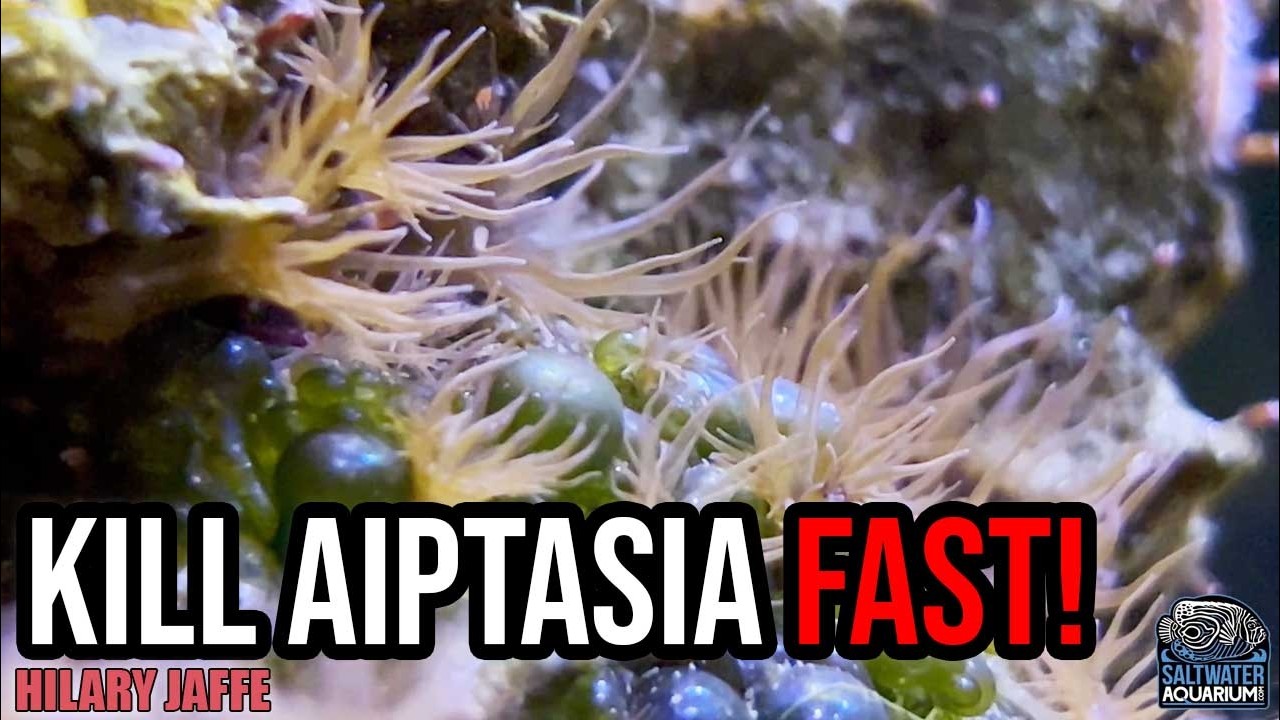
How to Get Rid of Aiptasia FAST: Berghia Nudibranch Guide & Review | Hilary Jaffe — SaltwaterAquarium.com How to Get Rid of Aiptasia FAST: Berghia Nudibranch Guide & Review | Hilary Jaffe
Video guide to using Berghia nudibranchs for biological Aiptasia control, covering sourcing, acclimation, and tank-size dosing. Practical husbandry for a common reef problem.
9 min · SaltwaterAquarium.com · Oct 24 · youtube.com
 

Every item above links to its source. This week's reporting comes from BULLETIN OF THE GEOLOGICAL SURVEY OF JAPAN, Coral City Camera — Bluesky, Frontiers in Marine Science — Journal, Great Southern Reef Foundation — Bluesky, Journal of Marine Science and Engineering, Microbial Ecology, Microbiome, Nature Communications, Ocean Acidification Research Center — Bluesky, PeerJ, Proceedings of the Royal Society B Biological Sciences, Project Seahorse — Bluesky, Reefs.com, Reviews in Fish Biology and Fisheries, Revista de Biología Tropical, SaltwaterAquarium.com, Scientific Reports, Tidal Gardens, UBC Oceans — Bluesky, World Wide Corals. Headlines and links belong to them; go read the originals.

Back issues · About & sourcing policy · RSS feed · [email protected]

Weekly Dive is an automated digest from The Lone Aquarist that links to reporting it does not own. Edited by Isaac.

#13
October 30, 2026
Read more

Weekly Dive — Steroid hormones produced by coral-associated Endozoicomonas influenc…

Weekly Dive — Friday, October 23, 2026

29 items from 25 outlets, led by “Steroid hormones produced by coral-associated Endozoicomonas influence coral immune respo…”
Weekly Dive — The Lone Aquarist. Saltwater and reef news for the marine aquarist.
Friday, October 23, 2026 · 29 items · read on the web
 

Howdy, it's Isaac again.

Happy Friday, reefing family, and welcome back to my Weekly Dive.

This week
  • Steroid hormones produced by coral-associated Endozoicomonas influence coral immune response during thermal stress
  • Changing coral disease dynamics with the emergence of stony coral tissue loss disease on reefs at Carrie Bow Cay, Belize Barrier Reef
  • Functional convergence despite taxonomic turnover across coral-associated microbiomes
  • A New Way to Rescue Dying Corals
  • Plus 25 more across wild reefs, husbandry & science, events
Let's dive into the news touching our hobby…
Community 4
A New Way to Rescue Dying Corals
Stanford research shows contact with healthy corals rescues bleached specimens in days, published in Science Advances. Novel coral recovery mechanism applicable to restoration and captive propagation.
Reefs.com · xeniaforever · Oct 19 · reefs.com
An Acropora Lover’s Dream! | 160-Gallon SPS Reef in Brazil
Tour of a 160-gallon SPS-dominated reef in Brazil with discussion of lighting, water chemistry, and filtration. Build logs with useful husbandry detail on keeping high-demand corals are solidly interesting for the community.
19 min · World Wide Corals · Oct 22 · youtube.com
Can an American Build a German ATO? (Part 2: Soldering & Potting the Tunze Osmolator)
Video series following assembly and testing of a Tunze Osmolator ATO system. Behind-the-scenes manufacturing detail is interesting, but the item is more entertainment than technical insight.
10 min · SaltwaterAquarium.com · SaltwaterAquarium · Oct 22 · youtube.com
Hands Off Mechanical Filtration for your Reef Tank! Nature Dimensions N-Clear M
Nature Dimensions N-Clear M automatic fleece-roller filter scales up to standard holders with optical sensor and remote control. Reduces manual filter-sock maintenance for larger systems.
4 min · BRStv — Bulk Reef Supply · Bulk Reef Supply - Saltwater Aquariums · Oct 19 · youtube.com
Husbandry & Science 11
Steroid hormones produced by coral-associated Endozoicomonas influence coral immune response during thermal stress
Coral-associated Endozoicomonas bacteria produce steroid hormones that enhance immune response during thermal stress. Understanding coral holobiont physiology is fundamental to keeping corals alive under adverse conditions.
Nature Microbiology · Amin R. Mohamed et al. · Oct 22 · doi.org
Functional convergence despite taxonomic turnover across coral-associated microbiomes
Study reveals coral microbiomes show high taxonomic variation across species but maintain functional stability through metabolic redundancy. Understanding this resilience mechanism is critical for predicting how corals respond to stress and disease.
Microbiology Spectrum · Xiaobin Wen et al. · Oct 21 · doi.org
Field testing the influence of settlement recesses and nighttime feeding lights on coral recruitment
Field study shows settlement recesses and nighttime feeding lights improve coral larval recruitment and survival on restoration modules in Kāne'ohe Bay. Direct evidence for practical reef-building techniques that home reef keepers and restoration practitioners can evaluate.
Scientific Reports · Hendrikje Jorissen et al. · Oct 22 · doi.org
Reef-scale environmental mosaics shape coral physiological and microbial signatures of resilience
Environmental variability at Heron Island shapes Pocillopora physiological and microbial resilience signatures, linking reef-scale habitat heterogeneity to coral holobiont performance. Understanding how localized conditions drive coral resilience mechanisms informs both conservation and captive-husbandry strategies.
ISME Communications · Marcelina P. Martynek et al. · Oct 21 · doi.org
Sustained release of beneficial microorganisms for corals from alginate beads under marine conditions
Alginate beads successfully deliver beneficial microorganisms to corals under marine conditions, offering a practical method to enhance coral resilience against bleaching. This could enable hobbyists and facilities to actively support coral health.
Journal of Applied Microbiology · Ahmed AlSaggaf et al. · Oct 21 · doi.org
Photogrammetric analysis reveals distinct topographic signatures for stony corals
Photogrammetry reveals how coral morphology affects reef structure and diversity. Understanding topographic signatures helps assess reef health and guides restoration targets.
Frontiers in Marine Science · Christina M. Mallica et al. · Oct 20 · doi.org
Standardizing deoxygenation studies in coral biology
A new study proposes standardized protocols for coral deoxygenation research to resolve methodological divergence across experiments. Consistent methodology enables reliable comparison and faster accumulation of knowledge about hypoxia stress on corals.
Communications Biology · Wyatt C. Million et al. · Oct 19 · doi.org
Multifactorial nutritional ecology of tropical scleractinian corals: integrating nutrient dynamics, trophic plasticity, and environmental drivers
A comprehensive review synthesizes how scleractinian corals integrate autotrophic and heterotrophic nutrition to support calcification, metabolism, and stress resilience. Nutritional dynamics underpin coral survival and reef productivity.
Aquatic Ecology · Guilherme Melgaço Heluy et al. · Oct 17 · doi.org
Native calanoid copepods for marine fish larviculture: a systematic review and evidence-maturity assessment
Systematic review identifies native calanoid copepods as promising live prey for marine fish larvae, assessing evidence maturity for hatchery scaling. This directly addresses a persistent bottleneck in larviculture that affects availability and sustainability of captive-bred reef fish.
Frontiers in Marine Science — Journal · Luis Antonio Espinoza-Ramos · Oct 21 · frontiersin.org
Surface complexity enhances early invertebrate recruitment on novel substrates for coral reef restoration
Surface topography of restoration substrate plates strongly influences early benthic colonization during reef rebuilding. Substrate design directly affects recruitment success, a key parameter for restoration and potentially relevant to captive coral farming.
Revista de Biología Tropical · J. Fernando Alvarado Rodríguez et al. · Oct 22 · doi.org
Persistence of sedimentary DNA in burrowing marine benthos: evidence from the decapod Upogebia major
Environmental DNA persists in burrowing benthic organisms like shrimp, informing eDNA survey interpretation. This refines understanding of eDNA detection in marine organisms but applies primarily to scientific monitoring rather than tank husbandry.
Frontiers in Marine Science — Journal · Kenji Okoshi · Oct 21 · frontiersin.org
Livestock & Corals 2
This week’s #ThrowbackThursday spotlight study found that older, larger seahorse dads have more mature…
Older seahorse fathers produce more offspring with better survival rates due to mature pouches. Seahorses are kept aquarium fauna, but this is a throwback to older research without new findings.
Project Seahorse — Bluesky · Oct 22 · bsky.app
🌊 Meet the West Australian seahorse, or 𝘏𝘪𝘱𝘱𝘰𝘤𝘢𝘮𝘱𝘶𝘴 𝘴𝘶𝘣𝘦𝘭𝘰𝘯𝘨𝘢𝘵𝘶𝘴!
A citizen-science project invites observations of West Australian seahorses via iNaturalist. Seahorses are common in ornamental trade; habitat monitoring informs collection sustainability.
Project Seahorse — Bluesky · Oct 16 · bsky.app
Wild Reefs 10
Changing coral disease dynamics with the emergence of stony coral tissue loss disease on reefs at Carrie Bow Cay, Belize Barrier Reef
Stony coral tissue loss disease now drives mortality on Belize reefs alongside bleaching, causing an epidemiologic shift in coral disease dynamics. This emerging threat is central to understanding wild reef decline and informing captive-care disease management.
Frontiers in Marine Science · Greta S. Aeby et al. · Oct 20 · doi.org
Fishers have caught at least 440 invasive lionfish off the coast of Porto Seguro in northeastern Brazil in…
Invasive lionfish now established off Brazil's largest coral reefs; local fishers actively capturing them. Lionfish invasion is a known threat to reef systems, and this confirms range expansion to a major reef ecosystem.
UBC Oceans — Bluesky · Oct 22 · bsky.app
Performance of Acropora species on the Great Barrier Reef's first coral tree nursery
Great Barrier Reef coral tree nurseries successfully outplant Acropora species, validating active restoration at scale. Results confirm fragment-based nursery methods work in field conditions.
Restoration Ecology · Hannah Kish et al. · Oct 20 · doi.org
Dear Sloane: a letter to my granddaughter
Retiring reef scientist reflects on decades of failed coral reef conservation in the Western Atlantic. A personal account of management shortcomings and reef decline that captures the scope of the conservation challenge reef keepers follow.
Frontiers in Marine Science — Journal · Stephen R. Gittings · Oct 22 · frontiersin.org
Land meets sea: How upland clearing threatens coral reef health in Ambon Bay, Maluku Province, Indonesia
Study links upland land clearing to coral reef deterioration in Indonesia through terrestrial sediment and nutrient runoff. Understanding land-sea interactions is essential for reef conservation and predicting reef system resilience.
Marine Pollution Bulletin · Daniel Deonisius Pelasula et al. · Oct 20 · doi.org
Mapping Coral Health Dynamics at Cheeca Rocks (2012–2018)
Long-term colony-level monitoring at Cheeca Rocks tracked bleaching responses and mortality across four coral taxa from 2012–2018. Individual-colony data reveals how reef corals respond heterogeneously to stress, informing resilience predictions.
Frontiers in Humanities and Social Sciences · Shaoxinyi Yan · Oct 19 · doi.org
IMPLEMENTATION OF TECHNICAL GUIDELINES FOR INVESTIGATION IN HANDLING DESTRUCTIVE FISHING CRIMES
Indonesia's Maluku region combats destructive fishing with enforcement guidelines. Dynamite and cyanide fishing destroy reef ecosystems; stronger investigation protocols aim to reduce habitat loss.
Journal of Human and Education (JAHE) · Sherly Adam et al. · Oct 20 · jahe.or.id
Spring kelp growth averages 6 g per kelp a day at some Great Southern Reef sites (wet weight)
Southern Australian kelp forest grows 6 g per plant daily in spring; research tracks seasonal variation across regions. Macroalgal productivity baseline supports understanding of cool-water reef systems.
Great Southern Reef Foundation — Bluesky · Oct 19 · bsky.app
Benthic-Pelagic Coupling and Structural Complexity of Coral Reefs in the Northern Bali Strait: Implications for Coastal Ecosystem Resilience
Benthic-pelagic coupling and structural diversity at Grand Watudodol in the northern Bali Strait showed 41.55% live coral cover and high habitat complexity. Reef ecosystem health and architectural diversity drive fish and invertebrate productivity.
Advances in Tropical Biodiversity and Environmental Sciences · Ayu Dewi Puji Lestari et al. · Oct 18 · doi.org
Carbonate sediment sources and characterisation prior to mass coral bleaching in an isolated atoll
A study examined carbonate sediment composition and benthic community structure at Mermaid Reef before mass bleaching. Reef geomorphology depends on coral productivity; sediment shifts signal ecological collapse.
Sedimentary Geology · Joshua Louis Bonesso et al. · Oct 17 · doi.org
Events 1
Reefstock Returns to Denver
ReefStock 2027 conference returns to Denver. Premier hobby event for frags, equipment, and networking among reef and planted-tank enthusiasts.
Reef Builders · Rob Mougey · Oct 19 · reefbuilders.com
Resource
How to Move a Reef Tank Without Crashing It | Aquarium Moving Guide — ReefDudes How to Move a Reef Tank Without Crashing It | Aquarium Moving Guide
Guide covers planning and execution for relocating a reef tank without crashing bioload. Practical protocol for preserving live rock, fish, and coral through transport and setup.
8 min · ReefDudes · Oct 19 · youtube.com
 

Every item above links to its source. This week's reporting comes from Advances in Tropical Biodiversity and Environmental Sciences, Aquatic Ecology, BRStv — Bulk Reef Supply, Communications Biology, Frontiers in Humanities and Social Sciences, Frontiers in Marine Science, Frontiers in Marine Science — Journal, Great Southern Reef Foundation — Bluesky, ISME Communications, Journal of Applied Microbiology, Journal of Human and Education (JAHE), Marine Pollution Bulletin, Microbiology Spectrum, Nature Microbiology, Project Seahorse — Bluesky, Reef Builders, ReefDudes, Reefs.com, Restoration Ecology, Revista de Biología Tropical, SaltwaterAquarium.com, Scientific Reports, Sedimentary Geology, UBC Oceans — Bluesky, World Wide Corals. Headlines and links belong to them; go read the originals.

Back issues · About & sourcing policy · [email protected]

Weekly Dive is an automated digest from The Lone Aquarist that links to reporting it does not own. Edited by Isaac.

#12
October 23, 2026
Read more

Weekly Dive — Rapid coral bleaching recovery via symbiont transfer from healthy cor…

Weekly Dive — Friday, October 16, 2026

28 items from 23 outlets, led by “Rapid coral bleaching recovery via symbiont transfer from healthy corals”
Weekly Dive — The Lone Aquarist. Saltwater and reef news for the marine aquarist.
Friday, October 16, 2026 · 28 items · read on the web
 

Howdy, it's Isaac again.

Happy Friday, reefing family, and welcome back to my Weekly Dive.

This week
  • Rapid coral bleaching recovery via symbiont transfer from healthy corals
  • The coral settlement-sphere: microenvironments that shape reef restoration in the Anthropocene
  • Coral Reef‐Level Upwelling in an Internal Wave Hotspot Modulated by Mesoscale Dynamics
  • Reflections on the prospects for western Atlantic coral reefs
  • Plus 24 more across wild reefs, livestock & corals, husbandry & science
Let's dive into the news touching our hobby…
Community 6
Insane 15,000L German Reef Tank System! (13-Meter Drop Off & Multi-Floor Sump) | Reefing Roadtrip
14 min · SaltwaterAquarium.com · SaltwaterAquarium · Oct 15 · youtube.com
Inside Germany’s Most Unique Local Reef Shop! (Tunze Reef 360 & Coral Tour) | Euro Reefing Roadtrip
Video tour of a Munich reef shop showcasing Tunze equipment and the owner's SPS and soft coral collection. Practical husbandry insights—dry rock aquascaping, water changes, Aiptasia management—from an experienced setup.
19 min · SaltwaterAquarium.com · SaltwaterAquarium · Oct 13 · youtube.com
THE ULTIMATE MARINE FISH CHALLENGE! RARE FISH FOR HUGE 17K GALLON REEF TANK!
Polo Reef documents quarantining and establishing 450 anthias in a 17K-gallon system. The detailed protocol for a difficult species at scale offers practical insight into professional acclimation technique.
18 min · Polo Reef · Polo Reef by Andrew Sandler · Oct 16 · youtube.com
Cycling and Microbiome - Jump starting your Microdiversity w/ @hightideaquaticsoak
A podcast episode explores tank cycling, microbiome, and microdiversity with guest input. Foundational topics for reef keepers, though the format and lack of detail limit specificity.
1h 18m · ReefDudes · Oct 15 · youtube.com
‘Miami Coral Club’ @ Gramps Getaway
Miami Coral Club launches monthly community meetup series starting October 22. Local reef club event for networking and learning about Miami's wild reefs.
Reefs.com · Colin Foord · Oct 13 · reefs.com
Top Beginner Corals Recommended by Reef-A-Palooza Experts! | Hilary On Location
Reef-A-Palooza vendors recommend beginner corals including Duncans, Zoanthids, Hammer corals, and Acans for their hardiness and fast growth. Expert consensus on resilient species helps new reefers choose stocking.
8 min · SaltwaterAquarium.com · SaltwaterAquarium · Oct 10 · youtube.com
Husbandry & Science 9
Rapid coral bleaching recovery via symbiont transfer from healthy corals
Demonstration of rapid coral bleaching recovery via contact-mediated symbiont transfer between coral fragments. A novel mechanism for assisted recovery could inform both restoration and aquarium-based interventions.
Science Advances · Daniel S. Collins et al. · Oct 14 · doi.org
Hierarchical physiological sensitivity of the coral, Orbicella faveolata, to suspended sediment and elevated temperature
Laboratory study of Orbicella faveolata physiology under suspended sediment and elevated temperature. Clarifies stressor interactions critical for understanding coral stress responses in closed systems.
Environmental Monitoring and Assessment · Keisha D. Bahr et al. · Oct 13 · doi.org
Cool and warm conditions disrupt development through divergent mechanisms in larvae of the reef-building coral Orbicella faveolata
Cold and warm stress disrupt coral larval development through different genetic mechanisms in Orbicella faveolata. Understanding how temperature extremes affect early life stages informs reef restoration and aquaculture efforts.
BMC Genomics · Benjamin H. Glass et al. · Oct 12 · doi.org
Three Vibrio isolates from the coral Pachyseris speciosa as draft genome resources
Three Vibrio isolates from coral Pachyseris speciosa characterized with draft genomes. Pathogenic Vibrio in tropical corals is directly relevant to coral disease and reef husbandry.
Microbiology Resource Announcements · Hau Ching Luk et al. · Oct 14 · doi.org
Integrating active and passive environmental DNA sampling into coral reef assessments: implications for community-based biomonitoring in Hawaiʻi
Study integrates active and passive eDNA sampling for coral reef biomonitoring in Hawai'i, exploring community-based assessment methods. Demonstrates practical monitoring tools for reef health assessment that hobbyists could eventually adapt.
BMC Zoology · Cécile M. Vimond et al. · Oct 13 · doi.org
Symbiont‐Mediated Molybdenum Cycling Shapes Coral Skeletal Mo Isotopes
Coral symbiotic algae drive molybdenum isotope fractionation in coral skeletons, not seawater alone. Tracing how symbionts shape skeletal chemistry deepens understanding of coral physiology and trace-metal uptake.
Geophysical Research Letters · Xuefei Chen et al. · Oct 12 · doi.org
Environmental drivers of metabolomic profiles within and between cryptic lineages of Montastraea cavernosa, the great star coral
Cryptic lineages of Montastraea cavernosa show distinct metabolomic responses to environmental stress, with some segregated by depth. Understanding between-lineage adaptation informs coral-nursery selection and restoration strategy.
Metabolomics · Dominique N. Gallery et al. · Oct 10 · doi.org
Experimental manipulation of ecological constraints influences conflict but not cooperation in the humbug damselfish Dascyllus aruanus
Experimental test of how habitat saturation and dispersal risk influence cooperation and conflict in humbug damselfish colonies. Understanding social behavior in obligate coral-dwellers illuminates how to keep them in systems and encourage natural breeding.
Proceedings of the Royal Society B Biological Sciences · Rebecca Branconi et al. · Oct 14 · doi.org
Leaning left: how turn bias and habitat complexity shape spatial cognition in a coral-reef fish
Humbug damselfish reared in low-complexity coral environments showed altered spatial learning and increased reliance on turn-based strategies. Habitat structure affects fish cognition, relevant to tank design and fish behavior.
Animal Cognition · Helen von Drenkmann et al. · Oct 11 · doi.org
Livestock & Corals 2
QM Aquacultures the Peacekeeper Maroon Clownfish
QM Aquacultures has bred the Peacekeeper Maroon Clownfish, adding to their recent aquaculture wins. Captive-bred maroons offer hobbyists a sustainable alternative to wild-collected specimens.
Reef Builders · Raj Shingadia · Oct 16 · reefbuilders.com
Harem polygyny through resource defense territoriality in the sandperch Parapercis pacifica (Pinguipedidae)
Parapercis pacifica sandperch use territorial resource defense to maintain harem mating systems on Okinawan reefs. Behavioral ecology of reef fish informs understanding of species kept in captivity.
Environmental Biology of Fishes · Natsumi Takayama et al. · Oct 12 · doi.org
Wild Reefs 10
The coral settlement-sphere: microenvironments that shape reef restoration in the Anthropocene
Review introduces the 'settlement-sphere' concept—the microenvironmental factors governing coral larval recruitment success. Understanding recruitment mechanics informs both conservation strategy and captive-breeding design.
Frontiers in Marine Science — Journal · Daniel Wangpraseurt · Oct 16 · frontiersin.org
Coral Reef‐Level Upwelling in an Internal Wave Hotspot Modulated by Mesoscale Dynamics
Internal waves at Dongsha Atoll in the South China Sea drive temperature fluctuations and upwell cool, nutrient-rich water onto reef slopes, modulated by mesoscale circulation. Illuminates how physical oceanography sustains reef environments under natural conditions.
Geophysical Research Letters · Alex S. J. Wyatt et al. · Oct 15 · doi.org
Reflections on the prospects for western Atlantic coral reefs
Analysis of bleaching resilience and recovery prospects in Western Atlantic corals through thermal acclimatization and symbiont shuffling. Direct evidence on whether and how reef corals can survive warming matters to everyone tracking the hobby's foundation.
Frontiers in Marine Science · Jeremy B. C. Jackson · Oct 14 · doi.org
Depth- and Taxon-Specific Coral Bleaching of High-Latitude Marginal Coral Communities at Jeju Island During the 4th Global Coral Bleaching Event
During the 2024 global bleaching event, high-latitude corals at Jeju Island showed taxon- and depth-specific bleaching patterns, with Alveopora japonica suffering heavy mortality. Range-edge bleaching responses inform predictions for coral survival under warming.
Diversity · Taihun Kim et al. · Oct 12 · doi.org
The potential for habitat support structures to address habitat deficits in a declining marine ecosystem
Study examines whether artificial habitat structures can restore reef structural complexity lost to bleaching, disease, and hurricanes in the Caribbean. Direct evidence on reef recovery strategies relevant to understanding wild-reef dynamics that inform the hobby.
Frontiers in Marine Science — Journal · John H. Hunt · Oct 15 · frontiersin.org
🎵 The reefs are alive with the sound of healthy coral reef ecosystems!
Two Scripps studies show that underwater sound can aid coral reef restoration and rebuild fish communities. Understanding reef recovery mechanisms informs broader conservation science that shapes wild-stock availability and reef health trends affecting the hobby.
Scripps Institution of Oceanography — Bluesky · Oct 9 · bsky.app
New report documents at least 8,250 shark and ray deaths in South Australian waters affected by the harmful…
Report documents 8,250+ shark and ray deaths from a harmful algal bloom in South Australia. Large-scale wild-reef mortality from environmental stress illustrates ecosystem fragility affecting species collection and trade.
Great Southern Reef Foundation — Bluesky · Oct 15 · bsky.app
The Minister of Fisheries, the Honorable Joanne Thompson, announced that the Government of Canada is…
Canada proposes adding or reclassifying 15 aquatic species under the Species at Risk Act. Trade and import regulations for reef fauna could shift; monitor for ornamental species affected.
UBC Oceans — Bluesky · Oct 13 · bsky.app
First NOAA RESTORE Funded Coral Sampling Mission Complete
NOAA completes first RESTORE-funded coral sampling mission in the Gulf. Government-backed wild-coral monitoring and resilience research informs conservation baseline.
NOAA National Ocean Service — Newsletter · Oct 15 · links-1.govdelivery.com
Descriptive morpho pathological lesions and surveillance baseline of mesenchymal tumors in some commercially important marine fish species from the Arabian Gulf, Saudi Arabia
Survey of mesenchymal tumors in commercial fish species from the Arabian Gulf reveals disease indicators in wild populations. Provides baseline data on fish health and ecosystem stressors, though focused on food-species rather than aquarium fauna.
Frontiers in Marine Science — Journal · Mustafa M. Ibrahim · Oct 15 · frontiersin.org
Resource
This Reef Has Grown for 10 Years! | SPS, Chalices & Reef Keeping in Brazil — World Wide Corals This Reef Has Grown for 10 Years! | SPS, Chalices & Reef Keeping in Brazil
Tour of a mature 10-year Brazilian reef tank with established corals, monthly ICP testing, and minimal water changes. Ricardo's decade-long system demonstrates long-term husbandry strategy and trace-element management at scale.
14 min · World Wide Corals · Oct 15 · youtube.com
 

Every item above links to its source. This week's reporting comes from Animal Cognition, BMC Genomics, BMC Zoology, Diversity, Environmental Biology of Fishes, Environmental Monitoring and Assessment, Frontiers in Marine Science, Frontiers in Marine Science — Journal, Geophysical Research Letters, Great Southern Reef Foundation — Bluesky, Metabolomics, Microbiology Resource Announcements, NOAA National Ocean Service — Newsletter, Polo Reef, Proceedings of the Royal Society B Biological Sciences, Reef Builders, ReefDudes, Reefs.com, SaltwaterAquarium.com, Science Advances, Scripps Institution of Oceanography — Bluesky, UBC Oceans — Bluesky, World Wide Corals. Headlines and links belong to them; go read the originals.

Back issues · About & sourcing policy · [email protected]

Weekly Dive is an automated digest from The Lone Aquarist that links to reporting it does not own. Edited by Isaac.

#11
October 16, 2026
Read more

Weekly Dive — Could Machine Learning Transform Deep-Sea Conservation?

Weekly Dive — Friday, October 9, 2026

28 items from 23 outlets, led by “Could Machine Learning Transform Deep-Sea Conservation?”
Weekly Dive — The Lone Aquarist. Saltwater and reef news for the marine aquarist.
Friday, October 9, 2026 · 28 items · read on the web
 

Howdy, it's Isaac again.

Happy Friday, reefing family, and welcome back to my Weekly Dive.

This week
  • Could Machine Learning Transform Deep-Sea Conservation?
  • Spatial and temporal variability of Honduran benthic communities and reef functionality throughout the fourth global coral bleaching event
  • Agaricia spp. recruitment failure and subsequent recovery in the wake of mass bleaching and disease outbreak on reefs of St. Thomas, US Virgin Islands
  • In situ enhancement of coral larval settlement using acoustic enrichment, engineered habitats and living materials
  • Plus 24 more across husbandry & science, wild reefs, community
Let's dive into the news touching our hobby…
Community 3
Can a 1 kWh Power Station Keep a Reef Tank Alive During a Blackout? We Tested the Bluetti Elite 100 V2
Test of 1 kWh battery system's ability to sustain a reef tank through blackout, examining circulation, aeration and filtration runtime. Practical assessment of backup power sizing for system-critical periods.
Reefs.com · danireef · Oct 6 · reefs.com
2 Year Update with an MRC Filter Roller
A two-year field report on MRC filter-roller performance at a coral farm. Practical data on mechanical filtration will interest keepers choosing equipment.
15 min · Tidal Gardens · Oct 8 · youtube.com
Inside a Self-Built House with a 2,500L Custom Reef Tank & Paludarium! | Euro Reefing Roadtrip
Videotour of a custom 2,500-liter reef tank and paludarium built into owner-designed home in Bavaria, featuring anthias, gem tangs, leopard wrasses, and integrated filtration. Documentation of high-end European system design and husbandry practices.
15 min · SaltwaterAquarium.com · SaltwaterAquarium · Oct 6 · youtube.com
Husbandry & Science 8
Remobilized volcanogenic sediments boost photophysiological activity in three symbiotic reef-building coral species
Controlled experiment shows weathered volcanic sediment enhances photophysiology in three aquarium coral species. Demonstrates how mineral supplementation and environmental chemistry affect coral health and productivity.
Royal Society Open Science · Frank Förster et al. · Oct 7 · doi.org
The gut within: reframing the coral gastrovascular cavity as a discrete anaerobic microbial ecosystem
Research reframes coral gastrovascular cavity as anaerobic gut ecosystem with distinct microbial communities. New understanding of coral internal physiology and heterotrophy mechanisms fundamental to keeping corals alive.
Applied and Environmental Microbiology · Claudia Pogoreutz · Oct 5 · doi.org
The chromosomal genome sequence of the massive starlet coral, Siderastrea siderea (Ellis & Solander, 1768) (Scleractinia: Rhizangiidae)
Genome sequence published for Siderastrea siderea, a common aquarium coral. Genomic data enables deeper understanding of coral physiology, symbiosis, and stress response.
Wellcome Open Research · Richard F. Karp et al. · Oct 8 · doi.org
Transient Disturbance and Community Convergence of Coral-Associated Microbial Communities Under Acidification, Benzo[a]pyrene Pollution, and Combined Stress in Coral Acropora millepora
Research on how Acropora microbiomes respond to combined ocean acidification and organic pollution stress. Understanding coral holobiont stress responses directly informs what parameters matter most in captive systems.
Microorganisms · Qi Ming Zhao et al. · Oct 4 · doi.org
Seasonal variations in coral polyps and their skeletal microbiome in the marginal reef area of South China Sea
Seasonal patterns in coral skeletal microbiota from South China Sea marginal reef. Understanding coral holobiont biology informs what stressors and conditions matter in aquarium systems.
BMC Microbiology · Zhenjun Qin et al. · Oct 8 · doi.org
Preliminary in vitro antibacterial activity of Globularia trichosantha root extract and associated changes in tet(A) and floR transcript abundance in a single Vibrio anguillarum isolate
Plant extract shows antibacterial activity against Vibrio anguillarum, a trout pathogen. Results could inform disease management in marine farms raising aquaculture corals or ornamentals.
Frontiers in Marine Science — Journal · Teoman Özgür Sökmen · Oct 9 · frontiersin.org
🤝 Join over 4,400 citizen scientists in uploading photos and details of seahorse sightings to iSeahorse on…
iSeahorse crowdsources seahorse sighting data on iNaturalist to support research and protection efforts. Seahorses are kept in marine tanks and understanding their wild populations informs captive husbandry practices.
Project Seahorse — Bluesky · Oct 2 · bsky.app
UAV-based super-resolution instance segmentation enables ecological monitoring of sea cucumbers in shallow coral reef habitats
New AI framework uses super-resolution imaging to identify sea cucumbers in shallow reef UAV footage, addressing camouflage and blur challenges. Automated monitoring could scale ecological surveys, though application to tank-keeping remains distant.
Marine Pollution Bulletin · Fan Zhao et al. · Oct 7 · doi.org
Wild Reefs 16
Could Machine Learning Transform Deep-Sea Conservation?
The expedition explored the Nola seamount complex, where deep-sea corals and sponges torm vulnerable marine ecosystems that provide important habitat for a wide range of marine life.
YouTube.com · Oct 5 · youtu.be
Spatial and temporal variability of Honduran benthic communities and reef functionality throughout the fourth global coral bleaching event
Frontiers in Marine Science · Gianna Paden et al. · Oct 7 · doi.org
Agaricia spp. recruitment failure and subsequent recovery in the wake of mass bleaching and disease outbreak on reefs of St. Thomas, US Virgin Islands
Agaricia coral recruitment failed after 2019 bleaching and stony coral tissue loss disease in the USVI, with partial recovery by 2022. This directly measures reef resilience to the dual stressors reef keepers track in wild populations.
Frontiers in Marine Science — Journal · Marilyn E. Brandt · Oct 9 · frontiersin.org
In situ enhancement of coral larval settlement using acoustic enrichment, engineered habitats and living materials
Field trial combining acoustic cues, engineered habitat, and living materials to enhance coral larval settlement in Hawaiʻi. Demonstrates conservation restoration techniques relevant to understanding coral recruitment and settlement biology.
Communications Biology · Aaron A. Thode et al. · Oct 8 · doi.org
Deep learning–assisted coral morphology cover across 742 sites on the Great Barrier Reef (2022–2025): A Great Reef Census citizen science dataset
Citizen science combined with deep learning mapped coral cover across 742 Great Barrier Reef sites 2022–2025. Large-scale, validated dataset reveals reef health trends and demonstrates scalable monitoring technology.
Limnology and Oceanography Letters · Christopher L. Lawson et al. · Oct 5 · doi.org
The atoll gap: area, governance, and the under-recognition of a major coral reef system
Frontiers in Marine Science · Alex S. Wegmann et al. · Oct 6 · doi.org
Corals Reveal Atlantic Drivers of Red Sea Surface Variability Through Indian Ocean Inflow
Coral skeletal records reveal Atlantic influence on Red Sea temperature and salinity over 346 years. Long-term oceanographic patterns in reef regions inform understanding of natural variability underlying coral stress.
Geophysical Research Letters · Ian Plummer et al. · Oct 5 · doi.org
No effect of short‐term exposure to ocean acidification on individual‐level variation in behaviour and susceptibility to predation in a Great Barrier Reef damselfish
Study found no population-level behavioral change in damselfish from short-term acidification exposure, despite prior reports. Challenges assumptions about CO₂ sensitivity and individual variation in reef fish responses.
Journal of Animal Ecology · Dominique G. Roche et al. · Oct 8 · doi.org
High‐Resolution Satellite Imagery Reveals Landscape‐Scale Benthic Habitat Changes in a Turbid Coral Reef
Satellite analysis of a turbid southwestern Atlantic reef over 14 years reveals shifts in benthic habitat composition and spatial structure. Long-term habitat monitoring at scale reveals stress patterns that single-site surveys cannot detect.
Remote Sensing in Ecology and Conservation · Thais Andrade Galvão de Medeiros et al. · Oct 7 · doi.org
Spatial attention–driven hybrid Vision Transformers for automated classification of crown-of-thorns starfish in coral reef ecosystems
Deep learning system for automated crown-of-thorns starfish detection in reef surveys. Addresses a major reef pest through technology that could improve monitoring and management of wild reefs.
Frontiers in Marine Science · Yogasrinithi P. et al. · Oct 5 · doi.org
Reef fish assemblages on Acropora patches in the Colombian Caribbean: resistance to reef degradation
Fish assemblages on remaining Acropora patches in Colombian Caribbean show resilience despite 90% branching coral loss. Documents resistance mechanisms in degraded reefs and coral-fish interdependence.
PeerJ · Rocío García‐Urueña et al. · Oct 5 · doi.org
Projected intensification of summer upwelling along the Southeastern Coast of China
Coastal upwelling intensity along southeastern China is projected to increase through 2100 under climate scenarios. Upwelling drives nutrient cycling and regional ecosystem productivity affecting wild reef dynamics.
Frontiers in Marine Science — Journal · Fanglou Liao · Oct 9 · frontiersin.org
Through the Great Southern Reef Research Partnership, teams have surveyed priority regions across 5 states…
The Great Southern Reef Research Partnership surveyed and revisited monitoring sites across five Australian states. Long-term reef surveillance establishes the ecological baseline reef keepers watch in wild populations.
Great Southern Reef Foundation — Bluesky · Oct 8 · bsky.app
Effects of sea ice model characteristics on Arctic marine primary production
Research on how sea ice features affect Arctic phytoplankton and primary production under climate change. Models coral-reef productivity drivers in cold-water systems with shifting baselines.
Frontiers in Marine Science — Journal · Shuang Gao · Oct 8 · frontiersin.org
🌊 How is the incoming strong #ElNiño shaping up to impact California's coastline, kelp ecosystems and marine…
Scripps scientists discuss El Niño impact on California kelp and marine ecosystems. Kelp ecosystems are temperate, not tropical reef, but ENSO drives global reef bleaching cycles.
Scripps Institution of Oceanography — Bluesky · Oct 7 · bsky.app
Habitat-shifting predatory and herbivorous reef fishes exhibit spatial partitioning despite shared biophysical drivers of seascape use
Study of spatial partitioning in reef fish despite shared environmental drivers. Incremental work on wild reef fish behavior and habitat use.
Landscape Ecology · Isla N. Spence et al. · Oct 8 · doi.org
Resource
This 400-Gallon Reef Is One of Brazil’s Most Impressive | SPS, LPS & Aquascaping — World Wide Corals This 400-Gallon Reef Is One of Brazil’s Most Impressive | SPS, LPS & Aquascaping
Tour of an impressive 400-gallon Brazilian reef featuring SPS, LPS, and custom aquascaping. Shows mature system design, husbandry choices, and equipment setup worth learning from.
24 min · World Wide Corals · Oct 8 · youtube.com
 

Every item above links to its source. This week's reporting comes from Applied and Environmental Microbiology, BMC Microbiology, Communications Biology, Frontiers in Marine Science, Frontiers in Marine Science — Journal, Geophysical Research Letters, Great Southern Reef Foundation — Bluesky, Journal of Animal Ecology, Landscape Ecology, Limnology and Oceanography Letters, Marine Pollution Bulletin, Microorganisms, PeerJ, Project Seahorse — Bluesky, Reefs.com, Remote Sensing in Ecology and Conservation, Royal Society Open Science, SaltwaterAquarium.com, Scripps Institution of Oceanography — Bluesky, Tidal Gardens, Wellcome Open Research, World Wide Corals, YouTube.com. Headlines and links belong to them; go read the originals.

Back issues · About & sourcing policy · [email protected]

Weekly Dive is an automated digest from The Lone Aquarist that links to reporting it does not own. Edited by Isaac.

#10
October 10, 2026
Read more

Weekly Dive — Climate-mediated population declines in the common Floridian coral, P…

Weekly Dive — Friday, October 2, 2026

40 items from 26 outlets, led by “Climate-mediated population declines in the common Floridian coral, Porites astreoides”
Weekly Dive — The Lone Aquarist. Saltwater and reef news for the marine aquarist.
Friday, October 2, 2026 · 40 items · read on the web
 

Howdy, it's Isaac again.

Happy Friday, reefing family, and welcome back to my Weekly Dive.

A lot landed this week.

This week
  • Climate-mediated population declines in the common Floridian coral, Porites astreoides
  • Markers of resilience to stony coral tissue loss disease and putative probiotic functions in the microbiomes of the coral, Orbicella faveolata
  • The National Oceanic and Atmospheric Administration is asking for public comment on a plan that would allow…
  • Casting a shadow: in situ shading of corals reduces hyperthermal paling
  • Plus 36 more across husbandry & science, wild reefs, community
Let's dive into the news touching our hobby…
Community 5
Reef Factory Is Back: Gian Luca Ciotti Takes 100% Ownership
Gian Luca Ciotti has acquired 100% ownership of Reef Factory after bankruptcy and plans to relaunch the brand. A major Polish aquarium-tech company's return signals market consolidation and renewed product development.
Reefs.com · danireef · Sep 29 · reefs.com
BRS Frags-Giving Offer!
Boston Reefers Society's FragsGiving 2026 runs November 7th with coral vendors, dry goods, educators, and raffles. A regional swap worth attending if you're in range.
Reefs.com · xeniaforever · Sep 28 · reefs.com
Reefapalooza California 2026 WALKTHROUGH - New Corals, New Gear & More! | Hilary On Location
Reefapalooza California 2026 floor walkthrough shows new coral displays and equipment. Event coverage offers a sense of market trends and new product availability.
7 min · SaltwaterAquarium.com · SaltwaterAquarium · Sep 26 · youtube.com
MOAI Review: Does This Robotic Aquarium Glass Cleaner Really Work?
MOAI is a robotic glass cleaner reviewed after years of development and prototyping. A niche convenience tool with no impact on livestock health or water chemistry.
Reefs.com · danireef · Oct 1 · reefs.com
The State of Marine Aquarium Education - Reef Beef Chunks
Reef Beef podcast episode discusses where aquarists find education in marine keeping. A meta-discussion about community resources rather than substantive husbandry or news.
17 min · Reef Beef · Reef Beef Podcast · Sep 27 · youtube.com
Industry & Products 1
The Science of Particulate PO4, Rock Marinating, and Heavy Metal Resets: Inside Tropic Marin’s Interzoo Breakthroughs
Tropic Marin unveiled product advances in phosphate chemistry, rock treatment, and heavy-metal management at Interzoo. These directly address persistent water-quality challenges in reef tanks.
Reef Builders · Shawn Hale · Sep 27 · reefbuilders.com
Husbandry & Science 8
Markers of resilience to stony coral tissue loss disease and putative probiotic functions in the microbiomes of the coral, Orbicella faveolata
Researchers identified bacterial markers associated with resistance to stony coral tissue loss disease in Orbicella faveolata, suggesting microbial communities may hold keys to SCTLD prevention. This points toward probiotic interventions for one of the Caribbean's most devastating coral diseases.
ISME Communications · Cynthia C. Becker et al. · Sep 30 · doi.org
Casting a shadow: in situ shading of corals reduces hyperthermal paling
Shade structures reduced thermal bleaching in Caribbean Pseudodiploria and Colpophyllia corals while preserving symbiont ratios. A testable mitigation for restoration corals facing heat stress.
Frontiers in Marine Science — Journal · Andrew C. Baker · Oct 2 · frontiersin.org
Demographics of a coral-associated crab: growth and lifespan in Trapezia septata
Growth and lifespan of Trapezia septata, an obligate Pocillopora coral symbiont, were quantified for the first time using multi-year monitoring. Life-history data supports restoration planning and mutualist-driven coral ecology.
Frontiers in Marine Science — Journal · Temir A. Britayev · Oct 2 · frontiersin.org
The Coral Nurture Program: a science–practitioner partnership for stewardship-based reef restoration
The Coral Nurture Program on the Great Barrier Reef partners researchers, tourism operators, and Traditional Owners to restore degraded reefs despite climate and local pressures. Demonstrates stewardship-based restoration approaches and ecosystem-recovery monitoring at scale.
Frontiers in Marine Science — Journal · David J. Suggett · Oct 1 · frontiersin.org
Coral-associated denitrification is seasonally variable and species-specific
Published research quantifies species-specific denitrification in four Red Sea corals across a full year. Understanding nitrogen regulation in coral physiology informs tank nutrient management.
Communications Biology · Claudia E.L. Hill et al. · Sep 26 · doi.org
Environmental Factors Have a Stronger Influence on the Coral Holobiont in Comparison to Geographic Distance Along a 15,000‐km East‐to‐West Transect Through the Coral Triangle, Pacific and Indian Oceans
Environmental factors shape coral-associated microbiomes across a 15,000-km Indo-Pacific transect more strongly than geographic distance. This framework helps explain why local conditions, not location alone, determine reef resilience.
Global Ecology and Biogeography · Rhys A. Thomas et al. · Sep 29 · doi.org
Spatial variability in seawater chemistry across an intertidal mangrove–coral reef boundary
Study measures seawater chemistry gradients between mangrove and coral reef habitats. Documents physicochemical conditions structuring reef ecosystems and water quality principles.
Marine and Freshwater Research · Alexander Waller et al. · Sep 30 · doi.org
Environmental control of morphological color changes in the Bigfin Reef Squid, Sepioteuthis lessoniana
Bigfin reef squid reared in contrasting light environments showed morphological color changes via chromatophore organization. Cephalopod-rearing physiology is marginal to tank-keeping practice but illustrates phenotypic plasticity in wild reef animals.
Frontiers in Marine Science — Journal · Sebastian Gaston Alvarado · Oct 2 · frontiersin.org
Livestock & Corals 1
Integrative analysis of Smart-seq2 and DIA proteomics reveals dynamic formation of the Balbiani body during oocyte development in leopard coral grouper (Plectropomus leopardus)
Molecular study of oocyte development in leopard coral grouper using advanced genomics. Relevant to breeding aquacultured reef fish but highly technical with limited practical application.
BMC Genomics · Ji Liu et al. · Oct 1 · doi.org
Wild Reefs 22
Climate-mediated population declines in the common Floridian coral, Porites astreoides
Long-term Florida Keys data show Porites astreoides populations declining despite apparent dominance, raising questions about climate resilience. Contradicts conventional assumptions about this supposedly stress-tolerant species.
Frontiers in Marine Science · Kelsey M. Vaughn et al. · Sep 30 · doi.org
The National Oceanic and Atmospheric Administration is asking for public comment on a plan that would allow…
NOAA proposal would permit bottom trawling in Florida's rare ivory tree coral habitat. Threatens one of the world's last coral-reef refugia and signals imminent policy shift on deep-reef protection.
UBC Oceans — Bluesky · Sep 25 · bsky.app
🌎 @noaa.gov is forecasting that the coming #ElNiño could be among the strongest on record
NOAA forecasts a potentially record-strength El Niño. El Niño drives coral bleaching and reef stress; understanding its severity helps predict wild reef pressure and wild-caught livestock availability.
Scripps Institution of Oceanography — Bluesky · Oct 1 · bsky.app
Long-Term Growth Records of Four Massive Coral Colonies from Haitian Reefs: Colony-Specific Variability and Associations with SST and ENSO
Long-term growth records from four Haitian massive coral colonies show species-specific responses to thermal variability and ENSO. Understanding these growth patterns helps predict how Caribbean reefs will respond to climate-driven temperature swings.
Environments · Moramade Blanc et al. · Sep 30 · doi.org
Homeward Bound: Mesophotic Corals Returned to Flower Garden Banks National Marine Sanctuary
NOAA returned mesophotic corals to Flower Garden Banks sanctuary. A concrete restoration effort on deep reefs signals evolving conservation practice and propagation success at depth.
NOAA National Ocean Service — Newsletter · Oct 2 · links-1.govdelivery.com
Africa’s first permanent Ocean Observatory: powering science, defending nature, and shaping policy for ocean governance and the blue economy
Mozambique's Bazaruto Archipelago now hosts Africa's first permanent multi-ecosystem Ocean Observatory for climate and ecosystem monitoring. Sustained observation of reef response to climate change and conservation action in the wild.
Frontiers in Marine Science — Journal · Nina Flohr · Oct 1 · frontiersin.org
Blocks of Identity by Descent Reveal the Dual Role Played by Reef Fish Larvae for Retention and Dispersal
Research uses genetic identity-by-descent to untangle reef fish larval dispersal from retention. Understanding larval connectivity informs conservation and explains how wild reefs replenish themselves.
Molecular Ecology · Nina Tombers et al. · Sep 28 · doi.org
Species distribution models of ESA-listed corals highlight niche differences among taxa that may guide recovery planning
Species distribution models of endangered corals in Samoa guide conservation strategy. Directly informs understanding of coral biogeography and ESA-listed species persistence.
Scientific Reports · Kisei Royd Tanaka et al. · Oct 1 · doi.org
A tropical scleractinian coral reaches the Mediterranean: Tubastraea sp. in the Levantine Sea
Tropical coral species documented in Mediterranean for first time. Range expansion signals shifting climate conditions affecting coral distribution globally.
Regional Studies in Marine Science · Carlos Jiménez et al. · Oct 1 · doi.org
Marine Debris Undermines Herbivory in Coral-Algal Competition
Study examines how marine debris synergistically undermines herbivory in coral-algae competition, accelerating phase shift risk. Understanding this interaction is critical for reef conservation and predicting ecosystem collapse scenarios.
Theoretical and Natural Science · Yuankai Fang · Sep 29 · doi.org
📑 #NewStudy by Nilsen et al. spotlights a group of shell-eating fishes making a huge contribution to…
Shell-eating fish (parrotfish and similar species) contribute substantially to reef sediment production that stabilizes coral structures. Their ecological role underscores the interconnection between reef fish fauna and structural integrity.
Australian Society for Fish Biology — Bluesky · Sep 28 · bsky.app
New research led by Sheena Chung at Southern Cross University has analysed 43 years of sea surface…
Forty-three years of sea surface temperature data across 60 Australian coastal regions show 95% experienced longer marine heatwaves since 1982. Warming trends directly threaten the distribution and stress thresholds of wild reef fauna.
Great Southern Reef Foundation — Bluesky · Sep 29 · bsky.app
Extreme compound events in the Agulhas Leakage
Marine heatwaves and ocean acidity extremes are intensifying together in the Agulhas Leakage. Compound climate stressors in a key current system illustrate bleaching pressure on wild reefs globally.
Frontiers in Marine Science — Journal · Camila Artana · Oct 2 · frontiersin.org
The High Seas Treaty, also know as the Biodiversity Beyond National Jurisdiction (BBNJ) has reached 100…
The High Seas Treaty (BBNJ) reached 100 signatory parties, a major conservation milestone. Expanded marine protection affects wild-reef conservation and may influence future aquarium-trade regulations.
UBC Oceans — Bluesky · Oct 1 · bsky.app
Why are coral reefs not found in the Mediterranean today?
Paper investigates why reef-building corals absent from Mediterranean despite warming, comparing environmental limits. Fundamental reef ecology with implications for coral physiology.
Coral Reefs · Andréa G. Grottoli et al. · Oct 1 · doi.org
Evaluating the relationship between cold-water corals and a cold seep in a submarine slope failure at the Northeast Saglek Bank cold-water coral hotspot, Eastern Canadian Arctic
Cold-seep discovery associated with deep-sea coral abundance in Canadian Arctic. Links seafloor geology to coral distribution in extreme environments.
Arctic Science · Marion Boulard et al. · Sep 30 · doi.org
📑 #NewStudy by Hvala et al. completed 20 low-altitude beyond visual line-of-sight missions with uncrewed…
Drone surveys of remote coastline detected 291 derelict fishing nets across 210 km. Abandoned gear threatens wild reef ecosystems and documents a concrete conservation problem.
Australian Society for Fish Biology — Bluesky · Sep 27 · bsky.app
#FieldworkFriday 🧪🌊🦑🦀 @uafairbanks.bsky.social graduate student Teighan Shore is working with the #BeringSea…
Graduate research in Bering Sea links ocean acidification to red king crab physiology. Understanding acidification effects on marine fauna informs broader reef conservation context.
Ocean Acidification Research Center — Bluesky · Sep 25 · bsky.app
Abundance, distribution, and origins of hawksbill sea turtles on the nearshore Atlantic reefs of the Florida Keys National Marine Sanctuary
A Florida Keys survey of 76 hawksbill sea turtles over nine years documents baseline abundance and distribution. Turtles are reef fauna but the paper's primary contribution is stock census, not husbandry.
Frontiers in Marine Science — Journal · David J. Duffy · Oct 2 · frontiersin.org
Implementing the BBNJ Agreement: shaping and being shaped through institutional interaction with RFMOs
A study examines how the BBNJ Agreement interacts with regional fisheries-management organizations on the high seas. Institutional mechanisms that may shape future wild-reef protection and potentially affect trade regulation.
Frontiers in Marine Science — Journal · Yanxuedan Zhang · Oct 1 · frontiersin.org
For the Great Southern Reef, the review offers an opportunity to strengthen representative and connected…
Australia reviews marine park management to strengthen protection on the Great Southern Reef. Temperate reef conservation in one of the world's unique reef systems.
Great Southern Reef Foundation — Bluesky · Sep 27 · bsky.app
Community-based coral transplantation and fish apartment deployment in the Sapeken Islands, Indonesia
Indonesian oil company's community-service program deployed coral transplants and fish apartments in local islands. Outcome data limited to outputs, not demonstrated reef recovery.
Journal of Community Service and Empowerment · Kampoi Naibaho et al. · Sep 26 · doi.org
Events 2
Ticket Sales Now Open
Reef Retreat conference tickets opened; it emphasizes education over commercial vendors. A learning-focused gathering signals growing demand for knowledge-based community events.
Reef Builders · Rob Mougey · Oct 2 · reefbuilders.com
TG & ECC Open Houses
Tidal Gardens and ECC open houses featured speaker events and vendor booths. Community gathering highlighting local cultivation operations.
Reef Builders · Raj Shingadia · Sep 25 · reefbuilders.com
Resource
This 120-Gallon SPS Reef Is Incredible | Acropora, Lighting & Reef Keeping in Brazil — World Wide Corals This 120-Gallon SPS Reef Is Incredible | Acropora, Lighting & Reef Keeping in Brazil
A videotaped tour of Felipe's 120-gallon SPS-dominated reef in Brazil showcases Acropora growth, lighting, and maintenance practices over six years. Demonstrates consistency and water chemistry management in a high-growth system.
15 min · World Wide Corals · Oct 1 · youtube.com
 

Every item above links to its source. This week's reporting comes from Arctic Science, Australian Society for Fish Biology — Bluesky, BMC Genomics, Communications Biology, Coral Reefs, Environments, Frontiers in Marine Science, Frontiers in Marine Science — Journal, Global Ecology and Biogeography, Great Southern Reef Foundation — Bluesky, ISME Communications, Journal of Community Service and Empowerment, Marine and Freshwater Research, Molecular Ecology, NOAA National Ocean Service — Newsletter, Ocean Acidification Research Center — Bluesky, Reef Beef, Reef Builders, Reefs.com, Regional Studies in Marine Science, SaltwaterAquarium.com, Scientific Reports, Scripps Institution of Oceanography — Bluesky, Theoretical and Natural Science, UBC Oceans — Bluesky, World Wide Corals. Headlines and links belong to them; go read the originals.

Back issues · About & sourcing policy · [email protected]

Weekly Dive is an automated digest from The Lone Aquarist that links to reporting it does not own. Edited by Isaac.

#9
October 2, 2026
Read more

Weekly Dive — A devastating and mysterious algal bloom that hit the coast of South…

Weekly Dive — Friday, September 25, 2026

32 items from 24 outlets, led by “A devastating and mysterious algal bloom that hit the coast of South Australia last year,…”
Weekly Dive — The Lone Aquarist. Saltwater and reef news for the marine aquarist.
Friday, September 25, 2026 · 32 items · read on the web
 

Howdy, it's Isaac again.

Happy Friday, reefing family, and welcome back to my Weekly Dive.

Busy week — plenty to get through.

This week
  • A devastating and mysterious algal bloom that hit the coast of South Australia last year, killing more than…
  • Commercial trawlers reported hauling up more than 35 tonnes of protected coral and sponges in New Zealand…
  • Lithochloron , a new genus of green algae residing in coral skeleton (Cladophorales, Chlorophyta)
  • Population structure and gene flow in the endangered Caribbean reef-building coral, Acropora palmata
  • Plus 28 more across husbandry & science, wild reefs, livestock & corals
Let's dive into the news touching our hobby…
Community 1
Inside Poo Tang Reefs: High-Density Micro-Aquaculture, Automated Precision, and Commercial-Grade Standards
An interview with Poo Tang Reefs about precision micro-aquaculture and commercial practices. Examines how hobbyists can scale systems with professional-grade standards and quarantine discipline.
Reef Builders · Shawn Hale · Sep 22 · reefbuilders.com
Husbandry & Science 17
Lithochloron , a new genus of green algae residing in coral skeleton (Cladophorales, Chlorophyta)
New endolithic green alga genus discovered living within coral skeletons on the Great Barrier Reef. Coral holobiont biology and algal-coral symbiosis directly inform understanding of what keeps corals alive and healthy.
Journal of Phycology · Heroen Verbruggen et al. · Sep 24 · doi.org
mGem: The two-decade evolution of in vivo coral microbiome manipulations
A two-decade review of coral microbiome manipulations and probiotic interventions to improve health. Synthesizes practical coral-restoration techniques and identifies research gaps applicable to both wild and captive recovery programs.
mBio · Lauren Speare et al. · Sep 22 · doi.org
Species-specific variation in thermal tolerance in Montipora capitata and Porites compressa corals across two Hawaiian bay habitats
Study quantifies thermal tolerance variation in two dominant Hawaiian reef-builders using controlled heat stress and PAM fluorometry. Understanding species-specific thermal limits is essential for predicting coral survival under ocean warming.
Scientific Reports · Allison M. Klein et al. · Sep 22 · doi.org
A miRNA-mediated gene regulatory network supports seasonal plasticity in the temperate coral Astrangia poculata
Research identifies miRNA regulation of seasonal plasticity in temperate coral Astrangia poculata across temperature ranges. Gene-regulatory mechanisms explain how corals tolerate extreme seasonal stress and may inform hardiness in captive systems.
Journal of Experimental Biology · Jill Ashey et al. · Sep 21 · doi.org
Microbiota and metabolic disturbance caused by sulfamethoxazole exposure in the scleractinian coral Pocillopora damicornis
Study shows sulfamethoxazole antibiotic exposure triggers immune and metabolic disruptions in Pocillopora corals at low concentrations. Aquaculture antibiotic runoff into reefs is widespread; this reveals molecular mechanisms of antibiotic harm to corals.
Ecotoxicology and Environmental Safety · Zhicong Yan et al. · Sep 19 · doi.org
Linking coral stress to groundwater phosphorus loading: a model-based novel framework for water resource management and coral reef protection
Groundwater phosphorus loading drives excess nutrients that stress reefs. A novel modeling framework helps island communities target nutrient reduction to protect local reef ecosystems.
Hydrological Sciences Journal · Chris Leong et al. · Sep 23 · doi.org
Food selectivity and grazing responses of the Lawnmower Blenny ( Salarias fasciatus ) to nutrient enrichment and ammonia exposure
Research shows lawnmower blenny feeding selectivity changes with nutrient enrichment and ammonia exposure, altering the nutritional value of algal matrices. Reef tanks with nutrient or waste issues may see altered grazer behavior and tank dynamics.
Journal of Fish Biology · Ramón Gómez et al. · Sep 22 · doi.org
Does light and short-term high food availability enhance larval success in the coral eating crown-of-thorns seastar (Acanthaster cf. solaris)?
Study of crown-of-thorns seastar larvae tested how light and phytoplankton pulses affect development and settlement success. Understanding larval drivers matters because COTS outbreaks devastate reefs, and predicting recruitment helps managers intervene early.
Coral Reefs · Frances Patel et al. · Sep 20 · doi.org
📑 #NewStudy by Gojanovic et al. investigates whether the time of day a juvenile coral reef fish is released…
A study examined whether release timing affects juvenile coral reef fish survival in the wild. Understanding wild recruitment and larval ecology informs captive rearing and restocking decisions.
Australian Society for Fish Biology — Bluesky · Sep 24 · bsky.app
Genomic and phenotypic characterization of a multidrug-resistant Pseudomonas putida strain associated with skin ulceration disease in farmed sea cucumbers (Apostichopus japonicus)
Pseudomonas putida causes skin ulceration in farmed sea cucumbers; genomic characterization shows multidrug resistance. Sea cucumbers are reef invertebrates widely kept in tanks; pathogen identification informs disease prevention and treatment.
Frontiers in Marine Science — Journal · Xiaoke Zhang · Sep 24 · frontiersin.org
Structural Characteristics of Artificial Reefs and Coral Larval Recruitment in Turbid Coastal Waters
Artificial reef structure and materials influence coral larval recruitment in turbid waters. Understanding reef engineering design directly informs captive coral restoration and propagation protocols.
Theoretical and Natural Science · Yiman Wei · Sep 22 · doi.org
📑 #NewStudy by Darnley et al. investigate an emerging disease affecting an ancient fish, and discover seven…
Researchers discovered seven novel RNA viruses, including two coronaviruses, in an ancient fish species. Understanding emerging diseases in marine organisms informs disease management in captive settings.
Australian Society for Fish Biology — Bluesky · Sep 22 · bsky.app
The chromosomal genome sequence of the blushing star coral, Stephanocoenia intersepta (Lamarck, 1816) (Scleractinia: Astrocoeniidae) and its associated microbial metagenome sequences
Complete chromosome and mitochondrial genome assembly published for blushing star coral with 26,627 protein-coding genes and associated microbial data. Genomic resources enable studies of coral physiology, symbiosis, and stress response.
Wellcome Open Research · D. Abigail Renegar et al. · Sep 21 · doi.org
Functional distinctions in feeding behavior of two herbivorous reef fish lineages
Comparative study identifies feeding-behavior differences between rabbitfish and surgeonfish families on algae-covered reefs. Understanding herbivory mechanics illuminates how different fish species control algae growth that competes with corals.
Integrative Organismal Biology · Ava Luenenborg et al. · Sep 19 · doi.org
Parasite infestation patterns in nine families of coral reef fishes from Saint Martin’s Island, Bay of Bengal
Survey of parasite species infecting nine families of coral-reef fish at Saint Martin's Island. Parasite identification and infestation patterns in wild reef fish inform disease management in captive reef systems.
Dhaka University Journal of Biological Sciences · Subrina Sehrin et al. · Sep 24 · doi.org
High-frequency observations of the variations of pCO2 in the Bohai Sea
High-frequency pCO2 monitoring in the Bohai Sea reveals fine-scale carbon-cycle dynamics. Seawater chemistry data from a productive marginal sea contributes to understanding of pH and alkalinity drivers relevant to reef systems.
Frontiers in Marine Science — Journal · Song Gao · Sep 24 · frontiersin.org
Tropical Eastern Pacific coral morphometrics: a toolkit for coral studies
3D digitization toolkit developed to distinguish morphologically similar Pocillopora species in the Eastern Tropical Pacific. Better species identification improves restoration outcomes and research accuracy.
Coral Reefs · Sergio D. Guendulain-García et al. · Sep 21 · doi.org
Livestock & Corals 1
📸 Say hello to the magical West African seahorse, or 𝘏𝘪𝘱𝘱𝘰𝘤𝘢𝘮𝘱𝘶𝘴 𝘢𝘭𝘨𝘪𝘳𝘪𝘤𝘶𝘴, logged on to iSeahorse by citizen…
West African seahorse sighting documented via citizen science platform iSeahorse. Seahorses are commonly kept in reef tanks; tracking wild populations and wild-collected species distribution informs hobbyist sourcing and conservation.
Project Seahorse — Bluesky · Sep 18 · bsky.app
Wild Reefs 12
A devastating and mysterious algal bloom that hit the coast of South Australia last year, killing more than…
An algal bloom off South Australia killed over 600 marine species and may prevent recovery of giant cuttlefish populations. Sudden ecosystem shifts and die-offs signal environmental stress patterns relevant to reef stability.
UBC Oceans — Bluesky · Sep 24 · bsky.app
Commercial trawlers reported hauling up more than 35 tonnes of protected coral and sponges in New Zealand…
Commercial trawlers hauled 35 tonnes of protected coral and sponges from New Zealand waters over six years. Bycatch of reef fauna shows collection pressure and regulatory enforcement gaps affecting wild populations.
UBC Oceans — Bluesky · Sep 24 · bsky.app
Population structure and gene flow in the endangered Caribbean reef-building coral, Acropora palmata
Updated genomic analysis of Acropora palmata population structure reveals ongoing decline and asexual dominance. Changes in the most iconic Caribbean reef-builder directly affect wild-stock thinking and captive-breeding priorities for the hobby.
Conservation Genetics · Iliana B. Baums et al. · Sep 24 · doi.org
Post-disturbance temperate reef states influence fish contributions to nature and people
Post-heatwave kelp forest fish communities along Baja California show altered contributions to biodiversity and human nutrition. Climate-driven reef-fish reorganization illustrates how disturbance reshapes ecosystems hobbyists draw knowledge from.
Ocean Ecosystems · Paulina Filz et al. · Sep 24 · doi.org
Phytoplankton and giant virus diversity during different monsoon seasons, a fish kill, and a saxitoxin episode in a eutrophic mariculture area
Harmful algal blooms in Philippine mariculture area produced saxitoxin and fish kills; phytoplankton and giant virus communities were characterized. Reveals mechanisms behind HAB events relevant to understanding wild reef toxicity and mariculture diseases.
Frontiers in Marine Science — Journal · Grieg F. Steward · Sep 24 · frontiersin.org
"Planetary Boundaries describe processes that must remain within safe limits to preserve stability and…
Ocean acidification has breached the Planetary Boundaries threshold for the first time. This milestone underscores the urgent state of seawater chemistry change affecting all reef systems.
Ocean Acidification Research Center — Bluesky · Sep 21 · bsky.app
Integrating underwater photo transects and environmental DNA to assess coral genus composition in nearshore reefs of Madura, Indonesia
Study compares underwater photo surveys with environmental DNA to assess coral community composition in Indonesian nearshore reefs. Developing faster monitoring methods in data-limited regions supports conservation prioritization for threatened reefs.
International journal of aquatic biology · Wahyu Andy Nugraha et al. · Sep 20 · ij-aquaticbiology.com
Irish researchers seeking to restore deep-sea coral habitats damaged by bottom trawling by installing…
Deep-sea coral restoration using 3D-printed artificial reefs shows successful colonization. Methods for reef habitat recovery may inform restoration approaches.
UBC Oceans — Bluesky · Sep 21 · bsky.app
Wind, tides, and waves in a shallow coral reef system: observations and modeling of circulation in Tamandaré (Brazil)
First hydrodynamic model of Tamandaré reef in Brazil reveals wind-driven circulation in shallow lagoon. Understanding these dynamics affects sediment transport and reef resilience predictions in similar systems.
Marine Environmental Research · Luiza Paschoal Stein et al. · Sep 19 · doi.org
#FieldworkFriday #AlaskaSky 🧪🌊🦑 This week we are analyzing seawater samples collected by…
Ocean acidification field survey in Alaska's glacial and park waters using seawater analysis. OA affects reef calcification globally, but this work targets non-reef glacial systems outside the reef-keeping subject.
Ocean Acidification Research Center — Bluesky · Sep 18 · bsky.app
🌎 You probably have questions about #ElNiño
Scripps Oceanography offers educational content on El Niño and its marine ecosystem impacts. Understanding ENSO cycles helps predict bleaching and reef stress events years in advance.
Scripps Institution of Oceanography — Bluesky · Sep 21 · bsky.app
🌧️ How is the incoming #ElNiño shaping up to impact California's coastline?
Scripps researchers discuss El Niño impacts on California coastal erosion. Relevant to understanding oceanographic drivers affecting reef systems, though the article focuses on erosion rather than reef bleaching or productivity shifts.
Scripps Institution of Oceanography — Bluesky · Sep 18 · bsky.app
Resource
Inside a 560-Gallon SPS Reef in Brazil | T5 Lighting, Acropora & Old-School Reefing — World Wide Corals Inside a 560-Gallon SPS Reef in Brazil | T5 Lighting, Acropora & Old-School Reefing
A 560-gallon Brazilian SPS reef demonstrates decades of experience with T5 lighting, calcium reactors, and minimal automation. The build log shows proven old-school techniques but adds little methodological novelty.
19 min · World Wide Corals · Sep 24 · youtube.com
 

Every item above links to its source. This week's reporting comes from Australian Society for Fish Biology — Bluesky, Conservation Genetics, Coral Reefs, Dhaka University Journal of Biological Sciences, Ecotoxicology and Environmental Safety, Frontiers in Marine Science — Journal, Hydrological Sciences Journal, Integrative Organismal Biology, International journal of aquatic biology, Journal of Experimental Biology, Journal of Fish Biology, Journal of Phycology, Marine Environmental Research, Ocean Acidification Research Center — Bluesky, Ocean Ecosystems, Project Seahorse — Bluesky, Reef Builders, Scientific Reports, Scripps Institution of Oceanography — Bluesky, Theoretical and Natural Science, UBC Oceans — Bluesky, Wellcome Open Research, World Wide Corals, mBio. Headlines and links belong to them; go read the originals.

Back issues · About & sourcing policy · [email protected]

Weekly Dive is an automated digest from The Lone Aquarist that links to reporting it does not own. Edited by Isaac.

#8
September 25, 2026
Read more

Weekly Dive — Echoes of the past, warnings for the future: seven decades (1956–2025…

Weekly Dive — Friday, September 18, 2026

32 items from 23 outlets, led by “Echoes of the past, warnings for the future: seven decades (1956–2025) of coral reef traj…”
Weekly Dive — The Lone Aquarist. Saltwater and reef news for the marine aquarist.
Friday, September 18, 2026 · 32 items · read on the web
 

Howdy, it's Isaac again.

Happy Friday, reefing family, and welcome back to my Weekly Dive.

Heavy week; settle in.

This week
  • Echoes of the past, warnings for the future: seven decades (1956–2025) of coral reef trajectories under repeated bleaching and local pressures in Addu Atoll, Maldives
  • The chromosomal genome sequence of the rice coral, Montipora capitata (Dana, 1846) (Scleractinia: Acroporidae)
  • Beyond warming: changes in copepod phenological timing in response to marine heatwaves before and during their blooms
  • Seawater sprinkling promotes swim bladder inflation and reduces lordosis during mass-scale seed production in the leopard coral grouper Plectropomus leopardus
  • Plus 28 more across husbandry & science, wild reefs, community
Let's dive into the news touching our hobby…
Community 1
Connecting Hydros to the Aqua Insight: One App to Rule Your Reef Tank | Reefapalooza CA 2026
AvidAqua Insight now integrates with Hydros equipment through a new CoralVue API, unifying control of Apex, Hydros, Alkatronic, Mastertronic, and GHL platforms. Multi-controller compatibility reduces lock-in for hobbyists building mixed-brand systems.
13 min · SaltwaterAquarium.com · SaltwaterAquarium · Sep 13 · youtube.com
Husbandry & Science 9
The chromosomal genome sequence of the rice coral, Montipora capitata (Dana, 1846) (Scleractinia: Acroporidae)
The rice coral Montipora capitata genome has been sequenced and assembled into 14 chromosomes with 44,675 protein-coding genes identified. Genomic resources enable research into coral physiology, stress response, and symbiosis.
Wellcome Open Research · Crawford Drury et al. · Sep 17 · doi.org
Beyond warming: changes in copepod phenological timing in response to marine heatwaves before and during their blooms
Marine heatwaves disrupt copepod phenology and development timing, with cascading food-web impacts. Zooplankton timing shifts affect the foundation of reef productivity and aquarium water quality.
Frontiers in Marine Science — Journal · Luis Giménez · Sep 17 · frontiersin.org
Seawater sprinkling promotes swim bladder inflation and reduces lordosis during mass-scale seed production in the leopard coral grouper Plectropomus leopardus
Seawater sprinkling improves swim bladder inflation and reduces lordosis in leopard coral grouper seed production. The technique could improve survival rates and quality of cultured fish available to aquarists.
Fisheries Science · Yuji Fujikura et al. · Sep 17 · doi.org
The chromosomal genome sequence of the Caribbean fire coral, Millepora alcicornis Linnaeus, 1758 (Anthoathecata: Milleporidae) and its associated microbial metagenome sequences
The fire coral Millepora alcicornis genome and associated microbial metagenome have been sequenced. Genomic data on coral-symbiont interactions informs understanding of holobiont biology and stress tolerance.
Wellcome Open Research · Nikolaos V Schizas et al. · Sep 17 · doi.org
Spatially resolved gene expression analysis illuminates location-specific functions in the reef-building coral Pocillopora acuta
Spatial gene expression mapping in Pocillopora acuta reveals tissue-specific functions in feeding, defense, and skeleton formation. Understanding coral physiology at this resolution informs husbandry of difficult species.
PLoS ONE · Zoe Dellaert et al. · Sep 16 · doi.org
Coral spat survival on inshore reefs is enhanced by foul-release-coated seeding devices
Foul-release coating on seeding devices improves coral spat survival on degraded inshore reefs. Practical restoration technique addresses macroalgae and sediment fouling.
Coral Reefs · Jose Montalvo-Proaño et al. · Sep 14 · doi.org
Common census methods can lead to fundamentally different ecological interpretations of coral reef fish communities
Common reef fish survey methods produce different ecological interpretations, suggesting care is needed when comparing datasets across studies. This matters for anyone designing their own monitoring protocols or interpreting published reef health data.
Coral Reefs · Helen F. Yan et al. · Sep 14 · doi.org
Liz Weatherup and myself are at the Vibrio 2026 meeting in Berlin, Germany!
Vibrio coralliilyticus and V. pectenicida research presented at Vibrio 2026. Coral and sea-star pathogens remain critical to understanding disease outbreaks in wild and captive systems.
Blake Ushijima, Ph.D. — Bluesky · Sep 14 · bsky.app
Evaluating the impacts of site preparation and fragment size on coral outplanting success at a highly degraded reef site
Site preparation and fragment size affect outplanting success for Pocillopora acuta and Porites lutea. Optimization of restoration protocols directly improves reef recovery outcomes.
PeerJ · Yi Jiang et al. · Sep 14 · doi.org
Livestock & Corals 3
Our PhD candidate, Samara, has interviewed 200+ fishers, traders, divers & community members across 8 coastal…
A doctoral researcher has interviewed 200+ fishers and traders across 8 Sri Lankan districts on seahorse fisheries and trade. Primary data on collection pressure and cultural context informs understanding of livestock sourcing.
Project Seahorse — Bluesky · Sep 17 · bsky.app
A new Dragon Search South Australia report led by Janine Baker has documented the loss of almost 1,700…
Harmful algal bloom killed nearly 1,700 seadragons, hundreds of pipefish and seahorses in South Australia. These ornamental species face emerging disease pressures aquarists should monitor.
Great Southern Reef Foundation — Bluesky · Sep 15 · bsky.app
Social context shapes acoustic signalling in the territorial damselfish Stegastes fuscus
Study characterizes acoustic signaling in the damselfish Stegastes fuscus across social contexts, showing sounds vary with behavior. The work contributes to understanding damselfish communication but has limited practical aquarium application.
Journal of Fish Biology · Aléxia A. Lessa et al. · Sep 14 · doi.org
Wild Reefs 18
Echoes of the past, warnings for the future: seven decades (1956–2025) of coral reef trajectories under repeated bleaching and local pressures in Addu Atoll, Maldives
Seven decades of Maldives reef data show bleaching and local pressures reshaping coral communities. Long-term monitoring proves essential for predicting reef futures under climate stress.
Biological Conservation · Irene Pancrazi et al. · Sep 16 · doi.org
Relationships Between Oceanic Primary Production, Human Habitation and Variation in the Life‐History Traits of Coral Reef Fishes Across the Northern Line Islands
Study examines how oceanic upwelling and human habitation shape life-history traits of reef fish across the Northern Line Islands. Understanding these relationships helps predict how reefs respond to combined natural and anthropogenic stressors.
Fish and Fisheries · Brian Zgliczynski et al. · Sep 14 · doi.org
Local baselines reveal elevated groundwater nutrients, localised coastal enrichment, and broadly oligotrophic reef conditions in Laamu Atoll, Maldives
A baseline study of groundwater and coastal nutrient enrichment in the Maldives reveals oligotrophic reef conditions with localised coastal impacts. Nutrient dynamics shape reef ecology, and monitoring frameworks like this establish the environmental context for understanding reef resilience.
Frontiers in Marine Science — Journal · Alexander W. Tudhope · Sep 18 · frontiersin.org
Amid the destruction of Hurricane Maria, some species not only survived, but thrived
Invasive Halophila stipulacea from the Red Sea thrived after Hurricane Maria in the Caribbean, enabled by climate disruption. Invasive seagrass threatens reef ecosystems and import dynamics worth tracking.
UBC Oceans — Bluesky · Sep 17 · bsky.app
Late middle Pleistocene fossil coral reef growth history in the subtropical Northwest Pacific
Fossil coral reefs in the Ryukyu Islands reveal Pleistocene climate and sea-level change impacts on reef growth. High-latitude coral ecology under past climate extremes informs modern reef resilience questions.
Progress in Earth and Planetary Science · Riho Tomatsu et al. · Sep 17 · doi.org
Why bother? What kind of value do Caribbean coral reefs have?
A study examines the economic and ecological value of Caribbean coral reefs. Understanding reef value is foundational to conservation policy affecting collection and trade.
Coral Reefs · R. Scott Winters · Sep 17 · doi.org
Mapping cumulative impacts of invasive alien species on ecosystem services
Researchers developed CIMPAL-ES, an index mapping cumulative impacts of invasive alien species on marine ecosystem services. Understanding IAS impacts across reef systems informs conservation priorities and management of species already present in aquarium trade.
Frontiers in Marine Science — Journal · Stelios Katsanevakis · Sep 18 · frontiersin.org
Drone-Transect: a non-destructive operational protocol for drone-based conservation studies on intertidal coral reefs
Drone-Transect is a non-destructive protocol for surveying intertidal coral abundance and species distribution using aerial imagery. The method provides monitoring tools relevant to understanding wild reef condition.
Marine and Fishery Sciences (MAFIS) · Lynick Jones et al. · Sep 17 · doi.org
Following the storm, the invasive seagrass rapidly recovered and spread throughout the shallow Caribbean…
An invasive seagrass rapidly recovered and spread across shallow Caribbean reefs following a storm. Invasive-species dynamics and climate-driven range expansion directly affect Caribbean reef ecosystems.
UBC Oceans — Bluesky · Sep 16 · bsky.app
Plastic debris in the Ecuadorian shoreline, coastal and deep-water zones of the eastern Pacific margin
A six-year study documents plastic debris from shallow shorelines to abyssal depths off Ecuador, establishing transport patterns across connected zones. Plastic pollution directly degrades wild reef ecosystems and informs conservation.
Frontiers in Marine Science — Journal · Jean-Noel Proust · Sep 17 · frontiersin.org
Scotland has opened a consultation on fisheries management for 76 MPAs and 90 proposed PMF areas, as…
Scotland opened a consultation on fisheries management for 76 marine protected areas while 95% of inshore waters remain open to bottom trawling. Trawling bans affect wild reef conservation and long-term ecosystem health.
UBC Oceans — Bluesky · Sep 16 · bsky.app
Habitat Suitability and Glacial Refugia of the Turbid-Water Coral Turbinaria peltata Across the Indo-West Pacific Ocean Based on MaxEnt Modeling
MaxEnt modeling maps Turbinaria peltata habitat suitability and glacial refugia across Indo-West Pacific. Predicting turbid-water coral distribution under climate change informs conservation priorities.
Biology · Yanping Zhang et al. · Sep 15 · doi.org
A new bubblegum coral from the Nazca Ridge reveals chitin as the structural scaffold of skeleton-less Paragorgia colonies
New bubblegum coral species from the Nazca Ridge contains visible chitin in its tissues, explaining how skeleton-less Paragorgia colonies maintain structural integrity. Understanding coral skeletal biology advances knowledge of octocoral adaptation.
Scientific Reports · Juan A. Sánchez et al. · Sep 13 · doi.org
5️⃣ Number of times #OceanAcidification was discussed during the AK Fisheries 🇺🇸 Senate debate #AlaskaSky…
Ocean acidification was discussed five times during an Alaska fisheries senate debate. Advocacy attention to ocean acidification reflects growing policy recognition of a core challenge to reef systems.
Ocean Acidification Research Center — Bluesky · Sep 16 · bsky.app
Occurrence, distribution, and tissue concentrations of organochlorine pesticides in marine sediments, bivalves, and two reef fish (Siganus sutor and Lethrinus nebulosus) from coastal waters of Unguja Island, Tanzania: baseline levels, sediment-quality screening and dietary risk
Organochlorine pesticides detected in Tanzania coastal sediments and reef fish tissue. Persistent pollutants in tropical reef systems establish baselines for ongoing monitoring.
Frontiers in Marine Science · Hassan M.A. Hassan et al. · Sep 15 · doi.org
Our Gulf of Alaska #OceanAcidification buoy site has mostly observed below average sea surface temperatures…
A Gulf of Alaska buoy has recorded below-average sea surface temperatures in 2026 compared to its full historical record. Regional temperature trends inform understanding of oceanographic conditions affecting reef systems globally.
Ocean Acidification Research Center — Bluesky · Sep 16 · bsky.app
Ultrasonic parametric investigation of a coral slab: prospects for in situ non-destructive testing of coral microatolls.
Ultrasonic testing proposed for non-destructive coral microatoll analysis. Alternative to destructive sampling enables long-term sea-level and climate research.
Acta Acustica · Sérine Madji et al. · Sep 14 · doi.org
Distribution and Diversity of Coral Growth Forms at Different Depths in Badi Island, South Sulawesi, Indonesia
Researchers mapped coral growth forms and physicochemical conditions at Badi Island to assess reef ecosystem baseline conditions. The depth-dependent distribution patterns inform understanding of coral adaptation to local conditions.
Nekton · Samuel Alfaref Sembiring · Sep 14 · doi.org
Resource
15 Months Later: Inside Ivan’s 1,500-Gallon SPS Reef — World Wide Corals 15 Months Later: Inside Ivan’s 1,500-Gallon SPS Reef
A 1,500-gallon SPS reef matures over 15 months with detailed documentation of calcium, trace elements, and nutrient management. The behind-the-scenes look at large-system maintenance and equipment choices offers practical insights for scaling aquarium husbandry.
23 min · World Wide Corals · Sep 17 · youtube.com
 

Every item above links to its source. This week's reporting comes from Acta Acustica, Biological Conservation, Biology, Blake Ushijima, Ph.D. — Bluesky, Coral Reefs, Fish and Fisheries, Fisheries Science, Frontiers in Marine Science, Frontiers in Marine Science — Journal, Great Southern Reef Foundation — Bluesky, Journal of Fish Biology, Marine and Fishery Sciences (MAFIS), Nekton, Ocean Acidification Research Center — Bluesky, PLoS ONE, PeerJ, Progress in Earth and Planetary Science, Project Seahorse — Bluesky, SaltwaterAquarium.com, Scientific Reports, UBC Oceans — Bluesky, Wellcome Open Research, World Wide Corals. Headlines and links belong to them; go read the originals.

Back issues · About & sourcing policy · [email protected]

Weekly Dive is an automated digest from The Lone Aquarist that links to reporting it does not own. Edited by Isaac.

#7
September 18, 2026
Read more

Weekly Dive — Aquashella New Jersey 2026

Weekly Dive — Friday, September 11, 2026

31 items from 23 outlets, led by “Aquashella New Jersey 2026”
Weekly Dive — The Lone Aquarist. Saltwater and reef news for the marine aquarist.
Friday, September 11, 2026 · 31 items · read on the web
 

Howdy, it's Isaac again.

Happy Friday, reefing family, and welcome back to my Weekly Dive.

A lot landed this week.

This week
  • Aquashella New Jersey 2026
  • Reef Hobbyist Magazine Q3 Out Now
  • Increasing nitrogen loading in the Gulf of Mexico undermines coral reef resilience
  • The Status of Coral Reefs of the World: 2025 report is out!
  • Plus 27 more across wild reefs, husbandry & science, community
Let's dive into the news touching our hobby…
Community 4
Reef Hobbyist Magazine Q3 Out Now
Reefkeeping's Only FREE Magazine! Worth the read.
Reef Hobbyist Magazine · Sep 1 · reefhobbyistmagazine.com
The Legend Returns! Pukani & Tonga-Style Branch Rock is BACK! | Reefapalooza CA 2026
Pukani branch rock from Fiji is back in stock after discontinuation. Serious reefers now have access again to a classic substrate preferred for its structure and biology.
5 min · SaltwaterAquarium.com · SaltwaterAquarium · Sep 7 · youtube.com
Custom 8-Foot Reef Aquarium Installation | Complete System & Equipment Tour
Detailed walkthrough of a custom 8-foot peninsula reef system including sump, automation, lighting, and redundancy. Practical system design and equipment choices inform experienced keepers' own setup decisions.
20 min · World Wide Corals · Sep 10 · youtube.com
Learning all about Perfect Corals and their ecosystem!
A visit to a Florida coral farm behind the scenes. Aquaculture facility tours interest hobbyists, but the excerpt contains no technical detail or business news worth acting on.
Reefs.com · Afishionado · Sep 7 · reefs.com
Husbandry & Science 7
The chromosomal genome sequence of the staghorn coral, Acropora cervicornis (Lamarck, 1816) (Scleractinia: Acroporidae) and its associated microbial metagenome sequences
Complete genome assembly of staghorn coral Acropora cervicornis with 24,579 protein-coding genes identified and associated microbial metagenomes recovered. Genomic resources for a critically endangered reef-building coral enable research into disease, heat tolerance, and restoration.
Wellcome Open Research · Kara Rising et al. · Sep 9 · doi.org
Coral metabolomic diversity is associated with restoration success
Coral metabolite diversity correlates with restoration success in microfragment survival under predation. Understanding which corals survive fragmentation has direct bearing on propagation and restoration practices.
Scientific Reports · Catherine Raker et al. · Sep 7 · doi.org
Bioactive Nanocoatings Encode Bacterial Settlement Cues for Coral Restoration
Nanocarrier-delivered bacterial settlement cues improve coral larval recruitment in restoration. Direct application to ex-situ coral propagation and restoration bottlenecks.
ACS Materials Letters · Daniel Wangpraseurt et al. · Sep 8 · doi.org
Antioxidant and phytoplankton-enriched microparticle diets mitigate thermal stress in the reef-building coral Stylophora pistillata
Researchers found that antioxidant and phytoplankton-enriched microparticle diets reduced thermal stress in Stylophora pistillata corals. This suggests dietary supplements could help corals tolerate warming, a practical tool for both aquarists and restoration efforts.
Environmental Science & Technology · Juan José Dorantes‐Aranda · Sep 5 · doi.org
Why do some golden kelp grow faster?
Genetic markers explain roughly half the fourfold variation in golden-kelp blade elongation across 52 individuals, suggesting heritable growth differences. Macroalgal genetics directly inform tank cultivation and strain selection.
Great Southern Reef Foundation — Bluesky · Sep 9 · bsky.app
Mechanical Anisotropy, Water Absorption, and Alkali Leaching of Two Regional 3D-Printed Concrete Formulations for Artificial Coral Reef Applications
A study of 3D-printed concrete formulations for artificial reef structures, measuring mechanical anisotropy, water absorption, and alkali leaching. Substrate composition affects tank chemistry and stability; this is reef-building relevant.
Construction Materials · Loan Pham et al. · Sep 7 · doi.org
Surviving the long fast: biochemical and photosynthetic acclimation of Synechocystis sp. CCNM 2501 to chronic nitrogen and phosphorus starvation
Cyanobacteria Synechocystis adjusts lipid and pigment production under nutrient starvation. Understanding microalgal responses to nutrient limitation informs cultivation of live food and refugium management.
Frontiers in Marine Science — Journal · Sandhya Mishra · Sep 10 · frontiersin.org
Livestock & Corals 2
Male #seahorses get pregnant, but do females do the courting?
Study shows male seahorses compete for mates and exhibit complex courtship behavior rather than females driving mate choice. Seahorse reproduction biology is relevant to hobbyists keeping these aquarium ornamentals.
Project Seahorse — Bluesky · Sep 10 · bsky.app
41 seahorse species have been recorded on iSeahorse by our incredible community of citizen scientists!
iSeahorse citizen scientists have recorded 41 seahorse species, with six still missing or rarely documented. While seahorses are kept in aquariums, this is primarily a call for field observations of wild populations rather than husbandry or aquaculture information.
Project Seahorse — Bluesky · Sep 4 · bsky.app
Wild Reefs 16
Increasing nitrogen loading in the Gulf of Mexico undermines coral reef resilience
Science Advances · Jonathan Jung et al. · Sep 9 · doi.org
The Status of Coral Reefs of the World: 2025 report is out!
The Status of Coral Reefs of the World 2025 report tracks global hard coral and macroalgae cover over 44 years. This peer-reviewed synthesis of wild reef health is essential for understanding ecosystem trends driving conservation and trade.
International Coral Reef Society — Bluesky · Sep 5 · bsky.app
Benthic Community Composition of Coral Reefs Is Associated with the Time Since Last Blast Fishing Event
Benthic community composition on Tanzanian coral reefs correlates with time since blast fishing; recovery patterns suggest blast damage persists for decades. Destructive fishing is a direct threat to wild reefs and informs understanding of reef resilience.
Biology · Alec S. Leitman et al. · Sep 9 · doi.org
Rapid loss, and slow recovery, of coral reef structural complexity resulting from a prolonged marine heatwave
Coral habitat complexity loss from marine heatwaves persists longer than recovery, with cascading effects on reef biodiversity. Reef keepers maintain complexity as a core husbandry goal; understanding recovery timescales informs long-term restoration expectations.
Journal of Animal Ecology · Kevin A. Bruce et al. · Sep 9 · doi.org
Submarine caves as potential climate microrefugia for symbiotic octocorals
Mediterranean submarine caves may serve as temperature refugia for the gorgonian Eunicella singularis during marine heatwaves. This demonstrates how octocoral physiology and behavior adapt to thermal stress—directly informing aquarium management of slow-growing symbiotic corals.
Frontiers in Marine Science — Journal · Andrea Gori · Sep 10 · frontiersin.org
The ocean absorbs 27% of human caused carbon dioxide emissions
Ocean absorbs 27% of human CO2 emissions, driving acidification that lowers seawater pH. Acidification directly threatens coral calcification and reef system chemistry that reefkeepers replicate in tanks.
Ocean Acidification Research Center — Bluesky · Sep 10 · bsky.app
National Coral Reef Monitoring Program Data Visualization Tool,
NOAA completed 2026 coral-reef monitoring across sanctuaries using a new data visualization tool. Hobbyists tracking wild-reef health trends benefit from accessible institutional monitoring data.
NOAA National Ocean Service — Newsletter · Sep 10 · links-1.govdelivery.com
🪸 Life is better in color!
September is Coral Bleaching Awareness Month; ICRS and partners are highlighting reef stress through logo bleaching. Bleaching remains the most visible threat to wild reefs and a marker reef keepers track closely.
International Coral Reef Society — Bluesky · Sep 9 · bsky.app
Objectives and principles for successful management and conservation of coral reefs and other tropical marine ecosystems
A framework for coral reef management and conservation with five objectives and twelve principles. This is directly relevant to understanding wild reef ecology and conservation drivers that shape the hobby's supply and ethics.
Coral Reefs · Laurence J. McCook · Sep 7 · doi.org
A high-resolution digital twin of Oeno Atoll (Pitcairn Islands) through integrated geospatial data
Researchers created a high-resolution digital twin of Oeno Atoll using remote sensing and geospatial data to monitor vulnerable coral ecosystems. Digital monitoring tools like this support reef conservation management in remote, logistically challenging locations.
Frontiers in Marine Science — Journal · Jarbas Bonetti · Sep 11 · frontiersin.org
Assessment of Commercially Important and Herbivorous Fish Species Ten Years After the Akumal Fishery Refuge Zone Decree
A 10-year assessment of fish recovery in a Mexican fishery refuge zone shows complex outcomes amid habitat degradation. Understanding wild reef recovery dynamics informs conservation and trade decisions affecting the hobby.
Diversity · Ariadna Mendieta Romero et al. · Sep 7 · doi.org
The influence of marine invasive species on native seagrasses: a brief overview highlighting research gaps and biases
Literature review examines how invasive species threaten native seagrass ecosystems and their communities. Seagrass beds harbor reef-associated fauna and reflect ecosystem stress relevant to reef conservation.
Frontiers in Marine Science — Journal · Pedro A. Quijón · Sep 10 · frontiersin.org
Interactions Between Environmental and Anthropogenic Stressors Affecting Coral Bleaching and Mortality in Kāneʻohe Bay, O‘ahu
A literature review examines interactions between climate (rising temperature, algae blooms) and local stressors (tourism) driving bleaching and mortality in Hawaiian reefs. Synthesis of environmental and anthropogenic bleaching drivers applicable to reef science broadly.
Scholarly review . · Zizi Dai · Sep 9 · doi.org
Could moving kelp-covered rocks give degraded reef habitat a head start?
Researchers in Tasmania transplanted kelp-covered boulders to urchin-degraded reef habitat as a restoration trial. Kelp ecosystems overlap with cold-water reef conservation, relevant to broader reef restoration science.
Great Southern Reef Foundation — Bluesky · Sep 6 · bsky.app
ENSO-related variability in typhoon-induced high-wave exposure along the Guangdong coast
Study links ENSO patterns to typhoon-driven wave exposure on China's coast. Understanding how climate cycles affect coastal reef habitats informs reef conservation strategy.
Frontiers in Marine Science — Journal · Jinjun Li · Sep 11 · frontiersin.org
Coral reef exposure increases aerosol and cloud condensation nuclei over the Great Barrier Reef
In situ aerosol measurements over the Great Barrier Reef show reefs contribute to atmospheric aerosol and cloud nuclei loading. This is atmospheric chemistry tied to reef presence; interesting but tangential to reef keeping and coral husbandry.
Aerosol Research · Juha Sulo et al. · Sep 9 · doi.org
Events 1
Aquashella New Jersey 2026
Aquashella New Jersey 2026 takes place on September 12–13, 2026, at the New Jersey Convention & Exposition Center in Edison, New Jersey.
Aquashella · Sep 1 · aquashella.com
Resource
How to Prep Your Reef Tank Before Going on Vacation | European Tour Teaser | Newbie Tank Build 2.0 — SaltwaterAquarium.com How to Prep Your Reef Tank Before Going on Vacation | European Tour Teaser | Newbie Tank Build 2.0
Vacation prep for reef tanks, including auto top-off, RO/DI staging, and dinoflagellate outbreak prevention. Practical guidance on tank stability and pest prevention during owner absence.
6 min · SaltwaterAquarium.com · Sep 8 · youtube.com
 

Every item above links to its source. This week's reporting comes from ACS Materials Letters, Aerosol Research, Aquashella, Biology, Construction Materials, Coral Reefs, Diversity, Environmental Science & Technology, Frontiers in Marine Science — Journal, Great Southern Reef Foundation — Bluesky, International Coral Reef Society — Bluesky, Journal of Animal Ecology, NOAA National Ocean Service — Newsletter, Ocean Acidification Research Center — Bluesky, Project Seahorse — Bluesky, Reef Hobbyist Magazine, Reefs.com, SaltwaterAquarium.com, Scholarly review ., Science Advances, Scientific Reports, Wellcome Open Research, World Wide Corals. Headlines and links belong to them; go read the originals.

Back issues · About & sourcing policy · [email protected]

Weekly Dive is an automated digest from The Lone Aquarist that links to reporting it does not own. Edited by Isaac.

#6
September 11, 2026
Read more

Weekly Dive — It's Coral Bleaching Awareness Month!

Weekly Dive — Friday, September 4, 2026

26 items from 19 outlets, led by “It's Coral Bleaching Awareness Month!”
Weekly Dive — The Lone Aquarist. Saltwater and reef news for the marine aquarist.
Friday, September 4, 2026 · 26 items · read on the web
 

Howdy, it's Isaac again.

Happy Friday, reefing family, and welcome back to my Weekly Dive.

This week
  • It's Coral Bleaching Awareness Month!
  • Coral restoration is only practical when local human pressure levels are low
  • Cryptobenthic reef fishes may not be safe from invasive lionfish ( Pterois spp. Oken, 1817)
  • Resolving cryptic diversity in the Chromis viridis species complex (Pomacentridae): a multilocus phylogenetic and morphometric reassessment of species boundaries
  • Plus 22 more across wild reefs, community, livestock & corals
Let's dive into the news touching our hobby…
Community 5
It's Coral Bleaching Awareness Month!
Every September (originally November until 2025), organizations, conservationists, and ocean lovers unite to raise awareness about coral bleaching
coral.org · Sep 1 · go.coral.org
Maxspects Gen 2 Jump Protein Skimmer Gives You 3 Ways to Dial It In!
Maxspect Jump G2 protein skimmers add adjustable recirculation, dual needle wheels, and easier maintenance. Real equipment upgrade with three tuning methods and improved construction.
4 min · BRStv — Bulk Reef Supply · Bulk Reef Supply - Saltwater Aquariums · Sep 3 · youtube.com
Meet the Bearded Fireworm for Reefs
Reefs.com profiles the bearded fireworm (Hermodice carunculata), a bristleworm that can harm corals and tank inhabitants. Identifying problem hitchhikers helps reef keepers manage invasive species.
Reefs.com · Marijke Puts · Sep 1 · reefs.com
Hatch MASSIVE Amounts of Baby Brine Shrimp With Ziss Aqua
Bulk Reef Supply reviews Ziss Aqua brine shrimp hatchery models for high-volume live food production. Useful equipment overview for breeders, though the video is primarily promotional.
4 min · BRStv — Bulk Reef Supply · Bulk Reef Supply - Saltwater Aquariums · Sep 1 · youtube.com
How This 5-Foot SPS Reef Became a Coral Powerhouse
Tour of a well-designed 5-foot SPS reef with open aquascaping, high flow, 550 PAR lighting, and Acropora colonies. Build-log format showing practical tank design and husbandry choices.
16 min · World Wide Corals · Sep 3 · youtube.com
Husbandry & Science 3
Bottom-up control of coral reef sponges: for better and for worse
Sponges on Caribbean reefs are controlled by food availability, not predators, across sites with varying water quality. Sponge ecology informs understanding of reef nutrient cycling and filter-feeding competition.
Oecologia · Janie Wulff · Sep 1 · doi.org
Having found a mysterious killer of sea stars, scientists see an ingenious way to stop it
Researchers identify a killer of sea stars and propose a method to stop it. Sea-star wasting disease affects cleanup crews kept in reef tanks.
UBC Oceans — Bluesky · Sep 3 · bsky.app
Natural reproductive modulators in aquaculture: endocrine mechanisms, microalgal and plant-derived bioactives, and sustainability perspectives
Review of natural bioactives from microalgae and plants as reproductive modulators in aquaculture. Relevant to coral and marine fish spawning and propagation techniques.
Frontiers in Marine Science — Journal · Zyril A. Mayakie · Sep 3 · frontiersin.org
Livestock & Corals 5
Resolving cryptic diversity in the Chromis viridis species complex (Pomacentridae): a multilocus phylogenetic and morphometric reassessment of species boundaries
Molecular and morphological analysis reveals cryptic species diversity within the blue-green damselfish complex, widely traded in the aquarium hobby. Resolution of species boundaries improves sourcing and husbandry of this common ornamental.
Frontiers in Marine Science — Journal · Ajithkumar T. T. · Sep 4 · frontiersin.org
🤔 How do we save seahorses from overfishing?
Study proposes 10cm minimum size limit for seahorse global trade to protect wild populations and breeding. Seahorses are sold in marine livestock trade and overfishing affects wild stock availability.
Project Seahorse — Bluesky · Sep 3 · bsky.app
Our PhD student and researcher Ruth Arnold's fieldwork in Mexico's Yucatán Peninsula found that seahorses are…
Seahorse bycatch persists in Mexico despite protection; fieldwork recorded only 32 seahorses over 60 dives. Baseline data highlights pressure on wild-caught seahorses sold in the hobby.
Project Seahorse — Bluesky · Sep 1 · bsky.app
Reef Fish Biodiversity and Behavior in The Seribu Islands of Jakarta, Indonesia
Research documents reef fish species, coral preferences, and behavioral interactions with corals in the Seribu Islands. Understanding fish-coral associations informs which species coexist and how reef structure supports reef-fish communities.
Jurnal Ilmu dan Teknologi Kelautan Tropis · Ade Silaban et al. · Aug 31 · doi.org
Hippocampus amandavincentae grows to about 6.3 inches (16 centimeters) and has a short snout, a five-spined…
A new seahorse species (Hippocampus amandavincentae) discovered off India; named for seahorse conservation researcher Amanda Vincent. Seahorse biology and availability matter to aquarists who keep them.
UBC Oceans — Bluesky · Aug 28 · bsky.app
Wild Reefs 11
Coral restoration is only practical when local human pressure levels are low
Mathematical modeling and case studies show coral restoration cannot sustain reefs under high local pressure without reducing fishing and development first. Reef keepers should understand restoration's limits when considering wild-reef conservation impact.
PLoS ONE · Cole B. Brookson et al. · Sep 2 · doi.org
Cryptobenthic reef fishes may not be safe from invasive lionfish ( Pterois spp. Oken, 1817)
Journal of Fish Biology · Liana de Figueiredo Mendes et al. · Sep 1 · doi.org
Full-spur mapping: refining coral reef carbonate production estimates using underwater photogrammetry
Photogrammetry-mapped coral reefs reveal that line transects underestimate carbonate production and coral diversity through sampling bias. Better measurement methods improve understanding of reef structure and health.
Royal Society Open Science · Ana Molina‐Hernández et al. · Sep 2 · doi.org
Coral Disease Prevalence in the Western Lombok Waters
Research identifies and quantifies four types of coral disease in Lombok waters and their relationship to reef cover. Disease prevalence data from understudied regions helps map threats to wild reef systems.
Jurnal Ilmu dan Teknologi Kelautan Tropis · Farrel Rizky Fahrezy et al. · Aug 31 · doi.org
RESEARCH: Large fisheries declines linked to compound and extreme climate events
Research links fisheries declines to compound and extreme climate events. Understanding climate impacts on wild stocks informs broader reef conservation and collection sustainability.
UBC Oceans — Bluesky · Sep 3 · bsky.app
Depth Zonation and Environmental Characteristics of Shallow and Mesophotic Coral Reef Fish Assemblages in Comoros
Study compares fish and benthic assemblages in shallow and mesophotic zones (10–100 m) at Comoros Islands. Understanding depth zonation and refugia is essential for reef conservation strategy.
Diversity · Anthony T.F. Bernard et al. · Aug 31 · doi.org
Outreach and community engagement as a tool to build capacity and to support effective coral restoration in Eleuthera, The Bahamas
The Bahamas Coral Innovation Hub uses community outreach to build local capacity for reef restoration and conservation. Grassroots education strengthens long-term restoration success in under-resourced regions.
Frontiers in Ocean Sustainability · Natalia Hurtado-López et al. · Sep 1 · doi.org
Advances in numerical modelling of coral reef hydrodynamics: approaches, applications, and future perspectives
Review of computational models for understanding reef hydrodynamics and their role in coral health, coastal protection, and resilience to stressors. Modeling physical processes underpins understanding of how reefs respond to bleaching and environmental change.
Engineering Applications of Computational Fluid Mechanics · Yu Yao et al. · Aug 31 · doi.org
Assessment of the protection of coastal reef-fish habitat across an isolated oceanic archipelago using spatial distribution models
Study uses species distribution models to assess MPA network effectiveness for reef-fish habitat in the Azores. Better habitat mapping informs protected-area placement to preserve reef biodiversity.
Frontiers in Marine Science · Peter West et al. · Aug 31 · doi.org
A new study details a deep-sea expedition near the remote Christmas and Cocos islands, where researchers…
Expedition discovered 149 new deep-sea species near Christmas and Cocos islands, including black corals and sea worms. Deep-sea fauna may overlap reef-keeping interest but these unexplored seamounts are not reef ecosystems.
UBC Oceans — Bluesky · Sep 3 · bsky.app
Feasibility of empirical remote sensing for estimating total nitrogen in the coral reef lagoon of Yoron Island, Japan
Remote sensing can estimate total nitrogen in coral reef lagoons using limited ground data. Better nutrient-pollution monitoring improves understanding of reef stress from land runoff.
Remote Sensing Letters · Pingkan Mayestika Afgatiani et al. · Sep 1 · doi.org
Events 1
Check out our Sunday Workshops at ASFB & AFSS 2026
Australian Society for Fish Biology and Australian Fisheries and Seafood Society announce 2026 conference Sunday workshops. Relevant for those attending ASFB & AFSS 2026 in Australia.
Australian Society for Fish Biology — Bluesky · Sep 3 · bsky.app
Resource
How I’m Fighting Dinoflagellates in My Reef Tank (3-Step Battle Plan) | Newbie Tank Build 2.0 — SaltwaterAquarium.com How I’m Fighting Dinoflagellates in My Reef Tank (3-Step Battle Plan) | Newbie Tank Build 2.0
A hobbyist documents a three-step approach to dinoflagellate control using diatom competition, copepod introduction, and UV sand sweeping. Real-world testing of biological methods offers practical insight into dino management.
25 min · SaltwaterAquarium.com · Sep 1 · youtube.com
 

Every item above links to its source. This week's reporting comes from Australian Society for Fish Biology — Bluesky, BRStv — Bulk Reef Supply, Diversity, Engineering Applications of Computational Fluid Mechanics, Frontiers in Marine Science, Frontiers in Marine Science — Journal, Frontiers in Ocean Sustainability, Journal of Fish Biology, Jurnal Ilmu dan Teknologi Kelautan Tropis, Oecologia, PLoS ONE, Project Seahorse — Bluesky, Reefs.com, Remote Sensing Letters, Royal Society Open Science, SaltwaterAquarium.com, UBC Oceans — Bluesky, World Wide Corals, coral.org. Headlines and links belong to them; go read the originals.

Back issues · About & sourcing policy · [email protected]

Weekly Dive is an automated digest from The Lone Aquarist that links to reporting it does not own. Edited by Isaac.

#5
September 4, 2026
Read more

Weekly Dive — It's Coral Bleaching Awareness Month!

Weekly Dive — Friday, September 4, 2026

1 item from 1 outlet, led by “It's Coral Bleaching Awareness Month!”
Weekly Dive — The Lone Aquarist. Saltwater and reef news for the marine aquarist.
Friday, September 4, 2026 · 1 item · read on the web
 

Howdy, it's Isaac again.

Happy Friday, reefing family, and welcome back to my Weekly Dive.

This week seems a little quiet.

This week
  • It's Coral Bleaching Awareness Month!
Let's dive into the news touching our hobby…
Community 1
It's Coral Bleaching Awareness Month!
Every September (originally November until 2025), organizations, conservationists, and ocean lovers unite to raise awareness about coral bleaching
coral.org · Sep 1 · go.coral.org
 

Every item above links to its source. This week's reporting comes from coral.org. Headlines and links belong to them; go read the originals.

Back issues · About & sourcing policy · [email protected]

Weekly Dive is an automated digest from The Lone Aquarist that links to reporting it does not own. Edited by Isaac.

#4
September 4, 2026
Read more

Weekly Dive — Coral skeleton records stretching back 1,000 years show El Nino episo…

Weekly Dive — Friday, August 28, 2026

36 items from 22 outlets, led by “Coral skeleton records stretching back 1,000 years show El Nino episodes are intensifying…”
Weekly Dive — The Lone Aquarist. Saltwater and reef news for the marine aquarist.
Friday, August 28, 2026 · 36 items · read on the web
 
This week
  • Coral skeleton records stretching back 1,000 years show El Nino episodes are intensifying as the planet warms…
  • Reefapalooza California 2026
  • R2R LIVE with Dr. Randy Holmes-Farley! How do corals add calcium and carbonate to their skeletons?
  • Under the Sea
  • Plus 32 more across wild reefs, husbandry & science, livestock & corals
Community 4
R2R LIVE with Dr. Randy Holmes-Farley! How do corals add calcium and carbonate to their skeletons?
Dr. Randy Holmes-Farley discusses “How do corals add calcium and carbonate to their skeletons, and why that mechanism explains many hobbyist observations.”
YouTube · Aug 25 · youtube.com
Exploring Point Defiance Zoo & Aquarium | Cold Water vs. Tropical Marine Life | Hilary On Location
Point Defiance Zoo tour contrasts cold-water Pacific fauna with tropical Indo-Pacific reef species and husbandry. Public-aquarium life-support and difficult-species keeping directly applies to hobbyist challenges.
8 min · SaltwaterAquarium.com · SaltwaterAquarium · Aug 22 · youtube.com
Inside an Incredible 8-Foot SPS Reef | Massive Acropora & Reef Keeping Secrets
A video tour showcases two mature SPS reef systems with discussion of flow, lighting, nutrients, dosing, and filtration decisions. Tank tours offer practical heuristics but lack novel technique or failed experiments that would elevate them beyond hobbyist documentation.
26 min · World Wide Corals · Aug 27 · youtube.com
Natura iCon MAX
Orphek launched the Natura iCon MAX, a 290W reef LED scaling up the original design with more chips. Incremental hardware update for hobbyists choosing lighting systems.
Reefs.com · xeniaforever · Aug 26 · reefs.com
Husbandry & Science 10
Development of methods for spawning, fertilization, larval husbandry, and settlement in the temperate coral Astrangia poculata
Researchers detail standardized protocols for spawning, larval rearing, and settlement of the temperate coral Astrangia poculata across multiple institutions. These methods establish a model organism for symbiosis and development research directly relevant to understanding coral husbandry.
Frontiers in Marine Science — Journal · K. H. Sharp · Aug 28 · frontiersin.org
Algae-specific immune modulation influences responses to heat and pathogen challenge in a symbiotic coral
Study shows Durusdinium algae enhance heat tolerance but trigger higher immune costs in Pocillopora corals. Understanding symbiont trade-offs directly informs keeper decisions about which corals thrive under stress.
Science Advances · Jeric Da‐Anoy et al. · Aug 26 · doi.org
Hot spots in hot waters: spatial patterns of bleaching-related mortality within individual reefs
Research maps spatial variation in coral bleaching mortality within individual reefs, showing susceptibility differs at fine scales. Understanding where corals survive stress informs restoration site selection and keeper expectations.
Frontiers in Marine Science — Journal · Arelys A. Chaparro · Aug 26 · frontiersin.org
Metagenomic insights into mechanisms of coral larval settlement induction and inhibition by marine biofilms
Metagenomic study identifies biofilm mechanisms controlling coral-larval settlement in four broadcast-spawning species. Critical for understanding coral reproduction and aquaculture propagation.
Environmental Microbiome · Paul A. O’Brien et al. · Aug 23 · doi.org
High‐frequency temperature monitoring with time‐resolved wavelet analysis reveals unrecognized complexities across depth on a coral reef ecosystem
Fine-scale temperature monitoring on Belizean coral reef reveals unrecognized thermal complexity across depths and timescales. Reef keepers must account for microhabitat thermal variability often missed by single-point sensors.
Limnology and Oceanography · Aubrey Foulk et al. · Aug 27 · doi.org
Introducing a novel 28S rRNA marker for improved assessment of coral reef biodiversity
Novel 28S rRNA metabarcoding primer pair improves sponge detection in coral-reef biodiversity surveys. Better reef-monitoring tools advance both wild research and captive husbandry assessment.
PeerJ · Gabrielle Martineau et al. · Aug 24 · doi.org
Editorial: Using direct microbiome manipulation to understand causal roles of microbes in the health and stress resistance of corals
Frontiers editorial on manipulating coral microbiomes to understand causal roles in coral health and stress resistance. Microbiome research directly applies to understanding coral resilience in captivity.
Frontiers in Marine Science — Journal · Kshitij Tandon · Aug 27 · frontiersin.org
The chromosomal genome sequence of a staghorn coral, Acropora cf. manni (Scleractinia: Acroporidae)
Staghorn coral *Acropora* genome sequenced, revealing chromosome structure and associated bacterial bin. Genomic resources enable future coral breeding and disease resistance research.
Wellcome Open Research · David J. Combosch et al. · Aug 27 · doi.org
Optimising fertilisation kinetics models for broadcast spawning corals in the genus Acropora
Study optimizes fertilization kinetics models for spawning Acropora corals using experimental parameters. Advances coral reproduction science relevant to restoration and captive breeding.
Scientific Reports · Elizabeth Buccheri et al. · Aug 25 · doi.org
Invertivore fish predation is an overlooked source of carbonate sediment on a turbid coral reef
Study quantifies invertivore fish contribution to reef carbonate sediment, previously overlooked beyond parrotfish. Understanding sediment ecology informs reef system stability and aquarium geochemistry.
Coral Reefs · Jake L. Nilsen et al. · Aug 24 · doi.org
Livestock & Corals 8
Coral skeleton records stretching back 1,000 years show El Nino episodes are intensifying as the planet warms…
The chemical makeup of the coral skeleton -- the ratio of strontium-to-calcium and the different forms of oxygen inside it -- reflects the conditions under which it grew, giving scientists monthly temperature records scattered across the past millennium.
France24 · Aug 27 · france24.com
In a bid to slow the decline of the queen conch, researchers and local conservation organizations across the…
Caribbean researchers and organizations are establishing mobile hatcheries to breed and protect queen conch through early life stages, addressing population decline. Queen conch is both wild-collected and a potential aquacultured ornamental; hatchery success directly affects future availability.
UBC Oceans — Bluesky · Aug 27 · bsky.app
Since 2025, we have been working with Indonesia’s National Research & Innovation Agency (BRIN) to better…
Project Seahorse partnered with Indonesia's research agency to study seahorse trade through stakeholder interviews and workshops, identifying management solutions. Understanding seahorse trade patterns and conservation constraints directly affects availability and collection pressure on captive stock.
Project Seahorse — Bluesky · Aug 27 · bsky.app
📑 #NewStudy by Moore et al. record a remarkable – and perhaps surprising – diversity of seahorses, pipefishes…
Moore et al. document diverse seahorses, pipefishes and seadragons in a modified Australian bay. These syngnathids are sold in marine aquarium trade and their ecology informs collection and husbandry practices.
Australian Society for Fish Biology — Bluesky · Aug 25 · bsky.app
The researchers named the new species Hippocampus amandavincentae after @amandavincent.bsky.social…
New Indian Ocean seahorse species Hippocampus amandavincentae named for conservation pioneer. Syngnathid taxonomy and trade recognition relevant to aquarists.
UBC Oceans — Bluesky · Aug 24 · bsky.app
Recently, @amandavincent.bsky.social who has dedicated her life to the study and preservation of the unique…
New seahorse species named after conservation researcher Amanda Vincent. Seahorse taxonomy and research recognition relevant to aquarium trade species.
UBC Oceans — Bluesky · Aug 24 · bsky.app
🔍 We are delighted to share this observation of the Zebra seahorse by citizen scientist Jon Biesse on…
A citizen scientist documented a rare zebra seahorse sighting through iSeahorse, filling a gap in species occurrence data. Seahorses are kept in reef aquariums and their biology matters to keepers who maintain them.
Project Seahorse — Bluesky · Aug 21 · bsky.app
During a bycatch examination, a research team came across a seahorse similar to Hippocampus histrix – the…
Seahorse bycatch examination revealed *Hippocampus histrix* may be three species, not one. Taxonomy refinement matters for hobbyists sourcing and identifying ornamental seahorses.
UBC Oceans — Bluesky · Aug 26 · bsky.app
Wild Reefs 12
Under the Sea
Free on YouTube this is a 2009 IMAX film showcasing great examples of coral reefs from Southern Australia and the Great Barrier Reef, as well as Papua New Guinea and Indonesia in the famed Coral Triangle, and more.
YouTube · Jan 1 · youtube.com
Widespread coral bleaching across subtropical and temperate Japan under record marine heat stress
Extreme 2024 marine heatwaves triggered record bleaching across Japanese reefs and temperate waters, with DHW reaching 17–19 °C-weeks. Shows bleaching now affects higher latitudes and broader ecosystems than before.
Scientific Reports · Haruko Kurihara et al. · Aug 25 · doi.org
Intensifying concurrent marine–atmospheric heatwaves in the marginal seas of the Arabian Peninsula: implications for coral bleaching and ocean productivity
Concurrent marine-atmospheric heatwaves in Arabian marginal seas intensify thermal stress, triggering bleaching and productivity loss. Reef keepers should understand these real-world drivers of wild-stock scarcity and health.
Frontiers in Marine Science — Journal · Yasser Abualnaja · Aug 27 · frontiersin.org
The Wernberg & Filbee-Dexter Labs have returned to the Houtman Abrolhos Islands to assess how these…
Post-heatwave survey assesses community recovery in Houtman Abrolhos Islands after severe 2025 marine heatwave. Real-time reef resilience data is critical for understanding climate-stress outcomes.
Great Southern Reef Foundation — Bluesky · Aug 23 · bsky.app
Deep Diving and Innovation to Restore the Gulf's Mesophotic Corals
NOAA describes restoration efforts for mesophotic corals in the Gulf of Mexico using deep-diving innovation. Mesophotic coral conservation and restoration technique are directly relevant to understanding coral biology and conservation drivers affecting reef ecosystems.
NOAA National Ocean Service — Newsletter · Aug 27 · links-1.govdelivery.com
Marine Applied Research and Exploration
Marine Applied Research and Exploration's work on mesophotic coral restoration in the Gulf demonstrates applied conservation technique at depth. Mesophotic biology and restoration directly inform reef conservation and coral physiology understanding.
NOAA National Ocean Service — Newsletter · Aug 27 · links-1.govdelivery.com
Multiple lines of evidence framework for quantifying ecosystem function and connectivity of offshore infrastructure: a rigs-to-reefs perspective
Frontiers in Marine Science — Journal · Travis S. Elsdon · Aug 28 · frontiersin.org
Through murky waters: conservation implications from evaluating the drivers of diversity and abundance on coral reef communities in Cambodia
Reef Check data from Cambodia reveal turbidity, temperature, and MPA effects on fish and coral community structure. Field-validated reef ecology improves understanding of what wild reefs need.
Biodiversity and Conservation · Fiona Chong et al. · Aug 26 · doi.org
🌏 You've got #ElNiño questions; Scripps Oceanography scientists have answers
Scripps scientists explain El Niño impacts on weather, marine life, and California coast. El Niño bleaching and reef stress are critical knowledge for understanding wild-reef dynamics.
Scripps Institution of Oceanography — Bluesky · Aug 24 · bsky.app
🐟 Small marine protected areas can deliver long-term benefits for both reef fish populations and local…
A throwback study from the Philippines demonstrates long-term benefits of small marine protected areas for reef fish populations and local fisheries. Community-based conservation directly informs the conservation mechanisms affecting wild reef fauna and future collection.
Project Seahorse — Bluesky · Aug 27 · bsky.app
The Spanish government has launched a consultation process to establish 23 new marine protected areas (MPAs)…
Spain proposes 23 new marine protected areas covering Canary Islands and Mediterranean waters to reach 30% protection by 2030. MPA expansion affects collection pressure and reef conservation policy in European waters.
UBC Oceans — Bluesky · Aug 24 · bsky.app
Nearly 300 of the world’s leading marine scientists are urging the Federal Government to strengthen…
300 marine scientists urge Australia to expand marine protected areas and remove industrial extraction. Broad marine-conservation appeal but not specifically reef-targeted.
UBC Oceans — Bluesky · Aug 24 · bsky.app
Events 1
Reefapalooza California 2026
Reefapalooza is considered one of the largest saltwater aquarium shows, bringing together hobbyists, industry leaders, retailers, manufacturers, coral farmers, and marine life enthusiasts from around the world. It will be held at the Anaheim Marriott during August 29-30, 2026 timeframe.
reefapaloozashow · Aug 21 · reefapaloozashow.com
Resource
6 Reef Tank Nuisance Algae and How to Beat Them — Tidal Gardens 6 Reef Tank Nuisance Algae and How to Beat Them
Video covers six common tank nuisances—diatoms, dinoflagellates, cyanobacteria, hair algae, bryopsis, bubble algae—and treatment methods. Direct application to reef maintenance problems.
20 min · Tidal Gardens · Aug 25 · youtube.com
 

Every item above links to its source. This week's reporting comes from Australian Society for Fish Biology — Bluesky, Biodiversity and Conservation, Coral Reefs, Environmental Microbiome, France24, Frontiers in Marine Science — Journal, Great Southern Reef Foundation — Bluesky, Limnology and Oceanography, NOAA National Ocean Service — Newsletter, PeerJ, Project Seahorse — Bluesky, Reefs.com, SaltwaterAquarium.com, Science Advances, Scientific Reports, Scripps Institution of Oceanography — Bluesky, Tidal Gardens, UBC Oceans — Bluesky, Wellcome Open Research, World Wide Corals, YouTube, reefapaloozashow. Headlines and links belong to them; go read the originals.

Back issues · About & sourcing policy · [email protected]

Weekly Dive is an automated digest from The Lone Aquarist that links to reporting it does not own. Edited by Isaac.

#3
August 28, 2026
Read more

Weekly Dive — Jamie's Dinoflagellate Journey

Weekly Dive — Friday, August 21, 2026

13 items from 10 outlets, led by “Jamie's Dinoflagellate Journey”
Weekly Dive — The Lone Aquarist. Saltwater and reef news for the marine aquarist.
Friday, August 21, 2026 · 13 items · read on the web
 
This week
  • Jamie's Dinoflagellate Journey
  • Our friends at @noaa.gov are forecasting that the 2026/2027 #ElNiño could be among the strongest on record
  • How Your Reef Tank Can Help Marine Science | Amphipod Microbiome Research with Dr. Nathaniel Curtis
  • Researchers studied the frequency and impacts of bomb #fishing, an illegal fishing practice, in the Spermonde…
  • Plus 9 more across wild reefs, livestock & corals, husbandry & science
Community 3
Jamie's Dinoflagellate Journey
Why this thread matters? It is important to see how fellow reef keepers nurse their tanks through a dinoflagellate outbreak. It's not an easy journey and Jamie's latest update reports dinos have been gone for about two months.
Reef2Reef · Aug 19 · reef2reef.com
Can You Have Too Much Data? The Truth About Reef Tank Water Testing & pH | Mr. Saltwater Tank
Video on water-testing strategy for reef tanks examines margin of error, parameter priorities, and when obsessive logging does harm. Practical guidance on which measurements actually matter for coral husbandry.
10 min · SaltwaterAquarium.com · SaltwaterAquarium · Aug 20 · youtube.com
Rappin’ With ReefBum: Guests Richard Ross, Joe Yaiullo & Alex Grah – Water Flow in a Reef Tank
ReefBum podcast episode features Richard Ross, Joe Yaiullo, and Alex Grah discussing water flow in reef tanks. Water movement is fundamental to reef tank function and coral health, making expert guidance on optimization directly applicable.
Reefs.com · ReefBum · Aug 18 · reefs.com
Husbandry & Science 1
Coral acclimatization to novel, co-varying stressors is associated with fitness trade-offs
Research on Siderastrea siderea and Porites corals shows acclimatization to combined stressors involves fitness trade-offs. Understanding how corals adapt physiologically to multiple pressures informs realistic husbandry expectations and species selection for challenging conditions.
Coral Reefs · Sarah L. Solomon et al. · Aug 18 · doi.org
Livestock & Corals 3
The species - Hippocampus amandavincentae - was found by examining heaps of bycatch
Scientists identified a new seahorse species, *Hippocampus amandavincentae*, overlooked in bycatch for over a century. Seahorses are stocked in marine aquaria; new species descriptions matter for collection and identification.
UBC Oceans — Bluesky · Aug 19 · bsky.app
Marine biologist @amandavincent.bsky.social once examined fish hauled ashore by trawlers
New seahorse species *Hippocampus amandavincentae* named after marine biologist Amanda Vincent, discovered in trawl bycatch. Seahorse taxonomy is relevant to the marine ornamental trade reef keepers rely on.
UBC Oceans — Bluesky · Aug 19 · bsky.app
#ThrowbackThursday This week’s spotlight linked fisher interviews and logbooks to show that seahorse catch…
Historical fisher data reveals 93% decline in seahorse catch despite stable modern logs, showing stock depletion. Catch trends directly inform availability and sustainability of seahorses in the hobby trade.
Project Seahorse — Bluesky · Aug 20 · bsky.app
Wild Reefs 5
Our friends at @noaa.gov are forecasting that the 2026/2027 #ElNiño could be among the strongest on record
NOAA forecasts 2026–27 El Niño may rank among the strongest on record. Severe El Niño events trigger coral bleaching, nutrient upwelling, and wild-stock stress; this is a critical outlook for reef systems.
Scripps Institution of Oceanography — Bluesky · Aug 20 · bsky.app
Researchers studied the frequency and impacts of bomb #fishing, an illegal fishing practice, in the Spermonde…
Researchers studied blast fishing's frequency and impact in the Spermonde Archipelago. Destructive fishing methods directly damage reef ecosystems and drive conservation concerns affecting collection.
UBC Oceans — Bluesky · Aug 19 · bsky.app
📑 #NewStudy by Hellmrich et al. used underwater video to study how communities of fishes change across…
Video study of fish community composition across depth and habitat on mesophotic coral reefs. Understanding deep-reef fish ecology informs knowledge of reef systems and species life history.
Australian Society for Fish Biology — Bluesky · Aug 20 · bsky.app
Advancing knowledge on biodiversity-driven ecological connectivity at sea and across the land–sea interface: challenges and future directions
Marine Functional Connectivity science examines how organisms and energy move across ocean systems and scales. Understanding these linkages informs reef conservation and larval connectivity that aquarists depend on for wild populations.
Frontiers in Marine Science — Journal · Audrey M. Darnaude · Aug 21 · frontiersin.org
Five new marine protected areas came into effect in Aotearoa New Zealand in July, with a 6th is expected to…
New Zealand established five marine protected areas with Māori co-management, banning extractive activities. Reserve networks shape wild-stock sustainability and trade availability for aquacultured species.
UBC Oceans — Bluesky · Aug 20 · bsky.app
Resource
How Your Reef Tank Can Help Marine Science | Amphipod Microbiome Research with Dr. Nathaniel Curtis — World Wide Corals How Your Reef Tank Can Help Marine Science | Amphipod Microbiome Research with Dr. Nathaniel Curtis
NSF-funded researcher seeks reef-hobbyist samples to study amphipod microbiomes and their variation across tank conditions. Hobby aquarists can contribute directly to invertebrate microbiome research with their own systems.
42 min · World Wide Corals · Aug 20 · youtube.com
 

Every item above links to its source. This week's reporting comes from Australian Society for Fish Biology — Bluesky, Coral Reefs, Frontiers in Marine Science — Journal, Project Seahorse — Bluesky, Reef2Reef, Reefs.com, SaltwaterAquarium.com, Scripps Institution of Oceanography — Bluesky, UBC Oceans — Bluesky, World Wide Corals. Headlines and links belong to them; go read the originals.

Back issues · About & sourcing policy · [email protected]

Weekly Dive is an automated digest from The Lone Aquarist that links to reporting it does not own. Edited by Isaac.

#2
August 21, 2026
Read more

Weekly Dive — INTEGRATED ASSESSMENT OF CORAL REEFS AND REEF FISH ASSEMBLAGES IN KAI…

Weekly Dive — Tuesday, August 18, 2026

6 items from 6 outlets, led by “INTEGRATED ASSESSMENT OF CORAL REEFS AND REEF FISH ASSEMBLAGES IN KAIMANA MARINE PROTECTE…”
Weekly Dive — The Lone Aquarist. Saltwater and reef news for the marine aquarist.
Tuesday, August 18, 2026 · 6 items · read on the web
 
This week
  • INTEGRATED ASSESSMENT OF CORAL REEFS AND REEF FISH ASSEMBLAGES IN KAIMANA MARINE PROTECTED AREAS, WEST PAPUA
  • Beyond PAM: digital photography and RGB color analysis as a cost-effective method for coral bleaching assessment
  • 📑 #NewStudy by Mamo explores a marine park to see how no-take protection benefits a critically endangered…
  • Ridge-to-reef conservation avoids future deforestation and sediment exposure of coral reefs
  • Plus 2 more across livestock & corals, community
Husbandry & Science 1
Beyond PAM: digital photography and RGB color analysis as a cost-effective method for coral bleaching assessment
Digital photography and color analysis offer a cost-effective alternative to PAM fluorometry for assessing coral bleaching in heat-stress assays. Accessible bleaching-assessment methods enable broader research and better understanding of coral thermal tolerance.
Coral Reefs · Ricardo M. Pedraza-Pohlenz et al. · Aug 15 · doi.org
Livestock & Corals 1
Seahorses are among the priority species in a new national training program for aquatic wildlife enforcement…
Philippine enforcement training now prioritizes seahorses with dedicated ID guide. Reflects tighter seahorse trade oversight and conservation focus affecting collection and availability.
Project Seahorse — Bluesky · Aug 17 · bsky.app
Wild Reefs 3
INTEGRATED ASSESSMENT OF CORAL REEFS AND REEF FISH ASSEMBLAGES IN KAIMANA MARINE PROTECTED AREAS, WEST PAPUA
Survey of coral and reef-fish assemblages in Kaimana Marine Protected Areas (Papua Barat) across three monitoring periods (2012–2019). Establishes baseline reef health and composition data critical to understanding wild reef condition and conservation effectiveness.
Jurnal Teknologi Perikanan dan Kelautan · Roni Bawole et al. · Aug 18 · doi.org
📑 #NewStudy by Mamo explores a marine park to see how no-take protection benefits a critically endangered…
Study shows no-take marine protection benefits a critically endangered shark and its fish prey. Demonstrates MPA effectiveness for conservation; relevant to understanding wild reef recovery and trade-regulation context.
Australian Society for Fish Biology — Bluesky · Aug 17 · bsky.app
Ridge-to-reef conservation avoids future deforestation and sediment exposure of coral reefs
Ridge-to-reef modeling links tropical deforestation to downstream coral-reef sediment stress and degradation. Understanding cross-realm threats to wild reefs informs conservation priorities and reef physiology.
Biological Conservation · Dominic Muenzel et al. · Aug 16 · doi.org
Resource
How to Film Aquarium Fish Like a Pro with Your Smartphone! | Newbie Tank Build 2.0 — SaltwaterAquarium.com How to Film Aquarium Fish Like a Pro with Your Smartphone! | Newbie Tank Build 2.0
Smartphone videography techniques for aquarium fish and corals, including lighting, filtering, and stabilization. Helpful community content but instructional in nature rather than news-driven.
27 min · SaltwaterAquarium.com · Aug 18 · youtube.com
 

Every item above links to its source. This week's reporting comes from Australian Society for Fish Biology — Bluesky, Biological Conservation, Coral Reefs, Jurnal Teknologi Perikanan dan Kelautan, Project Seahorse — Bluesky, SaltwaterAquarium.com. Headlines and links belong to them; go read the originals.

Back issues · About & sourcing policy · [email protected]

Weekly Dive is an automated digest from The Lone Aquarist that links to reporting it does not own. Edited by Isaac.

#1
August 18, 2026
Read more
Powered by Buttondown, the easiest way to start and grow your newsletter.