
Topography of a Book
The 3-D artifacts of our books, and lives
We did it, fam! My new book, Mother Tongue is out in the world right this second. The book went into a second printing, so if your local store didn’t have it last week, please check back! You can also request it from your local library. Other ways to support a book’s visibility is by feeding Daddy Algorithm and leaving a good review on Goodreads/Amazon/StoryGraph, and by pressing “Notify Me” on the Libby app if your library doesn’t yet have e-copies or audiobooks available.
Long, Long ago…
(2012ish?) in a land far away (Bushwick with significantly fewer Chase Banks), I was the fiction editor at the extremely badass lit mag Blunderbuss Magazine (RIP🪦). At the time, I was writing my first novel on scraps of paper, often while on NJ Transit or in between shifts at various weird jobs (ok, ok, also while I was at work!) I became a little obsessed with what we came to call the “flotsam” of the writing process—notes, drafts, and drawings that are ultimately woven into the architecture of a finished project.
I asked writers to select some of these artifacts and share them with readers, and this became a series called, “Topography of a Novel.” We were lucky to snag a lineup of really cool writers, including Hannah Lillith Assadi, Jami Attenberg, Lincoln Michel, and more. (I did one for Girl at War, too.) People liked the series so much, and liked participating in the series, The Guardian even re-ran them for a while.
Blunderbuss, The 2010s, and an interesting Bushwick may be long gone, but my fascination with writing as a messy, 3-D, textured thing remains, so I thought I’d share with you a bit of the topography of Mother Tongue.
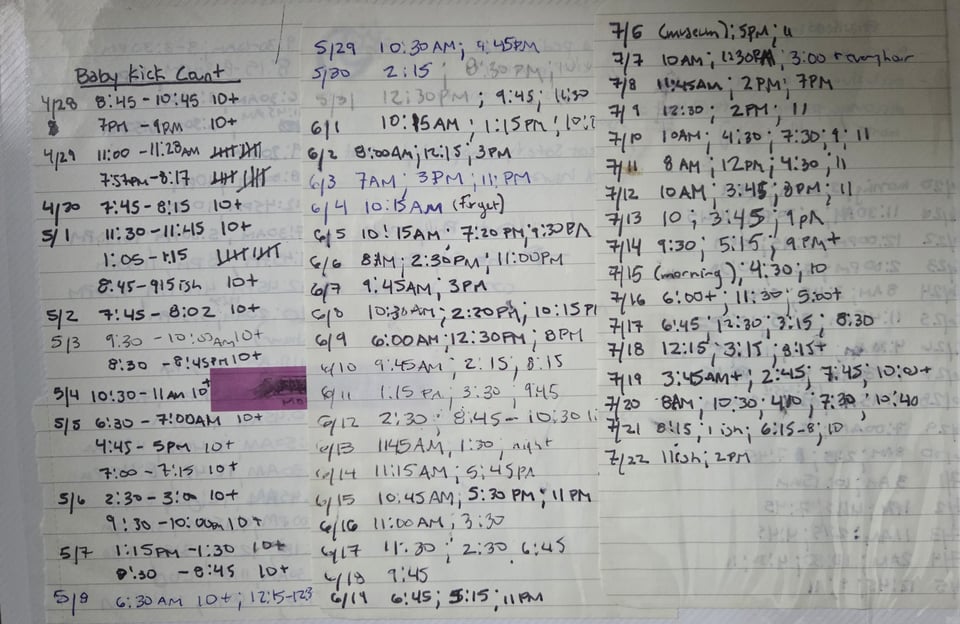
1. In a way, this book started before I knew it was a book. Ever the nerd, I took pleasure in writing things down, even when it was only for myself. Here’s the log of kick counts I kept while pregnant with S:
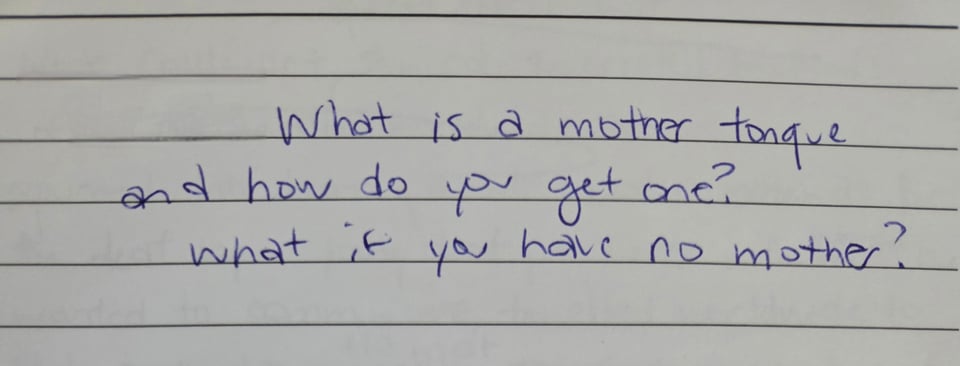
2. The sentence, “What is a mother tongue and how do you get one?”, which ultimately informed the book’s title, also pre-dates the project, at least consciously. I woke up with the lines in my head one morning years ago, and they’ve been rolling it around ever since.
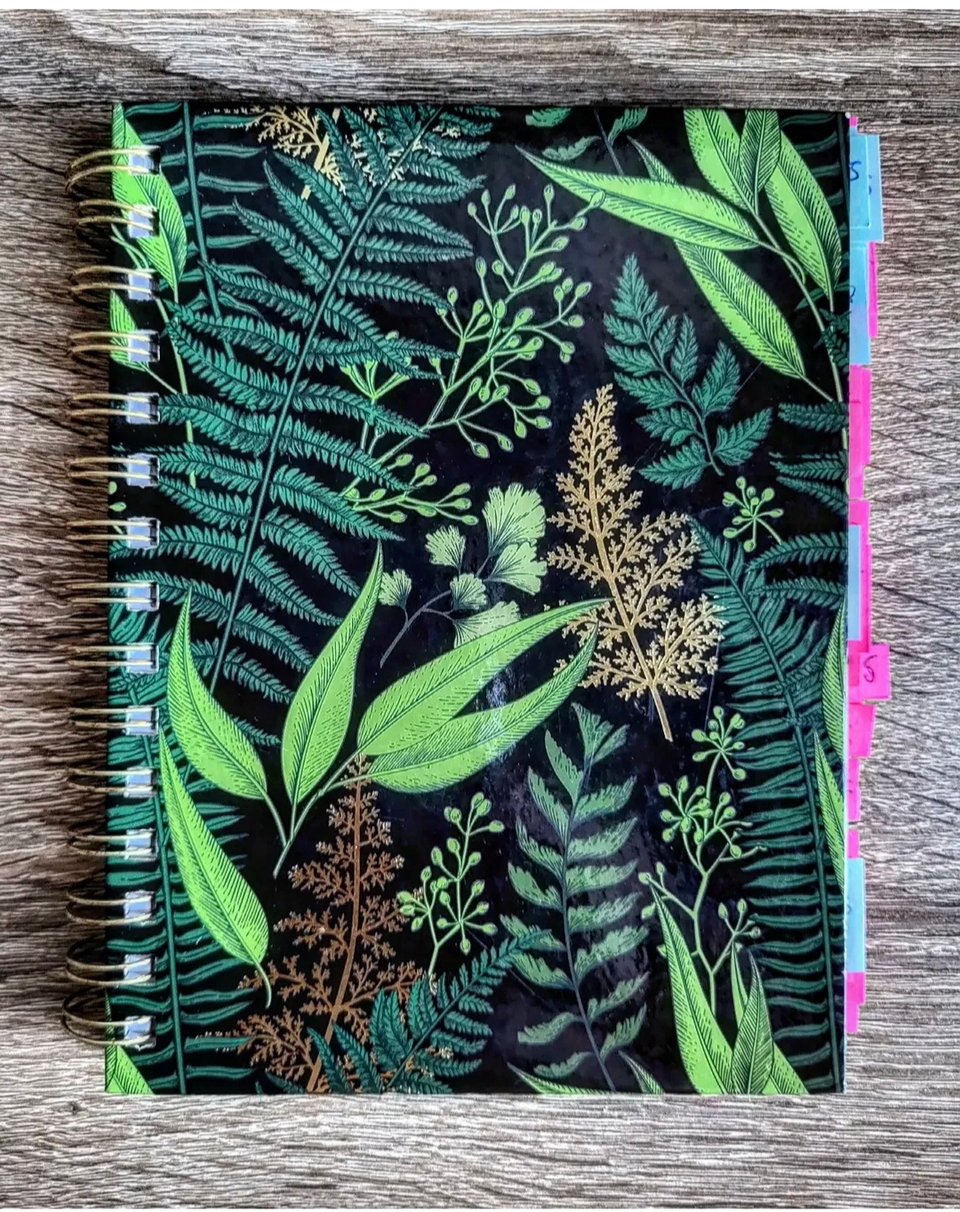
3. Whenever I start a new project, I begin a new notebook and write by hand. This one was given to me by the genius Tea Obreht, whose Philly Free Library book event I moderated as one of my first postpartum outings after having S. When I brought it home, I filled the first pages of it with memories of pregnancy and observations about S’s newborn existence, which eventually became the pages of the “America’s Favorite Pastime” chapter in Mother Tongue.
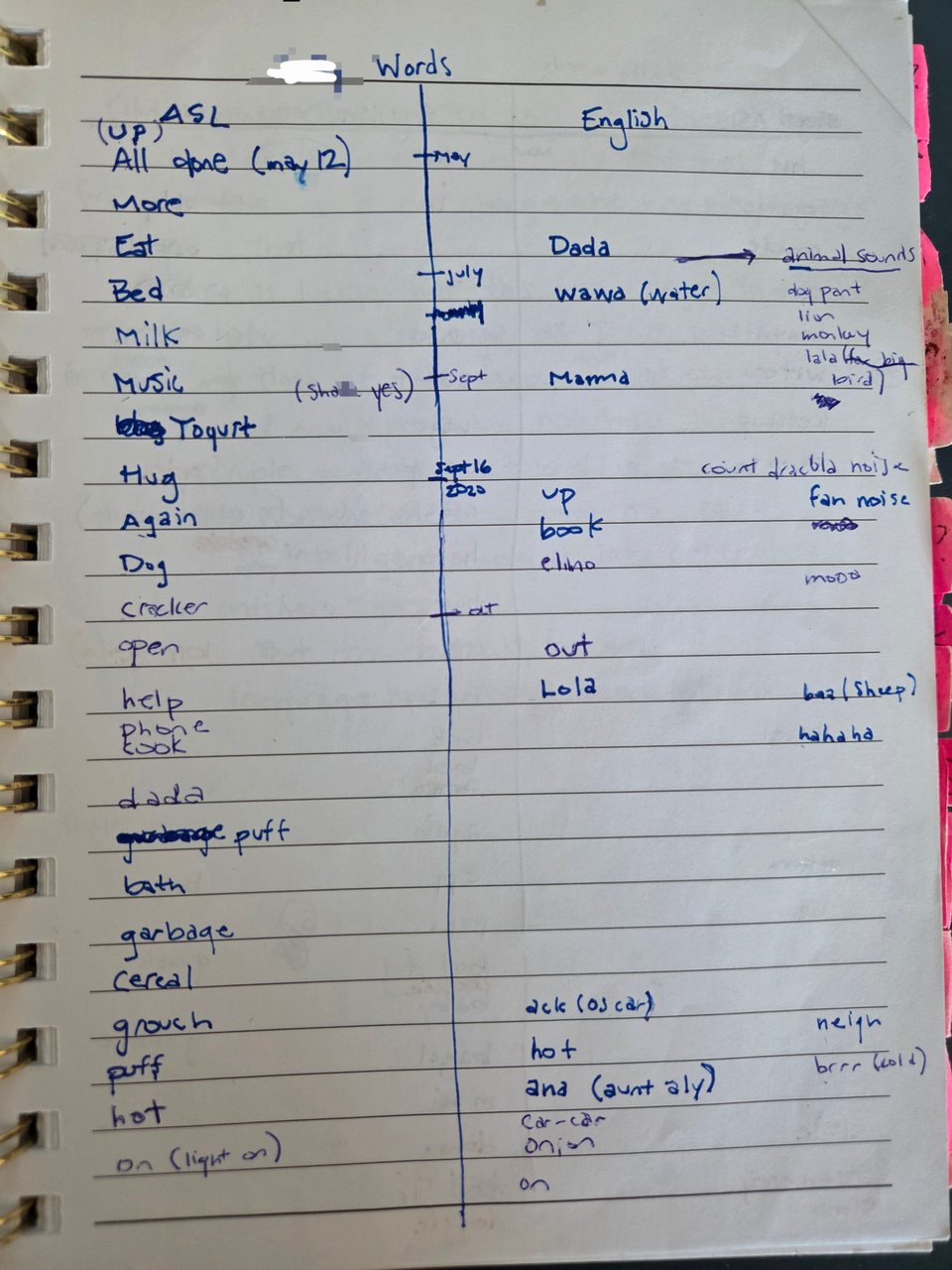
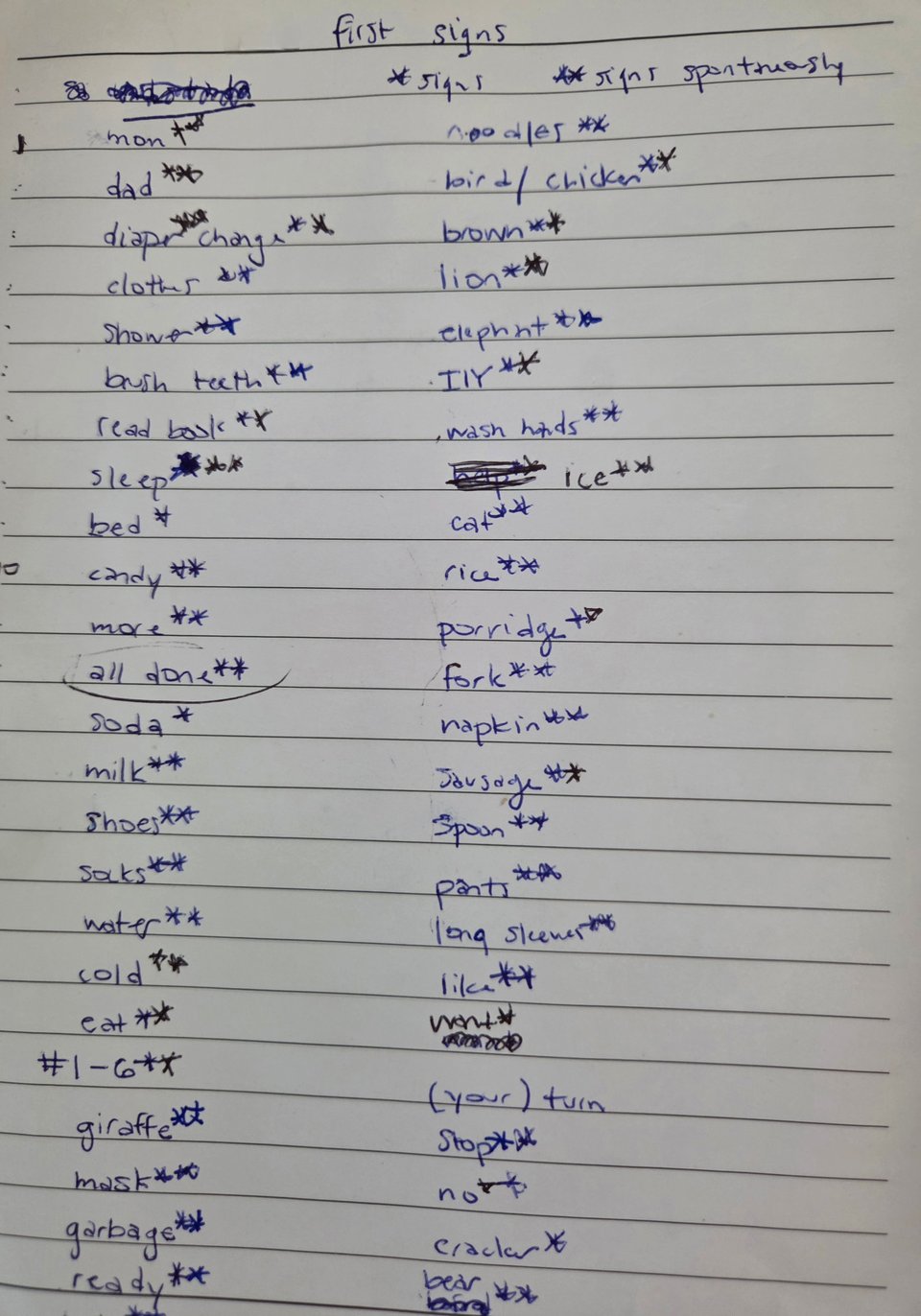
4. Language acquisition is a central theme in Mother Tongue but also in the lives of all children and parents, particularly when deafness is involved. I always joke that in another life I’d be a linguist working in Carol Padden’s lab in San Diego, so even for my CODA, whose robust bilingual language development was never in question, I enjoyed keeping track of the words he learned and seeing how, for a long time, his ASL doubled his English.
5. The story of our family took a narrative twist in the best way when we found K on a list of “waiting children”—children, often disabled, who are living in institutions and who cannot be placed for adoption with kin or within their home countries. The process of adoption— bureaucratically, emotionally, mentally—is fraught, but the ultimate reminder of the both/and nature of existence: where there has been grief, there is also great joy.
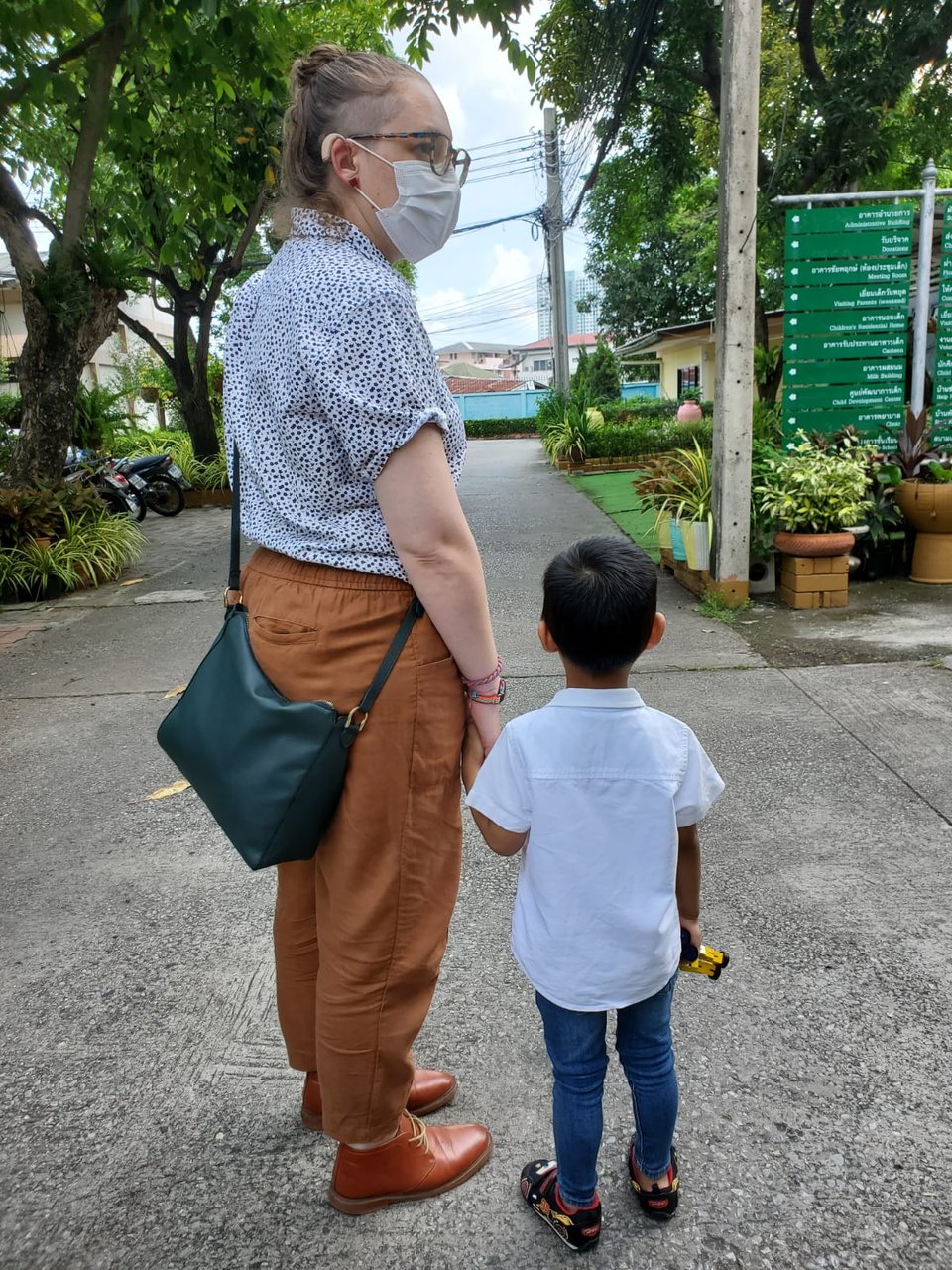
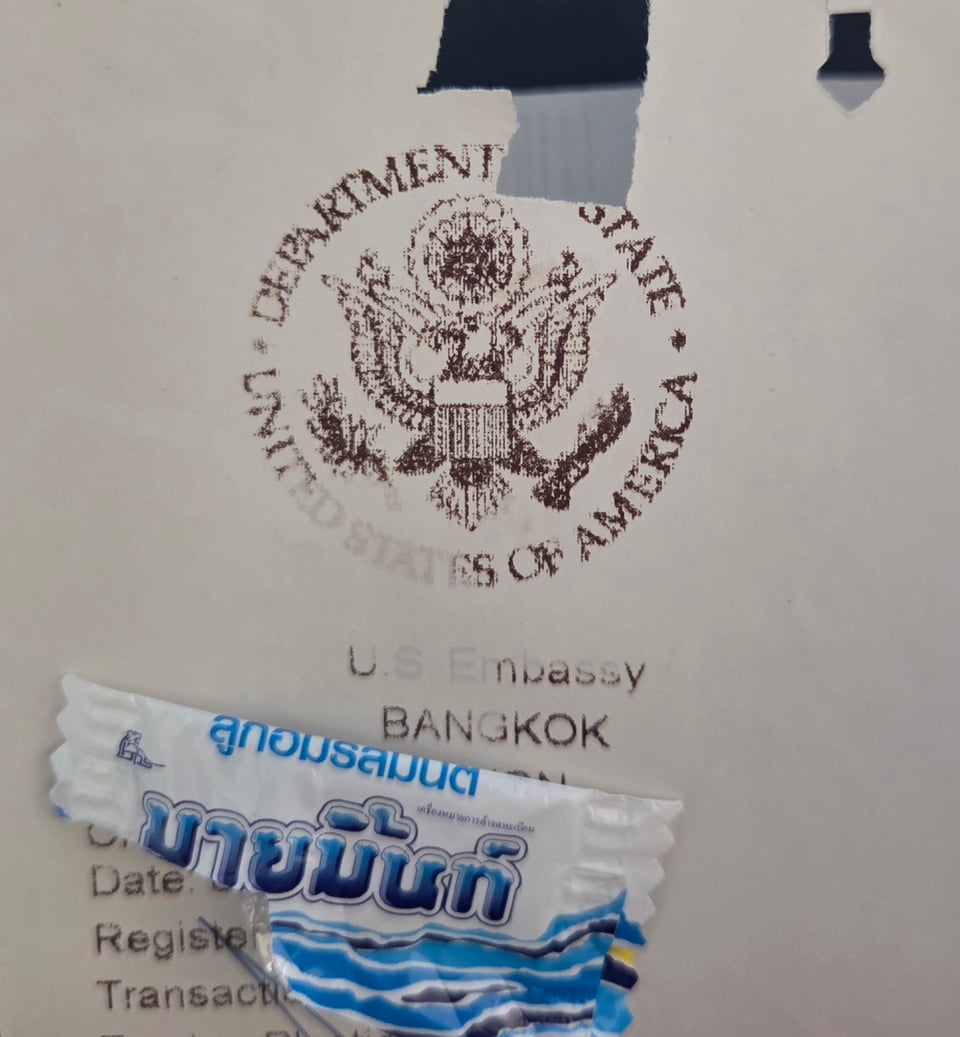
6. Besides the clothes he was wearing, K didn’t have any possessions, so we have been meticulous about saving things we might have trashed from any other trip, as tactile reminders of the process. Here’s a receipt from the ticket line of one of our embassy meetings, and a wrapper of the mints the carers at K’s orphanage filled his pockets with before he left.
7. My somewhat neurotic recording of K’s language acquisition served a more concrete purpose, given his experience of language deprivation. His lists existed entirely in sign for a long time, and were instead divided into signs he would merely copy, versus signs he’d use himself, a common issue for language deprived children who not only don’t have a wide vocabulary, but literally don’t understand the function of language itself.
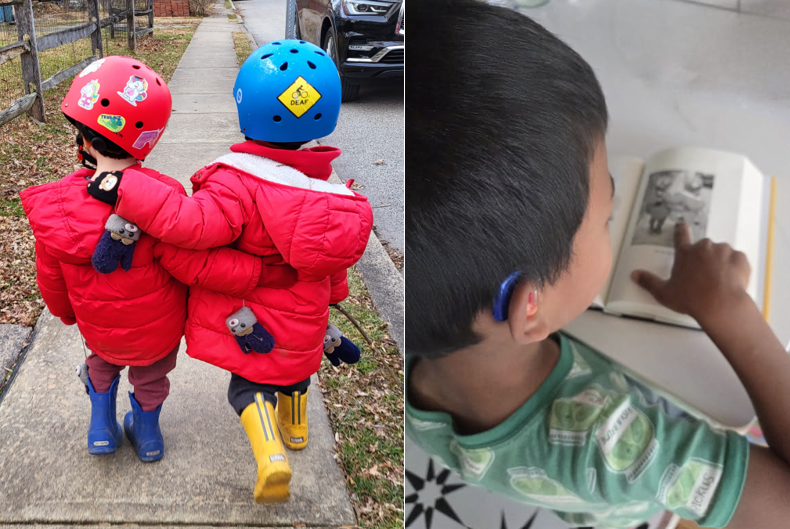
8. These days we’ve settled into ourselves as a family of people "in-between.” When the boys opened the boxes of Mother Tongue books, they were surprised and delighted to find their photo inside. “Look mom, I’m in here!” K said. Yes, bud. Yes you are.
Biz
Save the Dates!
10 June 7PM: Books are Magic Brooklyn, Montague St. with Ruthie Ackerman ASL/English interpretation provided Tickets here
11 June: UK On Sale Day! Preorder in the UK here
20 June 1-3PM: Reads and Company Phoenixville, PA Book signing as part of Chester County’s PrideFest
Stay tuned for another batch of events to come.
Interviews!
With D/Annie Liontas: https://electricliterature.com/a-deaf-manifesto-on-motherhood/
With Rachel Kolb: https://rachelrkolb.substack.com/p/signed-language-is-a-home-too
With Jana Perkins/Women of Letters: https://womenofletters.substack.com/p/sara-novic
With Philly Voice: https://www.phillyvoice.com/mother-tongue-sara-novic-memoir-deaf-rights/
And a really lovely review from Broad Street Review here.
Support this free letter with a one-time or recurring tip at Buy Me A Coffee.

