
The D word.
On the words we pick, the ones we shy away from, and why we still need a Disability Pride Month.
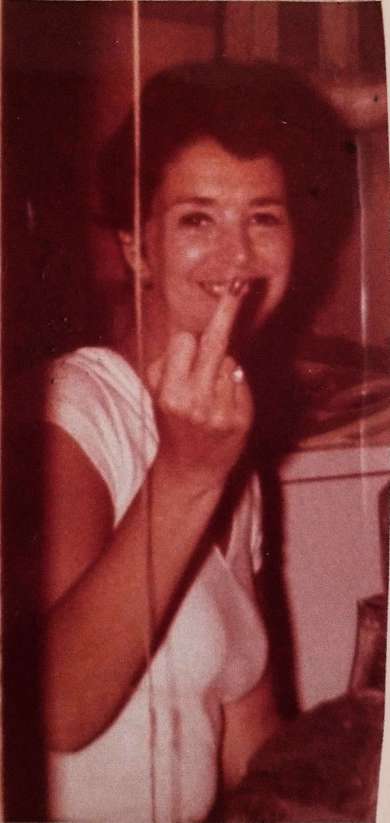
Growing up, I cursed like a sailor. I acquired the cadence and vocabulary of the people around me like any kid, and the people around me cursed all the time. It had been the same for my dad when he was little, a childhood played out in a playpen at his grandparents’ bar and the apartment atop it.
I, too, learned all my best curses from my grandma, which turned out to be the problematic part, because for maybe too long, my sister and I didn’t realize we needed to code-switch. Because of her, curses didn’t feel like curses; they felt like terms of endearment. I was generally quiet at school and didn’t attract much attention—my sister, who was chattier, earned detention for these particular family heirlooms. Eventually, I learned to tone myself down, to switch registers, to a point, though I still find myself frightening the genteel literary world with a “fuck” from time to time.
Unsurprisingly, my boys have taken an interest in cursing, in the words of their grandfather, their aunts and uncles, and yes, me. I’ve told them they aren’t allowed to say any word for which they don’t know the meaning, because that can cause hurt feelings. This has inspired them to explore the etymologies of a few mild expletives, and make swaps for others—S is currently in a phase of screaming, “oh fudge!” in equal moments of upset or joy.
And while I’m glad he (who takes chatty to a whole new level) won’t get in trouble in school, the word really does ring hollow. Maybe it’s just not what I’m used to. Or maybe something really is lost when we try to wriggle out of what we really mean to say for fear of offense.
I’ve been thinking a lot about the words people shy away from lately, in part because of this very cool roundtable discussion about class in the lit world, and also in the context of the last days of Disability Pride Month.
The commemorative designation, meant to mark the passage of the Americans with Disabilities Act (ADA) in July 1990, is the subject of much internet ire. Invariably, nondisabled people appear in every discussion to argue two main points:
That one should not be proud of a disability.
That pride or history months are no longer necessary in a society in which, according to the commentor, discrimination no longer exists.
What type of person crawls into marginalized folks’ comments to die on this hill? Well, as my grandma used to say, “I’ll give you three guesses, and the first two don’t count.” (There is nothing those with power seem to hate more than when marginalized people say we like ourselves; they use our identities to oppress and control others, then decry “identity politics” when we make any mention of them.)
Another thing they have in common? They are almost always afraid to say the word “disabled.” Occasionally we see them work up the courage to say “people with disabilities,” a well-meaning but outdated attempt (in the US at least) at centering the humanity of, but ultimately reinforcing the need to avoid, a person’s disability. Then there are the cringier attempts at circumnavigation: “special needs,” “differently-abled,” “people of ability” (just…what?), and the vomit-inducing, “handicapable!”
Why do we still need Disability Pride Month? Because you can’t even say the word.
For as long as nondisabled people avert their eyes and tell their children to do the same; for as long as they talk over us and amplify and codify the voices of our parents and our teachers over our own; for as long as they fear us, we still need the month.
Other reasons? Disabled people still don’t have marriage equality. Disabled people can still legally be paid subminimum wage. Disabled people can still be forcibly sterilized in at least 31 states and DC. Disabled people’s educational rights are currently being stripped away by this administration. Disabled people’s rights to access public places and live in-community are currently being attacked by this administration. For as long as these human rights are endangered, for as long as the nondisabled stand back and let this happen, we still need the month.
As for pride—it’s always funny to watch folks attempt to litigate the emotions of strangers, and this is just another iteration of that hubris. They’ve been trained to think they know better than us. They’ve been trained to think in absolutes, and to think that disability is an absolute negative. Many of them have worked hard to make that a reality.
They can take away a lot, but because they refuse to see it, they can’t take away what disability so often generates—creativity, ingenuity, community, strength.
Do I feel proud to be a deaf person? You fucking bet.
BIZ
Mother Tongue, a memoir and a history of deafness, queerness, adoption and more, is available now. Grab a copy on Bookshop.org, from your favorite bookstore, or make a request at your library branch.
Already read the book? If you liked it, please consider leaving a review on Goodreads, Amazon, StoryGraph or another retailer or book tracking site. Reviews help like-minded readers find out about the book.
Want to know more about a study or article cited in Mother Tongue? The complete endnotes are available on my website, here.

