
The Fold: Shiny Pebbles
A pile of pebbles. A meme dump. Closing browser tabs in my brain.

Greetings, Fold friends! This issue of The Fold is the equivalent of closing a bunch of browser tabs in my brain. (Not to mix metaphors.) It’s a pile of shiny pebbles I gathered for you. Help yourself.
Problem solving advice from Aleah Black (aka @Gendersauce on Instagram) that has stuck with me:
If it’s too hard, I missed a step.
If I missed a step, I can add a step.
Getting out of bed is impossible? I skipped a step. What little step will make it possible?
Making dinner is impossible? I skipped a step. What little step will make it possible?
Making the phone call is impossible? I skipped a step. What little step will make it possible?
My job is not to punish myself when things are too hard for me.
My job is to make things easier for me.
My job is to make the hard things, possible.
I am the remover of obstacles.
I am the transformer of the Earth.
Read the original Instagram post here.
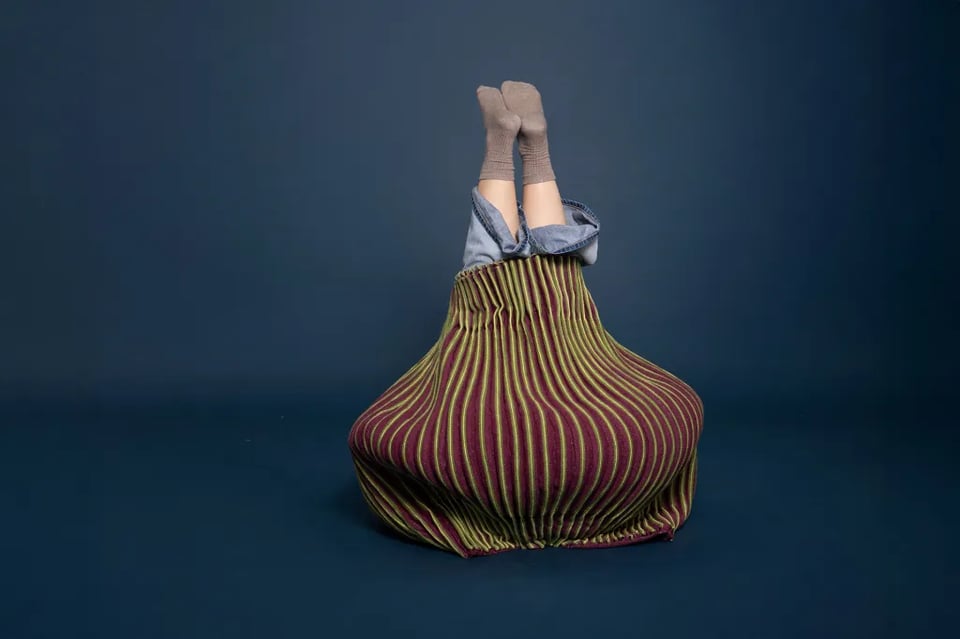
Fun, fantastical, uncategorizable fabric creations. Are they sculptures? Costumes? Wearable art? Movement props? Furniture? Yes.

Octavia Butler and the Three Questions
“Sometime ago I read some place that Robert A. Heinlein had these three categories of science-fiction stories: The what-if category; the if-only category; and the if-this-goes-on category. And I liked the idea. So this is definitely an if-this-goes-on story. And if it's true, if it's anywhere near true, we're all in trouble.”
From a talk by Octavia Butler about her novels Parable of the Sower and Parable of the Talents
Via Christine Platt, author of Afrominimalism and Keepers of Random Things

Glitter in the Dark
Amanda Palmer, half of the duo Dresden Dolls, on why drag queens like Jinkx Monsoon have been so enthusiastically supporting their latest tour:
The Punk Cabaret philosophy of the band and the philosophy and the Drag World are squarely allied: we try to throw glitter on the darkness, and we celebrate personal expression and joy in the face of hopelessness and hardship.
Dark times require extra glitter.
Making Traditional Sumi Ink
I don’t care for the “Why is X so Expensive” framing of this video series. However, they do give us a closer look at how traditional art materials are made. Such as sumi ink.
Wendell Berry (1934-2026)
It may be that when we no longer know what to do
we have come to our real work,
and that when we no longer know which way to go
we have come to our real journey.
The mind that is not baffled is not employed.
The impeded stream is the one that sings.
Via Skye Gilkerson
Making a Gee’s Bend Quilt
A beautiful, unhurried stroll through the quilt making process with Rita Mae Pettway and Louisiana Bendolph.
The Ribbon Sandwich
Have I recommended the excellent Sword and Sandwich newsletter from Tal Lavin? Yes, and if you haven’t subscribed yet, please do.
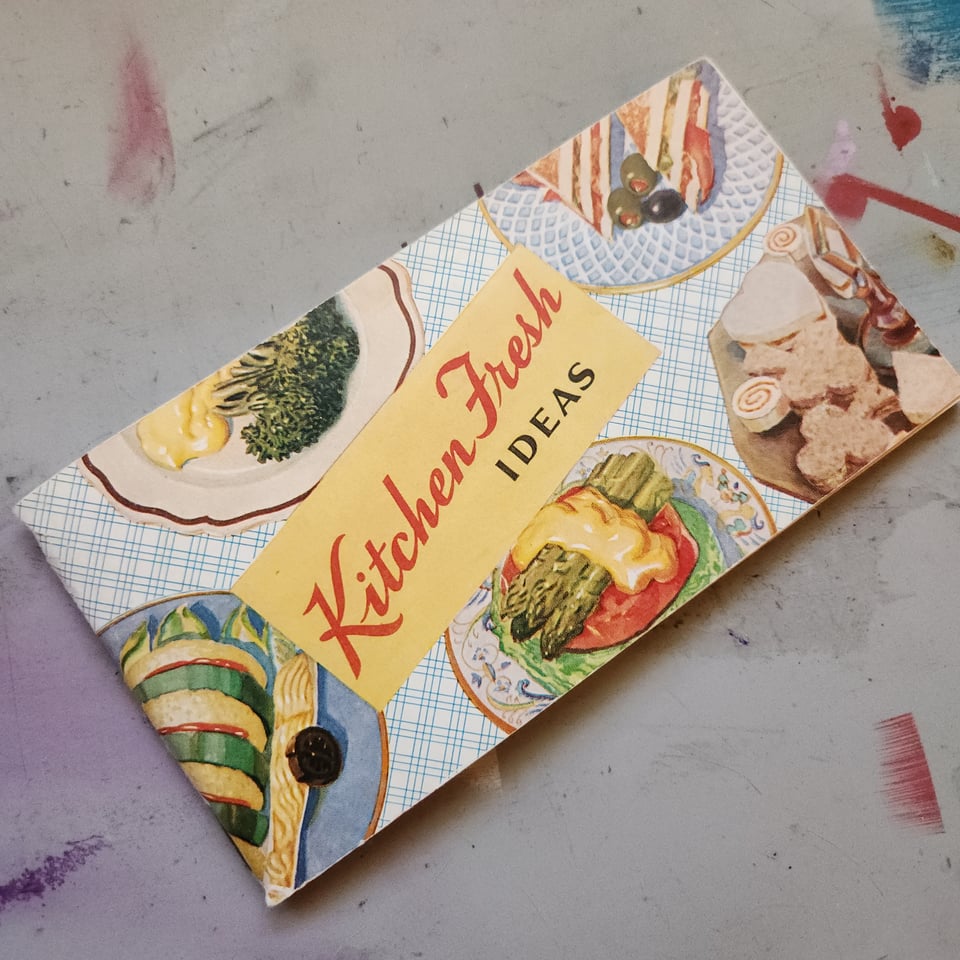
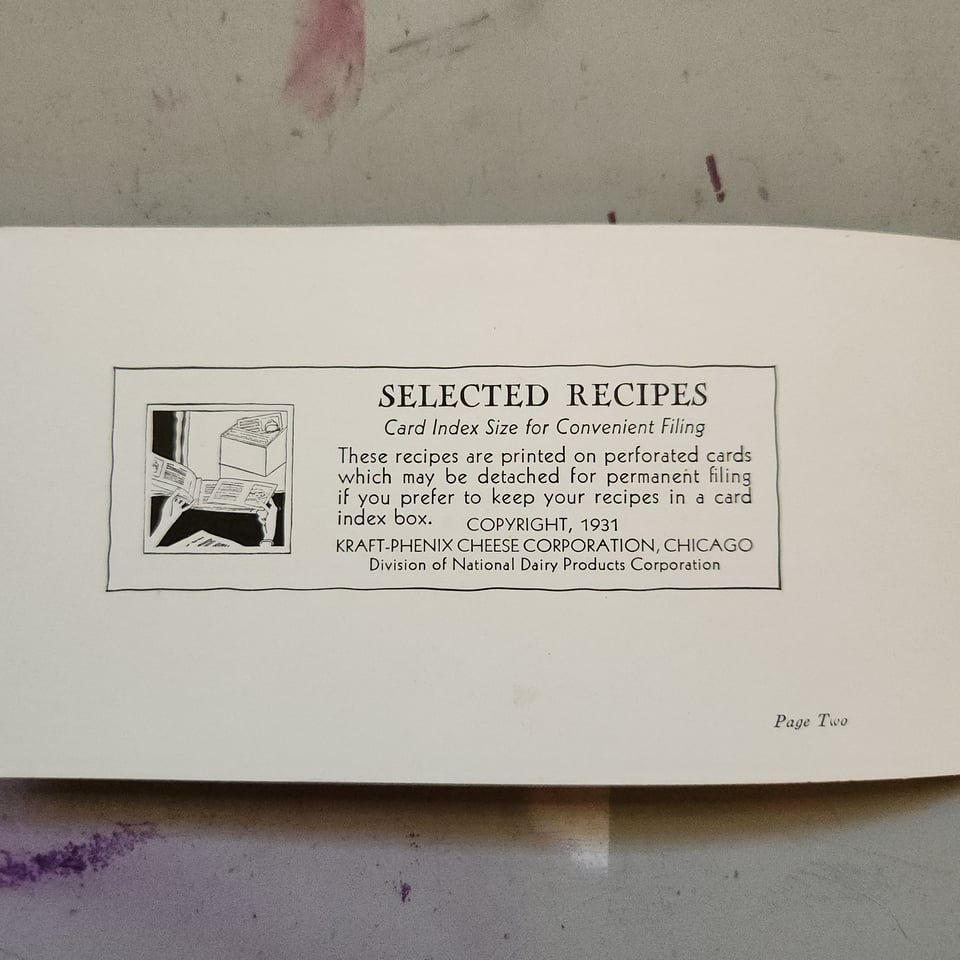
Some time after I read Levin’s essay on the Smorgastarta, I revisited this Kraft Mayonnaise recipe pamphlet that a friend had given me. Flipping through it again, I spotted what must be the midwestern American descendant of the above confection: The Ribbon Sandwich Loaf.
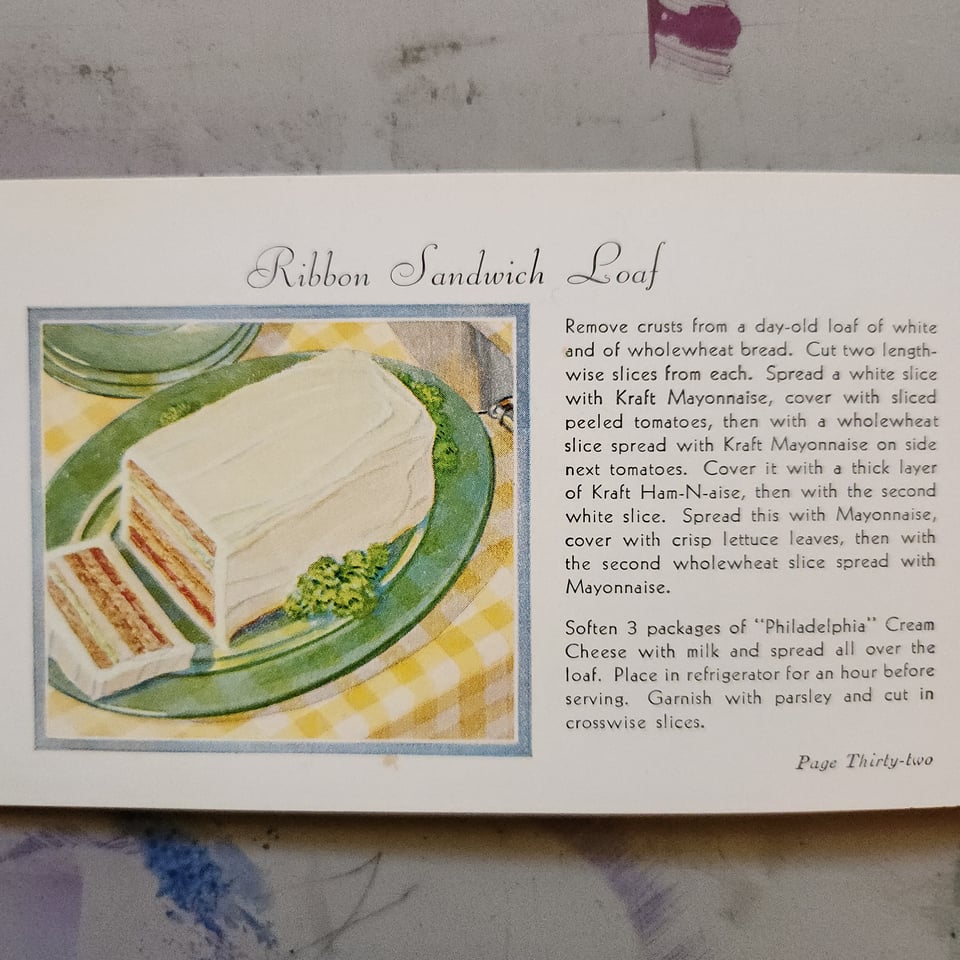
The recipe instructions are as follows:
Remove crusts from a day-old loaf of white and of wholewheat bread. Cut two length-wise slices from each. Spread a white slice with Kraft Mayonnaise, cover with sliced peeled tomatoes, then with a wholewheat slice spread with Kraft Mayonnaise on [the] side next [to] tomatoes. Cover it with a thick layer of Kraft Ham-N-aise, then with the second white slice. Spread this with Mayonnaise, cover with crisp lettuce leaves, then with the second wholewheat slice spread with Mayonnaise.
Soften 3 packages of “Philadelphia” Cream Cheese with milk and spread all over the loaf. Place in refrigerator for an hour before serving. Garnish with parsley and cut in crosswise slices.
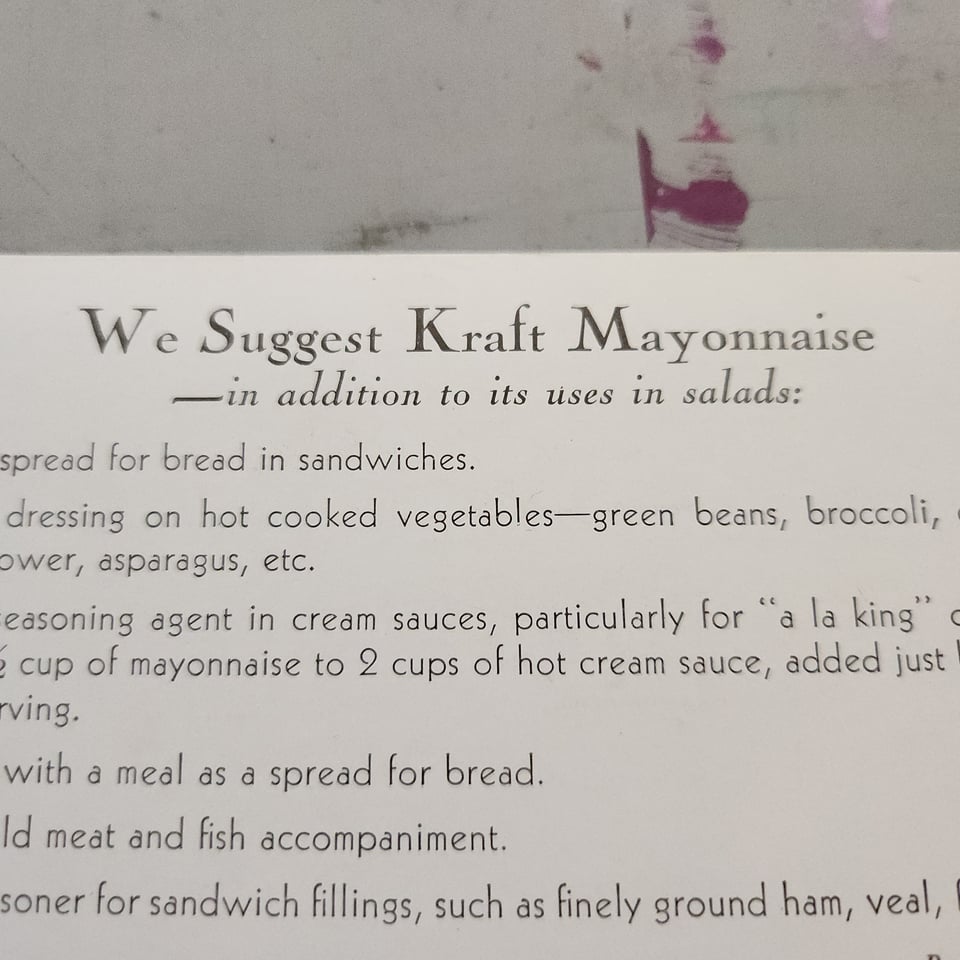
Given the number of Swedish immigrants who settled in the United States in the 19th and 20th centuries, it’s no surprise that the Smorgastarta was adapted for American kitchens.

A GIF For Those Who Read This Far
Thanks for attending my brain dump today!
Until next time,
xoxo Sarah