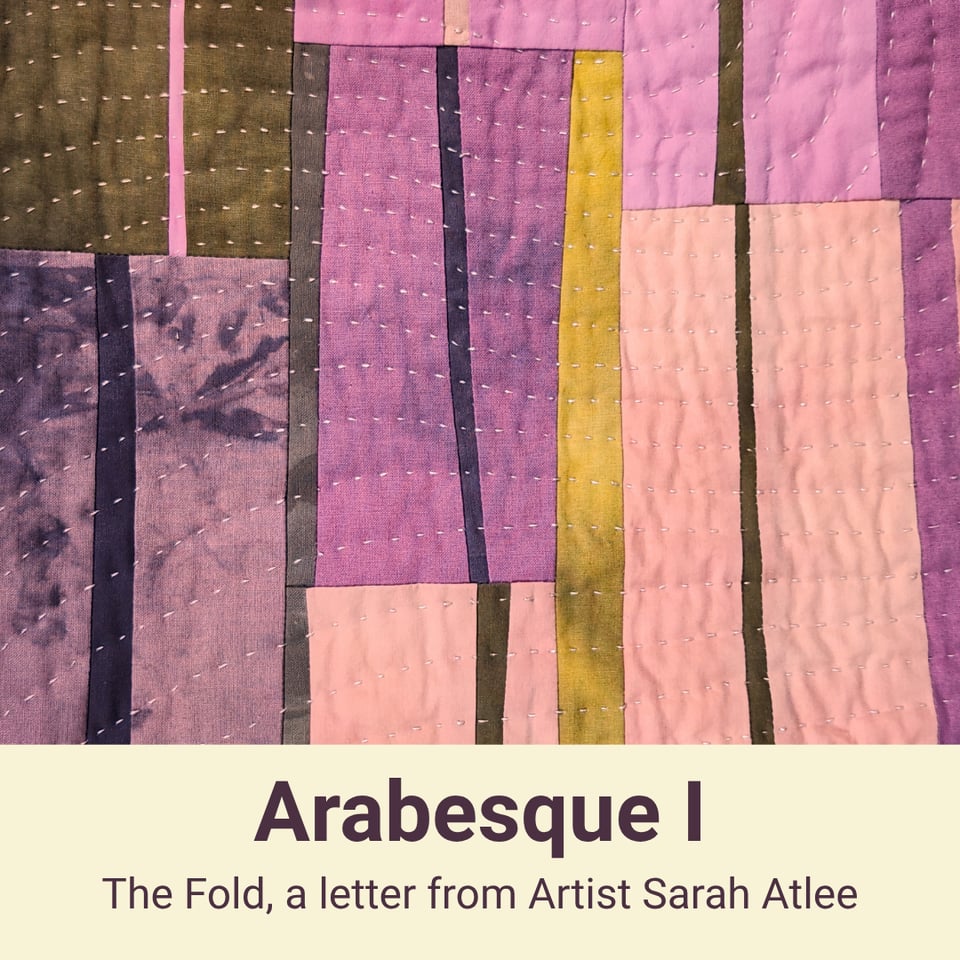
The Fold: Arabesque I
Behind the scenes of my new quilt, Arabesque I.
Hi friends! Welcome to another edition of The Fold. I hope this seasonal transition has been as good for you as it has been for me. Leaves, clouds, gourds, I’m jazzed for all of it.
In this issue:
Palette Swap is open through 10/31
Behind the scenes of Arabesque I
Potholder orders still open!
A rainy GIF
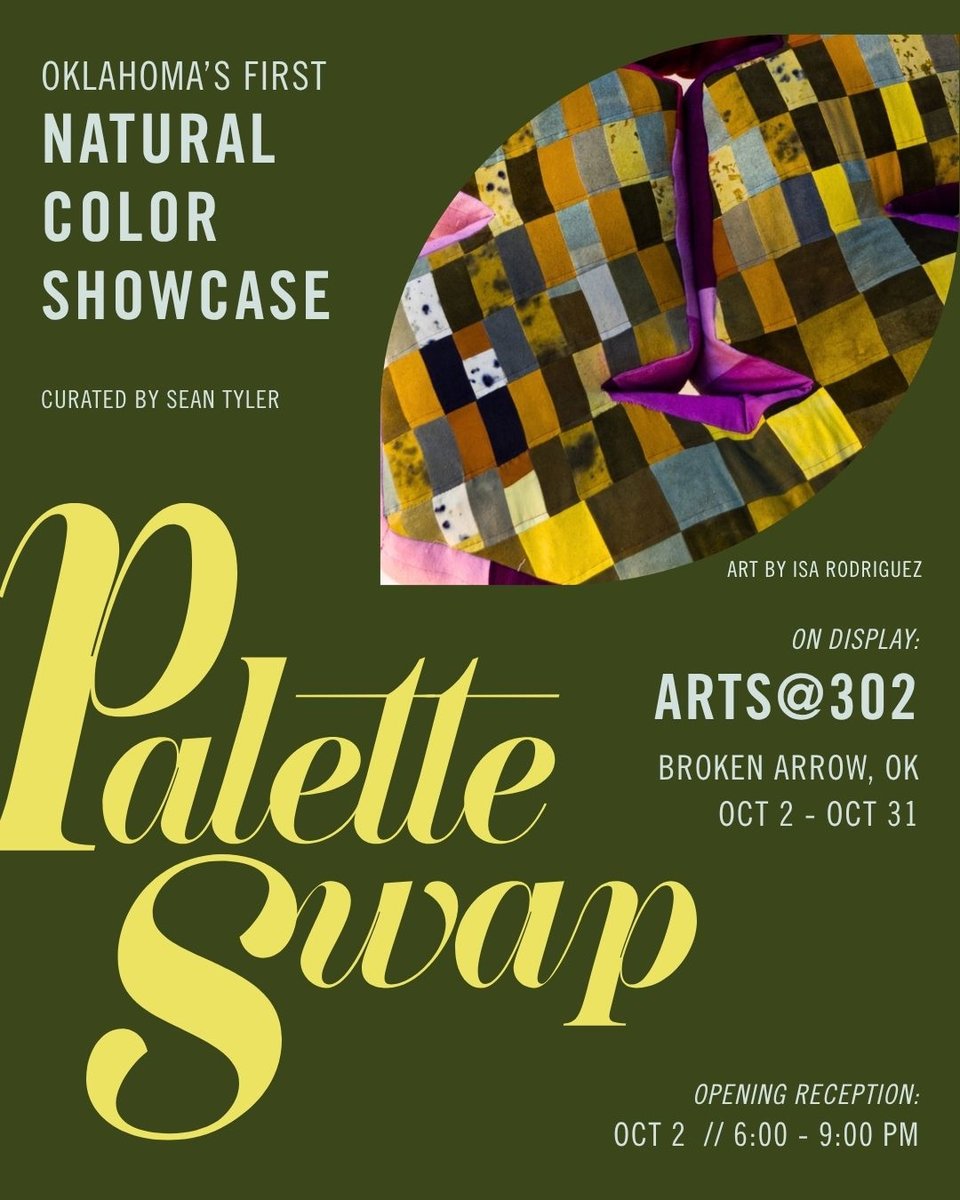
Palette Swap is Open through 10/31
The Palette Swap exhibition opened in Broken Arrow, Oklahoma last week and oh, my is it lovely. From the curator’s statement:
The colors featured come from a combination of grown, foraged, and purchased natural dyes, soils, earth pigments, and more. Many colors come directly from plant sources, including wildflowers, shrubs, heartwood, and roots. Artists are also using cotton, silk, wool, paper, soil, and ash to create their pieces.
If you are in central or eastern Oklahoma this show is definitely worth a day trip. The gallery, Arts@302, is situated within walking distance of plenty of restaurants and fun shops. Palette Swap is open through October 31.
I made two new quilts for this show. I’m calling them the Arabesque diptych. (Because how often do we get to use a word like diptych? So cool.)
Arabesque I
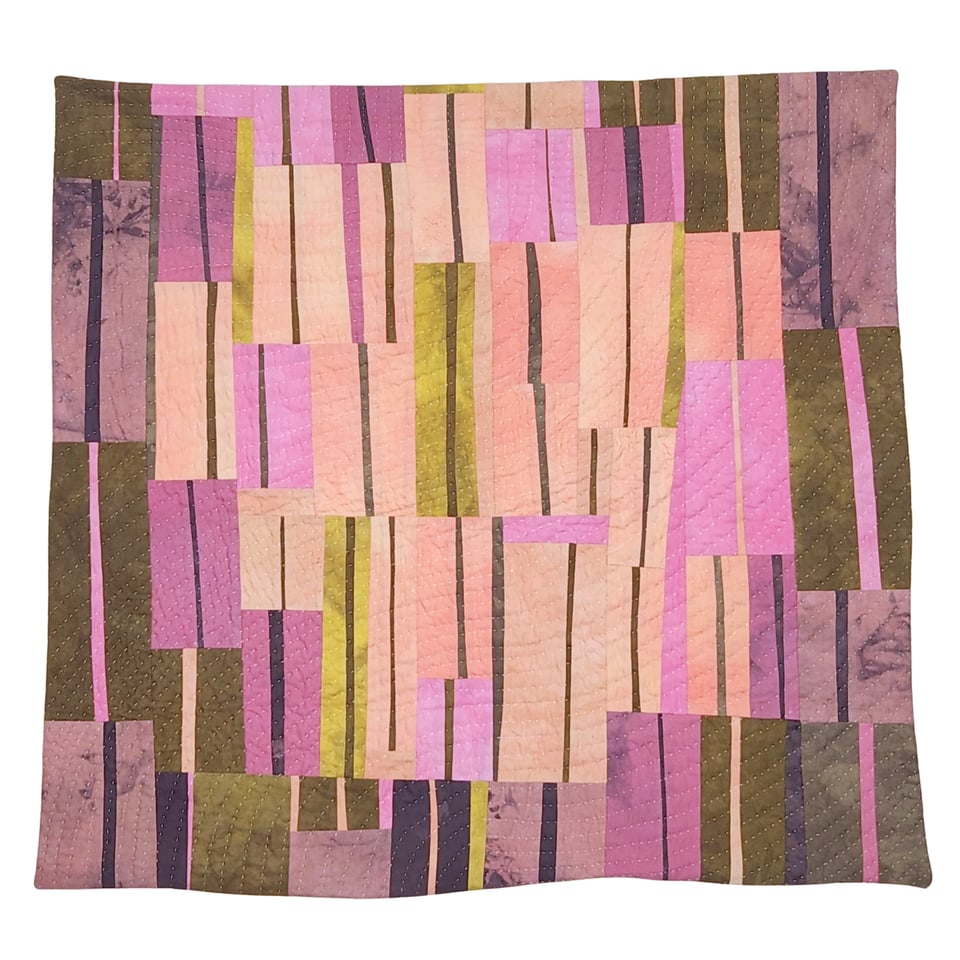
Arabesque I. Hand-dyed cotton fabrics, machine pieced, hand quilted. 28 x 31 inches, 2026. $650
In the Arabesque diptych I’m exploring the tension between structure and improvisation. Originally used as a visual design term, “Arabesque” usually refers to interlacing foliate motifs that produce a swirling effect.
In ballet, Arabesque describes a position where the dancer stands on one leg while extending their other leg and arms. Ballet is a contradiction in itself – they work so hard to make it look easy. This is the tension I love. The dancers are incredibly strong, yet they exude grace and flow.
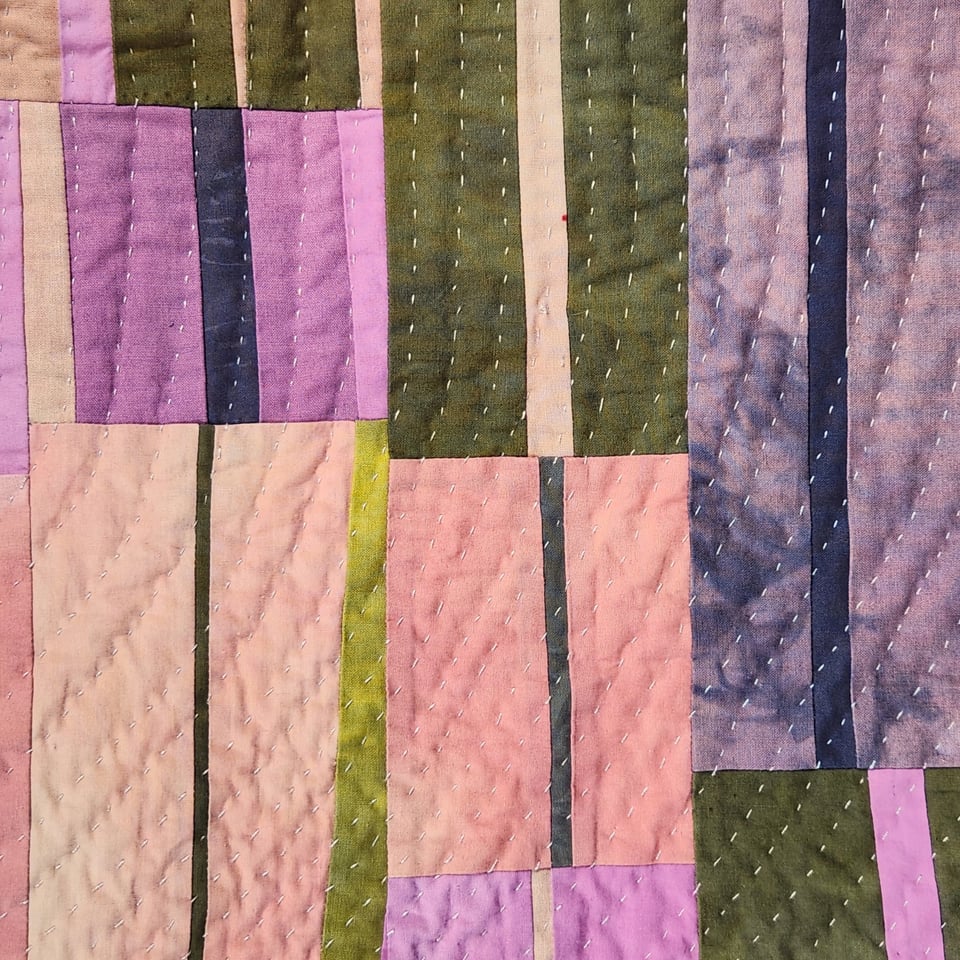
A famous example of the Arabesque position in a ballet is the Kingdom of the Shades scene from La Bayadere. In this video you can watch the corps perform thirty-nine Arabesques in a row. (The sequence starts at about 7:25.)
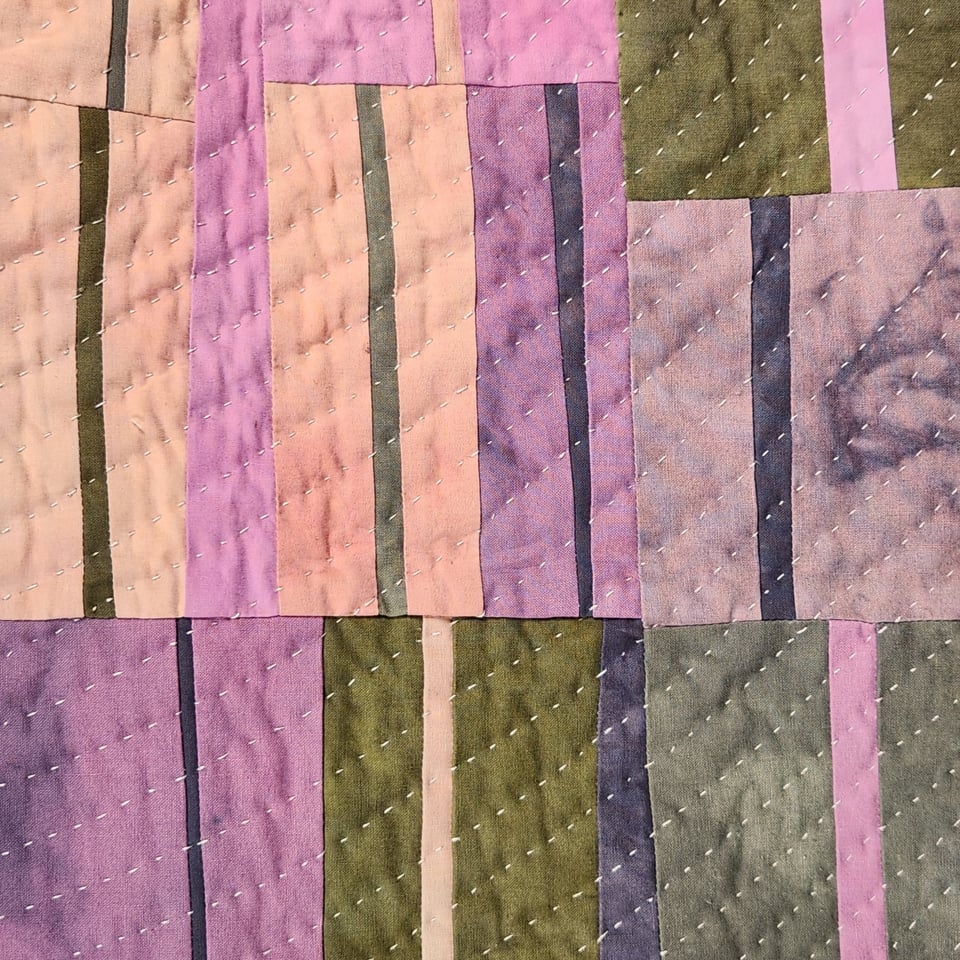
I’m an improvisational quilter, which means I start sewing fabric together before I have decided on a final design. I find out what the composition will be through the process. For each of the Arabesque quilts, I began with a simple shape, and made many variations of that shape using different fabric combinations.
I did something similar in a 2020 quilt called Basic Split. Each block was a rectangle split by a skinnier rectangle.
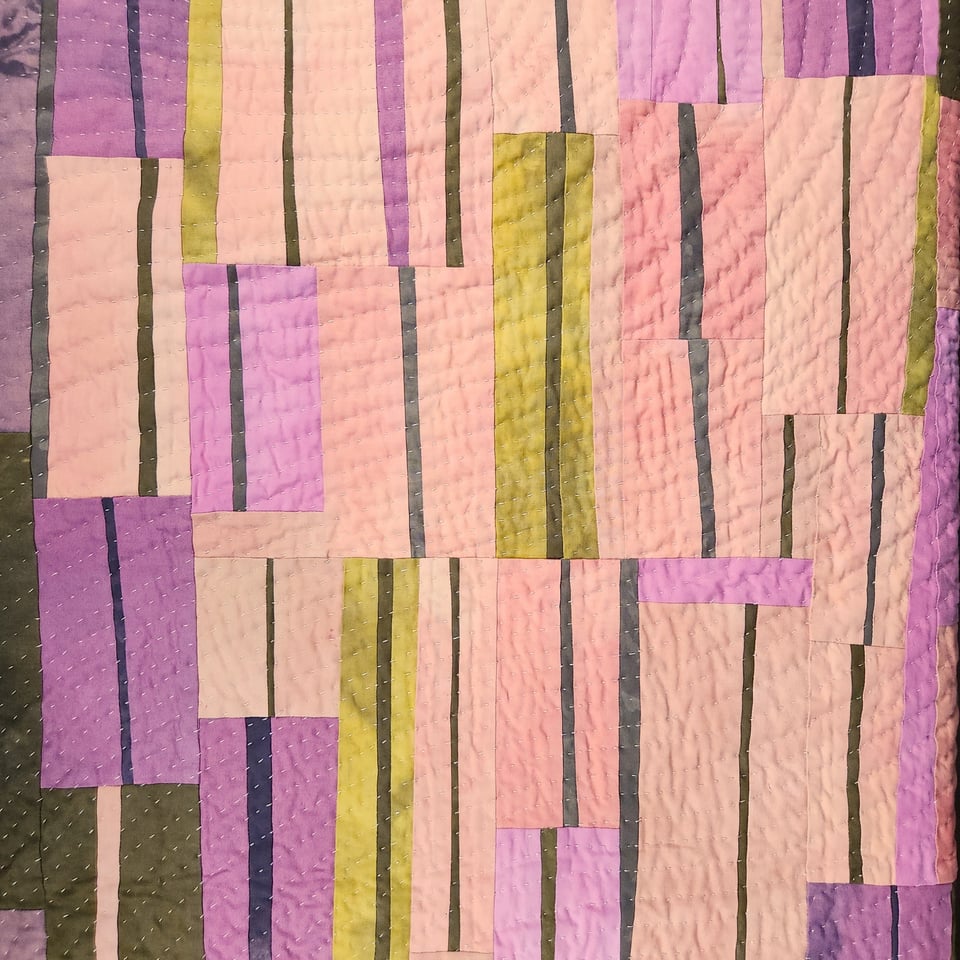
I created the blocks without rulers or templates. I made every cut intuitive, knowing that I’d be filling in gaps with more fabric later. I wanted the shapes to stay gestural, like handwriting. As with a dancer repeating a movement over and over, each quilt block is a breath, a gesture, an opportunity to try again.
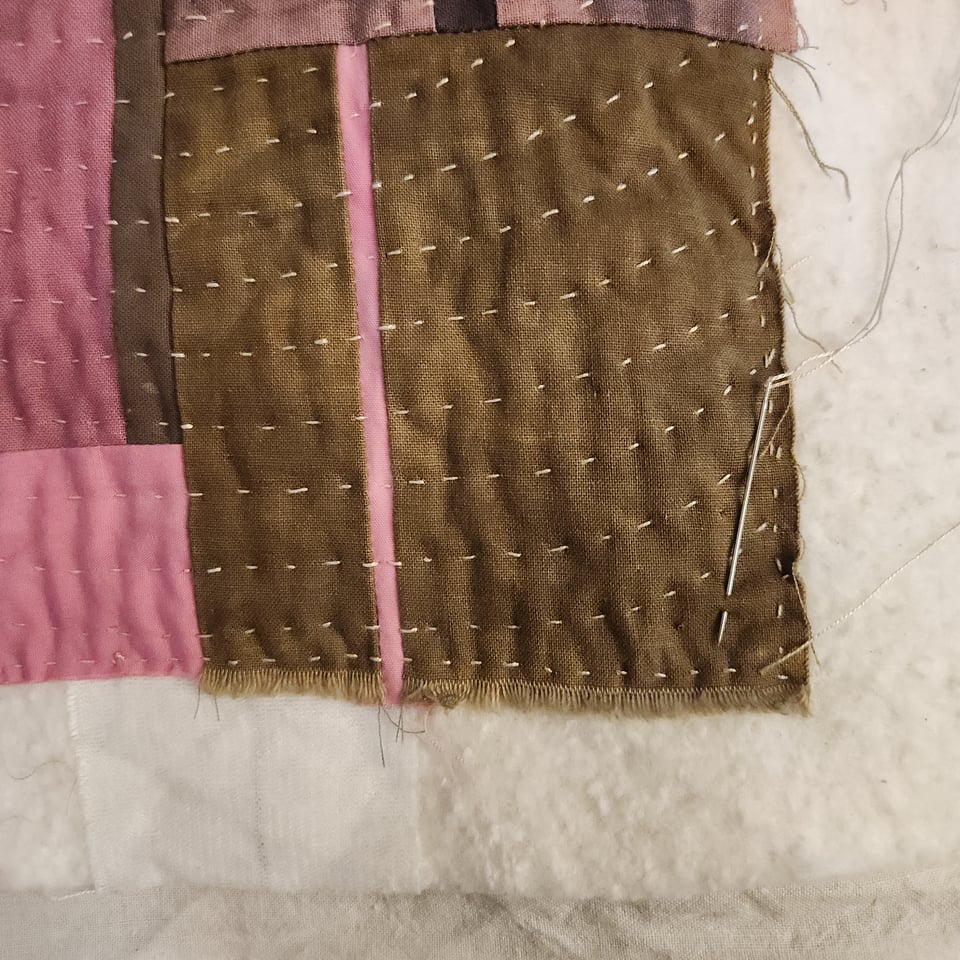
For the quilting stitches, I chose a curved pattern to offset the rectangles. We’re back to the paradox of the ballet dancer: rigid structure, graceful flow.
In the next issue I’ll introduce you to Arabesque II and delve further into the process.
Potholder Orders are Still Open!
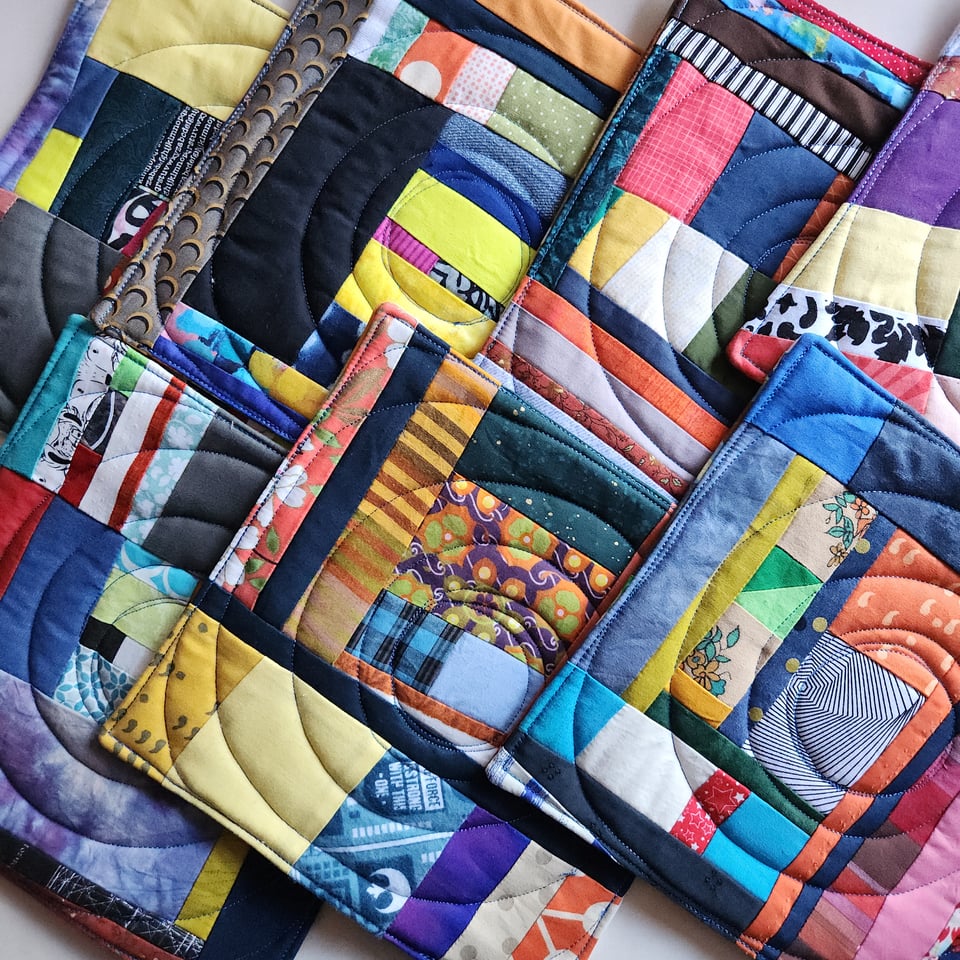
My quilted potholders make excellent holiday gifts!
If you’re looking to get just one or two pairs, you can order those through my website right up until December.
If you’re in the Oklahoma City area, you can find my potholders at DNA Galleries in the Plaza District. You’ll be supporting two small businesses at once!
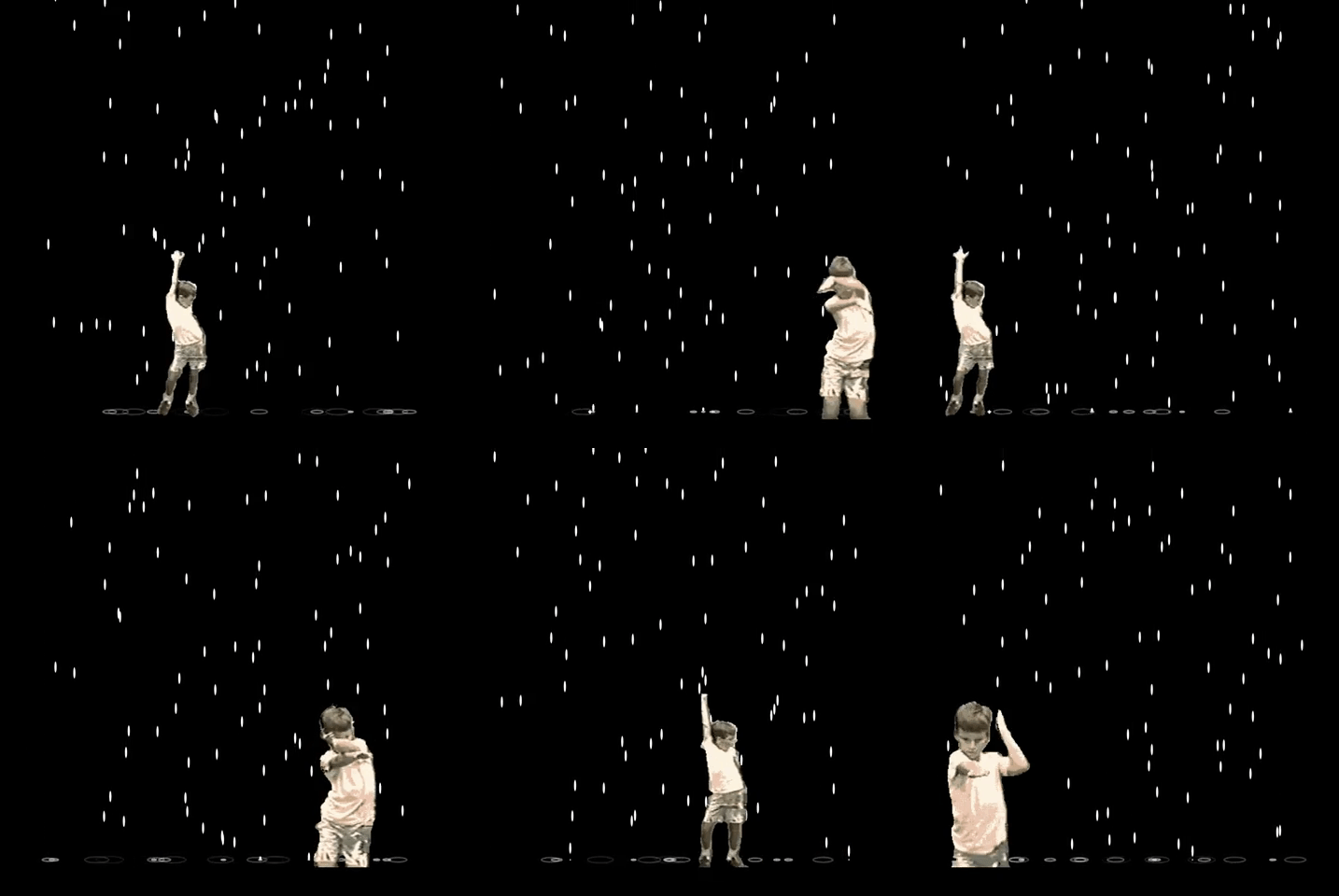
A GIF For Those Who Read This Far
Rain is my favorite, and we’re getting lots of it this week!
Until next time,
xoxo Sarah