The impact of a frame
Prince of Persia The Lost Crown's vengeful counter system injects a flash of anime into every combat encounter.
by Toussaint Egan
This is part of re:frame's Per Second, a month of coverage focused on all the ways animation touches video games, from the culture surrounding the medium to high-profile outliers to the everyday bread and butter of video game animation.
Prince of Persia The Lost Crown deserved better. The 2024 reboot of Ubisoft's classic side-scrolling action platformer is an inspired return to form for the franchise, introducing a new protagonist in a new universe that combines motifs from the series' earlier triumphs and reimagines them in an expansive Metroidvania-style environment. I wouldn't go so far as to say I'm the game's strongest soldier, but I count myself among their ranks.
There's a lot to love about Sargon the Immortal's adventure across the temporally fractured corners of Mount Qaf. The moment-to-moment combat is challenging and engaging, even more so when adding in all the special traversal and offensive abilities you acquire over the course of the game. The Lost Crown's "Memory Shard" feature, which allows the player to take screenshots and pin them to the ever-growing world map for easy referral, is inarguably the game's best contribution to the Metroidvania genre. As far as how the game leans into its anime influences (which were well-documented in the lead up to The Lost Crown's release), I'm a huge fan of Prince of Persia The Lost Crown's ample use of impact frames to punctuate its tense, unforgiving parry mechanic.
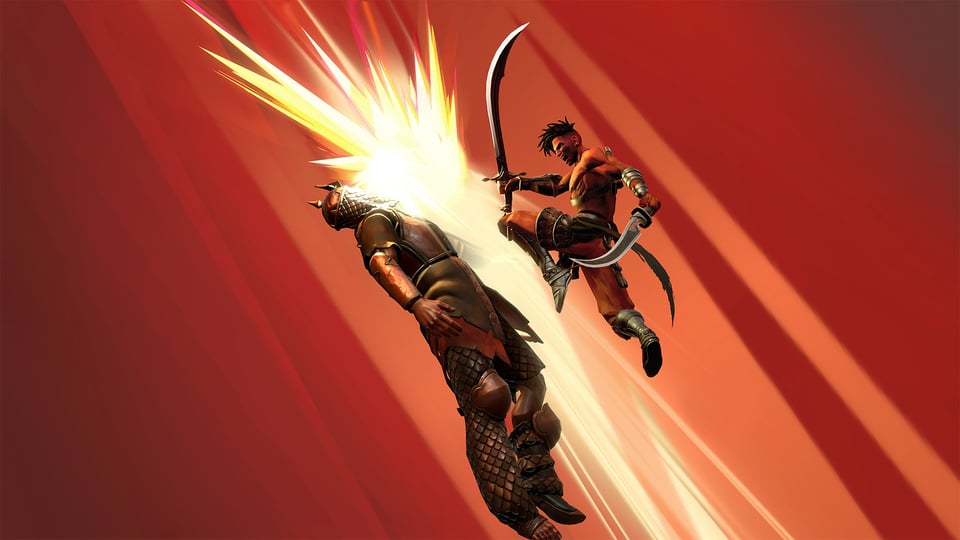
For those unfamiliar, impact frames refer to single frames or sequences that employ high-contrast, stylized drawings within animation that are used to make either punches, collisions, or explosions really pop, often with striking sharp lines and silhouettes. It's one of the signature stylistic techniques of Japanese animation, and it's seen everywhere from popular shonen martial arts epics to irreverent high school comedies.
In Prince of Persia The Lost Crown, they're the cherry on top of every cinematic special counterattack the player is able to pull off by parrying exactly when a circular yellow halo glows over an enemy. It's electrifying no matter who or when you manage to pull one off, whether in a spat with one of the innumerable fodder opponents you come across throughout the mountain or against one of the game's more formidable boss encounters.
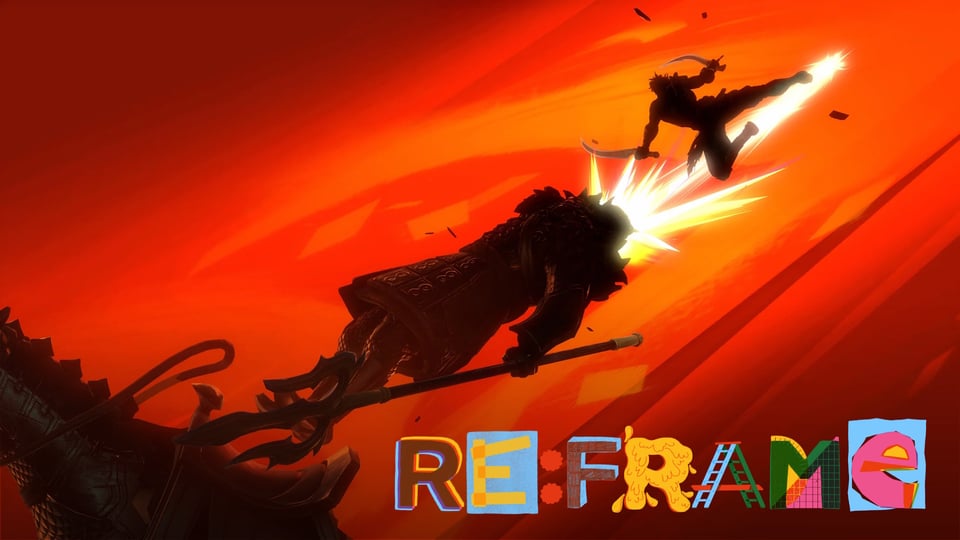
My personal favorite examples of this are in the boss fight between Menolias, the second Immortal Sargon fights before his rematch with antagonist Vahram, and King Darius, the resurrected Persian ruler and penultimate boss, respectively. The former takes on the form of a one-inch punch, with Sargon charging his Athra into a single pinpoint strike to Menolias' abdomen that sends him hurtling into a nearby pillar amid a kamehameha-esque stream of light. In the case of Darius, it's while executing a counterattack during a mid-air sequence, wherein Sargon delivers a cross strike attack that prompts the camera to zoom out before exploding into a flash of light not unlike the blast of an atomic bomb. Again, it's sick as hell and feels just as amazing as it looks when pulled off precisely.
Prince of Persia The Lost Crown certainly isn't the only game released in recent memory to incorporate visual nods to the techniques of Japanese animation, but it certainly stands out in my mind as one of the more tasteful and original examples in that respect. While this may, unfortunately, be the last we see of Sargon, it's a hell of a journey that's more than worth experiencing at least once.