A stitch, very many in fact, and time
Scarlet Deer Inn is very deliberately doing something different.
by Rollin Bishop
This is part of re:frame's Per Second, a month of coverage focused on all the ways animation touches video games, from the culture surrounding the medium to high-profile outliers to the everyday bread and butter of video game animation.
The recently released video game Scarlet Deer Inn from developer Attu Games (composed of husband and wife duo Eva Navratilova and Lukas Navratil) does something quite unusual with its animation. It's immediately clear when you see it, but while ruminating on how to begin discussing it… I've yet to come up with a better way than "the fundamentals." There's really just no better place to start than the beginning, so, buckle up.
Animation is, in its simplest terms, a series of still images put in an order to create the illusion of movement, right? Every frame a painting, yes? We literally just went over this. By and large, this definition can also typically be applied to animation in video video games. With one significant caveat: interactivity.
Classically, especially in the 2D games of my youth, this was accomplished through the use of a sprite sheet. Basically, a series of static images representing certain poses or actions. You go left, you get the sprite image associated with that. Right, you get the right sprite image. Jump, the sprite (or sprites, plural, even) for that action. Think about how Link moves in the original Legend of Zelda for the NES or the Final Fantasy classes with their different poses for attacking and so on. It's just another series of still images, but the player is in the director's chair.
So, with all of that in mind, what's stopping that library of static images actually being… anything at all? Like say, perhaps embroidery? That's exactly what Attu Games has done with Scarlet Deer Inn; in fact, there's a good chance you've previously seen something about it on social media before as it went a bit viral some years back.
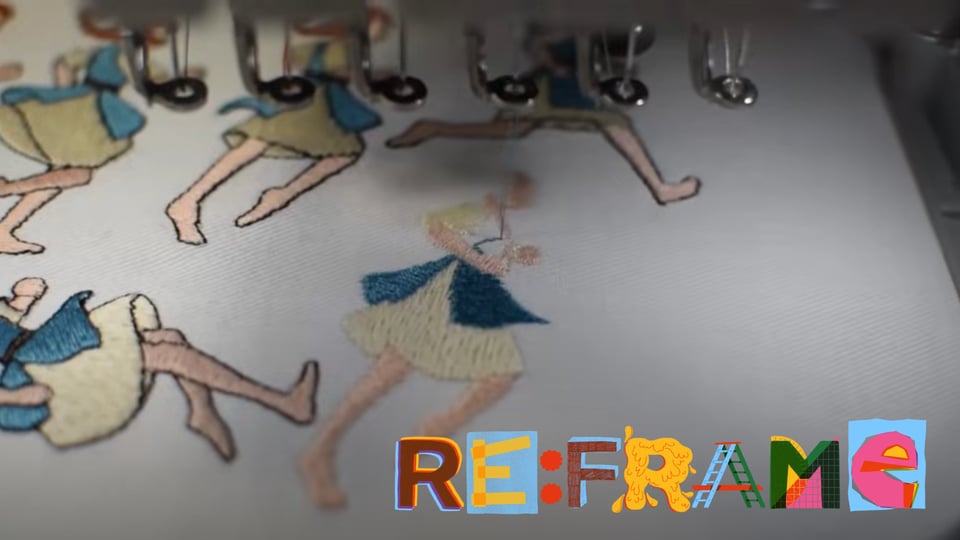
Animating in alternative mediums to what is typical isn't exactly a new thought, but Scarlet Deer Inn stands out to me in part because it's so clearly such a pain in the ass. And they did it anyway. It should probably not surprise you that the process is fairly involved and complicated as opposed to simply creating digital art alone. There's plenty of prep digitally then embroidery, then scanning, then rendering, and then it has to be plugged into the game itself.
"The embroidery must be prepared on a computer beforehand," the official Scarlet Deer Inn FAQ reads in part. "It means that the finished frame-by-frame animation must be replicated in vectors using embroidery software, with several options for threads, colors, stitch patterns, angles, and so on. After the embroidery is completed, the material is scanned back into a computer. Then, in Photoshop, each frame is taken out and the cloth around it is removed. Finally, the outline and shadows are applied."
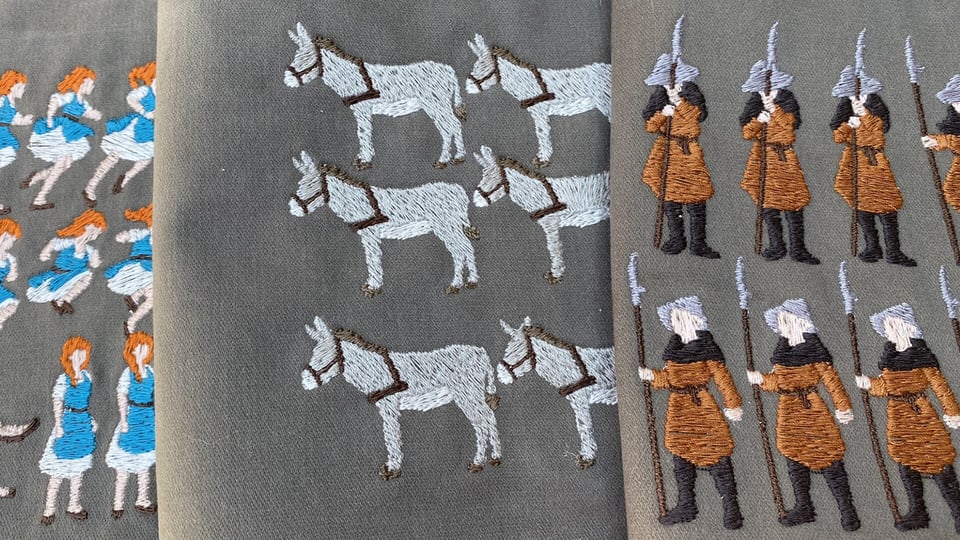
"The whole machine embroidery process is surprisingly complicated, and you need a lot of learning through mistakes before the result stops being unusable garbage," Navratilova previously told Kotaku. "The main problem is that we have nobody to ask how to do those things, so we have to learn all of that the hard way."
It should likely come as no surprise that I, the resident physical media and tangible goods enjoyer, find all of this delightful. The end result is a video game that completely stands apart from its contemporaries — and one that's been fairly well received, thanks in no small part to this art direction. But it's been a long road to this point, and a positive reception is never guaranteed for any kind of art.
So, why do this at all? Why even bother trying to turn embroidery into character art in a digital video game? For what point or purpose? The developers have an answer for this in the FAQ that has stuck with me ever since I first read it. It's something, I feel, that we could all perhaps apply a lot more liberally to life in general, and is a stance that certainly flies in the face of the existence of generative AI and other similar so-called "shortcuts."
"To enjoy trying and learning new things," it states. "Even though it‘s not gonna be perfect."