You know, even with everything 1in the news, and in the news, and in the news, police are still who a lot of people think about when they think about safety. This belief also supports the kinds of reformist reforms that add more money to police budgets and directly counter what communities and society are demanding.
For example, the Montreal police are piloting a program described by the police chief as a ‘humane approach to people with autism.’ But the program requires registration in a police-accessible database to be treated as a human. As the Abolition and Disability Justice Collective tells us, reforms that require registries, monitoring, or surveillance are reforms to avoid!
People who are the least likely to have involuntarily encounters with the police are also more likely to trust police. Because policing works by making some people actually unsafe while making a second group feel safe by telling them that what they should be most afraid of is the first group. Policing also works to deskill us all, leading us to believe that there isn’t the knowledge, and skill, and care in community and society to keep each other safe.
We know that reentry follows a pathway rather than being a single event. Stepping back out of a court, jail or prison is just the first step in getting free and finding home.
And, as a recent Canadian Civil Liberties Association report points out, for people from rural and fly-in communities the lack of transit and transportation supports mean that one’s physical home can be an inaccessible hundreds of kilometres away.
Join us for Planning for Community Safety a two day, in person, workshop and community exchange in Ottawa, February 14+15 2006 (with an opening celebration on the 13th) + share with your networks!
The goal for these two days is to bring together planning practitioners and abolition, transformative and restorative justice practitioners to learn more about each other's work; share skills and ideas to better support and collaborate with each other; and share what we are learning together with a wider audience.
OPPI is the one of the largest professional planning organizations in the country, so it feels like a real turning point to have ideas about abolition and transformative justice welcomed by the editors, and shared with their audience.
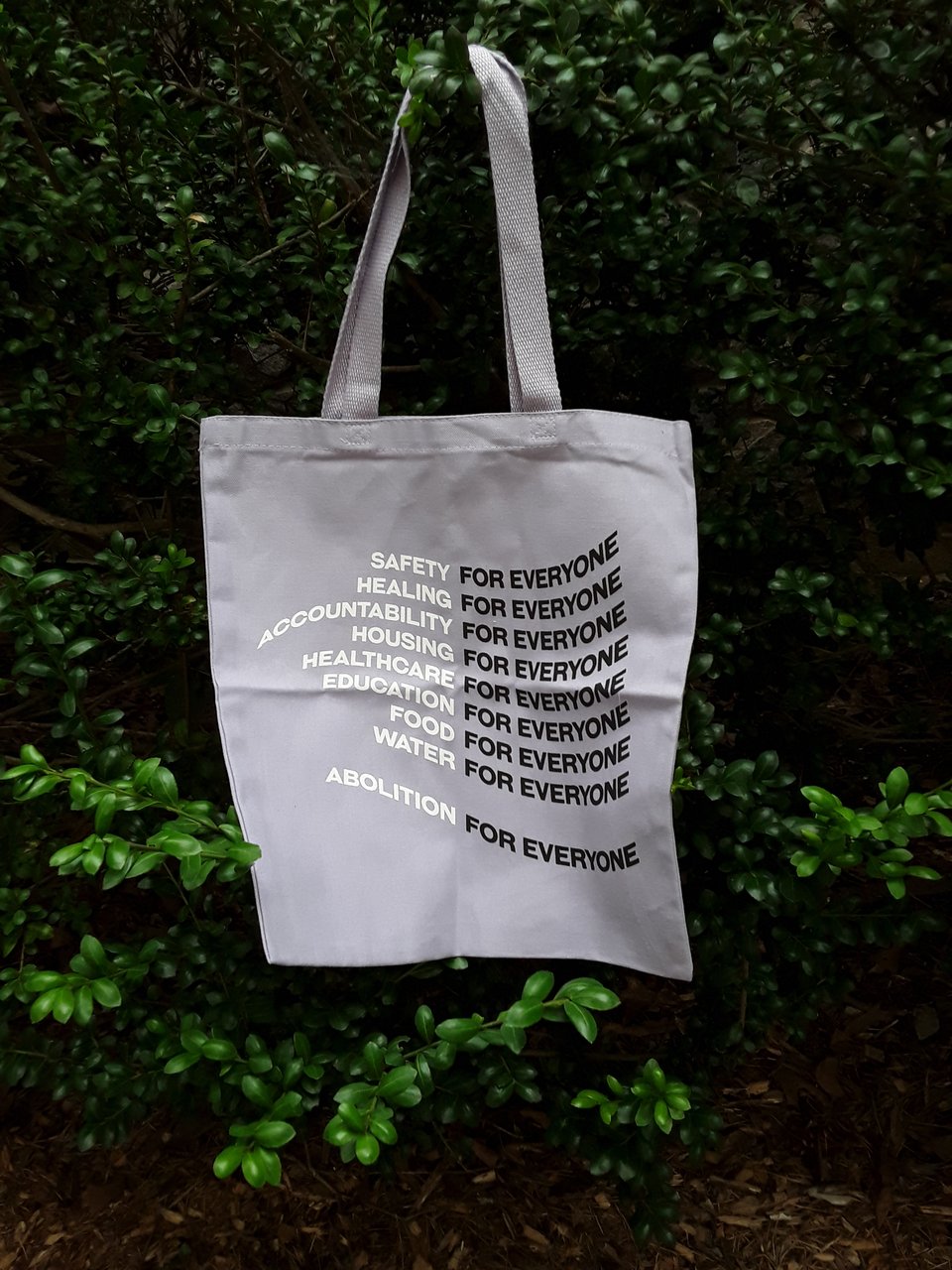
I just got this lovely tote from the For Everyone Collective, and it’s such a perfect distillation of what abolition can be. For example, safety, housing, food, education, water for everyone. These calls can also be inspiration to think about the different ways we can all contribute!
The dog days of summer mean we don’t have as much to report this month, but still want to share resources and ideas for everyday abolition connected to different parts of work and community.
Also hoping that everyone is keeping as safe as possible given the environmental chaos we are all dealing with these days. Speaking of, take a re-look at last month’s update with resources and ideas about the connections between environmental planning and abolition.
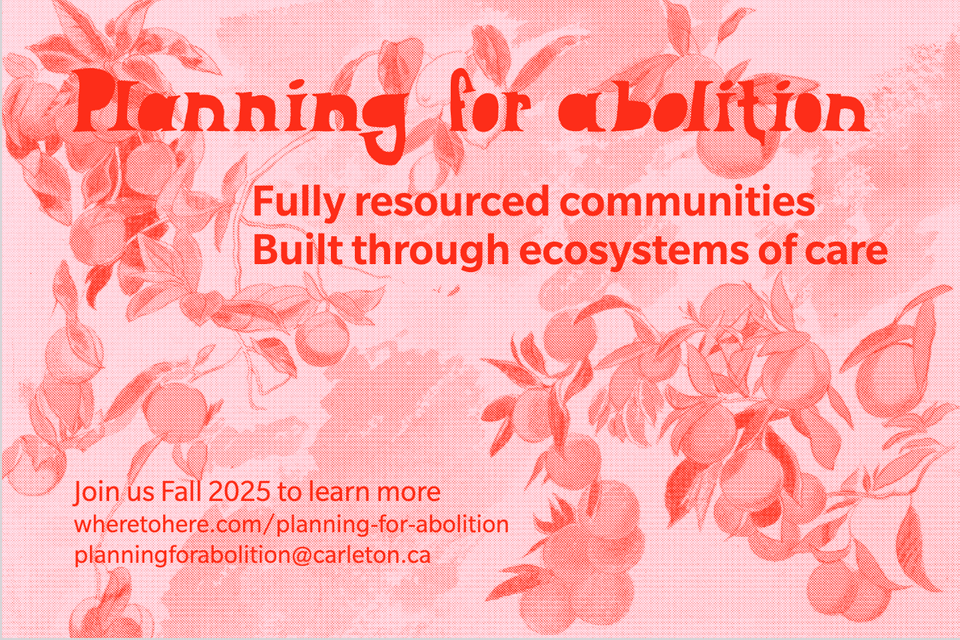
The second big theme is that these communities need to be produced through ecosystems of care. This theme really puts a spotlight on process, and the importance of planners playing a support role, following the folks who have been most impacted by community violence, policing, prisons and carceral violence, and building ongoing relationships in the process.
This fall we’ll start our Pathways to Community Safety series sharing our research findings, and ideas for action and practice, so watch this space for more!
One of our main findings has been that planning can support abolition by making sure that communities are fully resourced with all the supports we need.
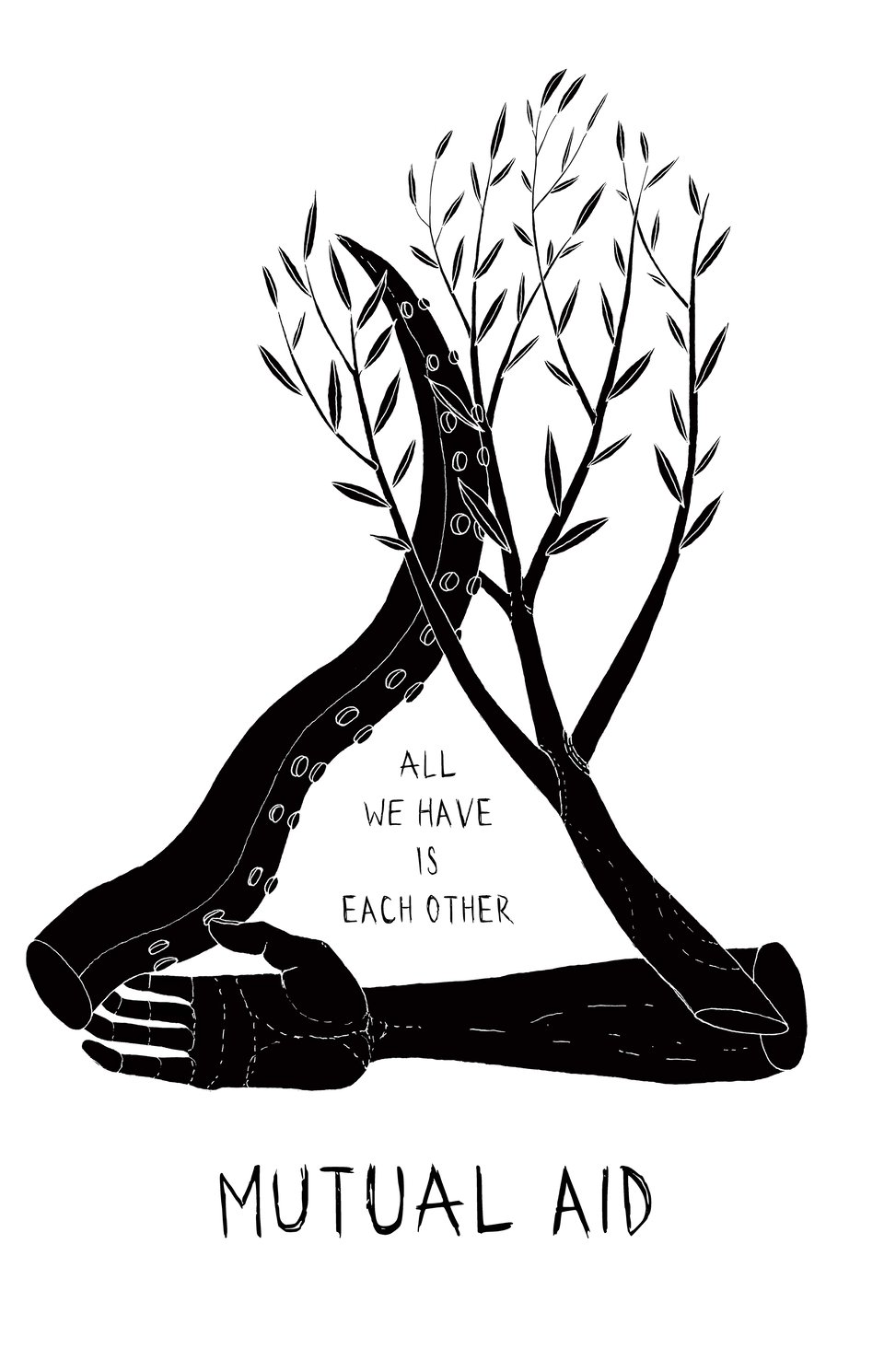
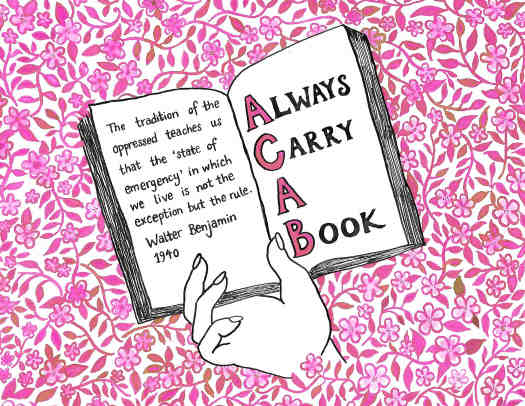
Alice Ross’ ‘Always Carry a Book’ is part of the Justseeds graphics collection. Justseeds is a cooperative of artists committed to social, environmental, and political engagement, and whose work I go back to for inspiration all the time.
One of my current favourites is a poster by William Estrada, an image of a forest with a bright pink night sky and a group of walkers winding through a trail with the reminder that “we learn with each other” printed along the bottom.