
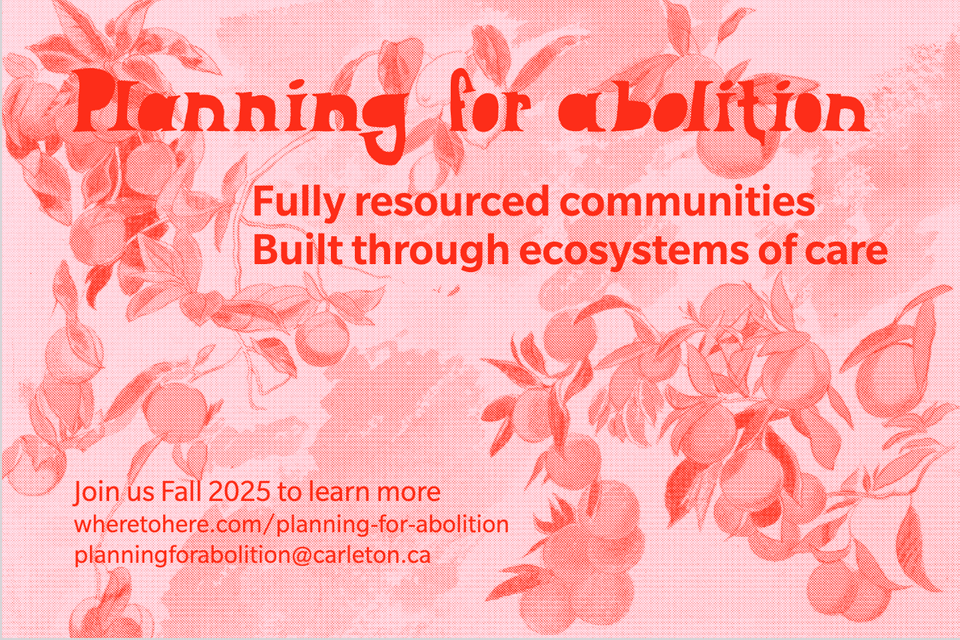
This fall we’ll start our Pathways to Community Safety series sharing our research findings, and ideas for action and practice, so watch this space for more!
One of our main findings has been that planning can support abolition by making sure that communities are fully resourced with all the supports we need.
As a contributor to the podcast Invisible Institutions put it:
When I say community, what I mean are the people, places and things that support us to live, and in turn the ways I support many people, places and things to live. I find for myself, as someone with disabilities, there are a lot of different components to living independently. Like I need a dishwasher because I have arthritis and my hands don’t work that well – sorry to all my broken plates – and it’s just, we view supports so narrowly in our society, and don’t see how we all need support … to live in community.
In addition to dishwashers, we’ve identified needed resources like diverse housing types, zoning that permits a range of work, transportation to that work and supports to access jobs. Community-based and government-based alternatives to calling the police, and education about what abolition, transformative and restorative justice, and planning are.
We won’t be able to cover everything in our series, so would love to hear from you if there are questions you have or resources you’d like us to share. Complete this short, anonymous survey, or respond to this email to share your ideas.
à bientôt
planningforabolition@carleton.ca
Learning + Action
What is happening in the US right now is a loud version of expanding carcerality, with the federal government using surveillance, violent and militant punishment, and banishment to criminalize more and more of life.
In Canada it’s quieter, but there are quite a few new carceral programs and policies at all levels of government that overlap with the work of planning, and disproportionately impact marginalized communities.
Federal Bill C-2: Strong Borders Act
- Canada proposes sweeping immigration and security bill [BBC]
- Border Bill Blowback [CBC]
- Stop Bill C-2 [Migrant Rights Network]
BC Involuntary Medical Admission
- B.C. to open 18 long-term involuntary care beds in Metro Vancouver [CBC]
- Why involuntary medical admission won’t solve homelessness [The Conversation]
- 17 organizations condemn forced detention [P.O.W.E.R.]
Municipal Protest Bubble Zones
You just read issue #2 of Planning for Abolition. You can also browse the full archives of this newsletter.